Health

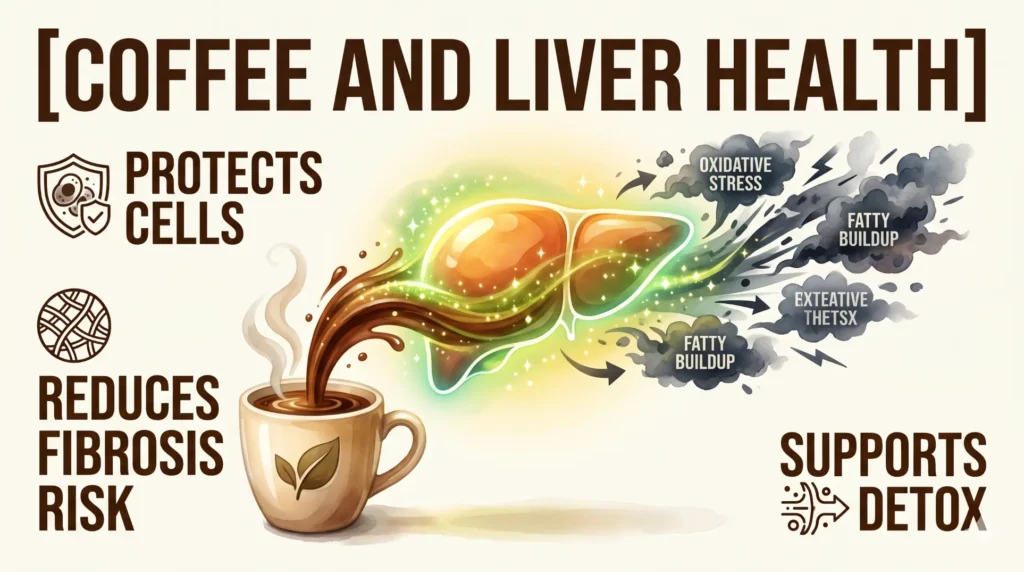
Infographic illustrating the benefits of coffee on liver health, including cell protection, fibrosis risk reduction, and detoxification support.
Health

Coffee and Liver Health: How 2–4 Daily Cups Defend Against Fatty Liver, Fibrosis, and Cirrhosis

Coffee actively defends the liver by reducing the relative risk of NAFLD, slowing fibrosis progression, and lowering hepatocellular carcinoma rates—outcomes driven by chlorogenic acid, kahweol, cafestol, and paraxanthine working across multiple biological pathways. We see the strongest protection at two to four daily cups, where these compounds collectively suppress inflammation and fat accumulation before scarring can advance to cirrhosis.

Coffee and Liver Health: How 2–4 Daily Cups Defend Against Fatty Liver, Fibrosis, and Cirrhosis Read More »

Magazine-style cover showing a woman drinking coffee with a digital infographic overlay illustrating the digestive system, microbiome, and bowel function.
Health

Coffee and Gut Health: How Every Cup Shapes Your Digestion and Microbiome

Coffee reshapes your gut through three simultaneous mechanisms: it activates the gastrocolic reflex to accelerate colonic motility, delivers polyphenols and soluble fiber that selectively feed beneficial bacteria like *Lawsonibacter asaccharolyticus*, and drives short-chain fatty acid production that reinforces the gut barrier. We see these effects in both caffeinated and decaf varieties, confirming non-caffeine compounds as the primary drivers.

Coffee and Gut Health: How Every Cup Shapes Your Digestion and Microbiome Read More »

A cup of coffee next to a stethoscope representing coffee heart health benefits
Health

Coffee and Heart Health: What the Evidence Says About Cardiovascular Benefits and Blood Pressure Myths

Moderate coffee consumption directly reduces heart-failure and stroke risk, making it one of the most evidence-backed dietary habits for cardiovascular protection. Three to five filtered, 8-ounce cups daily—within the 400 mg caffeine ceiling established by U.S. dietary guidelines—deliver measurable relative risk reduction. We examine the mechanisms, debunk the blood-pressure spike myth, and build a personalized intake strategy.

Coffee and Heart Health: What the Evidence Says About Cardiovascular Benefits and Blood Pressure Myths Read More »

A cup of coffee next to an abstract representation of a glowing human brain, illustrating how coffee improves brain health.
Health

Coffee Health: How Caffeine Boosts Brain Function and Reduces Neurodegenerative Risk in Seniors

Coffee health facilitates neuroprotection through bioactive compounds that preserve cognitive function and mitigate neurodegenerative disease risk. We utilize the way caffeine and chlorogenic acids modulate adenosine receptor activity to inhibit neuronal damage. By prioritizing oxidative stress reduction through moderate consumption, we can effectively lower the long-term incidence of Alzheimer’s and Parkinson’s diseases.

Coffee Health: How Caffeine Boosts Brain Function and Reduces Neurodegenerative Risk in Seniors Read More »

Steamy cappuccino cup - is cappuccino healthy, good for you, benefits of drinking cappuccino, or are cappuccinos fattening?
Health

Is Cappuccino Healthy? Are Cappuccinos Fattening? Stop Milk Sugar Traps

Whether a cappuccino is healthy depends largely on preparation. While espresso offers antioxidants, adding excessive whole milk and refined sugar makes cappuccinos fattening. A basic cappuccino can fit a healthy diet; focusing on non-fat milk or having it unsweetened maximizes any cappuccino benefits.

Is Cappuccino Healthy? Are Cappuccinos Fattening? Stop Milk Sugar Traps Read More »

A stylized 3D rendered latte coffee with an infographic overlay showing caffeine content details.
Health

How Much Caffeine Is in a Latte: A Simple Breakdown by Cup Size and Shot Count

Latte caffeine comes entirely from espresso — steamed milk adds zero stimulant effect, only volume. A single espresso shot delivers roughly 63–75 mg of caffeine, meaning we calculate a latte’s total strength by counting shots, not ounces. Understanding this shot count mechanic lets us predict exactly how much caffeine lands in our cup before we ever place an order.

How Much Caffeine Is in a Latte: A Simple Breakdown by Cup Size and Shot Count Read More »

Pumpkin spice latte nutrition facts for venti size, including calories in venti pumpkin spice latte, carbs, and nonfat options to avoid calorie overload
Health

Pumpkin Spice Latte Nutrition: Avoid Cal Overload Pro Quick Non‑Fat

A Venti Pumpkin Spice Latte typically contains about 410 calories, as detailed in the full pumpkin spice latte nutrition facts. For context, the Venti PSL calories primarily stem from sugar and whole milk. Check nutrition facts for nonfat or short options to lower your Venti PSL calories.

Pumpkin Spice Latte Nutrition: Avoid Cal Overload Pro Quick Non‑Fat Read More »

dark roast caffeine content
Health

Does Dark Roast Coffee Have Less Caffeine?

Dark roast coffee does not inherently contain more caffeine than light roast when measured by weight, debunking a common coffee myth. Light roasts often have higher caffeine per scoop because they are denser. Caffeine stability during roasting keeps levels largely consistent. Read on to discover the critical role of extraction and brewing factors.

Does Dark Roast Coffee Have Less Caffeine? Read More »

caffeine content in roasts
Health

Does Light Roast Coffee Have More Caffeine?

Contrary to popular belief, light roast coffee often contains more caffeine than dark roast when measured by volume due to denser, smaller beans. The roasting process causes minimal dehydration, keeping caffeine levels stable across roasts. Measuring by weight ensures accuracy. Read on to discover the science behind roast levels and brewing methods.

Does Light Roast Coffee Have More Caffeine? Read More »

Scroll to Top