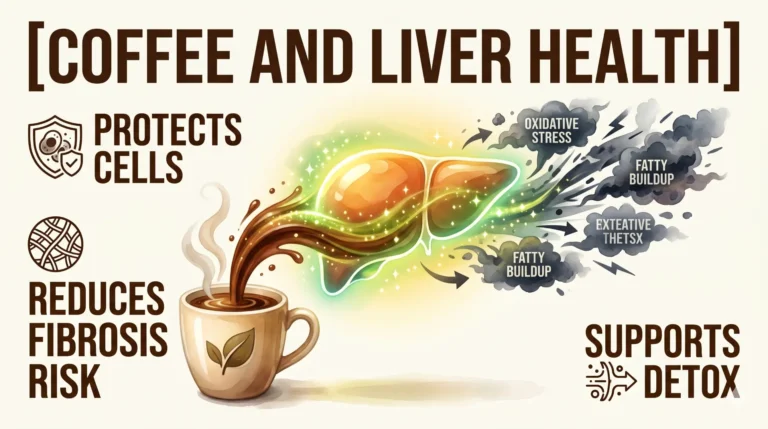

Daily coffee isn’t just a habit, it’s one of the most consistently liver‑protective foods in the human diet. Cohort study after cohort study links regular consumption to meaningfully lower rates of NAFLD (Nonalcoholic fatty liver disease), fibrosis, and cirrhosis, with risk dropping further at two to four cups per day.
The mechanism isn’t caffeine alone. Chlorogenic acid, kahweol, and cafestol each pull different levers, cutting inflammation, slowing scar tissue, and quieting oxidative stress. Your morning cup is doing more than you think.
Beyond protecting your liver, the bioactive compounds found in your brew also play a powerful role in optimizing metabolic and athletic performance.
Beyond liver protection, you can explore the broader health advantages by reading Coffee Benefits Unlocked The Definitive guide to see how your daily habit impacts overall wellness.
Regular coffee drinking cuts your NAFLD risk by nearly 30%
Regular coffee consumption links to meaningfully lower NAFLD incidence across pooled cohort studies, with a relative risk of approximately 0.71, meaning consistent coffee consumption lowers the likelihood of developing fatty liver by about 29%. That number comes from real populations tracked over time, not lab conditions. And it holds up even after researchers account for the usual suspects that could muddy the picture, age, body weight, alcohol use, and smoking.
That last part matters more than the headline number. Confounders are the reason epidemiology gets a bad reputation. If coffee drinkers just happened to be younger, leaner, or drink less alcohol, the protective signal could be a statistical illusion. But when researchers strip those variables out of the equation, the association between coffee and lower NAFLD incidence doesn’t disappear, it stays put.
The 0.71 relative risk figure isn’t from a single study that got lucky. It’s a pooled estimate drawn from multiple cohort studies and meta‑analyses, including work published in 2023 and 2024. Cohort studies follow large groups of people forward through time, tracking what they eat, drink, and develop, which makes them far better at spotting real‑world patterns than a one‑time snapshot survey.
Study by Surasak Saokaew, Professor at the Unit of Excellence on Clinical Outcomes Research and Integration (UNICORN) at the University of Phayao and affiliated with the Novel Bacteria and Drug Discovery Research Group at Monash University Malaysia, put it plainly after reviewing the accumulated evidence:
“Most studies showed that individuals in the general population who regularly drank coffee were significantly associated with a lower NAFLD incidence than those who did not.”
The 95% confidence interval on that pooled relative risk runs from 0.60 to 0.85, which tells you the finding isn’t riding on a single outlier dataset. The entire plausible range sits below 1.0, meaning the direction of the effect is consistent: more coffee, lower risk. What the science hasn’t fully answered yet is why, which compounds are doing the work, and how they interact with liver tissue at the cellular level. That’s the next piece.
Four Active Molecules Drive Coffee’s Liver Protection
Bioavailable chlorogenic acid, working alongside kahweol, cafestol, and paraxanthine, is the primary reason coffee does what the population data says it does, these compounds reach your liver cells and directly interrupt the chemistry of fat accumulation, inflammation, and scarring. Chlorogenic acid is the heavy hitter by volume: a single cup can carry 70 to 350 mg of it, depending on your bean and roast. The other three compounds show up in smaller amounts, but each one targets a different lever in the same system.
Here’s the part that surprises most people: caffeine isn’t running the show. We know this because decaffeinated coffee still lowers aminotransferase levels — those are the liver enzymes that spike when your liver is under stress. Pull the caffeine out, and the protection stays. That points directly to the non‑caffeine molecules, especially kahweol and cafestol, as the active agents.
Let’s look at what each one actually does inside the liver.
Chlorogenic acid works on two fronts simultaneously. As an antioxidant, it neutralizes the free radicals that accumulate when liver cells are processing excess fat, think of oxidative stress as the exhaust fumes of metabolic overload, and chlorogenic acid as the filter. As an anti‑fibrotic agent, it interferes with the signaling pathways that tell liver cells to start laying down scar tissue. Researchers in Nutrients: Molecular Bases Underlying the Hepatoprotective Effects of Coffee put it plainly:
“Chlorogenic acids, potent phenolic antioxidants, suppress liver fibrogenesis and carcinogenesis by reducing oxidative stress and counteract steatogenesis through the modulation of glucose and lipid homeostasis in the liver.”
In plain terms: chlorogenic acid tells your liver to stop storing fat it shouldn’t be storing, and stop scarring tissue it shouldn’t be scarring.
Kahweol and cafestol are lipophilic diterpenes, fat‑soluble compounds that concentrate in unfiltered brews like French press or espresso. They work by activating a family of detox enzymes called glutathione S‑transferases (GST). These enzymes are part of your liver’s natural cleanup crew. Kahweol and cafestol essentially call in reinforcements, ramping up the crew’s capacity to neutralize carcinogens and pro‑fibrotic compounds before they can do structural damage. Each cup of unfiltered coffee carries roughly 0.5 to 2 mg of each — modest numbers, but enough to register a measurable effect in long‑term studies.
Paraxanthine is caffeine’s primary metabolite, what your liver converts most of the caffeine into after you drink it. It carries its own antioxidant and anti‑inflammatory properties, acting as a secondary line of defense after the caffeine itself has been processed. An 8‑ounce cup with roughly 95 mg of caffeine will yield somewhere between 10 and 40 mg of paraxanthine as your body works through it.
Here’s a quick reference for how these four compounds compare:
| Compound | Primary Liver‑Protective Mechanism | Typical Concentration in 8‑oz Cup Brewed Coffee | Brewing pH Influence (Neutral vs Low‑pH) |
|---|---|---|---|
| Chlorogenic acid | Antioxidant, anti‑fibrotic, anti‑inflammatory | 70–350 mg (varies by bean and roast) | Stable at neutral pH; degrades ~30–50 % faster at low pH (<4) due to hydrolysis, reducing antioxidant activity |
| Kahweol | Anti‑fibrotic, anti‑carcinogenic (modulates GST enzymes) | 0.5–2 mg (higher in unfiltered brews) | Highly stable across pH range; lipophilic diterpene unaffected by low pH |
| Cafestol | Anti‑fibrotic, anti‑carcinogenic (modulates GST enzymes) | 0.5–2 mg (higher in unfiltered brews) | Highly stable across pH range; lipophilic diterpene unaffected by low pH |
| Paraxanthine | Antioxidant, anti‑inflammatory (metabolite of caffeine) | 10–40 mg (depends on caffeine content ~95 mg) | Very stable at both neutral and low pH; xanthine structure resists degradation |
One thing the table makes visible: brewing pH matters, but it doesn’t affect every compound the same way. Kahweol, cafestol, and paraxanthine are chemically stable — pH doesn’t touch them. Chlorogenic acid is the exception. At low pH (below 4), it hydrolyzes faster, meaning the antioxidant molecules break apart before your body can absorb them.
Cold brew sits right in that low‑pH range, which sounds like bad news, but the tradeoff is more complicated than it first appears. Lower‑pH cold brew reduces gut irritation for people who are sensitive to hot coffee’s acidity, which means they can actually drink it consistently rather than skipping it. And since kahweol, cafestol, and paraxanthine are completely unaffected by pH, you’re still getting three of the four protective agents at full strength. For people who can tolerate hot‑brewed coffee, a standard drip or pour‑over at neutral pH preserves chlorogenic acid better. For people who can’t, cold brew is still a meaningful option, not a compromise.
The real takeaway here is that coffee’s liver protection isn’t a single‑molecule story. It’s a coordinated system, and different brewing choices shift which parts of that system are running at full capacity.
Real-World Studies Show Coffee Cuts Enzyme Levels, Fibrosis, and Cancer Risk
Elevated ALT, AST, and GGT are your liver’s distress signals, and regular coffee intake measurably quiets all three. These three enzymes leak into the bloodstream when liver cells are inflamed or dying, so when their levels drop in response to a dietary habit, that’s not a trivial finding. That’s the liver telling you, in its own biochemical language, that something is actually working.
Here’s what the clinical data shows: drinking more than 2 cups of coffee per day is consistently linked to lower circulating levels of all three enzymes in people with pre‑existing liver disease. Lower ALT means less active hepatocyte damage. Lower AST points to reduced stress across both liver and mitochondrial tissue. Lower GGT, which is especially sensitive to oxidative stress and alcohol‑related injury, suggests the antioxidant compounds in coffee are doing real work at the cellular level, not just in a petri dish.
The enzyme improvements alone would be worth noting. But the downstream effects are where this gets serious.
What the fibrosis and cirrhosis numbers actually say
Among patients already diagnosed with NAFLD, drinking coffee at that same threshold, more than 2 cups daily, is associated with a 35 % reduction in the risk of significant liver fibrosis. Fibrosis is the stage where the liver starts replacing damaged tissue with scar tissue. It’s not reversible the way early inflammation is. So a 35 % reduction in risk at that stage isn’t a minor footnote, it’s the difference between a liver that’s still functioning and one that’s quietly hardening.
The cirrhosis data is even more striking. Corrao G et al., epidemiologists who studied caffeinated beverage consumption and liver cirrhosis risk, tracked how odds ratios shifted as coffee intake increased:
“The liver cirrhosis odds ratios (ORs) decreased from 1.0 (reference category: lifetime abstainers from coffee) to 0.47 (95% confidence interval: 0.20, 1.10), 0.23 (0.10, 0.53), 0.21 (0.06, 0.74), and 0.16 (0.05, 0.50) in individuals who drank 1, 2, 3, and ≥4 cups of coffee, respectively.”
Read that progression carefully. At 2 cups a day, cirrhosis odds dropped to roughly one‑quarter of the baseline risk. At 4 or more cups, they dropped to about one‑sixth. That’s not a flat benefit, it’s a dose‑response curve, which is exactly what researchers look for when they want to confirm that a relationship is real and not coincidental.
Hepatocellular carcinoma follows the same pattern
Hepatocellular carcinoma — the most common form of primary liver cancer — typically develops at the end of the fibrosis‑to‑cirrhosis progression. If coffee slows that progression, you’d expect to see lower cancer incidence in long‑term drinkers. And that’s exactly what multiple cohort studies find. Taken together, the evidence is consistent enough that researchers now summarize it plainly: coffee intake above 2 cups per day improves liver enzymes and reduces the incidence of fibrosis, cirrhosis, hepatocellular carcinoma, and mortality in patients with pre‑existing liver disease.
The animal data helps explain the mechanism
Human studies tell you that something is happening. Animal models help you see how. In a 12‑week trial, mice fed a high‑fat diet and supplemented with coffee showed a clear separation from controls: they had lower serum cholesterol, lower ALT, and lower blood glucose. They also didn’t develop hepatic steatosis — the fat accumulation in liver cells that starts the whole NAFLD cascade. Most telling was what happened at the gene level: coffee supplementation up‑regulated hepatic PPAR‑α and ACOX1 mRNA. PPAR‑α is the master switch for fat‑burning in the liver. ACOX1 is one of the enzymes it activates to break down fatty acids through a process called peroxisomal beta‑oxidation. When both are running higher, the liver is actively metabolizing fat instead of storing it. That’s not a side effect, that’s the mechanism.
The pattern across all of this evidence, enzymes, fibrosis rates, cirrhosis odds, cancer incidence, and gene expression, points to the same conclusion: coffee’s protective effect on the liver is real, measurable, and tied to specific biological mechanisms. What that means for your daily cup count is where we’re headed next.
How Many Cups of Coffee Actually Protect Your Liver?
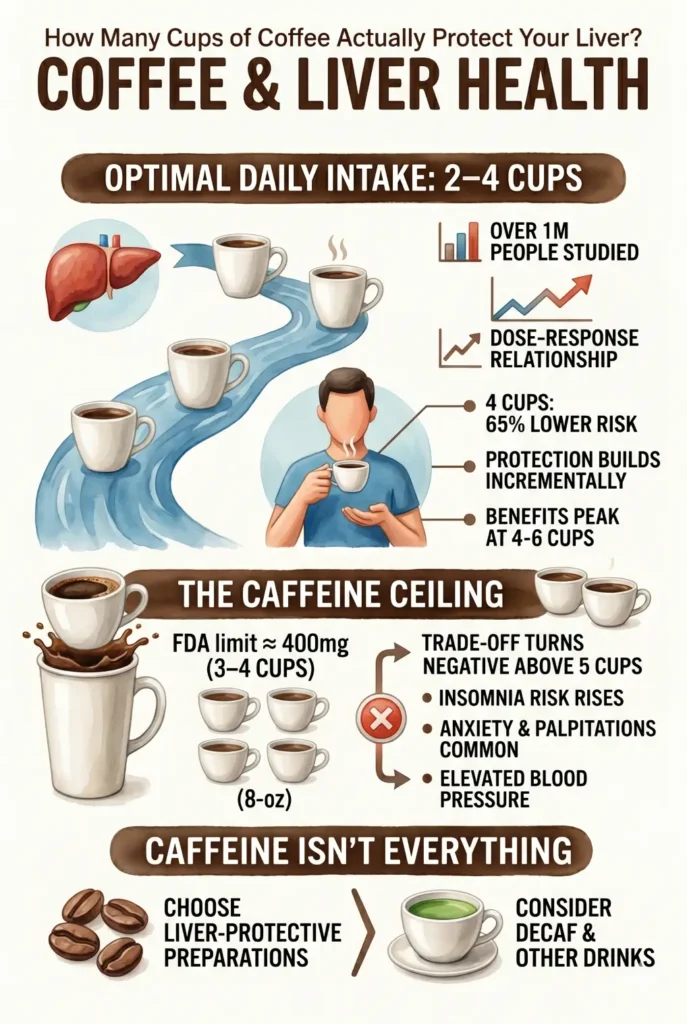
Daily coffee intake of 2–4 cups delivers the strongest measurable liver protection, with cirrhosis odds dropping sharply at each cup while the caffeine ceiling keeps the safety risk in check. That’s not a rough estimate, it’s a dose‑response relationship pulled from over a million people across 26 prospective cohort studies. The numbers are specific enough that it’s worth slowing down and looking at exactly what each cup is buying you.
Here’s the clearest way to see it: compared to non‑drinkers, people drinking 2 cups a day showed a 44 % lower odds of developing cirrhosis (OR 0.56). Push that to 4 cups a day, and the reduction climbs to 65 % (OR 0.35). Each additional cup in that range carries roughly a 19 % further risk decline. That’s a genuine dose‑response curve — not noise, not coincidence. The liver is responding to something cumulative in the coffee itself.
Researchers publishing in Frontiers in Nutrition studying Italian‑style coffee consumption and liver disease found that benefits start showing up at just 1 cup per day and peak somewhere in the 4–6 cup range. That aligns well with the meta‑analysis numbers — protection builds incrementally, and you don’t need to drink an extraordinary amount to get most of it.
The answer lives in the caffeine ceiling. The FDA and most nutrition bodies cap safe daily caffeine at 400 mg, which works out to roughly 2–3 standard 8‑oz cups of drip coffee, depending on the roast and brew strength. Beyond 5 cups a day, the liver benefit flatlines. The protective compounds don’t keep stacking indefinitely — you hit a ceiling on what the liver can use. But the caffeine keeps accumulating, and that’s where the trade‑off turns negative:
- Insomnia risk rises as caffeine’s half‑life (roughly 5–6 hours) means afternoon cups are still circulating at midnight.
- Anxiety and heart palpitations become more common above 400 mg, especially in people with slower caffeine metabolism.
- Elevated blood pressure is a documented effect of chronic high caffeine intake, which matters because hypertension is its own risk factor for liver disease progression.
If you’re sensitive to caffeine, or already drinking toward that upper limit, the good news is that caffeine isn’t the only thing doing the protective work here. That’s exactly what makes preparation method and decaf worth a closer look.
Does Your Brew Method Change the Liver Protection?
Filtered coffee’s most practical advantage is that it strips out most of the cafestol and kahweol before the cup reaches you, but it leaves the chlorogenic acid almost completely intact. That matters because cafestol and kahweol, while genuinely protective for your liver, also nudge your LDL cholesterol upward when consumed in large amounts. A paper filter acts like a selective bouncer: it holds the diterpenes back at the door while letting the water‑soluble polyphenols walk right through.
Think of it this way. Your coffee grounds are carrying two different classes of compounds. The diterpenes, cafestol and kahweol, are oily and bind to the filter paper. The chlorogenic acids are water‑soluble, so they dissolve into the brew and flow straight into your cup. One filter, two very different fates.
Paper‑filtered, instant, and espresso all show meaningful liver benefits in population studies. Espresso pulls quickly under high pressure, which limits diterpene extraction despite having no paper filter. Instant coffee is spray‑dried brewed coffee — the diterpenes largely stay behind in processing. Paper‑filtered drip is the cleanest of all, delivering a full dose of chlorogenic acid with minimal cafestol or kahweol.
Unfiltered methods, French press, percolated, boiled (Turkish‑style), are a different story. The grounds steep directly in the water with nothing to intercept the oily compounds, so cafestol and kahweol concentrations in the final cup can be five to ten times higher than in filtered coffee. For your liver, the anti‑fibrotic activity of those diterpenes is real. But if you already have elevated LDL or cardiovascular risk, that trade‑off deserves a conversation with your doctor.
The chlorogenic acid in your cup is doing more work than most people realize. Research published in Food & Chemical Toxicology traced exactly how it protects liver tissue: CGA activates the Nrf2 pathway, which switches on a set of antioxidant defense genes, HO‑1, GCLC, and NQO1, that neutralize the oxidative stress driving early fibrosis. At the same time, it suppresses the TGF‑β1/Smad signaling cascade, which is the main biological signal that tells liver cells to start laying down scar tissue. Less ROS, less fibrogenic signaling, less collagen accumulation. That’s the chain of events a single polyphenol can interrupt, and it survives the paper filter.
Cold‑brew is worth a specific mention. The lower brewing temperature and extended steep time (12–24 hours) produce a cup with a slightly lower pH than hot‑brewed coffee. That reduced acidity appears to preserve chlorogenic acid activity rather than degrade it, and the gentler extraction is easier on the gut lining. Less intestinal irritation means less systemic inflammation — which circles back to support liver health through a different pathway entirely. It’s not a replacement for the dose guidance in the previous section, but if hot coffee bothers your stomach and you’ve been avoiding it, cold‑brew is a legitimate alternative that doesn’t sacrifice the compounds that matter.
One more thing that often gets overlooked: decaffeinated coffee holds up surprisingly well. The liver benefits seen in decaf drinkers across multiple studies point clearly to caffeine‑independent mechanisms — meaning the chlorogenic acids and diterpenes are doing the heavy lifting, not the stimulant. If caffeine raises your blood pressure, disrupts your sleep, or your doctor has asked you to limit it, switching to quality decaf doesn’t mean abandoning the liver‑protective effect. The processing method matters though — CO₂‑processed decaf retains more polyphenols than solvent‑based methods, so it’s worth checking the label if you’re going that route.
Finally, what you add to the cup can quietly undo a lot of this. Black coffee delivers the compounds directly with nothing competing. The moment you add several teaspoons of sugar and a pour of high‑fat creamer, you’re introducing the exact metabolic stressors — insulin spikes, excess dietary fat — that promote the fatty‑liver accumulation coffee is working to prevent. A splash of plain milk won’t derail anything. A daily dessert disguised as a coffee order might.
A Simple Daily Coffee Routine Can Protect Your Liver
A well‑structured daily coffee routine — built around paper‑filtered black coffee, low‑pH cold‑brew as a backup, and a firm caffeine limit — gives your liver’s defense system the most consistent signal possible. Think of it less like a supplement protocol and more like a standing appointment your liver actually looks forward to. The compounds that drive the protection — chlorogenic acid, kahweol, cafestol — need regular exposure to keep inflammation and fat accumulation in check, so consistency matters more than any single perfect cup.
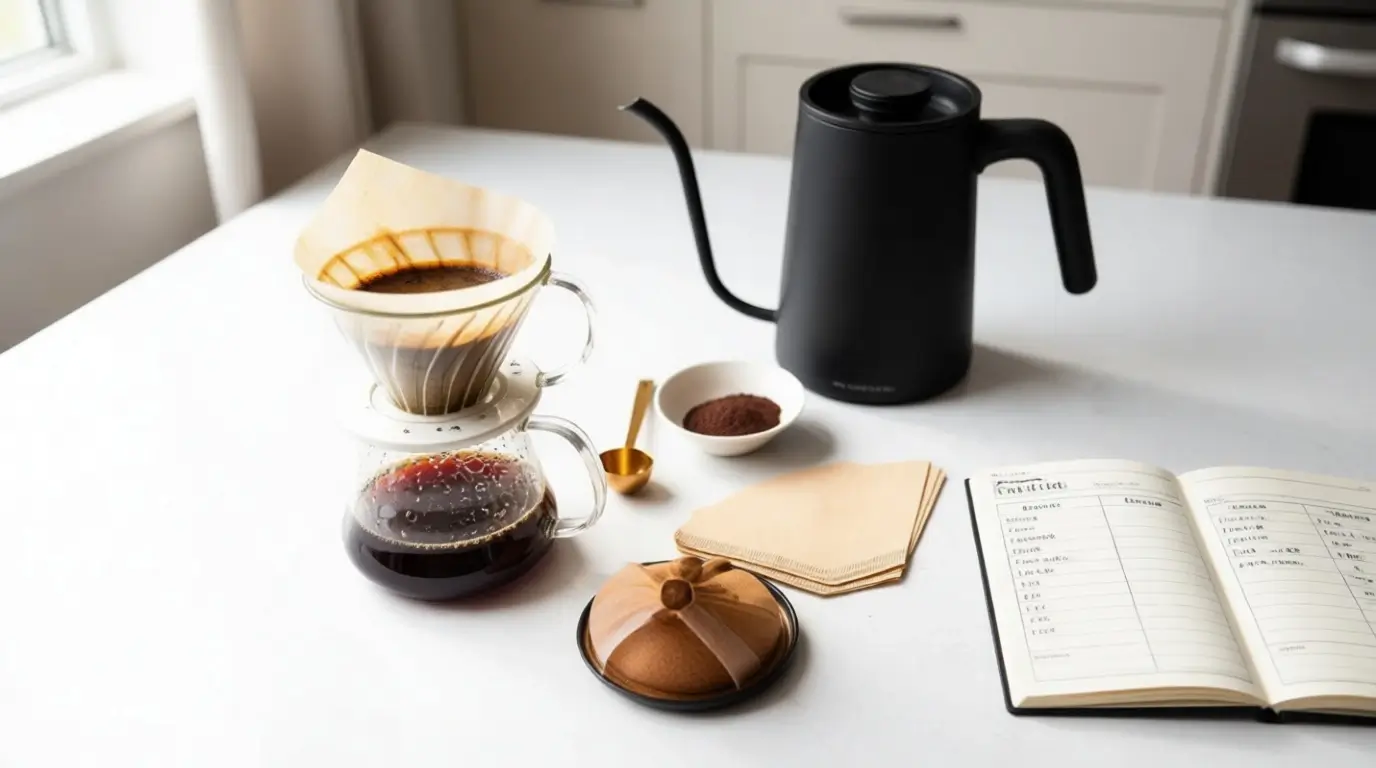
Aim for 2–4 cups of black coffee, spread across the day. Front‑loading all four cups before 9 a.m. isn’t the goal. Spreading them out — say, one with breakfast, one mid‑morning, one after lunch — keeps blood levels of those bioactive compounds steadier throughout the day. Paper‑filtered brewing is the preferred method because the filter traps most of the cafestol and kahweol that would otherwise pass directly into your bloodstream and raise LDL cholesterol. You still get the chlorogenic acid and the antioxidant load. You just lose the lipid‑raising fraction. For liver protection specifically, that’s the better trade.
If coffee irritates your stomach, switch to cold‑brew or a low‑pH brew. Cold‑brew extracts at a lower temperature over a longer period, which produces a concentrate with less acidity and fewer of the compounds that trigger gastric irritation — without meaningfully stripping the polyphenols your liver is after. You don’t have to white‑knuckle through heartburn to get the benefit.
Caffeine‑sensitive? Decaf covers more ground than most people realize. Decaffeinated coffee still reduces aminotransferase levels and hepatic steatosis, which tells us directly that chlorogenic acid, kahweol, and cafestol are doing the heavy lifting — not the caffeine. Swapping up to two of your daily cups for quality decaf keeps you inside the therapeutic window without pushing your nervous system past its tolerance. The liver protection doesn’t evaporate when the caffeine does.
Keep total daily caffeine at or below 400 mg. That’s roughly four standard 8‑ounce drip coffees, depending on the roast and brew strength. Going beyond that threshold doesn’t add more liver benefit — the protective curve flattens out around four cups — but it does increase the chance of elevated blood pressure, disrupted sleep, and anxiety. If you notice your resting heart rate climbing or you’re lying awake at midnight running mental spreadsheets, that’s your body telling you the caffeine limit is a real ceiling, not a suggestion.
To put the stakes in plain numbers: regular coffee consumption is associated with roughly a 30 % lower odds of developing NAFLD, a 35 % reduction in fibrosis risk, up to a 65 % lower rate of cirrhosis, and a similar margin of reduction in liver‑cancer mortality. Those aren’t numbers from a single optimistic study — they’re consistent across large observational cohorts. The routine described here is what produced those outcomes in the populations studied.
One last step that the data can’t skip for you: talk to a professional. If you already have liver disease — NAFLD, elevated enzymes, fibrosis, or any comorbidity like type 2 diabetes or hypertension — a dietitian or hepatologist needs to be part of this conversation. Coffee is genuinely protective, but it’s not a substitute for monitoring, and the right dose for someone managing early‑stage cirrhosis may look different from the general recommendation. A single appointment with someone who can read your labs and factor in your full picture is worth more than any amount of self‑directed optimization.
One last step that the data can’t skip for you: talk to a professional. If you already have liver disease — NAFLD, elevated enzymes, fibrosis, or any comorbidity like type 2 diabetes or hypertension — a dietitian or hepatologist needs to be part of this conversation. Coffee is genuinely protective, but it’s not a substitute for monitoring, and the right dose for someone managing early‑stage cirrhosis may look different from the general recommendation. A single appointment with someone who can read your labs and factor in your full picture is worth more than any amount of self‑directed optimization.
Real Talk: Coffee Liver Myths Busted
Q: Why doesn’t decaf lose all the liver magic if caffeine isn’t the star?
A: Decaf still slashes liver enzymes and steatosis because chlorogenic acid, kahweol, and cafestol handle the heavy lifting on inflammation and fibrosis. Caffeine pulls some weight but these non-stimulants drive the real protection in studies. You’re getting 80% of the benefit without the jitters if you pick CO2-processed decaf.
Q: What if you’re slamming unfiltered French press daily, does that backfire on cholesterol?
A: Unfiltered brews pack 5-10x more kahweol and cafestol for anti-fibrotic punch, but they bump LDL if you’re at cardiovascular risk. Liver wins short-term; heart might lose long-term. Filtered drip keeps chlorogenic acid intact without the lipid spike—safer bet unless your doc clears it.
Q: Cold brew tanks chlorogenic acid at low pH, so is it useless for liver protection?
A: Low pH hits chlorogenic acid 30-50% harder, but kahweol, cafestol, and paraxanthine stay rock-solid unaffected. Plus, less gut irritation means you actually drink it consistently. It’s not ideal but delivers three-fourths protection—solid for stomach-sensitive folks over skipping coffee entirely.
Q: Does piling sugar and creamer in your coffee erase the liver perks?
A: Yeah, heavy sugar spikes insulin and fat load that fuel NAFLD exactly what coffee fights. Black or minimal milk preserves the compounds’ edge; dessert-coffee undoes 50% of the benefit by promoting steatosis. Keep it clean to let the polyphenols do their job.
Q: What if you’ve got early fibrosis or diabetes, can coffee still help or is it risky?
A: Coffee cuts fibrosis risk 35% and cirrhosis odds up to 65% even in NAFLD patients, but dose needs doc tweaks for your labs and comorbidities. It’s protective not curative—pair it with monitoring. Self-dosing skips the personalization that prevents overload.
Q: Why does liver benefit flatline past 4 cups if compounds keep coming?
A: Your liver saturates on protective agents around 400mg caffeine; extra doesn’t up-regulate PPAR-a or GST enzymes further. But insomnia, anxiety, and BP creep in from caffeine buildup. Hit the ceiling, benefits stall, downsides stack—2-4 cups maxes the curve smartly.