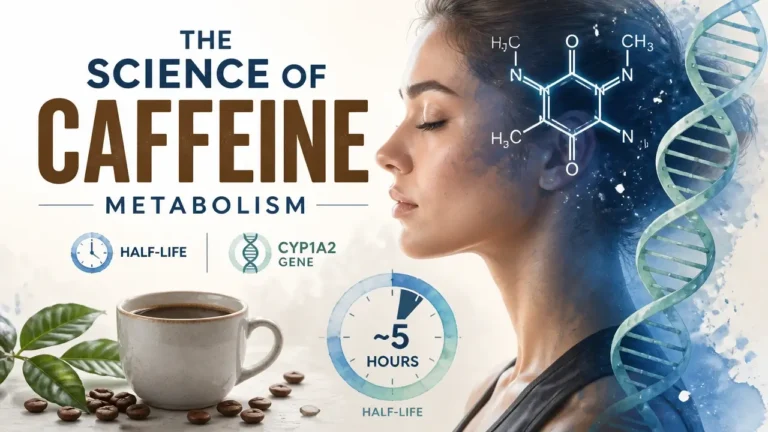

Caffeine metabolism – the stepwise enzymatic process your liver uses to dismantle and clear every cup you drink – is far more variable than the wellness world lets on. Your genes set a baseline, but smoking, hormonal contraceptives, and even the drugs you take can override that baseline entirely.
Caffeine metabolism – the stepwise enzymatic process your liver uses to dismantle and clear every cup you drink – is far more variable than the wellness world lets on, often interacting unpredictably with the hidden caffeine in medications you might be taking.
While liver enzymes dictate your nervous system’s response to stimulants, the rest of your morning brew travels further down the GI tract, where it exerts profound digestion and microbiome impacts.
Understanding the actual pathway, not just the pop-science version, gives you something more useful than a cup limit: it gives you a biological lens for evaluating every caffeine claim you’ll encounter from here on.
Understanding the actual pathway, not just the pop-science version, gives you something more useful than a cup limit: it gives you a biological lens for evaluating every caffeine claim you’ll encounter from here on, especially when you explore Coffee Benefits Unlocked The Definitive guide to overall wellness.
How Your Liver Breaks Down Caffeine
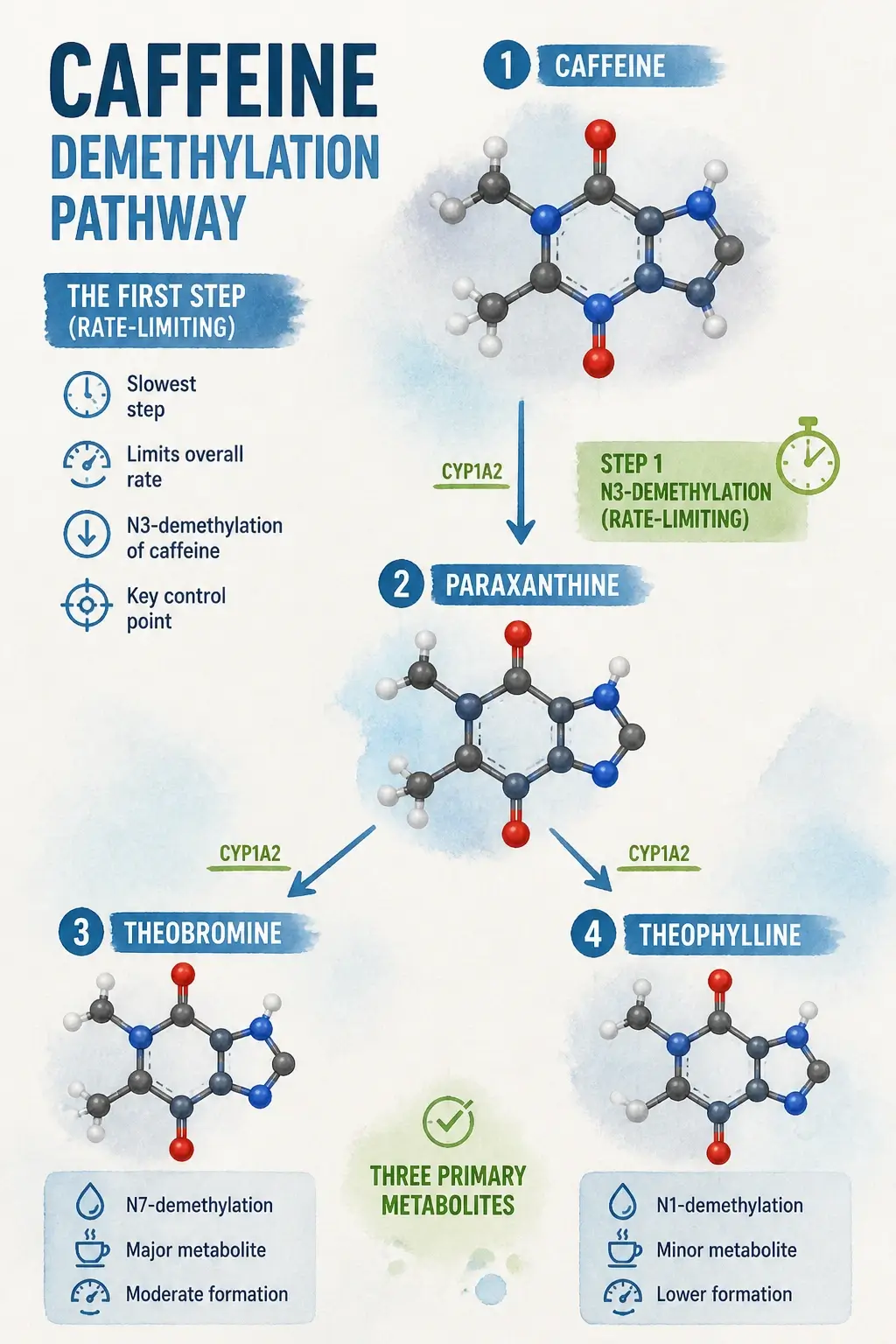
Caffeine metabolism begins the moment caffeine enters your bloodstream and reaches the liver, where the enzyme CYP1A2 performs roughly 95% of the initial clearance work through a sequential series of demethylation reactions – each one stripping a methyl group from the caffeine molecule to produce three biologically distinct metabolites. That first step, the conversion of caffeine to paraxanthine, is the rate-limiting bottleneck that determines how long caffeine stays pharmacologically active in your body. Everything downstream – including whether you’re still wired at midnight – depends on how fast that one enzymatic reaction runs.
The three principal products of this demethylation cascade aren’t passive waste. Dr. Jan Grzegorzewski, a researcher at the Institute of Biology at Humboldt-University of Berlin, notes that N-3 demethylation of caffeine to paraxanthine is the dominant reaction, accounting for around 80–90% of caffeine demethylation, with the remainder split between theobromine at roughly 11% and theophylline at around 4% – all three reactions exclusively mediated by CYP1A2. That split matters because each metabolite has its own biological activity, and you’re not just clearing caffeine when you metabolize it – you’re generating a cascade of compounds with distinct effects on your physiology.
Here’s what each one is actually doing in your body:
- Paraxanthine (82–84%): Nearly as potent as caffeine itself at blocking adenosine receptors, which is why the stimulant effect doesn’t simply switch off the moment your liver starts working. Paraxanthine also accelerates lipolysis – the breakdown of stored fat – by inhibiting phosphodiesterase and elevating cyclic AMP levels in fat cells.
- Theobromine (11–12%): A mild vasodilator and diuretic. It relaxes smooth muscle in blood vessel walls and promotes mild fluid excretion through the kidneys. This is the same compound found in higher concentrations in dark chocolate.
- Theophylline (~4%): Relaxes smooth muscle in the bronchial airways – it’s pharmacologically related to drugs used in asthma management, though the concentrations produced from dietary caffeine are far below therapeutic doses.
The practical implication: caffeine half-life – the time needed to eliminate 50% of the dose from your system – is really a measure of how fast that first CYP1A2-driven demethylation step runs. And that rate varies substantially between individuals. Genetics is where the story starts, but as we’ll see, it’s nowhere near where it ends.
Here’s a visual overview of the full demethylation pathway before we get into the genetic machinery behind it.
The CYP1A2 Gene and Why Metabolism Speed Differs
The CYP1A2 gene encodes the enzyme responsible for that rate-limiting first step, and its most studied single-nucleotide polymorphism – rs762551 – is the primary inherited determinant of how fast your liver clears caffeine. At this SNP, a single base change (C to A) in intron 1 of the gene produces measurable differences in enzyme inducibility and, consequently, in caffeine clearance speed. Dr. Craig Pickering, a sports scientist and genetic researcher formerly of DNAFit Life Sciences, describes rs762551 as the major source of inducibility of CYP1A2 – with AA homozygotes classified as fast metabolizers and C allele carriers (AC and CC) classified as slow metabolizers.
The three genotypes at this locus translate into three distinct functional phenotypes:
- AA (homozygous A allele): Fast metabolizer. The enzyme variant produced shows enhanced inducibility, particularly in response to environmental triggers like cigarette smoke. Caffeine is cleared more rapidly.
- AC (heterozygous): Intermediate-to-slow metabolizer. One C allele is enough to reduce enzyme activity meaningfully.
- CC (homozygous C allele): Slow metabolizer. Lowest CYP1A2 activity, longest caffeine half-life.
In practical terms, fast metabolizers (AA) typically clear caffeine with a half-life of roughly 3–5 hours. Slow metabolizers (AC/CC) typically show half-lives in the range of 8–10+ hours. That’s a real and meaningful difference – but here’s where a popular claim needs correcting. You’ll frequently encounter the assertion that slow metabolizers clear caffeine “four times slower” than fast metabolizers. The pharmacokinetic data doesn’t support that number. The actual measured difference is closer to a factor of two to three. That overstatement matters because it encourages a kind of genetic determinism – the belief that your rs762551 result is a fixed fate – when the reality is more dynamic and more interesting.
It’s also worth noting that allele frequencies vary by ancestry. The C allele appears at higher frequency in some East Asian populations compared to populations of European descent, which means genotype-based caffeine advice isn’t uniformly applicable across groups. If you want to know your rs762551 status, consumer DNA services like 23andMe or DNALabs can report it – giving you a useful genetic baseline, though not the whole picture.
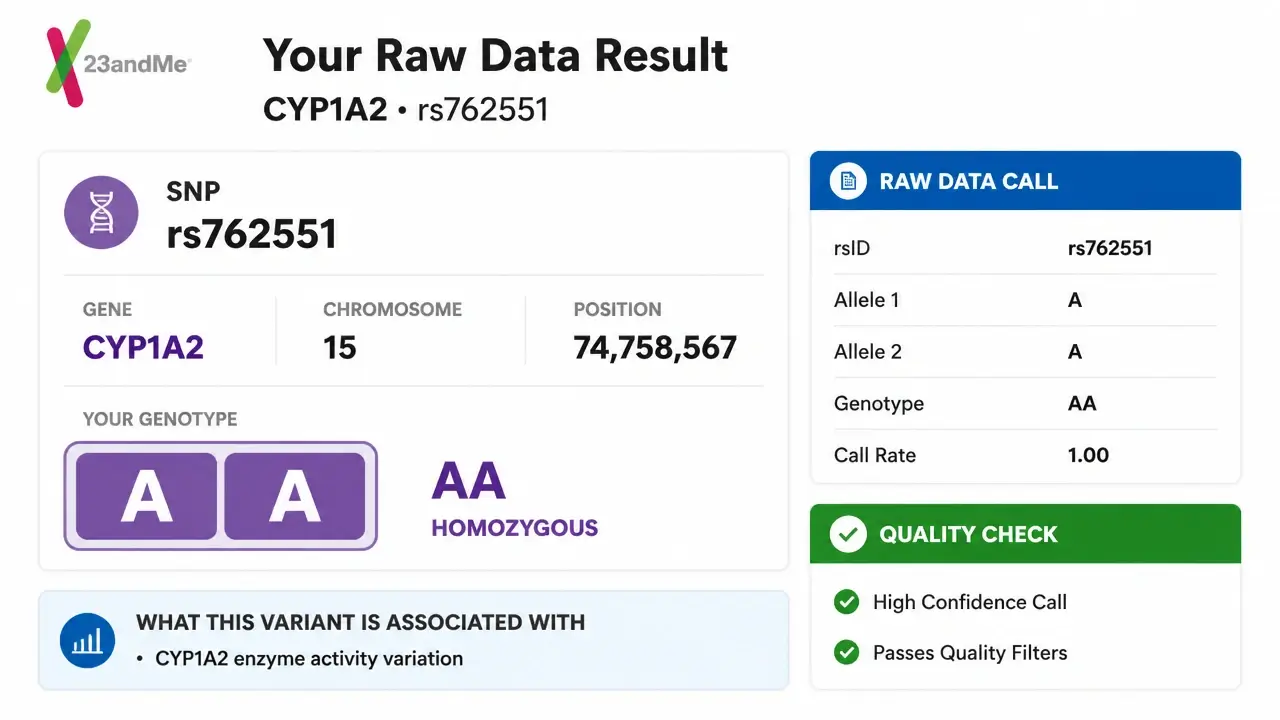
Genotype is a starting point, not a destiny. The same CYP1A2 gene can be expressed at dramatically different levels depending on what else is happening in your body – which is exactly what the health-risk evidence reveals.
What Your Metabolizer Type Means for Heart, Kidney, and Overall Health
CYP1A2 genotype health outcomes have been studied most rigorously in the context of cardiovascular and kidney disease – and the picture that emerges is more complicated, and more contested, than most caffeine advice acknowledges. The early evidence pointed toward a clean genotype-specific risk story. More recent data from a much larger cohort has significantly complicated it. Understanding both is essential to evaluating any advice you receive about coffee and your health.
Genotype-Specific Cardiovascular and Kidney Risk in Foundational Studies
The 2006 JAMA study established the genotype-heart-risk narrative that still circulates today. In a case-control study of over 4,000 participants in Costa Rica, researchers found that slow metabolizers carrying the CYP1A2\1F allele who drank more than four cups of coffee per day had a 1.64-fold increased risk of non-fatal myocardial infarction (95% CI 1.14–2.34). Fast metabolizers – those with the CYP1A2\1A/\*1A genotype – showed no increased risk at any level of intake (OR ≈ 0.99 for ≥4 cups/day). The gene-coffee interaction was statistically significant (P = .04), and the PubMed record confirms these figures. This finding became the cornerstone of the “slow metabolizer = higher coffee risk” framework repeated across health media ever since.
The kidney evidence is more recent and arguably more striking. Dr. Sara Mahdavi, Dr. Paolo Palatini, and Dr. Ahmed El-Sohemy from the Department of Nutritional Sciences at the University of Toronto report that among slow metabolizers consuming more than three cups of coffee per day, the risk of developing albuminuria was 2.74-fold higher (95% CI 1.63–4.62, P<0.001), hyperfiltration risk increased 2.11-fold, and hypertension risk rose 2.81-fold – while fast metabolizers showed no such associations at any level of intake. These findings from the HARVEST study (conducted in stage 1 hypertension patients) suggest that the kidneys may be more sensitive to genotype-modulated caffeine exposure than the cardiovascular system, and that the threshold for risk is lower – more than three cups, not four.
Both studies are observational. They show association, not proven causation, and these risk estimates apply specifically to sustained heavy intake – not to the occasional fourth cup on a stressful Wednesday. Prolonged caffeine exposure also carries non-cardiovascular concerns worth naming: sleep disruption from extended half-life in slow metabolizers and anxiety amplification through sustained adenosine receptor blockade are real, if less dramatic, consequences of chronically elevated plasma caffeine levels.
What the UK Biobank Data Changes About Genotype-Based Heart Advice
The cardiovascular risk narrative shifted considerably when a much larger dataset entered the picture. Analysis of the UK Biobank – involving over 300,000 participants – found that heavy coffee consumption above six cups per day was associated with a 22% increase in the odds of cardiovascular disease compared with 1–2 cups per day (P-curvature 0.013). So far, consistent with the earlier narrative. But the critical finding is what CYP1A2 genotype did – or rather, didn’t – do: it showed no interaction with coffee intake on CVD risk (P ≥ 0.53).
That result means the elevated cardiovascular risk from heavy consumption applied equally to fast and slow metabolizers alike. The genotype didn’t protect fast metabolizers, and it didn’t uniquely penalize slow metabolizers. This directly contradicts the implication that ran through popular interpretations of the 2006 JAMA study – that your rs762551 status determines your cardiac vulnerability to coffee. The 2006 finding has not been replicated in this larger, more rigorously adjusted cohort.
To be clear about what this means for your mental model: the kidney risk data from HARVEST still stands and hasn’t been contradicted at scale. The heart-risk narrative, however, needs updating. Slow metabolizers aren’t uniquely protected from heart disease by drinking less coffee, and fast metabolizers aren’t uniquely protected by their genotype. Heavy consumption is a cardiovascular risk factor for everyone – the gene just doesn’t change that calculus.
Everyday Factors That Change Your Caffeine Half-Life Beyond Genetics
CYP1A2 inducers and inhibitors are the environmental layer that sits on top of your genetic baseline – and in several real-world scenarios, they dominate it. The same person with an AA genotype (nominally a fast metabolizer) can shift into effectively slow-metabolizer territory through medication use or physiological state, with measurable consequences for both caffeine clearance and drug interactions. Understanding this layer is what separates a useful genetic result from a dangerously incomplete one.
Dr. Laura A. Klebanoff of the Division of Epidemiology, Statistics, and Prevention Research at the National Institute of Child Health and Human Development notes that cigarette smoking nearly doubles the rate of caffeine metabolism through the enzyme-inducing effects of polycyclic aromatic hydrocarbons, while pregnancy slows it substantially through a reduction in CYP1A2 activity. Those two variables alone can produce a wider swing in caffeine half-life than the difference between AA and CC genotypes.
Here’s a structured view of the major modulators and their directional effects:
| Factor | Direction | Effect on Half-Life | Mechanism |
|---|---|---|---|
| Cigarette smoking | Inducer (speeds up) | ~3–4 hours | PAHs in smoke upregulate CYP1A2 transcription |
| Charred/grilled meat | Inducer (speeds up) | Mild shortening | Heterocyclic amines induce CYP1A2 |
| Cruciferous vegetables | Inducer (speeds up) | Mild shortening | Indole-3-carbinol activates CYP1A2 |
| Rifampicin (antibiotic) | Inducer (speeds up) | Significant shortening | Strong CYP1A2 inducer via nuclear receptor |
| Oral contraceptives | Inhibitor (slows down) | Extends half-life ~50% | Oestrogen competitively inhibits CYP1A2 |
| Pregnancy (3rd trimester) | Inhibitor (slows down) | 10–15+ hours | Marked reduction in CYP1A2 activity |
| Grapefruit juice | Inhibitor (slows down) | Modest extension | Furanocoumarins inhibit CYP enzymes |
| Liver disease | Inhibitor (slows down) | Variable, often significant | Reduced functional hepatocyte mass |
| Systemic inflammation/infection | Inhibitor (slows down) | Variable | Cytokine-mediated CYP1A2 downregulation |
Pregnancy deserves particular emphasis: third-trimester caffeine half-life regularly reaches 10–15 hours or more, often exceeding the effect of even the slowest genetic phenotype. This is why caffeine intake recommendations during pregnancy are set conservatively – the issue isn’t just fetal exposure, it’s that the mother’s own clearance rate has been substantially altered by hormonal physiology.
The clinical stakes escalate further when CYP1A2’s role as a shared metabolic pathway is considered. CYP1A2 also clears clozapine, olanzapine, theophylline, and tizanidine – drugs with narrow therapeutic windows where plasma concentration matters enormously. Caffeine competes as a substrate for the same enzyme, and changes in caffeine intake can shift drug levels in ways that aren’t always anticipated. Research examining the caffeine metabolic ratio (CMR) – a functional, real-time measure of CYP1A2 activity derived from the ratio of caffeine metabolites in urine – found that CMR explained up to 14.9% of the variance in dose-normalized clozapine plasma concentration among psychiatric patients, over six times the variance explained by genetic factors alone. A one-unit increase in CMR was associated with a 26% higher likelihood of hospital admission (P=0.002) and an 11% reduced chance of short-stay discharge (P<0.001). Routine CMR measurement before initiating clozapine could enable genuinely personalized dose titration.
That finding is worth sitting with: in a clinically meaningful real-world scenario, lifestyle-driven enzyme activity outperformed static genotype by a factor of six in predicting drug levels. A DNA test alone would have missed most of the signal.
Putting the Science Into Practice
Personalized caffeine management, done well, starts with genetics but doesn’t end there – it integrates your CYP1A2 genotype with your current physiological modifiers, your medications, and honest self-monitoring. Here’s how to translate the mechanistic evidence into something you can actually act on.
Know your genotype, but hold it lightly. Consumer DNA tests from services like 23andMe or DNALabs can report your rs762551 status, and that’s useful baseline information. But genotype is a starting point, not a safe-intake certificate. A CC genotype tells you your liver enzyme runs slowly under neutral conditions – it doesn’t account for the oral contraceptive you’re taking, the infection you’re fighting, or the clozapine you were prescribed last month.
Use evidence-based, risk-stratified intake as a starting framework:
- Slow metabolizers (AC/CC): The HARVEST kidney data suggests limiting intake to no more than three cups per day. Albuminuria and hyperfiltration risk climbed steeply above that threshold specifically in this genotype group.
- Fast metabolizers (AA): Moderate intake up to four cups per day appears safe from a genotype-specific standpoint. But the UK Biobank data is unambiguous: heavy consumption above six cups per day increases cardiovascular disease odds by 22% for everyone, regardless of genotype. Your AA result doesn’t exempt you from that risk.
Caffeine timing matters more than most people realize. Because caffeine’s half-life ranges from 3 hours (a smoker with AA genotype) to 15+ hours (a pregnant woman in her third trimester on oral contraceptives), the same cup of coffee drunk at 3 p.m. can either clear your system by bedtime or still be measurably active at 3 a.m. A practical rule for most people: stop caffeine intake at least 8–10 hours before your target sleep time. Slow metabolizers should consider an earlier cut-off – around 1–2 p.m. – to avoid supraphysiological plasma levels during sleep, when adenosine receptor blockade most directly impairs sleep architecture.
If you’re reducing intake, do it gradually. A widely used clinical approach is to cut intake by half every three days – so if you’re drinking four cups, drop to two for three days, then one, then half-caff or decaf. This isn’t validated by formal RCT data, but it’s physiologically sensible: it gives your adenosine receptor density time to recalibrate without the acute withdrawal that comes from abrupt cessation (headache, fatigue, and reduced alertness, typically peaking 20–51 hours after the last dose). Practical substitutes – decaffeinated coffee, half-caff blends, or herbal teas – let you maintain the ritual and the warmth without the pharmacological load.
Red-flag interactions require a prescriber, not a podcast. If you take any medication metabolized by CYP1A2 – clozapine, olanzapine, theophylline, tizanidine – do not make significant changes to your caffeine intake without informing your prescriber first. Sharply increasing or decreasing caffeine can shift plasma drug concentrations in ways that matter clinically, particularly for drugs with narrow therapeutic indices. This isn’t a theoretical concern – the clozapine CMR data makes the stakes concrete.
One final calibration on certainty: no randomized controlled trial has demonstrated that genotype-guided reduction in coffee intake prevents kidney disease or cardiovascular events. Every risk estimate in this article comes from observational data. There is no guaranteed safe cup number for any individual. The most defensible approach is to combine your genotype knowledge with awareness of your personal modifiers – smoking status, medications, liver health, pregnancy status – and to treat self-monitoring (sleep quality, anxiety, blood pressure trends) as real data. The science here is a lens for smarter, more personalized choices. It’s not a prescription.
When physiological modifiers or unexpected overconsumption demand active intervention, understanding the biological levers involved is crucial for flushing caffeine from your system safely and effectively.
Key Takeaways on Caffeine Metabolism
- CYP1A2 performs roughly 95% of caffeine clearance, converting it primarily to paraxanthine, which remains nearly as active at adenosine receptors as caffeine itself.
- The rs762551 SNP in the CYP1A2 gene makes fast metabolizers clear caffeine two to three times faster than slow metabolizers – not four times, as widely claimed.
- Slow metabolizers consuming more than three cups per day face 2.74-fold higher albuminuria risk and 2.81-fold higher hypertension risk, per the HARVEST study.
- The UK Biobank found no CYP1A2 genotype interaction with cardiovascular risk – heavy coffee consumption raises CVD odds equally for fast and slow metabolizers.
- Pregnancy, oral contraceptives, and smoking can shift caffeine half-life more dramatically than genotype alone, extending it to 15+ hours or compressing it to under four.
- Caffeine metabolic ratio (CMR) explained six times more variance in clozapine plasma levels than genetic testing alone, underscoring the limits of DNA-only caffeine advice.
Frequently Asked Questions About Caffeine Metabolism
Does caffeine metabolism slow down as you age?
Yes, CYP1A2 activity tends to decline modestly with age, which can lengthen caffeine half-life in older adults even without any change in genotype or lifestyle – partly explaining why many people find they become more caffeine-sensitive in their 50s and 60s.
Can you train your body to metabolize caffeine faster over time?
Not directly. Regular caffeine use doesn’t meaningfully upregulate CYP1A2 expression the way, say, smoking does. What shifts with habitual use is adenosine receptor density – your brain adapts to sustained blockade, which reduces perceived sensitivity, but your liver isn’t clearing caffeine any faster.
Does the type of coffee – espresso, cold brew, filter – change how quickly it’s metabolized?
No, the brewing method doesn’t alter the metabolic pathway. What changes is the dose and the absorption rate. Cold brew’s higher caffeine concentration and espresso’s concentrated bolus affect peak plasma levels, but CYP1A2 processes caffeine the same way regardless of how it arrived.
If I’m a fast metabolizer, does that mean caffeine is always safe for me?
Not at high doses. The UK Biobank data showed a 22% increase in cardiovascular disease odds with more than six cups per day regardless of CYP1A2 genotype. Fast metabolizer status doesn’t confer blanket protection – it shifts your dose-response curve, it doesn’t eliminate it.
Can a urine test tell me more than a DNA test about my current caffeine metabolism?
In many practical scenarios, yes. The caffeine metabolic ratio – derived from measuring caffeine and its metabolites in urine a few hours after a standard caffeine dose – reflects your real-time CYP1A2 activity, integrating genetic, dietary, and physiological influences simultaneously. A DNA test only captures your genetic baseline.
Why does caffeine make some people anxious but not others, even among fast metabolizers?
Anxiety from caffeine is driven by adenosine receptor sensitivity and the adrenergic response to adenosine blockade, not by metabolism speed alone. Variants in the adenosine receptor gene ADORA2A are independently associated with caffeine-induced anxiety – so two people with identical CYP1A2 genotypes can have very different anxiety responses based on receptor-level genetics.
Is decaf coffee truly caffeine-free for slow metabolizers?
Decaf isn’t caffeine-free – it typically contains 2–15 mg per cup versus 80–100 mg in a standard filter coffee. For most people this is negligible, but slow metabolizers with very long half-lives who drink several decaf cups in the evening could still accumulate enough caffeine to disrupt sleep architecture, particularly if they’re also taking CYP1A2-inhibiting medications.
Should I stop caffeine completely if I’m on clozapine or olanzapine?
Don’t make that decision without your prescriber. Abrupt caffeine cessation can actually raise plasma clozapine levels significantly, since caffeine is no longer competing for CYP1A2 capacity – potentially pushing drug concentrations into a range that increases side-effect risk. Any change to habitual caffeine intake while on CYP1A2-metabolized medications should be discussed with the prescribing clinician first.
References
- Caffeine Metabolism Pathway – Frontiers in Pharmacology – frontiersin.org
- CYP1A2 Genotype and Caffeine Metabolism – MDPI Nutrients – mdpi.com
- Coffee, CYP1A2 Genotype, and Risk of Myocardial Infarction – JAMA Network – jamanetwork.com
- Coffee, CYP1A2 Genotype, and Risk of Myocardial Infarction (PubMed record) – PubMed – pubmed.ncbi.nlm.nih.gov
- Albuminuria, Hyperfiltration, and Hypertension Risk by Genotype – JAMA Network Open – jamanetwork.com
- UK Biobank Cardiovascular Disease and Coffee Consumption – UK Biobank – biobank.ndph.ox.ac.uk
- Caffeine Metabolism, Pregnancy, and Smoking Effects – Annals of Epidemiology – sciencedirect.com
Beyond caffeine, chlorogenic acid in coffee provides notable antioxidant and metabolic benefits.