
Structurally complex chlorogenic acid is the compound doing most of the metabolic heavy lifting in your morning cup – and the wellness industry has been telling only half its story. The popular narrative stops at “it’s an antioxidant.” The real picture involves Nrf2 activation, AMPK signaling, hepatic glucose suppression, and a bioavailability ceiling that quietly undercuts every marketing claim about CGA content per cup.
Understanding the full mechanism changes how you evaluate coffee choices, supplement labels, and health claims about green coffee extract. This isn’t about finding a magic dose. It’s about building the biological lens to read the evidence on your own.
Beyond targeting specific metabolic pathways, exploring general coffee health benefits provides a broader perspective on how your daily brew impacts overall wellness.
Beyond metabolic pathways, regular coffee consumption also plays a vital role in supporting brain function and protection, especially as we age.
Beyond its systemic metabolic effects, researchers are also uncovering fascinating insights regarding its gut microbiome impact.
What Chlorogenic Acid Is and Why It Matters
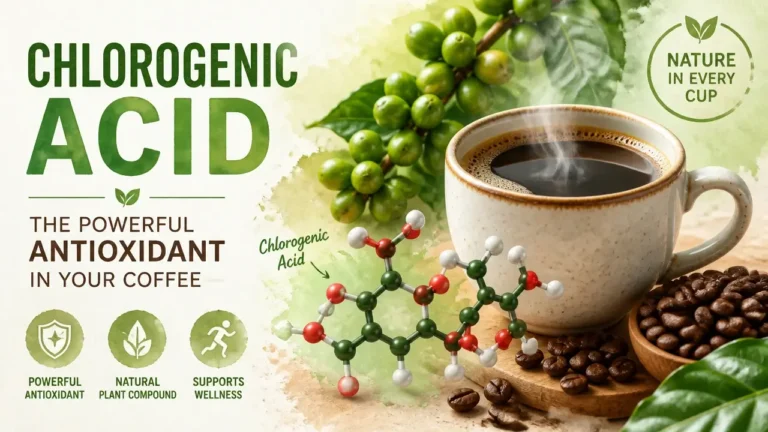
Chlorogenic acid – the ester formed when caffeic acid bonds to quinic acid – is the dominant polyphenol in coffee and one of the most concentrated dietary antioxidants in the human food supply. It belongs to the hydroxycinnamic acid family, and its primary biological roles are direct free-radical scavenging and the modulation of cellular signaling pathways that govern metabolism and inflammation. Those two functions are distinct, and conflating them is where most popular explanations go wrong.
CGA isn’t a single molecule. It’s a family of structurally related isomers, and the one you’ll encounter most often in the literature – and in your cup – is 5-caffeoylquinic acid (5-CQA), which typically accounts for the largest fraction of total CGA in roasted coffee. The other isomers (3-CQA, 4-CQA, and various dicaffeoylquinic acids) are present in smaller amounts but contribute to the overall biological profile.
Green, unroasted coffee beans are the richest known source of CGA, with concentrations that dwarf what survives into the final brew. CGA also appears in fruits, vegetables, and other plants – blueberries, apples, and artichokes are meaningful contributors – but for most adults in the Western diet, coffee is the single largest dietary source by a wide margin. That makes the chemistry of your cup relevant in a way that a blueberry serving simply isn’t.
The reason scientists care about CGA isn’t the antioxidant label itself. It’s the specificity of its downstream effects. Free-radical scavenging is table stakes for polyphenols. What distinguishes CGA is the evidence that it interacts with receptor-level signaling, not just oxidative chemistry – and that distinction is what the next section unpacks.
How CGA Works: Antioxidant and Metabolic Mechanisms
Chlorogenic acid’s biological reach is broader than its antioxidant reputation suggests, and the mechanisms behind that reach are specific enough to evaluate independently. Three pathways dominate the current literature: Nrf2 activation, AMPK signaling, and glucose-6-phosphatase inhibition. Each operates through a different mechanism, and each produces a different downstream effect.
How CGA Activates the Nrf2 Defense System
The Nrf2 pathway is the body’s master regulator of antioxidant and detoxification enzyme expression. Under normal conditions, the Keap1 protein sequesters Nrf2 in the cytoplasm, keeping it inactive. CGA disrupts this. Research published in Molecular and Cellular Biochemistry demonstrated that several CGA isomers bind directly to the Keap1-Nrf2 complex in Caco-2 cells, destabilizing Keap1 and allowing Nrf2 to translocate into the nucleus. Once there, Nrf2 binds antioxidant-response elements and markedly increases transcription of downstream enzymes – specifically HO-1, NQO1, and GCLC – which are the enzymes that neutralize reactive oxygen species and support glutathione synthesis.
This isn’t a generic antioxidant effect. CGA is triggering the cell to upregulate its own defense machinery rather than simply donating electrons to neutralize a free radical. The distinction matters: one mechanism is transient, the other is durable.
A parallel study on acute liver injury, published in International Immunopharmacology, confirmed that CGA dose-dependently increased nuclear accumulation of Nrf2 in a CCl₄-induced mouse model, with elevated HO-1, NQO1, and GCLC expression correlating with reduced hepatic oxidative stress and inflammation. The Nrf2 axis also intersects with PI3K/Akt signaling: research published in Oncotarget showed that CGA pretreatment in osteoblasts promoted Akt phosphorylation, which facilitated Nrf2 nuclear translocation and HO-1 expression, attenuating hydrogen peroxide-induced apoptosis and cell death.
Dr. Seong-Su Hong, Ph.D. in Pharmacology at Dongguk University College of Korean Medicine, demonstrated in vascular tissue that CGA attenuated vascular senescence in a dose-dependent manner, linked to increases in Sirtuin 1 and endothelial nitric oxide synthase (eNOS), and decreases in markers of cellular aging including p53 and p21. His work showed that Nrf2 nuclear translocation and subsequent HO-1 upregulation occurred earlier in CGA-treated cells following oxidative challenge – suggesting that CGA effectively pre-arms the vascular endothelium’s antioxidant response. The practical implication is that the vasodilatory and anti-aging effects observed in cardiovascular studies may be mechanistically downstream of this same Nrf2/HO-1 axis, not a separate phenomenon.
Where AMPK and Hepatic Glucose Control Converge
The second pathway operates in metabolic tissue. CGA acts as an AMPK activator – it mimics the energy-deprivation signal that cells normally generate during caloric restriction or exercise. When AMPK is activated, it promotes glucose uptake into peripheral tissue, stimulates fatty acid oxidation, and suppresses hepatic glucose production. The result is a shift in how the body handles blood sugar, independent of insulin.
Simultaneously, CGA inhibits glucose-6-phosphatase in the liver – the enzyme responsible for releasing glucose from stored glycogen into the bloodstream. This is a direct brake on hepatic glucose output, which is the mechanism that drives elevated fasting blood glucose in early type 2 diabetes. The combination of AMPK activation and glucose-6-phosphatase inhibition creates a two-point intervention on blood sugar regulation: one at the level of peripheral uptake, one at the level of hepatic release.
These actions collectively produce the anti-inflammatory, anti-diabetic, and vasodilatory effects documented in clinical literature. A systematic review of CGA consumption found that its antioxidant, anti-inflammatory, and dual metabolic effects – regulating both glucose and lipid metabolism – represent a plausible non-pharmacological pathway for reducing chronic disease risk across diabetes, cardiovascular disease, obesity, and hepatic steatosis. The breadth of that reach is what makes CGA, even at moderate dietary doses, a compound worth understanding at the pathway level rather than just the outcome level.
The Health Benefits of CGA: Blood Sugar, Weight, and Heart
The clinical evidence for chlorogenic acid doesn’t spread evenly across all the outcomes it’s been credited with. Some effects are reproducible and well-characterized; others are promising but preliminary. Getting those categories right is the only way to form an accurate expectation.
What the Blood Sugar Data Actually Shows
Green coffee extract’s most consistent clinical signal is in glucose regulation. CGA slows intestinal carbohydrate absorption by inhibiting alpha-glucosidase activity, which blunts the rate at which glucose enters the bloodstream after a meal. The post-meal glucose spike – the one that drives insulin surges and, over time, contributes to insulin resistance – is specifically attenuated.
At the level of fasting glucose, the numbers are notable. One clinical study on green coffee extract reported approximately a 24% reduction in fasting glucose over the trial period. That’s a meaningful effect size, and it aligns mechanistically with the glucose-6-phosphatase inhibition described in the previous section. The hepatic glucose suppression pathway provides a plausible explanation for why fasting numbers move, not just post-meal readings.
The dose context matters here: these glucose effects emerge at CGA intakes equivalent to roughly 120–300 mg orally. Below that range, effects are inconsistent. Above it, safety data become sparse – a point worth returning to in the final section.
The Visceral Fat and Weight Evidence
The weight and body composition data are more complicated, and the wellness industry has been considerably less honest about this than the blood sugar story. A 12-week trial using two cups of high-CGA coffee per day showed a 25% reduction in visceral fat area – a finding that generated significant attention. Visceral fat, the metabolically active fat stored around abdominal organs, is a stronger predictor of cardiometabolic risk than total body weight, so a 25% reduction is clinically meaningful if real.
But that “if real” carries weight. The visceral fat reduction is promising, not established. Studies that have isolated CGA from the broader coffee matrix, controlling for caffeine and other polyphenols, show inconsistent results. One trial in healthy male volunteers consuming 329 mg of CGA daily for four weeks found no significant reduction in body weight, BMI, or body fat percentage compared to placebo. The effect size for fat loss appears to be smaller and less reproducible than for glucose, and it’s almost certainly not attributable to CGA alone. Treating coffee as a weight-loss tool on the strength of this evidence is an overreach the data don’t support.
Cardiovascular Outcomes: The Strongest Signal
Blood pressure and endothelial function represent the most reproducible cardiovascular effects. Systematic reviews in the literature report reductions of approximately −8.4 mmHg systolic and −5.9 mmHg diastolic blood pressure associated with regular CGA intake. For context, a 5 mmHg reduction in systolic pressure corresponds to a meaningful reduction in stroke risk at the population level.
The mechanism here likely runs through the eNOS and Nrf2/HO-1 pathway described earlier – CGA appears to support nitric oxide bioavailability in the vascular endothelium, which is the primary biochemical driver of vasodilation and blood pressure regulation. Improved endothelial function has also been documented as an independent outcome, suggesting the cardiovascular benefit isn’t purely hemodynamic.
One important caveat: these results are most reproducible for blood pressure and glucose regulation. They are not a reliable signal for fat loss. And critically, they emerge at doses that require intentional coffee selection – not just any cup.
Roast Level: The Biggest Factor Controlling CGA in Your Cup
Roast level is the single largest controllable variable determining how much chlorogenic acid actually reaches your mug. CGA is heat-labile – it degrades progressively and predictably as temperature and roast duration increase, and the degradation is not subtle.
Light roasts preserve the most CGA. A well-prepared light-roast coffee typically delivers somewhere between 92 and 188 mg of CGA per 200 ml cup. Medium roasts fall in between. Dark roasts can retain less than half the CGA present in the green bean – sometimes substantially less, depending on the roasting profile. The compound doesn’t just diminish; it converts. Some CGA is transformed into lactones and other derivatives during roasting, and a portion is incorporated into melanoidins – the brown polymers responsible for much of roasted coffee’s flavor and color.
This is where the popular narrative about roast and antioxidants gets genuinely complicated. Dark roast isn’t antioxidant-free; the melanoidins that form during roasting have their own antioxidant activity. But those compounds don’t share CGA’s specific metabolic mechanisms – the AMPK activation, the glucose-6-phosphatase inhibition, the Nrf2 pathway interaction. If those particular pathways matter to you, roast level isn’t a matter of preference. It’s a dosing decision.
Dr. Alan Crozier, Professor of Plant Biochemistry and Human Nutrition at the University of Glasgow, quantified this directly: CGA content varied from 27.33 to 121.25 mg per 200 ml brew across commercially available coffees, with degree of roasting as the primary driver of that variation. His work confirmed that high roasting has a detrimental effect on CGA content and that coffee choice is meaningfully important for delivering optimal CGA intake. That’s not a wellness claim – it’s a measurement.
Here’s where the marketing picture becomes worth scrutinizing. Some brands publicly claim their product contains “around 65% higher CGA than other organic coffee brands.” No independent test methodology, comparator standard, or lab report has been made publicly available to support that figure. This gap between promotional claims and verifiable data is structurally common in the CGA space. The practical rule: demand the actual mg-per-cup figure and the methodology behind it, not a relative percentage with no disclosed baseline.
The table below shows how CGA content shifts across roast levels, alongside degradation rate context and what that means for the dose ranges the clinical literature actually tested.
| Roast Level | Typical CGA per 200 ml Cup | Approximate Degradation vs. Green Bean | Notes |
|---|---|---|---|
| Green (unroasted) | 250–350 mg | Baseline | Not typically consumed as brewed coffee |
| Light Roast | 92–188 mg | ~30–50% loss | Highest CGA in drinkable form; most relevant for clinical dose targets |
| Medium Roast | 60–120 mg | ~50–70% loss | Mid-range; flavor balance with moderate CGA retention |
| Dark Roast | 25–70 mg | ~70–85% loss | Lowest CGA; melanoidins form but lack CGA-specific metabolic mechanisms |
| Branded “High-CGA” Claims | Variable / unverified | N/A | Independent lab verification rarely provided; treat with skepticism |
Beyond Roast: Bean Variety, Origin, and Processing
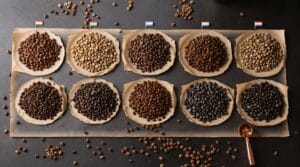
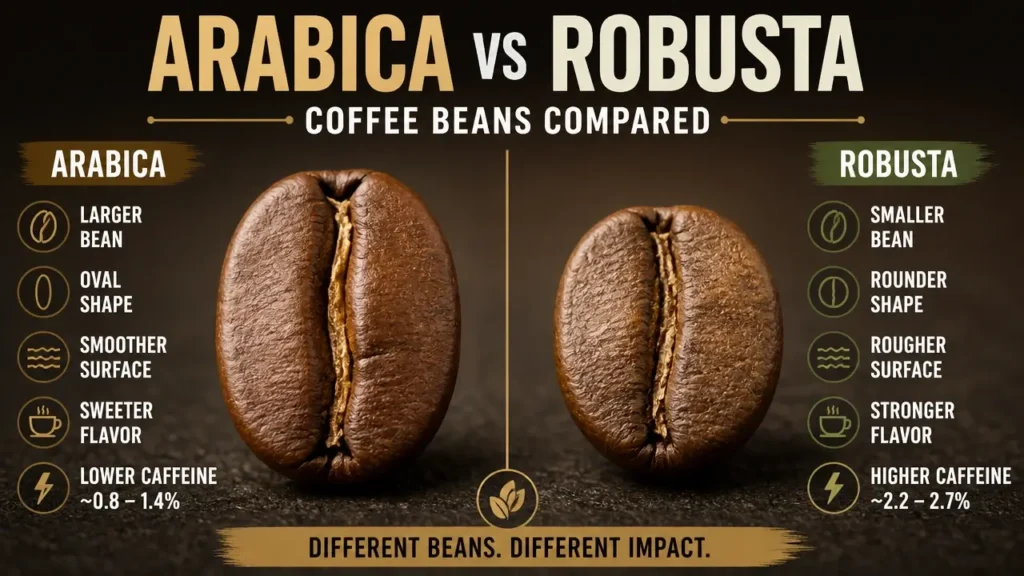
Coffea canephora – Robusta – is the high-CGA species, and this is one of those biological facts the specialty coffee world tends to underemphasize. Robusta reliably contains roughly 7–10% chlorogenic acid by dry weight of the green bean. Coffea arabica, which dominates the specialty and third-wave market, comes in at 5–7%. That’s not a marginal difference – it’s the equivalent of choosing a lighter roast in terms of CGA yield, before roasting even enters the picture.
The comparison of Arabica and Robusta at the isomer level adds useful nuance. Dr. Nikolai Kuhnert, Professor of Chemistry at Jacobs University Bremen, found that while mono-caffeoylquinic acids – including the dominant 5-CQA – showed no statistically significant variation between the two species, feruloyl quinic acids and dicaffeoylquinic acids (DiCQAs) showed meaningful differences favoring Robusta. This matters because the isomer profile affects downstream biological activity; DiCQAs have their own receptor-level interactions that differ from 5-CQA’s, and a Robusta-derived CGA profile is compositionally richer.
Within Arabica, origin and altitude introduce secondary variation. High-altitude growing conditions – typically above 1,500 meters – tend to produce beans with higher phenolic compound concentrations, including CGA. The mechanism is plant stress response: UV exposure, temperature fluctuation, and pest pressure at altitude trigger the phenylpropanoid pathway, which produces CGA as a photoprotective and antimicrobial compound. The effect is real but smaller than the species difference.
Processing method – wet-washed versus natural or honey – influences CGA retention to a lesser degree. Wet processing tends to preserve a cleaner phenolic profile, while natural processing introduces fermentation variables that can alter the final CGA composition. The effect is secondary to species and roast, but it’s worth noting if you’re optimizing at the margin.
The practical hierarchy, then, runs in this order: species first, roast second, origin third, processing fourth. An unroasted or very lightly roasted Robusta bean delivers the most CGA per gram of any commercially available coffee. The flavor trade-off is real – Robusta’s higher CGA correlates with a more bitter, less aromatic cup – which is why a light-roast, high-altitude Arabica often represents the best compromise between CGA yield and drinkability.
The Hidden Gap: Why Your Effective CGA Dose Is Only a Fraction of What’s in the Cup
CGA bioavailability is the variable that almost no consumer-facing content accounts for – and it’s the one that recalibrates every other number in this article. Knowing the CGA content of your cup is necessary but not sufficient. What reaches systemic circulation is a different figure entirely.
How the Gut Processes CGA Before It Reaches Your Blood
After ingestion, CGA doesn’t pass intact into the bloodstream. A significant portion is hydrolyzed in the small intestine by esterases, releasing caffeic acid and quinic acid as separate compounds. What isn’t absorbed in the small intestine passes into the colon, where gut microbiota metabolize it further into phenolic acids – primarily ferulic acid, dihydrocaffeic acid, and hippuric acid. These metabolites do appear transiently in plasma, but as Dr. Michael N. Clifford, Professor of Food Safety at the University of Surrey, has documented, the body treats them largely as xenobiotics, clearing them rapidly from circulation.
The net result: approximately 33% of consumed CGA reaches systemic circulation as the parent compound or its biologically active derivatives. That absorption proportion is not fixed – it varies substantially between individuals based on gut microbiota composition. Someone with a microbiome rich in CGA-metabolizing bacteria will convert more of the compound to colonic phenolic acids and less will arrive as intact CGA. Someone with a different microbial profile may absorb more of the parent compound but less of the downstream metabolites. The biological activity of those metabolites is not equivalent to the parent compound, and the research hasn’t fully characterized which fraction drives which outcome.
What That Means for Your Real-World Dose
Translate the absorption ceiling into practical numbers: a light-roast cup containing 150 mg of CGA likely delivers somewhere around 50 mg of bioavailable parent compound to systemic circulation. The remainder is either hydrolyzed in the small intestine, converted by colonic bacteria, or cleared before it can exert the Nrf2 or AMPK effects documented in cellular studies.
This is why the gap between in vitro evidence and human clinical outcomes is structurally larger for CGA than for many other compounds. Cell culture studies can expose cells to concentrations of CGA that the gut would never deliver to peripheral tissue under normal dietary conditions. When you read a study showing dramatic Nrf2 activation from CGA, the first question worth asking is: what was the concentration used, and is that achievable in vivo?
The infographic below maps this journey from cup content to systemic exposure, showing where the losses occur and what the inter-individual variation looks like.
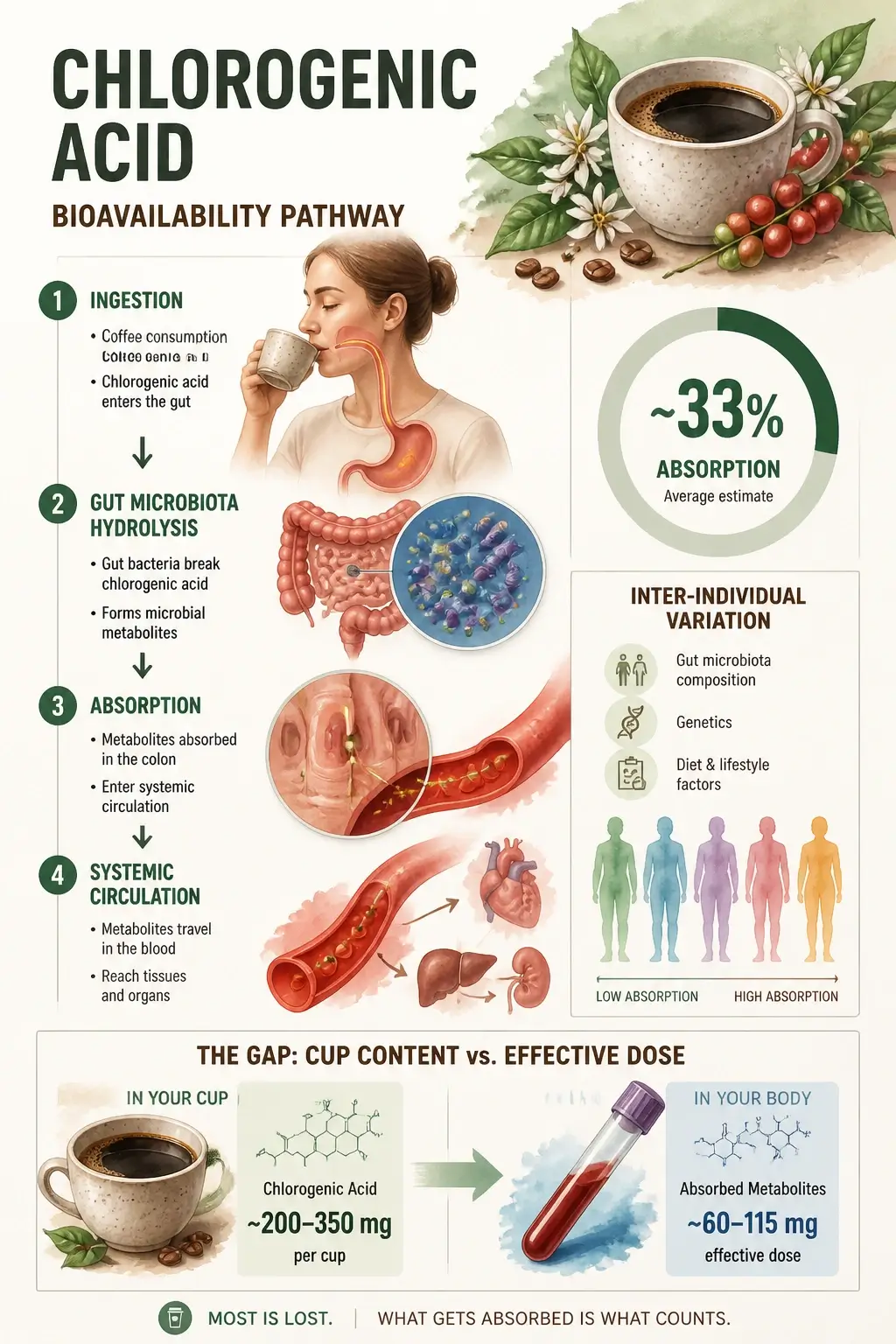
For green coffee extract supplements, the same ceiling applies. The 120–300 mg range cited in clinical trials refers to oral intake – not absorbed dose. If a supplement label claims 400 mg of CGA per serving and implies that full amount is biologically active, that framing is misleading. The bioavailability bottleneck doesn’t disappear because the source is a capsule rather than a cup.
The consumer narrative that treats raw CGA content as the direct proxy for benefit systematically overestimates true exposure. Understanding this doesn’t mean CGA is ineffective – the clinical blood pressure and glucose data are real. It means the effective dose is smaller than the label suggests, and the inter-individual variation in microbiome composition means that population-level averages may not predict your personal response.
What the Science Really Says: Evidence, Limits, and Making CGA Work for You
Synthesizing the evidence on chlorogenic acid requires holding two things simultaneously: genuine biological plausibility with meaningful clinical signals, and a set of real limitations that the wellness industry consistently glosses over. Both are true at the same time.
Where the Evidence Is Strongest
The most reproducible clinical outcomes for CGA are blood pressure reduction and fasting glucose improvement. The blood pressure signal – approximately −8.4 mmHg systolic and −5.9 mmHg diastolic – has been replicated across multiple study designs and is mechanistically coherent with CGA’s effects on eNOS activity and endothelial nitric oxide bioavailability. Fasting glucose improvement is similarly reproducible, grounded in the glucose-6-phosphatase inhibition and AMPK activation pathways described earlier.
Visceral fat reduction shows promise, but the evidence isn’t there yet to call it a reliable outcome. The 25% visceral fat reduction figure from the 12-week high-CGA coffee trial is intriguing, but it hasn’t been consistently replicated, and the confounding variables – caffeine, other polyphenols, dietary context – haven’t been adequately controlled across studies. Weight loss as an isolated outcome is even weaker. Dr. Maria-Jose Alcaraz, Professor of Pharmacology at the University of Valencia, reviewed the hydroxycinnamic acid literature and found that studies showing significant reductions in weight, BMI, and body fat are in the minority – and that at least one well-controlled trial using 329 mg of CGA daily for four weeks in healthy male volunteers showed no significant change in body weight, BMI, or body fat percentage compared to placebo. That null result doesn’t invalidate CGA’s other effects, but it should recalibrate expectations for anyone approaching it primarily as a weight management tool.
The Unanswered Questions That Matter
Several gaps in the evidence are worth naming explicitly, because they’re the kind of nuance that separates an informed position from a marketing-driven one.
Long-term safety data for sustained high-CGA intake – particularly above 300 mg daily – are essentially absent. The clinical trials that generated the positive outcomes were short-term by design. Specific populations, including pregnant individuals, those on anticoagulant therapy, and people with compromised gut barrier function, have not been studied. That’s not a reason to avoid CGA, but it is a reason not to treat it as categorically safe at any dose.
The gut microbiota question is genuinely unresolved. If your personal microbial profile converts most of your consumed CGA into colonic metabolites before it reaches systemic circulation, the Nrf2 and AMPK effects documented in cell studies may not reflect your individual response. Personalized response to dietary polyphenols is an active research frontier, and CGA is a prime candidate for that variability.
The dairy interaction hypothesis – that milk proteins may bind CGA and reduce its bioavailability – is biologically plausible and has been raised in the literature, but the human data are insufficient to call it established. If you’re drinking CGA-rich coffee with milk specifically for metabolic benefit, it’s a reasonable precaution to have at least some of it black, but it’s not an evidence-based mandate.
Finally, the question of whether CGA works best within the whole coffee matrix is unresolved. Coffee contains hundreds of bioactive compounds – trigonelline, diterpenes, other hydroxycinnamic acids – and their interactions with CGA’s signaling pathways are incompletely mapped. The whole-matrix effect may be greater than the sum of isolated CGA doses, which would mean that green coffee extract supplements could be a structurally different intervention from drinking well-chosen coffee, not merely a more concentrated version of it.
The Practical Bottom Line
Daily consumption of light-roast, ideally high-grown coffee – from a source transparent about its CGA content – is a reasonable dietary strategy for supporting modest improvements in blood pressure and glucose regulation as part of a balanced diet. That’s a meaningful, evidence-grounded position. It’s also a more limited claim than the wellness industry typically makes, and the limitation is honest.
Don’t treat it as a therapeutic intervention. Don’t treat it as a weight-loss shortcut. And don’t assume that a higher CGA number on a label translates linearly into a proportionally larger benefit, because the bioavailability ceiling and individual microbiome variation mean the relationship between dose and effect is not that simple.
The value of understanding CGA’s mechanisms isn’t that it gives you a protocol to follow. It’s that it gives you the biological filter to evaluate the next coffee brand, supplement label, or health claim that crosses your feed – and to assess it on its own terms rather than on someone else’s marketing.
Here’s a useful look at how coffee’s broader cardiovascular effects play out in practice, particularly for how circulation responds to regular black coffee consumption:
Key Takeaways on Chlorogenic Acid
- Chlorogenic acid is not a single molecule but a family of isomers, with 5-caffeoylquinic acid as the dominant form in coffee.
- CGA activates the Nrf2 pathway and AMPK signaling – mechanisms that upregulate cellular antioxidant defenses and improve glucose regulation at the pathway level.
- The most reproducible clinical outcomes are modest blood pressure reduction (around −8.4/−5.9 mmHg) and fasting glucose improvement; fat loss evidence is inconsistent.
- Light roast preserves the most CGA per cup (92–188 mg); dark roast can lose more than half the original content through heat degradation.
- Approximately 33% of consumed CGA reaches systemic circulation, with large inter-individual variation driven by gut microbiota composition.
- Long-term safety data above 300 mg daily CGA intake are absent; specific populations including pregnant individuals and those on anticoagulants have not been studied.
Frequently Asked Questions About Chlorogenic Acid
Which coffee is actually highest in chlorogenic acid?
Unroasted Robusta (Coffea canephora) contains the most CGA by dry weight – roughly 7–10% versus Arabica’s 5–7% – but since most people don’t drink green coffee, a light-roast Robusta or high-altitude light-roast Arabica is the practical highest-CGA option in a brewed cup.
Does adding milk to coffee reduce chlorogenic acid absorption?
The dairy interaction is biologically plausible – milk proteins can bind polyphenols and potentially reduce their bioavailability – but the human evidence is insufficient to call it established, so drinking some of your CGA-rich coffee black is a reasonable precaution rather than a hard rule.
Is green coffee extract supplement more effective than drinking coffee for CGA intake?
Not necessarily, because the same ~33% bioavailability ceiling applies to both; additionally, isolated CGA in supplement form may lack the synergistic effects of coffee’s broader polyphenol and alkaloid matrix, which means a well-chosen cup of light-roast coffee may be a structurally different intervention, not just a weaker one.
How much chlorogenic acid do I actually need daily for blood pressure or glucose benefits?
The clinical trials that produced meaningful blood pressure and glucose outcomes typically used oral CGA intakes in the 120–300 mg range, which translates to roughly two to three cups of light-roast coffee daily – but remember that only about a third of that reaches systemic circulation.
Can chlorogenic acid cause any side effects or interact with medications?
High-dose CGA intake above 300 mg daily has no adequate long-term safety data, and CGA hasn’t been studied in people on anticoagulants, so if you’re on blood-thinning medication or are pregnant, the evidence base is simply too thin to make a confident safety call without consulting a clinician.
Does the type of brewing method affect how much CGA ends up in the cup?
Brew method influences extraction efficiency – longer contact time and finer grind generally extract more CGA from the grounds – but the effect is secondary to roast level and bean species, which are the dominant variables controlling how much CGA is available to extract in the first place.
Why do some people seem to respond better to coffee’s metabolic effects than others?
Gut microbiota composition is the most likely explanation: individuals with different microbial profiles convert CGA into different downstream metabolites at different rates, meaning two people drinking identical coffee can have meaningfully different systemic CGA exposure and biological response.
Is there a point of diminishing returns where drinking more light-roast coffee stops increasing CGA benefits?
Yes – because bioavailability plateaus and doses above 300 mg oral CGA daily haven’t been adequately tested for either efficacy or safety, pushing intake higher with multiple additional cups is unlikely to yield proportional gains and moves into territory where the risk-benefit calculation becomes genuinely uncertain.
References
- Chlorogenic acid isomers directly interact with Keap1-Nrf2 signaling in Caco-2 cells – Springer (Molecular and Cellular Biochemistry)
- Activation of Nrf2 pathway and inhibition of NLRP3 inflammasome activation contribute to the protective effect of chlorogenic acid on acute liver injury – ScienceDirect (International Immunopharmacology)
- Cytoprotective effect of chlorogenic acid against hydrogen peroxide-induced oxidative stress in MC3T3-E1 cells through PI3K/Akt-mediated Nrf2/HO-1 signaling pathway – Oncotarget
- The Protective Effect of Chlorogenic Acid on Vascular Senescence via the Nrf2/HO-1 Pathway – PubMed (International Journal of Molecular Sciences)
- Clinical trial: blood pressure reduction associated with chlorogenic acid intake – PubMed
- The effect of processing on chlorogenic acid content of commercially available coffee – PubMed (Food Chemistry)
- Comparison and quantification of chlorogenic acids for differentiation of green Robusta and Arabica coffee beans – ScienceDirect (Food Research International)
- Bioavailability of Coffee Chlorogenic Acids and Green Tea Flavan-3-ols – MDPI (Nutrients)
- Regular Consumption of Green Coffee Phenol, Oat β-Glucan and Green Coffee Phenol/Oat β-Glucan Supplements Does Not Change Body Composition in Subjects with Overweight and Obesity – MDPI (Foods)