
Flushing caffeine out of your system is one of those things everyone thinks they can hack – chug water, sweat it out, pop something. The truth is your liver runs on its own schedule, and no home remedy changes that timeline in any meaningful way.
What you can actually control is how bad the next few hours feel. Smart electrolyte replacement, the right foods, a specific breathing pattern, and one amino acid can take a genuinely awful caffeine overdose and make it survivable. Here’s exactly how to do that – and when to stop trying and call a doctor.
Once you recover from overconsumption and want to enjoy your daily brew more sustainably, exploring our definitive coffee health guide will help you optimize your intake for long-term wellness.
Beyond your morning brew, accidental overconsumption often stems from hidden stimulant sources found in everyday over-the-counter painkillers and cold formulas.
The Truth About “Flushing” Caffeine Out of Your System
Caffeine elimination runs on a biological clock that no kitchen remedy can override. The moment you swallow caffeine, your liver starts breaking it down through a pathway driven by the CYP1A2 enzyme – and that process moves at whatever speed your personal biochemistry allows. No amount of water, lemon juice, or activated charcoal tea is going to speed that enzyme up.
Understanding this upfront matters because every minute you spend chasing a fake flush is a minute you’re not doing the things that actually reduce how awful you feel.
To fully understand why these quick fixes fail, you need to look at caffeine half-life and genetics, which dictate the true timeline of how your liver processes stimulants.
The Half-Life Reality: Why No Home Remedy Speeds Caffeine Elimination
Caffeine’s half-life in most healthy adults runs between 3 and 5 hours – meaning roughly half the caffeine in your blood is gone after that window. After about 10 hours, you’re still carrying around 25% of the original dose. That’s not a small amount if you started high.
The liver is doing this work whether you help it or not. Nothing you drink or eat will flush caffeine out of your blood faster – time is the only true eliminator. This isn’t a pessimistic framing; it’s the most useful information you can know right now, because it redirects your energy from chasing a non-existent shortcut toward managing the hours ahead.
Here’s where it gets more personal than most articles let on: the FDA’s widely cited 400 mg per day guideline is a chronic safety ceiling for healthy adults. It is not a promise that you’ll feel fine at 399 mg. Many people experience significant distress at 300–400 mg – especially if caffeine was consumed on an empty stomach, if you rarely use it, or if you’re a woman on oral contraceptives (who metabolize caffeine considerably more slowly due to hormonal interference with CYP1A2 activity).
The dose-severity link also shifts the risk picture in ways most “caffeine overdose” articles understate. Mild-to-moderate symptom management – the hydration and rest advice you’ll read everywhere – is mostly validated for doses under 400 mg. When doses climb toward 500–800 mg, which is the range many people in real overdose situations actually report, the window for safe home management narrows and a medical consult becomes warranted much earlier than the standard advice suggests.
Recognizing Caffeine Overdose Symptoms and Setting Realistic Goals
Coffee jitters at their worst show up as a cluster of recognizable physical and mental signals: racing heartbeat, restlessness, anxiety that feels almost electric, sweating, nausea, and shakiness in the hands or legs. If you’re reading this article, you’re probably experiencing most of those right now.
The honest goal here isn’t to delete caffeine from your bloodstream. It’s to de-escalate those side effects – reduce the heart rate spike, settle the tremor, quiet the mental noise – so the wait while your liver does its job is far less unbearable. That’s a completely achievable target, and the steps that follow are built around it.
Step 1: Stop Immediately and Assess How Much You Took
The very first move in managing a caffeine overdose is simple: stop all caffeine intake right now. No more coffee, no tea, no energy drinks, no pre-workout, no caffeine-containing pain relievers. The pipe needs to close before anything else matters.
Once you’ve stopped, take 60 seconds to estimate your dose in milligrams. This number will guide everything that follows.
Here’s a quick reference to help you count:
- A standard 8 oz home-brewed coffee: ~80–85 mg
- A 12 oz energy drink: ~100–140 mg (check the label – some run higher)
- A double espresso: ~80 mg
- A 12 oz can of cola: ~35–45 mg
Add up your beverages and multiply. If you had three large energy drinks, you’re likely in the 300–420 mg range. If you combined pre-workout with multiple coffees, you could easily be at 600 mg or above.
Why does this number matter? Because it determines whether you’re in a “bad afternoon” zone or a “needs medical attention” zone. It’s also the first thing a doctor or poison control specialist will ask you. Knowing your rough milligram total keeps you in control and prevents you from either panicking unnecessarily or dismissing something genuinely serious.
Dr. Christopher Drumm, MD – Family Medicine Physician at Einstein Healthcare Network and Clinical Assistant Professor – puts the dose-severity relationship in clear clinical terms:
“Some have indicated that after a dose of around 1 g, toxic symptoms begin to manifest, a dose of 2 g requires hospitalization, while higher doses (e.g., typically 5 g or more) could be lethal.”
Most people in a typical overconsumption scenario are well below 1 g – but knowing where you stand relative to that threshold is exactly the kind of information that turns panic into a plan.
Step 2: Hydrate Smart With Electrolyte-Balanced Water
Electrolyte replacement, not plain water volume, is the correct rehydration target during a caffeine overdose. Caffeine is a mild diuretic – it has likely caused some fluid and mineral loss already. The instinct to chug a full bottle of water is understandable, but plain water in large volumes creates its own problem: it dilutes blood sodium, which can trigger hyponatremia – a condition where low sodium causes symptoms that can mimic or worsen the very things you’re trying to fix.
The safe approach is sipping, not gulping. Aim for about 250–500 mL over the first 60 minutes, taken in divided doses of roughly 250 mL at a time. Slow and steady keeps your sodium balance intact while restoring fluid volume.
Skip the Gatorade and high-sugar sports drinks. The sugar load can spike your energy and worsen jitters for people who are already overstimulated. You don’t need the carbs right now – you need the minerals.
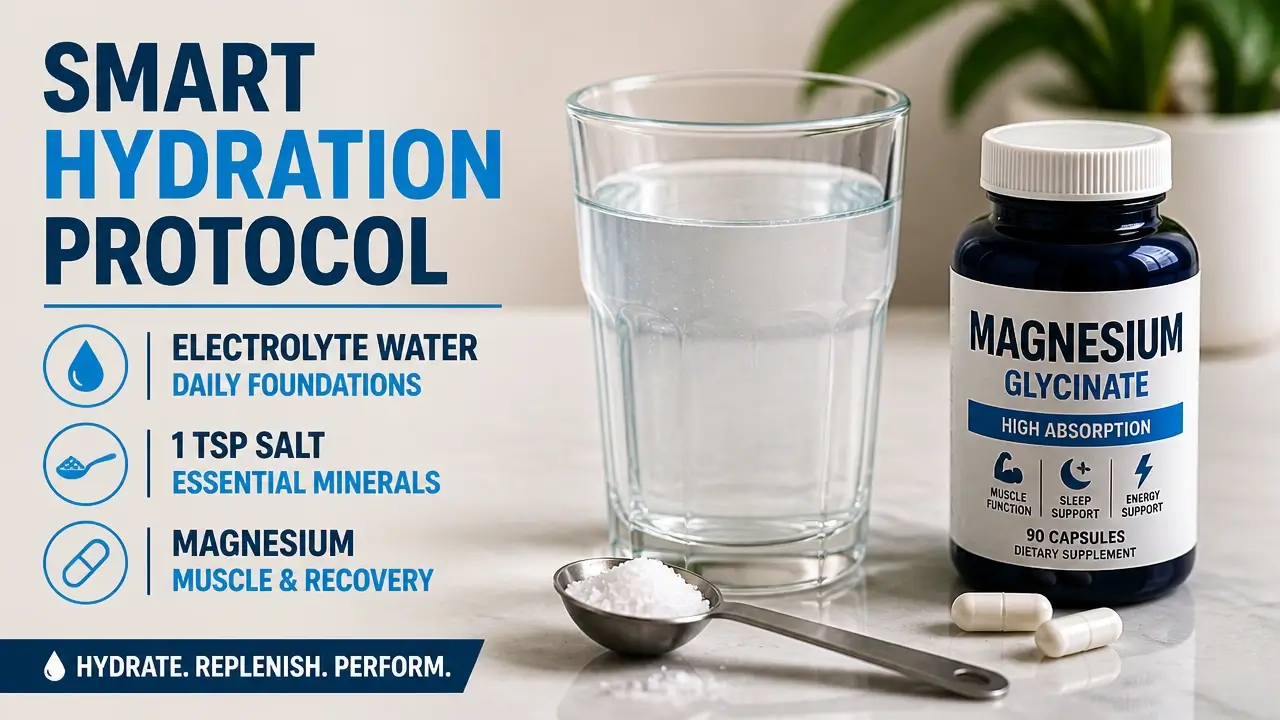
Here’s a refined protocol that addresses both hydration and mineral balance: mix ¼ teaspoon of table salt plus a pinch of magnesium powder (or a crushed magnesium tablet) into 1 liter of water. Sip 250 mL at a time over 60 minutes. Do not exceed 1 liter in an hour.
The physiological logic behind this is direct. Sodium expands plasma volume to counter the dehydration caffeine caused. Magnesium is a cofactor for CYP1A2 – the same liver enzyme responsible for metabolizing caffeine – so a deficiency could theoretically slow natural clearance at the margin. The mineral combination also prevents the hyponatremia risk that plain water overload creates.
Hard safety warning: This electrolyte protocol is contraindicated for people with hypertension, heart failure, or kidney disease. If any of those apply to you, stick to small sips of plain water and contact your doctor.
Here’s a visual summary of the smart hydration approach:
Dr. Ronald Maughan, PhD – Professor of Sport and Exercise Sciences and Chair of the Sports Nutrition Advisory Board – explains why plain water falls short on its own:
“Water alone does not efficiently replace lost fluid as it reduces the sodium concentration in plasma so that the reduced osmolality stimulates diuresis.”
In plain terms: plain water tells your kidneys to keep excreting fluid, which defeats the purpose. The sodium in your electrolyte mix is what actually signals your body to hold on to the water you’re drinking.
Step 3: Eat Potassium- and Magnesium-Rich Foods
Potassium is the mineral your heart and muscles are quietly screaming for right now. Caffeine’s diuretic effect depletes it, and that depletion is a direct contributor to the tremor, muscle tension, and irregular heartbeat sensation you’re feeling. A banana is the fastest, most accessible fix – it delivers a meaningful potassium hit alongside natural carbohydrates that gently redirect caffeine’s adrenergic energy into the digestive process.
Don’t eat the banana alone. Pair it with a small protein and fat source – a spoonful of peanut butter, a handful of almonds, or a few slices of cheese. Protein and fat slow gastric emptying, which means any residual caffeine in your gut absorbs more gradually, and the steady energy prevents a sugar crash on top of everything else you’re managing.
If you don’t have a banana, dark leafy greens like spinach or kale are solid alternatives. They provide both potassium and magnesium in meaningful amounts, and they won’t spike your blood sugar.
What you should actually feel within 20–40 minutes of eating: a gradual softening of the heart-thumping sensation and a reduction in hand tremor. It won’t be dramatic, but it will be noticeable.
The banana-and-magnesium connection goes deeper than folk wisdom. Magnesium functions as a cofactor for CYP1A2 – the primary enzyme your liver uses to metabolize caffeine. If you’re even mildly magnesium-deficient (and caffeine’s diuretic effect actively worsens that deficiency), your liver may clear caffeine marginally slower than it otherwise would. Eating magnesium-rich foods – banana, spinach, almonds – supplies the raw material that enzyme needs to run efficiently.
There’s also a practical “heavy carb” workaround that shows up consistently in real overdose accounts: when shakiness is extreme, a moderate portion of simple carbs – toast, a small bowl of pasta or rice – can shift blood flow toward digestion and physically dampen some of the adrenergic energy. This isn’t a metabolic fix. Caffeine is still in your blood. But it’s a sensory intervention that can make the next hour significantly more bearable.
Dr. Katharine Jenner, Registered Nutritionist and Public Health Specialist, explains why potassium’s role at the cellular level is more than just a general “eat healthy” recommendation:
“The gradient of potassium across the cell membrane determines cellular membrane potential, which is maintained in large part by the ubiquitous ion channel the sodium-potassium (Na+-K+) ATPase pump.”
When caffeine disrupts that gradient through diuresis, the pump struggles to maintain normal electrical signaling across heart and muscle cells – which is exactly why the thumping and tremor feel so pronounced. Restoring potassium through food directly addresses the root cause of those sensations.
Step 4: Supplement With L-Theanine If Available
L-theanine is an amino acid found naturally in green tea that promotes relaxation without sedation – it works by increasing alpha wave activity in the brain, which is the same calm-but-alert state you’d associate with meditation. It doesn’t knock you out or make you foggy. It just takes the sharp, wired edge off.
During a caffeine overdose, L-theanine is particularly useful because it directly counters caffeine’s anxiogenic effects. Caffeine ramps up excitatory neurotransmitter activity; L-theanine modulates that response without blocking it entirely, which means you get mental quieting without a sedative crash on top of everything else.
If you have an L-theanine supplement, follow the label. Most capsules run 100–200 mg, and a single dose is appropriate here. If you don’t have a supplement on hand, a cup of decaffeinated green tea provides a smaller but still meaningful amount – just make sure it’s genuinely decaffeinated.
L-theanine is non-habit-forming and has a well-established safety profile. That said, it is not a substitute for medical attention if red-flag symptoms are present. It’s a tool for the mental layer of this experience, not a medical intervention.
Dr. David Haskell, PhD – Cognitive Psychopharmacologist and Neuropharmacology Researcher – has measured this calming effect directly:
“L-theanine was associated with significantly greater subjective calmness assessed by the Visual Analogue Scale 30 min post-dose when compared to placebo.”
Thirty minutes is a realistic expectation. If your body is settling from the food and hydration steps but your mind is still spinning, this is the targeted intervention for that specific problem.
Step 5: Light Walking to Disperse Nervous Energy
Light walking genuinely helps burn off the adrenaline surge that caffeine triggers – but the line between “helpful movement” and “dangerous overexertion” is thinner than most people realize when their heart is already running at 100+ beats per minute.
The rule is simple: walking is good, vigorous exercise is forbidden. Running, HIIT, heavy lifting – all of these further elevate a heart rate that’s already elevated, and in someone with caffeine-induced tachycardia, that additional demand can push the heart into territory where arrhythmias become a real possibility. The advice you occasionally see online – “just sweat it out with a hard workout” – is one of the more dangerous pieces of caffeine-overdose guidance in circulation.
What actually helps: a gentle 10–15 minute walk outside or around the house at a conversational pace. If you can’t easily form a full sentence while walking, you’re moving too fast. Slow down.
If going outside isn’t possible, slow bodyweight movements work just as well. Arm circles, neck rolls, gentle hip rotations – these release the physical tension without spiking heart rate. The goal is movement that metabolizes the adrenergic energy, not movement that adds to the cardiovascular load.
Here’s the stop-immediately rule: if at any point during movement you feel chest tightness, new palpitations, lightheadedness, or your heart rate jumps noticeably beyond where it already was – sit down immediately and do not resume movement. Those are signals that your cardiovascular system is under more stress than light activity can safely handle.
For gentle stretching movements you can do before or during your walk, this video walks through a practical sequence:
Step 6: Rest, Monitor, and Wait It Out
Symptom management strategies have a ceiling – and once you’ve completed the hydration, food, L-theanine, and movement steps, the most powerful tool remaining is rest combined with a structured monitoring protocol. Caffeine’s half-life will do the heavy lifting from here. Your job is to create the right conditions for that process and know when “waiting” has turned into “ignoring something that’s getting worse.”
Creating a Calm Environment and Using the 4‑4‑4 Breathing Technique
The 4-4-4 breathing technique is a direct pharmacological intervention on your nervous system – not a relaxation gimmick. Slow, controlled breathing activates the parasympathetic nervous system (the “rest and digest” branch), which directly counters the sympathetic overdrive that caffeine has triggered. The result is a measurable reduction in heart rate and a quieting of the anxiety loop.
Find a quiet room, dim the lights, and get comfortable. Then: inhale for 4 seconds, hold for 4 seconds, exhale for 4 seconds. Repeat for 5–10 minutes. You don’t need to count perfectly – the rhythm matters more than the precision.
The environment itself matters here. Bright screens, loud sounds, and social stimulation keep your nervous system in an activated state. A dark, quiet room is not optional comfort; it’s part of the protocol.
Monitoring Progress With the Half-Life Timeline and Timed Escalation Protocol
Caffeine’s half-life gives you a reliable benchmark: about 5 hours after ingestion, half the caffeine is gone. After about 10 hours, roughly 75% has cleared. These aren’t arbitrary numbers – they’re the physiological checkpoints that tell you whether you’re on track or falling behind the curve.
Success looks like this: heart rate gradually returning to the 60–100 bpm range, tremor lessening, anxiety decreasing, and the ability to close your eyes and feel genuinely drowsy rather than wired. If you can feel yourself getting sleepy, you’re winning.
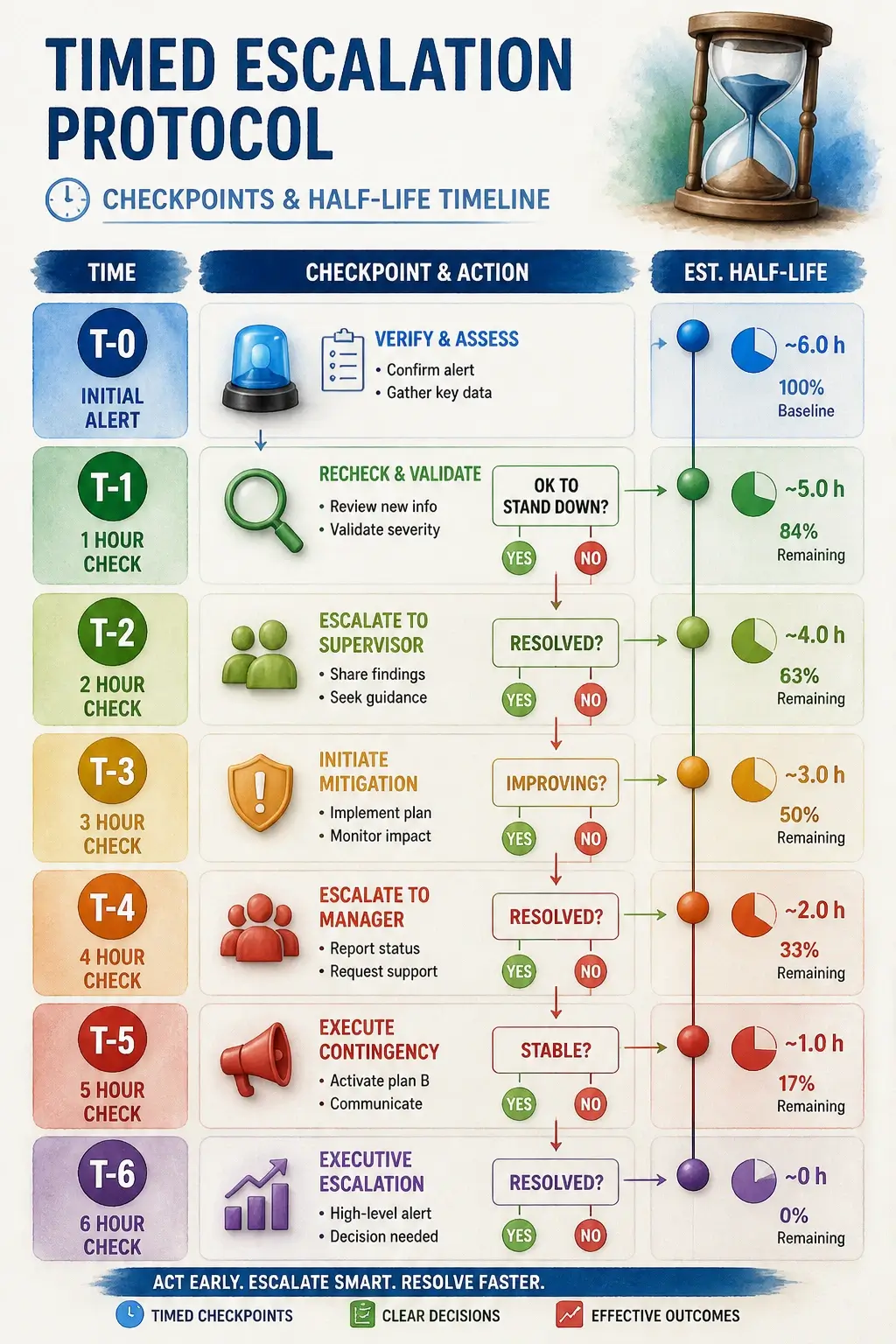
Here’s where most overdose guides leave a critical gap – they tell you to “wait and see” without giving you any structure for what you’re actually watching. This timed escalation protocol fills that gap:
- T-0 minutes: Stop caffeine. Estimate your dose. Note your approximate resting heart rate. If it’s above 150 bpm or feels irregular, skip home management entirely – go to the ER now.
- T-5 minutes: First 250 mL of electrolyte water.
- T-15 minutes: Eat the banana plus protein snack.
- T-30 minutes: Reassess. If any symptom is noticeably worse, or you develop chest pain, severe vomiting, or confusion – ER now, no further deliberation.
- T-2 hours: If symptoms persist at the same intensity with zero improvement, strongly consider a medical consult.
- T-6 hours (one half-life): If symptoms are still severe and unimproved at this point, you need medical evaluation. Do not keep waiting.
This is an escalation ladder, not a panic trigger. The majority of people who follow these steps start feeling genuine, measurable relief within 60–90 minutes. The thresholds exist for the minority whose reaction requires professional care – and catching that early is far better than discovering it late.
Here’s a visual summary of the full timed protocol and half-life timeline:
Dr. Christian Cajochen, PhD – Head of the Centre for Chronobiology at the University of Basel and leading sleep researcher – has quantified the cardiovascular recovery window:
“Results support the adequacy of a six-hour abstention in controlling for caffeine-elicited cardiovascular changes.”
Six hours of abstention – not six hours of distress. If you’ve followed the steps above, the experience within that window should be progressively more manageable, not static. If it isn’t, that’s the signal to escalate.
Troubleshooting: When Home Remedies Fall Short
Medical escalation criteria exist because flushing caffeine at home has a real upper boundary – and crossing it without professional help is genuinely dangerous. This section draws that line clearly and dismantles the dangerous folk remedies that circulate in overdose forums, so you leave with both a complete action plan and hard criteria for when to hand off to a doctor.
Red-Flag Symptoms That Require Emergency Care
Red-flag symptoms during a caffeine overdose are not subtle – they represent a physiological state that home management cannot address. If any of the following appear, call 911 or go to the emergency room immediately. Do not wait to see if they resolve:
- Chest pain or chest pressure of any kind
- Severe or uncontrollable vomiting
- Confusion or inability to think clearly
- Irregular heartbeat or resting heart rate above 150 bpm
- Seizure-like activity
- Fainting or near-fainting
If you have a pre-existing heart condition, uncontrolled hypertension, or are pregnant, the threshold for contacting a healthcare provider is lower. Moderate symptoms that a healthy adult might manage at home warrant a call to your doctor or poison control (1-800-222-1222 in the US) if any of those conditions apply to you.
Avoiding Dangerous Hacks: Alcohol, Laxatives, and Marijuana
Dangerous hacks circulate widely in online overdose threads, and several of them can turn a manageable caffeine reaction into a genuine emergency. Here’s the mechanism and severity behind the most common ones:
Alcohol (including beer): Creates competing stimulant-depressant cardiac stress, increases dehydration, and raises the risk of atrial fibrillation. It also masks symptom severity – you may feel less anxious while your heart continues to be under significant strain. This combination is particularly dangerous.
Tobacco and nicotine: While smoking does theoretically induce the CYP1A2 enzyme over time, that induction is a chronic effect – it doesn’t meaningfully speed clearance in a single session. What it does do is introduce additional cardiovascular stress and carcinogens. For a non-smoker, this is a non-starter under any circumstances.
Laxatives: Physiologically futile. Caffeine is absorbed within 45 minutes of ingestion – by the time you’re experiencing symptoms, there’s nothing in your gut to purge. What laxatives will do is cause dangerous dehydration and electrolyte depletion on top of what caffeine has already done.
Marijuana: Provides no pharmacokinetic benefit whatsoever. In susceptible individuals, it can amplify anxiety and trigger panic attacks, compounding the tachycardia that caffeine already caused. This combination has driven people to the ER who would have otherwise been fine.
The decision tree for when to stop home management is straightforward: if your dose was above 600 mg, if your resting heart rate is above 150 bpm, if symptoms worsen at the 30-minute check, or if there is zero improvement after 6 hours – stop home management and seek medical care.
Dr. Richard C. Dart, MD, PhD – Medical Toxicologist, Director of the Rocky Mountain Poison and Drug Center, and President of the American Association of Poison Control Centers – is direct about the clinical priority:
“Caffeine overdoses should be treated immediately with activated charcoal if within the appropriate timeframe of 1-2h post-ingestion, and special attention should be given to the cardiovascular effects of caffeine, as tachydysrhythmias may prove fatal.”
Activated charcoal is a hospital intervention, not a home remedy – but Dr. Dart’s emphasis on the cardiovascular effects is the key takeaway. The heart is the system most at risk in a serious caffeine overdose, and it’s the reason the red-flag list above is anchored in cardiac symptoms. If your heart is doing something that feels wrong, that’s the signal that supersedes every other consideration.
Key Takeaways on Flushing Caffeine
- Flushing caffeine out of your system faster is not physiologically possible – the liver’s CYP1A2 enzyme sets the pace, and nothing shortens it.
- Caffeine’s half-life runs 3–5 hours in most adults, meaning roughly 25% of a large dose can still be active at the 10-hour mark.
- The FDA’s 400 mg daily guideline is a chronic safety ceiling, not an acute “no symptoms” threshold – many people feel significant distress well below that number.
- Electrolyte-balanced water beats plain water during a caffeine overdose because sodium prevents the hyponatremia risk that large volumes of plain water can trigger.
- A banana paired with a small protein source addresses both potassium depletion and the tremor it causes, while magnesium supports the liver enzyme metabolizing caffeine.
- A resting heart rate above 150 bpm, chest pain, confusion, or any symptom that worsens at the 30-minute check are hard criteria to stop home management and seek emergency care.
Frequently Asked Questions About Flushing Caffeine
Can you actually speed up caffeine elimination with any drink or food?
No – nothing you consume meaningfully accelerates how fast your liver clears caffeine. The CYP1A2 enzyme runs at a genetically and hormonally determined pace, and while magnesium and potassium support that enzyme’s function, they optimize it rather than turbocharge it.
How long until caffeine is completely out of your system?
“Completely” is a longer timeline than most people expect. After one half-life (roughly 5 hours), half is gone; after 10 hours, about 75% has cleared; full elimination for most adults takes 24 hours or more, though symptoms typically become manageable well before that point.
What are the two clearest signs you’ve had too much caffeine?
A racing heartbeat that you can feel at rest and a jittery, anxious restlessness that feels impossible to sit through are the two most consistent early signals. If both are present together, you’ve crossed your personal tolerance threshold regardless of what the milligram count says.
Is it safe to sleep off a caffeine overdose?
Sleeping is actually one of the best things you can do once symptoms are mild and stable – it’s a sign the parasympathetic nervous system is winning. The concern is trying to force sleep while heart rate is still elevated above 100 bpm, since lying down can sometimes make palpitations feel more intense and harder to monitor.
Does drinking coffee regularly make overdose symptoms less severe?
It does, to a degree. Habitual caffeine users have developed adenosine receptor tolerance, so the same dose produces a blunted stimulant effect. But tolerance doesn’t protect against the cardiovascular effects of very high doses – a regular coffee drinker who takes 800 mg is still at real risk, just at a higher threshold than a non-user.
What’s the difference between caffeine jitters and a true caffeine overdose?
Jitters – mild shakiness, slight anxiety, elevated mood – are a normal high-dose response and resolve without intervention. A true overdose involves symptoms that feel involuntary and escalating: heart rate above 120–150 bpm at rest, nausea, vomiting, confusion, or chest tightness. The distinction matters because jitters warrant self-management, while overdose symptoms warrant monitoring against the escalation criteria.
Should I call poison control for a caffeine overdose?
Yes, if you’re unsure about your dose or your symptoms aren’t clearly mild. The US Poison Control hotline (1-800-222-1222) is free, available 24/7, and staffed by toxicologists who can help you assess whether home management is appropriate or whether you need to go to the ER.
Why does caffeine feel so much worse on an empty stomach?
When your stomach is empty, caffeine absorbs into the bloodstream significantly faster – peak plasma concentration is reached more quickly, which means the spike in heart rate and anxiety hits harder and faster than it would after a meal. The same dose that feels manageable after breakfast can feel genuinely overwhelming when taken fasted.
References
- Clinical Toxicology of Caffeine – Einstein Healthcare Network / Medical Press Reports
- Frontiers in Nutrition: Hydration and Electrolyte Research – frontiersin.org
- MDPI Nutrients: Sports Hydration and Sodium Balance – mdpi.com
- ScienceDirect: Potassium and Cellular Membrane Potential – sciencedirect.com
- MDPI Nutrients: Potassium and Cardiovascular Function – mdpi.com
- Biological Psychology: L-Theanine and Subjective Calmness – Biological Psychology Journal
- MDPI Nutrients: L-Theanine Neuropharmacology Research – mdpi.com
- Frontiers in Nutrition: Caffeine Abstention and Cardiovascular Recovery – frontiersin.org
- MDPI Brain Sciences: Caffeine Half-Life and Sleep Research – mdpi.com
- Journal of Emergency Medicine: Caffeine Overdose Treatment Protocols – ScienceDirect
- Rocky Mountain Poison and Drug Center: Caffeine Toxicology – AAPCC / ScienceDirect