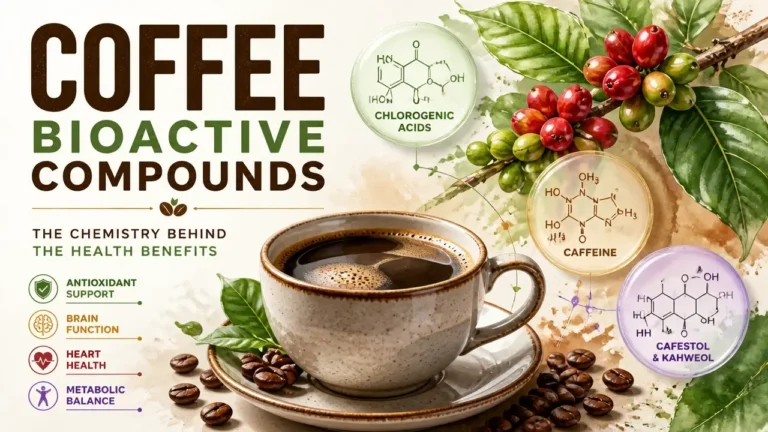

Coffee bioactive compound groups form one of the most chemically complex matrices in the human diet – a coordinated mixture of alkaloids, polyphenols, diterpenes, and nitrogen-rich polymers that act on multiple body systems simultaneously. Calling coffee a caffeine delivery vehicle is like calling red wine “fermented sugar water”: technically defensible, biologically misleading.
The health story in your cup is written by chlorogenic acids, melanoidins, trigonelline, cafestol, and kahweol working in concert – not by a single molecule acting alone. What roasting does to those compounds, and what your brewing method keeps or discards, determines which version of that chemistry actually reaches your cells.
Beyond metabolic function, exploring how these complex phytochemical interactions translate into cardiovascular benefits and evidence reveals why moderate intake supports long-term heart health.
Beyond general wellness, understanding these biochemical interactions is crucial for evaluating their metabolic impact on weight loss and blood sugar regulation.
Coffee: A Chemical Cocktail, Not Just Caffeine
Roasted coffee’s bioactive matrix contains over 1,000 identified compounds – a chemical density that places it closer to a whole food than to a supplement, and one that makes the popular “it’s basically just caffeine” framing collapse almost immediately. The health effects associated with regular coffee consumption don’t trace back to a single alkaloid; they emerge from a layered interaction between polyphenols, diterpenes, alkaloids, and melanoidins that each engage different biological targets at different points in the digestive and metabolic cascade.
Think of it this way: if caffeine were the only active player, decaffeinated coffee would show no health associations. It does. Epidemiological data consistently links decaf consumption to reduced risk of type 2 diabetes and liver disease – outcomes that track with chlorogenic acid and melanoidin content, not caffeine. That finding alone should reframe how we think about what we’re drinking.
The analogy to a whole food is worth taking seriously. When you eat a blueberry, you don’t get resveratrol in isolation – you get a matrix of polyphenols, fiber, and micronutrients whose combined effect differs from any single extracted compound. Coffee works the same way. The interaction between its components – what nutritional biochemists call the matrix effect – shapes the net biological outcome in ways that no single-ingredient supplement can replicate.
One more thread worth holding onto as we go deeper: not all of these compounds survive the journey from green bean to finished cup unchanged. Roasting degrades some, creates others from scratch, and brewing methods determine which ones actually make it into the liquid you drink. That chemistry is worth understanding before reaching for the darkest roast on the shelf.
Dr. Elvira Gonzalez de Mejia, Professor of Food Science and Human Nutrition at the University of Illinois Urbana-Champaign, puts this plainly: coffee isn’t a caffeine vehicle but a biosynergistic system – one where polyphenols like chlorogenic acids, alkaloids like trigonelline, diterpenes like cafestol, and trace minerals including magnesium and potassium all contribute to a physiological profile that no single compound can account for. What that means practically is that the research on coffee’s health benefits only makes sense when you read it through the lens of the whole mixture, not through the narrow aperture of caffeine pharmacology.
The Major Bioactive Players in Your Cup
Coffee’s bioactive compound groups span several chemical families, each with a distinct molecular identity and a different set of biological targets – and knowing who does what is the prerequisite for understanding any of the health claims that follow. A single 8-oz cup of filtered coffee can deliver 50–200 mg of chlorogenic acids, 80–120 mg of caffeine, and meaningful amounts of trigonelline, melanoidins, and diterpenes, depending on roast level and brew method. These aren’t trace contaminants – they’re pharmacologically relevant doses of structurally diverse compounds acting simultaneously.
Here’s the cast:
- Caffeine – the most studied alkaloid in the human diet, and for good reason. It crosses the blood-brain barrier, blocks adenosine receptors, and drives the stimulant effects everyone recognizes. But its role extends beyond alertness: epidemiological studies consistently associate caffeine intake with neuroprotective signals, particularly for Parkinson’s and Alzheimer’s disease risk.
- Chlorogenic acids (CGAs) – the dominant polyphenol family in coffee, present at concentrations that make coffee one of the primary dietary sources of polyphenols in Western diets. CGAs are potent antioxidants, but their more interesting role is metabolic: they modulate glucose absorption in the gut, influence insulin signaling, and activate cellular defense pathways in the liver. They’re also the most roast-sensitive compound in the cup.
- Trigonelline – an alkaloid that doesn’t survive roasting intact. Under heat, it partially converts to nicotinic acid (niacin, vitamin B3), making darker roasts a modest but real dietary source of a vitamin most people associate with meat and legumes. In its intact form, trigonelline also shows neuroprotective and blood-sugar-regulating activity in animal and cell models.
- Melanoidins – the brown, high-molecular-weight polymers responsible for much of coffee’s color and some of its bitterness. They’re formed during roasting through Maillard reactions between sugars and amino acids, and they behave more like dietary fiber than a typical bioactive compound. Dr. Maria Dolores del Castillo, Head of the Food Bioscience Group at the Institute of Food Science Research in Spain, notes that coffee melanoidins are more powerful antioxidants than melanoidins from other heat-processed foods – and because they’re non-digestible, they travel intact to the colon, where gut bacteria break them down and release antioxidant-active metabolites. This makes melanoidins a gut-targeted bioactive that operates on a completely different timeline than the compounds absorbed in the small intestine.
- Cafestol and kahweol – the diterpene pair that makes unfiltered coffee a genuinely different health proposition from filtered. Both compounds show anticarcinogenic signals in laboratory studies, but both also raise serum LDL cholesterol in humans – a real cardiovascular trade-off that the wellness conversation around coffee largely ignores. More on that when we reach brewing methods.
None of these compounds operates in a vacuum. Their combined effect – synergistic in some cases, potentially antagonistic in others – is what shapes the net health outcome. Understanding each one individually is the foundation; the interaction between them is where the biology gets interesting.
The Health Benefits: What the Research Really Shows
Coffee disease risk reduction is one of the more consistent findings in nutritional epidemiology – not a fringe association, but a pattern that has emerged across dozens of large cohort studies and multiple meta-analyses covering millions of people. The associations span several of the most common chronic conditions in high-income countries, and they hold up across different populations, coffee types, and preparation methods, which is a signal that something real is happening biologically.
The most consistent findings cluster around five disease areas:
- Parkinson’s disease – regular coffee consumption is associated with meaningfully lower risk, with caffeine appearing to be the primary driver. The proposed mechanism involves adenosine receptor antagonism in dopaminergic neurons, which may slow the neurodegeneration pathway implicated in Parkinson’s.
- Alzheimer’s disease – the association is present but somewhat less linear than for Parkinson’s. Both caffeine and chlorogenic acids appear relevant here, likely through separate pathways involving amyloid processing and neuroinflammation.
- Type 2 diabetes – arguably the most data-rich association in coffee epidemiology. A systematic review and dose-response meta-analysis published in PLOS ONE found that both caffeinated and decaffeinated coffee consumption were associated with reduced risk of type 2 diabetes – the decaffeinated finding pointing directly at chlorogenic acids and trigonelline as the active compounds, not caffeine. Each additional cup per day was associated with a statistically significant incremental reduction in risk.
- Liver fibrosis and cirrhosis – the liver association is strong and mechanistically well-supported. Regular coffee consumption is consistently linked to lower rates of liver fibrosis, cirrhosis, and hepatocellular carcinoma, with chlorogenic acids and melanoidins most implicated in the hepatoprotective signaling.
- Colorectal cancer – associations exist, though effect sizes are smaller and less consistent than for the metabolic and neurodegenerative outcomes.
Dr. Adriana Farah, Professor of Food Science and Nutrition at the Federal University of Rio de Janeiro, summarizes the current state of the field this way: the evidence from epidemiological studies, clinical trials, and meta-analyses consistently links regular coffee consumption to reduced incidence of type 2 diabetes, Parkinson’s, Alzheimer’s, liver diseases, various cancers, and stroke – effects that trace primarily to the antioxidant and anti-inflammatory properties of the beverage’s bioactive matrix, not to caffeine alone.
The important caveat: almost all of this evidence is observational. We’re working with association, not proven causation. Effect sizes vary by population, coffee type, and individual genetics. What the data supports is a pattern of reduced risk in regular coffee drinkers – not a guarantee, and not a prescription. But the consistency of the associations across independent study populations, combined with the mechanistic plausibility we’ll explore next, makes the case for coffee’s health relevance genuinely compelling rather than merely hopeful.
To examine how these epidemiological patterns translate into overall wellness, consult this definitive guide for health.
How Coffee Protects You: The Molecular Mechanisms
Coffee’s bioactive signaling pathways work at the level of gene expression, enzyme activity, and cellular energy sensing – not simply as antioxidants mopping up free radicals, which is the reductive explanation most popular health content settles for. The real picture involves specific transcription factors being switched on, metabolic sensors being activated, and downstream cascades that reshape how liver cells handle fat, glucose, and oxidative load. Two pathways in particular – Nrf2 and AMPK – sit at the center of coffee’s documented cellular effects.
Nrf2 and AMPK: Coffee’s Molecular On-Switches for Cellular Defense
The liver is the primary arena for coffee’s metabolic benefits, and the two molecular switches that explain most of the action are the Nrf2 antioxidant pathway and the AMPK energy-sensing pathway – both of which chlorogenic acids and related polyphenols are documented to activate. When these pathways are engaged, the downstream effects reach far beyond simple antioxidant activity.
Nrf2 – Nuclear factor erythroid 2-related factor 2 – is a transcription factor that functions as the cell’s master antioxidant regulator. Under normal conditions, it sits in the cytoplasm, held inactive. When chlorogenic acids or their gut-derived metabolites reach liver cells, they trigger a conformational change that releases Nrf2, allowing it to migrate to the nucleus and bind to antioxidant response elements (AREs) – stretches of DNA that activate a coordinated battery of protective enzymes, including superoxide dismutase and catalase. The result isn’t one antioxidant reaction; it’s the upregulation of an entire defensive gene program.
The AMPK-SREBP-1c axis addresses the metabolic side of the equation. AMPK (AMP-activated protein kinase) is essentially the cell’s fuel gauge – it activates when cellular energy is low and triggers responses that restore metabolic balance. Chlorogenic acids activate AMPK in hepatocytes, which in turn suppresses SREBP-1c, a transcription factor that drives fat synthesis in the liver. The downstream effect is dual: reduced hepatic lipid accumulation and improved insulin sensitivity, which together explain much of the epidemiological signal connecting coffee to lower type 2 diabetes and liver disease risk.
Trigonelline contributes a different but complementary mechanism. During roasting, a portion of trigonelline converts to nicotinic acid – a form of niacin that participates in NAD⁺ synthesis, a coenzyme critical to mitochondrial energy metabolism. This means darker roasts deliver a modest but real boost to a metabolic pathway that supports cellular energy production and insulin signaling simultaneously.
Dr. Elvira Gonzalez de Mejia and her team at the University of Illinois have characterized how coffee by-product bioactives – primarily chlorogenic and protocatechuic acids – activate the FGF21 signaling cascade in liver cells, simultaneously modulating hepatic mitochondrial function and lipid and glucose metabolism. Their work also documents that oxidative stress markers, including reactive oxygen species and mitochondrial superoxide, were suppressed through Nrf2 activation, while antioxidant enzyme activity was upregulated – confirming that these aren’t theoretical pathways but measurable molecular events.
Quantifying the Effect: What the Numbers Actually Show in Liver Cells
The FGF21 signaling cascade sits downstream of both Nrf2 and AMPK activation, making it a useful read-out for the integrated metabolic impact of coffee bioactives – and recent cell-culture work has moved the conversation from qualitative pathway descriptions to exact fold-changes that are harder to dismiss.
A 2022 peer-reviewed study published in Frontiers in Nutrition used HepG2 liver cells treated with palmitic acid to model non-alcoholic fatty liver disease (NAFLD) – a relevant disease context given coffee’s documented hepatoprotective associations – then exposed those cells to chlorogenic and protocatechuic acids from coffee by-products at concentrations of 50 µmol/L, and to aqueous extracts at 100 µg/mL. The results were quantified across multiple metabolic endpoints: FGF21 secretion rose 1.3- to 1.9-fold; intracellular lipid accumulation fell by 23–41%; and glucose uptake improved by 58–111%. Carnitine palmitoyl-transferase-1 activity – a key enzyme in fatty acid oxidation – rose 1.3- to 1.7-fold, and IRS-1/Akt1 signaling, the central insulin pathway, was measurably modulated.
Two things make these numbers meaningful beyond the in-vitro context. First, the concentrations used in the study overlap with the lower end of what’s achievable through normal coffee consumption – a single cup of filtered coffee can deliver 50–200 mg of chlorogenic acids, which places a habitual two-to-three cup intake within the biologically active range documented in the model. Second, the effects converged on mitochondrial respiration: the FGF21 pathway activation improved mitochondrial bioenergetics in the fatty-acid-loaded cells, directly linking coffee compound exposure to enhanced cellular energy metabolism. That’s not a peripheral effect – impaired mitochondrial function is a central feature of both NAFLD and type 2 diabetes, which closes the loop between the cell-culture data and the epidemiological associations established earlier.
This is what separates mechanism-level understanding from correlation-level understanding: the pathway from cup to cell is now traceable in quantitative terms, not just inferred from population statistics.
Roasting: The Heat Alchemy That Reshapes Bioactivity
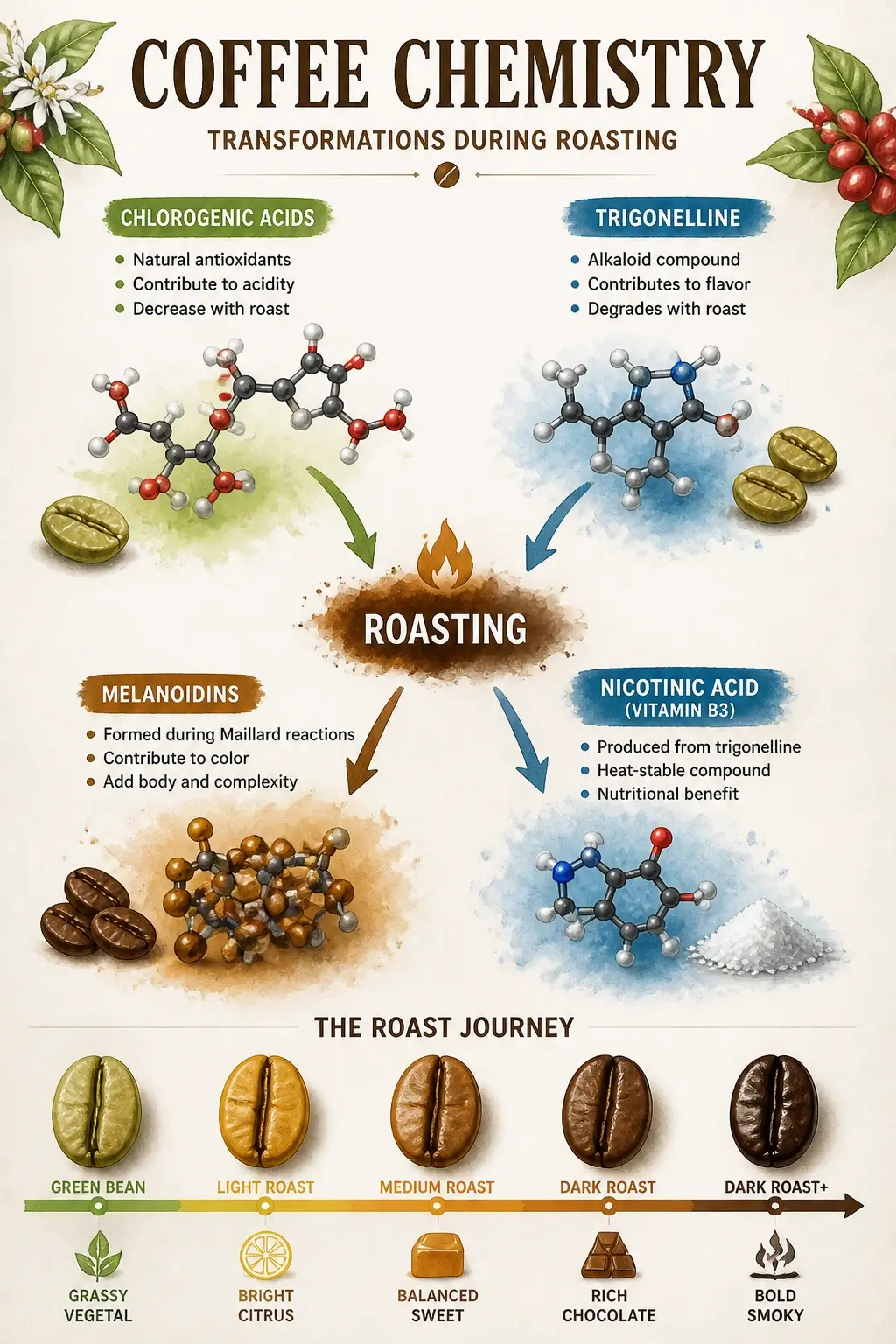
Coffee roasting chemistry is a series of irreversible transformations that simultaneously destroys some bioactives, creates entirely new ones, and converts others into different compounds with different physiological roles – which means the roast level you choose is effectively a decision about which version of coffee’s bioactive profile you’re prioritizing. This is rarely framed that way in popular coffee content, but the chemistry makes it unavoidable.
The most important transformation involves chlorogenic acids. Green coffee beans are exceptionally rich in CGAs – they can account for up to 12% of the dry weight of some varieties. Roasting progressively degrades them through pyrolysis: the CGA molecules break down, forming cinnamoyl quinolactones and other phenolic derivatives that have their own, less well-characterized biological activity. By the time you reach a dark roast, CGA levels may have fallen by 50% or more relative to the green bean. Light roasts preserve the most CGAs – which matters if the metabolic and hepatoprotective benefits associated with chlorogenic acids are a priority.
Dr. Adriana Farah has described this transformation in detail: during roasting, CGAs undergo pyrolysis that generates phenolic lactones and other derivatives, with cinnamoyl-1,5-γ-quinolactones (CGLs) as the primary products – formed through intramolecular ester bond formation as water is lost from the molecule. These derivatives retain some antioxidant activity but represent a structurally distinct and pharmacologically different set of compounds from the original CGAs.
The counter-narrative to CGA loss is melanoidin formation. As roasting intensifies, Maillard reactions between reducing sugars and amino acids produce melanoidins – the brown, high-molecular-weight polymers that give dark roast its characteristic color and contribute to its body. These aren’t simply byproducts of degradation; they’re functionally active compounds that act as antioxidant dietary fibers in the gut. So while dark roast loses CGAs, it gains melanoidins – a different bioactive profile, not a simply inferior one.
Two other roast-dependent changes are worth noting. Caffeine is thermally stable across the roast spectrum: by weight, caffeine content remains essentially constant regardless of roast level. The common belief that dark roast is stronger in caffeine is a volume artifact – darker roasts produce less dense, more expanded beans, so a scoop of dark roast contains fewer beans by weight than a scoop of light roast, delivering slightly less caffeine per tablespoon but not per gram. Trigonelline, by contrast, is roast-sensitive: it converts partially to nicotinic acid during roasting, meaning a dark roast cup delivers more niacin than a light roast cup – a modest but real nutritional difference.
The practical takeaway from the roasting chemistry is this: there’s no universally superior roast for health. Light roasts maximize CGA delivery; dark roasts trade CGAs for melanoidins and add niacin via trigonelline conversion. The right choice depends on which bioactive family you’re trying to prioritize – and that, in turn, depends on your individual health context.
Brewing: Filtered vs. Unfiltered and the Diterpene Dilemma
Coffee brewing chemistry is where the health conversation gets genuinely consequential in a way that most wellness content never addresses – because the method you use to extract your coffee determines not just flavor, but which bioactive compounds end up in your cup and which stay trapped in the grounds or the filter. For most compounds, this is a matter of optimization. For diterpenes, it’s a matter of cardiovascular risk.
Filtration and Diterpenes: What Your Brewing Method Actually Extracts
Cafestol and kahweol are oil-soluble diterpenes that reside in the lipid fraction of the coffee bean – and whether they end up in your cup depends almost entirely on whether your brewing method uses a paper filter. The distinction between filtered and unfiltered methods is the single most important variable in coffee’s cardiovascular risk profile, and it’s one that almost never appears in popular coffee-health discussions.
Paper-filter methods – including drip coffee makers, pour-over, and Aeropress with a paper filter – physically trap the oily fraction of the brew. The result is that over 90% of cafestol and kahweol are retained in the filter, making the resulting coffee essentially neutral with respect to LDL cholesterol. Unfiltered methods – French press, Turkish coffee, boiled coffee (such as Scandinavian-style), and to a lesser extent espresso – allow the oil fraction to pass through into the cup, delivering meaningful doses of both diterpenes with every serving.
Dr. S. Moeenfard, a researcher in food chemistry, has characterized the physical mechanism precisely: paper filters impede the passage of fine particles into the brew and retain an average of 87.6% of cafestol, with the exact retention depending on filter porosity and coffee grind size. The coarser the grind and the denser the filter, the more effective the diterpene removal.
The cardiovascular implication is well-established in lipid science: regular consumption of unfiltered coffee measurably raises serum LDL cholesterol in humans. This isn’t a theoretical concern – it’s documented in controlled dietary intervention studies and is substantial enough that it has influenced dietary guidelines in several countries. Cafestol is, by some analyses, the most potent dietary cholesterol-raising compound identified in any commonly consumed food.
The anticarcinogenic activity of cafestol and kahweol in cell and animal studies is real, but it exists in a context that matters: when you drink unfiltered coffee, the LDL-raising effect operates in parallel with any theoretical protective signal. There’s no current human evidence that the anticarcinogenic benefit of these compounds, at typical dietary doses, outweighs the cardiovascular risk of chronically elevated LDL.
[Watch this breakdown from NutritionFacts.org for a clear summary of what the clinical evidence on coffee and cholesterol actually shows:]
The Diterpene Trade-Off: Why “Heart-Protective” Is the Wrong Label
The diterpene LDL effect is one of the most consequential pieces of information missing from mainstream coffee-health content – and the way it’s typically handled when it does appear makes the problem worse, not better. Some wellness sources describe cafestol and kahweol as “heart-protective” based on their anticarcinogenic laboratory data, without ever mentioning that this framing only makes sense if those compounds are removed from the coffee before you drink it.
Here’s the logical structure of the problem: cafestol and kahweol show anticarcinogenic signals in vitro and in animal models. Paper filtration removes over 90% of them. Therefore, if you’re drinking paper-filtered coffee – the method most associated with health benefits in epidemiological studies – you’re not getting meaningful doses of these diterpenes anyway. The “heart-protective” label is being applied to compounds that are absent from the coffee most health-conscious people drink.
In unfiltered coffee, where cafestol and kahweol are present in pharmacologically relevant amounts, their LDL-raising effect on cardiovascular disease risk is the dominant biological signal in humans – not a theoretical anticarcinogenic benefit that has not been demonstrated at dietary doses in human trials. Framing unfiltered coffee as beneficial because of its diterpene content is, at best, a selective reading of the evidence. At worst, it’s a genuinely misleading recommendation for anyone with elevated LDL or existing cardiovascular risk.
The practical direction is clear: if you have high cholesterol, a family history of cardiovascular disease, or existing metabolic risk, paper-filtered coffee is the appropriate default. The health benefits associated with regular coffee consumption in the epidemiological literature derive predominantly from filtered coffee populations. Unfiltered methods are not a route to enhanced protection – they introduce a documented cardiovascular risk that the rest of coffee’s bioactive profile doesn’t cancel out.
Finding Your Perfect Dose: How Much Coffee Should You Drink?
Optimal coffee intake is not a single number – it’s a range that shifts depending on your genetics, your cholesterol status, your gut microbiome composition, and the specific health outcomes you’re most interested in supporting. That said, the evidence does converge on a practical framework, and it’s specific enough to be genuinely useful rather than a hedge.
The clearest finding from the epidemiological literature is that 2–3 cups of filtered coffee per day represents the range most consistently associated with reduced risk of neurodegenerative and metabolic diseases. This is the dose range that appears in the majority of prospective cohort studies and meta-analyses covering Parkinson’s, Alzheimer’s, type 2 diabetes, and liver disease outcomes. Below this range, the associations are weaker; above 4–5 cups per day, the data on net benefit becomes less consistent, and the risk of adverse effects – anxiety, palpitations, sleep disruption – becomes more clinically relevant.
Dr. Adriana Farah has quantified what this dose range actually delivers in bioactive terms: at 100 mg of chlorogenic acids per 100 mL serving (a reasonable estimate for filtered coffee), one to three cups per day translates to 100–300 mg of CGAs – an intake that overlaps meaningfully with the lower end of concentrations used in mechanistic studies. This isn’t a coincidence; it’s the bridge between the fold-change data from the FGF21 cell studies and the population-level associations. A habitual two-cup-per-day filtered coffee habit delivers a CGA dose that is biologically relevant, not just theoretically interesting.
For individuals with elevated LDL cholesterol or a family history of cardiovascular disease, the dose guidance shifts: 1–2 cups per day of strictly paper-filtered coffee is the more conservative and evidence-appropriate target. This preserves access to the metabolic and neuroprotective benefits while avoiding the diterpene-driven LDL elevation that unfiltered methods introduce.
High-dose consumption – above 4–5 cups per day – is where the risk-benefit calculation begins to invert. The protective associations plateau or weaken, while the stimulant burden from caffeine accumulates: disrupted sleep architecture, elevated cortisol, and cardiovascular stress responses that work against the metabolic benefits the earlier cups were providing. There’s also the practical issue of caffeine metabolism: CYP1A2 genetic variants determine how quickly individuals clear caffeine, and slow metabolizers face a higher cardiovascular risk at higher doses than fast metabolizers consuming the same amount.
One calibration note that often gets lost: a “cup” in the research literature means an 8-oz (240 mL) serving, not a 16-oz coffee shop large. Bioactive loads vary substantially with bean origin, roast level, and brew strength, so these numbers are frameworks for thinking about intake, not pharmacological prescriptions.
Here’s how the bioactive math looks across roast levels and brewing methods – the table below draws from published composition databases to give the dose ranges a concrete reference point.
| Compound | Light Roast, Filtered | Dark Roast, Filtered | Espresso (per shot) | French Press |
|---|---|---|---|---|
| Chlorogenic acids | 100–200 mg | 50–100 mg | 40–90 mg | 80–160 mg |
| Caffeine | 80–120 mg | 80–115 mg | 60–75 mg | 80–110 mg |
| Trigonelline | 25–40 mg | 10–20 mg | 20–35 mg | 20–35 mg |
| Cafestol + Kahweol | <2 mg (filtered out) | <2 mg (filtered out) | 2–4 mg | 4–8 mg per cup |
The table makes a few things visible that prose tends to obscure. Light roast filtered coffee is the highest-CGA option by a meaningful margin – which matters if the metabolic and hepatoprotective benefits are your priority. Caffeine is relatively stable across methods, confirming that roast level isn’t a reliable lever for adjusting stimulant intake. And the diterpene column shows why French press is a different health proposition from pour-over, even when everything else is equal.
The through-line from the cell-culture data in the mechanisms section to this practical framework is now traceable: the FGF21 activation and Nrf2 upregulation documented in liver cells at 50 µmol/L of chlorogenic acids corresponds to a dose range that a habitual filtered coffee drinker can realistically achieve through normal consumption. That’s not a guarantee of the same effect in a living human – the gap between in-vitro and in-vivo is real and should be respected – but it does mean the mechanistic findings and the epidemiological associations are pointing in the same direction, at doses that are practically accessible.
Key Takeaways on Coffee Bioactive Compound Groups
- Coffee contains over 1,000 bioactive compounds; its health effects emerge from the full matrix, not from caffeine alone.
- Chlorogenic acids are the dominant polyphenols and activate Nrf2 and AMPK pathways in liver cells, reducing fat accumulation and improving glucose metabolism.
- Light roasts preserve more chlorogenic acids; dark roasts trade CGAs for melanoidins and deliver more niacin via trigonelline conversion – neither is universally superior.
- Paper filtration removes over 90% of cafestol and kahweol, making filtered coffee cardiovascular-neutral; unfiltered methods deliver LDL-raising diterpenes at meaningful doses.
- For otherwise healthy adults, 2–3 cups of filtered coffee per day is the range most consistently associated with reduced neurodegenerative and metabolic disease risk.
- Individuals with elevated LDL or cardiovascular risk should limit intake to 1–2 cups per day of strictly paper-filtered coffee.
Frequently Asked Questions About Coffee Bioactive Compound Groups
Does decaf coffee provide the same health benefits as regular coffee?
Decaf retains most chlorogenic acids, melanoidins, and trigonelline but removes the majority of caffeine, so the metabolic and liver-protective benefits largely carry over while the neuroprotective associations – which appear caffeine-dependent – are weaker. If you’re managing caffeine sensitivity, decaf is not a health compromise for most of coffee’s documented benefits.
Are coffee bioactive compounds destroyed by adding milk or cream?
Dairy proteins can bind to polyphenols like chlorogenic acids and temporarily reduce their bioaccessibility in the gut, but the evidence on whether this meaningfully reduces health outcomes is mixed – some studies suggest the bound polyphenols are still released and absorbed during digestion. It’s a real interaction worth knowing about, but it’s not a reason to drink black coffee if you don’t enjoy it.
Does cold brew preserve more bioactive compounds than hot brewing?
Cold brew typically extracts fewer chlorogenic acids than hot methods because CGA solubility increases with temperature, so you’re likely getting a lower polyphenol dose per cup despite the longer steep time. The trade-off is lower acidity, which some people tolerate better – but from a bioactive standpoint, hot-brewed filtered coffee delivers more CGAs per serving.
Can I get the same liver-protective benefits from coffee supplements or extracts?
Green coffee extract supplements deliver chlorogenic acids, but the matrix effect – the interaction between CGAs, melanoidins, trigonelline, and other compounds – is absent in an isolated extract. The epidemiological evidence for liver protection is built on whole coffee consumption, not supplementation, so the two aren’t interchangeable from an evidence standpoint.
Is instant coffee a meaningful source of coffee bioactives?
Instant coffee retains a reasonable fraction of chlorogenic acids – typically in the 50–150 mg per cup range – and is made from real brewed coffee that’s been spray-dried or freeze-dried. It’s a legitimate bioactive source, though generally lower in CGAs than freshly brewed filtered coffee and often higher in acrylamide due to the additional heat processing.
Does the bioactive content of coffee vary by bean origin or variety?
Significantly. Robusta beans contain roughly twice the chlorogenic acid content of Arabica, and altitude, soil, and processing method all influence the final CGA load in green coffee. This means two “light roast filtered coffees” from different origins can have meaningfully different polyphenol profiles – origin matters, and it’s almost never disclosed on consumer packaging.
Should people with type 2 diabetes drink coffee for its metabolic benefits?
The epidemiological data is among the most consistent in coffee research – both caffeinated and decaffeinated coffee are associated with reduced type 2 diabetes risk – but if you already have diabetes and are managing blood sugar with medication, caffeine can affect glucose variability acutely. The long-term metabolic associations are favorable, but the short-term caffeine effect on glucose is worth discussing with a clinician before treating coffee as a therapeutic tool.
Does the antioxidant activity of coffee hold up after it sits in a thermos for hours?
Chlorogenic acids are relatively stable at room temperature over several hours, but the antioxidant capacity of brewed coffee does decline with prolonged exposure to heat and oxygen. Keeping coffee on a heated plate or in a hot thermos for more than a couple of hours measurably degrades polyphenol content – brewing fresh, or storing in a sealed insulated container at room temperature, preserves more bioactive activity.
References
- Coffee as a Biosynergistic System – Frontiers in Nutrition (Dr. Elvira Gonzalez de Mejia) – frontiersin.org
- Coffee Melanoidins as Antioxidant Dietary Fiber – Frontiers in Nutrition (Dr. Maria Dolores del Castillo) – frontiersin.org
- Caffeinated and Decaffeinated Coffee and Type 2 Diabetes Risk: A Dose-Response Meta-Analysis – PubMed / PLOS ONE – pubmed.ncbi.nlm.nih.gov
- Designing Coffee for Health: Bioactive Compounds and Chronic Disease – MDPI (Dr. Adriana Farah) – mdpi.com
- Activating Effects of Coffee By-Product Bioactives on FGF21 Signaling in Liver Cells – Frontiers in Nutrition – frontiersin.org
- Chlorogenic Acid Degradation During Roasting – Food Chemistry (Dr. Adriana Farah) – sciencedirect.com
- Cafestol and Kahweol in Coffee Brewing: Filtration and Cholesterol Effects – Food Research International (Dr. S. Moeenfard) – sciencedirect.com
- Chlorogenic Acid Intake Through Coffee Consumption: Quantitative Estimates – MDPI (Dr. Adriana Farah) – mdpi.com