

Careful caffeine tracking during pregnancy matters more than most women realize-not because one extra sip is dangerous, but because the rules of caffeine metabolism change completely once you’re pregnant. Your body clears it far slower, and your baby can’t clear it at all.
The good news: you don’t need to white-knuckle your way through nine months of herbal tea. You need a simple, repeatable system. This guide walks you through exactly that-step by step, milligram by milligram.
To ensure you stay safely under this threshold while enjoying your favorite single-serve pods, consult our K Cup Caffeine Levels Complete guide to accurately measure your daily intake.
The 200mg Limit: Why It’s There and What It Means for Your Pregnancy
The widely recommended 200mg daily caffeine limit during pregnancy isn’t arbitrary-it’s grounded in how profoundly pregnancy changes your body’s ability to process caffeine. When you’re not pregnant, caffeine has a half-life of roughly four hours. By your third trimester, that half-life stretches to 11–15 hours. The same cup of coffee that would clear your body by early afternoon now lingers well into the night-and the whole time it’s circulating, it’s reaching your baby too.
Here’s the part that catches most people off guard: caffeine crosses the placental barrier freely. It moves from your bloodstream into the fetal bloodstream without any resistance. The problem is that your developing baby lacks the liver enzymes needed to metabolize it. What takes your body 11 hours to process in late pregnancy takes your baby even longer-and there’s no workaround. The caffeine just accumulates.
This is why organizations like ACOG, the FDA, and the European Food Safety Authority (EFSA) all point to 200mg per day as a reasonable upper limit. Staying under it is associated with a lower risk of low birth weight and fetal growth restriction. And critically, that 200mg applies to your total caffeine from every source across the entire day-not just your morning coffee.
American College of Obstetricians and Gynecologists and the European Food Safety Authority put the physiology plainly:
“During pregnancy, CYP1A2 activity decreases, resulting in a prolonged caffeine half-life and elevated serum concentrations… with half-life extending up to approximately 15 h in the late gestational trimester”
That enzyme-CYP1A2-is the one your liver uses to break caffeine down. Pregnancy dials its activity back significantly, which is the direct mechanical reason your caffeine sensitivity increases as your pregnancy progresses.
One more layer worth knowing: the 200mg threshold is intentionally conservative. Evidence for fetal harm is strongest above 300mg per day; between 200–300mg, the research findings are genuinely conflicting. The World Health Organization, for instance, sets its safe limit at under 300mg. So the 200mg guideline isn’t a cliff where one extra milligram triggers harm-it’s a practical safety margin that accounts for individual variation.
And that variation is real. Differences in the CYP1A2 gene mean some women clear caffeine up to four times faster or slower than average. Since routine prenatal care doesn’t test for this, the 200mg limit functions as a safety net for everyone-regardless of where you fall on that genetic spectrum.
Step 1 – Spot Every Caffeine Source in Your Day
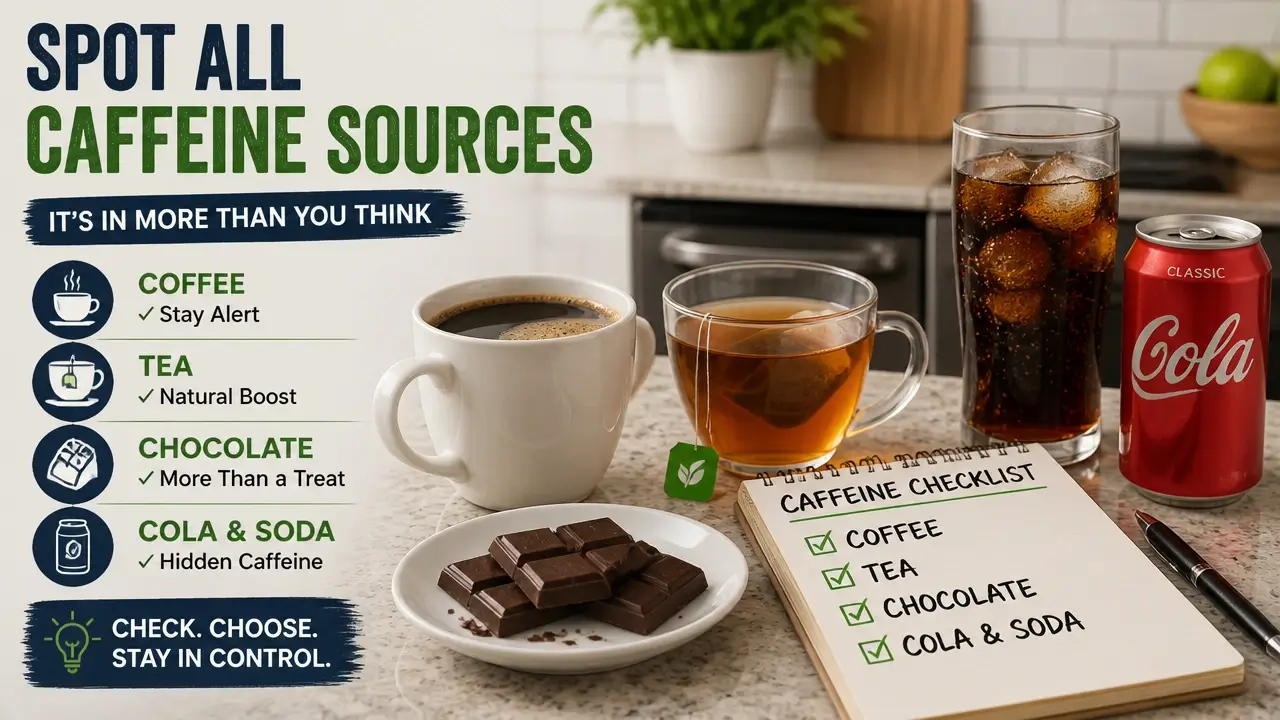
Effective tracking caffeine during pregnancy starts with one honest question: what did you actually consume today, and did all of it make your mental list? Most people undercount because they only think of coffee-but caffeine hides in a surprising number of everyday items.
The obvious ones are straightforward: brewed coffee, instant coffee, espresso-based drinks, black tea, green tea, iced tea, matcha, regular and diet cola, and energy drinks. Dark and milk chocolate both contain caffeine too, with dark chocolate carrying significantly more per ounce.
Then there are the sources that rarely cross anyone’s mind. Certain over-the-counter pain relievers-particularly those marketed for migraines or tension headaches-contain caffeine as an active ingredient. Chocolate-flavored protein bars, snack cakes, and flavored yogurts can add up quietly. Some herbal supplements and “energy” teas contain guarana or kola nut, which are caffeine-delivering plants by another name. Pre-workout powders are another one to check if you’re staying active during pregnancy.
Before you do any math, just write a list. Everything you typically drink or eat in a day, even things you’re not sure about. Don’t worry about milligrams yet-that comes in the next step. The goal here is simply to catch everything, because what you don’t see, you can’t count.
As a reminder from clinical researchers specializing in prenatal dietary exposure:
“Although the main source of caffeine during pregnancy is coffee, attention must be also paid to the increasingly intake of chocolate”
Small amounts add up faster than you’d expect. A square of dark chocolate here, a cola there-by the end of the day, those “small” sources can account for 50–60mg on their own.
Here’s a visual to help you think through what a typical kitchen’s worth of caffeine sources actually looks like:
Step 2 – How Much Caffeine Is Actually in That?
Caffeine content per serving is where most tracking attempts fall apart-not because the numbers are hard to find, but because serving sizes are deceptive. The difference between an 8oz home brew and a 16oz coffee-shop cup isn’t just size; it can mean the difference between 140mg and 300mg in a single drink.
Here’s a quick reference table built from CSPI and Mayo Clinic data so you can translate what you actually drink into real numbers:
| Drink / Food | Serving Size | Caffeine (mg) |
|---|---|---|
| Brewed filter coffee | 8 oz | 95–140 mg |
| Starbucks Grande drip (Pike Place) | 16 oz | ~310 mg |
| Espresso | 1 oz (single shot) | 63 mg |
| Instant coffee | 8 oz | ~62 mg |
| Black tea | 8 oz | ~48 mg |
| Green tea | 8 oz | ~29 mg |
| Matcha (prepared) | 8 oz | ~70 mg |
| Cola (regular or diet) | 12 oz can | 30–45 mg |
| Energy drink | 8–12 oz | 80–150 mg |
| Dark chocolate | 1.5 oz bar | 20–30 mg |
| Milk chocolate | 1.5 oz bar | 5–10 mg |
| Decaf coffee | 8 oz | 2–5 mg |
A few things jump out immediately. One: a single Starbucks Grande drip coffee already exceeds the 200mg daily limit on its own. Two: matcha carries more caffeine than most people assume-it’s not a gentle alternative to coffee. Three: decaf is genuinely close to zero, not zero, but the 2–5mg is negligible for tracking purposes.
Spanish food safety researchers and an Italian fertility clinic prospective cohort study found that:
“an espresso contains between 88-116 mg of caffeine. In the case of tea beverages, the amount of caffeine present was 2-3 times smaller than in espresso coffees. Energy drinks showed a similar caffeine content (80-106 mg) as espresso coffees”
That last point is worth pausing on. Energy drinks often get framed as a coffee alternative, but their caffeine load is essentially identical to a shot of espresso-plus they frequently contain other stimulants and additives that aren’t recommended during pregnancy regardless of caffeine content.
The practical rule: when you’re buying from a coffee shop, check the chain’s nutrition page or app before you order. Brewing at home gives you far more control over what ends up in your cup.
Step 3 – Add Up Your Daily Caffeine Total
Your daily caffeine total is just simple addition-but it’s the step that makes everything else in this system real. Once you have your list from Step 1 and your milligram values from Step 2, the math takes about two minutes.
Write down each item you consumed and its estimated mg next to it. Here’s what a typical day might look like:
- 1 home-brewed 8oz coffee → 140mg
- 1 cup green tea (afternoon) → 29mg
- 1 small dark chocolate bar → 25mg
- Total: 194mg
That’s a day that lands comfortably under the 200mg target. The numbers don’t have to be exact-using average values from a reference table is entirely sufficient. You’re not running a clinical study; you’re building a practical habit. Epidemiologists and clinical specialists in maternal dietary tracking confirm this approach holds up:
“Maternal self-reported caffeine intake was correlated with urinary concentrations of caffeine and its primary metabolites throughout pregnancy… self-reports are the best and most valid measure available”
For tracking tools, keep it frictionless. A notes app on your phone works. A small notebook on the kitchen counter works. A printable daily tracker taped to the fridge works. Whatever requires the least effort to maintain is the right choice-because a system you actually use beats a perfect system you abandon by week two.
The only non-negotiable: include everything from your list, especially the hidden sources. It’s easy to remember the morning coffee and forget the chocolate you had at 3pm.
Step 4 – Check Your Number Against the 200mg Target
Once you have your daily total, the comparison itself is straightforward: is your number at or below 200mg? That’s the entire evaluation.
If your total lands at 200mg or under, you’re doing exactly what the guidelines ask. No adjustments needed-just keep the habit going. If your total comes in over 200mg, that’s not a failure. It’s information, and it points directly to what needs a small adjustment.
The framing here matters. One day over 200mg is not an emergency. The risk picture that ACOG, EFSA, and the UK Food Standards Agency are concerned with is your typical daily average over time-not a single reading. As these regulatory bodies categorize it:
“Clinicians use this target to classify maternal risk, categorizing patients into three levels, (i) no caffeine use; (ii) typical or maximal intake on consumption days within the intake guideline (up to 200 mg); and, (iii) typical or maximal intake on consumption days exceeding the intake guideline (greater than 200 mg)”
The operative word is “typical.” A pattern matters; an occasional outlier doesn’t define your risk category.
When you review your log, look at which items contributed the most milligrams. In most cases, one or two drinks are responsible for the majority of the total. Those become the focus of the next step-not a wholesale overhaul of everything you eat and drink.
Step 5 – Swap High-Caffeine Favorites for Safe, Satisfying Alternatives
Practical caffeine alternatives during pregnancy work best when they preserve the ritual, not just reduce the number. The morning coffee routine isn’t only about caffeine-it’s about warmth, habit, and a moment of calm before the day starts. A swap that feels like a punishment won’t stick.
Start with Swiss Water Decaf if you love the taste of coffee. This chemical-free decaffeination process removes 99.9% of caffeine from the beans, leaving only 2–5mg per cup. The flavor profile holds up well, especially in medium and dark roasts, and it’s widely available. European food chemistry researchers confirm that proper decaffeination processes lower methylxanthine concentration by 97–99.9% in ground roasted coffee-so you’re genuinely getting near-zero caffeine, not just “less.”
“decaffeination processes should lower the methylxanthine concentration by 97-99.9% in ground roasted coffee and 97-99% in instant coffee”
The half-caf strategy is another strong option if cold-turkey decaf feels too abrupt. Mix one regular espresso shot with one decaf shot, or brew half regular and half decaf grounds together. That brings a typical mug down to around 70–80mg-giving you the real-coffee experience at less than half the caffeine load.
If you’re a tea drinker, rooibos is naturally caffeine-free and has a warm, slightly sweet character that works well as an afternoon cup. Peppermint, chamomile, and ginger teas are also caffeine-free-just check the label to make sure they don’t contain added green tea or yerba maté, which would reintroduce caffeine quietly.
For cola drinkers, caffeine-free versions of most major brands exist and taste nearly identical. Sparkling water with a squeeze of citrus is another crisp option that satisfies the carbonation craving without anything else to track.
Size is also a lever most people overlook. A single-shot espresso macchiato runs about 63mg. A large latte at a coffee shop can easily hit 150mg or more. Going smaller-even staying with regular coffee-can bring your total down without switching drinks entirely.
One category to avoid: energy drinks. Even setting aside caffeine, they typically contain other stimulants, herbs, and additives that aren’t well-studied in pregnancy. Water, milk-based drinks, and caffeine-free teas are the safer default.
If you want to see the half-caf approach in action, here’s a short video that walks through the technique:
Step 6 – Recalculate to Confirm You’re Under the Limit
Recalculation after swaps is the step that closes the loop-it’s how you move from “I think I’m okay” to “I know I’m okay.” Run through the same tracking process from Step 3, but this time using your new, swapped items for a typical day.
Here’s what a before-and-after looks like with real numbers:
Before swaps:
- 1 large home-brewed coffee (12oz) → 175mg
- 1 black tea → 48mg
- 1 small dark chocolate → 25mg
- Total: 248mg
After swaps:
- 1 half-caf coffee (12oz) → ~88mg
- 1 rooibos tea → 0mg
- 1 small dark chocolate → 25mg
- Total: 113mg
That’s a 135mg reduction without eliminating coffee or chocolate entirely. The tracking data from prenatal cohort research supports just how dramatically intake tends to shift once women become aware of it and start making deliberate adjustments-reported caffeine intake in some studies dropped from over 100mg per day pre-pregnancy to single digits in the first trimester.
If your recalculated total still sits slightly above 200mg, look for the next easiest swap. Swapping one more coffee for decaf, or skipping the afternoon chocolate, usually closes the gap. Once you’re consistently landing under 200mg on a typical day, the system is working. You don’t need to track obsessively every single day forever-just enough to confirm your new routine holds.
Step 7 – Handle the Switch: Caffeine Withdrawal and New Routines
Caffeine withdrawal symptoms during pregnancy catch a lot of women off guard, particularly those who were drinking two or more strong coffees a day before they got pregnant. The symptoms-headache, fatigue, irritability, and difficulty concentrating-are real, temporary, and manageable. Knowing they’re coming makes them significantly easier to get through.
The most important rule here: reduce gradually, not all at once. If you were drinking two strong coffees a day, don’t drop to zero overnight. Start by replacing one with a half-caf, then move the other to a half-caf or decaf a few days later. Step down in stages over a week or so. Your nervous system adjusts far more smoothly to a gradual reduction than to an abrupt cut.
Dr. Karl B. Alstadhaug, a consultant neurologist and clinical trial investigator on caffeine withdrawal, and Dr. Jane E. James, an international researcher in psychopharmacology and pregnancy outcomes, make the case plainly:
“abrupt withdrawal of caffeine is a potent trigger for migraine attacks”
That’s not a minor inconvenience-migraine-level headaches are exactly what you want to avoid during pregnancy. Gradual reduction sidesteps that trigger almost entirely.
While you’re stepping down, a few things help: drink more water than usual, allow yourself extra rest, and don’t schedule the reduction during a particularly demanding week if you can help it. If a headache does hit, a small amount of caffeine-a cup of green tea at around 29mg-can take the edge off without meaningfully affecting your daily total.
Most withdrawal symptoms peak within one to two days and resolve within a week. Once your body adjusts to the lower caffeine level, most women find they actually sleep more deeply and feel more even-keeled than they did when they were drinking more. The adjustment period is short; the benefit runs the rest of your pregnancy.
Common Caffeine Traps and What to Do If You Go Over
Even with a solid system, real life throws curveballs. The most common tracking failures aren’t carelessness-they’re blind spots that nobody warned you about.
Hidden Sources and the Extended Half-Life Problem
Hidden caffeine sources are more common than the labels suggest, and a few of them carry enough caffeine to blow a carefully managed day. Chocolate-covered snacks, flavored protein bars, and certain granola products all contain cocoa-derived caffeine that most people never think to count. Pain relievers marketed for headaches and migraines-Excedrin being the most well-known-can contain 65mg of caffeine per tablet. Matcha powder, especially concentrated ceremonial-grade versions, can run 70mg or more per cup. Herbal teas labeled “energy” or “vitality” often contain guarana or yerba maté, which deliver caffeine without using the word on the front of the package.
Coffee-shop drink sizes are their own trap. A Starbucks Grande (16oz) Pike Place brewed coffee contains approximately 310mg-the entire daily limit and then some, in a single cup. Always check the chain’s nutrition information before ordering, or ask for a short (8oz) size, which cuts that number roughly in half.
There’s also a timing dimension that tracking by milligrams alone misses. Because caffeine’s half-life can stretch to 15 hours by late pregnancy, a 2pm latte doesn’t just affect your afternoon-it may still be active in your body at midnight, compounding the fatigue and sleep disruption that third-trimester pregnancy already brings. If you’re going to have caffeine, morning is the better window.
Accidental Overages: Reassurance and the Full System in One Place
Accidental overages happen to nearly everyone at some point-a coffee that was stronger than expected, a piece of birthday cake you didn’t realize had espresso in it. A single day above 200mg is highly unlikely to cause harm. Guilt and stress aren’t useful responses, and they won’t change what already happened. The best move is simply to return to your plan the next day.
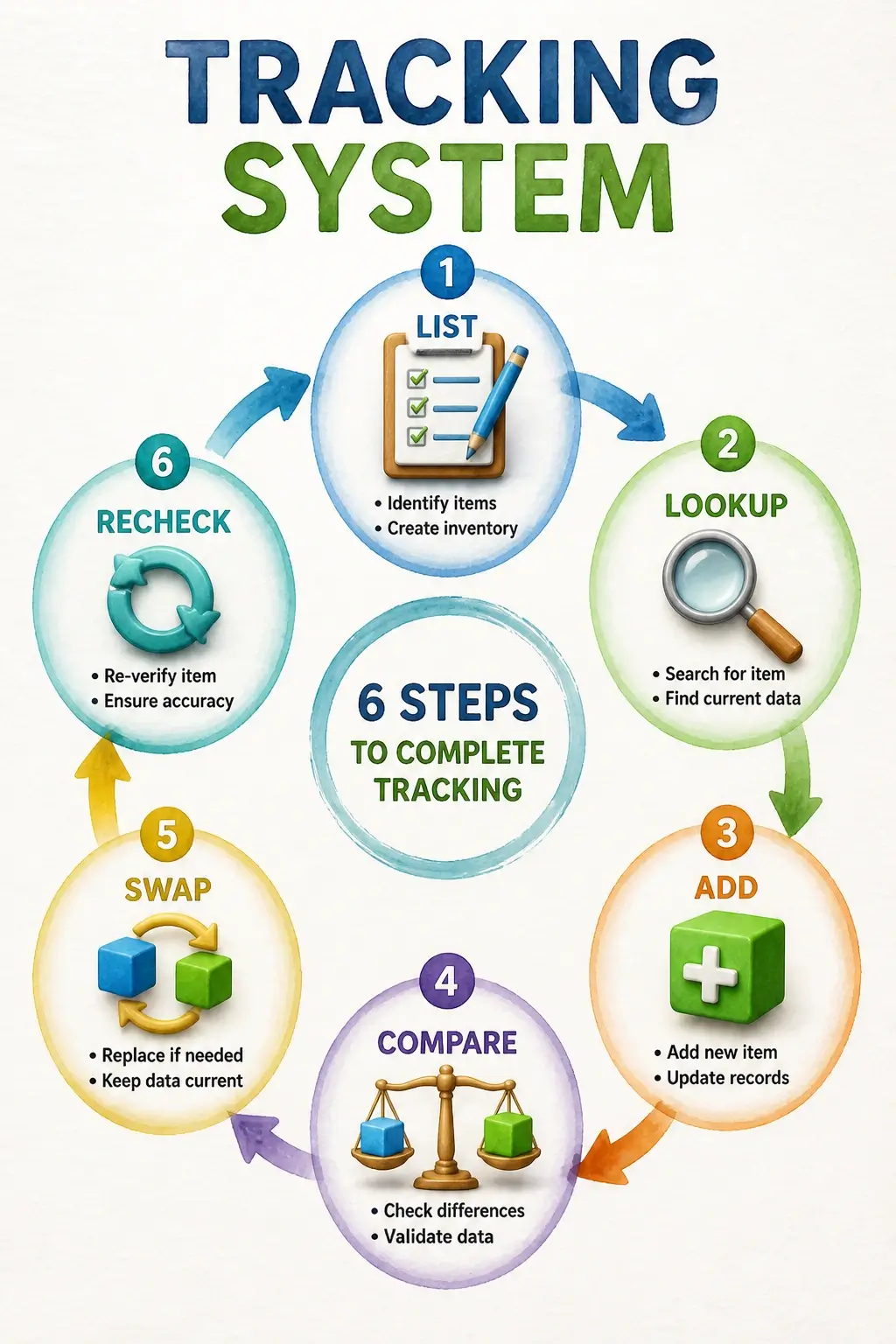
Here’s the entire system in one sentence: List, Lookup, Add, Compare, Swap, Recheck, and be kind to yourself.
The alarming binary warnings you’ll encounter on pregnancy forums-“any caffeine over 200mg is dangerous”-don’t reflect what the clinical evidence actually shows. ACOG and the Royal College of Midwives acknowledge that while some studies show associations between higher caffeine intake and miscarriage or low birth weight, others-particularly those looking at intakes below 300mg-do not find the same relationship. The true risk picture is a gradual slope, not a cliff edge. The 200mg guideline is a conservative, practical target for everyone, not a threshold where harm switches on like a light.
Prenatal behavioral researchers who study maternal dietary compliance remind us that anxiety and lifestyle factors around food choices can themselves affect pregnancy outcomes. The anxiety of a single mistake is often more impactful on your wellbeing than the caffeine itself.
Here’s a visual summary of the full tracking system and how to handle the moments when things don’t go perfectly:
You have the knowledge now. You have a system that works. You can enjoy your pregnancy without caffeine-related fear hanging over every cup.
Key Takeaways on Tracking Caffeine During Pregnancy
- By the third trimester, your body’s caffeine half-life stretches to 11–15 hours, meaning caffeine lingers far longer than it did before pregnancy.
- Your baby cannot metabolize caffeine at all-it crosses the placenta freely and accumulates because the fetal liver lacks the enzymes to break it down.
- The 200mg daily limit covers all caffeine sources combined, not just coffee-chocolate, tea, cola, and certain pain relievers all count.
- A single Starbucks Grande drip coffee can contain around 310mg, exceeding the entire daily limit on its own-serving size is the most common tracking mistake.
- One day accidentally over 200mg is not an emergency; it’s the consistent daily average over time that shapes fetal risk, not a single outlier.
- Gradual caffeine reduction over several days prevents withdrawal headaches-abrupt cuts are a known trigger for migraine attacks during pregnancy.
Frequently Asked Questions About Tracking Caffeine During Pregnancy
Can I have exactly 200mg of caffeine every day while pregnant?
Yes, 200mg per day is the widely accepted safe upper limit set by ACOG, the FDA, and similar health authorities-staying at or below it is considered appropriate for most pregnancies. That said, it’s a ceiling, not a target; if you naturally consume less, there’s no reason to top up.
What does 200mg of caffeine actually look like in real food and drink?
200mg is roughly one 12oz home-brewed coffee, or about three single espresso shots, or four cups of black tea. It’s also the amount in one Starbucks Tall (12oz) drip coffee-which is why ordering anything larger at a coffee shop can push you over the limit in a single drink.
Is it safer to quit caffeine entirely during pregnancy?
There’s no established harm from eliminating caffeine, so it’s a perfectly valid choice-but it’s not required by any major health guideline. If cutting out caffeine causes significant withdrawal symptoms or stress, a gradual reduction to under 200mg is just as protective and far more sustainable.
Does caffeine affect all three trimesters equally?
No. The risk and the physiology both shift as pregnancy progresses. Caffeine metabolism slows significantly by the third trimester, so the same amount of caffeine has a longer-lasting effect late in pregnancy than it did in the first trimester. Some women find they become more sensitive to caffeine’s effects as their due date approaches.
Does decaf coffee count toward my 200mg limit?
Technically yes, but the amount is negligible. Decaf contains roughly 2–5mg per 8oz cup, so you’d need to drink 40 cups to hit the 200mg mark. For practical tracking purposes, decaf doesn’t need to be counted unless you’re drinking an unusual volume of it.
What should I do if I realize I’ve gone over 200mg today?
Don’t panic-return to your plan tomorrow. A single day over the limit is highly unlikely to cause harm; the risk profile that concerns clinicians is a consistent pattern of high intake over time, not one outlier day. Stress and guilt are not medically helpful responses here.
Are herbal teas always caffeine-free during pregnancy?
Not always. Teas labeled “herbal” that contain guarana, yerba maté, kola nut, or green tea extract all deliver caffeine. Rooibos, peppermint, chamomile, and ginger are genuinely caffeine-free-but always check the ingredient list, especially on “energy” or “wellness” blends.
How do I track caffeine if I eat out or grab coffee on the go?
Most major coffee chains publish detailed nutrition information on their websites and apps-checking before you order takes about 30 seconds and removes all the guesswork. For restaurant meals, the safest approach is to estimate conservatively: assume a standard brewed coffee is 140mg and an espresso shot is 63mg, and you’ll stay close enough to accurate for practical tracking.
References
- Caffeine and Pregnancy: ACOG Clinical Guidance – acog.org
- Caffeine: EFSA Scientific Opinion on Safety – efsa.europa.eu
- Maternal Caffeine Intake and Pregnancy Outcomes: Cohort Data – pubmed.ncbi.nlm.nih.gov
- Chocolate as a Caffeine Source in Pregnancy: Dietary Research – pubmed.ncbi.nlm.nih.gov
- Prenatal Caffeine Intake and Fetal Growth: Italian Cohort Study – pubmed.ncbi.nlm.nih.gov
- Methylxanthine Profiling in Espresso and Tea: Spanish Food Safety Research – pubmed.ncbi.nlm.nih.gov
- Caffeine Content in Common Beverages: CSPI and Mayo Clinic Data – mayoclinic.org
- Maternal Self-Reported Caffeine and Urinary Biomarkers: Validity Study – pubmed.ncbi.nlm.nih.gov
- UK Food Standards Agency: Caffeine in Pregnancy Guidance – food.gov.uk
- Decaffeination Processes and Methylxanthine Reduction: European Food Chemistry Research – pubmed.ncbi.nlm.nih.gov
- Caffeine Withdrawal and Migraine: Dr. Karl B. Alstadhaug Clinical Research – pubmed.ncbi.nlm.nih.gov
- Caffeine, Pregnancy Outcomes, and Psychopharmacology: Dr. Jane E. James – reyjames.com