A stylized hyper-realistic 3D rendering comparing a Keurig and Nespresso coffee machine side-by-side with a modern infographic layout.
Buying Guide Brewing

Keurig vs Nespresso: Which Pod Coffee Machine Is Actually Right for You?

Pod coffee machines divide cleanly into two systems—Keurig and Nespresso—each engineered around fundamentally different decision criteria. Keurig prioritizes pod variety and low pod cost, while Nespresso delivers high brew pressure and genuine crema. We use these measurable differences in machine price, milk-frothing capability, and environmental impact to match each system to the drinker it actually serves.

Keurig vs Nespresso: Which Pod Coffee Machine Is Actually Right for You? Read More »

High-quality graphic featuring Geisha and Catimor coffee cherries in a 3D artistic style representing anaerobic fermentation process.
Coffee Beans

The Best Coffee Varieties for Anaerobic Fermentation: From Geisha to Catimor, Ranked and Explained

Anaerobic fermentation coffee varieties determine cup complexity by controlling which esters and organic acids develop inside sealed, oxygen-free tanks during coffee processing. Geisha dominates this field because its dense sucrose load feeds *Saccharomyces cerevisiae* T58, generating ethyl acetate and isoamyl acetate at concentrations we rarely achieve with Catimor’s thinner mucilage layer.

The Best Coffee Varieties for Anaerobic Fermentation: From Geisha to Catimor, Ranked and Explained Read More »

A stylized 3D infographic comparing the anaerobic washed coffee process to honey processed beans with bright artistic textures.
Coffee Beans

Anaerobic Washed & Honey Processing: How Clarity, Sweetness, and Complexity Are Built from the Tank Up

Anaerobic coffee processing transforms sealed-tank fermentation into a precision flavor tool by stripping oxygen from the environment so lactic-acid bacteria convert mucilage sugars into esters under controlled CO₂ pressure. When we apply this mechanism to depulped beans, we get clean brightness; when we retain mucilage for the honey variant, we unlock extreme sweetness—two distinct outcomes driven by one oxygen-free system.

Anaerobic Washed & Honey Processing: How Clarity, Sweetness, and Complexity Are Built from the Tank Up Read More »

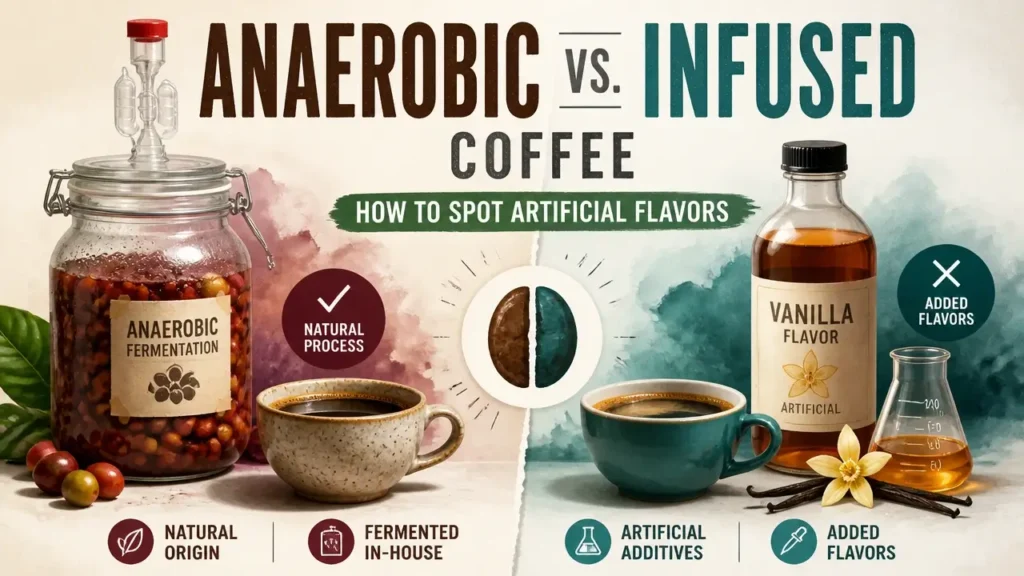
A side-by-side comparison of natural anaerobic coffee beans and chemically infused coffee, highlighting the difference between anaerobic coffee flavor vs artificial flavor.
Coffee Beans

Anaerobic vs. Infused Coffee: How to Spot the Real Flavor Difference

Coffee flavor reveals its true origin through three measurable scoring dimensions—acidity intensity, fruit-forward clarity, and mouthfeel smoothness—that separate fermentation-driven complexity from added compounds. Anaerobic fermentation builds layered, evolving profiles across all three dimensions, while artificial flavoring delivers single-note predictability. We use this rubric to give you a reliable, criteria-based method for identifying exactly what’s in your cup.

Anaerobic vs. Infused Coffee: How to Spot the Real Flavor Difference Read More »

A stylized 3D artistic rendering showing the brewing process of anaerobic coffee with sensory flavor profile icons.
Uncategorized

How to Brew Anaerobic Coffee: Cold-Bloom, Pulse-Pour, and Sensory Checkpoints for a Repeatable Cup

Anaerobic coffee demands a fundamentally different brewing approach because its sealed-fermentation process produces highly porous beans that release soluble acids and volatile compounds faster than any conventional roast. We control this accelerated extraction through a cold-bloom pre-infusion, a coarser grind size, low-temperature water, and a disciplined pulse-pour schedule that together preserve the process’s signature fruit aromas.

How to Brew Anaerobic Coffee: Cold-Bloom, Pulse-Pour, and Sensory Checkpoints for a Repeatable Cup Read More »

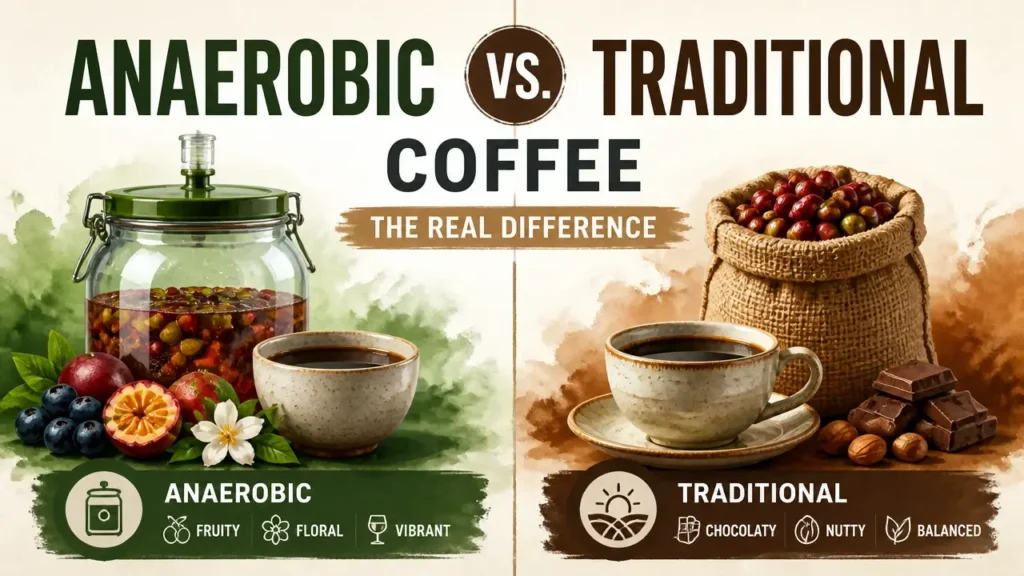
Hyper-realistic 3D magazine cover showing anaerobic coffee beans contrasted with traditional coffee beans, rendered with a hand-painted watercolor texture and bright studio lighting.
Coffee Beans

Anaerobic vs. Traditional Coffee Processing: What the Real Differences Mean for Your Cup

Coffee processing method determines every sensory outcome in your cup—acidity sharpness, body weight, and batch-to-batch stability—before brewing even begins. Anaerobic fermentation locks beans in oxygen-free tanks, concentrating lactic acids and syrupy body, while traditional aerobic methods produce cleaner, more predictable flavor profiles. We use five criteria—acidity, body, stability, extraction difficulty, and price premium—to show exactly where each method wins.

Anaerobic vs. Traditional Coffee Processing: What the Real Differences Mean for Your Cup Read More »

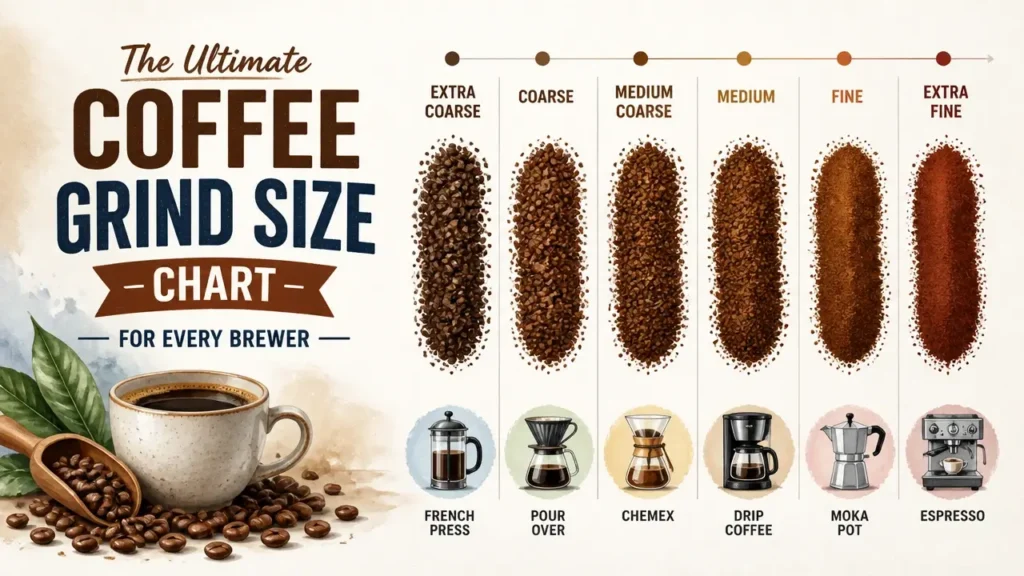
A professional infographic showing a coffee grind size chart for various brewing methods including espresso, pour-over, and French press.
Brewing

The Complete Coffee Grind Size Chart: Micron Ranges, Brewing Methods & Calibration for Every Brewer

A coffee grind size chart maps grind size categories — from extra-fine espresso particles at 100–300 microns to coarse French press grounds at 700–1,000 microns — directly to brewing methods through the surface-area principle. We use this micron-to-method relationship as a calibration baseline, but burr grinder uniformity and co-dominant brewing variables determine whether that baseline actually delivers repeatable extraction.

The Complete Coffee Grind Size Chart: Micron Ranges, Brewing Methods & Calibration for Every Brewer Read More »

Hyper-realistic 3D render of a steaming cup of black coffee on a glossy surface, with watercolor texture accents and modern infographic layout, bright studio lighting
Brewing

Black Coffee Done Right: A Complete Guide From Bean Quality to Brewing Method

Black coffee transforms fresh, high-quality beans into a pure, additive-free cup where every flavor note stands exposed. Bean origin, water mineral content, grind consistency, and brewing temperature function as interdependent variables—adjust one, and the extraction shifts measurably. We use these four levers together to build a repeatable process that produces a balanced, deeply flavorful black coffee every single time.

Black Coffee Done Right: A Complete Guide From Bean Quality to Brewing Method Read More »

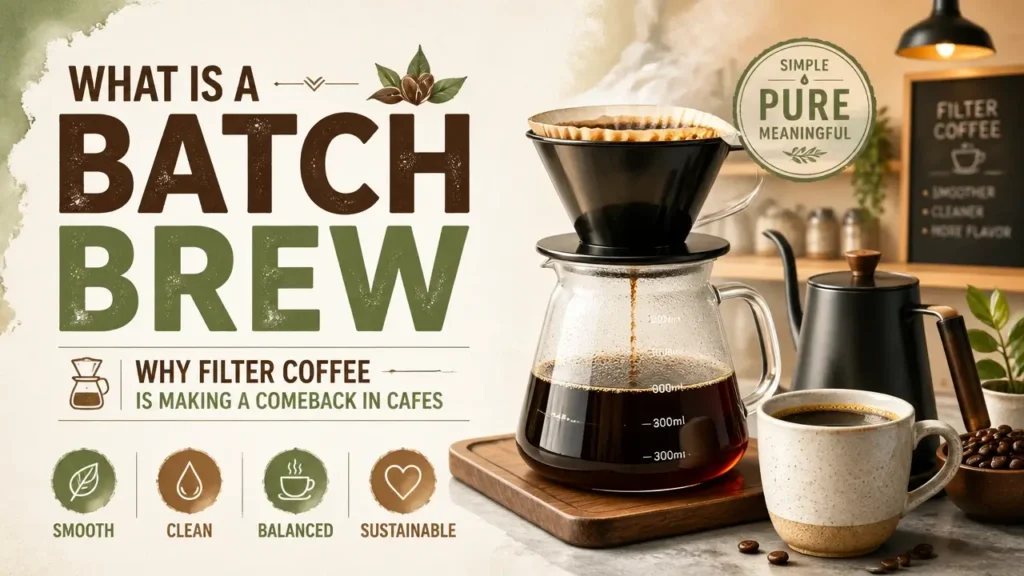
Hyper-realistic 3D rendering of high-quality batch brew coffee in a modern cafe setting
Brewing

What Is Batch Brew Coffee? Why Specialty Cafés Are Bringing Filter Coffee Back

Batch brew coffee delivers café-grade filter coffee at scale by automating extraction variables—water temperature, flow rate, and contact time—that manual pour-over leaves to individual baristas. We recognize this controlled consistency as the core reason specialty cafés are reintroducing it: ground coffee meets precisely calibrated brew water every cycle, eliminating cup-to-cup variance without sacrificing flavor integrity.

What Is Batch Brew Coffee? Why Specialty Cafés Are Bringing Filter Coffee Back Read More »

Professional magazine cover featuring stylized coffee and athletic performance concepts for endurance and muscle recovery.
Health

Caffeine for Athletic Performance: Dose, Timing, and Muscle Recovery Strategies That Actually Work

Caffeine enhances athletic performance by blocking adenosine receptors, triggering glycogen sparing and improved calcium handling in active muscle fibers. At 3–6 mg per kg of body weight, timed 45–60 minutes before exercise, it demonstrably raises endurance output, strength, and sprint capacity. We understand this works because plasma concentration peaks precisely when metabolic demand is highest, converting a dietary molecule into a measurable competitive advantage.

Caffeine for Athletic Performance: Dose, Timing, and Muscle Recovery Strategies That Actually Work Read More »

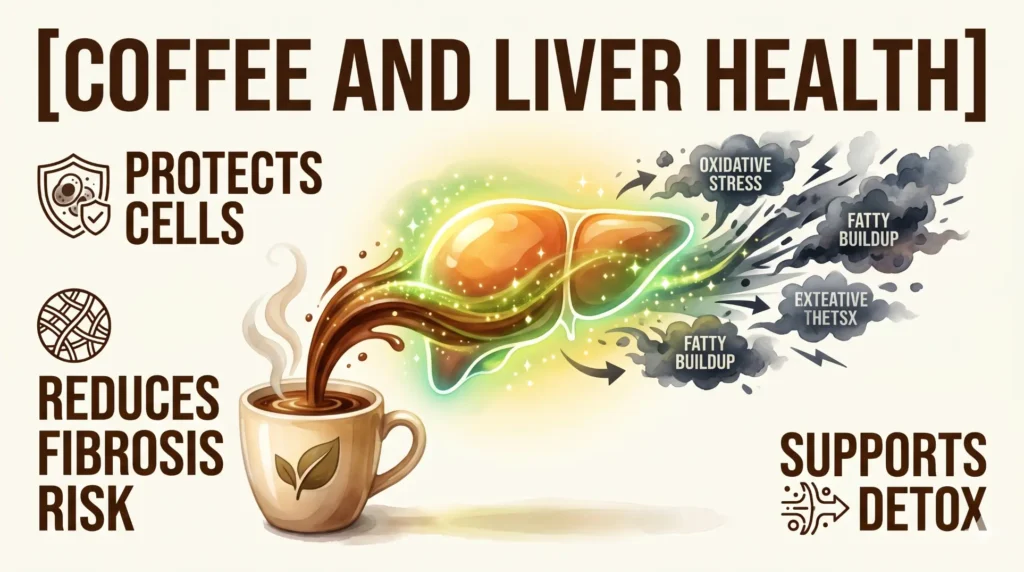
Infographic illustrating the benefits of coffee on liver health, including cell protection, fibrosis risk reduction, and detoxification support.
Health

Coffee and Liver Health: How 2–4 Daily Cups Defend Against Fatty Liver, Fibrosis, and Cirrhosis

Coffee actively defends the liver by reducing the relative risk of NAFLD, slowing fibrosis progression, and lowering hepatocellular carcinoma rates—outcomes driven by chlorogenic acid, kahweol, cafestol, and paraxanthine working across multiple biological pathways. We see the strongest protection at two to four daily cups, where these compounds collectively suppress inflammation and fat accumulation before scarring can advance to cirrhosis.

Coffee and Liver Health: How 2–4 Daily Cups Defend Against Fatty Liver, Fibrosis, and Cirrhosis Read More »

Magazine-style cover showing a woman drinking coffee with a digital infographic overlay illustrating the digestive system, microbiome, and bowel function.
Health

Coffee and Gut Health: How Every Cup Shapes Your Digestion and Microbiome

Coffee reshapes your gut through three simultaneous mechanisms: it activates the gastrocolic reflex to accelerate colonic motility, delivers polyphenols and soluble fiber that selectively feed beneficial bacteria like *Lawsonibacter asaccharolyticus*, and drives short-chain fatty acid production that reinforces the gut barrier. We see these effects in both caffeinated and decaf varieties, confirming non-caffeine compounds as the primary drivers.

Coffee and Gut Health: How Every Cup Shapes Your Digestion and Microbiome Read More »

Scroll to Top