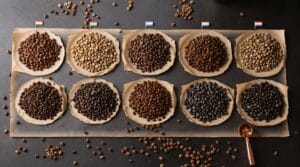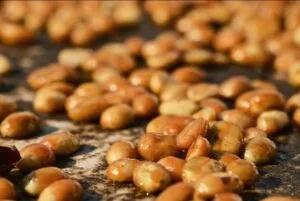

Anaerobic coffee is wired differently: its oxygen-starved fermentation cranks up porosity and loads the bean with volatile compounds that punish a standard brew. Go too hot, grind too fine, and you’ve got a sharp, boozy mess in 30 seconds flat.
The fix is a three-part discipline: a cold-bloom to throttle the acid surge, a pulse-pour schedule with low-temperature water to protect fruit aromatics, and a dialed 1:15–16 ratio with sensory checkpoints that replace guesswork with taste.
Once you have mastered this brewing discipline, you can experiment with the best coffee varieties to further elevate your cup’s profile.
To better understand how these pressurized processes alter bean architecture from the ground up, you can explore Carbonic Maceration Coffee The Complete guide for deeper agricultural insights.
Why Anaerobic Beans Need a Coarse Grind and Cold Bloom
Unusually porous anaerobic beans release soluble acids faster than conventionally processed coffee, so without a coarser grind and a cold-bloom to slow that initial surge, you’re fighting the extraction from the first pour. Think of it this way: the sealed fermentation environment that creates those wild fruit notes also restructures the bean’s cell walls, leaving them more open and ready to give up their compounds the moment hot water touches them. That porosity is a benefit when controlled, and a problem when it isn’t.
Both adjustments work together. The coarser grind limits how much surface area you expose to water. The cold bloom throttles the rate at which soluble acids escape in the first critical seconds. Get either one wrong and you’re not pulling out more flavor, you’re pulling out the wrong flavor, faster.
Why anaerobic beans need a coarser grind
Coarser grind settings protect anaerobic beans from their own porosity. Because the pressurized fermentation process leaves the bean’s structure more open, a fine grind exposes an enormous amount of surface area to water all at once, and the first compounds to rush out at that scale aren’t the fruit esters you paid for. They’re the sharp acidic compounds and hay-like off-flavors that live near the surface of an over-extracted puck.
The fix is straightforward: grind to a sea-salt texture. On a Comandante, that’s roughly 25–30 clicks. In absolute terms, you’re targeting around 750–800 µm, noticeably coarser than you’d use for a washed Ethiopian. It feels counterintuitive if you’re used to dialing finer to get more flavor, but with anaerobic beans, finer just means faster and more chaotic extraction. Coarser grind size gives you control over when the good stuff comes out.
To prevent these undesirable aromas from ruining your cup, mastering fermentation defect control at the processing level is just as important as your brewing technique.
The cold-bloom slows your soluble acids
Cold-bloom technique works by using reduced water temperature to deliberately slow the extraction rate during the most volatile phase of the brew. Here’s the procedure: before your main pour, add roughly 30% of your total brew water at around 60 °C (140 °F), not boiling, not room temperature, and let the grounds sit for 30 seconds.
That lower temperature matters for two reasons. First, it slows the initial rush of soluble acids that would otherwise dominate the cup. Second, it gives volatile off-flavors, the ones that smell faintly of fermentation funk or, in worst-case anaerobic defects, something closer to barnyard, a window to escape into the air rather than dissolve into your brew.
This is the same principle behind why cold brew reads differently on the palate. Dr. Mackenzie Batali, lead author of a sensory study at the UC Davis Coffee Center, put it plainly:
“cold brew was slightly less bitter, sour, and rubbery tasting, as well as more floral.”
The cold bloom doesn’t go that far, you’re still brewing hot, but it borrows the same logic for those first 30 seconds. By throttling the surge of soluble acids early, the rest of the brew can extract the fruit and florals at a pace that doesn’t drag the off-notes along with them. Coarse grind size limits how much the water can grab; cold bloom controls how fast it grabs it. Together, they’re what makes an anaerobic bean brewable rather than just interesting.
Precise pulse-pours and low-temperature water keep anaerobic fruit aromas intact
Deliberate low-temperature water and a measured pulse-pour schedule protect anaerobic coffee’s volatile fruit aromatics by slowing solute release and reducing the thermal shock that drives off delicate esters before they reach your cup. Here’s the short version of why that matters: anaerobic fermentation loads the bean with fragile, high-volatility compounds: the ones that smell like mango, passionfruit, or red wine. Heat and turbulence are their enemies. Pour too hot or too aggressively, and those aromatics flash off or get buried under sharp, sour acids that extract fast when the slurry temperature spikes.
The bloom from H2-1 already slowed that rapid early release. Now the pulse-pour and water temperature work together to keep extraction steady: hot enough to pull the sweet, floral sugars, cool enough to leave the harsh acidity sitting in the grounds where it belongs.
Low-temperature water hits the right soluble sugars
Low-temperature water in the 88–92 °C (190–198 °F) range is your primary lever for separating the compounds you want from the ones you don’t. Soluble sugars and floral esters dissolve readily at this range. The sharper chlorogenic acids and astringent tannins need higher heat to fully release, so by staying below 93 °C, you’re essentially leaving them behind.
One thing worth knowing: temperature advice alone is incomplete. If your grind is too fine, even 88 °C water will over-extract because the surface area is too high and contact time too long. The coarser grind from the bloom step isn’t optional, it’s the other half of this equation. Temperature and grind size work as a pair, not independently.
The practical implication is that fewer, larger pours are better than many small ones here. Every time you add water, you’re also adding heat to a slurry that’s been cooling between pours. More water per pour means the slurry temperature recovers faster and stays in range longer. Too many tiny pours and the bed cools unevenly, some zones drop below the extraction threshold while others spike when the next pour hits.
A 3-pour schedule keeps agitation gentle
A straightforward pulse-pour schedule after the bloom runs three pours of roughly 40 g each, or about one-third of your remaining water per pour, delivered in a slow spiral from the center outward. The target total brew time sits between 3:30 and 4:00 minutes.
Patrik Stridsberg, Co-Founder of 3TEMP, and co-designer of the Hipster brewer, explains the mechanical logic directly:
“We can choose the size of the pulses. Fewer pulses equals more water in each pulse. More pulses equals less water in each pulse. If we have few pulses, the water hits the bed harder [because there’s more of it] and we have a shorter extraction time, and more pulses gives us a longer extraction time.”
For anaerobic coffee specifically, that means three pours is the sweet spot: enough separation to let the bed drain partially between pours (which extends extraction time and keeps it even), but few enough that each pour volume is substantial enough to maintain slurry temperature without spiking it.
The spiral motion matters for the same reason. Pouring in a tight center stream drives grounds against the filter walls and creates uneven channels. A slow outward spiral wets the bed evenly and keeps agitation low. Aggressive stirring between pours is one of the most common mistakes here: it looks like it’s helping even things out, but it re-suspends fines, clogs the filter, and extends brew time past the point where acidity starts climbing. A single gentle swirl at the very end, if the bed looks uneven, is enough.
Here’s a visual walkthrough of the exact technique: the pour motion, timing, and why a light swirl at the end is all you need:
With temperature dialed in and your pour schedule running smoothly, the last piece is knowing what a correctly brewed cup actually tastes like, and what to adjust when it doesn’t.
Getting the Ratio Right Tells You Everything
Precise coffee-to-water ratio and reliable sensory checkpoints work together in anaerobic brewing to separate a clean, fruit-forward cup from one that tastes like fermentation gone sideways. The ratio sets the extraction ceiling: how much dissolved material the water can pull before it starts grabbing the wrong stuff. The sensory cues are your real-time readout, because no standard TDS or extraction yield has been established for anaerobic brews the way it has for conventional pour-overs.
That last point matters more than it sounds. With a regular washed Ethiopian, you can dial in by hitting a target TDS on a refractometer and call it done. With anaerobic, the fermentation compounds interact with extraction differently depending on the specific lot, the processing duration, and even your water. Two brews with identical TDS numbers can taste completely different. So the instrument you’re trusting here is your palate, not a meter.
What ties ratio and sensory feedback together is water chemistry. A filtered water blend sitting around 80 ppm (with calcium, bicarbonate, and magnesium balanced in the mix) acts like a tuning fork for the fruit notes. Hard water suppresses them. Distilled water makes the acidity feel sharp and hollow. The 80 ppm mineral profile gives the solutes something to bind to without competing with the delicate esters the fermentation created.
The 1:15 ratio is your starting anchor.
Bright, clean acidity is the first sensory signal that your ratio and extraction are working together. Start at 1:15 to 1:16: 18 g of coffee to 270–288 g of water is a practical working range. That window keeps the brew strong enough to carry the fruit and floral character without tipping into the muddy over-extraction zone where boozy, hay, or medicinal notes show up.
Why is TDS useless for dialing in anaerobic coffee?
No standard extraction yield exists for anaerobic brews because fermentation compounds interact with water differently depending on lot, processing duration, and your specific water. Two brews with identical TDS can taste completely different. Your palate, not a meter, is the instrument here. The five sensory checkpoints matter way more than hitting a number.
Can you use a fine grind if you adjust temperature and bloom timing?
No. Grind size and porosity are mechanically linked. A fine grind on anaerobic beans exposes too much surface area to water all at once, regardless of temperature or bloom duration. You’re fighting thermodynamics, not fixing it. Coarse grind limits surface area exposure, giving you actual control over when the good stuff comes out.
What’s the real difference between pulse-pouring three times versus five times?
Fewer pulses mean more water per pour, which spikes slurry temperature higher and keeps it there longer. More pulses mean shorter brew time and uneven cooling between pours. Three pours hits the sweet spot: enough separation to extend extraction evenly, but substantial enough per pour to maintain slurry temperature without spiking it. It’s about thermal stability, not just agitation.
Why does a flat-bottom dripper fix channeling problems with anaerobic beans?
Anaerobic beans have denser cell structure from pressurized fermentation, which resists water flow more than washed beans. Flat-bottom drippers distribute pressure evenly across the entire puck instead of letting water find a low-resistance path down the sides. A plastic V60 with a finer mesh filter does the same job. Equipment matters here because the bean structure demands it.
If your brew time is significantly fast or slow, what actually went wrong?
Finish fast and you’re channeling: water found a shortcut through the puck. Finish slow and your grind is too fine or the puck is clogging from fines. The 4-minute window is your confirmation signal. Land there with a cup passing all five sensory checkpoints, and you’ve got a repeatable brew. It’s not just timing, it’s a diagnostic tool.
For sustained quality, understanding how to protect anaerobic coffee beans from oxidation is also key.