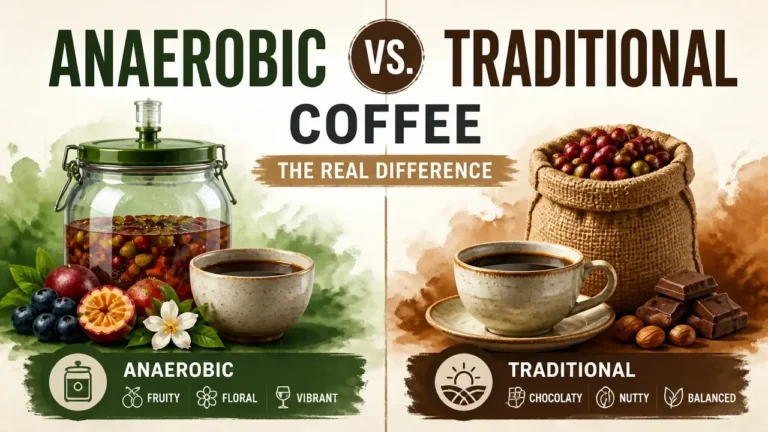

The anaerobic process doesn't just taste different, it's built differently. Sealed from oxygen during fermentation, it produces lactic acids and exotic compounds that traditional aerobic processing simply can't replicate. The result lands in your cup as something wilder, heavier, more polarizing.
But different isn't automatically better. Traditional coffee processing delivers cleaner acidity, predictable body, and batch stability that anaerobic methods still struggle to match. Before picking a side, you need the right criteria, acidity, body, extraction difficulty, price premium, and an honest head‑to‑head.
How to Judge Anaerobic vs. Traditional Coffee Before You Buy
Precise coffee processing criteria, acidity, body, and stability, give you the actual tools to compare anaerobic and traditional methods before you spend money on a bag. Without them, you're just reading marketing copy. With them, you can look at any coffee's process and predict how it'll behave in your cup and under your brewer.
Each criterion connects directly to what happens during processing, which means understanding the heat and fermentation effects tells you what to expect before you ever taste it.
Think of these three criteria as a triangle. Acidity tells you the character of the brightness. Body tells you the weight and texture. Stability tells you how forgiving the coffee is when your grind is slightly off or your water temp drifts. Each criterion connects directly to what happens during processing, which means understanding the process tells you what to expect before you ever taste it.
That's the frame we'll build here. First, a quick map of the four classic processes and their flavor signatures. Then, a closer look at what acidity, body, and stability actually measure — plus the practical factors that will either seal the deal or break it.
The four classic processes and their flavor signatures
Every coffee processing method makes one fundamental decision: how long does the coffee seed stay in contact with the fruit, and in what environment? That single variable drives almost everything you taste in the cup.
Here's how the four main methods line up:
A real‑world look at where processing begins — washed tanks and drying patios at origin, before the flavor differences even exist yet.
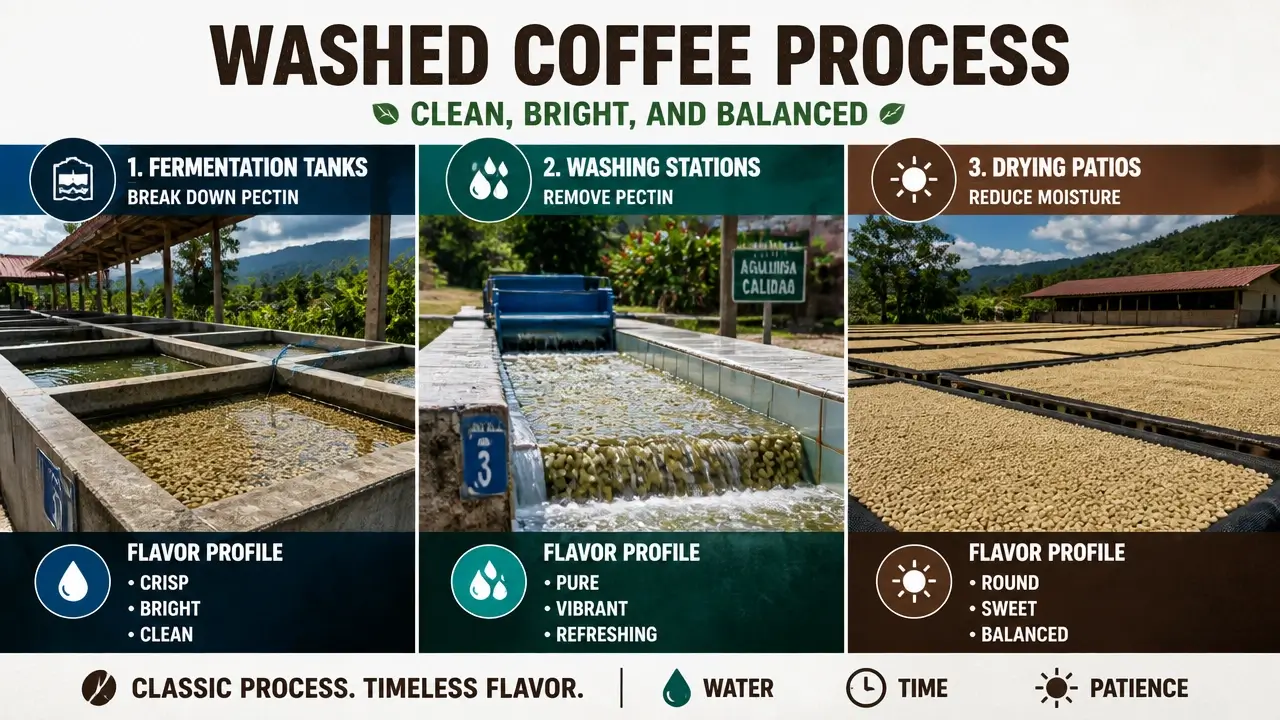
- Washed (Wet): The fruit is stripped away immediately after harvest. The seed ferments briefly in water tanks to remove the remaining mucilage, then dries clean. Result: a clean, bright cup where the bean's origin character comes through without fruit interference. High acidity, light body, transparent flavor.
- Natural (Dry): The whole cherry dries in the sun with the fruit intact — sometimes for weeks. Sugars and fruit compounds slowly migrate into the seed. Result: sweet, fruit‑forward, and full‑bodied, often with berry or wine notes. Lower acidity, heavier texture.
- Honey: A middle path — some fruit is removed, some stays. Depending on how much mucilage is left (yellow, red, black honey), the cup lands somewhere between washed clarity and natural richness. Result: rounded and syrupy, with moderate acidity and body.
- Anaerobic: The cherries or seeds ferment in sealed, oxygen‑free tanks where pressure and CO₂ build up. This controlled, low‑oxygen environment amplifies specific fermentation byproducts — particularly lactic acid and ethyl acetate — that don't form in open‑air processing. Result: complex, funky, and intensely acidic, with flavor notes that can range from tropical fruit to fermented wine to spirits.
Bram, a coffee expert featured in Barista Magazine, puts the commercial weight of this directly:
"It can drastically increase a coffee's cup score and hence the value of the coffee."
That cup score bump isn't magic — it's chemistry. Anaerobic fermentation produces flavor compounds that open‑air methods simply can't generate, which is why the method commands attention from competition baristas and specialty roasters alike.
What acidity, body, and stability actually tell you
Sensory criteria like acidity and body aren't just tasting notes — they're signals about what happened chemically during processing, and they predict how the coffee will behave in your specific brewing setup.
Acidity is the most misunderstood of the three. It's not sourness. Sourness is a flaw — it means something went wrong in extraction or roasting. Acidity is a structural quality. Washed coffees tend toward citric and malic acidity — bright, clean, fruit‑like. Anaerobic coffees shift toward lactic acidity — softer, rounder, almost creamy — but can also carry acetic acidity if fermentation ran long, which reads as sharp or vinegary. The type of acid matters as much as the intensity.
Body is the texture you feel in your mouth — the weight and coating sensation. Natural and anaerobic coffees tend toward fuller body because more soluble compounds from the fruit migrate into the seed during extended fermentation. The washed process is lighter and cleaner on the palate. For espresso drinkers, this matters a lot — a heavy‑bodied anaerobic can feel luxurious as an espresso but muddy in a pour‑over if you're not careful with grind and ratio.
Stability is where most buyers get caught off guard. It measures how predictable the cup is across different brew sessions and how much the coffee tolerates small variations — in grind size, water temperature, or dose. Stability is generally highest with the washed process. Their flavor profile is narrow and consistent, which makes them forgiving. Stability is lowest with the anaerobic process. The same bag can taste transcendent one morning and oddly flat the next if your grind drifted two clicks. Alejandro Sevillano, an Authorised SCA Trainer, captures the intensity of what anaerobic fermentation adds:
"The increase in acidic compounds results in flavour profiles that you may not be able to create using other processing methods. As a wine and whisky lover, the boozy mouthfeel of anaerobic fermented coffees also reminds me of certain alcoholic spirits."
That boozy, spirit‑like quality is exactly what makes the anaerobic process polarizing. The same compounds that create complexity at the right fermentation depth create something unpleasant when fermentation goes too far. Over‑fermentation is the single biggest deal‑breaker with anaerobic beans — it produces "funky" or "winey" notes that cross the line from interesting into nausea‑inducing for some drinkers. It's not a flaw in your palate; it's a real physiological response to specific fermentation byproducts at elevated concentrations.
One emerging middle ground worth knowing: the washed‑anaerobic hybrid, which ferments the coffee anaerobically but then strips the fruit and finishes with a washed‑style drying. You get the lactic complexity without the heavy fruit funk — a cleaner version of the anaerobic flavor signature that's more forgiving to brew and more accessible to drink daily.
Beyond the three primary criteria, three ancillary factors will shape your real‑world decision:
- Extraction difficulty: Anaerobic coffees are less forgiving to extract. They reward precision and punish sloppy technique.
- Price premium: Anaerobic processing is labor‑intensive and equipment‑dependent. Expect to pay significantly more per bag compared with washed or natural coffees of equivalent origin quality.
- Label transparency: Not all "anaerobic" labels tell you the same story. Fermentation time, tank pressure, cherry vs. seed fermentation — these details change the cup dramatically. A transparent producer will list them. An opaque one won't, and that's a risk.
Now that we have the scoring dimensions in place — acidity type, body weight, stability, extraction difficulty, price, and label clarity — we can actually put the two approaches side by side with real numbers.
How Anaerobic and Traditional Aerobic Coffee Actually Compare
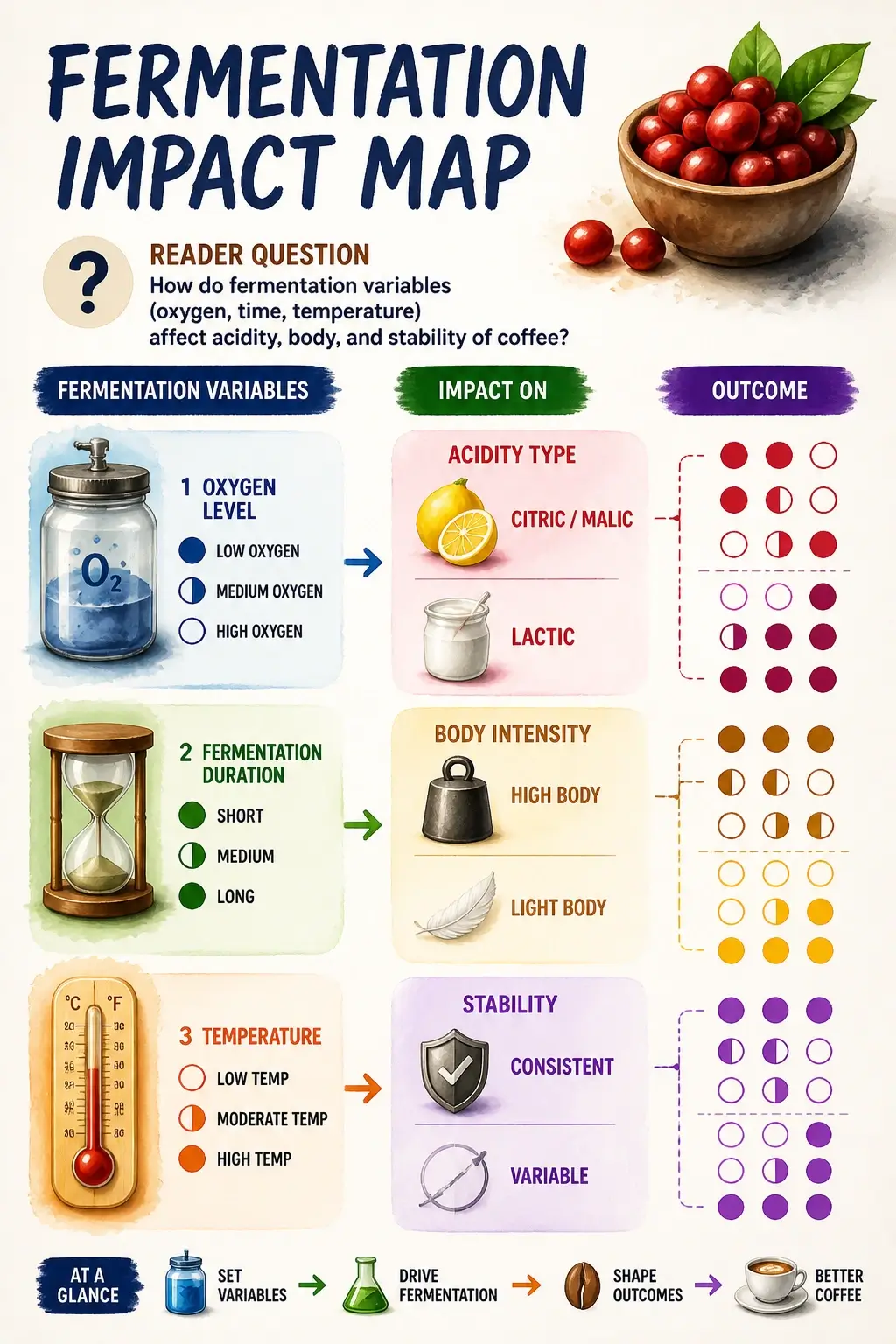
Measured sensory attributes — acidity, body, and stability — split sharply between anaerobic and traditional aerobic coffee processing, and those differences flow directly from one variable: oxygen. When you seal the fermentation tank and cut oxygen out, the microbial community shifts from aerobic bacteria (which produce bright citric and malic acids) to lactic acid bacteria, which work slower and produce softer, rounder acids. That single change cascades through every cup you brew.
For an even deeper exploration of oxygen-deprived fermentation techniques and their distinct flavor yields, consider examining Carbonic Maceration Coffee The Complete guide.
How fermentation changes acidity, body, and stability
Acidity in traditional aerobic processing — whether dry or wet — tends to be bright and high‑frequency. You get the clean, citrus‑forward snap of citric acid or the apple‑like tartness of malic acid. These are the acids that make a washed Ethiopian feel like biting into a nectarine. The anaerobic process softens all of that. The lactic acid produced in the sealed tank reads as a rounder, almost creamy tartness — easier on the stomach and noticeably less aggressive on the palate.
Body works differently than most people expect. Traditional natural (dry) processing gives you full, heavy body because the fruit dries on the bean and the oils absorb into the seed over weeks. Anaerobic beans can actually feel *lighter* in body by comparison — but the flavor intensity hits harder. You're getting concentrated, exotic fruit notes (think fermented tropical fruit or wine‑like sweetness) that can dominate the entire cup. It's not that the body is weak; it's that the flavor is so loud it shifts your perception.
Stability is where traditional processing has a clear, structural advantage. Aerobic methods have been refined over generations. The variables — drying time, washing channels, raised‑bed airflow — are well understood, and a good producer can dial them in reliably. Anaerobic batches are far more sensitive. Fermentation time, tank temperature, and starting sugar content all interact. A batch that ferments 12 hours too long doesn't just taste different — it can taste wrong. Over‑fermented anaerobic coffee has a distinctive barnyard or acetone note that no amount of good brewing will fix.
The infographic below maps exactly how those three fermentation variables — oxygen level, time, and temperature — translate into the acidity, body, and stability outcomes you experience in the cup:
Neil, Head Roaster at Origin Coffee Roasters, frames the palate journey this way:
"For people who are new to specialty coffee, natural processed coffees often captivate them with their distinct and unfamiliar flavours. However, as your palate becomes more refined, the subtlety and complexity of the washed process often become more apparent and appreciated."
The anaerobic process sits even further along that spectrum than the natural process, which means the coffees that feel most exciting to a new palate can also be the ones that feel exhausting once you've been drinking specialty coffee for a few years.
Brewing difficulty and price are the real switching costs
Beyond the sensory numbers, what you see on the bag label can hide crucial brewing adjustments.
Extraction difficulty is the practical consideration that catches most home brewers off guard. Anaerobic beans behave more like a dark roast than a light one — even when they're roasted light. The fermentation process alters the cell structure of the bean, making it extract faster and more aggressively. The fix is counterintuitive: brew cooler (around 88–90 °C instead of the standard 93–96 °C), grind coarser, and reduce agitation. Most roasters don't print any of this on the bag. They'll note the processing method, sometimes the fermentation vessel, but fermentation time, oxygen levels, and fruit retention details are rarely disclosed. That leaves you experimenting blind until you stumble onto the right parameters.
Traditional aerobic processing — washed, natural, or honey — extracts predictably within standard brewing parameters. No special adjustments needed. You can follow the roaster's generic brew guide and land somewhere reasonable.
Then there's the price gap, which is a consistent decision point for anyone buying regularly. The price premium for anaerobic beans typically runs $20–$35+ per 250 g, sometimes higher for competition‑grade lots. Traditional specialty beans sit at standard specialty pricing — call it a baseline of $12–$18 per 250 g depending on origin and roaster. That's a 30–50 % premium for anaerobic, every single time you reorder. For someone buying a bag every two weeks, that math adds up fast.
| Processing Method | Acidity | Body | Stability | Extraction Difficulty | Price Premium |
|---|---|---|---|---|---|
| Anaerobic | Soft, lactic | Light‑medium, intense fruit | Lower (batch‑variable) | High — needs lower temp, coarser grind | +30–50 % |
| Traditional Aerobic | Bright, citric/malic | Light to full (method‑dependent) | High (well‑established) | Low — standard parameters work | Baseline (0 %) |
The numbers point to a real trade‑off: the anaerobic process delivers a flavor experience that traditional aerobic methods simply can't replicate — but it asks more of your brewer, your budget, and your tolerance for inconsistency. Which side of that trade‑off fits your situation depends entirely on who you are as a drinker.
Persona recommendations decide which coffee processing method wins for you
Persona‑based recommendations split cleanly across four types of coffee drinkers, and each one maps to a different point on the processing spectrum — from stripped‑clean washed beans all the way to full‑pressure anaerobic fermentation. The method that excites one person will genuinely repel another, so the honest answer to "which should I buy?" starts with knowing which camp you're in.
Here's the pattern I see play out constantly: someone starts with washed coffee, loves the clarity, then gets curious about fruit. They try a natural process bean and their world opens up. Then they hear about anaerobic and order a bag. Sometimes it's a revelation. Sometimes the funk hits them like a wet sock, and they quietly go back to their washed Ethiopian. That cycle isn't a failure — it's just the processing spectrum doing exactly what it's supposed to do.
- Beginners and clean‑taste seekers should start with washed process, full stop. The fermentation is aerobic and time‑limited, which means the microbes don't have the oxygen‑free environment they need to produce the heavier volatile compounds that create funk. You get the bean's natural acidity — bright, citrus‑forward, easy to dial in. If you want a gentle on‑ramp toward something more complex, a washed‑anaerobic hybrid gives you a small dose of lactic character without the intensity of a pure anaerobic lot.
- Fruit‑forward lovers already know what they want: body, sweetness, stone fruit. Natural and honey processes deliver that because the cherry pulp stays on the bean during drying, and the sugars ferment into the seed. These beans are forgiving to brew and easy to love.
- Adventure‑seekers are the ones who actually want to try pure anaerobic. Go for it — but go in with your eyes open. Research published in Food Chemistry confirms what specialty roasters have been saying for years: Lactococcus bacteria introduced during self‑induced anaerobic fermentation markedly increase lactic acid production alongside diacetyl, compounds that shape the bean's sensory profile at a fundamental level. Sensory evaluation linked that lactic‑acid‑rich volatile composition to a smoother, creamier mouthfeel — a genuinely different drinking experience from traditionally aerobic beans, where citric acid dominates and produces a brighter, sharper edge. That's the upside. The downside is over‑fermentation. When the sealed tank runs too long or temperature control slips, acetic acid and ethyl acetate spike, and you get vinegar or nail‑polish notes that no brewing method can fix. It's a producer‑side failure, but you're the one drinking it. If you're new to anaerobic, buy from roasters who publish their fermentation parameters and cup scores. The hybrid washed‑anaerobic style is a smarter entry point — you get the lactic creaminess with a much lower risk of the deal‑breaking funk.
- Budget‑conscious buyers should stick with traditional aerobic beans without hesitation. Anaerobic lots command a premium because the process requires sealed‑tank infrastructure, precise temperature monitoring, and higher failure rates that producers price into every successful bag. You're not getting proportionally more flavor for that premium — you're paying for novelty and process complexity. A well‑sourced washed or natural bean from a skilled producer will outperform a mediocre anaerobic lot at half the price, every time.
A quick note on sustainability claims: if you're choosing based on environmental impact, be careful. No quantitative water‑use or lifecycle‑assessment data exist for any of these processes at scale. The sustainability conversation around coffee processing is still almost entirely qualitative — directional claims, not measured outcomes. Factor that in before letting environmental marketing tip your decision.
Brewing tips by process:
- Anaerobic beans: Pull toward manual pour‑over. Drop your water temperature to 88–91 °C (190–196 °F) — the lactic volatiles are sensitive to heat and high temperatures push them toward bitterness. Go slightly coarser on your grind than you would for a comparable washed bean, and slow your pour rate. You're trying to preserve the creaminess, not blast through it.
- Traditional aerobic beans (washed, natural, honey): Standard V60 or espresso parameters work well. Washed beans handle higher extraction temperatures (92–96 °C / 197–205 °F) cleanly. Natural process beans benefit from a slightly coarser grind and a longer bloom to prevent muddiness from the higher body.
Real Talk: What Most People Miss About Anaerobic Coffee
Q: Why does anaerobic coffee sometimes taste like nail polish remover?
A: Over-fermentation in the sealed tank spikes acetic acid and ethyl acetate, creating that acetone nail-polish note no brewing fixes. It’s a producer error from poor temp or time control, not your palate—toss it and stick to roasters publishing exact fermentation specs to dodge this batch-killer.
Q: What if your anaerobic bag tastes amazing one day and flat the next?
A: Low stability means tiny grind or temp shifts wreck the lactic volatiles. You’re chasing a narrow extraction window unlike forgiving washed beans. Dial in 88-90C water, coarser grind, less agitation—still risky, so test small bags first if you’re not precise.
Q: How come anaerobic feels lighter-bodied than you’d expect from the hype?
A: Fermentation amps flavor intensity so much it overshadows the actual mouthfeel, making it seem light-medium despite fruit compounds. Don’t expect natural-process heaviness; the tropical punch dominates, which tricks your brain on texture.
Q: Why do roasters hide fermentation details on anaerobic labels?
A: Vague “anaerobic” skips tank pressure, time, or cherry vs seed, hiding what drives funk or creaminess. Opaque labels mean you’re gambling—demand specifics like 72-hour CO2 ferment to predict if it’ll wow or bomb in your brewer.
Q: What happens if you brew anaerobic at standard hot temps?
A: High 93-96C water torches sensitive lactic compounds into bitterness, killing the creamy exotics. Drop to 88-91C, coarsen grind, slow pours to preserve that boozy spirit vibe—ignore this and it pulls like a flawed dark roast.
Q: Is washed-anaerobic hybrid just a safe cop-out for scared drinkers?
A: Nah, it nails lactic complexity without fruit-funk overkill, stripping post-ferment for washed stability. Perfect daily driver for adventure without nausea risk—best of both if pure anaerobic’s variability frustrates your routine.
Q: Why pay 50% more for anaerobic when naturals taste fruity too?
A: You’re buying sealed-tank novelty and failure-prone batches, not better flavor pound-for-pound. Skilled washed or natural crushes mediocre anaerobic at half price—premium’s for competition lots, not your weekly brew.