
A well-made tequila espresso martini is not a vodka espresso martini with a swap. Reposado and añejo bring agave caramel, oak vanilla, and dried-fruit tones that interact with espresso crema and coffee liqueur in ways a neutral spirit never does. Get the temperature wrong or stack the wrong sweeteners, and those flavors collapse into a murky, over-diluted drink.
The good news: once you understand what each ingredient is actually doing, the recipe runs itself. This guide walks through sourcing, ratios, shaking mechanics, and the diagnostic fixes most recipes skip entirely.
Key Takeaways on Tequila Espresso Martini
- Reposado is the beginner default; añejo works for a dessert profile but requires less syrup and less liqueur to stay balanced.
- Oak aging increases perceived sweetness through non-volatile compounds, not aroma, so reducing syrup alone won’t fix an overly sweet añejo build.
- Chilling espresso for at least one hour before shaking is the single most reliable fix for flat, watery results.
- Less ice in the shaker creates more headspace, and more headspace produces thicker foam during agitation.
- Patrón XO Cafe is discontinued; Cascabel or regular tequila plus coffee liqueur are the practical substitutes.
- Batch builds require cold-chain discipline: pre-chill all liquids, skip ice in the pitcher, and shake individual portions immediately before serving.
Prerequisites: Stock the Right Tequila, Coffee, Liqueur, and Gear
Before you shake anything, the tequila espresso martini ingredients on your counter determine what’s possible. The short list is manageable. The substitution logic, especially now that one popular bottle has been discontinued, takes a few extra minutes to think through.
Core Build Inventory and Ingredient Functions
100% agave tequila is the base. Two ounces, reposado or añejo. Every other ingredient calibrates around it.
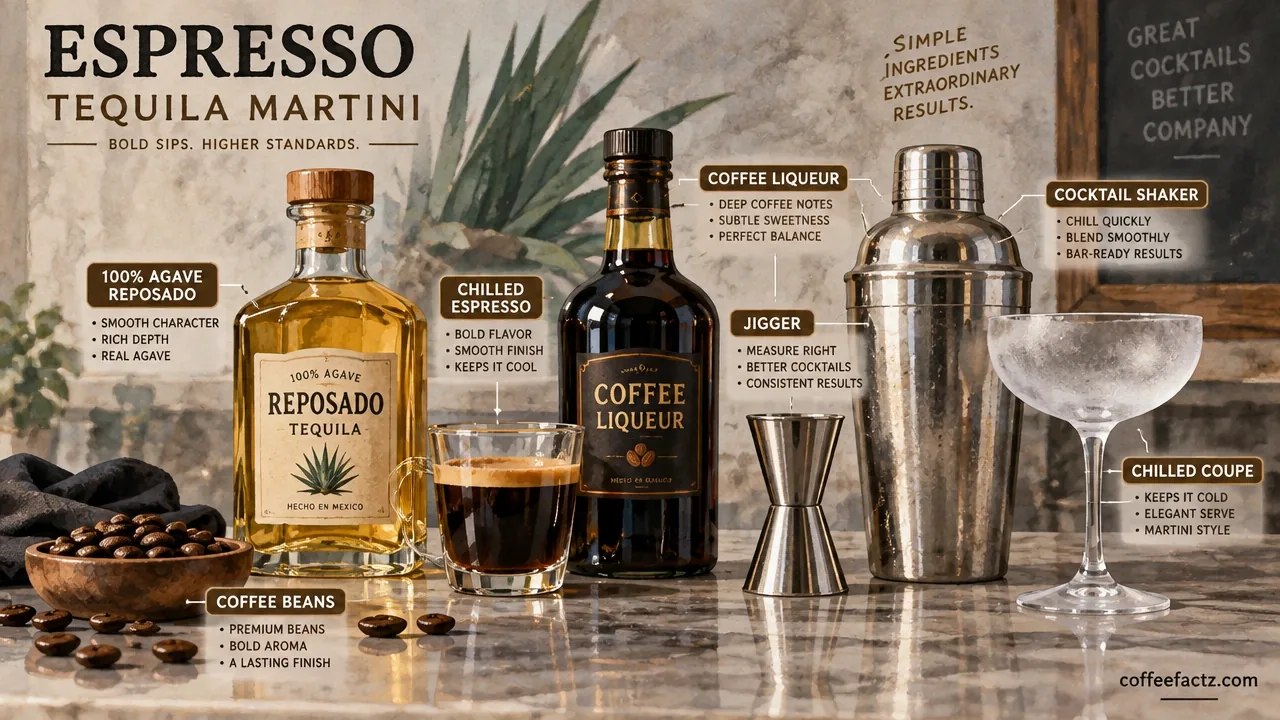
Here’s the full build list before we get into why each piece matters:
- 2 oz 100% agave reposado or añejo tequila
- 1 oz chilled espresso or cold brew concentrate
- ½ to 1 oz coffee liqueur (Kahlúa or Licor 43)
- ½ oz simple syrup or maple syrup (optional, adjust to taste)
- Ice for shaking
- Cocktail shaker or mason jar
- Jigger for measuring
- Chilled coupe or martini glass
- Three coffee beans for garnish
Each ingredient has a job. Tequila is the structural base, carrying agave sweetness and whatever oak character the aging added. Coffee liqueur handles sweetness, vanilla, and coffee depth simultaneously. Espresso brings bitterness, aroma, and the proteins that create crema when agitated. Simple syrup is your final sweetener: use it only after you taste the base, because the liqueur and the tequila are already contributing sweetness.
One thing most recipes quietly skip: neither the ABV nor the caffeine content is fixed. Both depend on your specific bottle and your specific espresso. A double shot of espresso runs roughly 60 to 120 mg of caffeine depending on the bean and the machine. Your tequila’s ABV is printed on the label. Calculate from those numbers rather than assuming a standard, and keep water nearby. Caffeine blunts the physical sensation of alcohol, so the drink can feel lighter than it is.
Agave Spirit Selection and Sweetener Sourcing
The beginner sourcing rule is simple: 100% agave on the label, not mixto. Mixto tequila can include up to 49% non-agave sugars, which muddies the flavor profile you’re trying to build. Reposado, aged two months to a year in oak, gives you agave caramel and mild vanilla. Añejo, aged one to three years, pushes further into toffee, dried fruit, and deeper oak.
Two common questions come up here. Can you use Kahlúa? Yes. It’s the classic choice and it works. Is a tequila espresso martini actually good? Yes, if you like agave and coffee together. It reads bolder and earthier than a vodka version, which is the point.
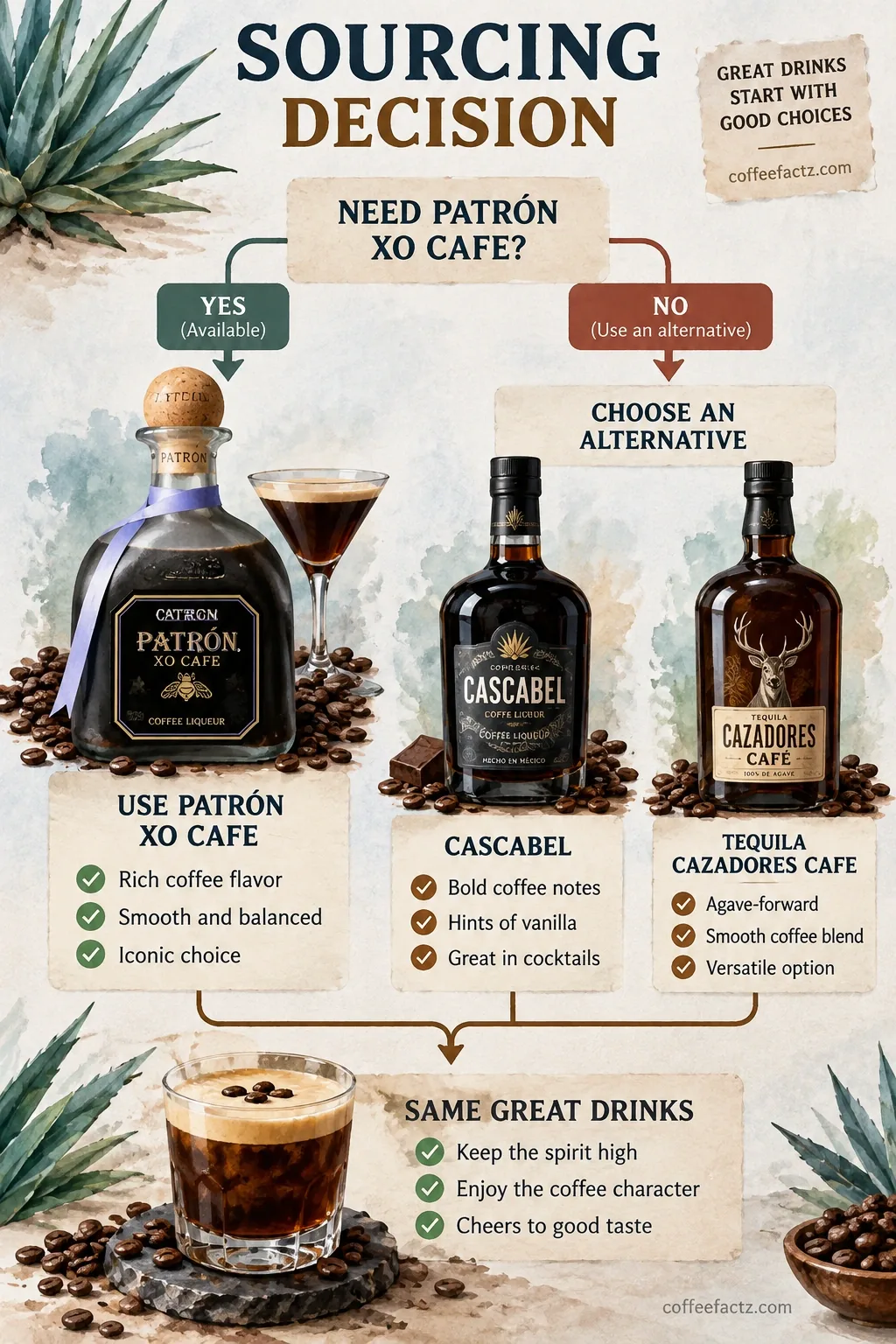
The substitution question is more pressing now: Patrón XO Cafe has been discontinued. If a recipe you’ve saved calls for it, don’t hunt for old stock. Cascabel coffee liqueur is a solid replacement, or simply use a standard reposado tequila alongside your preferred coffee liqueur. Tequila Cazadores Cafe is another option that compresses the build to two main ingredients, but check availability before you plan a batch around it.
The spirit choice isn’t just about flavor preference. It sets the sweetness baseline before you add a single drop of liqueur or syrup, which is why we address it first.
Step 1: Choose Reposado vs Añejo and Match the Coffee Liqueur
The tequila aging decision is the first real fork in the road. It determines how much additional sweetness the drink can absorb before it tips out of balance.
Short-Aged and Long-Aged Agave Spirit Profiles
Reposado is the beginner default for good reason. The light oak contact leaves the agave character prominent, with caramel and mild vanilla underneath. That profile complements coffee liqueur without competing with it. The bitterness of espresso and the sweetness of the liqueur stay in proportion.
Añejo is a different animal. Longer oak aging develops vanilla, dried fruit, toffee, and sometimes a dark chocolate finish. It’s excellent for a dessert-style tequila espresso martini, but it requires an adjustment: reduce the syrup or lower the coffee liqueur volume. The oak is adding perceived sweetness before you pour anything else.
Research published in the Australian Journal of Grape and Wine Research on oak aging and perceived sweetness found that non-volatile compounds released from oak wood, specifically quercotriterpenosides, are responsible for the increased sweetness perception in oak-aged beverages, not the volatile compounds like vanillin or lactones that most people assume. – From the study “Contribution of oak wood ageing to the sweet perception of dry wines“
That finding matters practically. When you taste an añejo-based cocktail and think “this is too sweet,” the instinct is to reduce the syrup. That’s correct. But the oak itself is contributing to the perception through non-volatile compounds that don’t blow off when you stir or shake. Switching to reposado changes the baseline more than cutting syrup alone.
Sweetener Pairing and Baseline Proportions
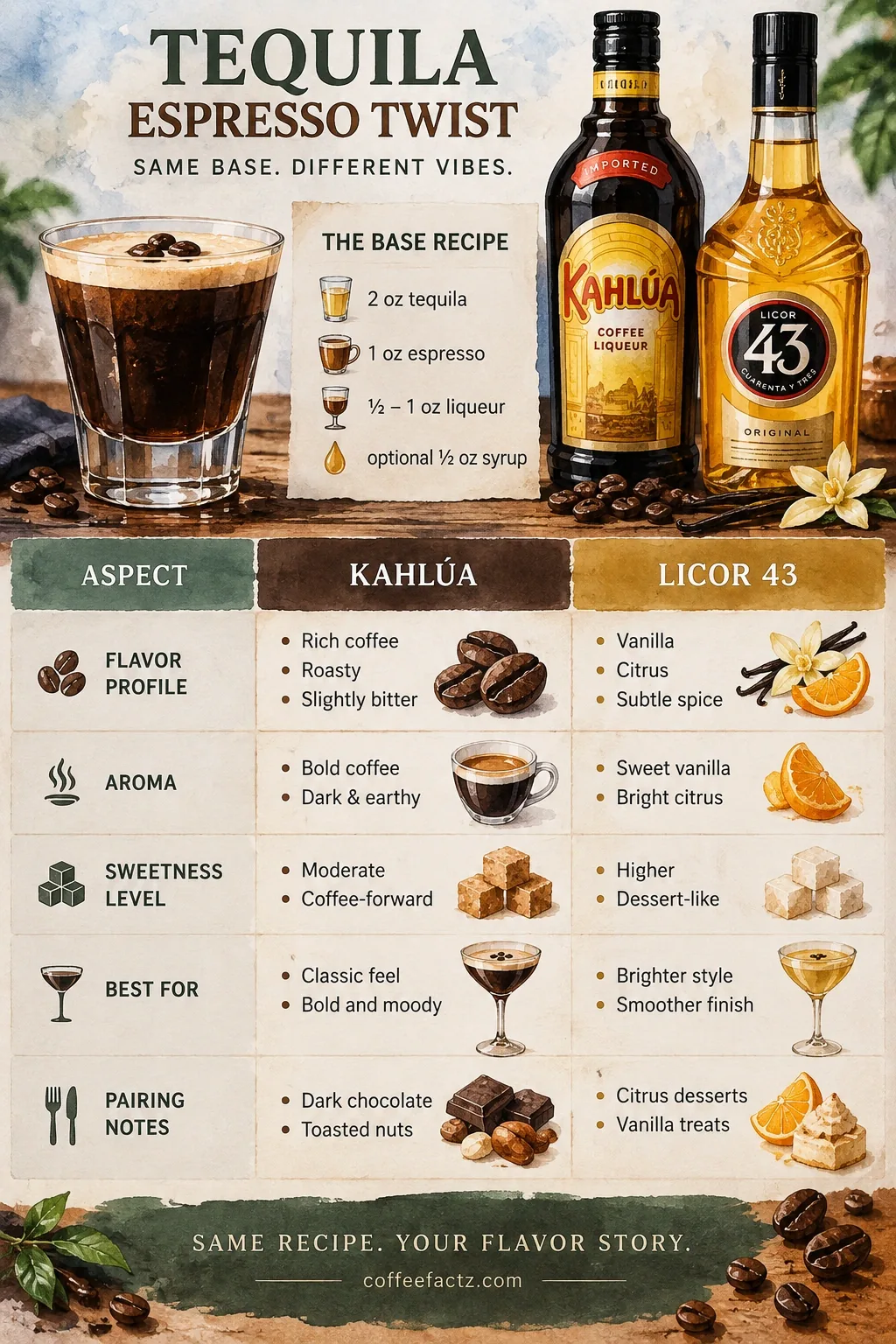
Kahlúa brings rum, vanilla, and coffee. It’s the classic pairing and it works with both reposado and añejo. Licor 43 brings vanilla, citrus, and warm spice, which reads differently against agave caramel. Neither is wrong. The choice depends on whether you want the coffee note or the vanilla-spice note to lead.
Use ½ to 1 oz of whichever you choose. Start at ½ oz if you’re using añejo. If you’re skipping coffee liqueur entirely, replace it with coffee syrup plus a drop of vanilla extract, but understand you’re losing depth. The liqueur does more than sweeten.
The baseline ratio to build from:
| Ingredient | Amount |
|---|---|
| 100% agave tequila (reposado or añejo) | 2 oz |
| Chilled espresso or cold brew | 1 oz |
| Coffee liqueur (Kahlúa or Licor 43) | ½ to 1 oz |
| Simple syrup or maple syrup (optional) | ½ oz |
Taste the base before you shake. Adjust there, not after you’ve already diluted with ice.
Step 2: Chill Espresso and Build the Agave-Caramel Base
Temperature is where most first attempts fail, and the failure happens before the shaker is even in your hand.
Brew your espresso or strong coffee, then chill it for at least one hour in the refrigerator. Cold brew works too and skips the waiting period entirely. What you cannot do is pour hot espresso over ice and call it chilled. Hot espresso melts the ice on contact, which pre-dilutes the base, collapses the crema proteins, and warms the other ingredients before the shake even begins. You’ll get a watery, flat drink with no foam. Sources disagree on whether room-temperature espresso is acceptable, so treat cold as the reliable fix.
Once the espresso is cold, fill the shaker with ice. Add ingredients in this order: tequila first, then coffee liqueur, optional syrup, and chilled espresso last. Adding espresso last preserves the crema proteins until the shake. Before you seal the shaker, check the base: it should smell of agave and coffee together and look dark, not thin or pale.
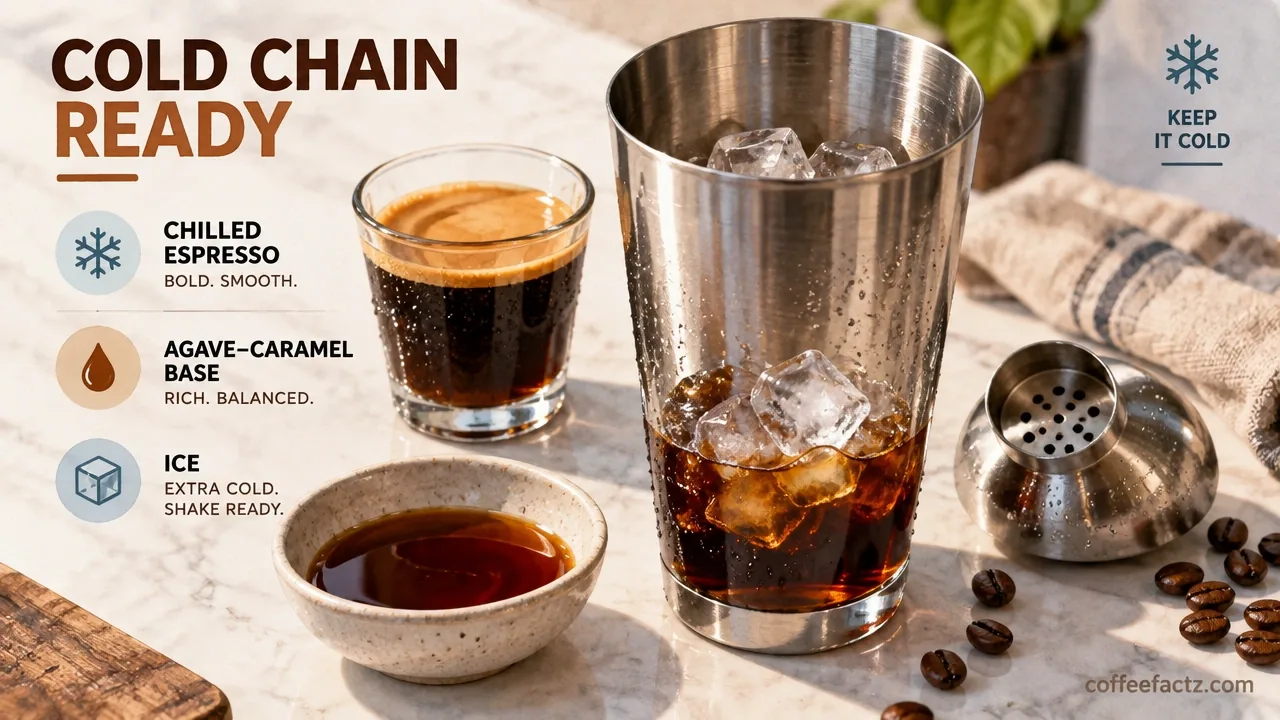
If you’ve made a vodka espresso martini before, the build sequence feels familiar. The key difference is that reposado or añejo adds agave caramel and oak vanilla to the base, and those flavors stay cleaner and more distinct when the espresso is cold and undiluted. Hot espresso doesn’t just water things down. It homogenizes the flavors into a flat, sweet blur.
Step 3: Shake for Crema and Proper Dilution
Shaking is not just chilling. It’s the mechanical step that creates the foam, and the duration matters more than most recipes admit.
Seal the shaker completely and shake vigorously until the outside of the tin frosts. That frost tells you the liquid inside has dropped to the right temperature. You should feel the shaker get cold and hear the ice working.
For the standard build (espresso plus coffee liqueur plus tequila), 5 to 10 seconds of hard shaking is enough. If you’re working with a simplified two-ingredient version built on brewed coffee rather than espresso, shake for 30 to 60 seconds to develop comparable aeration. The longer you shake, the more dilution you add, so stop when the shaker is frosted and the liquid sounds frothy, not when a timer runs out.
Karla Flores-Mercado, owner of Bar Flores in Los Angeles’s Echo Park, where the bar program centers on agave spirits, explains that using less ice and leaving room for air inside the shaker is what produces that thick, gorgeous foam.
That’s the mechanism: less ice means more headspace, and more headspace means the liquid moves farther on each shake, trapping more air. Packing the shaker completely with ice leaves nowhere for the liquid to travel. The result is a colder drink with less foam. Use enough ice to chill efficiently, not to fill every gap.
For texture, double-straining (shaker strainer plus a fine mesh strainer) removes ice chips and produces a smoother pour. Single-straining works fine if you’re not chasing a restaurant-quality finish.
Here’s a short video walkthrough of shaking mechanics and cold cocktail technique that’s worth watching before your first attempt:
Step 4: Strain, Garnish, and Serve Before Foam Falls
Foam is fragile. Once you stop shaking, the clock starts.
Strain immediately into a chilled coupe or martini glass. Do not strain over fresh ice. The drink is meant to be served up, and ice at this stage dilutes a cocktail you’ve spent careful effort building. Pre-chill the glass by filling it with ice water for two minutes while you shake, then dump it dry before you pour.
Garnish with three coffee beans placed directly on the foam. The three-bean arrangement is traditional, but it’s also functional: the beans sit on the foam surface and slow its collapse slightly. Optional garnishes include a light dusting of shaved dark chocolate, a small pinch of flaky sea salt on the rim, or a thin line of ground cinnamon. Don’t overload the surface. The foam is the visual.
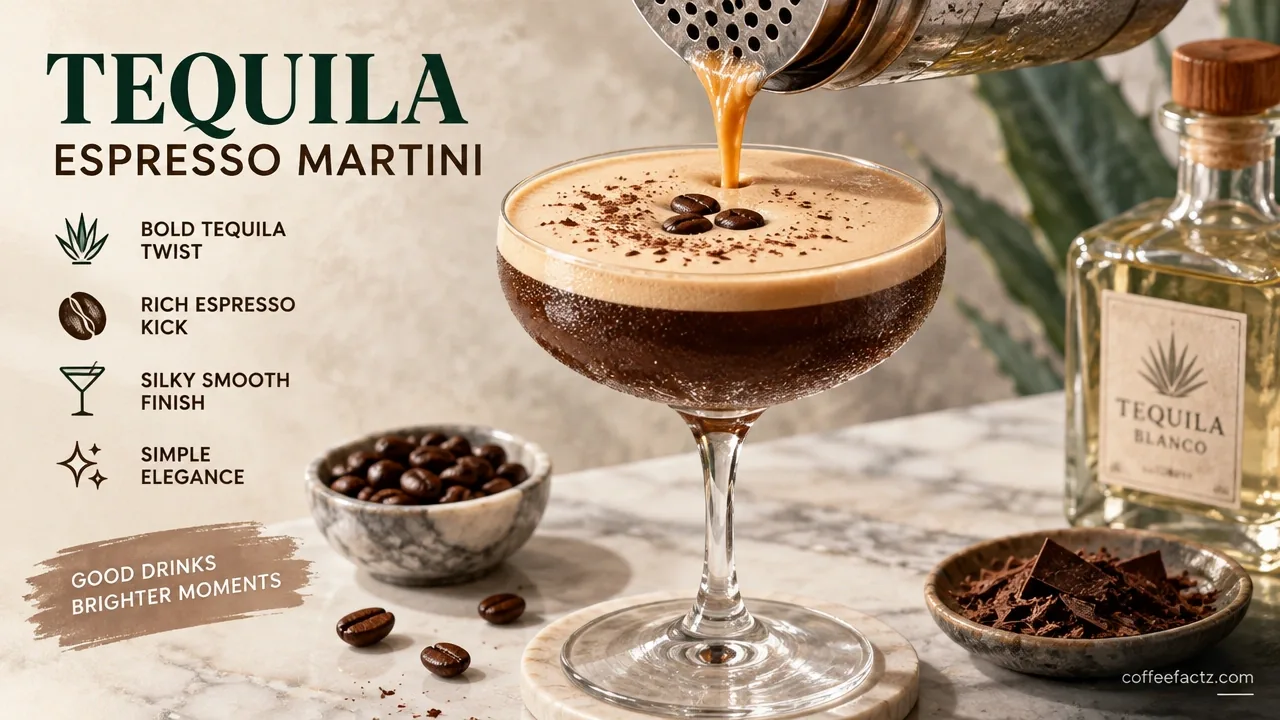
Tell your guests to drink it. Not in five minutes. Now. The foam dissipates as the drink warms, and the flavor profile shifts as the agave caramel and espresso separate slightly at room temperature. A tequila espresso martini is at its best in the first two minutes after the pour.
Step 5: Scale for a Batch and Make a Non-Alcoholic Version
One drink is about timing. A batch is about temperature control at scale.
Group Service Volume Preparation
Multiply each ingredient by the number of servings and pre-chill all liquids for at least one hour before guests arrive. Combine the tequila, coffee liqueur, optional syrup, and chilled espresso in a pitcher, then refrigerate the pitcher itself. Do not add ice to the batch.
When it’s time to serve, shake individual portions with ice and strain immediately. If you’re moving quickly, shake in two-serving batches, but no larger. Shaking more than two servings at once reduces the headspace needed for aeration, and you’ll lose the foam that makes the drink worth making.
The failure mode in batch service is pre-dilution: adding ice to the pitcher, letting the batch sit on ice, or shaking too far in advance. The cold chain that protects crema for a single drink must be maintained at scale. Keep the batch cold, keep the shaker clean and dry between rounds, and pour immediately after straining.
Zero-Proof Serving Adjustments
For a non-alcoholic tequila espresso martini, replace both the tequila and the coffee liqueur with zero-proof coffee liqueur and strong chilled coffee or espresso. Add vanilla syrup or agave syrup to replace the depth that alcohol carries. The mechanics stay identical: cold espresso, hard shake, immediate pour.
Zero-proof coffee liqueur keeps the vanilla and coffee flavors intact. What it can’t replicate is the mouthfeel that ethanol provides, so the drink may feel slightly lighter on the palate. That’s expected.
One note that matters for evening service: caffeine remains in the non-alcoholic version. If you’re serving guests who are avoiding both alcohol and stimulants, use decaf espresso. The foam mechanics are the same. Crema proteins exist in decaf beans; the shaking behavior doesn’t change.
Troubleshooting: Fix No Foam, Over-Dilution, Sweetness, and Shaker Failure
Every failure in a tequila espresso martini points to one variable. The trick is knowing which one to look at first.
Aeration and Concentration Diagnostics
No foam has four possible causes: hot espresso, a weak shake, a dirty shaker, or a drink that sat too long before the pour. Work through them in order. Hot espresso kills crema proteins before the shake begins. A weak shake doesn’t trap enough air. A shaker coated in residue from a previous round interferes with aeration. A glass that sat for three minutes after straining has simply lost its foam to gravity and warmth.
The fix sequence: chill the espresso, shake harder and faster, rinse the shaker between rounds, and pour the moment straining is done.
Over-dilution is almost always a temperature problem at its root. Hot espresso melts ice before the shake begins. Too much ice in the shaker increases surface area and melts faster. Over-shaking past the frost point adds water after the drink is already cold. Pre-mixing the batch with ice hours ahead dilutes everything before a single glass is poured.
Fix it by pre-chilling every liquid, measuring ice rather than eyeballing, shaking only to frost, and straining immediately. Change one variable at a time and taste between attempts.
Palate Balance and Equipment Diagnostics
Sweetness imbalance in an añejo-based build is almost always a stacking problem. Añejo oak vanilla plus coffee liqueur plus simple syrup is three sweetness sources running simultaneously. Reduce or eliminate the syrup first. If it’s still too sweet, drop the coffee liqueur to ½ oz. If it’s still off, switch to reposado and start the ratio over. A pinch of flaky sea salt or a splash of extra espresso can rescue a drink that’s already built, because both cut perceived sweetness without adding bitterness.
Shaker failure is fixable with what’s already in the kitchen. No shaker? A mason jar with a tight lid works. Leaking shaker? Reseal firmly, wrap the joint with a kitchen towel, and shake over the sink. No ice at all? Chill every ingredient as cold as possible and use the coldest espresso you can manage. The foam won’t be as thick, but the drink will still be worth drinking.
The decision logic is straightforward: foam problems trace back to temperature or agitation; dilution problems trace back to ice or time; sweetness problems trace back to liqueur, syrup, or aging. Change one variable, taste, then decide whether to change another. That’s the missing step in most recipes, and it’s what turns a failed first attempt into a repeatable result.
Frequently Asked Questions About Tequila Espresso Martini
What kind of liquor is an espresso martini made with?
The classic espresso martini uses vodka, but a tequila version substitutes 100% agave reposado or añejo tequila, which adds caramel, vanilla, and oak notes that a neutral spirit can’t provide.
Can I use Kahlúa in an espresso martini?
Yes, Kahlúa is the most common coffee liqueur in an espresso martini and pairs well with both vodka and tequila bases. It contributes rum, vanilla, and coffee depth all at once.
Is an espresso martini good with tequila?
It is, provided you like agave and coffee together. The flavor is bolder and earthier than the vodka version, and the oak vanilla from reposado or añejo integrates well with espresso bitterness.
Why does my espresso martini have no foam?
The most common cause is hot espresso poured directly into the shaker, which destroys the crema proteins before agitation begins. Chill espresso for at least one hour and shake vigorously until the shaker frosts.
Can I make a tequila espresso martini without a cocktail shaker?
A mason jar with a tight-fitting lid works as a direct substitute. Seal it firmly, wrap the lid joint with a kitchen towel, and shake over the sink in case of leaks.
Does a non-alcoholic version still have caffeine?
Yes. Replacing tequila and coffee liqueur with zero-proof alternatives doesn’t remove the caffeine from the espresso or cold brew. Use decaf espresso if you’re serving guests who need to avoid stimulants.
How do I fix a tequila espresso martini that’s too sweet?
Start by reducing or cutting the simple syrup entirely. If it’s still sweet, lower the coffee liqueur to ½ oz. If you’re using añejo, consider switching to reposado, since oak aging adds perceived sweetness through non-volatile compounds before you add a single sweetener.
How far in advance can I prep a batch?
You can combine tequila, coffee liqueur, syrup, and chilled espresso in a pitcher and refrigerate for up to a few hours. Do not add ice to the batch. Shake individual portions with fresh ice immediately before serving to preserve foam and avoid over-dilution.
References
- Contribution of oak wood ageing to the sweet perception of dry wines | onlinelibrary.wiley.com
- Tequila Espresso Martini Cocktail Recipe | liquor.com