latte

A stylized 3D rendered latte coffee with an infographic overlay showing caffeine content details.
Health

How Much Caffeine Is in a Latte: A Simple Breakdown by Cup Size and Shot Count

Latte caffeine comes entirely from espresso — steamed milk adds zero stimulant effect, only volume. A single espresso shot delivers roughly 63–75 mg of caffeine, meaning we calculate a latte’s total strength by counting shots, not ounces. Understanding this shot count mechanic lets us predict exactly how much caffeine lands in our cup before we ever place an order.

How Much Caffeine Is in a Latte: A Simple Breakdown by Cup Size and Shot Count Read More »
A perfectly crafted almond latte with rich espresso, creamy frothed almond milk, and delicate latte art, representing the best coffee with almond milk.
Brewing

Almond Latte Secrets Revealed: Professional‑Grade Brew in Your Kitchen

To make an almond milk latte, combine 1 shot of espresso with 6-8 oz of steamed almond milk. Gently pour the milk over the espresso, ensuring proper aeration for a creamy almond milk coffee drink. This simple almond latte recipe yields a delicious dairy-free alternative.

Almond Latte Secrets Revealed: Professional‑Grade Brew in Your Kitchen Read More »

A latte with a question mark, representing the debate about whether lattes are hot or cold.
Brewing

Hot or Cold Latte Secret: Never Order Wrong Again

By definition, a traditional latte is served hot, made by pouring steamed milk over espresso. The defining characteristic relies on the velvety microfoam created by heating milk to 140–155°F. Cold variations fundamentally change the texture. Read on to explore hot vs. cold preparations and seasonal preferences.

Hot or Cold Latte Secret: Never Order Wrong Again Read More »

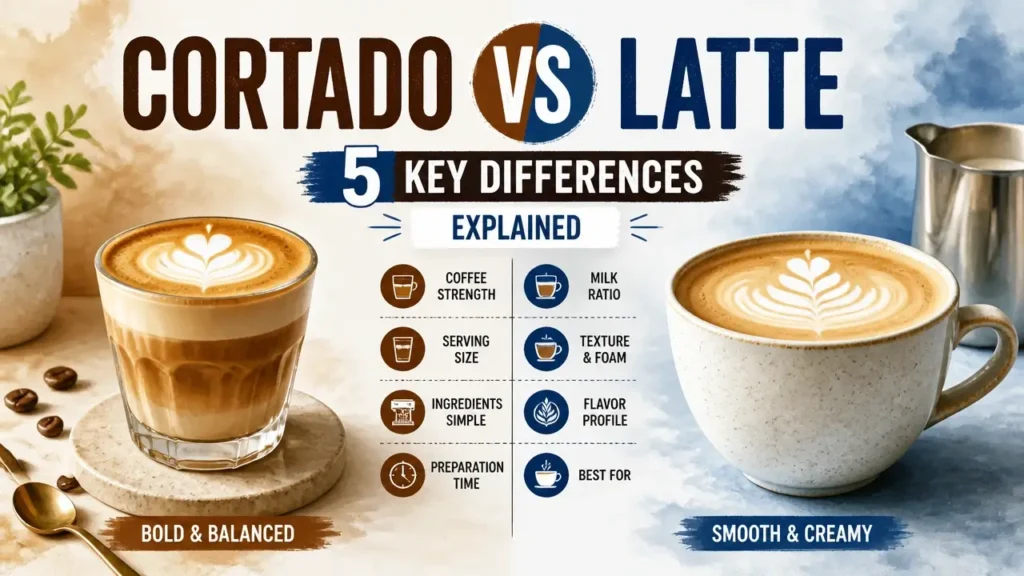
A hyper-realistic 3D rendering comparing a cortado and a latte side-by-side with watercolor textures.
Brewing

Cortado vs Latte Coffee: 5 Key Differences Every Coffee Enthusiast Should Know

Cortado vs latte differences come down to three structural variables – milk ratio, texture, and serving size – not just drink strength. While a cortado locks espresso and milk at a 1:1 ratio in roughly 4 oz, a latte stretches that to 1:3–1:5 across 8–16 oz, fundamentally changing what your palate registers.

Cortado vs Latte Coffee: 5 Key Differences Every Coffee Enthusiast Should Know Read More »

latte and coffee comparison
Brewing

Latte Vs Coffee: 5 Key Differences Explained

The main difference between coffee vs latte is preparation and composition: coffee is basic hot water brewed with grounds, whereas a latte blends espresso with steamed milk and foam. Coffee typically contains more caffeine (around 154mg per 12oz), while lattes average about 63mg per shot of espresso, resulting in smoother but often higher-calorie drinks. Learn the key distinctions in taste, ingredients, and nutrition here.

Latte Vs Coffee: 5 Key Differences Explained Read More »

cappuccino and latte differences
Brewing

What Makes a Cappuccino Vs Latte Different: Foam Flavor and Preparation Explained

The main difference between a cappuccino vs latte lies in their milk ratio and foam texture: a cappuccino features equal parts espresso, steamed milk, and thick foam, while a latte uses much more steamed milk with only a light foam layer. These ingredient ratios dramatically alter the flavor strength and mouthfeel. Read on to discover how steaming methods create these distinct experiences.

What Makes a Cappuccino Vs Latte Different: Foam Flavor and Preparation Explained Read More »

latte versus mocha differences
Brewing

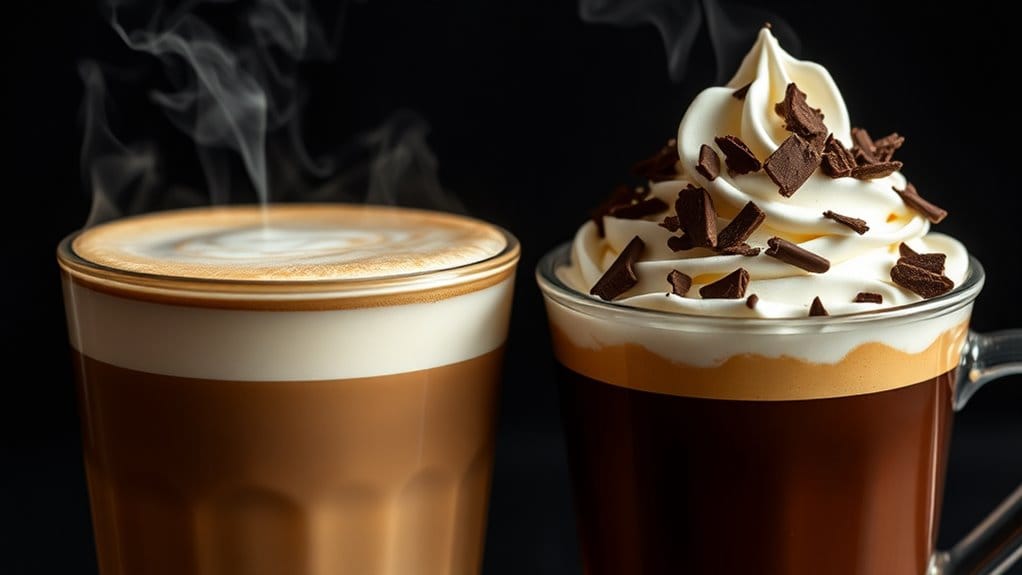
3 Key Differences Between a Latte and a Mocha Explained

The three key differences between a latte and a mocha lie in their ingredients, flavor profiles, and milk ratios. Lattes use predominantly steamed milk for a creamy taste, while mochas incorporate chocolate for a dessert-like twist. Mochas are generally thicker and sweeter. Read on to fully understand their distinctions.

3 Key Differences Between a Latte and a Mocha Explained Read More »

A stylized 3D render of a Starbucks matcha latte with a clear infographic overlay explaining caffeine levels.
Health

How Much Caffeine Is in a Starbucks Matcha Latte? A Complete Size-by-Size Guide

Starbucks Matcha Latte delivers a moderate 65–80 mg of caffeine in a grande – not the low-caffeine sip most people assume. Powered by shade-grown green tea and natural L-theanine, it hits differently than espresso, and knowing the exact numbers by size changes how you order.

How Much Caffeine Is in a Starbucks Matcha Latte? A Complete Size-by-Size Guide Read More »

creamy coffee substitutes list
Brewing

10 Creamy Coffee Alternatives Similar to a Latte

Creamy coffee drinks combine espresso with steamed milk or cream to achieve smooth, velvety textures, ranging from light foam caps to luxurious, melt-in-your-mouth consistency. Key variations like the Cappuccino, Flat White, and Breve rely on specific milk ratios or dairy alternatives to define their finish and flavor profile. Read on to explore the diverse world of rich, comforting coffee beverages.

10 Creamy Coffee Alternatives Similar to a Latte Read More »

Scroll to Top