
A properly built chocolate espresso martini is not a sugary coffee drink with a fancy glass. It is a precision balance act between dark-roast bitterness, cocoa richness, and clean alcohol structure. Get the ratio wrong and you end up with either a candy drink or something that tastes like cold brew mixed with regret.
This guide walks you through every step, from chilling your espresso before it touches ice to the double-strain that saves your froth, with Erin Ashford’s bartender logic woven through the whole thing.
Key Takeaways on Chocolate Espresso Martini
- Chill espresso completely before it touches ice; warm espresso melts ice prematurely and kills froth before shaking starts.
- Use dark chocolate liqueur or crème de cacao, not milk chocolate variants, to hold up against dark-roast espresso bitterness.
- Calibrate sweetness by adjusting the chocolate modifier against the espresso, not by adding sugar separately.
- Shake until the shaker wall is genuinely cold, not to a fixed timer; that physical cue is your froth readiness signal.
- Double-straining through a fine-mesh strainer removes micro ice chips that dilute the drink and eliminates sediment that roughens the texture.
- Caffeine does not reduce alcohol impairment; a drink this caffeinated and this strong deserves honest portion awareness.
Prerequisites: What You Need Before You Start
A chocolate espresso martini has a short ingredient list, but each item does a specific job. Swap casually and the whole flavor architecture collapses. Before you shake anything, get your equipment staged, your bottles identified, and your espresso chilled. That last part trips up more beginners than anything else.
Bar Tools, Glassware, and Temperature Readiness
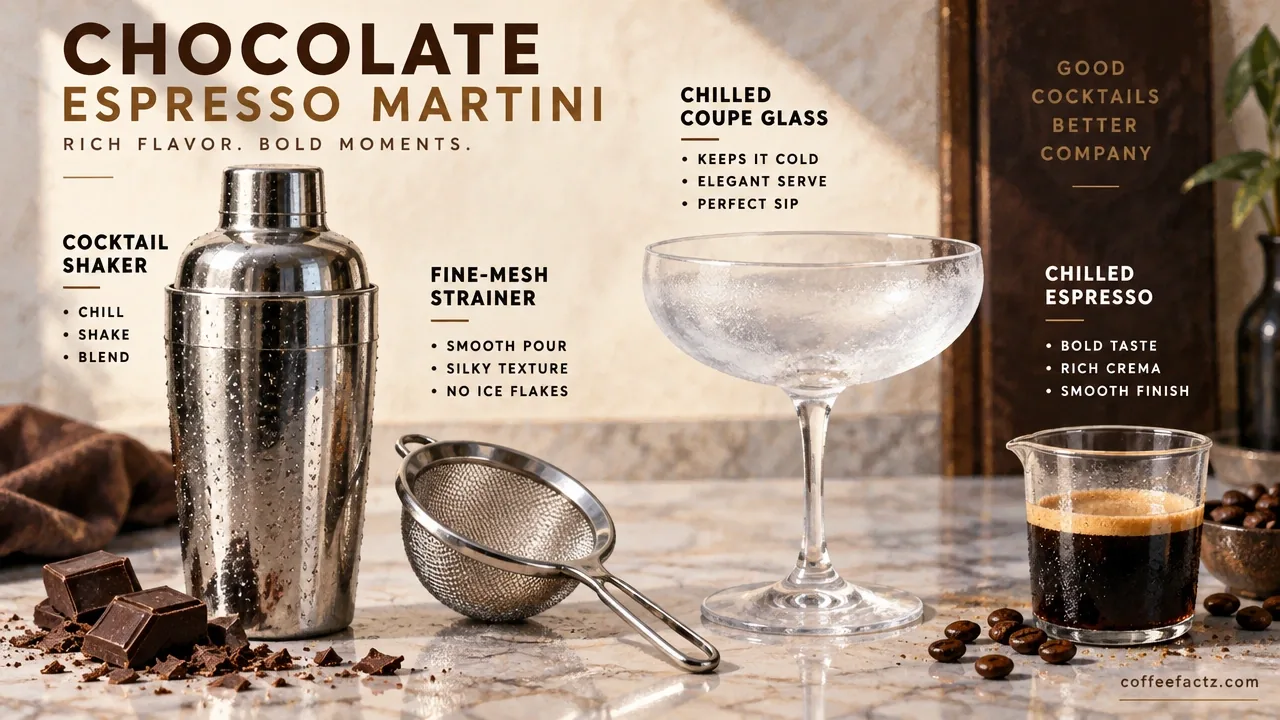
The right equipment for a chocolate espresso martini is minimal but non-negotiable. You need a cocktail shaker, a fine-mesh strainer, plenty of ice, and a chilled glass. That’s the core kit.
For glassware, a chilled coupe, Nick and Nora, or classic martini glass all work. The shape matters less than the temperature. A warm glass kills the froth within seconds of pouring.
Chill your glass by filling it with ice water while you prep everything else. Dump the water right before you strain. The espresso side of this equation is equally time-sensitive: chilled espresso must be ready before ice goes into the shaker. Hot or even warm espresso dumped over ice melts it instantly, dilutes the drink before you’ve even shaken it, and flattens the froth before it has a chance to form.
Stage everything first. Chill the glass. Chill the espresso. Then build.
One natural transition to the full equipment picture:
Pantry Bottle Roles and Novice Bottle Mapping
Every bottle in a chocolate espresso martini earns its place. Here is what each one does and where beginners commonly get confused.
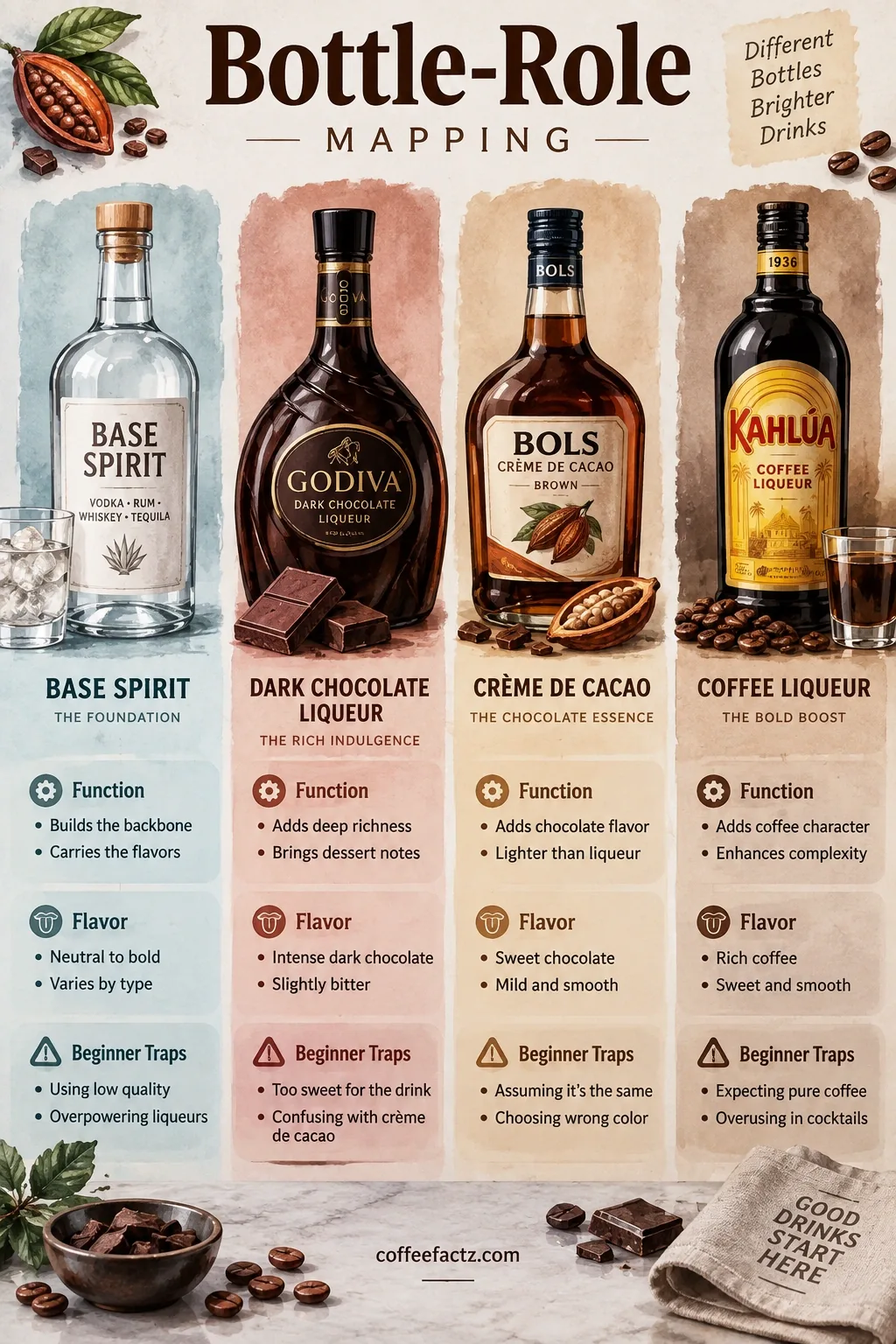
Base spirit: Vodka is the standard. It stays neutral and lets the coffee and chocolate carry the flavor. Vanilla vodka adds a soft sweetness that pairs well with dark chocolate. Aged rum is a valid swap if you want a warmer, molasses-adjacent backbone.
Espresso: This is the structural bitterness and the primary source of froth. It is not interchangeable with brewed coffee. Espresso is concentrated, and that concentration is what gives the drink its punch.
Dark chocolate liqueur or crème de cacao: This is where most beginners make a buying mistake. A dark chocolate liqueur (like Godiva Dark) skews richer and more intense. Crème de cacao is lighter and sweeter, with a cleaner cocoa note. Both work, but they are not identical. Choose based on how dessert-forward you want the drink.
Coffee liqueur: A Kahlúa-style coffee liqueur adds sweetness, coffee depth, and body. It bridges the gap between the straight espresso bitterness and the chocolate modifier.
Optional light cream or half-and-half: This is a richness lever, not a default ingredient. Add it only after your base is balanced, because it mutes dark-roast bitterness fast.
Step 1: Prepare the Espresso and Chocolate Before They Touch Ice
Espresso preparation is the step most home bartenders skip or rush, and it is the single biggest reason a chocolate espresso martini ends up watery. The rule is simple: nothing warm goes into a shaker with ice.
Brew your espresso first. Pull a standard double shot (roughly 2 oz) and let it cool, or speed-chill it by pouring it into a small container set in an ice bath for two to three minutes. Do not pour it directly over ice in the shaker. That melts ice immediately, dilutes the drink before you’ve even combined the other ingredients, and robs you of the aeration you need for a proper foamy head.
No espresso machine? You don’t need one. Mix 1 tablespoon of instant espresso powder with 3 tablespoons of hot water, stir until fully dissolved, then chill it using the same ice-bath method. It works. The texture will differ slightly from a fresh pull because instant espresso has no crema, so the resulting froth may be thinner. Treat it as a variable to adjust around rather than a failure. You may need to shake a few seconds longer to build comparable aeration.
While the espresso chills, measure out your dark chocolate liqueur or crème de cacao. Have it ready to go before ice enters the equation. The goal is a controlled build: every component measured and staged, so when ice goes in, you are shaking immediately, not scrambling.
Sequence matters. Chill the espresso. Stage the chocolate modifier. Then, and only then, does ice come into play.
Step 2: Build the Base and Calibrate Dark Chocolate Against Dark-Roast Espresso
Base-building is where the drink’s flavor identity gets set. Getting the shaker assembly right is straightforward. Getting the balance between cocoa sweetness and dark-roast bitterness right is where the real craft lives.
Shaker Assembly and Component Functions
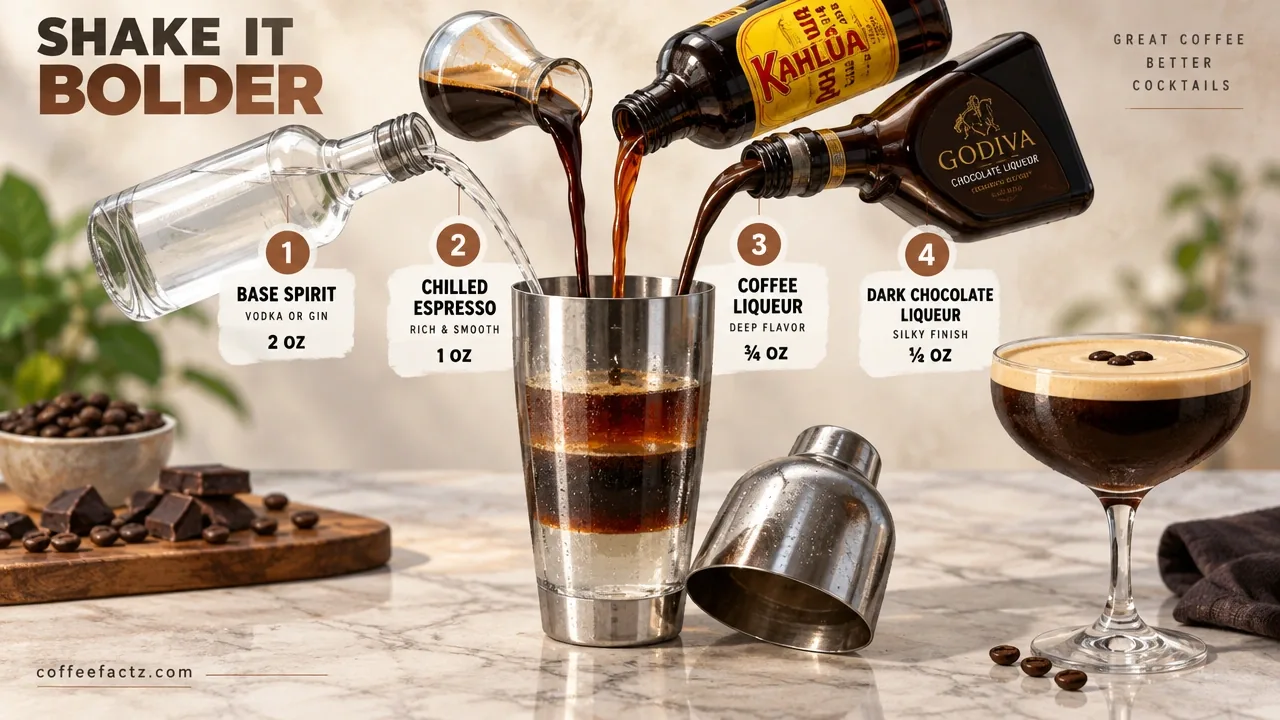
Combine your ingredients in the shaker in this order: base spirit, chilled espresso, coffee liqueur, then dark chocolate liqueur or crème de cacao. Ice goes in last, immediately before you shake.
Each ingredient has a distinct mechanical role:
- Base spirit (vodka or variant): Provides the structural backbone. Keeps the drink clean and lets the coffee and chocolate be the lead flavors.
- Chilled espresso: Delivers bitterness, intensity, and the dissolved proteins and oils that generate foam when agitated.
- Coffee liqueur: Adds sweetness and a rounded coffee depth. It softens the espresso’s sharpest edges without erasing them.
- Dark chocolate liqueur or crème de cacao: Contributes cocoa richness and additional sweetness. This is the variable you will adjust most.
Cocoa Bitterness Adjustment
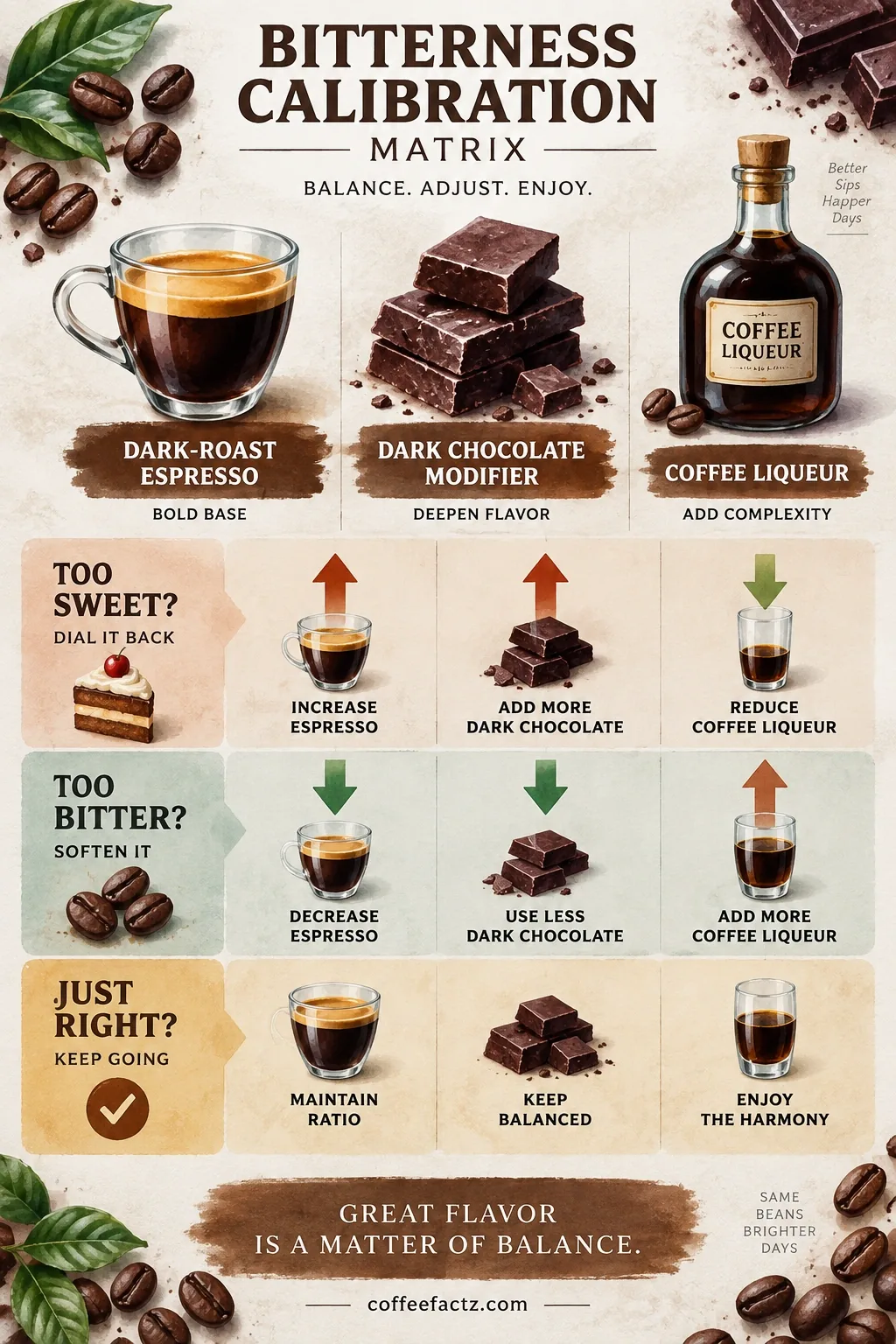
The balance problem in a chocolate espresso martini is specific: dark-roast espresso is aggressive and bitter, while most chocolate modifiers are sweet. If you pick the wrong chocolate product, the drink either turns into a candy bar or the espresso bulldozes everything else.
Start with dark chocolate liqueur or crème de cacao, not milk chocolate liqueur, not generic “chocolate schnapps.” Those lean too sweet and too thin to hold up against dark-roast coffee.
Then calibrate:
- Too sweet? Increase the espresso volume slightly, or reduce the chocolate modifier by a quarter-ounce. Do not add sugar to fix bitterness and then compensate with more chocolate. That compounds the problem.
- Too bitter? Increase the chocolate modifier by a quarter-ounce, or bump the coffee liqueur slightly. The coffee liqueur’s inherent sweetness is a gentler corrective than adding straight sugar.
- Aiming for a dessert profile? Lean toward crème de cacao, which is cleaner and sweeter, and pair it with a slightly shorter espresso pull.
The adjustment axis is always the chocolate modifier against the espresso, not a separate sugar addition. That is the differentiator most recipes miss. Once you start adding simple syrup to compensate for imbalance, you are masking the problem rather than solving it.
“To me, a great Espresso Martini starts with having the right texture, smelling and tasting like real espresso, and not adding sugar. At Holiday, we want to create something that tastes and smells like a real shot of espresso even though we don’t have an espresso machine. We use cold brew concentrate instead of diluted cold brew or regular coffee because it creates a more robust flavor and ensures that the drink doesn’t lean too sweet.” – Erin Ashford, Co-owner and Beverage Director at Holiday, Austin
Ashford’s logic applies directly here. Whether you use cold brew concentrate or a chilled espresso shot, the concentration of your coffee base determines how much sweetness the drink can absorb before it tips. A weak coffee base cannot anchor a full measure of chocolate liqueur. A concentrated base can. Build the coffee strong, then calibrate the chocolate against it.
Step 3: Shake Until the Shaker Is Cold and a Light Froth Forms
Shaking technique is the step most tutorials reduce to a timer, and that is the wrong frame entirely. The shaker itself tells you when it’s done.
Add ice to the shaker last, directly after your base spirit, espresso, coffee liqueur, and chocolate modifier are already in. Ice goes in last because you want to shake immediately; letting ice sit with the other ingredients before shaking starts dilution before aeration has a chance to happen.
Seal the shaker and shake vigorously. Not a polite stir with a lid on it. Hard, fast, deliberate shaking. The agitation does two things simultaneously: it chills the cocktail rapidly and forces air into the espresso proteins, which is what creates the foamy head.
Forget the fixed timer. The physical cue is more reliable. Shake until the outside of the shaker feels genuinely cold to the touch, almost uncomfortably so, and you can feel the resistance change slightly as the mixture thickens and chills. That typically takes 15 to 20 seconds of hard shaking, though it varies with ice temperature and shaker material.
One source says 10 seconds. Another says 15 to 20. The difference comes down to how cold your ice is and how vigorously you’re actually shaking. A half-hearted 20-second shake produces less froth than a hard 12-second one. Use the cold shaker wall as your checkpoint. When it’s genuinely cold and the liquid has aerated, stop.
Over-shaking past that point doesn’t improve the froth. It just chips the ice further and pushes dilution into territory that will flatten the drink in the glass.
Step 4: Double-Strain to Protect Texture and Prevent Dilution
Double-straining is the technique that separates a sharp, foamy chocolate espresso martini from a watery, gritty one. It is the most skipped step in home bartending, and it shows in the result.
After shaking, hold the shaker’s built-in strainer against the opening as usual, but add a fine-mesh strainer between the shaker and the glass. Pour through both simultaneously.
Here is why this matters mechanically. Vigorous shaking fractures ice into micro-chips. Those chips pass through a standard cocktail strainer easily. Once they’re in your glass, they melt within 30 to 60 seconds, adding unwanted water to a drink that was already perfectly diluted inside the shaker. The fine-mesh strainer catches them before they reach the glass.
The second benefit: the fine mesh also catches any undissolved coffee grounds or chocolate sediment, which gives the finished drink a cleaner, smoother texture.
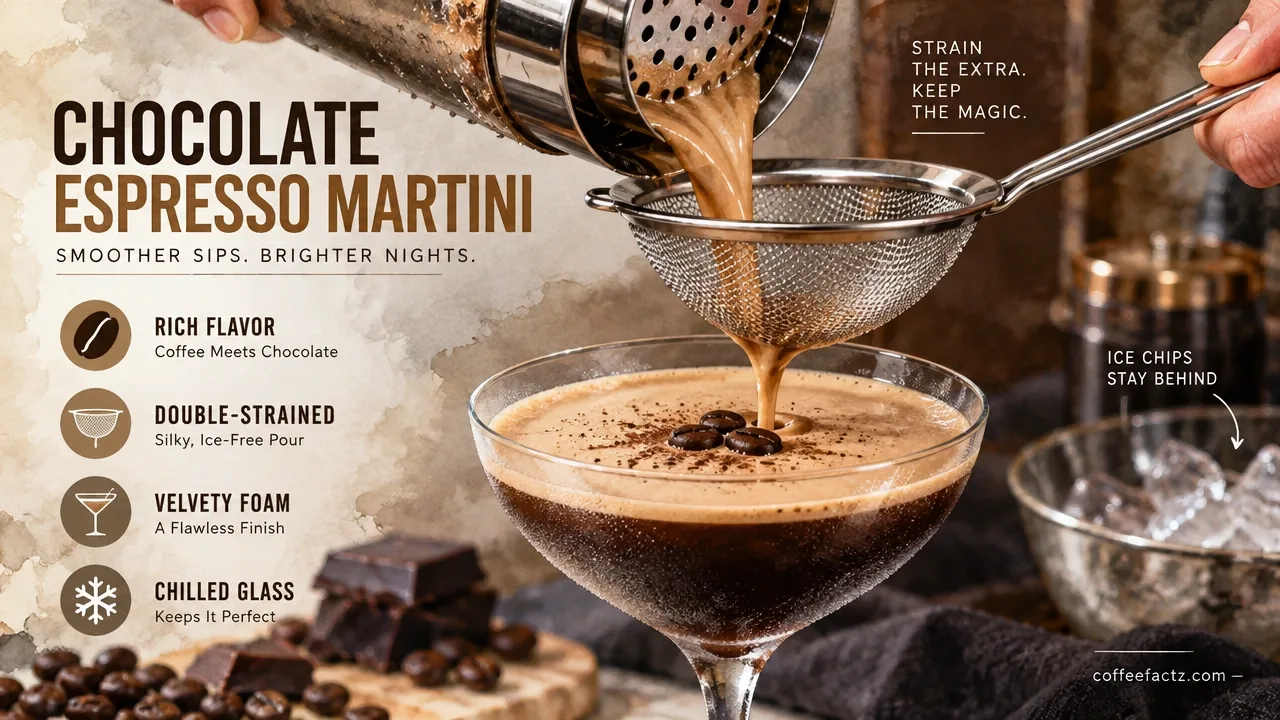
Pour at a controlled, steady pace. Don’t rush the strain. A fast pour through a fine-mesh strainer generates turbulence that can warm the drink slightly and disrupt the froth layer forming on top.
Serve immediately after straining. The foamy head is a living thing. It collapses as the drink warms and the proteins relax. Every minute between the strain and the first sip is froth you’re losing.
Step 5: Garnish and Serve for a Dessert-Like Chocolate Espresso Finish
Garnish on a chocolate espresso martini is mostly visual, but it signals what kind of drink the guest is about to receive. Get it right and it sets expectations accurately.
The classic garnish is three coffee beans floated on the foam. The number three is traditional (it represents health, wealth, and happiness in espresso culture), but the real function is texture contrast and aroma. The beans release a burst of coffee fragrance when the glass is lifted, which primes the palate before the first sip.
Optional additions: chocolate shavings grated directly over the foam, or a light dusting of cocoa powder. Both reinforce the dessert profile without altering the drink’s balance. Keep it restrained. A mountain of garnish on a cocktail glass looks chaotic and adds nothing to the flavor.
Serve in a chilled coupe, Nick and Nora, or martini glass. The coupe and Nick and Nora hold the foam better because their wider bowl allows the froth to settle evenly. A martini glass works but requires steadier hands during service.
On the cream question: light cream or half-and-half can push the drink into a genuinely rich, dessert-forward territory. Add it only after your base is balanced. A quarter-ounce is enough to add a velvety mouthfeel without muting the dark-roast bitterness that makes this drink interesting. More than that and you’ve built a different cocktail entirely. Cream softens everything, including the edges you worked to calibrate.
Serve immediately. Froth, temperature, and texture all degrade fast. This drink does not wait.
Troubleshooting and Success Checklist
A well-executed chocolate espresso martini has four markers you can check before the first sip: a visible foamy head, a glass cold to the touch, a smooth texture with no grit, and a flavor that hits bitter, sweet, and alcoholic in roughly that order. If any of those are missing, the fix is usually upstream in the process.
Sensory and Texture Corrections
Too sweet: The chocolate modifier is outrunning the espresso. Increase espresso volume by a quarter-ounce, or pull back on the dark chocolate liqueur. Do not add more spirit to compensate; that changes the alcohol balance without fixing the flavor ratio.
Too bitter: The espresso is dominating. Increase the chocolate modifier by a quarter-ounce. Alternatively, add a small bump to the coffee liqueur, which carries sweetness and rounds off bitterness more gently than the chocolate liqueur does.
Too weak or flat-tasting: The espresso was likely under-concentrated. Instant espresso mixed too thin, or a coffee shot that was over-diluted before it went into the shaker, produces a drink that tastes like everything is present but nothing is assertive. Brew stronger next time.
Weak froth: Three possible causes. First, the espresso was not fresh enough; older espresso has degraded proteins that don’t foam well. Second, the shake wasn’t vigorous or long enough. Third, the glass was warm, which collapses foam on contact. Check all three before your next attempt.
Over-dilution or watery texture: Ice went in too early, the shake ran too long past the cold-shaker checkpoint, or the double-strain step was skipped and micro-chips melted in the glass. Tighten the sequence.
Warm serve: The glass was not pre-chilled, or too much time passed between straining and serving. Both are process fixes, not ingredient fixes.
The success checklist runs like this: foamy head visible, shaker was cold before you stopped shaking, fine-mesh strain completed, flavor hits bitter first then sweet, alcohol warmth finishes clean.
A relevant point on the caffeine side of this drink: a 2010 FDA scientific memorandum on caffeinated alcoholic beverages concluded that caffeine can reduce the perceived sensation of intoxication without changing actual blood or breath alcohol levels. In plain terms, a guest who feels alert may still be objectively impaired. A chocolate espresso martini with a double shot of espresso and two or more caffeinated liqueurs is a potent combination on both axes. That context belongs in how you serve the drink, not just how you make it.
Caffeine, Allergen, and Guest Adaptation Guidance
Serve responsibly. A standard chocolate espresso martini carries a meaningful caffeine load from the espresso plus the coffee liqueur, and a meaningful alcohol load from the spirit plus the liqueurs. Those two do not cancel each other out. A guest who feels wired is not a guest who is less drunk.
For guests sensitive to caffeine, decaf espresso is a direct swap that changes nothing about the recipe mechanics. The flavor profile stays intact.
For guests with dairy allergies, check every bottle. Some chocolate liqueurs and crème de cacao products contain milk derivatives. Read the label before you pour. If cream is part of the build, swap it for oat milk or a barista-blend coconut milk. Both froth reasonably well and neither adds an off-flavor.
For a mocktail adaptation: replace the base spirit with a non-alcoholic spirit alternative, use decaf cold brew concentrate instead of espresso, and keep the dark chocolate syrup and coffee liqueur alternatives (several non-alcoholic coffee liqueur options now exist). The double-strain and shake mechanics are identical. The froth still forms. The experience is surprisingly close.
Know what’s in the glass. Know who you’re serving it to.
Frequently Asked Questions About Chocolate Espresso Martini
What goes in a chocolate espresso martini?
The core build is vodka, chilled espresso, coffee liqueur, and dark chocolate liqueur or crème de cacao. Optional light cream adds richness but mutes bitterness, so add it only after the base is balanced.
Can I make a chocolate espresso martini without an espresso machine?
Yes. Mix one tablespoon of instant espresso powder with three tablespoons of hot water, dissolve fully, then chill it before shaking. Froth may be thinner than a fresh pull, so shake a few extra seconds to compensate.
Why does my chocolate espresso martini have no foam?
Weak froth usually points to one of three causes: espresso that wasn’t fresh, a shake that wasn’t vigorous enough, or a warm glass that collapsed the foam on contact. Fix all three before blaming the recipe.
What is the difference between crème de cacao and dark chocolate liqueur?
Crème de cacao is lighter and sweeter with a clean cocoa note. Dark chocolate liqueur is richer and more intense. Both work in this drink, but dark chocolate liqueur holds up better against dark-roast espresso bitterness.
How do I stop my chocolate espresso martini from tasting watery?
Double-strain through a fine-mesh strainer to remove micro ice chips that melt in the glass. Also check that you stopped shaking at the cold-shaker checkpoint and not well past it; over-shaking fractures ice aggressively and pushes dilution too far.
Can I use bourbon or rum instead of vodka?
Aged rum adds a warm, molasses-adjacent backbone that pairs well with dark chocolate. Bourbon works too, though its oakiness competes with the espresso. Vodka stays neutral and lets the coffee and chocolate lead; that’s why it’s the standard.
Is a chocolate espresso martini safe for guests who don’t drink much caffeine?
The caffeine load from a double espresso shot plus a coffee liqueur is real and stacks with the alcohol. Decaf espresso is a direct mechanical swap that changes nothing about the recipe. For sensitive guests, flag it and offer the decaf version without being asked.
Can I make a non-alcoholic version of this drink?
Yes. Swap the spirit for a non-alcoholic spirit alternative, use decaf cold brew concentrate for the espresso, and use a non-alcoholic coffee liqueur substitute. The shaking and straining mechanics are identical, and the froth still forms.
References
- Scientific Memorandum: Caffeinated Alcoholic Beverages (CABs) | fda.gov
- What Bartenders Say Makes a Great Espresso Martini | vinepair.com