

A well-made cold drip coffee cocktail isn’t just iced coffee with a pour of something strong – it’s a carefully layered drink where the coffee base, the spirit, and the mixer each hold their own. Cold drip’s slow-percolation extraction produces a concentrate that’s smoother and less acidic than immersion cold brew, which means it won’t fight gin’s botanicals, rum’s warmth, or tonic’s bitter fizz.
Most cold coffee cocktail guides skip that foundational distinction entirely. This one doesn’t. What follows is a step-by-step walkthrough – from building the right cold drip base to troubleshooting the most common failures – so the drink you make actually tastes like something worth making again.
Key Takeaways on Cold Drip Coffee Cocktails
- Cold drip’s slow-percolation extraction produces a smoother, lower-acid base that cooperates with spirits instead of competing with them.
- Build cold drip as a concentrate – its smaller volume in the cocktail is what keeps coffee flavor intact after ice, tonic, and citrus dilute the drink.
- Gin’s botanicals and cold drip’s clean extraction are a natural pairing; white rum keeps builds crisp, aged rum shifts toward richer, stirred-style drinks.
- Granulated sugar won’t dissolve in cold liquid – simple syrup is the only reliable sweetener for cold coffee cocktails.
- Shake until the tin feels icy cold, not until a timer goes off; that tactile signal is the most accurate endpoint for chilling, dilution, and aeration.
- For tonic highballs, build the base first, add tonic last, and never shake a carbonated drink.
Cold Drip Is Not Cold Brew: Start with the Right Cocktail Base
Cold drip coffee is extracted by slowly dripping cold water through coffee grounds – a percolation process, not a soak. Cold brew, by contrast, is an immersion method: grounds sit submerged in water for anywhere from 12 to 24 hours before filtering. That difference in process produces a meaningful difference in the cup. Cold drip tends to be smoother, lower in acid, and less bitter, because the water contacts the grounds for a shorter, controlled window rather than a prolonged steep.
For cocktails, that distinction matters more than most guides let on. A cold brew base carries more of the harsh, tannic edges that develop during long immersion – qualities that compete with gin’s botanicals, clash with citrus, or make tonic taste medicinal. Cold drip’s cleaner extraction profile means the coffee contributes flavor without fighting every other ingredient in the glass.
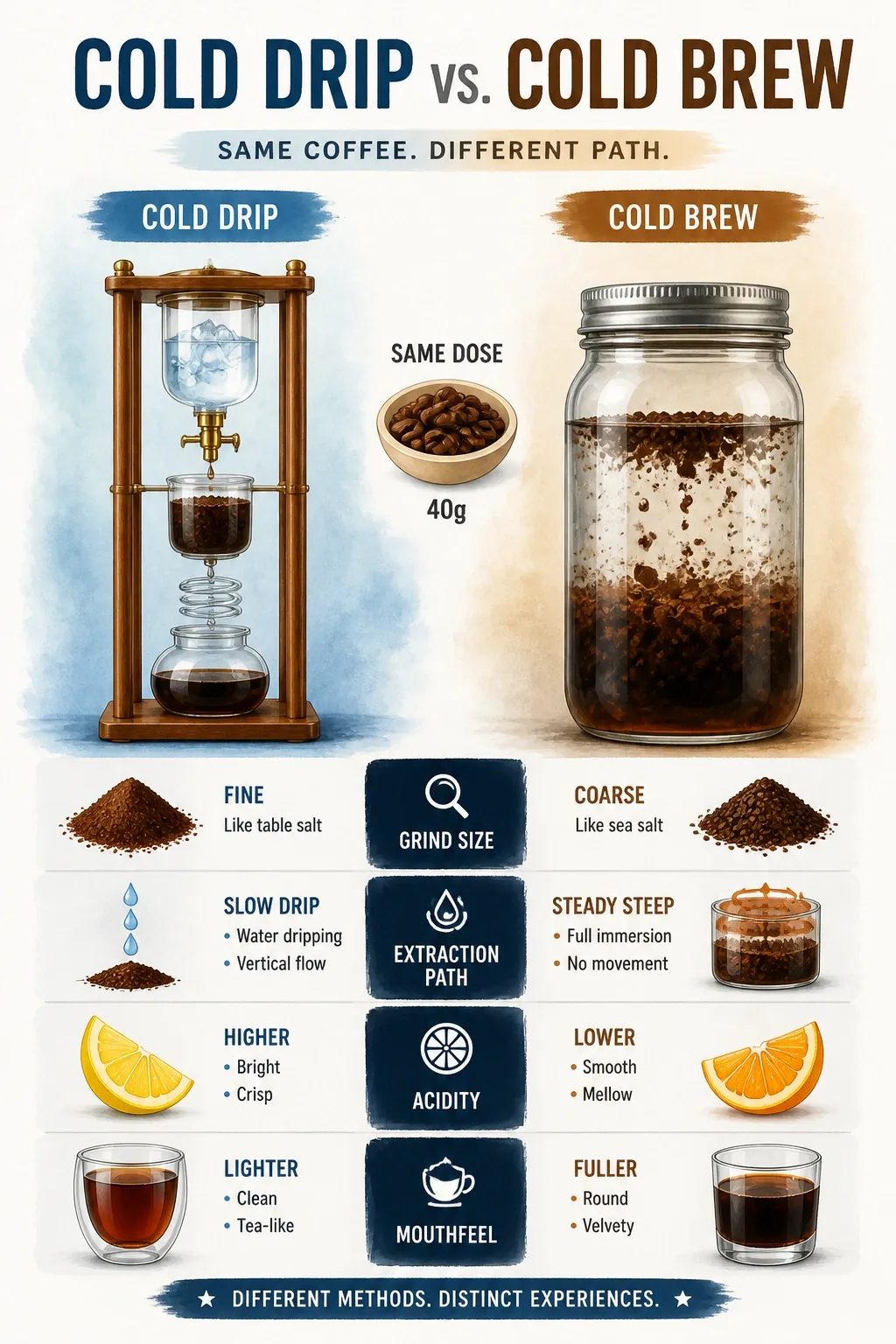
There’s also a persistent misconception worth clearing up before you build a single drink: dark roast is not stronger in caffeine than light roast. Roast level affects flavor intensity and acidity, not caffeine content. A light roast cold drip concentrate can taste brighter and more complex than a dark roast version while delivering similar or even slightly more caffeine. When you’re choosing a bean for cocktails, you’re choosing for flavor – specifically, the smoothness and low acidity that make cold drip such a cooperative cocktail ingredient.
The broader point is this: treat cold drip as a flavor ingredient in the cocktail, not as a morning cup that happens to have alcohol in it. The volume is smaller, the concentration is higher, and the goal is integration – not caffeination.
William Ristenpart, Professor of Chemical Engineering and Director of the UC Davis Coffee Center, found that the initial rinse phase of cold extraction – the brief first contact between water and grounds – captures the highest concentration of perceived sweetness. His research showed this same sweetness trend holds for cold brew formats as well, suggesting that longer extraction doesn’t automatically improve the sensory outcome.
That finding reframes how you think about cold drip for cocktails. You don’t need a marathon extraction to get a flavorful, sweet-leaning base. A well-controlled short drip can outperform a sloppy long steep – which is exactly why cold drip’s precision gives it an edge over immersion cold brew when the base needs to hold up in a drink.
Step 1: Build or Choose a Cocktail-Strength Cold Drip Concentrate
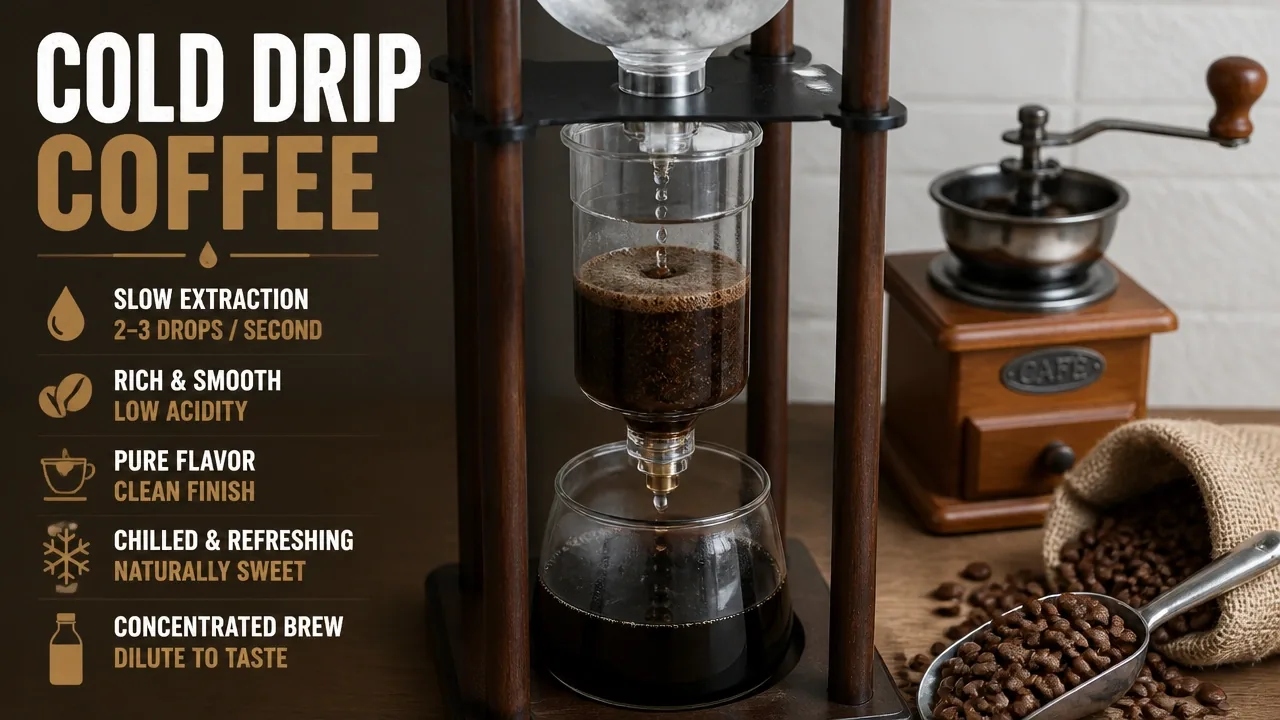
The single biggest reason cold coffee cocktails fall flat is a weak base. Standard cold brew recipes are calibrated for drinking straight or with milk – not for surviving ice melt, tonic dilution, and a 1.5-ounce pour of spirit. Cold drip concentrate for cocktails needs to be stronger than what you’d sip from a glass in the morning.
Brew Strength and Water Quality
Start with filtered water – tap water with chlorine or mineral imbalance will affect flavor at the extraction level, not just the finish. Use fresh whole beans stored airtight at room temperature, and grind immediately before brewing. Grind size is the most direct lever you have over extraction outcome: too coarse and the coffee tastes thin and sour; too fine and it turns bitter and muddy. For cold drip, a medium-fine grind is the usual starting point, but adjust based on what the base actually tastes like.
Concentration as Dilution Control
Think of cold drip concentrate the way a bartender thinks about a spirit: it’s measured, not free-poured. The concentrate goes into the cocktail in a smaller volume – typically 1 part concentrate to 1.5–2 parts spirit and mixer – because ice, tonic, and citrus will all add dilution as the drink sits. If you build with a weak base, that dilution buries the coffee flavor completely within a few minutes of pouring.
The make-ahead window for cold drip concentrate is roughly 5–7 days refrigerated, and that’s without dairy or sweetener added. Once you fold in milk, cream, or syrup, the clock shortens significantly. Build the concentrate in advance; build the drink fresh.
If the base tastes too bitter after extraction, the fix is usually grind adjustment or a shorter drip time – not adding more coffee grounds to the next batch. More grounds with the same grind and water volume can tip the extraction further into bitterness rather than correcting it.
Step 2: Choose Your Spirit and Summer Bridge: Gin, Rum, Tonic, and Citrus
Cold drip’s smooth, low-acid profile is cooperative by nature – it doesn’t bulldoze other flavors, which means the spirit you choose actually shows up in the glass. That’s the upside. The downside is that a poorly matched spirit will also show up clearly, with nothing to hide behind.
Why Gin Works So Well Here
Gin is the most natural pairing for a cold drip coffee cocktail built in summer style. Its botanical backbone – juniper, citrus peel, coriander, angelica – finds complementary notes in cold drip’s cleaner extraction. As Julia Momose, the mixologist behind Chicago’s Kumiko, has noted, the botanicals of particular gins can highlight notes within specific coffees or certain roast profiles.
Momose points out that different gins don’t just coexist with coffee – they actively amplify certain flavor dimensions depending on the roast and origin of the bean.
That’s a useful pairing principle: a floral, citrus-forward gin will sharpen the brightness in a light-roast cold drip; a more resinous, juniper-heavy gin will push toward earthier, darker notes. The match isn’t random – it’s a choice you make based on what the concentrate actually tastes like.
Rum as the Richer Alternative
White rum keeps the drink crisp and summer-appropriate – its clean sugarcane base adds sweetness without weight, which works well in a highball build. Aged rum shifts the whole drink toward something richer and more stirred in character: vanilla, oak, and molasses notes from the barrel create a deeper coffee cocktail that’s less about fizz and more about slow sipping.
Exploring aged spirits as structural anchors opens up fascinating avenues reminiscent of traditional preparations found in any authentic Carajillo recipe Spain.
Tonic and Citrus as Bridges
Tonic water adds carbonation and a quinine bitterness that lifts the cold drip’s weight and keeps the drink from feeling dense. Fresh citrus – lemon or lime juice – brightens the whole structure and prevents the coffee from reading as flat or one-dimensional. Neither is optional in a summer highball build; they’re doing structural work, not just adding flavor.
For starting ratios: 1.5 to 2 parts spirit to 1 part cold drip concentrate is a reliable range. Adjust based on how concentrated your base is and how much mixer volume you’re adding.
Step 3: Sweeten and Balance with Syrup and Citrus
Most beginner cold coffee cocktails have a texture problem before they have a flavor problem. The culprit is almost always granulated sugar added directly to a cold liquid. Cold drip concentrate, tonic, and citrus juice are all cold – and cold liquid does not dissolve undissolved sugar. The result is a gritty, uneven drink where the sweetness pools at the bottom rather than integrating into the cocktail.
The fix is straightforward: use simple syrup. A standard 1:1 ratio of water to sugar, dissolved hot and cooled, integrates instantly into cold liquid without adding meaningful dilution or introducing texture. It’s not a premium bartender trick – it’s basic chemistry applied to a cold-liquid problem.
Precision in sweetener selection is equally critical when crafting an agave nectar espresso martini, where heavy syrups can easily overpower delicate agave notes.
Acid as a Structural Element
Fresh citrus juice isn’t a garnish decision – it’s a balance decision. Citrus in small increments pulls the coffee, sweetness, and spirit into alignment. Add it a quarter-ounce at a time and taste between additions. The goal is integration: the drink should taste like a coherent whole, not like coffee on one side and sweetened tonic on the other.
Bitters can add complexity at this stage, but they’re secondary to citrus for most summer builds. A dash of aromatic or orange bitters alongside citrus juice can round out the finish, but don’t use bitters as a substitute for fresh acid – they serve different functions.
The Stir-Before-Carbonate Rule
Before adding tonic or any carbonated mixer, stir the base – cold drip, spirit, syrup, and citrus – together first. Pouring carbonated liquid over an unstirred base creates aggressive foaming and unpredictable bitterness as CO₂ interacts with the coffee’s remaining acids. Stir the still components, then add tonic gently down the side of the glass or over the back of a spoon.
Step 4: Shake to the Icy Cold Endpoint
The cocktail shaker is doing four things simultaneously: chilling, diluting, aerating, and building texture. All four happen in the same 10–15 second window, which is why the tin temperature is a better endpoint signal than counting seconds.
Fill the shaker with ice – more ice, not less, because a full shaker chills faster and dilutes more evenly than a half-full one. Seal tightly and shake hard. When the outside of the tin feels genuinely icy cold and slightly painful to hold, the drink is ready. That tactile cue tells you the liquid inside has dropped to the right temperature, absorbed the right amount of dilution from ice melt, and developed the aeration that gives a shaken cocktail its texture.
For cold drip specifically, that smooth extraction quality should survive the shake – the drink shouldn’t taste watery or lose its coffee character. If it does, the base was too weak going in, not the shake too long.
Watch this video for a clear demonstration of proper shaking and stirring technique, including how to read the tin temperature cue:
Highball Builds: A Different Order
For tonic-based drinks, don’t shake. Build the cold drip, spirit, syrup, and citrus in the glass over ice, stir gently to combine, then add tonic last. Shaking a carbonated drink destroys the carbonation and creates a mess. If you’re using fresh herbs or citrus slivers in the build, double-strain when pouring into the serving glass – it keeps the drink clean and prevents small solids from floating in the glass.
Troubleshooting: Fix Weak, Bitter, Watery, or Gritty Cold Drip Cocktails
Most cold drip cocktail problems trace back to one of four root causes: concentration, balance, dilution, or sweetener format. Here’s how to identify which one you’re dealing with and what to actually do about it.
Weak or lost coffee flavor means the concentrate was underpowered relative to the mixer volume. The fix is to increase the cold drip ratio in the next build, or reduce the tonic and citrus volume. Do not add more ice – additional ice accelerates dilution and makes the problem worse, not better.
Bitter or overpowering coffee usually points to an extraction issue in the base: grind too fine, drip too slow, or water contact too prolonged. For the drink already in your hand, a small addition of simple syrup and a squeeze of fresh citrus can bridge the bitterness by adding sweetness and acid to counterbalance it. For the next batch, adjust the grind coarser or shorten the extraction.
Watery drink comes from too much tonic, over-shaking, or small ice cubes that melt quickly. Use larger ice cubes – they have less surface area relative to volume, so they melt slower. Reduce the tonic pour, and stop shaking the moment the tin goes cold rather than continuing past the icy endpoint.
Gritty or sugary texture is a sweetener problem. Switch to simple syrup and make sure you’re stirring the base before adding any carbonated mixer. If the grittiness is from coffee particles rather than undissolved sugar, the cold drip wasn’t filtered cleanly – re-filter through a paper coffee filter or clean cotton cloth before using the concentrate.
Salvaging an already-built drink has limits. If the drink is weak, a small pour of cold drip concentrate added directly to the glass can rescue it – stir gently to integrate. If it’s bitter, a citrus squeeze and a small syrup addition can pull it back. What won’t help is re-shaking with fresh ice: that adds dilution on top of an already-diluted drink and rarely improves the flavor.
If no cold drip is available, chilled filter coffee can substitute – but reduce the mixer volume to compensate for its lower concentration. The logic is the same: protect the coffee’s presence in the final drink by controlling how much dilution the base has to survive.
Frequently Asked Questions About Cold Drip Coffee Cocktails
Can I use store-bought cold brew concentrate instead of making cold drip?
Yes, but expect a fuller-bodied, slightly more bitter base. Cold brew concentrate works – just use it in the same measured ratio as cold drip and taste before adding sweetener, since some commercial concentrates are already sweetened.
How do I make cold drip coffee without a dedicated tower or drip device?
A slow pour through a Chemex or V60 with cold water works as an approximation. It won’t replicate a true gravity-drip tower, but filtering cold water slowly through a medium-fine grind produces a cleaner, lower-acid result than immersion cold brew.
What roast level works best for a cold drip coffee cocktail?
Light to medium roasts tend to produce brighter, more complex cold drip that pairs well with gin and citrus. Dark roasts can work with aged rum, but they risk tipping bitter in a cold extraction – adjust grind coarser if you go dark.
Does cold drip coffee have more caffeine than hot coffee?
Caffeine content depends on brew ratio and bean type, not brew temperature. A concentrated cold drip can be higher in caffeine per ounce than a standard hot cup, so treat cocktail portions accordingly.
Why does my cold drip coffee cocktail foam aggressively when I add tonic?
The CO₂ in tonic reacts with the acids and proteins in coffee when they meet without pre-mixing. Stir the cold drip, spirit, and citrus base first, then add tonic gently over the back of a spoon to minimize foaming.
Can I batch cold drip coffee cocktails ahead of a party?
Batch the base – cold drip concentrate, spirit, syrup, and citrus – and refrigerate it without ice or tonic. Add carbonated mixers and ice only at serving time to preserve fizz and avoid over-dilution.
What’s the difference between a cold drip cocktail and an espresso martini?
An espresso martini uses hot-extracted, freshly pulled espresso shaken with vodka and coffee liqueur – it’s built on intensity and foam. A cold drip cocktail uses a cold-extracted base, typically with gin or rum, and leans toward brightness and refreshment rather than richness.
How long does cold drip concentrate stay good in the refrigerator?
Plain cold drip concentrate keeps well for 5–7 days refrigerated in an airtight container. Once you add dairy, sweeteners, or citrus, use it within 24–48 hours.
References
- How Cold Brew Differs from Chilled Hot Brew | sca.coffee
- Honeyed Coffee Gin Tonic Recipe | imbibemagazine.com