Coffee Beans

Professional coffee roaster monitoring the heat profile during anaerobic coffee roasting
Coffee Beans

How heat and fermentation shape beans in anaerobic coffee roasting

Roasting anaerobic coffee requires managing a controlled thermal gradient to protect high sugar retention levels created during fermentation. Because these beans are heat-sensitive, roasters must use lower charge temperatures to prevent surface burning. This technique preserves complex flavors in coffee lots from Costa Rica by stabilizing the development phase and preventing runaway heat.

How heat and fermentation shape beans in anaerobic coffee roasting Read More »

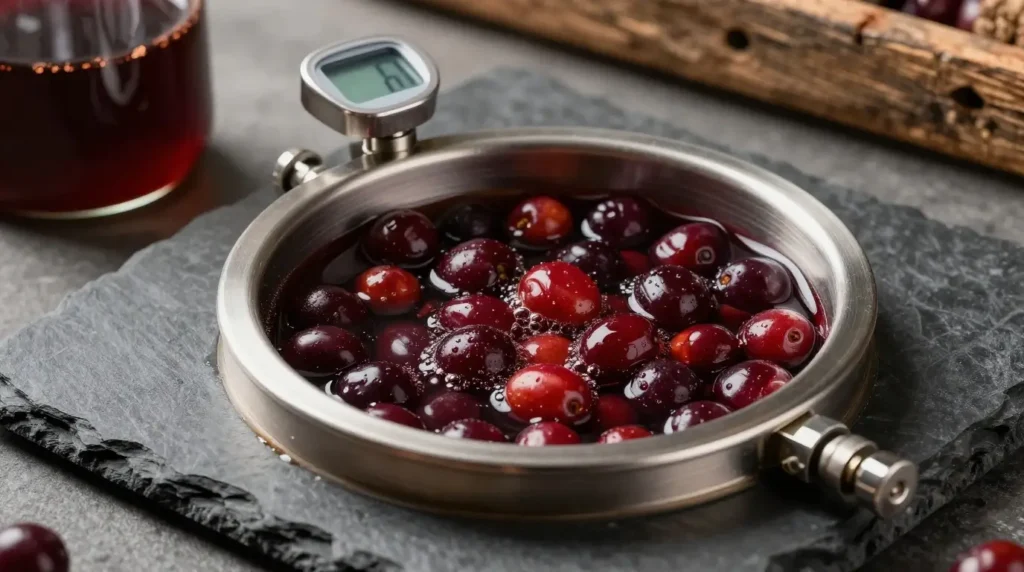
Close-up of coffee cherries undergoing anaerobic natural coffee processing in a sealed fermentation tank
Coffee Beans

How sealed‑tank fruit fermentation creates the funk of anaerobic natural coffee

Anaerobic natural coffee is a processing method where whole cherries ferment inside oxygen-free, sealed tanks. This environment uses high CO2 pressure and microbial activity to break down fruit sugars. Producers strictly monitor temperature and pH levels to create complex organic acids and the distinct flavor profiles resulting from these controlled anaerobic conditions.

How sealed‑tank fruit fermentation creates the funk of anaerobic natural coffee Read More »

Hyper-realistic 3D rendering of Robusta coffee beans showcasing high caffeine content compared to Arabica.
Coffee Beans

Robusta Coffee’s Caffeine Secret: Why This Affordable Bean Delivers Double the Kick of Arabica

Robusta coffee delivers 2.2%–2.7% caffeine by weight—nearly double Arabica’s 1.2%–1.5%—because Coffea canephora evolved at low, pest-dense altitudes where saturating every bean with bitter alkaloids became a survival weapon. We now understand this means a single 8 oz cup can contain up to 265 mg of caffeine, making Robusta the highest-yield caffeine source in mainstream coffee.

Robusta Coffee’s Caffeine Secret: Why This Affordable Bean Delivers Double the Kick of Arabica Read More »

coffee roasting process explained
Coffee Roasting

What Is Coffee Cycle Roasting?

Coffee cycle roasting is a multi-stage process that transforms green beans by first drying them, followed by a critical browning stage where sugars caramelize around 200°C. These key phases—drying, browning, and caramelization—are vital for developing the final flavor profile. Read on to discover the importance of each phase for high-quality beans.

What Is Coffee Cycle Roasting? Read More »

lightly roasted coffee flavor
Coffee Roasting

What Is Blonde Roast Coffee?

Blonde roast coffee is a distinct, light roast characterized by a short roasting time at lower temperatures, resulting in a golden hue and dry appearance. This process highlights fruity, floral notes and preserves significant caffeine, often reaching about 95 mg per cup. Read on to explore its flavor profile and market appeal.

What Is Blonde Roast Coffee? Read More »

lightly roasted coffee beans
Coffee Roasting

What Is Light Roast Coffee?

Light roast coffee is characterized by a bright brown, vibrant appearance and is packed with bright, fruity flavors, skipping the charred taste of darker roasts. The roasting process typically stops after the initial crack, preserving natural acidity and flavor notes. Read on to uncover the delicate journey of light roast coffee beans, from roast to cup.

What Is Light Roast Coffee? Read More »

medium roast coffee defined
Coffee Roasting

What Is Medium Roast Coffee?

Medium roast coffee is defined by beans roasted between 410°F and 440°F, resulting in a medium brown color with a balanced flavor profile. These beans feature sweet caramel and chocolate notes with moderate acidity, making them easy on the stomach. Explore the popularity and characteristics of this beloved roast level.

What Is Medium Roast Coffee? Read More »

bold dark coffee blend
Coffee Roasting

What Is French Roast Coffee?

French roast coffee is a dark roasted coffee characterized by bold, smoky flavors and slightly charred notes. Roasting Arabica beans at high temperatures, typically between 465°F and 485°F, results in a glossy, oily appearance. This process develops rich hints of chocolate and caramelization, creating a unique cup. Read on to explore its characteristics and history.

What Is French Roast Coffee? Read More »

Scroll to Top