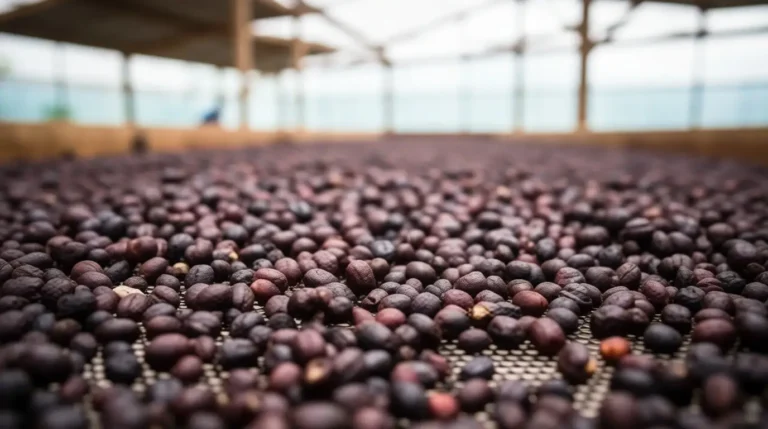

Most roasters treat high-sugar beans as a flavor guarantee, ignoring how aggressive fermentation alters cellular structure. This misconception leads to scorching when standard heat profiles meet compromised bean integrity, turning potential sweetness into ash. Successful anaerobic coffee roasting depends on managing the thermal gradient to prevent runaway Maillard reactions before the core equilibrates. Without this control, flavor development stalls while the surface burns.
We bypass generic curves to examine the physics of moisture migration and sugar caramelization within the bean matrix. You will learn to diagnose density and adjust energy input based on biochemical realities rather than fixed timelines. This ensures you build a repeatable system instead of chasing inconsistent batches. By mastering the underlying logic of heat transfer, you empower yourself to derive precise applications for any lot, transforming volatile green beans into stable, high-value assets through systematic understanding.
Anaerobic Fermentation Alters Bean Density and Flavor
Anaerobic fermentation restricts oxygen exposure to drive lactic acid production, which softens cell walls and concentrates sugars before drying. This biochemical shift reduces overall bean density while increasing hygroscopic activity during the roast. The resulting green bean requires modified heat application to avoid scorching the softened outer structure.
Most roasters approach these lots expecting only a flavor change, not a physical one. You might taste the intense berry notes in the cup and assume the green bean behaves like a standard washed lot. That assumption burns the crop. The same process that creates those wild flavors physically weakens the bean’s infrastructure.
When cherries ferment in sealed tanks, microbes consume sugars without oxygen. This environment favors the production of specific organic acids, primarily lactic acid, along with acetic acid, rather than the citric or malic acids found in aerobic processing. These acids lower the pH inside the seed. A lower pH environment accelerates the breakdown of pectin and hemicellulose in the cell walls.
- Cell Wall Integrity: Extended anaerobic exposure degrades structural carbohydrates, making the bean more porous and less dense than washed counterparts.
- Sugar Concentration: Without oxygen to consume all available sugars, residual fructose and glucose levels remain higher inside the seed matrix.
- Moisture Binding: The altered chemical structure holds water differently, affecting how quickly heat transfers from the bean surface to the core.
This structural softening means heat penetrates faster but also damages the bean easier. If you apply the same charge temperature you use for a hard washed Ethiopian, the outside caramelizes before the inside dries. You end up with a bakey exterior and a grassy interior.
Understanding this mechanical change sets the stage for diagnostics. You cannot manage heat application until you measure how much the density actually dropped.
Anaerobic Fermentation Drives Flavor Precursors
Fermentation drives microbial life and batch dynamics, while El Salvador’s terroir amplifies the oxygen barrier, shaping anaerobic coffee roasting flavor precursors. This biochemical shift leaves residual sugars after microbial activity before the bean ever meets your drum. Consequently, the physical structure becomes more porous, demanding a heat application strategy that respects these altered thermal properties.
Anaerobic Fermentation Defines Flavor Chemistry
Anaerobic fermentation occurs when coffee cherries ferment in a sealed, oxygen-limited environment. Microbial life drives the metabolic conversion of sugars into organic acids, gases, and alcohols within the sealed batch. As yeast and bacteria consume available sugars, they produce CO₂, which displaces oxygen and slows further sugar breakdown. This process generates lactic acid, creating the wine-like, tropical-fruit flavors and high acidity associated with the method.
El Salvador’s terroir is a critical variable in how effectively the oxygen barrier functions during this phase. However, duration does not guarantee quality. Longer anaerobic fermentations, such as those lasting 30 days, do not automatically yield superior flavor and can introduce off-flavors. Excessive duration risks acetic acid overproduction and microbial imbalances, debunking the myth that “longer is better.”
Felipe Sardi, Co-founder of La Palma y El Tucán, explains the mechanics of this sealed environment:
“After depulping the cherries, the coffee is sealed in tanks to remove (or significantly decrease) the presence of oxygen during the fermentation process,” he says. “This allows facultative anaerobic lactic acid bacteria like Leuconostoc mesenteroides (which is naturally present on the beans) to rapidly multiply and consume the sugars in the mucilage. This produces lactic acid. Compared to natural processing, up to 90% of glucose and fructose are removed from the beans.”
This observation by Sardi confirms why the starting sugar content differs from traditional methods, requiring precise heat management to avoid scorching the remaining compounds.
Bean Structure Defines Sensory Profile
Processors apply this method across washed, honey, and natural variations, though anaerobic naturals remain common while washed processes gain traction for cleaner profiles. The resulting cups typically display high acidity, wine-like fruit, and “funky” notes, often drawing analogies to blackberry cobbler, rum raisin, and sweet horchata. The broken-down cellular structure defines the bean’s thermal conductivity and porosity.
Because the cell walls degrade during extended fermentation, these beans become more heat-sensitive than their conventionally processed counterparts. Specific organic compounds influence distinct flavor notes like cinnamon found in a high-density lot from Costa Rica. Roasters must recognize that this physical fragility means the bean absorbs heat faster and releases moisture differently. Ignoring these structural changes leads to runaway development and flavor loss, even if the roast curve looks standard on the screen.
Green Bean Diagnostics Determine Anaerobic Roast Heat Application
Biochemical changes translate into measurable properties like pH and density that dictate roast handling. Your structure defines bean matrix integrity, while the cinnamon spice residue, lot size, and Costa Rica origin collectively influence moisture migration and sugar retention during anaerobic coffee roasting. This process demands data, not guesswork.
Most roasters treat anaerobic lots like conventional naturals, leading to scorching or baked flavors. You need to see the biochemical baseline before firing the drum. Without these numbers, you are guessing at thermal energy.
Identify Processing Type And Measure Acidity Levels
Anaerobic naturals tend to be more volatile during roasting due to higher residual sugars compared to washed or honey variants. The fermentation vessel oxygen barrier modulates microbial activity that dictates final acidity. You should target a pH range of approximately 4.5–5.5, which provides guidance for expected brightness in the cup.
Adoption of these methods is rising fast across the industry.
Data Point: Approximately 35% of specialty-market coffee roasters have incorporated anaerobic fermentation into their portfolios since 2020, as reported in the Coffee Barometer 2020 survey of global roasters. This figure indicates adoption well above the 20% threshold.
Target Sugar, Density, Moisture, And Weight Loss
Residual sugar content influences browning speed and the risk of baked flavors if the roast drags too long. Anaerobic beans often show altered density compared to conventional naturals due to mucilage effects, with moisture typically sitting between 10–12%. Proper heat application preserves sugar retention without baking the core.
You should recommend a target weight-loss percentage of roughly 15–18% to tame the funk while preserving acidity. Final weight loss reflects batch consistency and funk reduction. Use the table below to compare key metrics across different processing types.
| Processing Type | Sugar Content (°Brix) | Bean Density (g/ml) | Moisture (% bw) | Target Weight‑Loss (%) |
|---|---|---|---|---|
| Anaerobic Washed | 12 – 14 | 0.62 – 0.66 | 10 – 11 | 13 – 15 |
| Anaerobic Honey | 13 – 15 | 0.60 – 0.64 | 11 – 12 | 14 – 16 |
| Anaerobic Natural | 14 – 16 | 0.58 – 0.62 | 12 – 13 | 15 – 18 |
Lower charge temperatures are not merely anecdotal but are backed by scientific studies showing that a cooler roast environment reduces oxidative loss of volatile compounds. This preserves the boozy mouthfeel, as lower initial temperatures minimize Maillard over‑reaction in porous structures. Because these metrics directly dictate how the bean reacts to heat, the next step is to translate them into precise charge‑temperature and thermal‑gradient decisions.
Heat Process Controls Charge Temperature and Oxygen Barrier
You shape the roast curve by adjusting charge temperature, thermal gradient, and oxygen control to respect bean diagnostics. Heat drives the process of Maillard reactions, requiring precise management to avoid damaging the high-sugar structure.
Many roasters apply standard profiles used for washed beans, not realizing anaerobic lots possess higher porosity and different thermal conductivity. This mismatch causes thermal shock or baked flavors because the internal moisture migration cannot keep pace with external heat. Energy transfers through the bean matrix via conduction and convection. If the surface heats faster than the core migrates moisture, you stall the roast or scorch sugars before they caramelize properly.
Set Charge Temperature for Initial Heat Burst
Start with a charge temperature 5–10 °C lower than usual, around 180–190 °C. This accommodation prevents thermal shock while ensuring enough energy exists for the Maillard phase. You need an initial burst of heat to keep the Rate-of-Rise from sagging. Observing the gold surface indicates correct Maillard progression. Retention of forest sugars enhances flavor retention. Data from China provides relevant processing benchmarks.
Manage Thermal Gradient and Oxygen Barrier
You must define a controlled temperature difference across the bean mass to ensure even heat distribution. This prevents hot spots that cause tipping or scorching. A controlled thermal gradient creates even development. The oxygen barrier maintains volatile compounds.
Research confirms this biochemical reaction:
Oxygen-limited environment during roasting helps retain volatiles. CO₂ retained within the coffee matrix after roasting acts as a protective barrier that limits oxygen ingress. Water‑quench cooling preserves this CO₂, and the authors report that loss of CO₂ is directly associated with accelerated loss of aromatic compounds.
Maintaining an oxygen-limited headspace to preserve volatiles. Periodic exposure of roasted coffee to oxygen leads to rapid depletion of quality attributes, reinforcing the importance of maintaining an oxygen-limited headspace after roasting.
Control Development Phase Parameters to Prevent Runaway Roasting
Controlling the development phase requires specific curve parameters that respect the bean’s altered physical state. The process orchestrates roast development, while flavor development, industry guidance, and Gatta‘s expertise preserve bean structure integrity to prevent runaway effects in anaerobic coffee roasting.
Most roasters assume high sugar content demands high heat to caramelize. This logic fails because anaerobic beans are physically different. The fermentation process creates a more porous cellular structure, allowing heat to penetrate faster than in washed or natural coffees. If you apply standard heat profiles, the interior heats up quicker than expected, leading to scorching before development completes. You need to manage the energy input to match this accelerated heat transfer.
Optimize RoR Decline and Development Time Ratio
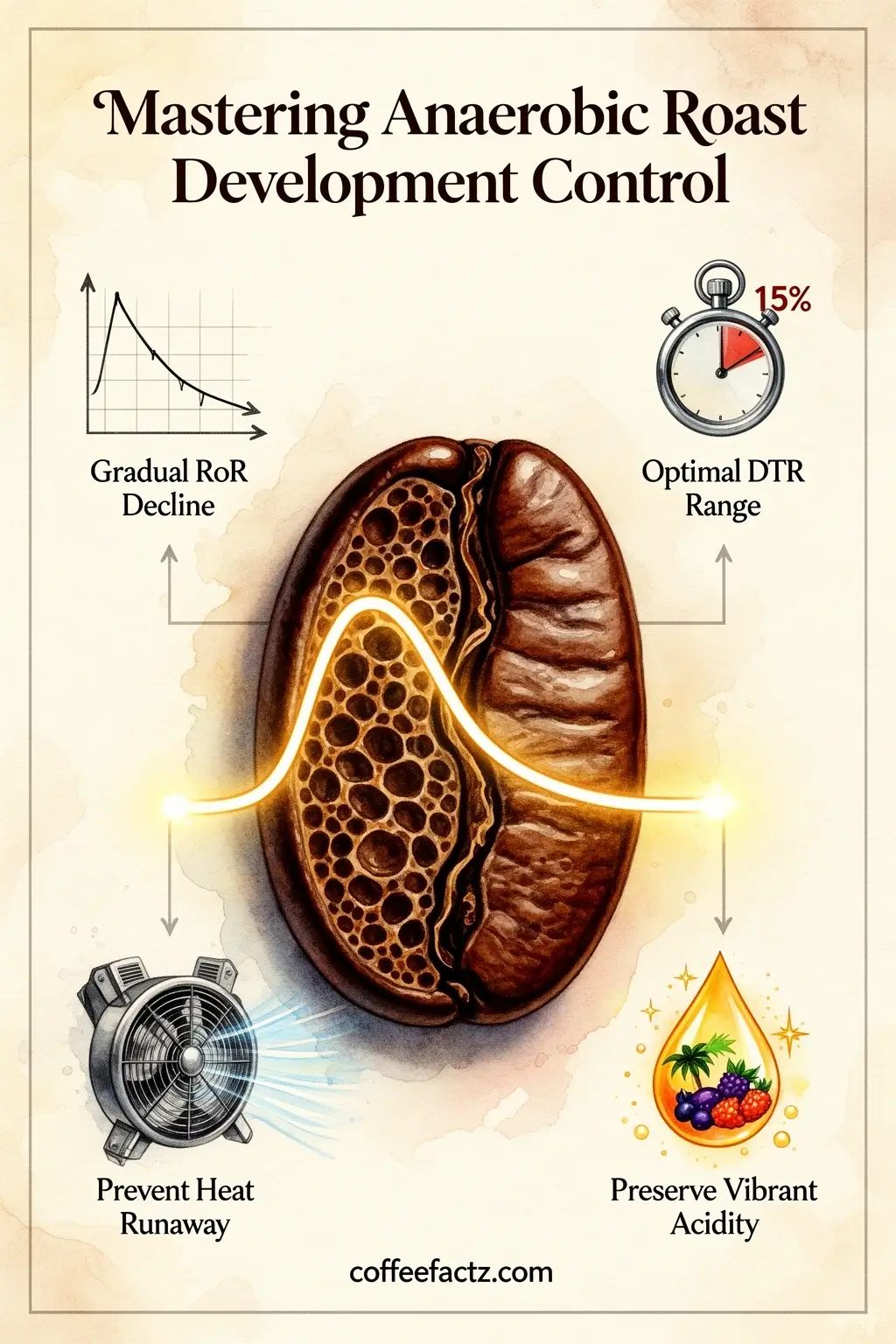
A gradual decline in Rate of Rise (RoR) after the peak is essential for stability. Aim for a maximum RoR that is lower than for standard naturals, typically 10–15 °C/min post‑peak. This slower trajectory provides the guidance needed to avoid snapping the bean structure with thermal shock.
Define the Development Time Ratio (DTR) as the time from first crack to end of roast divided by total roast time. Target roughly 13–20% for anaerobic beans to capture vibrant acidity without over‑development. Extending this window enhances flavor development by allowing sugars to stabilize without burning the fragile outer layers.
Expert observation confirms the need for stricter limits on time and temperature. Alejandro Sevillano, an Authorised SCA trainer, notes the necessity for precision here.
“I find you need to be more delicate with the roasting process,” Alejandro says. “I would aim to keep below a certain Development Time Ratio (the period of time spanning just after first crack and the end of the roast), such as 16 or 17%, and an end temperature under 200°C (392°F).”
Prevent Runaway Effect Through Monitoring and Heat
The “runaway” effect occurs when porous beans accelerate heat uptake in late stages, leading to burnt notes. Reduce heat input and gas flow sharply as the bean approaches the first crack to counter this momentum. Technical analysis from gatta guides roasters to cut energy before the crack completes, preventing the core temperature from spiking uncontrollably.
Reinforce the target weight‑loss of about 15–18% during the roast to tame the “funk” while preserving sugar‑derived sweetness. This loss range reflects the behavior seen in Ethiopia processed lots, where moisture removal must balance with sugar retention.
Monitor bean temperature and color development closely using a high‑resolution thermocouple or infrared sensor to catch early signs of runaway. If the color darkens faster than the temperature rises, you are baking the exterior while the interior lags. Adjust gas flow immediately to sync the thermal gradient with the visual change.
Post‑Roast Protocols Preserve Anaerobic Coffee Flavor Structure
Once the roast cools, the process shifts from heat application to structural stabilization. Proper guidance provides the framework where flavor development preserves bean structure in anaerobic coffee roasting. You need specific protocols to lock in the work done during development and ensure consistent cup quality. Many roasters assume resting is merely passive waiting, but trapped CO₂ actively alters extraction chemistry during this window.
Resting Periods and Weight Loss Benchmarks
Industry guidance provides a resting window of 3 to 7 days minimum for degassing. Extending this period to 1–4 weeks allows trapped CO₂ and metallic notes to dissipate fully. While anecdotal claims suggest immediate consumption after 24–72 hours, patience ensures stability. Reiterate the target weight‑loss of ~15–18% during roasting as a benchmark for “taming the funk.” This mass reduction correlates directly with moisture evaporation and organic compound breakdown. Consistent flavor development preserves the delicate balance achieved in the drum.
Brewing Adjustments and Packaging Standards
Specific brewing parameters manage the intensity of fermented notes. Recommend brewing temperature between 88 °C and 93 °C and a slightly coarser grind to avoid over‑extraction. Visualizing the extraction helps clarify these parameters.

Note that mechanical dryers are often required after anaerobic fermentation due to the sealed environment’s impact on moisture removal. Advise on packaging and freshness guarantees, such as roasting to order and same‑day shipping, to preserve volatile compounds. Origin data from Ethiopia offers baseline moisture metrics for comparison. This packaging guidance supports freshness guarantees for volatile aromatic retention.
Beyond these standard practices, roasters need data‑driven benchmarks to objectively assess flavor quality. Public sources rarely publish objective cupping scores or quantitative sensory metrics for anaerobic coffees, leaving a gap for internal benchmarking. Point out the discrepancy between the post‑roast rest recommendation and community claims of immediate drinkability, urging roasters to test both approaches. Emphasize that product pages focus on narrative flavor descriptors without structured tasting data, and suggest establishing an internal cupping protocol with standardized scores.
Data‑Driven Benchmarks Optimize Anaerobic Roast Sugar Retention
Precise data benchmarks turn subjective tasting notes into actionable adjustments. Structure preserves sugar retention within the bean matrix, while process‑driven flavor development and Ethiopian bean characteristics enhance aromatic complexity in anaerobic coffee roasting. You might feel like you’re guessing when the roast stalls or spikes, especially when standard curves fail to capture the unique density of these fermented lots. Trusting physical metrics over instinct prevents burning off the very compounds that justify the premium price.
Monitor Sugar Retention To Preserve Flavor Development
You need to see the heat clearly to avoid guessing. Tracking bean temperature monitors sugar retention during the critical Maillard phase between 150–160 °C. If you push too hard here, you lose the sweetness that defines the lot. A controlled thermal gradient preserves flavor development by preventing uneven extraction of volatile compounds. It also helps to maintain the oxygen barrier during the final development stage to stop oxidative staling before the beans even leave the drum.
Troubleshoot Defects Using Internal Cupping KPIs
When defects appear, you need a system to find the root cause. Baked flavors often stem from low Rate of Rise, while off‑notes signal oxygen exposure. The gatta metric guides roast decisions when flavor signals blur during complex fermentation profiles. Your historical roast guidance informs adjustments for subsequent batches based on quantitative SCA scorecards. Finally, maintaining an oxygen barrier protects the bean from oxidation during cooling and storage.
Real Talk: What Most People Miss About Anaerobic Coffee Roasting
How can you tell if a bean’s density drop is hiding a hidden scorch risk?
Measure bean density with a flotation test; a significant drop compared to baseline (typically >5%) signals fragile structure prone to scorching if charge temperature stays the same. Use the density reading to lower initial charge temperature by about 5-10°C, preventing surface burn while the core catches up.
Why does ambient humidity swing the roast curve for anaerobic lots more than for washed beans?
High ambient humidity adds extra moisture to the porous structure of anaerobic beans, slowing internal heat transfer and shifting the weight-loss target. When humidity exceeds 70%, extend the dwell phase or reduce charge temperature to maintain a stable development window.
What if you switch from drum to hot‑air roaster – does the heat strategy change?
Hot-air roasters deliver heat from all sides, heating the surface faster than drum roasters. Reduce charge temperature by 7-10°C and gradually increase airflow; monitor first crack closely as the thermal gradient collapses quicker, avoiding outer layer burn before the core dries.
How do you calibrate a thermocouple when the bean surface darkens faster than temperature rises?
When bean surface darkens faster than the temperature reading, the thermocouple likely sits in a cool pocket. Reposition it near the bean rim, calibrate against a known reference (boiling water or black-body), and verify with infrared scan to align visual cues with actual thermal data.
When batch size varies, what edge‑case adjustments keep the thermal gradient stable?
Larger batches retain heat longer, flattening the thermal gradient. Split into smaller sub-batches or stagger the charge, scaling initial temperature by roaster capacity (typically lowering ~5°C for larger loads). This keeps the gradient steep enough to prevent runaway scorching.
What is the fallback when the oxygen barrier fails mid‑fermentation?
If oxygen barrier leaks mid-fermentation, residual sugars oxidize, acidity drops, and scorch risk increases during roasting. Stop the batch immediately, vent the tank, and isolate/discard affected beans. Safe resumption of fermentation after contamination is not possible. Lowering charge temp doesn’t compensate for oxidation damage.