
Starbucks Matcha Latte is one of the most misread drinks on the menu – people either dismiss it as a caffeine-free treat or assume it’s a full coffee replacement. The truth sits somewhere more interesting in the middle.
At 65–80 mg of caffeine in a grande, it’s the functional equivalent of a single espresso shot, minus the spike. Add L-theanine into the equation – the amino acid naturally packed into every scoop of matcha powder – and you’ve got a drink worth understanding before you order it.
If 80 mg of caffeine isn’t quite enough to power through your morning and you are looking for an extreme energy boost, you might want to explore the Top 10 Highest Caffeine Coffee brands available on the market.
How Much Caffeine Is in a Starbucks Matcha Latte?
Starbucks Matcha Latte’s caffeine content runs 65–80 mg for a grande – the most commonly ordered size – making it a solidly moderate stimulant, not a gentle herbal sip. The number stays consistent within each size because Starbucks portions its pre-sweetened matcha powder by standardized scoops: two for a Tall, three for a Grande, four for a Venti. That structure means your caffeine intake is predictable as long as you don’t customize the scoop count.
Here’s the full picture by size:
| Size | Scoops | Caffeine Range |
|---|---|---|
| Short (8 oz) | 1–2 | ~35 mg |
| Tall (12 oz) | 2 | ~40–55 mg |
| Grande (16 oz) | 3 | ~65–80 mg |
| Venti (20 oz) | 4 | ~85 mg |
One thing worth flagging before you treat these numbers as gospel: no published source – including Starbucks itself – has backed these figures with a traceable lab methodology. The 15 mg gap you’ll notice between the official Tall number (45 mg) and some third-party Tall reports (40 mg) isn’t explained by a recipe change. It signals that every caffeine figure circulating online is an estimate, not a verified dose.
For most people ordering a grande as a morning drink or afternoon pick-me-up, the 65–80 mg window is a reliable ballpark. If you’re tracking caffeine for anxiety management, pregnancy, or medication interactions, treat that range as a working approximation – not a clinical measurement.
Sprudge, a leading specialty coffee publication, puts the comparison plainly:
“By caffeine comparison, a matcha latte at Starbucks has only 80mg caffeine versus a caffè latte ringing in at 150mg.”
That single comparison does a lot of heavy lifting. It tells you the Starbucks Matcha Latte isn’t a caffeine-free indulgence – but it also isn’t trying to compete with your double-shot morning coffee.
Matcha Latte vs. Coffee: How Does the Caffeine Stack Up?
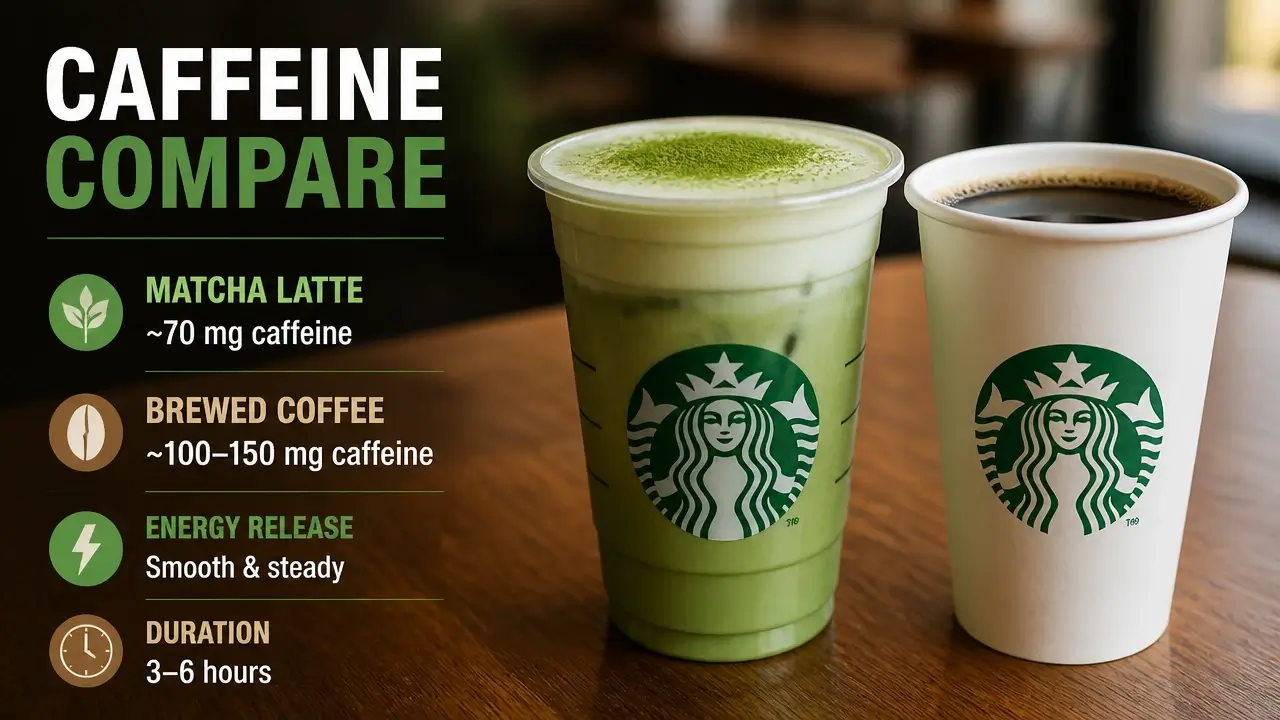
Starbucks Matcha Latte’s 65–80 mg grande sits in a surprisingly specific spot on the caffeine spectrum – above green tea, roughly level with a single espresso shot, and well below most coffee-milk drinks. That context matters more than the raw number when you’re deciding whether it can actually replace your usual order.
Here’s how it lines up against common Starbucks benchmarks:
- Single espresso shot: ~75 mg
- Grande Caffè Latte (2 shots): ~150 mg
- Tall brewed coffee: ~260 mg
- Iced green tea (grande): ~25–30 mg
- Grande Matcha Latte: ~65–80 mg
The “matcha has less caffeine than coffee” claim you see everywhere is technically true – but it’s functionally misleading for the Starbucks crowd. It lumps together a tall drip coffee (260 mg) and a single-shot latte (75 mg) as if they’re the same thing. What you actually need is a decision rule based on your current drink, not a blanket comparison to an abstract category called “coffee.”
Here’s a practical map you can use at the counter:
- Want a strong, immediate jolt? Stay with brewed coffee (260 mg).
- Want moderate, sustained energy? A grande matcha latte (65–80 mg) is your move.
- Currently drinking a double-shot latte? Switching to matcha cuts your caffeine roughly in half.
- Sensitive to caffeine but still want a lift? Matcha’s lower dose is the safer bet.
- Want the best of both worlds? A “dirty matcha” – matcha latte plus one espresso shot – lands around 140–155 mg, matching a standard two-shot latte while keeping the earthy, smooth flavor.
The comparison that actually changes behavior isn’t matcha versus coffee in the abstract. It’s matcha versus your coffee order.
Why Matcha Energy Feels Smoother: The L-Theanine Effect
L-theanine, a naturally occurring amino acid concentrated in shade-grown green tea leaves, promotes alpha brain wave activity – the mental state associated with relaxed alertness – and it’s the reason a Starbucks Matcha Latte feels qualitatively different from the same milligrams of caffeine delivered through espresso. The caffeine absorption curve flattens out instead of spiking, which is why people describe matcha as “calm focus” rather than “wired.”
The reason matcha delivers more L-theanine than a standard cup of steeped green tea comes down to how it’s made. With steeped tea, you discard the leaves after brewing – and a significant portion of both the L-theanine and the caffeine stays trapped in the wet leaf. With matcha, you’re consuming the entire powdered leaf suspended in liquid. Every milligram of L-theanine that grew in that leaf ends up in your cup.
The mechanism works like this: L-theanine doesn’t block caffeine – it modulates the rate at which your body absorbs it. Instead of a sharp spike followed by a familiar crash, you get a longer, lower plateau. The stimulant effect is real and measurable; it just arrives more gradually and exits more gently.
That said, there’s an important gap between the mechanism and the marketing. No published study has mapped the specific onset, peak, or duration of the caffeine-L-theanine interaction for a Starbucks Matcha Latte specifically. The claim that matcha delivers exactly four hours of steady, focused energy is anecdotal. What the research does support is the general principle: L-theanine and caffeine together produce a smoother, more sustained alertness than caffeine alone. Research published in PLOS ONE on intestinal absorption mechanisms supports the idea that bioavailability and absorption rate are meaningfully altered when compounds are consumed together rather than in isolation.
Individual metabolism, what you’ve eaten, and your personal caffeine tolerance will all shape how that plays out for you. Expect a gentler ride than coffee – just don’t expect it on a precise schedule.
The comparison that actually changes behavior isn’t matcha versus coffee in the abstract. It’s matcha versus your Lipton Tea vs Coffee order.
Scoops, Milk, and Sugar: How Your Customizations Change Caffeine and Health
Starbucks Matcha Latte’s ingredients give you more levers to pull than most people realize – but they don’t all do what you’d expect. The scoop count directly controls both caffeine and sugar. Milk type controls calories and texture. Syrups pile on sweetness without touching caffeine at all.
Here’s the breakdown of what actually moves the needle:
Scoop count (this is your caffeine dial): The standard ratio is Tall = 2 scoops, Grande = 3 scoops, Venti = 4 scoops. Each scoop contributes a proportional share of both the matcha’s caffeine and its built-in sweetness. Ask for one fewer scoop on your grande and you’re dropping caffeine by roughly a third – and trimming some sugar at the same time. That’s the only clean way to reduce both simultaneously.
Milk type (this moves calories, not caffeine): Whether you go with whole milk, oat, almond, or coconut, the caffeine count doesn’t budge. Milk is just the carrier. Oat milk adds the most calories and a natural sweetness; almond and coconut run lighter. Pick based on taste and dietary goals – caffeine isn’t part of that equation.
Sugar (this one surprises people): Starbucks’ matcha powder comes pre-sweetened, and that sweetness is locked into the powder itself. A standard grande typically lands in the 28–32 gram added sugar range. You can’t ask for “less sugar” the way you can with a syrup-based drink – the sugar is already in the scoops. Your only real options are to request fewer scoops (which drops caffeine too) or accept the sweetness as part of the package.
Flavored syrups: Adding vanilla, cinnamon dolce, or brown sugar syrup layers more sugar and calories on top of what’s already in the powder. It doesn’t change the caffeine, but it can push a drink that’s already sugar-forward into territory that competes with dessert.
If you want to push the caffeine higher without abandoning the matcha profile entirely, here’s the one customization worth trying: the Dirty Matcha. Order your standard grande iced matcha latte and ask for one added espresso shot. You’ll land around 140–155 mg of caffeine – the equivalent of a two-shot latte – while keeping the earthy, smooth character of the matcha. The flavor combination is an acquired taste for some people, so test it once before committing. The upcharge is typically around a dollar.
Watch a barista walk through the real-world execution of these customizations – milk swaps, scoop adjustments, and a dirty matcha build – in this breakdown:
Iced vs. Hot Matcha Latte: Busting the Caffeine Myth
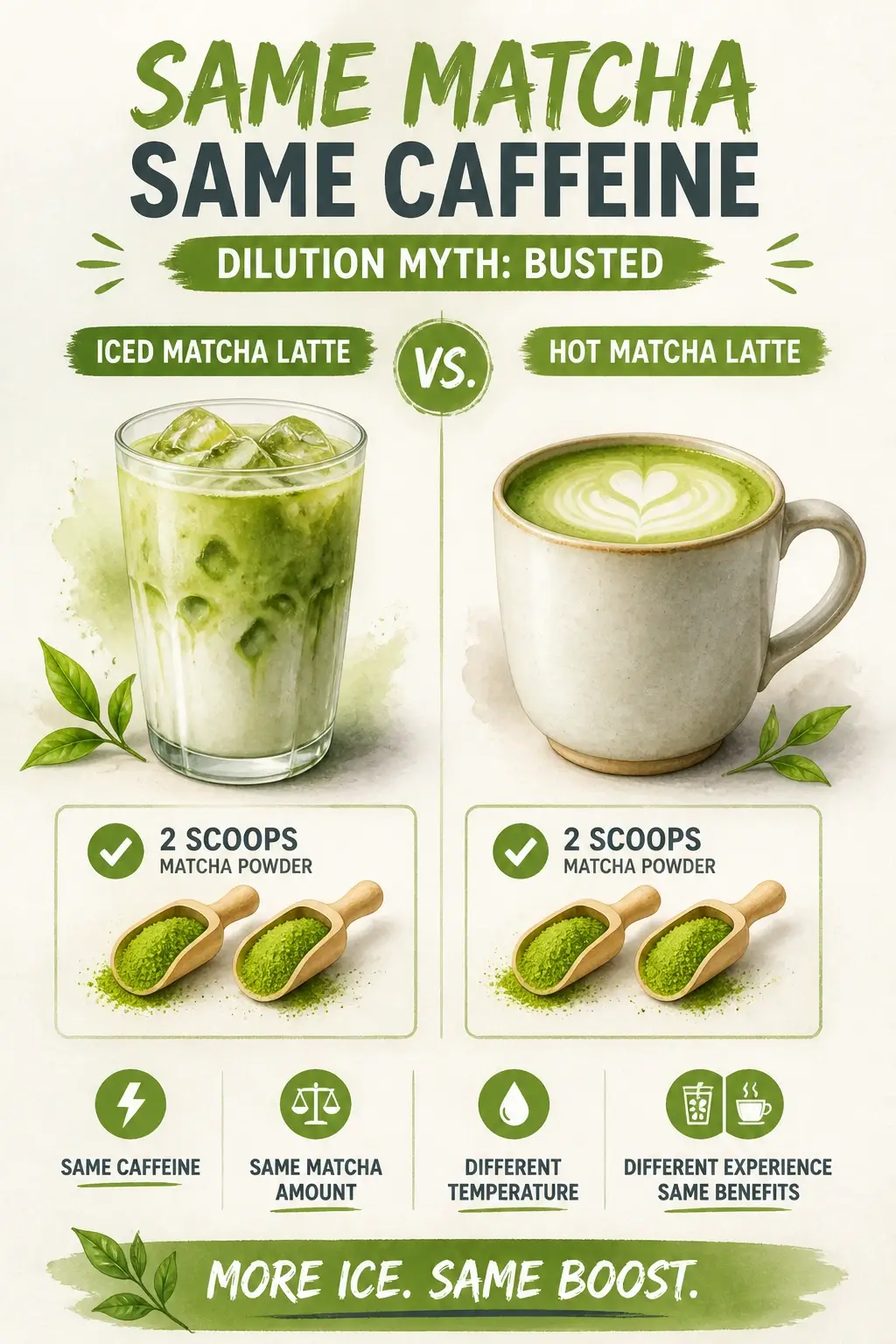
Iced and hot Starbucks Matcha Lattes of the same size contain exactly the same amount of caffeine – full stop. The preparation method doesn’t change the scoop count, and the scoop count is the only thing that controls caffeine in this drink.
Here’s why the myth has legs: when a barista builds an iced matcha latte, they’re working with a larger-looking cup filled partly with ice. The visual impression is that there’s less actual drink in there, which can feel like a diluted product. Cold temperatures also mute flavor intensity, so an iced grande can taste lighter than a hot grande made from the same three scoops. Neither of those things reflects what’s happening to the caffeine – you’re still consuming every milligram from those three scoops when you drink the whole cup.
The simple consumer rule: order hot or iced based entirely on what sounds good to you today. There’s no caffeine calculation involved.
Is the Starbucks Matcha Latte Actually a Healthy Café Option?
Starbucks Matcha Latte’s health profile is a genuine trade-off – not a clear win and not a red flag – and the outcome depends almost entirely on how you order it. The matcha powder itself brings real benefits: catechins, antioxidants linked to reduced inflammation, and the L-theanine and caffeine combination that supports focus. The pre-sweetened powder is what complicates the picture.
A standard grande typically contains 28–32 grams of added sugar. The American Heart Association recommends no more than 25 grams of added sugar per day for women and 36 grams for men. That means a single grande matcha latte can land at or above the daily recommended limit for roughly half the population before you’ve eaten a single meal. If you’re drinking one daily without thinking about it, the antioxidants don’t cancel out that sugar load.
The caffeine side of the equation is actually the easy part. Even a Venti at ~85 mg sits comfortably within the FDA’s 400 mg daily limit for healthy adults. And for people who find coffee acidic or harsh on their stomach, matcha’s lower acidity makes it a genuinely gentler option – same moderate stimulant effect, less digestive friction.
The good news is that this drink is more customizable than most people take advantage of. Dropping to two scoops on a grande reduces both caffeine and sugar. Choosing an unsweetened oat or almond milk keeps the calories reasonable. Skipping added syrups entirely means the pre-sweetened powder is the only source of added sugar in the cup.
According to analysis covered by NativePath, the matcha latte’s antioxidant benefits are real – but they’re most meaningful when the drink isn’t also serving as a daily sugar delivery system.
The honest verdict: a Starbucks Matcha Latte is a smart coffee alternative if you’re paying attention to what’s in the cup. Order it as-is every day without thinking about it, and the sugar story starts to overshadow the antioxidant one. Order it with intention – fewer scoops, no extra syrup – and it’s a legitimately balanced, moderate-caffeine, antioxidant-rich drink that earns its reputation.
Key Takeaways on Starbucks Matcha Latte
- A grande Starbucks Matcha Latte contains approximately 65–80 mg of caffeine, roughly equal to one espresso shot.
- Caffeine scales with scoop count: Tall gets 2 scoops, Grande gets 3, and Venti gets 4 – so fewer scoops means less caffeine.
- All published caffeine numbers for this drink are estimates with no verified lab methodology behind them.
- L-theanine in matcha modulates the caffeine absorption curve, producing sustained alertness rather than a sharp spike and crash.
- Milk type has zero effect on caffeine; only scoop count changes how much stimulant is in your cup.
- A standard grande can contain 28–32 grams of added sugar – at or near the American Heart Association’s daily recommended limit.
To contextualize these measurements alongside other menu offerings, consult our comprehensive breakdown of Starbucks caffeine amounts across every drink and size.
Frequently Asked Questions About Starbucks Matcha Latte
Is Starbucks matcha latte high in caffeine?
It’s moderate, not high. At 65–80 mg for a grande, it’s comparable to one espresso shot – meaningful enough to feel, well below the level of a brewed coffee or double-shot latte.
Can I order a Starbucks matcha latte with no caffeine?
No – matcha powder naturally contains caffeine, and Starbucks uses a pre-sweetened matcha blend with no decaf version available. The lowest-caffeine option is a Short (one or two scoops, ~35 mg), but you can’t eliminate caffeine entirely while keeping the matcha.
Is a Starbucks matcha latte okay to drink during pregnancy?
The 65–80 mg in a grande falls within the 200 mg daily limit most OBs recommend, so a single grande could fit – but it should count toward your total daily caffeine from all sources. Check with your healthcare provider before making it a daily habit.
Does adding oat milk change the caffeine in my matcha latte?
Not at all. Milk type only affects calories, fat, and texture. The caffeine comes entirely from the matcha powder scoops, so your choice of dairy or non-dairy milk is purely a flavor and nutrition decision.
Is matcha latte ok for GERD?
Matcha is lower in acidity than coffee, which makes it easier on the esophagus for many people with GERD. That said, caffeine itself can relax the lower esophageal sphincter, so even a lower-acid drink may still trigger symptoms in sensitive individuals – it’s worth testing with a small size first.
Does matcha lower cortisol?
The research on matcha and cortisol is preliminary and not specific to Starbucks-style matcha lattes. L-theanine has been studied for its calming effects on the nervous system, but claiming it reliably lowers cortisol overstates what the current evidence supports.
What’s the difference between a dirty matcha and a regular matcha latte at Starbucks?
A dirty matcha is a standard matcha latte with one or more espresso shots added. It isn’t on the official menu – you order it by asking for an espresso shot added to your matcha latte. The result is roughly 140–155 mg of caffeine in a grande, with both the earthy matcha flavor and the espresso’s roasted depth.
Why does my iced matcha latte taste weaker than the hot version?
Cold temperatures suppress flavor perception, making the same three scoops taste lighter when served over ice. The caffeine content is identical – the difference is entirely sensory, not chemical.
References
- What Is a Matcha Latte? – Sprudge.com
- Are Matcha Lattes Healthy? Here’s What You Need to Know – NativePath.com
- PLoS ONE: An imaging approach for determining the mechanism of enhancement of intestinal absorption – PLOS.org
- American Heart Association: Added Sugars – Heart.org