
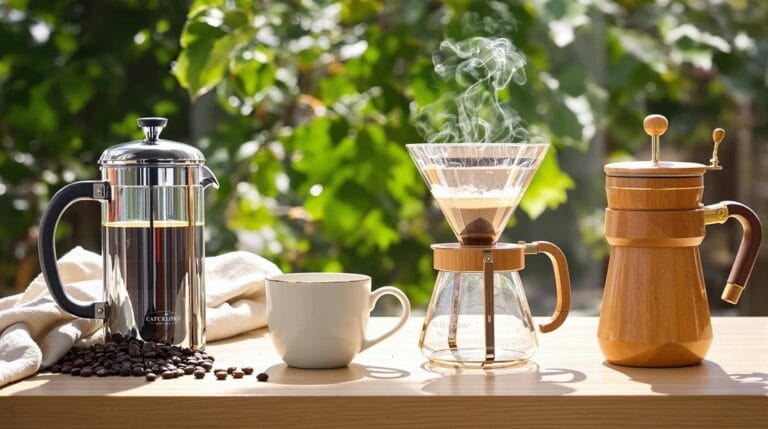

Key Takeaways
- Stainless steel and borosilicate glass designs eliminate plastic, ensuring toxin-free brewing and long-term environmental sustainability.
- Reusable filters in all four coffee makers reduce paper waste and offer low-maintenance brewing cycles.
- Heat-retaining materials like double-walled stainless steel maintain coffee temperature without plastic-lined components, enhancing flavor and eco-friendliness.
- Durable, dishwasher-safe construction simplifies cleanup and ensures longevity, minimizing landfill waste from frequent replacements.
- Options include versatile brewing styles (French press, pour-over, percolator) suited for home, travel, or camping while prioritizing zero-waste goals.
MuellerLiving Stainless Steel French Press Coffee Maker 34oz
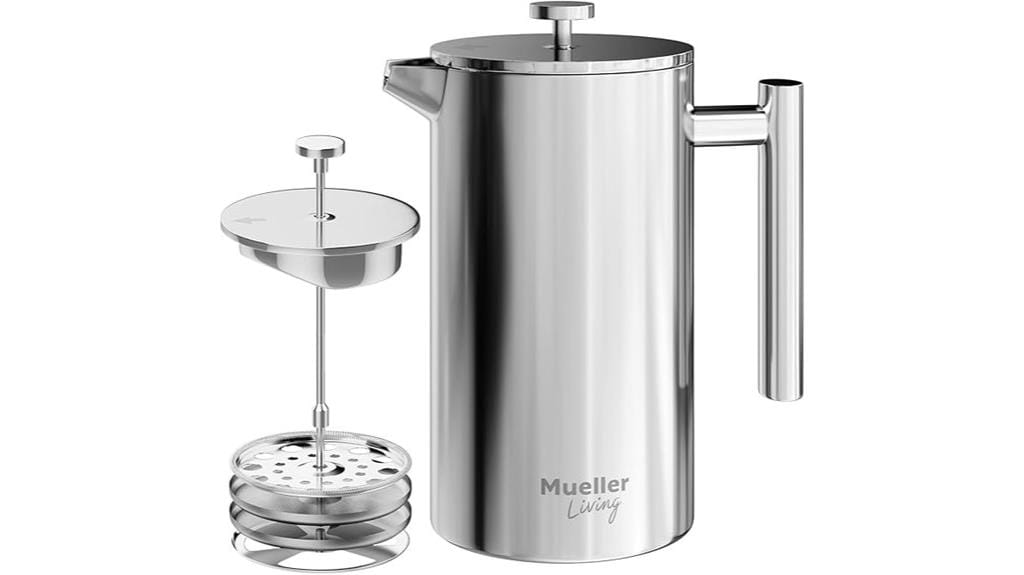
- Double-walled stainless steel construction maintains temperature and prevents burns
- Four-layer filtration system eliminates grit while accommodating various brew types
- Dishwasher-safe design with easy disassembly for low-maintenance cleaning
- Some users report actual capacity feels smaller than advertised 34oz measurement
- Requires immediate cleaning after use to avoid coffee oil buildup affecting flavor
- Heavier and bulkier than glass alternatives despite heat-retention benefits
COLETTI Bozeman Percolator Coffee Pot — NO Aluminum or Plastic [9 cup]
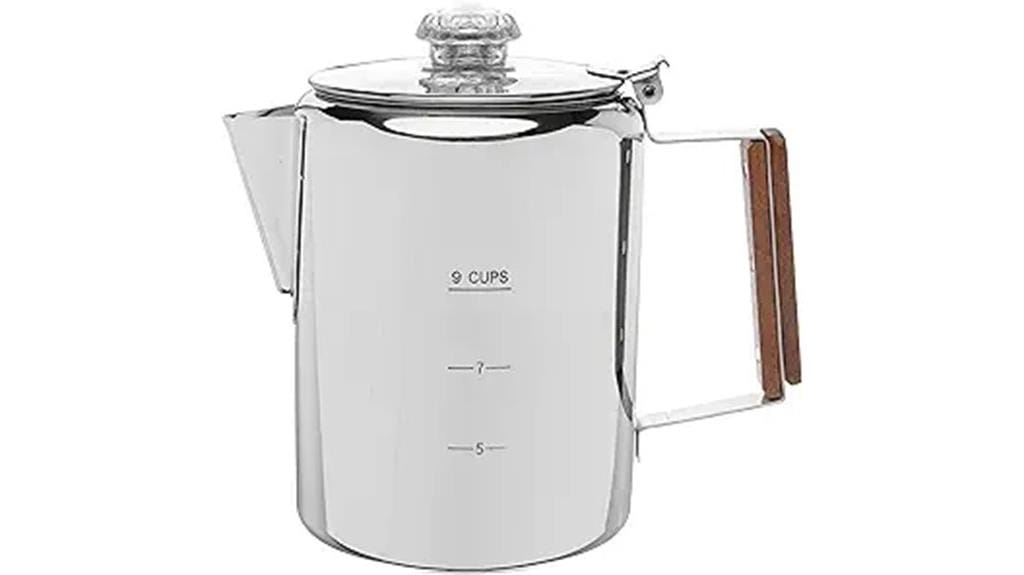
- Fully stainless steel construction with a glass lid ensures no plastic or aluminum contact.
- Dishwasher-safe design and included reusable filters simplify cleanup and maintenance.
- Rugged build and lifetime guarantee make it ideal for outdoor adventures and daily use.
- Wooden handle can get hot during brewing, requiring caution.
- Initial use may involve a learning curve to perfect brew timing and strength.
- Glass lid’s closure mechanism may feel finicky to some users.
Bodum 34 Oz Pour Over Coffee Maker with Borosilicate Glass and Stainless Steel Filter
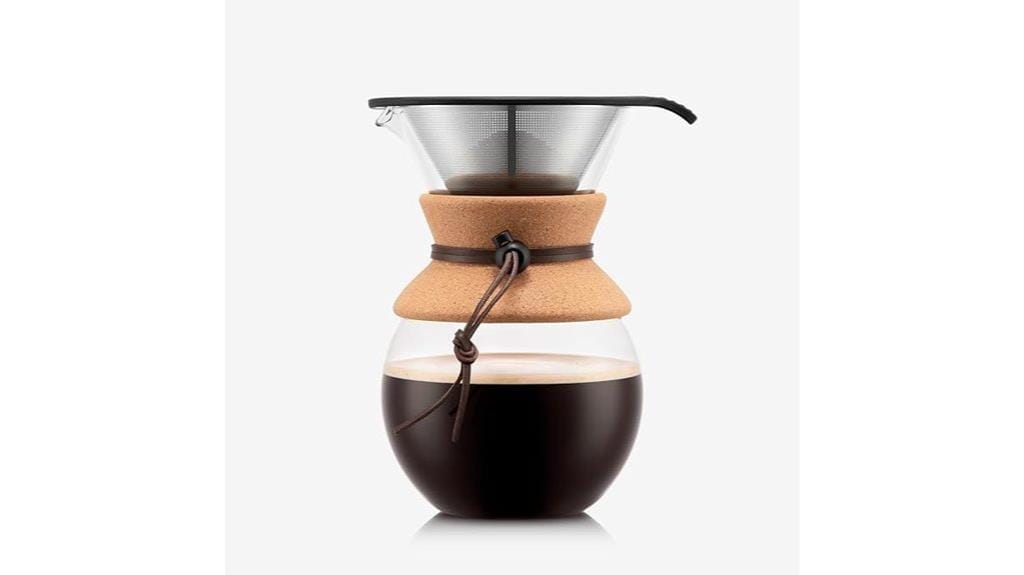
- Durable borosilicate glass construction withstands high temperatures and frequent use.
- Reusable stainless steel filter enhances flavor by retaining aromatic oils and eliminates paper waste.
- Dishwasher-safe design and cork grip simplify cleanup and handling.
- Requires coarse coffee grind consistency to prevent clogging the mesh filter.
- Lack of insulation in single-wall design may lead to faster heat loss during brewing.
- Glass carafe, though sturdy, remains more fragile than plastic alternatives if dropped.
COSORI Pour Over Coffee Maker with Stainless Steel Filter, 8-Cup, Heat Resistant Carafe
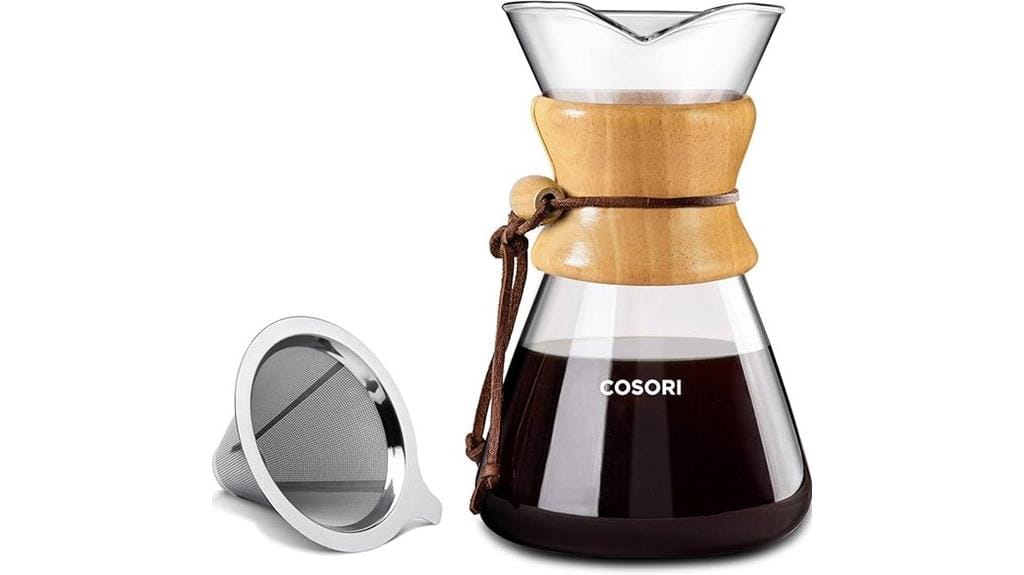
- Reusable double-layer stainless steel filter enhances flavor and eliminates paper waste
- Heat-resistant borosilicate glass carafe and cool-grip wooden sleeve suit stovetop use and easy cleanup
- Compact, lightweight build (1.7 lbs) ideal for camping, hiking, or small kitchens
- Handle may wobble during aggressive cleaning
- “8-cup” (32 oz) capacity confuses users expecting standard 8-oz cups
- Wooden sleeve prone to staining over time
Factors to Consider When Choosing Plastic-Free Coffee Makers
Picking a plastic-free coffee maker involves thinking about material safety, like non-toxic steel or glass, and brewing control, so your morning cup tastes just right. Heat retention matters for keeping coffee warm, capacity depends on how many cups you need, and cleaning should be easy—no hidden nooks for old grounds to hide! Balancing these factors helps find a durable, eco-friendly option that brews delicious coffee every time.Broadening your perspective on brewing architecture requires consulting a comprehensive ultimate home coffee maker guide to master the intersection of design integrity and extraction science.
Material Safety
Since sipping a cup of java shouldn’t feel like a mad scientist experiment, material safety matters when picking a plastic-free coffee maker! The champions here are stainless steel and borosilicate glass, which ditch the plastic’s sketchy chemicals (looking at you, BPA) and keep brews pure. Stainless steel’s like a kitchen superhero—rust-resistant, crazy durable, and unfazed by heat, so no sneaky substances crash your coffee party. Glass, meanwhile, locks in heat like a cozy blanket, protecting flavors without leaching weirdness. Both materials laugh at landfills, though—recyclable, long-lasting, and way kinder to Earth than plastic. Some models even swap paper filters for reusable metal or cloth ones, cutting waste and dodging plastic’s icky residue. Safe sips, happy planet, zero chemical drama—now that’s a win-win-win!Brewing Control
Brewing control turns coffee-making into a science experiment where you get to be the fun professor! Dialing in water temperature, flow speed, and brewing time lets you reveal flavors hiding in coffee beans, like a treasure hunt for taste buds. Manual methods, like pour-over setups, put you in charge—slow down for a bold, intense brew, speed up for something lighter, almost like mixing magic potions. Stainless steel filters? They’re sneaky-good, trapping gritty bits but letting flavorful oils sneak through, making your coffee smoother than a jazz playlist. Grind size and coffee-to-water ratios? Tweak them to turn “meh” into “wow,” because tiny adjustments can lead to big “ah-ha!” moments. Bonus perk: knowing your brewer’s capacity means you’ll never run out of that liquid gold during family breakfast chaos.Heat Retention
Heat retention becomes a coffee maker’s superpower the moment hot water hits grounds, ensuring flavors bloom bright and stay bold. Double-walled stainless steel designs work like a cozy blanket, locking in warmth far better than plastic or thin metal, so your brew stays hot—maybe even hotter than a summer sidewalk! When heat escapes, coffee cools fast, turning rich sips into sad, lukewarm puddles. Stainless steel presses or percolators trap heat inside, helping water pull the tastiest oils and notes from beans without sudden temperature drops that muddy flavors. Thicker walls mean better insulation, like a fortress against cold air. Hot coffee means happy taste buds, and with good heat retention, every sip’s as bold as the initial—no reheating required, because chilly brew is a buzzkill.Understanding the nuances of thermal carafe vs glass carafe performance helps connoisseurs select vessels that optimize serving temperatures without compromising delicate flavor profiles.
Capacity Needs
How much coffee fuels your day? The right plastic-free coffee maker must match your needs, like how many cups you’ll brew. For individuals, 8-cup pots or pour-over brewers work, but bigger households or caffeine-loving groups might need 9-cup percolators or immersion-style makers, which handle 34 oz—about four mugs—without plastic parts. Some brewers, like French presses, make full batches quickly, while others, like pour-overs, require multiple pours for bigger groups. Bigger machines save time (fewer refills!), but smaller ones are simpler if you’re solo. Remember: more coffee can affect taste, since immersion brewing steeps longer, deepening flavors, while faster methods might taste lighter. Pick size based on your crew’s caffeine addiction—because nobody wants a coffee mutiny before 9 a.m.!Cleaning Simplicity
Plastic-free coffee makers, with their stainless steel or glass parts, turn cleanup into a breeze, thanks to smooth surfaces that resist gunky buildup and messy stains! Many are dishwasher safe, zipping through cycles without warping or cracking like plastic might. Their parts often pop apart—think filters, plungers, or carafes—letting you scrub every nook, banishing sneaky coffee oils that mess with flavor. No plastic means no stubborn stains or funky smells that stick around, like that mystery odor in your gym bag. Sure, you still need to rinse after each brew, but steel and glass laugh off scratches and need way less elbow grease. It’s like giving your coffee maker a superhero cape: quick, clean, and ready for tomorrow’s caffeine rescue!Durability
Longevity sits at the heart of a great plastic-free coffee maker, with materials like stainless steel shrugging off rust like a superhero dodging raindrops, or borosilicate glass laughing at sudden temperature changes. Stainless steel stays tough through daily brews, resisting dents, scratches, and corrosion, while borosilicate glass handles boiling water and icy countertops without cracking. Makers built with these materials often back their confidence with lifetime warranties, promising years of coffee magic. Sturdy designs, like thick handles and snug-fitting lids, keep parts from wobbling or breaking, even when used every morning. Easy cleaning matters, too—dishwasher-safe models stay spotless without losing their shine. When picking a coffee maker, materials that fight wear and tear turn a simple brewer into a kitchen sidekick that outlasts trends.For enthusiasts prioritizing longevity and robust construction, exploring curated selections of stainless steel coffee makers uncovers exceptional hardware designed to withstand decades of daily extraction.
Eco-Friendly Design
Eco-friendly coffee makers shine when built with materials that love the Earth as much as coffee lovers adore their brew. Stainless steel and glass are top picks—strong, long-lasting, and plastic-free, so they won’t clutter landfills or leach icky chemicals. Reusable stainless steel filters replace paper ones, cutting waste and saving trees, while their heat-retaining powers keep coffee warmer longer (microwaving plastic? No thanks!). Dishwasher-safe designs mean easy cleanup without sacrificing sustainability, and non-plastic builds skip toxins like BPA, making every sip healthier. Choosing eco-conscious models isn’t just about great coffee—it wraps the planet in a warm, green hug while dodging those “single-use” blues. Good for Earth, good for you, and way cooler than a sad, plastic-laden drip.Frequently Asked Questions about Plastic‑Free Coffee Makers
What materials are most common in plastic‑free coffee makers and why are they better for the planet?
Plastic‑free coffee makers typically use stainless steel or borosilicate glass. Both are non‑leaching, recyclable, and far less resource‑intensive than plastic, keeping your brew chemical‑free and reducing landfill waste.
How does a stainless steel French press keep coffee hotter than a plastic‑based model?
Double‑walled stainless steel provides excellent insulation, trapping heat and keeping coffee warm for longer, unlike thin‑walled plastic which loses temperature quickly.
Are reusable metal filters in plastic‑free pour‑over systems better for flavor and sustainability?
Yes—metal filters retain the coffee’s natural oils, giving richer flavor, and they eliminate disposable paper filters, cutting waste and saving trees.
Can I use a plastic‑free percolator outdoors and still rely on its heat‑retention?
Absolutely. Stainless‑steel percolators are designed to withstand stove heat and keep water hot, so you’ll get consistent boils whether at home or on a campsite.
What should I focus on when cleaning a plastic‑free coffee maker?
Rinse or rinse and wash all removable parts immediately, use a mild soap, and avoid abrasive scrubbers. Regular cleaning keeps flavors bright and prevents buildup that can affect taste.
