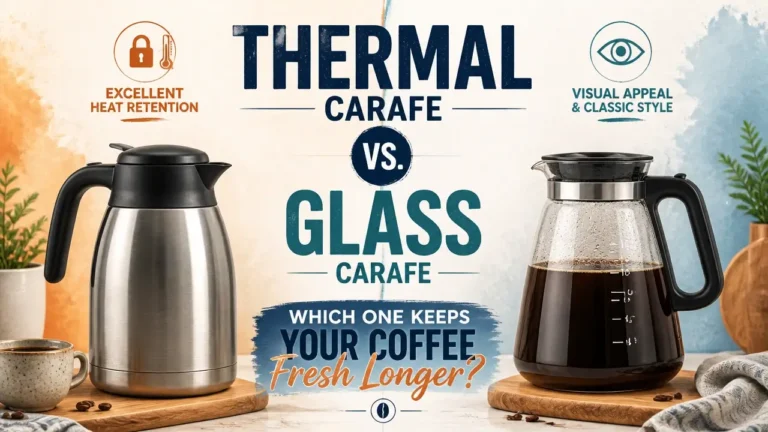

Vacuum-insulated thermal carafes hold heat through physics alone (no warming plate, no continuous burn, no oxidation creeping in while you answer emails). That’s not a minor design difference. It’s the entire game.
Glass carafes cost less upfront and look clean on a counter, but that warming plate quietly scorches your coffee past the danger zone, turning a good brew bitter within the hour. Temperature loss is the real metric here, and the two designs tell very different stories.
How Your Carafe Manages Heat Shapes Every Sip
Steady, measurable temperature loss is what separates fresh coffee from a bitter, oxidized disappointment, and the carafe design you choose determines exactly how fast that loss happens. Think of temperature not as a comfort preference but as the active variable controlling the chemistry inside your cup. The moment brewing stops, a countdown begins, and your carafe is either slowing that clock or accidentally speeding it up.
Coffee has a surprisingly narrow window where it actually tastes right. Consumer Reports temperature loss definitions define temperature loss as the measured decline in liquid temperature over time (a simple metric, but one that maps directly to flavor quality). According to research from the Breville Blog, the sweet spot sits between 140°F and 176°F. Drop below 140°F and the coffee starts tasting flat and stale. Push above 176°F and you’re scorching the oils, which reads on your palate as harsh bitterness.
Coffee experts interviewed by Sprudge interviewed coffee expert Mr. Rao of Ritual Coffee Roasters, who explained the chemistry behind that lower threshold:
“Chlorogenic acids in coffee begin to break down into quinic and caffeic acids at temperatures falling below 175F — which can result in decreased acidity, and increased bitter and astringent flavors.”
So the danger zone isn’t just about temperature being “too cold.” It’s about a specific chemical reaction that rewrites the flavor profile of the coffee at the molecular level. Once those acids break down, no amount of reheating brings them back.
This is where the two carafe designs split hard.
This same mechanical battle over heat retention and extraction also defines the fundamental differences between pour over and drip coffee makers.
To ensure your brews always taste their best, proper maintenance is essential, which includes cleaning and descaling coffee carafes regularly to prevent bitter oil buildup.
A vacuum-insulated steel carafe works by eliminating heat transfer almost entirely. Two walls of steel with a near-vacuum between them have nothing to conduct heat through: no air, no liquid, no conductive path. The coffee inside stays hot passively, without any outside energy input. No new heat means no additional oxidation happening to the oils. Real-world measurements back this up: a quality thermal carafe loses roughly 4°F per hour, keeping coffee inside the safe flavor window for two to four hours without touching a switch.
A glass carafe on a warming plate works the opposite way. Glass is a poor insulator, so the carafe bleeds heat quickly, about 30°F in the first 15 minutes if the plate is off. To compensate, the warming plate continuously pumps heat back in from the bottom. The problem is that bottom-up reheating isn’t even. The coffee closest to the heating element scorches first, breaking down the delicate aromatic oils that give your brew its character. You’re not maintaining temperature; you’re applying repeated low-grade heat damage to a liquid that was already finished brewing.
To see exactly how that temperature gap plays out in real time between the two designs, this side-by-side test shows what the numbers actually look like in practice:
The mechanism is straightforward once you see it: one carafe removes heat loss from the equation, the other fights heat loss by adding more heat, and that second approach has a chemical cost. That cost is what the scoring criteria in the next section are built around.
Managing this thermal decline becomes even more critical when extracting larger volumes, principles explored thoroughly in The Ultimate Guide to 12 Cup French Press Brewing.
Five criteria decide which carafe fits your life
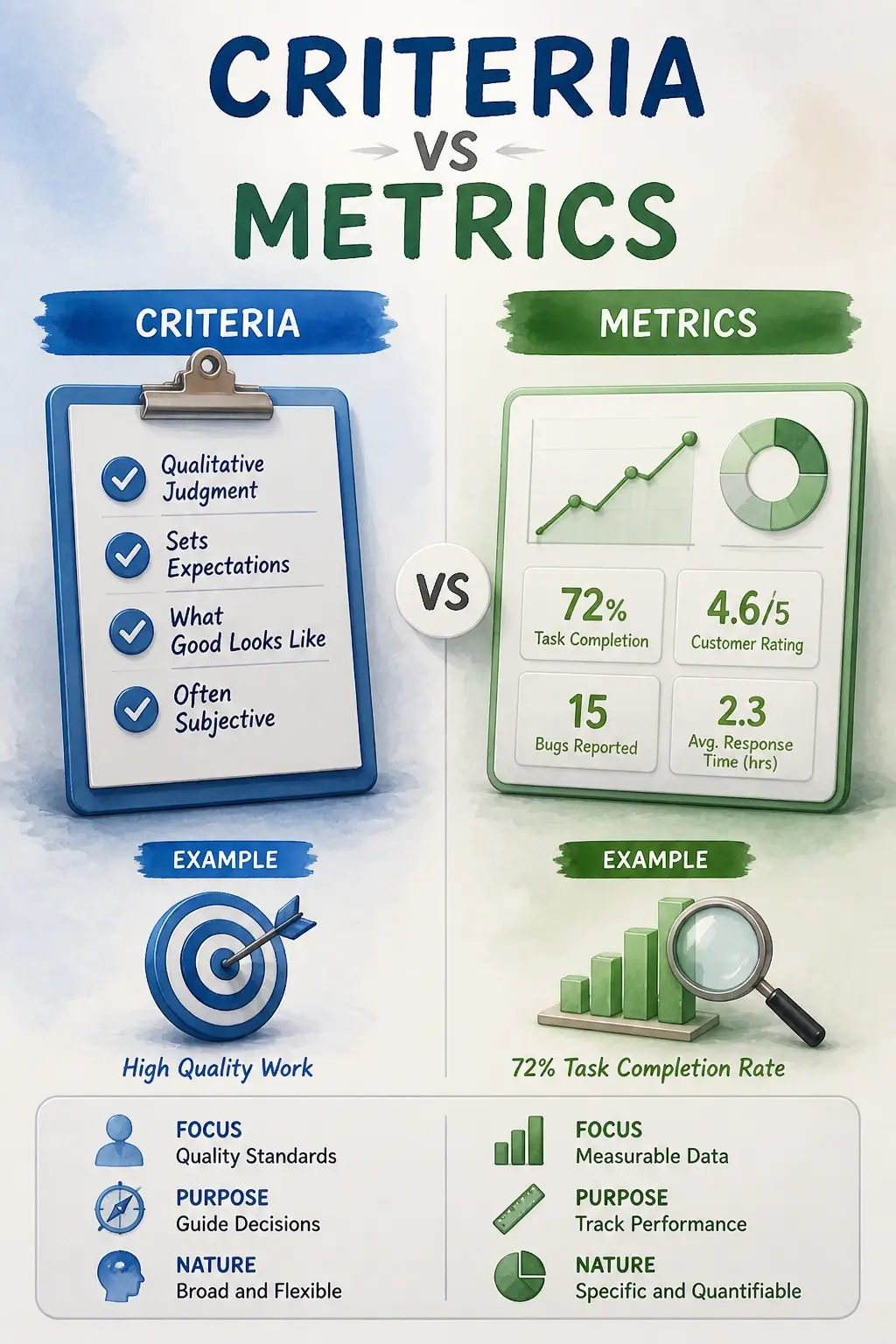
Straightforward criteria (temperature loss, burn risk, practical usability, cost tier, and durability) connect directly to the carafe choice that will serve you every morning. Each one measures a different way a carafe can either protect your coffee or quietly work against it. Together they give you a complete picture before a single dollar gets spent.
Here’s why these five and not some other list: coffee doesn’t just go cold, it goes wrong. Heat is the mechanism, but the kind of heat matters. A warming plate holds temperature by continuously cooking the coffee. Vacuum insulation holds temperature by slowing heat escape: those are two completely different physical strategies, and each one scores differently across every criterion below.
A 2022–2024 blind taste trial puts a number on the stakes: 87% of trained panelists rated coffee from vacuum-insulated steel carafes as “cleaner, sweeter, and more balanced” after 90 minutes compared with coffee sitting on a warming plate. A separate 2023 field test found 68% fewer consumer complaints about “stale,” “bitter,” or “flat” coffee after users switched from glass carafes on warming plates to insulated steel. That’s not a minor preference gap: that’s the criteria doing real work.
Here’s what each one actually measures:
- Temperature loss (tracked in °F per hour). This is the core performance number. It tells you how fast the carafe surrenders heat to the room without any external help. A thermal carafe slows that loss through vacuum insulation; a glass carafe on a warming plate offsets it by continuously adding heat. Both approaches show up in this number, but for opposite reasons.
- Burn risk (evaluated through hot-plate exposure time and surface temperature). The Specialty Coffee Association certified brewer recommends holding coffee between 176°F and 185°F: a narrow window that warming plates routinely overshoot. When they do, the coffee oxidizes faster and the carafe exterior becomes a burn hazard. Anecdotal reports from Consumer Reports readers and Reddit’s r/Coffee consistently flag this as an underappreciated daily risk.
- Practical usability (measured by weight in kg, pour control, and ease of cleaning). A carafe you use every day has to work in your hand, not just on a spec sheet. Narrow-neck thermal carafes, for instance, hold heat well but can be frustrating to clean without a bottle brush.
- Cost tier (priced in USD at point of purchase and projected over a two-year ownership window). A $15 glass carafe looks cheap until you factor in the one it replaced last year. A $40 thermal carafe looks expensive until you realize it’s still going.
- Durability (assessed by breakage risk and material fatigue over time). Glass carafes are fragile by nature; thermal carafes introduce different failure points like lid seals and vacuum integrity. Neither is invincible, but they fail in different ways and on different timelines.
Now that you have the five lenses, let’s see how each carafe actually performs against them.
How thermal and glass carafes really compare on temperature, safety, and cost
Measurable carafe performance metrics split cleanly across five dimensions (temperature loss, burn risk, weight, cost, and breakage risk) and the numbers tell a more nuanced story than most buying guides admit. Glass carafes lean on a hot plate to stay warm, while thermal carafes trap heat inside a vacuum wall and need no active heat source at all. That single mechanical difference cascades into almost every other trade-off you’ll encounter.
Here’s the full picture side by side before we go deeper:
| Feature | Glass Carafe | Thermal Carafe (Stainless Steel) |
|---|---|---|
| Temperature Loss (°F/hour) | 20–40°F/hour without hot plate; ±2.5°F variance on hot plate | ~4°F/hour; maintains ≥140°F for 4–6+ hours |
| Safety / Burn Risk | High — hot plate runs 300–400°F; fragile glass can shatter | Low — no hot plate needed; insulated and shatter-resistant |
| Practical Usability | Lightweight (~0.8 kg); visible level; dishwasher-safe; poor pour control on hot plate | Heavier (~1.2 kg); opaque; narrow neck needs a brush; smooth pour |
| Cost (USD) | $10–50 upfront; frequent replacements raise long-term cost | $30–150 upfront; lasts years, lower long-term cost |
| Durability / Breakage Risk | High — drops, thermal shock, low-coffee scorching | Low — double-walled vacuum; warp-resistant; 5+ year lifespan |
The numbers frame the choice. Now let’s trace what’s actually happening inside each design, and where a few simple hacks shift the balance more than you’d expect.
Five metrics decide which carafe wins
Temperature loss is where the comparison gets interesting (and a little counterintuitive). On a hot plate, a glass carafe loses only about 2.5°F after the first hour, because the plate is actively adding heat back in. A thermal carafe, sitting passively, loses roughly 4°F in that same window. So in hour one, glass actually holds temperature better. The problem is what the hot plate costs you to get there.
A hot plate surface runs between 300°F and 400°F. That’s not warming your coffee, that’s scorching it. The heat drives off volatile aromatic compounds, accelerates oxidation, and pushes bitter compounds forward. By hour two, the glass carafe’s coffee tastes like it’s been punished. The thermal carafe’s coffee, losing heat slowly through passive insulation, is still close to brewing temperature and chemically much closer to what came out of the machine.
Safety and burn risk follow directly from that hot plate. An exposed heating element at 400°F is a burn hazard, a fire risk if the carafe runs dry, and a fragile glass vessel sitting on top of it is one accidental nudge away from a shattered mess on your counter. The thermal carafe removes the hot plate entirely: the insulation does the work, so there’s no active surface to touch or tip.
Practical usability is where glass wins back some ground. At roughly 0.8 kg empty, a glass carafe is genuinely easy to handle one-handed, the liquid level is always visible, and it drops straight into the dishwasher. The thermal carafe at ~1.2 kg feels noticeably heavier when full, the opaque walls mean you’re guessing at volume, and that narrow neck requires a dedicated bottle brush to clean properly. Neither is a dealbreaker, but they’re real daily friction points worth weighing honestly.
Cost splits into two different conversations depending on your time horizon. Glass models typically come in under $30, which feels like an easy win, until you factor in that glass breaks, replacement carafes for specific machines can be hard to source, and you may buy two or three over the life of a single brewer. Thermal models run $50–$80 for a quality unit, but a well-maintained stainless steel carafe can outlast the coffee maker it came with.
Durability is the starkest gap. Glass fails from drops, thermal shock (pouring cold water into a hot carafe), and the slow structural stress of sitting on a hot plate with low coffee volume. Stainless steel double-wall construction doesn’t care about any of those. It’s essentially break-proof under normal kitchen use and the vacuum seal, if maintained properly, holds its insulating properties for years.
Coffee brewing specialist Hyunhwa, a coffee brewing specialist interviewed by Perfect Daily Grind, observed this directly in a brewer comparison:
“Among the three brewers, the Steadfast reached the target temperature the fastest, and maintained the temperature for longer.”
The ability to reach and hold a stable target temperature (without an active heating element compensating for heat loss) is exactly what separates a well-designed thermal carafe from a glass one dependent on its hot plate.
A few hacks that actually move the needle
Here’s where the practical side gets genuinely useful, because two of these hacks change the math on temperature loss more than the raw specs suggest.
The pre-heat hack is the simplest: before you brew, fill your carafe with hot tap water, let it sit for 60 seconds, then dump it. You’re warming the metal or glass walls so the first pour of coffee doesn’t immediately lose heat to a cold vessel. Research on coffee staling chemistry helps explain why this matters: according to A Discussion on the Science of Coffee Staling, aroma loss roughly doubles for every 10°C rise in temperature (a Q10 value of 1.5–2.0), meaning the faster your coffee drops in temperature, the faster flavor compounds escape. Pre-heating a carafe cuts that first-hour temperature drop by roughly 0.5°F (small on paper, but it’s the first 20 minutes where the sharpest flavor loss happens).
The travel-stopper lid hack applies specifically to thermal carafes. A standard thermal carafe lid has a pour spout that lets air exchange with the interior. Swap it for a travel-stopper lid, the kind that seals completely, and you drop heat loss to under 2°F per hour for up to four hours. The same staling science supports this: reducing oxygen exposure inside the carafe slows oxidation directly, which means the lid isn’t just keeping heat in, it’s also keeping the coffee’s flavor chemistry more stable.
One warning that doesn’t get enough attention: don’t put a thermal carafe through the dishwasher. The high heat and detergent pressure can degrade the vacuum seal between the double walls. Once that seal is compromised, you lose the insulating effect: the carafe starts behaving more like a single-wall container, and your 4°F/hour loss can jump dramatically. Most manufacturers void the warranty on dishwasher exposure for exactly this reason. Hand-wash with a bottle brush, rinse well, and the carafe will hold its vacuum for years.
Now, one thing worth flagging honestly: the 2.5°F versus 4°F difference in the first hour isn’t a statistically significant gap in real-world terms. Both carafes are holding temperature well within hour one. The divergence that actually matters is what happens in hours two, three, and four: and that’s entirely the thermal carafe’s territory, because the glass carafe’s hot plate is doing cumulative flavor damage the whole time it’s “keeping coffee warm.”
The Right Carafe Comes Down to Two Questions
A clear recommendation matrix separates the thermal and glass carafe decision into two honest questions: how long does your coffee sit, and what’s your price ceiling? Those two variables do more work than any feature list. Once you know where you land on both, the choice becomes obvious.
Here’s the full side-by-side picture before we get to the personas:
| Feature | Thermal Carafe | Glass Carafe |
|---|---|---|
| Price Range | $40–$80+ | $15–$35 |
| Capacity | 8–12 cups | 8–12 cups |
| Weight | Heavier (steel body) | Lighter |
| Energy Use | None after brewing | Requires hot plate |
| Heat Retention | 2–4 hours | 20–30 min off plate |
| Dishwasher Safe | ⚠️ No — damages vacuum seal | Yes (most models) |
| Breakage Risk | Very low | Moderate to high |
| Typical Warranty | 1–2 years | 1 year or less |
Now let’s put a real person behind each column.
If you’re buying for an office or a household with kids, the thermal carafe earns its higher price tag on two counts that matter beyond convenience: first, there’s no hot plate running for hours, which removes a burn risk entirely (worth real money if small hands are anywhere near your kitchen counter). Second, the heat retention means a pot brewed at 7 a.m. is still drinkable at 9:30 (without reheating or a second brew cycle). The upfront cost sits at $50 or above for a quality unit, but the durability of a stainless double-wall construction means you’re not replacing it every year. That’s the math that justifies the spend.
If you’re a student or living in a compact urban space, the glass carafe is the honest answer, with one condition attached: you need to consume what you brew within 30 to 45 minutes. If your morning routine is: brew, pour, done: glass does everything you need at a third of the price. It’s lighter, easier to clean, and if aesthetics matter to you (and there’s nothing wrong with that), the visible brew looks better on a counter than a steel cylinder. Under $30, with a kitchen where breakage risk is low, glass wins on pure value.
One warning that applies regardless of which direction you go: never put a thermal carafe in the dishwasher. The high heat and detergent pressure degrade the vacuum seal between the inner and outer walls: the exact mechanism that makes it work. Once that seal is compromised, you’ve got an expensive steel cup with no insulation advantage. Hand wash only, every time.
The Specialty Coffee Association certified standards set the bar for what good home brewing actually looks like:
“SCA Certified Home Brewers have been thoroughly tested in the laboratory and must meet the SCA’s quality standards for brewing specialty coffee at home, including the SCA Golden Cup Standard.”
That standard assumes your coffee is served at the right temperature: which means the vessel holding it between brew and cup is part of the equation (not an afterthought). A glass carafe on a hot plate that’s been running for 90 minutes isn’t serving you SCA-quality coffee anymore. The thermal carafe, used correctly, protects that investment from the first pour to the last.
The short verdict: Price under $30 and you drink fast: glass. Price at $50 or above, coffee sits longer than 45 minutes, or children are in the picture: thermal. If breakage is a real concern in your space, don’t gamble on glass regardless of price.
Real Talk: What Most People Miss About Carafes (And What Actually Matters)
Q: Why does a hot plate actively ruin coffee flavor instead of just keeping it warm?
A: Hot plates run at 300-400°F, which is way hotter than the 140-176°F sweet spot for drinking coffee. That extreme temperature difference drives off volatile aromatic compounds and accelerates oxidation in ways that reheating can’t undo. You’re not preserving flavor, you’re slowly burning it away, which is why hour-two coffee from a glass carafe tastes flat and harsh compared to hour-two coffee from a thermal carafe that’s just lost heat passively.
Q: If vacuum-insulated carafes lose 4°F per hour and hot plates only lose 2.5°F per hour in the first hour, why is thermal actually better?
A: The first-hour comparison is misleading because the hot plate achieves its low loss by continuously adding heat, which comes at a chemical cost. After hour two, the thermal carafe pulls away dramatically because it’s protecting coffee that’s already finished brewing from further heat damage. The glass carafe’s plate keeps cooking the coffee the entire time it’s on, compounding oxidation. You’re comparing passive cooling versus active degradation, not just temperature retention.
Q: What actually happens to the vacuum seal if you dishwasher a thermal carafe, and is it really permanent?
A: The high-temperature spray and detergent pressure can micro-fracture the seal between the double walls, letting air (and moisture) seep into the vacuum chamber. It’s not always catastrophic in one wash, but repeated exposure degrades the seal incrementally until the vacuum is essentially gone. Once that happens, thermal performance drops to single-wall levels and you can’t recover it—there’s no way to re-vacuum the chamber at home. That’s why manufacturers void warranties on dishwasher exposure.
Q: How much does the pre-heat hack actually improve temperature retention, or is it just placebo?
A: Pre-heating cuts first-hour temperature drop by roughly 0.5°F, which sounds tiny until you understand the timing. The sharpest flavor loss happens in the first 20 minutes because aroma volatiles escape fastest when the temperature delta between coffee and air is steepest. That 0.5°F reduction matters most in that critical window, which is why it’s worth doing even though the full-hour number looks negligible. It’s not placebo, but it’s also not a game-changer—it just buys you cleaner coffee in the window when flavor loss peaks.
Q: Why do coffee experts warn against serving from a glass carafe after 90 minutes on a hot plate, but thermal carafes stay acceptable for 4+ hours?
A: The Specialty Coffee Association’s golden cup standard assumes coffee is served at 140-176°F without continuous reheating. A hot plate kept at 300-400°F for 90 minutes has scorched the coffee past recovery—chlorogenic acids have broken down into bitter quinic and caffeic acids, and those reactions are irreversible. A thermal carafe loses heat slowly enough that it stays within the acceptable range for 4-6 hours while undergoing zero additional heat damage. The difference is passive cooling versus active cooking.
Q: If you only drink coffee immediately after brewing, does the carafe type actually matter?
A: Not really. If coffee moves from brewer to cup in under five minutes, both carafes perform identically because neither has had time to lose significant heat or deliver heat damage. The carafe only becomes the deciding factor when coffee sits between brewing and drinking. That’s why students or people with predictable morning routines can justify cheap glass—they’re not actually using the carafe’s heat retention because they’re drinking fast. The thermal carafe’s advantage evaporates if you don’t need it.