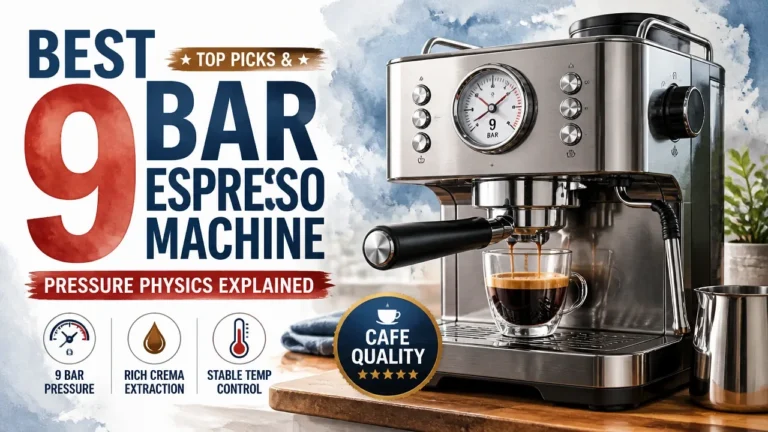

The best 9 bar espresso machine is hiding behind a number that almost no one measures correctly. Manufacturers print 15, 18, even 20 bar on the box – and every one of those figures describes the pump’s ceiling, not what your coffee ever sees. The pressure that actually matters is the one at the group head, and the machines that deliver it honestly are a much shorter list than the market suggests.
This guide ranks six machines against six criteria that mirror how espresso actually works: verified brew pressure, OPV presence, temperature control, portafilter size, pre-infusion capability, and workflow fit. The Breville Bambino Plus, Gaggia Classic Pro, and 9Barista Mk.2 all make the cut for different reasons. The 20-bar badge machines mostly don’t – and you’ll understand exactly why before you reach the buying decision.
Key Takeaways on the Best 9 Bar Espresso Machine
- The pressure number on the box is the pump’s ceiling, not the brew pressure your coffee receives – these are rarely the same figure.
- An over-pressure valve (OPV) is the hardware that converts a pump’s maximum into a regulated 9 bar at the group head; its presence or absence is the first thing to verify.
- Brewing above ~10 bar causes poroelastic puck compaction and channeling – a self-worsening loop that produces harsh, tannic extraction regardless of grind quality.
- Pre-infusion wets the puck at 2–4 bar before full pressure arrives, and it’s the single biggest performance gap between a $300 machine and a $1,500 machine in the cup.
- At every price point in this guide, spending the marginal dollar on a capable burr grinder and fresh beans produces a larger improvement than spending it on more advertised pump pressure.
- The Flair UPDATED Espresso Maker is the only sub-$150 machine capable of genuine 9-bar espresso – because it removes the pump entirely and lets the brewer generate pressure by hand.
The 9-Bar Standard: What Brew Pressure Does (and Why 20-Bar Badges Are Marketing)
The figure printed on the box is the pump’s maximum output. The figure that determines your espresso is the regulated pressure delivered at the group head – and those two numbers are rarely the same. Conventional espresso targets roughly 9 bar (~130 psi) at the puck, a standard that has held since the commercial industry converged on it decades ago. Everything printed above that is either a pump ceiling, a marketing decision, or both.
Espresso Extraction Mechanics and Failure Modes
At 9 bar, pressure emulsifies coffee oils, builds crema, and drives water through the grounds at a rate that allows even extraction. Push that number meaningfully higher – into the 10–12 bar range that many unregulated consumer machines actually deliver – and the physics work against you. The puck compacts under excess force, water finds the path of least resistance, and you get channeling: narrow fissures where water accelerates through the bed without extracting the surrounding coffee. The result is a cup that skews bitter and tannic, and the mechanism is self-worsening – more pressure drives more compaction, which drives more channeling.
This isn’t conjecture. A 2025 study from arXiv on poroelastic regulation in espresso brewing measured flow across controlled pressures up to ~12 bar and found a non-linear relationship in which flow saturates or actually decreases at higher brewing pressures – explained by pressure-induced compaction of the coffee bed. X-ray micro-CT imaging showed post-brew horizontal delamination and cracks in the puck, and repeated pressure cycles increased flow without increasing dissolution, which is the mechanical signature of channeling. The sensory consequence – harsh, acrid, over-extracted notes – follows directly from that physical outcome.
“Flow saturates or decreases at higher brewing pressures due to pressure-induced poroelastic compaction of the coffee bed, with X-ray imaging confirming post-brew delamination and channeling as the structural mechanism.” – From the study “Under pressure: poroelastic regulation of flow in espresso brewing“
Every buyer’s guide repeats “9 bar” as a target. Almost none of them explain that the number on the box is measured nowhere near your coffee – and that 15–20 bar frequently describes the pump’s maximum rating, not the brewing pressure the machine delivers to the group head.
Pump Architecture and Hydraulic Regulation
The pump type predicts shot-to-shot repeatability more reliably than any spec sheet figure. Vibratory pumps – the standard in consumer machines – produce oscillating pressure that peaks well above the target and must be bled back down through an over-pressure valve (OPV). Rotary vane pumps, common in commercial equipment, hold stable pressure natively, run quieter, and last longer. The difference shows up in the cup as consistency: a vibratory pump without a functioning OPV can brew at 10–12 bar regardless of what the marketing says.
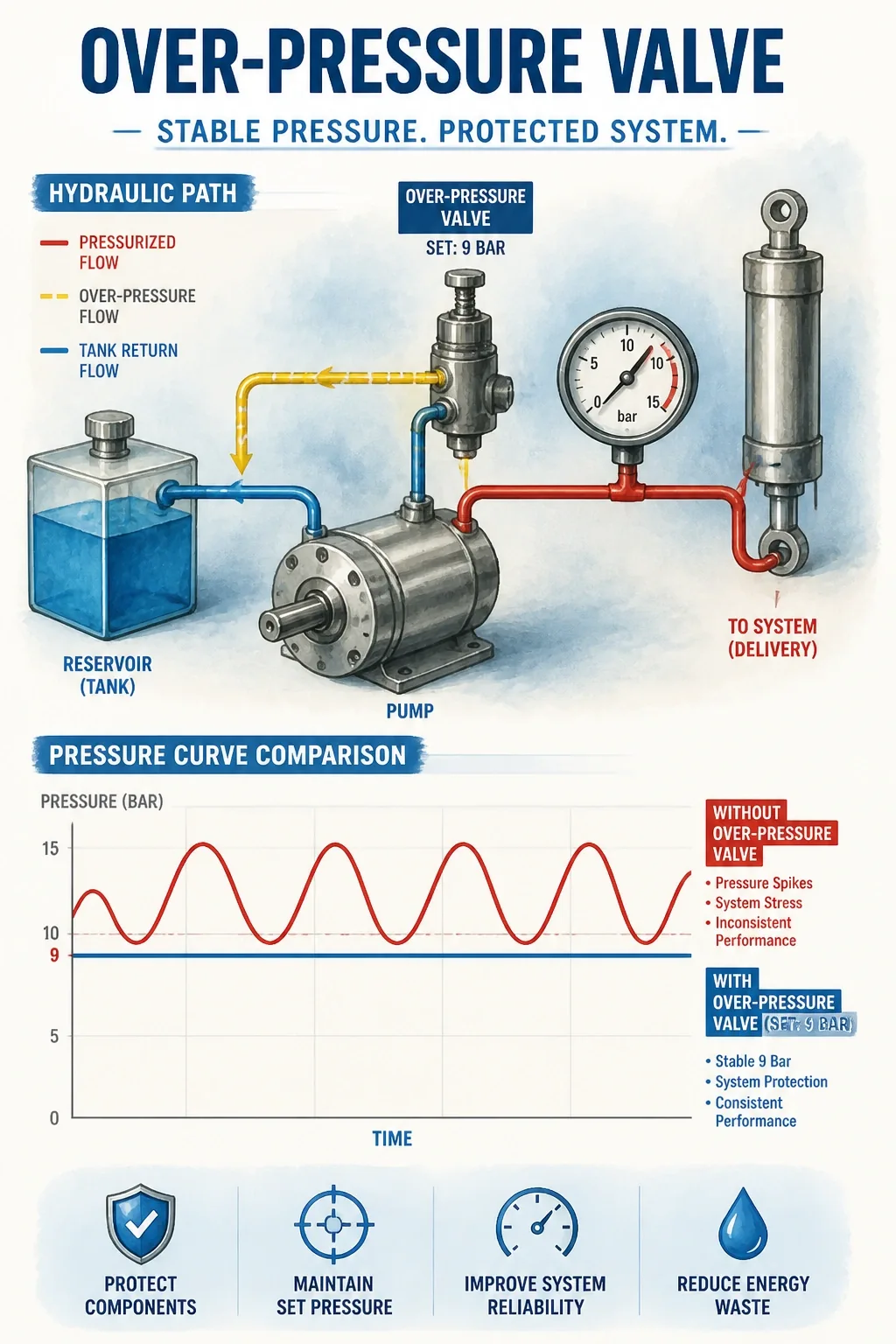
The OPV is the critical component. It sits in the hydraulic path and routes excess pressure back to the reservoir, holding a flat delivery at the group head. A machine without one has no mechanism to cap brewing pressure – which is precisely why low-cost machines with no OPV taste harsh even with freshly ground, well-dialed coffee. The pump hits its ceiling; the puck takes the full force.
Pre-infusion is where the gap between a $300 machine and a $1,500 machine becomes audible in the cup. Wetting the puck at 2–4 bar before the 9-bar peak allows the grounds to swell evenly, closing potential fissures before full pressure arrives. Skip that step and you’re relying on a perfectly prepared puck to resist channeling from a cold start – which is a technique problem that better pressure management would have prevented.
The infographic below shows how the OPV sits in the hydraulic path and what happens to pressure when it’s absent.
Historical Lineage and Ranking Framework
The 9-bar standard didn’t arrive by committee. Achille Gaggia’s 1947 spring-lever piston machine was the first to use high pressure to produce crema – before that, espresso was a steam-pressure extraction, fundamentally different in texture and flavor. The 1961 Faema E61 introduced the rotary pump and heat exchanger architecture that set the flat-pressure convention everything in this guide is measured against. Sixty-plus years later, the target hasn’t moved.
The six criteria used to rank every machine here follow directly from that history:
| Criterion | What It Measures |
|---|---|
| Verified brew pressure + OPV adjustability | Whether the machine actually holds 9 bar at the puck |
| Temperature control type and stability | Thermostat, thermoblock, or boiler – and whether it’s adjustable |
| Portafilter size and basket ecosystem | 51 mm, 54 mm, or 58 mm – and what aftermarket fits |
| Pre-infusion capability | Whether the machine wets the puck before full pressure |
| Pump type and serviceability | Vibratory vs. rotary; replaceability |
| Workflow fit | Volume, milk drinks, counter space, and user willingness to tinker |
The pressure spectrum readers can buy into runs from flat 9-bar delivery, through machines with pre-infusion, to needle-valve flow profiling – where machines like the Lelit Bianca or Decent DE1 let the brewer shape the entire pressure curve rather than hold one number. This guide covers the first two tiers. The enthusiast community’s position on the third is unambiguous: 15/20-bar specs are a marketing artifact, and the correct ranking criterion is actual brew pressure plus OPV presence – a standard almost no mainstream ranking applies.
Breville Bambino Plus: The Fastest Route to Regulated 9 Bar (and Its Two Quiet Ceilings)
For a reader who wants to unbox a machine, pull a shot the same morning, and not think about springs or gauges, the Breville Bambino Plus is the honest answer. It ships with a factory-regulated 9-bar OPV, pre-infusion, and PID temperature control – no case-opening required, no community forum required. Around $299 (verify at publish), it holds the unusual distinction of being the least expensive machine that ships with a genuine pressure regulation system, which is why it keeps winning budget rankings.
For those committed to rapid thermal readiness and out-of-the-box hydraulic compliance, this unit stands out prominently within any comprehensive lineup of breville espresso machines top picks.
Thermal Response and Factory Calibration
The ThermoJet thermoblock heats to brew temperature in roughly 3 seconds. That figure is real and it matters practically: you can pull back-to-back shots without a recovery wait, and switching to steam doesn’t mean standing at the counter for two minutes while a boiler climbs. For the home barista making flat whites on a weekday morning, that heat-up time is the machine’s strongest argument.
The ceiling is equally real and worth naming before you buy. The PID is fixed at 200°F with no user adjustability – excellent for shot-to-shot consistency, limiting if your goal is chasing light roasts that extract better at lower temperatures. There is no pressure adjustment and no flow profiling. The reader who will outgrow this machine is the one who, twelve months in, wants to dial brew temperature for a specific origin or experiment with pressure curves. That reader exists; they should know this now.
Community framing around the Bambino Plus is unusually consistent: at its price point, it is regarded as the least expensive machine that ships with a genuine 9-bar OPV. That single fact explains why it dominates beginner recommendations – not hype, but a real hardware distinction at a price where that hardware is rare.
Portafilter Ecosystem and Milk Workflow
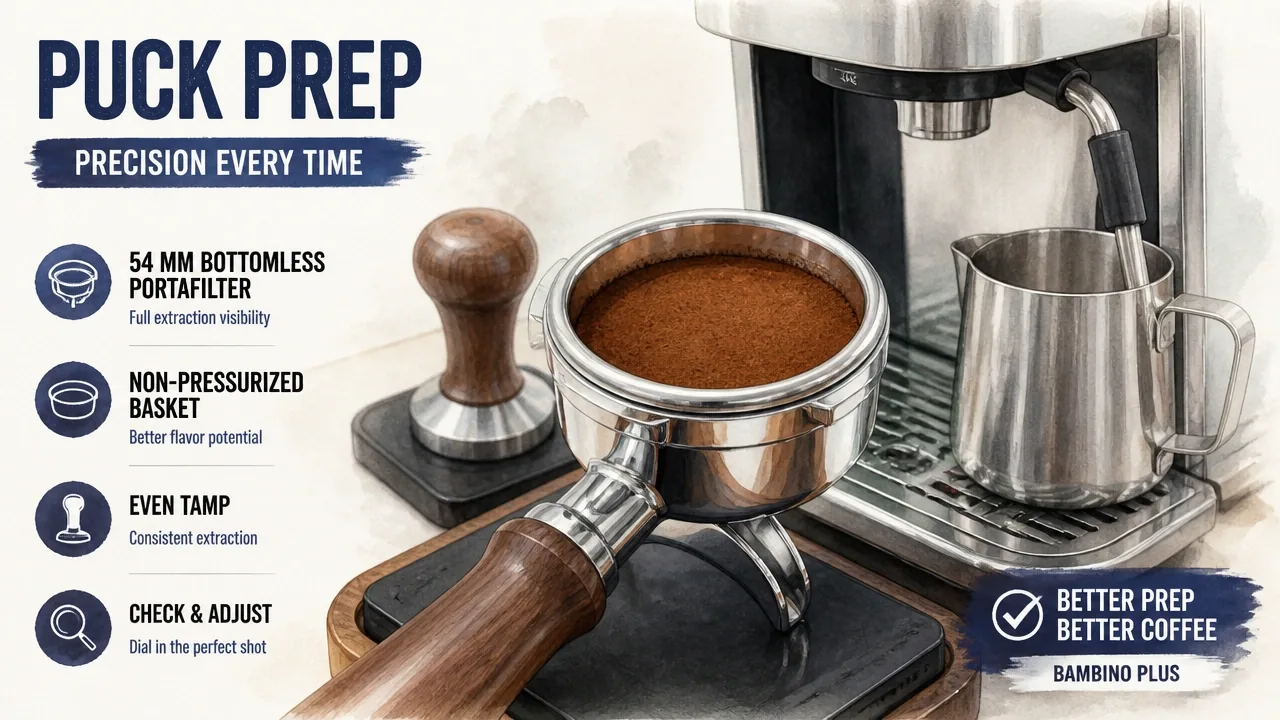
The 54 mm portafilter is the machine’s quiet constraint. It works – Breville ships both pressurized and non-pressurized baskets, and the non-pressurized basket is where you want to be once you own a burr grinder and fresh beans. Unlike a non-pressurized basket, the pressurized basket is designed for pre-ground coffee: it restricts flow artificially to produce crema regardless of grind quality, which means it hides technique problems rather than teaching you to solve them.
The trigger for switching to the non-pressurized basket is simple: the moment you buy a capable burr grinder, swap the basket. The pressurized basket’s job is done.
Where the 54 mm group matters more is in the aftermarket. The 58 mm industry standard supports a deep ecosystem of precision baskets, bottomless portafilters, distribution tools, and tampers – most of which don’t fit the Bambino Plus. If technique development is the plan, that’s a real cost over time. Footprint is roughly 6.3 inches wide, which makes it the practical choice for a cramped counter – but the accessory ceiling is worth factoring in alongside the price.
The Bambino Plus versus the base Bambino comes down to the steam wand. The Plus adds an automatic steam wand with preset temperature and texture settings; the base model runs a manual wand. If your primary drink is a flat white or latte, the Plus’s automatic wand is the deciding feature. If you pull straight espresso or plan to learn manual steaming, the base model saves money without sacrificing the shot.
Affiliate Disclosure
This post contains affiliate links, meaning I may earn a commission if you make a purchase through these links, at no additional cost to you. As an Amazon Associate, I earn from qualifying purchases. I only recommend products I genuinely believe will add value.

Breville BES500BSS Bambino Plus Espresso Machine, Brushed Stainless Steel
- MICROFOAM MILK TEXTURING: Cappuccino maker and latte machine has an automatic steam wand allowing you to adjus…
- PRECISE DOSE GRINDING: This semi-automatic espresso machine allows you to achieve a consistent and balanced es…
- WATER PRESSURE: Low pressure pre-infusion gradually increases pressure at the start and draws out all flavors …
- RECEIVE 2 FREE BAGS OF SPECIALTY COFFEE: Included when you purchase and register any Breville coffee machine; …
- FASTER HEAT UP TIME: Coffee maker includes innovative ThermoJet heating system that achieves extraction temper…
Gaggia Classic Pro: The 58 mm Mod Platform – and the OPV Swap Nobody Will Walk You Through
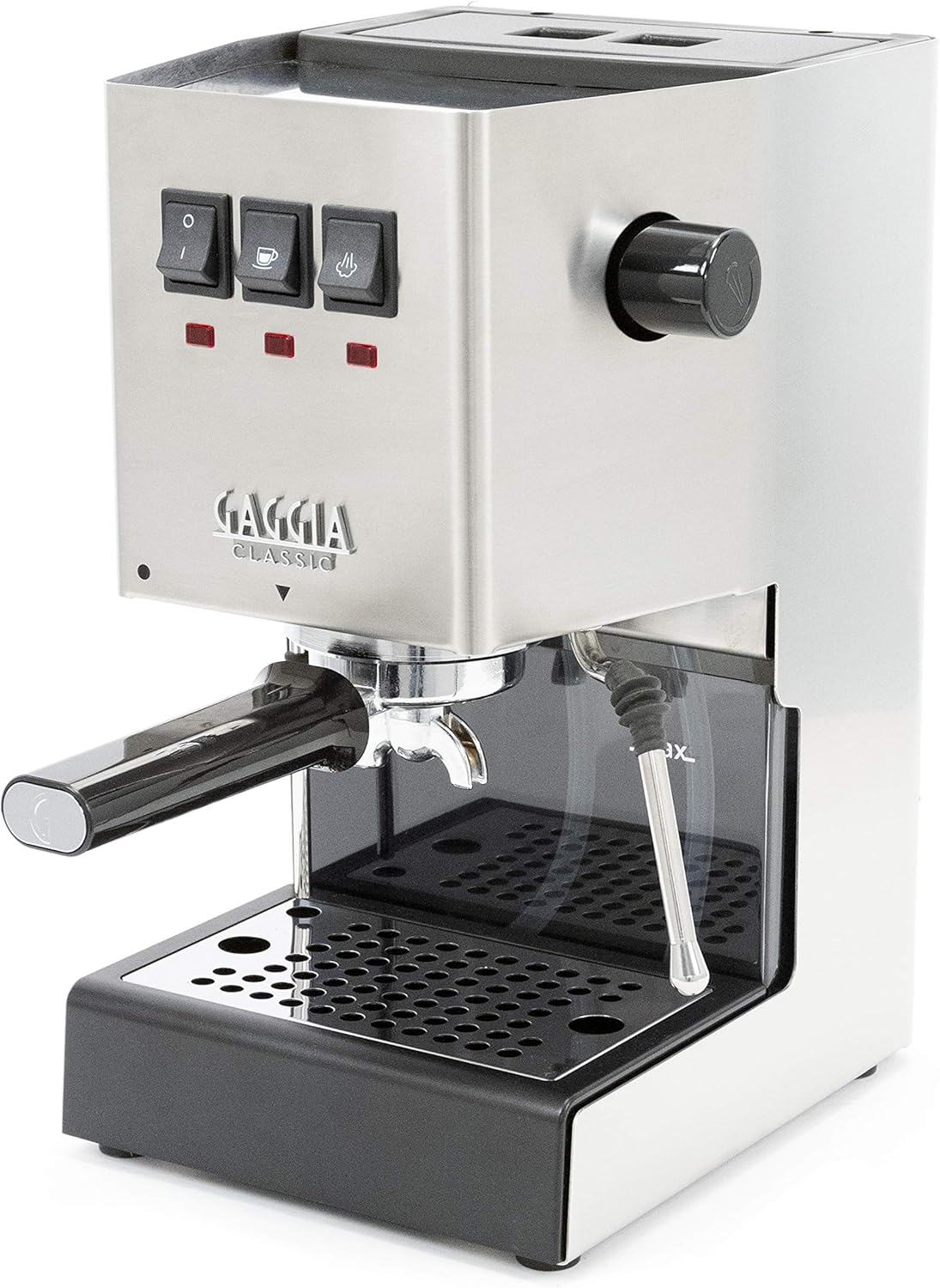
The Gaggia Classic Pro is the default first “serious” machine for a reason that has nothing to do with marketing: a commercial-style 58 mm group, a stainless steel body, and a parts ecosystem deep enough that the machine outlives most of its owners’ interest in modding it. Around $500 (verify at publish), it sits at the tier where the enthusiast community agrees real machines begin – and it’s the one machine in this guide that ships at the wrong pressure on purpose, trusting you to fix it.
Commercial-Style Architecture and Parts Ecosystem
The factory reality first: the Gaggia Classic Pro ships with an OPV spring set above the 9-bar target, commonly in the 12–15 bar range depending on model, region, and production year. Out of the box, it is not a 9-bar machine. That’s not a defect in the traditional sense – it’s a design decision that reflects the machine’s history as a platform, not a finished product.
The 58 mm group is the actual reason modders pick this machine. Precision baskets, bottomless portafilters, pressure gauges, distribution tools, and a resale/parts market that outlives the machine – the ecosystem surrounding the 58 mm standard is deeper than anything else in this price tier. When you buy the Gaggia Classic Pro, you’re buying into that ecosystem as much as you’re buying the machine itself.
One model-year warning that belongs in any honest recommendation: the 2024 Gaggia EVO Pro has been reported with a boiler coating leaching issue. Verify the exact model and production version before purchasing rather than assuming “Gaggia” means the Classic Pro variant. The community places the Classic Pro as a sound long-term buy in the ~$500 tier – but that confidence is specific to the model, not the brand umbrella.
Spring Replacement and Ownership Fit
The OPV spring replacement is directionally simple: open the case, locate the OPV, swap the factory spring for a 9-bar spring, then verify the result at the group head with a portafilter-mounted gauge. The cup-level outcome of a successful mod is tangible – slower flow, reduced channeling, a sweeter and less harsh extraction. That’s the version every forum thread describes.
What the forums don’t hand you is a safe procedure, because no source actually publishes one. The mod carries documented risk: burns from hot water and steam lines, electrical shock, leaks, equipment damage, and a voided warranty. If you attempt it, the non-negotiable steps are: unplug the machine and work cold, confirm the result with a gauge rather than guessing, use the correct spring for your specific model year, and treat YouTube videos as demonstrations of outcome, not step-by-step procedures. Paying a technician to perform the swap is the legitimate alternative.
From the factory, the Classic Pro also lacks a PID – temperature management involves learning the thermostat’s behavior, a technique called temperature-surfing. Steam performance is modest relative to machines with dedicated steam boilers, which matters if milk drinks are a regular part of the workflow.
The reader who should buy this machine wants to understand the hydraulics, will verify pressure after the mod, and has a capable burr grinder already. The reader who should not buy it is the one who wants to unbox and pull – they’ll brew at 12–15 bar indefinitely and wonder why the shots taste harsh.
Gaggia RI9380/46 E24 Espresso Machine, Brushed Stainless Steel
- Solid Steel Housing, Made in Italy
- 9 Bar Espresso Extractions
- Stainless Steel 58mm Commercial Portafilter
- Commercial Three Way Solenoid Valve
- Commercial Steam Wand
MiiCoffee Apex V2: The Machine Mainstream Rankings Skip
Machines get overlooked because of brand awareness and review access, not capability. The MiiCoffee Apex V2 carries an external OPV, adjustable PID, pre-infusion, a 58 mm portafilter, a dedicated brew boiler, and a separate thermoblock for steaming – a combination that is normally associated with machines in a significantly higher pricing tier. Confirm current pricing and availability at publish time; do not rely on historical figures.
Finding a machine that balances precise pressure control and modular capacity without forcing a case-mod is a rarity, much like the broader selection found among the best espresso machines under 1200.
Feature Verification and Thermal Trade-Offs
The feature that separates the Apex V2 most clearly from its price tier is the externally adjustable OPV. On most machines, verifying or changing brew pressure requires opening the case. Here, pressure verification becomes a routine task – the kind of thing you check periodically rather than perform once and forget. For a reader who wants the control of the Gaggia Classic Pro’s mod ecosystem without the spring-swap risk, that’s a meaningful distinction.
The thermal architecture pairs a dedicated brew boiler with a separate thermoblock for steaming. Running both simultaneously is normally an entry requirement for machines priced well above this tier. The honest trade-off is heat-up time: 7–10 minutes from cold. That is not a defect – it’s the physical consequence of a brew boiler that holds stable temperature rather than ramping fast. A reader who wants a shot in under a minute is buying the wrong machine, and this guide will say so plainly rather than bury it in a footnote.
The adjustable PID means brew temperature is not fixed at a factory default – you can dial it for different roast profiles, which is the feature the Bambino Plus’s fixed 200°F setting cannot offer. Pre-infusion is present. The 58 mm group opens the full accessory ecosystem described in the Gaggia section above.
Ownership Fit and Regional Support
The buyer this machine suits is the one who wants the 58 mm accessory ecosystem and genuine pressure control, but has no interest in replicating the spring-swap scenario. The Apex V2 delivers both without requiring a case opening or a voided warranty.
The pre-purchase step that matters most here is regional: confirm parts availability and service support in your area before ordering. MiiCoffee’s brand recognition is thin outside specialty coffee communities, which means local repair options may be limited. That’s not a reason to skip it – it’s a reason to do the due diligence that you’d skip with a brand that has a service center on every corner.

MiiCoffee Apex Espresso Machine V2 (Grey)
- 【New Version 2】This version comes with OPV and dual PIDs for both boiler temperature and steaming temperature.
- 【550ml Stainless Steel Boiler & Dedicated Thermo-block】 It comes with 550ml stainless steel boiler for brewing…
- 【Dual PID Temperatures】Apex has dual PIDs that allow you to adjust broiler temperature as well as steaming tem…
- 【Pressure Gauge】MiiCoffee Apex brews espresso around 9 bar. It comes with a pressure gauge showing the extra b…
- 【Pre-infusion】Pre-infusion water amount and time are configurable.
De’Longhi Stilosa: The Budget Winner That Isn’t the Same Machine Everywhere
The De’Longhi Stilosa shows up in budget-tier rankings with reliable frequency, and for a specific reader at a specific price point, the recommendation makes sense. Verify current pricing at publish – it has historically appeared around the $179 mark as a sub-$200 entry, but treat that as a snapshot. The more important caveat isn’t the price. It’s which machine you’re actually buying.
Portafilter Ecosystem and Basket Configuration
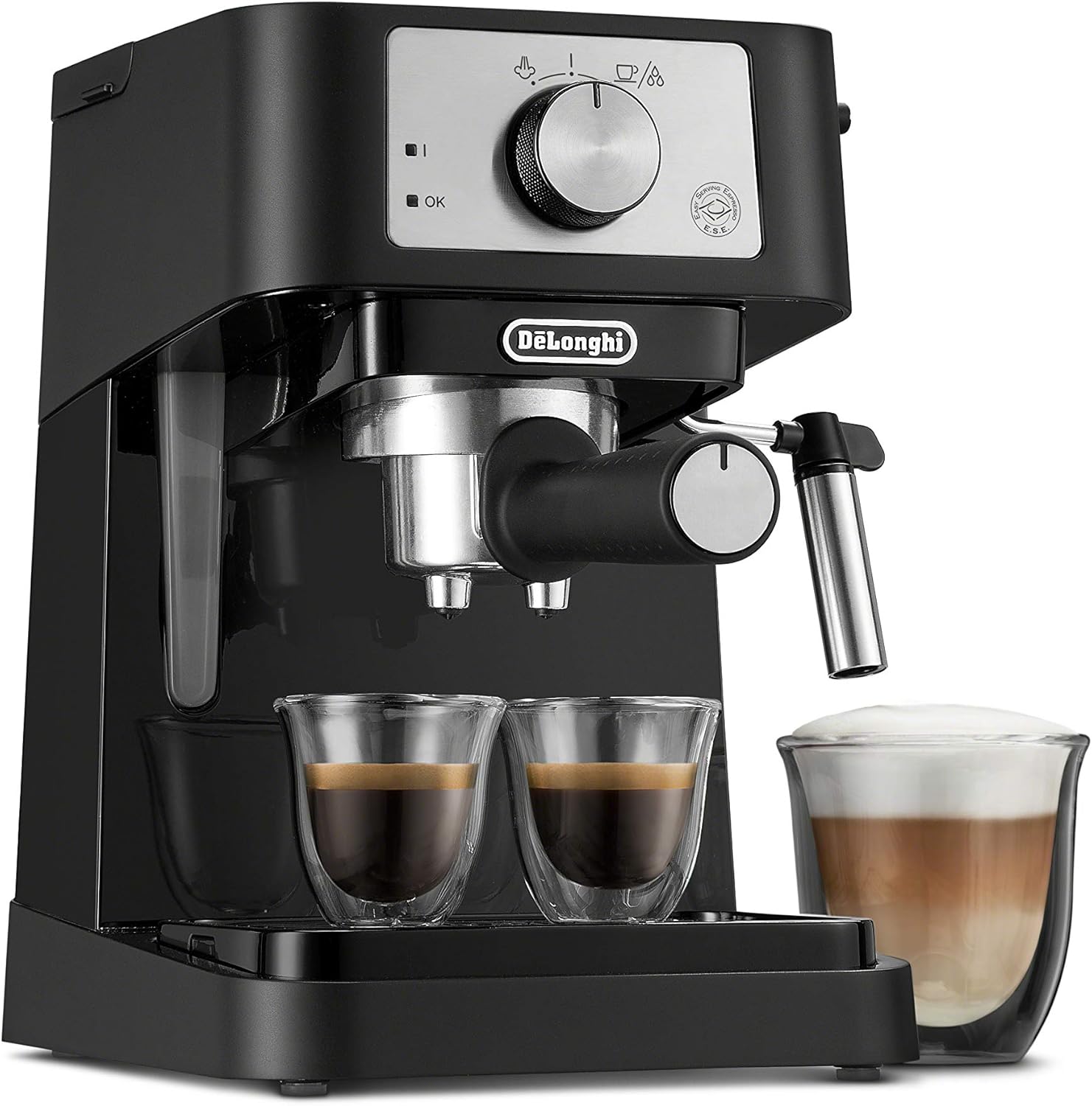
The 51 mm portafilter is narrower than both the 54 mm and 58 mm standards, which constrains the aftermarket meaningfully. Tampers, precision baskets, and distribution tools sized for 51 mm exist, but the selection is thinner and the quality ceiling is lower. If puck prep precision and technique development are the goal, this is a real limitation.
The basket situation requires a direct explanation. The pressurized basket shipped with most configurations is designed for pre-ground coffee: it artificially restricts flow to produce crema regardless of grind quality, which makes it forgiving for beginners and useless for learning real espresso technique. The moment to abandon it is the same as with the Bambino Plus – when you acquire a capable burr grinder and fresh beans, switch to the non-pressurized basket and accept that your first few shots will tell you exactly how much your grind needs work. That’s the point.
Steam wand behavior splits by configuration. A panarello-style wand injects air automatically and produces a thick, bubbly foam that works for cappuccino-style drinks but cannot produce the fine microfoam required for latte art or flat whites. A single-hole wand requires technique but can produce proper microfoam. Which wand your unit ships with depends on the regional SKU – and that distinction matters more than any other spec on this machine.
Workflow Constraints and Regional Purchase Fit
The Stilosa is a regional-SKU trap, and knowing this before you buy is the single most useful piece of information this guide can offer about it. EU and Asian versions have been reported with single-hole steam wands and non-pressurized baskets. US versions may ship with a panarello wand and no solenoid valve. Same model name, materially different machine – which means a review written on a European unit may describe something a US buyer cannot actually purchase.
Before ordering, check the region-specific spec sheet for two things: the steam wand type and whether a 3-way solenoid valve is present. The solenoid valve releases pressure from the group head after the shot, which keeps the puck dry and makes cleanup straightforward. Without it, backflushing isn’t possible and the puck comes out wet. It’s a workflow detail that compounds over hundreds of shots.
Practical limits apply to any machine in this class: water tank capacity, drip tray size, and the general friction of a small, low-cost appliance are real constraints, not marketing disclaimers. Position this machine honestly: it’s a “test the hobby” purchase at best, and only if the specific configuration being sold in your region matches your intent.
De'Longhi Stilosa Compact Manual Espresso Machine, Manual Milk Frother
- Please refer to user guide or user manual or user guide (provided below in PDF) before first use
- Includes Portafilter, measuring scoop/tamper and two filters for single or double espresso
- Stainless steel boiler is engineered to last long and work for years
- Manual steam wand to texture milk for lattes and cappuccinos
Casabrews and the 20-Bar Badge: How to Test the Claim Before You Buy
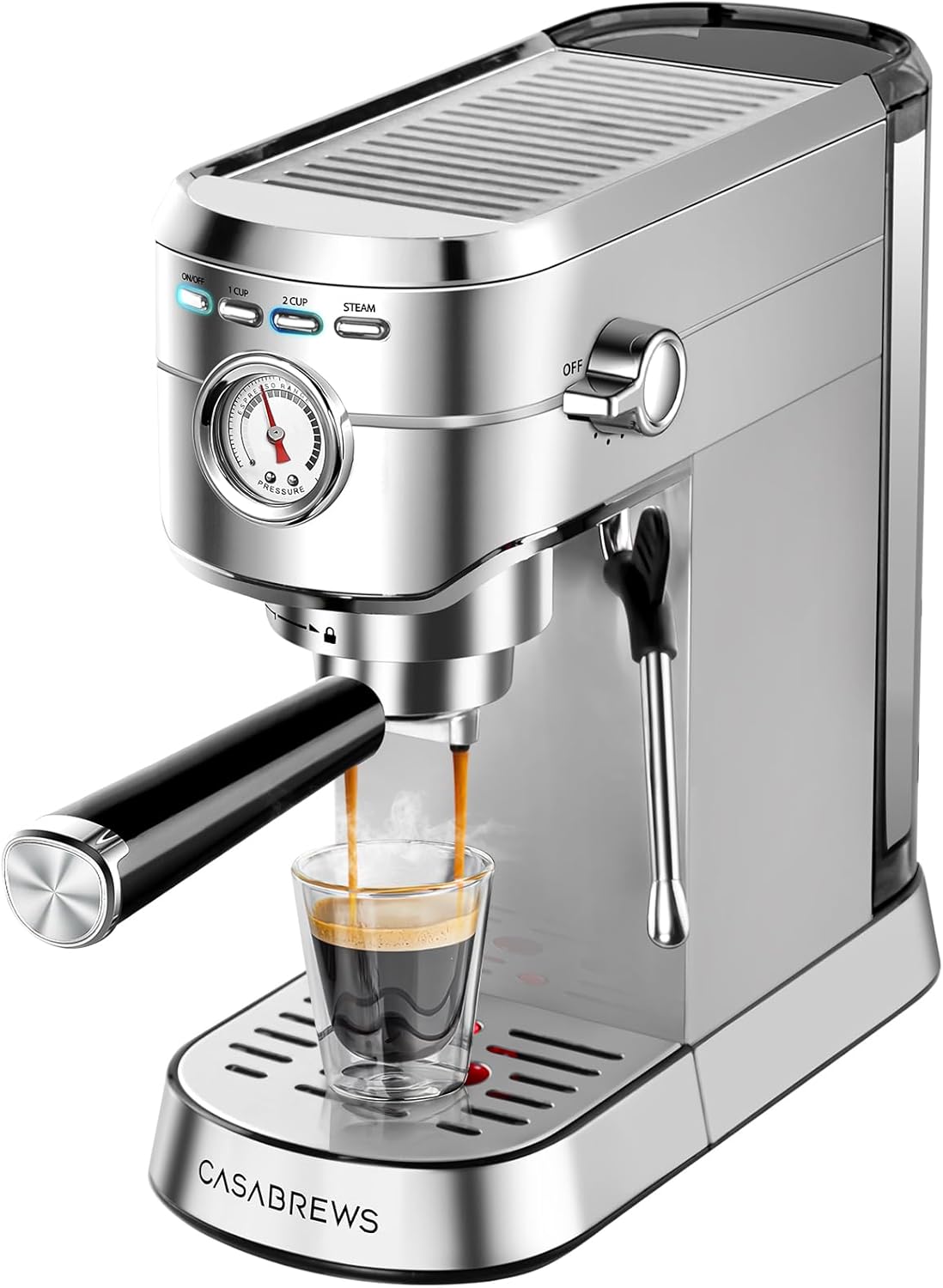
Casabrews represents a category rather than a single machine: budget stainless-front appliances sold primarily on a high advertised pump-pressure figure. The advertised number – whatever is printed on the unit or box – is the pump’s maximum ceiling, and it should be labeled explicitly as advertised, not measured every time it appears. The test that matters is what the machine delivers at the group head, and that test is something any buyer can run.
Gauge Verification and Diagnostic Indicators
The repeatable test protocol is straightforward. Fit a portafilter-mounted pressure gauge (or a group-head gauge fixture), pull a shot with a properly dialed puck, and record the reading against the advertised badge. Then repeat with a bottomless portafilter and watch the puck: fissures, spraying, and premature blonding are the visual signatures of channeling caused by over-pressure or an uneven bed.
The pressurized basket hides this problem temporarily. With pre-ground coffee and a pressurized basket, the artificial flow restriction masks whatever pressure the machine is actually delivering – the basket does the work the OPV should be doing. Switch to fresh beans and a real basket and the problem becomes immediately audible in the cup.
This video demonstrates exactly how to perform a brew pressure check and adjustment on a home espresso machine – the same procedure applies to any machine you’re evaluating:
Pre-Purchase Inspection and Suitability Assessment
Before purchasing any machine in this category, run a pre-purchase inspection on the parts diagram or product documentation. Look for two components: an OPV and a 3-way solenoid valve. If pressure regulation isn’t present in the hydraulic path, no technique, grind adjustment, or basket upgrade will convert the machine into a 9-bar platform. The physics don’t bend.
The honest verdict for this category: acceptable for milk drinks built on pre-ground coffee, convenient as a capsule-adjacent appliance, and a reasonable choice if the entire goal is a hot espresso-style drink with minimal workflow. Not a platform for learning 9-bar espresso extraction, and not a machine that will reward a capable grinder or fresh beans with a proportionally better cup.
CASABREWS CM5418 Compact Espresso Machine with Milk Frothing Steam Wand
- Make Your Favorite Espresso Coffee At Home: The CASABREWS coffee machine with milk frother allows you to prepa…
- Professional 20 Bar Pressure System: Semi-Automatic 2-in-1 Espresso Maker, with 20 bar professional Italian pu…
- Milk Frothing System: Our espresso machine with milk frother has a powerful steam wand, so you can texture cre…
- Compact, Stylish & Practical: The beautiful and compact design makes this small espresso machine suitable for …
- Useful Tips: Please kindly note that do not brew coffee immediately after frothing milk. The machine must cool…
Flair UPDATED Espresso Maker: The Only Sub-$150 Machine That Actually Reaches 9 Bar
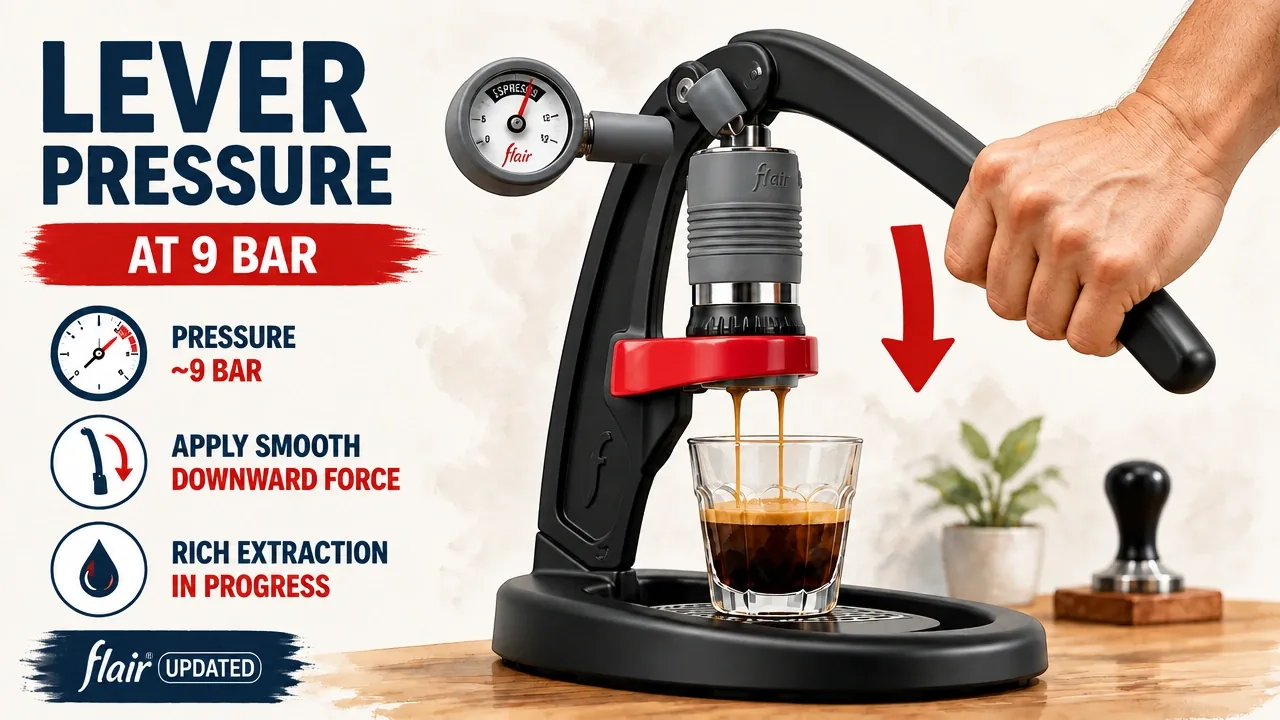
The budget espresso question usually gets answered with a pump machine. The honest answer is a Flair UPDATED Espresso Maker – a manual lever brewer that reaches and holds 9 bar because the brewer generates the pressure by hand, with no pump to overshoot and no OPV required to bring it back down. Under $150, it is the only machine in that price range capable of true 9-bar espresso, for a reason rooted in physics rather than marketing.
Manual Pressure Generation and Technique
There are no electronics in the Flair UPDATED Espresso Maker. No pump, no PID, no thermostat – just a brew chamber, a lever, and the force you apply to it. That simplicity is the feature, not the limitation.
Reaching and holding ~9 bar in practice requires a sequence: preheat the brew chamber with hot water, dose and tamp, then apply and maintain lever force through the shot. The pressure gauge available on some Flair models shortens the learning curve considerably – without it, you’re reading the shot’s behavior (flow rate, color, timing) to infer whether you’re in range. With it, you have direct feedback. If you’re buying the Flair Neo as your first espresso machine, spend the extra amount to get the gauge model.
Grinder dependency is more immediate on a manual lever than on any pump machine. A pump machine with a pressurized basket can mask a mediocre grind. The Flair UPDATED Espresso Maker cannot. The grind is not optional – it is the primary variable you’re managing, and a capable burr grinder is a prerequisite, not an upgrade.
Workflow Trade-Offs and Budget Positioning
The trade-offs are stated without apology: one shot at a time, no steaming, temperature managed through preheating and your kettle, and a cleaning routine that requires actual attention after each use. None of these are surprises if you understand the category. All of them are dealbreakers if you want automatic milk steaming – which means the reader who wants a flat white machine should stop reading this entry and go back to the Bambino Plus.
The durability and portability argument is real. No electronics means no electronics to fail. The Flair UPDATED Espresso Maker can travel. Its service life, maintained properly, outlasts most pump machines in the same price range.
The budget framing is the closing argument: two machines at the same price both say “espresso.” Only one of them can actually hold 9 bar, and it’s the one without a cord. Sub-$150 pump machines generally lack the pressure regulation covered in the criteria section – no OPV, no pre-infusion, no mechanism to bring the pump’s ceiling down to the group head target. The Flair UPDATED Espresso Maker sidesteps the entire problem by removing the pump. What you trade for that pressure accuracy is manual workflow and electrical convenience. That trade is explicit and should stay explicit.

Flair UPDATED Espresso Maker - Classic: All manual lever espresso maker for the home - Pressure gauge and two portafilters included
- HANDCRAFT SHOTS OF ESPRESSO - With the Flair Espresso Maker, you have a complete manual espresso machine that …
- FULLY MANUAL & COMPLETELY BEAUTIFUL – The Flair Classic is a 100% human-powered, direct lever espresso press. …
- ADVANCED & BEGINNER ESPRESSO BREWING – The relaunched Flair Classic comes with both our Bottomless 2-in-1 Port…
- BUILT TO LAST WITH A WARRANTY – The Flair Classic is made from durable materials like cast aluminum and stainl…
- EASY TO CLEAN – The Flair Classic manual espresso machine is the only manual espresso maker with a completely …
9Barista Mk.2: 9 Bar and 93°C From a Stovetop, With No Electronics at All
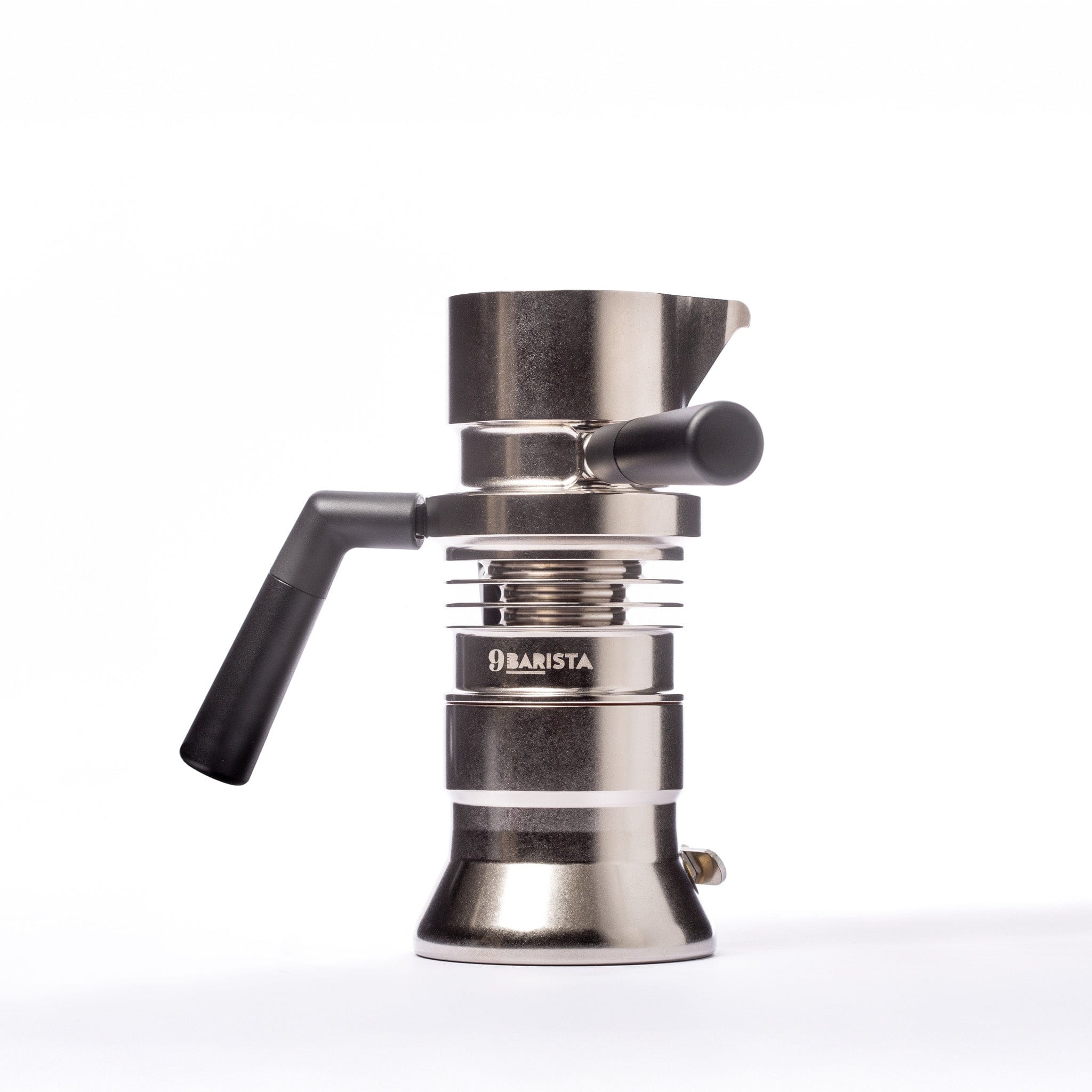
The 9Barista Mk.2 answers a question most espresso guides don’t think to ask: what if the entire pump-and-regulation problem is the wrong architecture? A stovetop machine with a patented twin-boiler system, no pump, and no electronics – pressure as a mechanical consequence of heat and a sealed boiler, not a setting to verify or a badge to audit.
William Playford, founder of 9Barista and a jet engineer by training, describes the Mk.2 as the culmination of everything learned since the Mk.1 launched in 2019: upgraded materials, improved finish, better brewing stability, enhanced heat resistance, and tighter build consistency – the version they’re genuinely proud to put in front of people.
That engineering background matters more than it might seem. The twin-boiler mechanism that generates 9 bar from a stovetop heat source is not a repackaged moka pot – it’s a precision pressure system, and the Mk.2 refinements address the consistency variables that the original design left to user technique.
Twin-Boiler Mechanics and Brew Specifications
The mechanism: heat builds pressure in the lower boiler; a second boiler stage delivers brew water at ~93°C – the temperature at which most espresso extracts optimally. There is no pump to wear out and no pressure setting to drift. The 9 bar figure is a design constant, not a claim to audit. For a reader who has spent any time navigating the badge-marketing landscape covered earlier in this guide, that’s the purchase confidence they were looking for.
The specifications are worth stating precisely:
| Specification | 9Barista Mk.2 |
|---|---|
| Brew pressure | 9 bar |
| Brew temperature | ~93°C |
| Dose | 17–20 g |
| Output | 40–45 g |
| Total time from cold | 3–6 minutes |
| Extraction time | ~25–30 seconds once brewing begins |
| Stove compatibility | Gas, electric, induction (adapter plate included) |
The time distinction matters: 3–6 minutes is the total time from a cold start on the stove. The extraction itself – the shot – targets roughly 25–30 seconds once brewing begins. That’s not slow espresso; that’s espresso with a stovetop warm-up instead of an electronic one.
The ownership argument is the real story. No pump to wear out, no electronics to drift or fail – the only meaningful wear items are seals. It’s characterized accurately as compact, repairable, and free of pod waste. It also sidesteps the modification risk described with the Gaggia entirely: there is no spring to swap, no case to open, and no warranty to void.
Variant Selection, Safety, and Upkeep
The Standard vs Pro choice comes down to what’s included. The Pro adds a naked portafilter, an IMS precision basket, a stainless steel basket cap, and anodized aluminum handles – components that improve consistency and heat resistance without changing the core brewing mechanism. If you’re serious about dialing in the 25–30 second extraction window, the IMS basket is the meaningful addition.
Handling requires directness: the machine becomes extremely hot during use. Handle it carefully, or quench it under cold water before touching the body. The pressure release valve is present and functional. The current design uses a single-use brass ring that may need periodic replacement – factor that into the maintenance picture.
Maintenance is straightforward: regular rinsing, occasional descaling, and the understanding that this is a one-shot-at-a-time machine with no steaming capability. A capable burr grinder is essential for dialing in the extraction target. The trade is counter space and patience, not capability – 3–6 minutes of attention per shot, one drink at a time, no simultaneous steaming. For the reader who wants no electronics, a small footprint, and a machine built to last, that trade is the point.
The Verdict: Which 9-Bar Machine Is Actually Yours
The right machine depends on five variables: budget ceiling, volume of milk drinks, counter space, willingness to mod or tinker, and – most importantly – whether a capable burr grinder is already on the counter. No machine in this guide extracts well without one, and at every price point here, spending the marginal dollar on the grinder and fresh beans produces a larger change in the cup than spending it on more advertised pump pressure.
Here’s the persona shortlist:
Breville Bambino Plus – The plug-and-play beginner making milk drinks. Factory-regulated 9 bar, pre-infusion, automatic steam wand, 3-second heat-up. The ceiling is real (fixed temperature, 54 mm group, no pressure adjustment), but it’s a ceiling most beginners won’t hit for the first year.
Gaggia Classic Pro – The tinkerer who will verify pressure after the spring swap and has already checked the model year. The 58 mm ecosystem and parts availability make it the most future-proof machine at its price tier – but only after the OPV is corrected.
MiiCoffee Apex V2 – The value hunter who wants a 58 mm group, an external OPV, adjustable PID, and pre-infusion without opening a case. Do the regional availability check first; the specs justify the research.
De’Longhi Stilosa – Only if the regional SKU checks out: single-hole wand, non-pressurized basket, solenoid valve present. Position it honestly as a test-the-hobby machine, not a technique platform.
Flair Neo – The manual purist on a tight budget who already owns or will buy a capable grinder. The only sub-$150 path to genuine 9-bar espresso. No steaming, no shortcuts.
9Barista Mk.2 – The no-electronics, small-footprint, repairable camp. One shot at a time, no steaming, 3–6 minutes of stovetop attention. For the reader burned by badge marketing, the 9-bar figure here is a design constant, not a claim.
Plain skip – Any machine in the high-pressure-badge, no-OPV category, unless convenience drinks on pre-ground coffee are the entire goal. The gauge test in the Casabrews section applies to every machine in that class.
The factors that flip a recommendation are worth naming directly. A reader who makes two milk drinks a day goes to the Bambino Plus even if they’re attracted to the Gaggia’s modding ecosystem – the steam workflow matters more than the pressure ceiling at that volume. A reader on a strict budget who wants real espresso goes to the Flair Neo over any sub-$150 pump machine, because the pump machine cannot regulate pressure and the lever can. A reader who wants the Gaggia’s architecture without the spring-swap risk goes to the MiiCoffee Apex V2 and does the regional support check.
The pressure argument this guide opened with closes here: 9 bar is a target measured at the puck, not a badge on a box. A machine that holds a flat, regulated 9 bar at the group head beats a machine that advertises 20 bar every single time. Manual and controllable machines offer the greatest control and the strongest upgrade path – but control only pays off when the grind is good enough to reward it.
Verify brew pressure and OPV presence first. Everything else is preference.
Frequently Asked Questions About the Best 9 Bar Espresso Machine
Is 9 bar actually better than 15 or 20 bar for espresso?
Yes – 9 bar at the puck is the target the industry converged on for a reason. Higher pressure compacts the coffee bed, causes channeling, and skews the cup bitter. The 15 or 20 bar figure on most machines describes the pump’s maximum, not what the coffee sees.
How do I know if my machine has an OPV?
Check the parts diagram or the manufacturer’s product documentation – not the marketing page. If the diagram doesn’t show an over-pressure valve in the hydraulic path, assume the machine brews at full pump pressure. A portafilter-mounted gauge will confirm the actual number.
Can I fix a machine that brews too high by adjusting the grind?
Partially. A finer grind increases resistance and can reduce flow rate, but it doesn’t address the root cause – excess pressure still compresses the puck unevenly. An OPV is a hydraulic solution; grind adjustment is a workaround with a ceiling.
What’s the difference between a thermoblock and a boiler, and does it matter?
A thermoblock heats water on demand and reaches temperature fast; a boiler holds a reservoir of water at temperature and recovers more slowly but delivers more stable heat during a long shot. For most home baristas pulling one or two shots, a good thermoblock is sufficient. For simultaneous steaming and brewing, a dedicated steam boiler or heat exchanger changes the workflow meaningfully.
Why does the Gaggia Classic Pro ship with the OPV set too high?
It’s a design legacy rather than an oversight. The machine was built as a platform for modification, and the factory spring setting reflects a conservative choice for pump longevity. The community workaround – a 9-bar spring swap – has been standard practice for years, but it carries real safety and warranty implications that most forum posts skip over.
Do I need a burr grinder to use any of these machines?
For every machine in this guide except those designed for pre-ground coffee or capsules, yes. A burr grinder is not an upgrade – it’s a prerequisite. The Flair Neo makes this most obvious because it exposes grind quality immediately, but the same dependency applies to the Gaggia, MiiCoffee Apex V2, and 9Barista Mk.2.
What does “flow profiling” mean, and do any of these machines support it?
Flow profiling means shaping the entire pressure curve during extraction – ramping up slowly, holding a plateau, tapering off – rather than delivering one fixed pressure. None of the machines in this guide fully support it. Machines like the Lelit Bianca and Decent DE1 do, at a significantly higher price point.
Is the 9Barista Mk.2 just a fancy moka pot?
No. A moka pot brews at 1–2 bar using steam pressure. The 9Barista Mk.2 uses a patented twin-boiler system to build 9 bar of hydraulic pressure and deliver brew water at ~93°C – the same pressure and temperature targets as a conventional espresso machine, achieved through mechanical engineering rather than a pump.
References
- Under pressure: poroelastic regulation of flow in espresso brewing | arxiv.org
- How 9Barista Mk.2 Works | 9barista.com