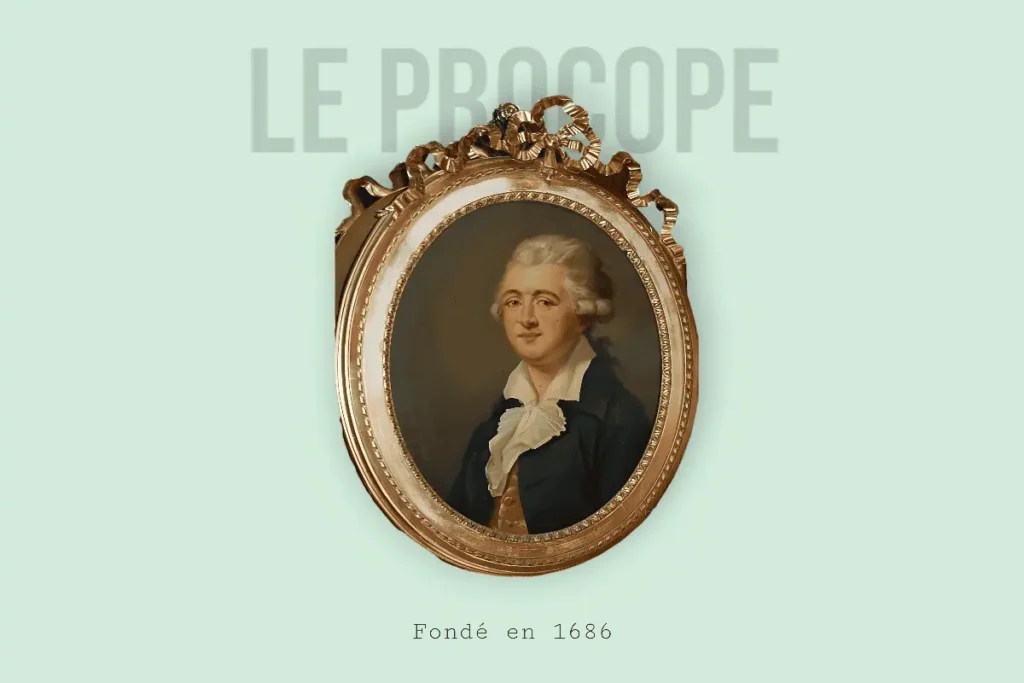
Portrait of Francesco Procopio dei Coltelli, founder of Le Procope, the oldest café in Paris.
People

Le Procope: The OLDEST PARIS COFFEE HOUSE AND Legacy of Francesco Procopio dei Coltelli

Le Procope, founded in Paris in 1686 by Francesco Procopio dei Coltelli, is recognized as the world’s oldest continuously operating café. For over 300 years, this establishment served as the intellectual hub for Enlightenment figures like Voltaire and Benjamin Franklin, and later, French Revolutionaries. Read the full article to understand the visionary legacy that created this historical landmark.

Le Procope: The OLDEST PARIS COFFEE HOUSE AND Legacy of Francesco Procopio dei Coltelli Read More »
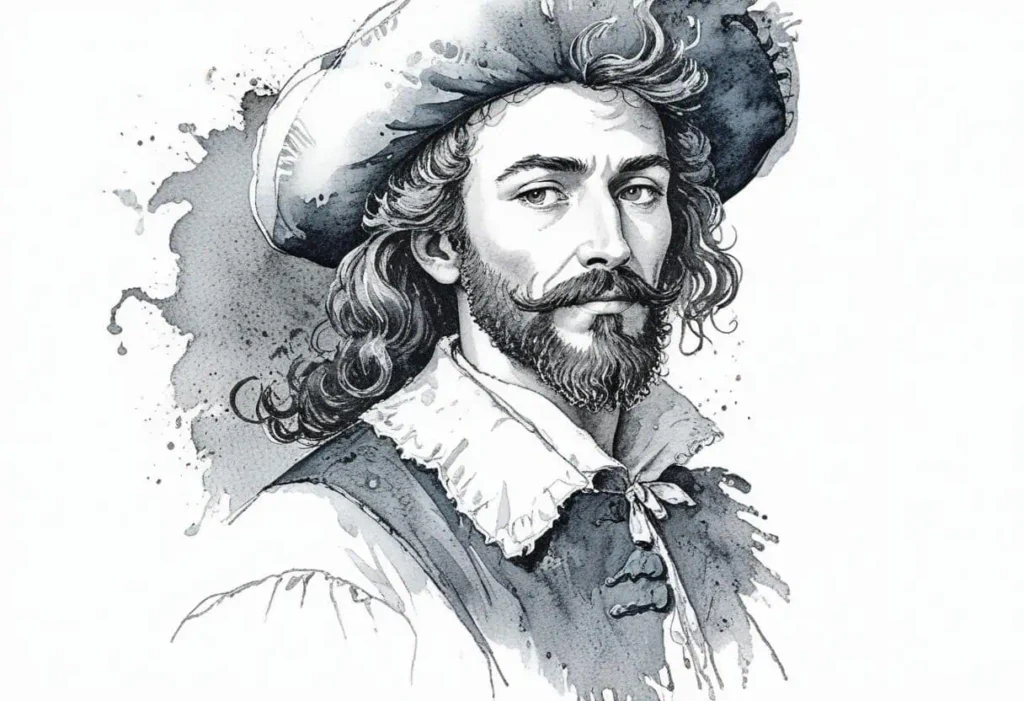
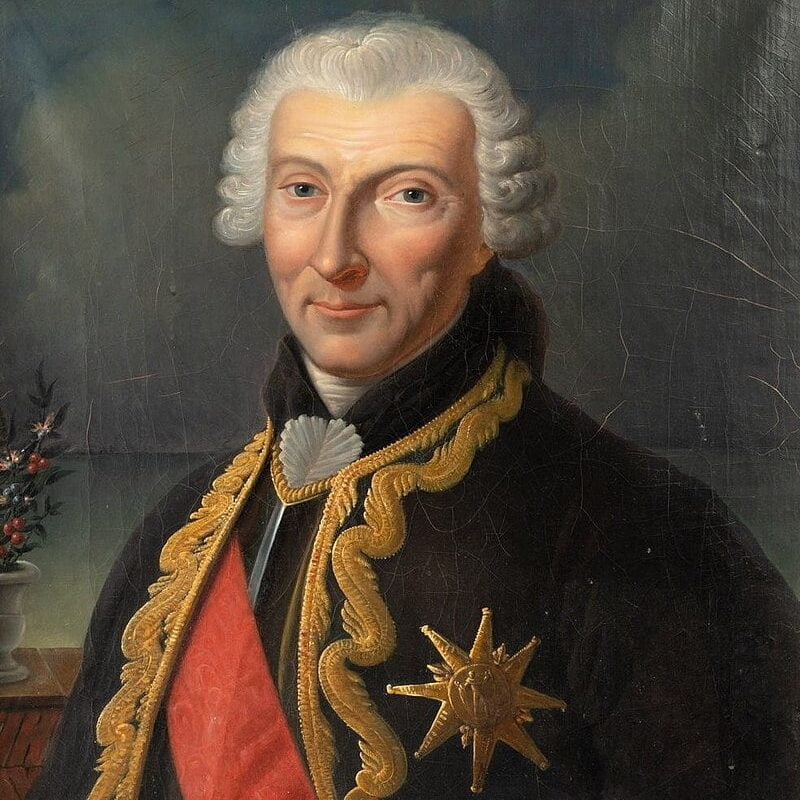
Portrait of Francisco de Melo Palheta, the man who introduced coffee to Brazil.
People

Francisco de Melo Palheta: The Beginning of Brazilian Coffee

Francisco de Melo Palheta introduced coffee to Brazil in 1727, transforming the nation from an economy reliant on dwindling gold and competitive sugarcane into the world’s foremost coffee powerhouse. Palheta, a Portuguese military officer, acquired thousands of forbidden Coffea arabica seeds from French Guiana, allegedly through a romantic affair with the Governor’s wife, Madame Claude d’Orvilliers. His bold action established the billion-dollar industry that now accounts for a significant portion of global coffee production. Discover the full story of Palheta’s mission and its lasting impact on Brazil’s economy.

Francisco de Melo Palheta: The Beginning of Brazilian Coffee Read More »

Portrait of Gabriel de Clieu, who brought the coffee plant to Martinique
People

The Heroic Journey of Gabriel de Clieu

Gabriel de Clieu introduced coffee to Martinique in 1723 by successfully transporting a single, fragile Coffea arabica plant from the Royal Gardens in Paris. During the perilous voyage, he famously shared his own minimal water ration with the plant to ensure its survival against pirates, storms, and drought. This heroic act led to the planting of over 18 million coffee trees on the island by 1777, establishing the French Caribbean as a major coffee source. Read the full account of de Clieu’s sacrifice and its lasting legacy in coffee history.

The Heroic Journey of Gabriel de Clieu Read More »

A detailed illustration of Baba Budan, an elderly man with a long white beard and a turban.
People

Baba Budan and the Seven Magic Beans

Baba Budan introduced coffee to India around 1670 by successfully smuggling seven live coffee seeds from Yemen, defying strict export laws enforced with the threat of death. The Sufi cleric concealed the sacred seeds in his beard after his pilgrimage to Mecca and planted them in the Chandragiri Hills, now known as Bababudangiri. This single act broke Yemen’s global coffee monopoly and established India’s coffee industry, which continues to thrive today. Explore the full legend of Baba Budan and the seven magic beans that changed coffee history.

Baba Budan and the Seven Magic Beans Read More »

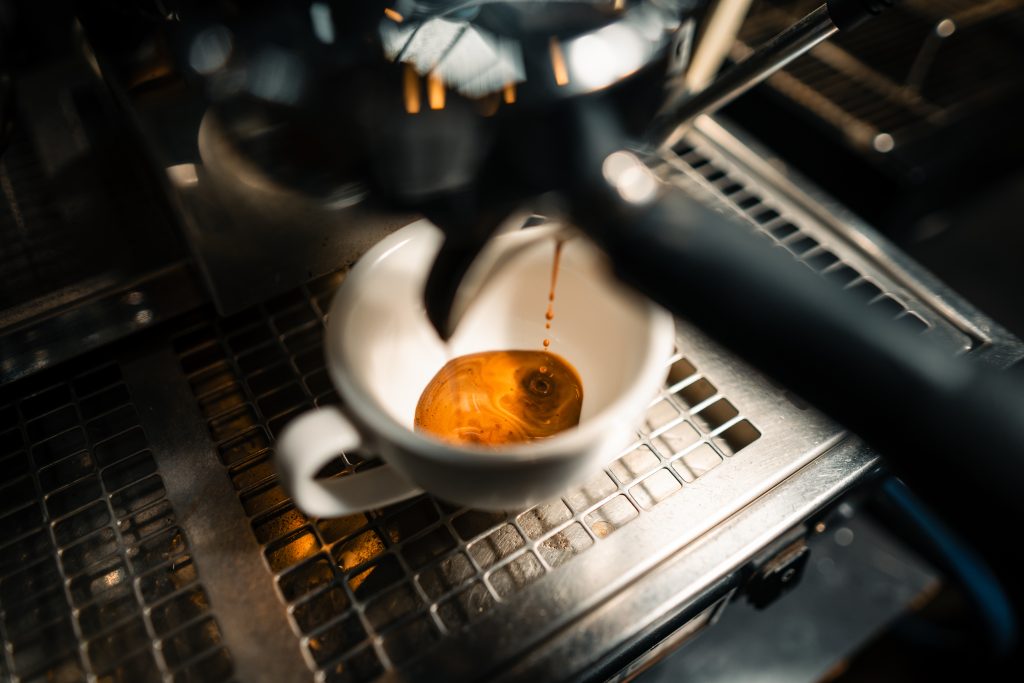
Close-up of espresso being extracted into a white cup from an espresso machine.
Brewing

An Overview of Espresso: History, Culture, techniques and Benefits

Espresso is a concentrated coffee beverage brewed by forcing hot water (195°–205°F) through finely ground coffee at 9–10 atmospheres of pressure, with an ideal extraction time of 20–30 seconds. This Italian-born method, first commercialized in 1902 by Luigi Bezzera, is defined by its high pressure, which creates the distinctive golden-brown foam layer known as crema. Contrary to popular belief, a single shot of espresso contains less total caffeine than a regular cup of drip coffee due to its smaller serving size. Learn the key elements and techniques required to master the perfect espresso shot.

An Overview of Espresso: History, Culture, techniques and Benefits Read More »

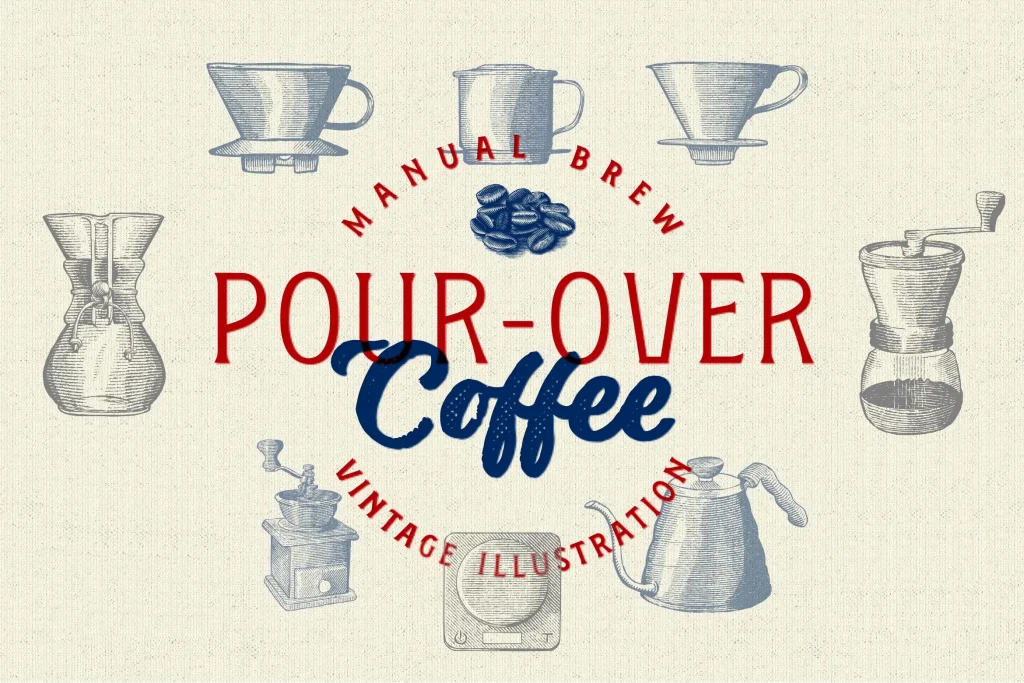
Vintage illustration of pour-over coffee manual brew equipment
Brewing

Unlock the Secrets of Pour Over Coffee

Pour over is a manual brewing technique, pioneered by Melitta Bentz in 1908, where hot water is precisely poured over medium-fine ground coffee, allowing it to drip through a filter into a cup. This method, often utilizing a 1:18 coffee-to-water ratio, offers complete control over variables like water flow and temperature, resulting in a cleaner, more nuanced flavor compared to immersion methods. Essential tools include a gooseneck kettle for controlled pouring and popular brewers like the Hario V60 or Kalita Wave. Unlock the secrets of the pour over method and learn the step-by-step guide to brewing your perfect cup.

Unlock the Secrets of Pour Over Coffee Read More »

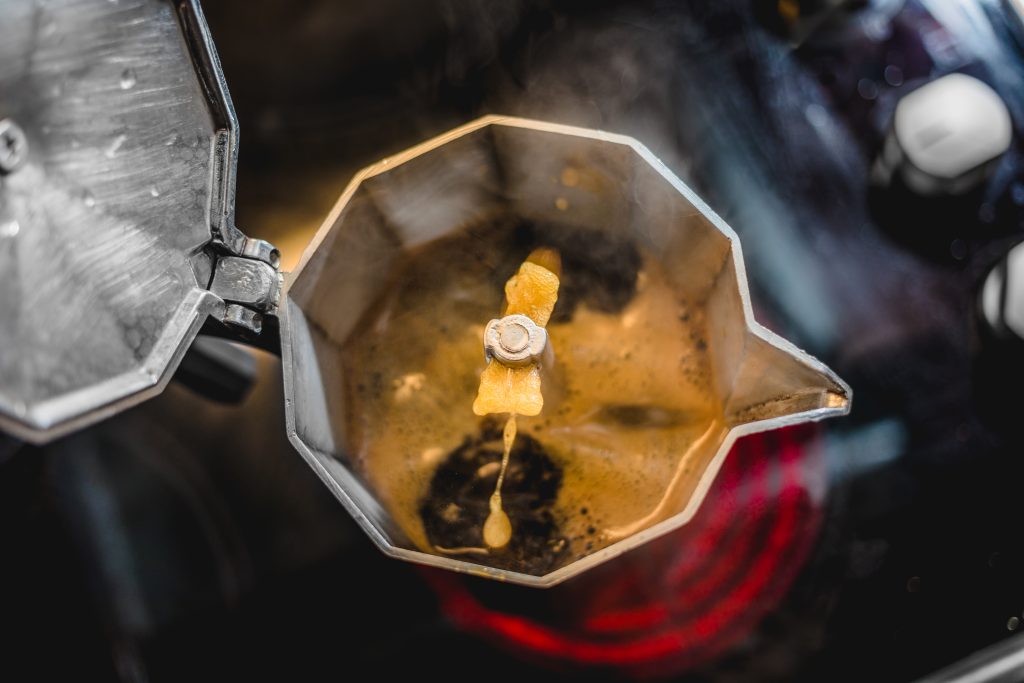
Top view of coffee brewing in a Moka Pot on a stovetop
Brewing

The Ultimate Guide to Moka Pot Coffee Brewing

The Moka Pot, or stovetop espresso maker, is a three-chambered Italian coffee brewer invented by Alfonso Bialetti in the 1930s that uses steam pressure to force hot water through coffee grounds. Unlike a true espresso machine (9 bars), the Moka Pot operates at a lower pressure (around 1.5 bars) to produce a rich, intense, and flavorful coffee, making it a robust and economical alternative for home brewing. To use it, fill the lower chamber with water, add medium-ground coffee to the filter basket, and heat it on the stove until the coffee collects in the upper chamber. Discover the full guide on how to brew and maintain this iconic symbol of Italian coffee culture.

The Ultimate Guide to Moka Pot Coffee Brewing Read More »

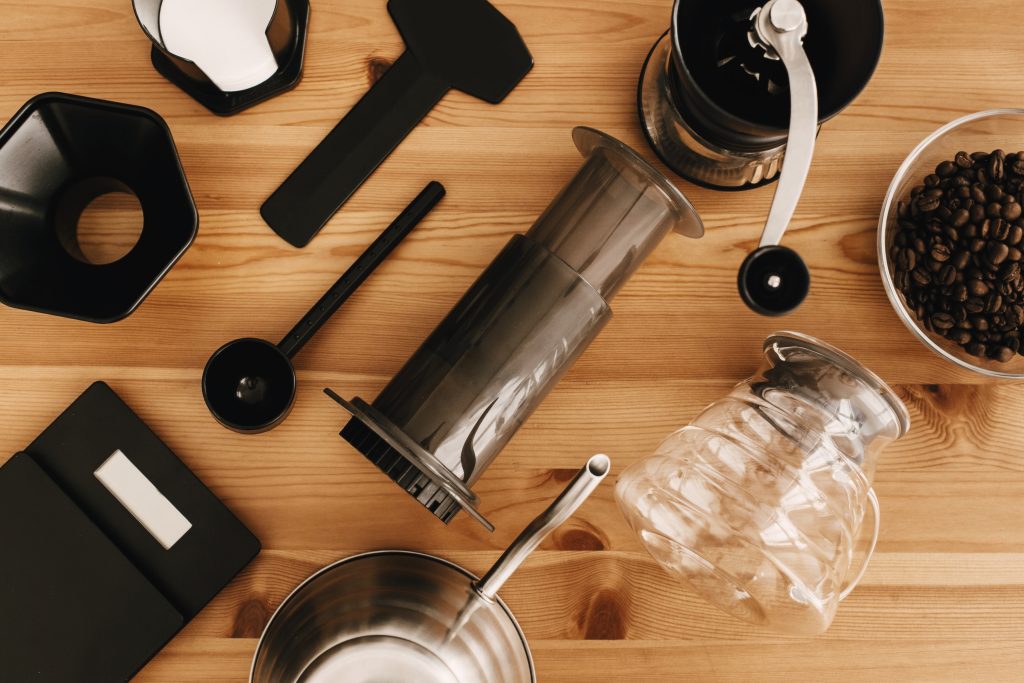
AeroPress coffee maker and various coffee brewing accessories on a wooden table.
Brewing

AeroPress: Rich, Smooth, Full-bodied

The AeroPress is a portable coffee brewing device, invented by Alan Adler in 2005, that uses a combination of immersion, steeping, and air pressure to produce a rich, smooth, and full-bodied coffee. Known for its quick brewing time of 2–3 minutes, the AeroPress delivers a cup that is less acidic and more flexible than pour-over methods, allowing users to create espresso-like concentrates or lattes. Many enthusiasts use the “inverted method” to control the steeping time before plunging. Explore the best techniques and award-winning recipes to master your AeroPress brewing today.

AeroPress: Rich, Smooth, Full-bodied Read More »

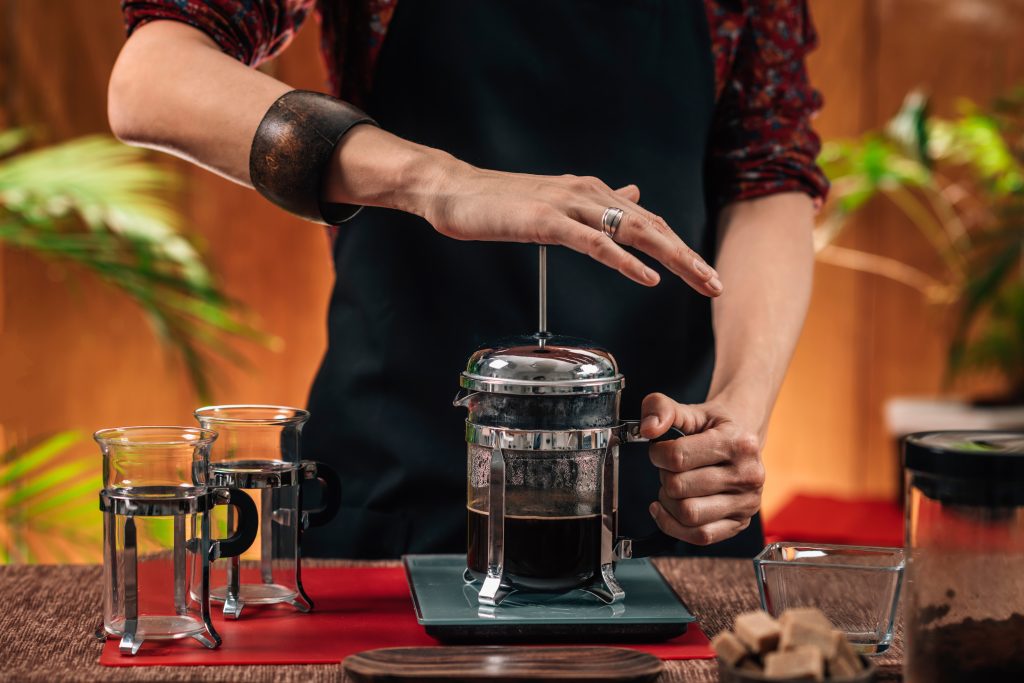
Barista pressing down the plunger on a French Press with two glass mugs beside them.
Brewing

French Press: Simple Yet Refined, Bold & Unforgettable

The French Press is an immersion coffee brewing method, first patented in 1852, where medium-coarse coffee grounds and hot water steep together for a minimum of four minutes before a plunger separates the grounds from the liquid. This method bypasses paper filters, allowing coffee oils and rich flavors to remain in the brew, resulting in a bolder, more authentic flavor compared to clean, paper-filtered methods like pour-over. The standard SCA ratio suggests 36 grams of coffee to 660 grams of water. Learn the precise, step-by-step technique to brew a truly unforgettable cup of French Press coffee.

French Press: Simple Yet Refined, Bold & Unforgettable Read More »

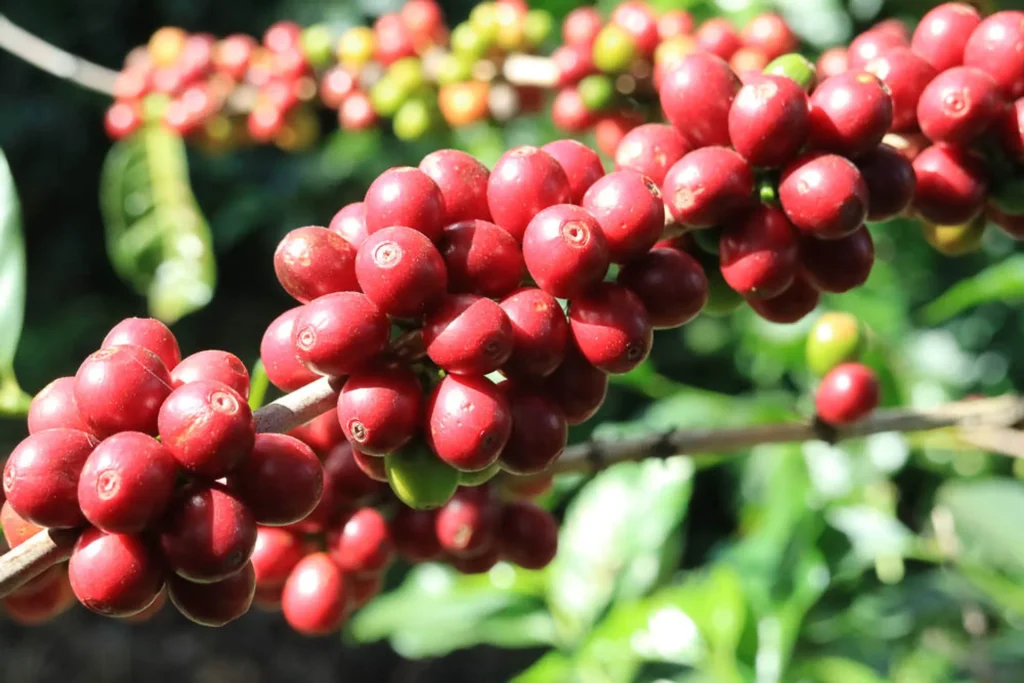
Cận cảnh những quả cà phê Bourbon chín đỏ trên cành với những chiếc lá xanh mướt ở hậu cảnh.
Coffee Beans

Bourbon Coffee: A Symphony of Genetic Diversity, Flavor, and Quality

Bourbon coffee is a highly celebrated Arabica varietal, tracing its origins to Yemen and Ethiopia before being widely cultivated on Réunion Island (Île Bourbon) in the 1700s. It is prized for its complex flavor profile, which features a satisfying balance of sweetness and acidity, rich aromas of fruit and caramel, and a smooth, full body. Bourbon is a foundational varietal, giving rise to important mutations like Caturra and Pacas. Explore the history, unique chemistry, and diverse relatives of this globally significant coffee plant.

Bourbon Coffee: A Symphony of Genetic Diversity, Flavor, and Quality Read More »

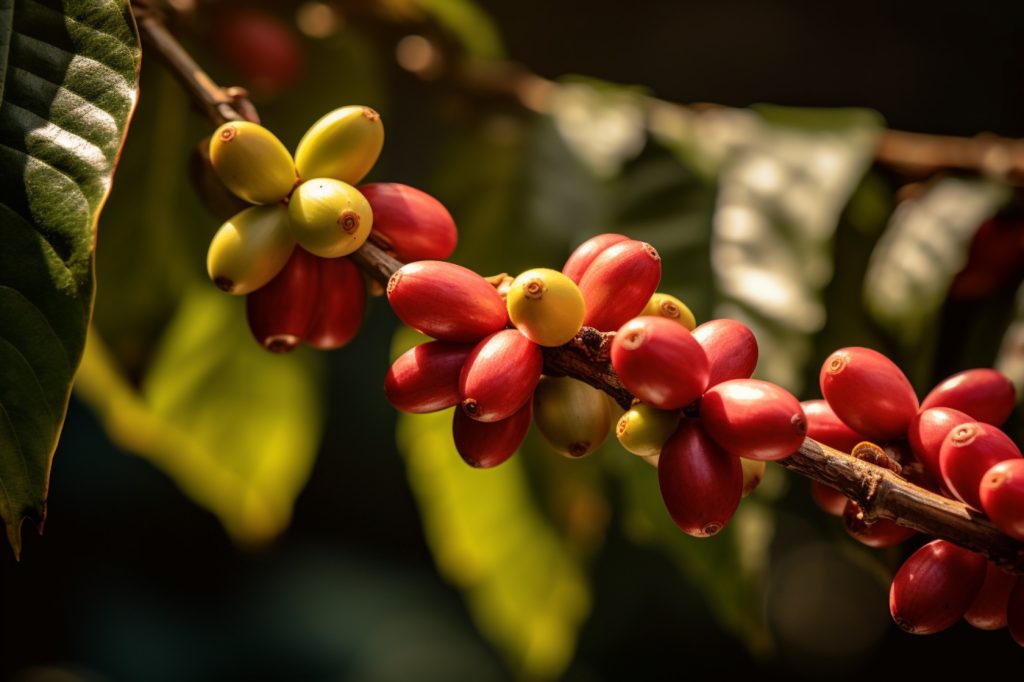
Close-up of ripe Typica coffee beans on a branch with green leaves in the background.
Coffee Beans

Typica Coffee : Queen of the Coffee World

Typica coffee is one of the original and most historically significant varieties of Coffea Arabica, tracing its global journey from Ethiopia and Yemen starting in the 15th century. While it is known for its low yield and disease susceptibility, Typica is highly prized in the specialty coffee market for the excellent quality of its large beans when grown at optimal altitudes (1000m to 1600m). Its genetic lineage is the backbone for many varieties, including Blue Mountain and Maragogype. Discover the rich legacy and unique characteristics of this “Queen of the Coffee World.”

Typica Coffee : Queen of the Coffee World Read More »

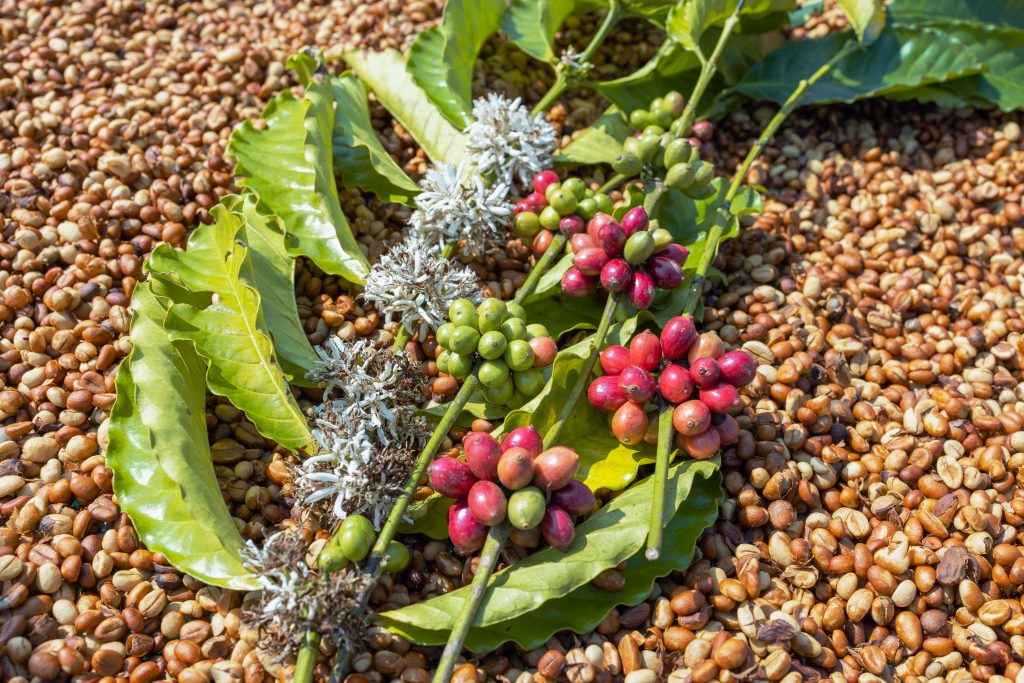
Freshly picked robusta coffee cherries and leaves laid out on a bed of dried coffee beans.
Coffee Beans

The Robust Flavor and Resilience of Robusta Coffee: A Deep Dive

Robusta (Coffea Canephora) is the second most popular coffee species, accounting for 40% of global production, and is primarily characterized by its high caffeine content and exceptional resilience to heat and drought. Unlike Arabica, Robusta’s chemical composition features higher levels of Chlorogenic Acids, resulting in a stronger, more bitter flavor, making it ideal for instant coffee and espresso blends. Robusta thrives best at temperatures between 16.2°C and 24.1°C. Explore the unique characteristics and vital role Robusta plays in the future of sustainable coffee production.

The Robust Flavor and Resilience of Robusta Coffee: A Deep Dive Read More »

Scroll to Top