
What is French Press?
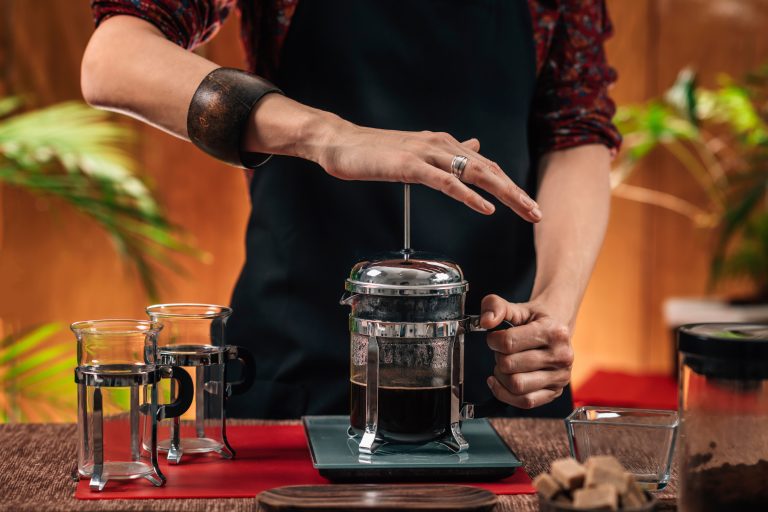
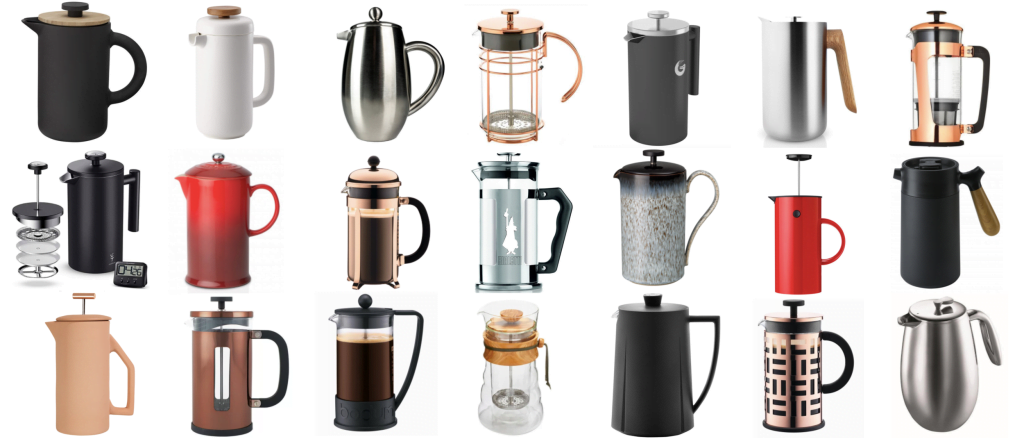
The French Press, if understood by the name of a brewing tool, is a French-style coffee maker consisting of a glass or metal container, a plunger, and several metal mesh filters. Interestingly, despite its name, this cafetiere is quite hard to find in France, where people prefer other coffee makers.
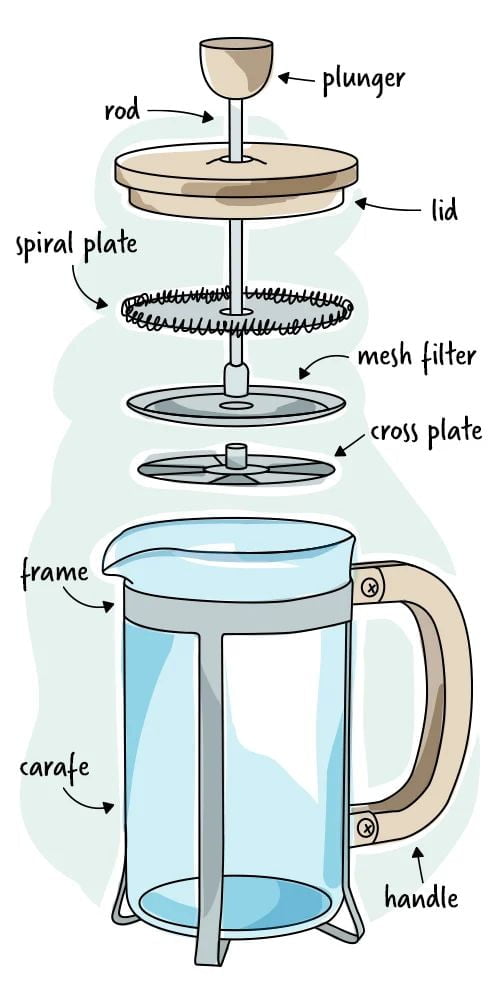
If understood by the name of brewing method, is an immersion method. With most coffee brewing methods, water flows through the coffee grounds. However, in this method, water and coffee grounds steep together, allowing a more uniform extraction.
French Press is most prevalent in Northern Europe, North America, and Australia, where it seems to embody an “Anglo-Saxon” charm. The name of this coffee maker varies across the world:
- UK and Ireland, it is known as a cafetiere
- North America, it is called a Coffee Press
- Australia, it’s referred to as a Plunger
- Germany, it goes by the names Kaffeebereiter or französische Presse.
History of French Press
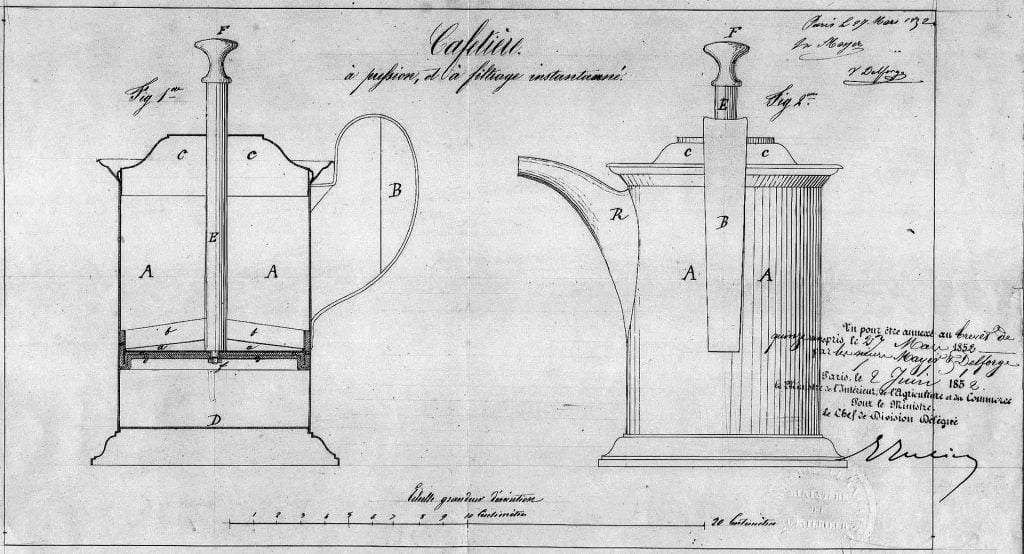
In 1852, two Frenchmen, a tinsmith and a merchant, Henri-Otto Mayer and Jacques-Victor Delforge, filed a patent for the earliest version of the French Press. However, this design did not include a watertight seal around the filter disk. Over the decades, it has undergone numerous improvements, and its popularity has spread across Europe and, later, the entire world.
Why Use the French Press Method?
- Bold and Authentic Flavor: This method does not use paper filters, allowing oils and other rich flavors from the coffee beans to remain in the brew, resulting in a more robust cup.
- Ease of Use: Despite its classic appearance, the brewing process is uncomplicated, making it suitable even for beginners.
- Versatility: You can customize the grind size, steeping time, and coffee-to-water ratio to create a cup tailored to your preferences.
Evaluating the Final Product
French Press coffee yields a bolder cup than paper-filter methods, retaining the distinctive flavors of the coffee beans. When brewed correctly, the coffee will have an attractive colour and a lingering aftertaste.
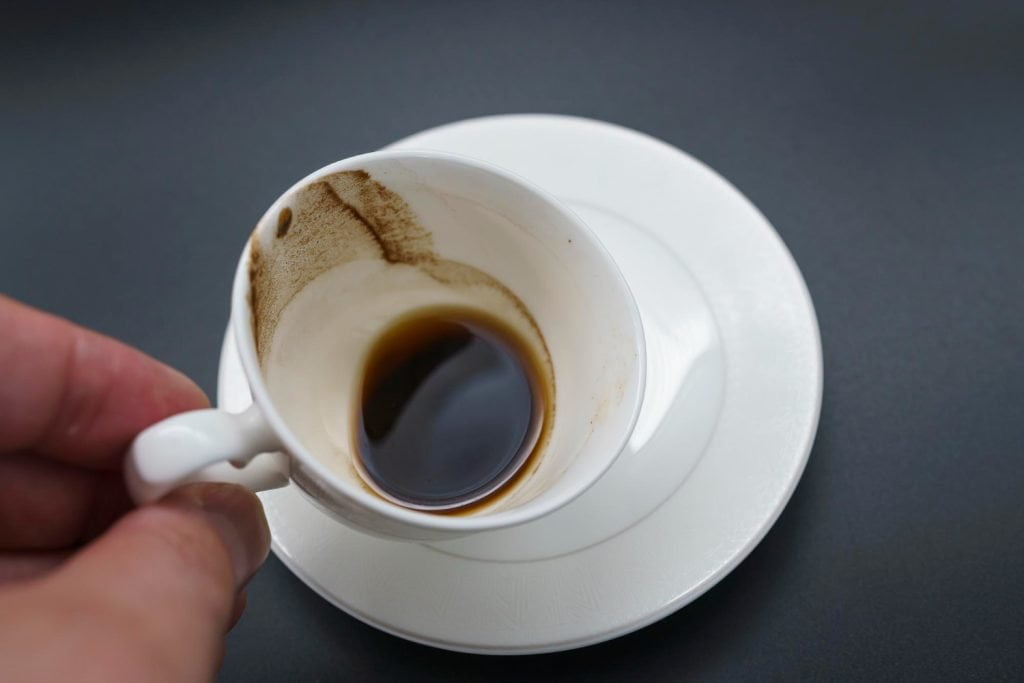
However, due to the presence of some coffee grounds, it might have a slightly gritty texture and a hint of bitterness.
How To Brew a Three-Cup French Press (SCA Guidelines)
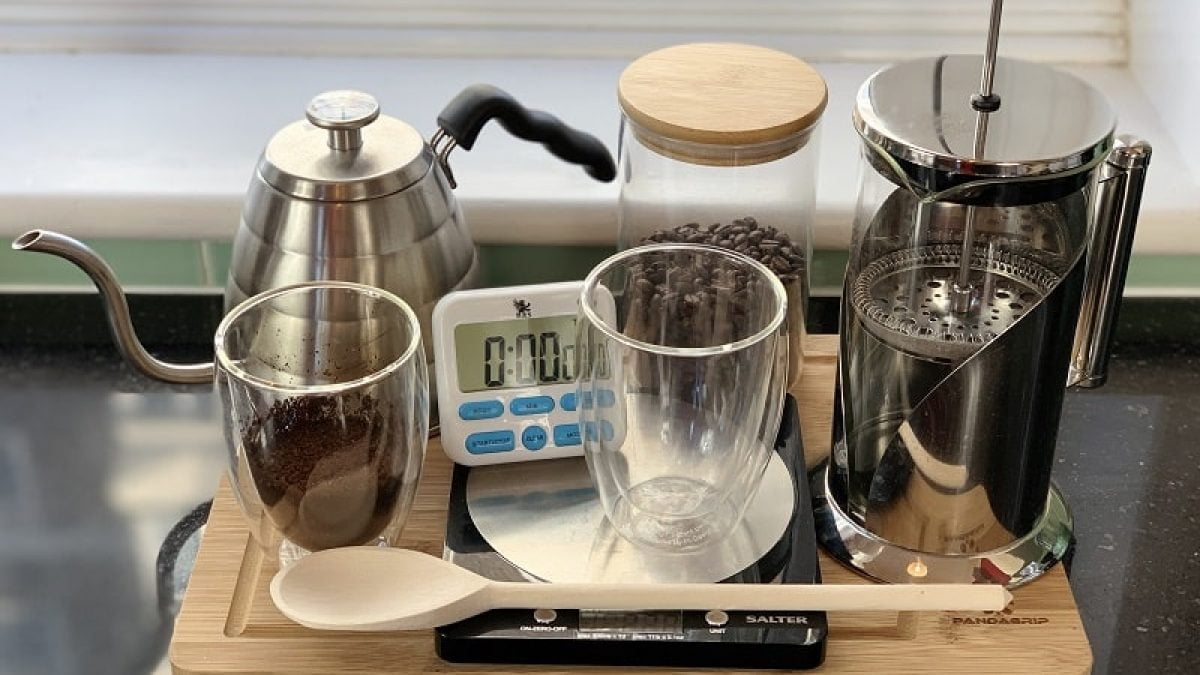
How To Brew a Three-Cup French Press (SCA Guidelines)
5 minutes
Step 1 : Preheat
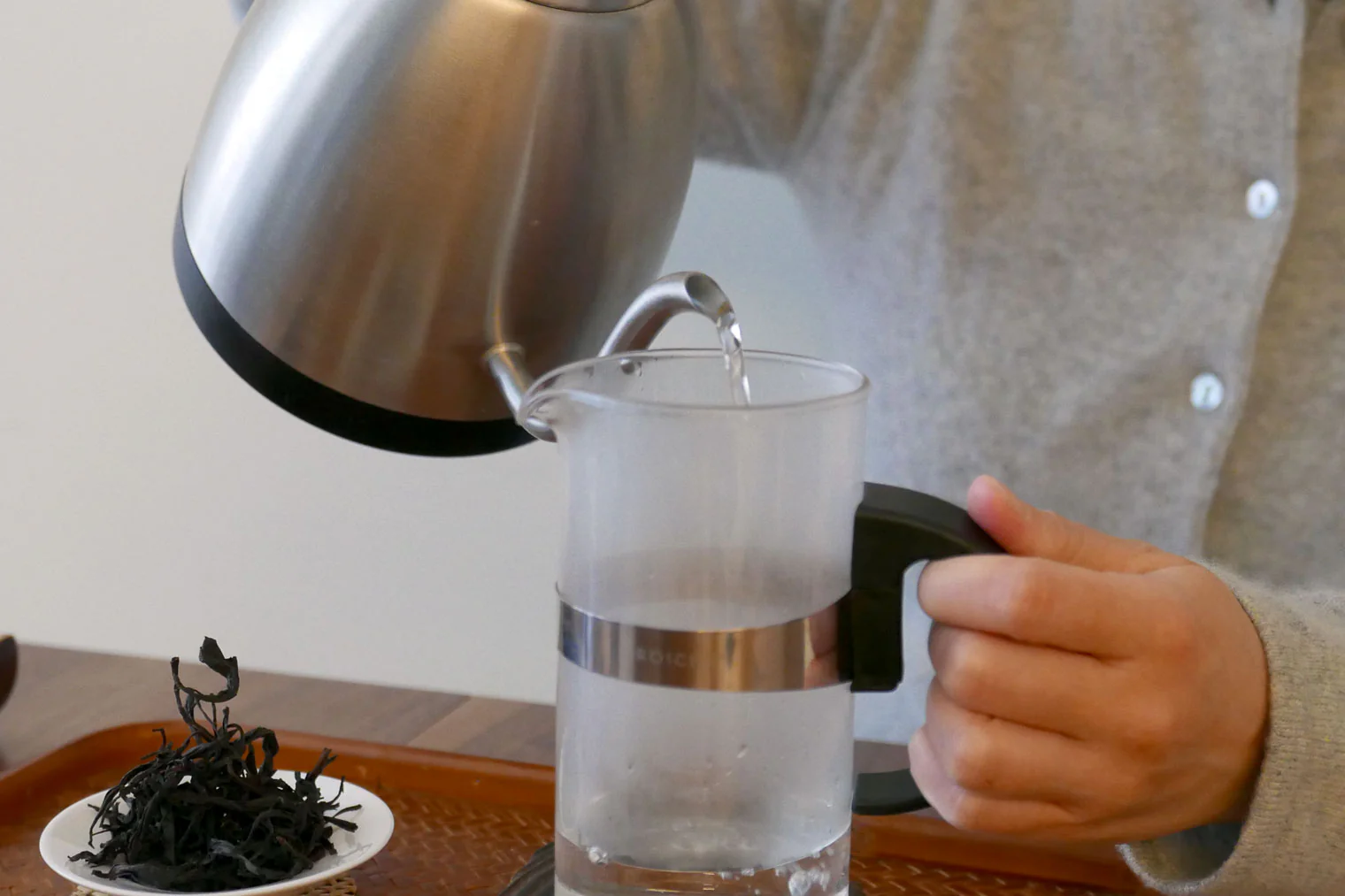
Fill the carafe with hot water to preheat, then discard the water.
Step 2 : Add Coffee
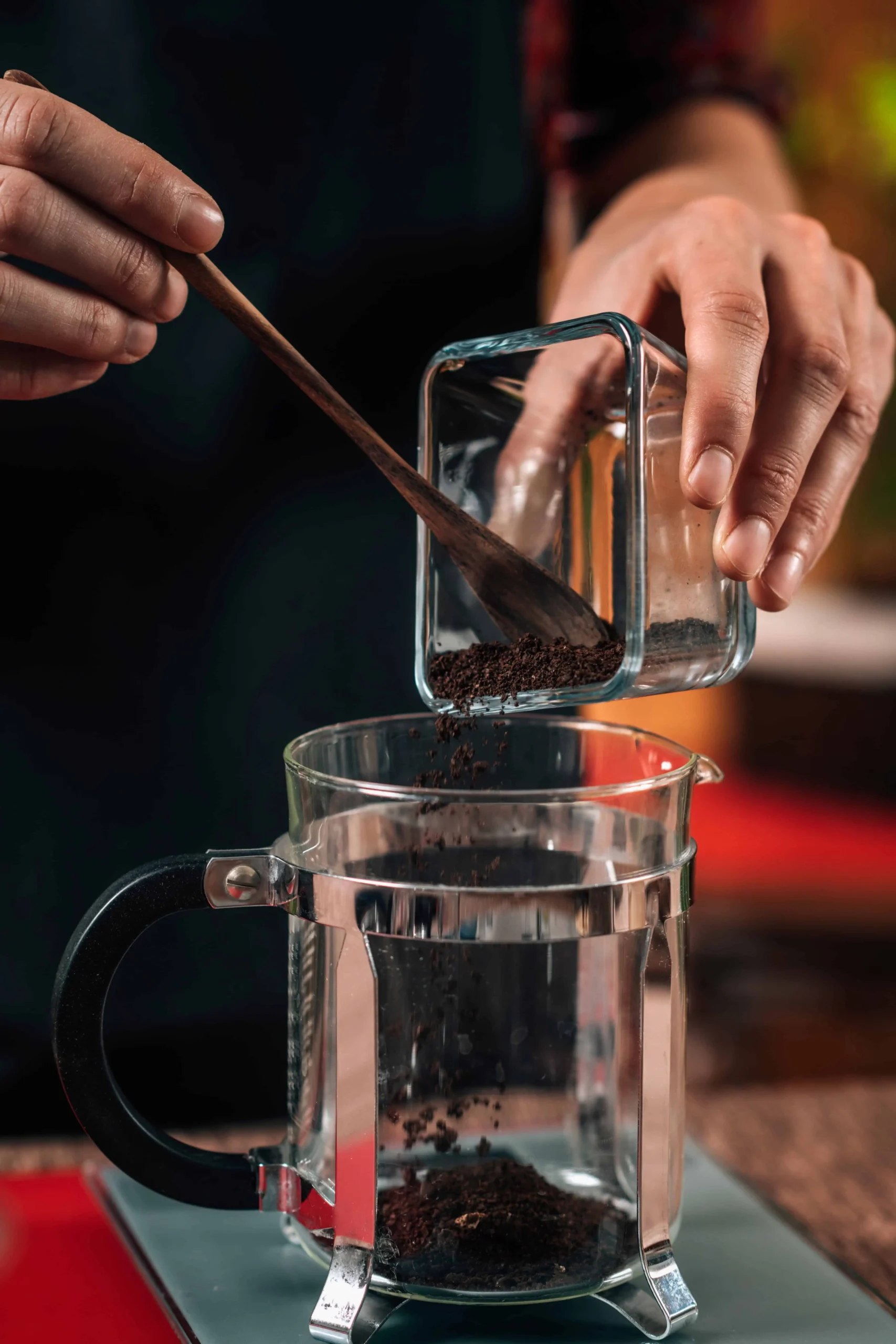
Place 36 grams of coffee into the carafe. Put it on the scale and tare the scale.
Step 3 : Pour Hot Water

Start the timer and pour 540 grams of hot water into the carafe, ensuring all the coffee grounds are thoroughly saturated.
Step 4 : Place Lid
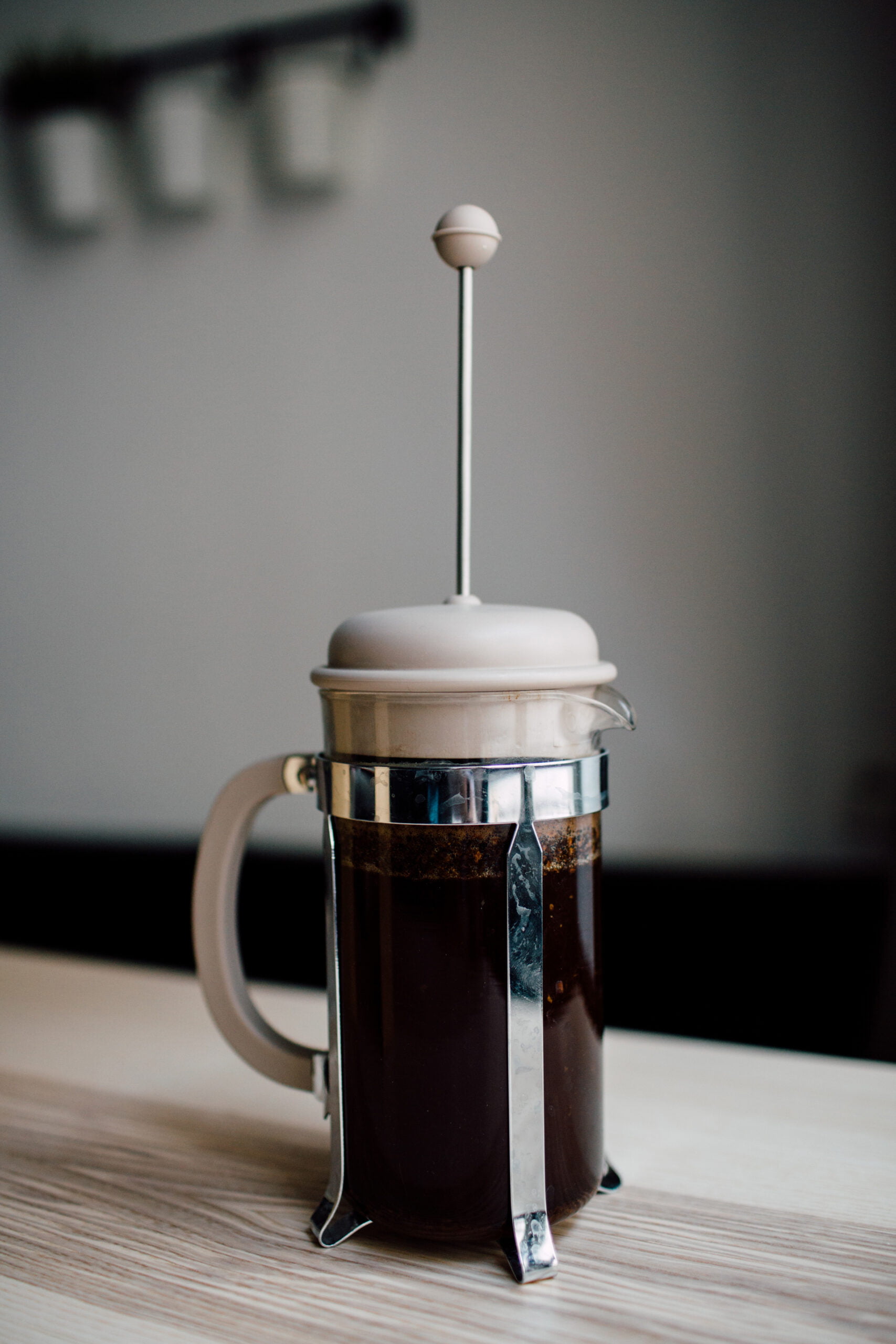
Put the lid on the pot without pressing down the plunger.
Step 5: Stir Coffee
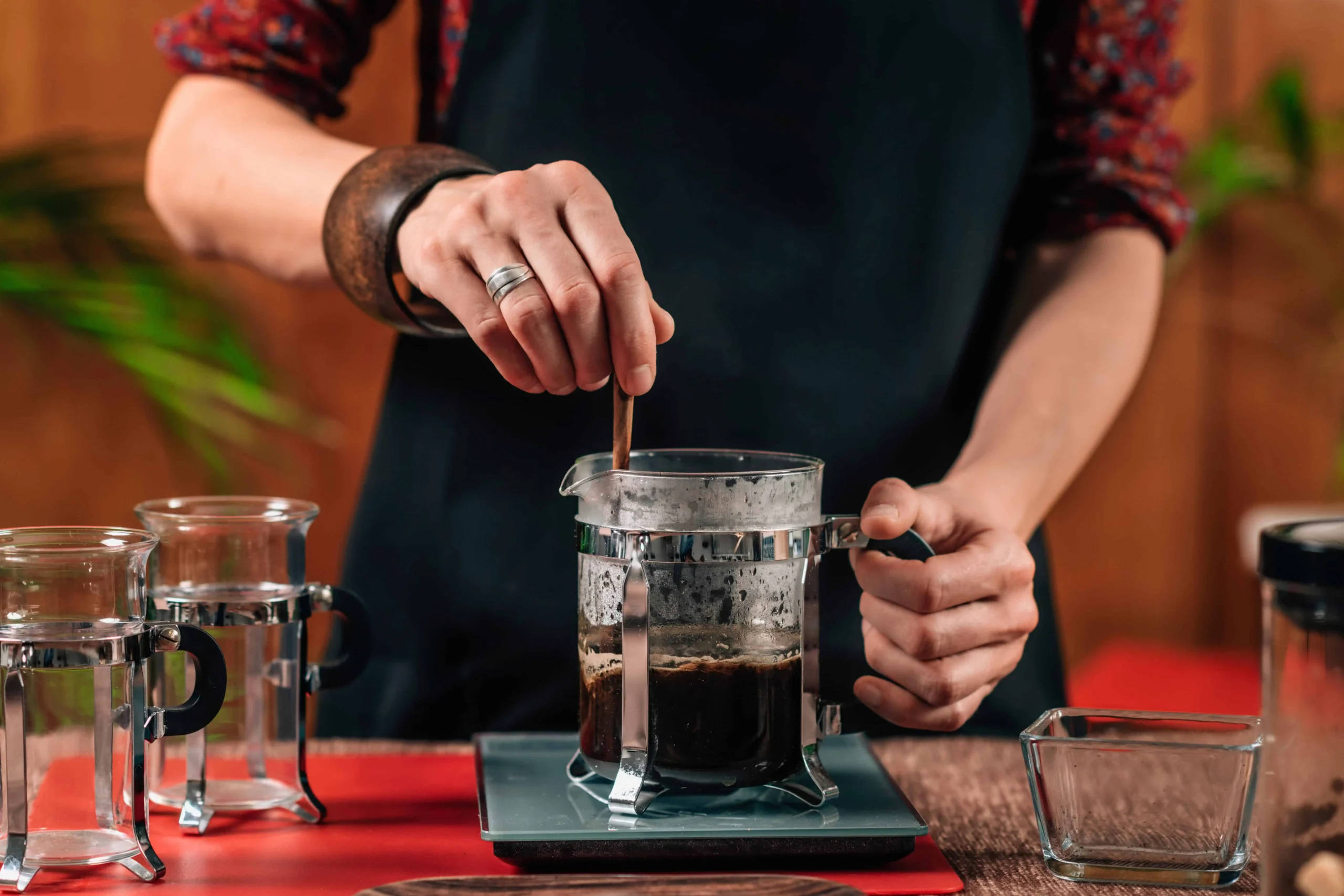
After 2 minutes, remove the lid and gently stir the coffee to ensure all grounds are saturated. Add the remaining 120 grams of hot water.
Step 6: Skim Surface

Use two spoons to skim off the oils and any floating grounds from the top of the brew. This will produce a cleaner cup and stop further extraction. Replace the lid without pressing down the plunger.
Step 7: Press Plunger
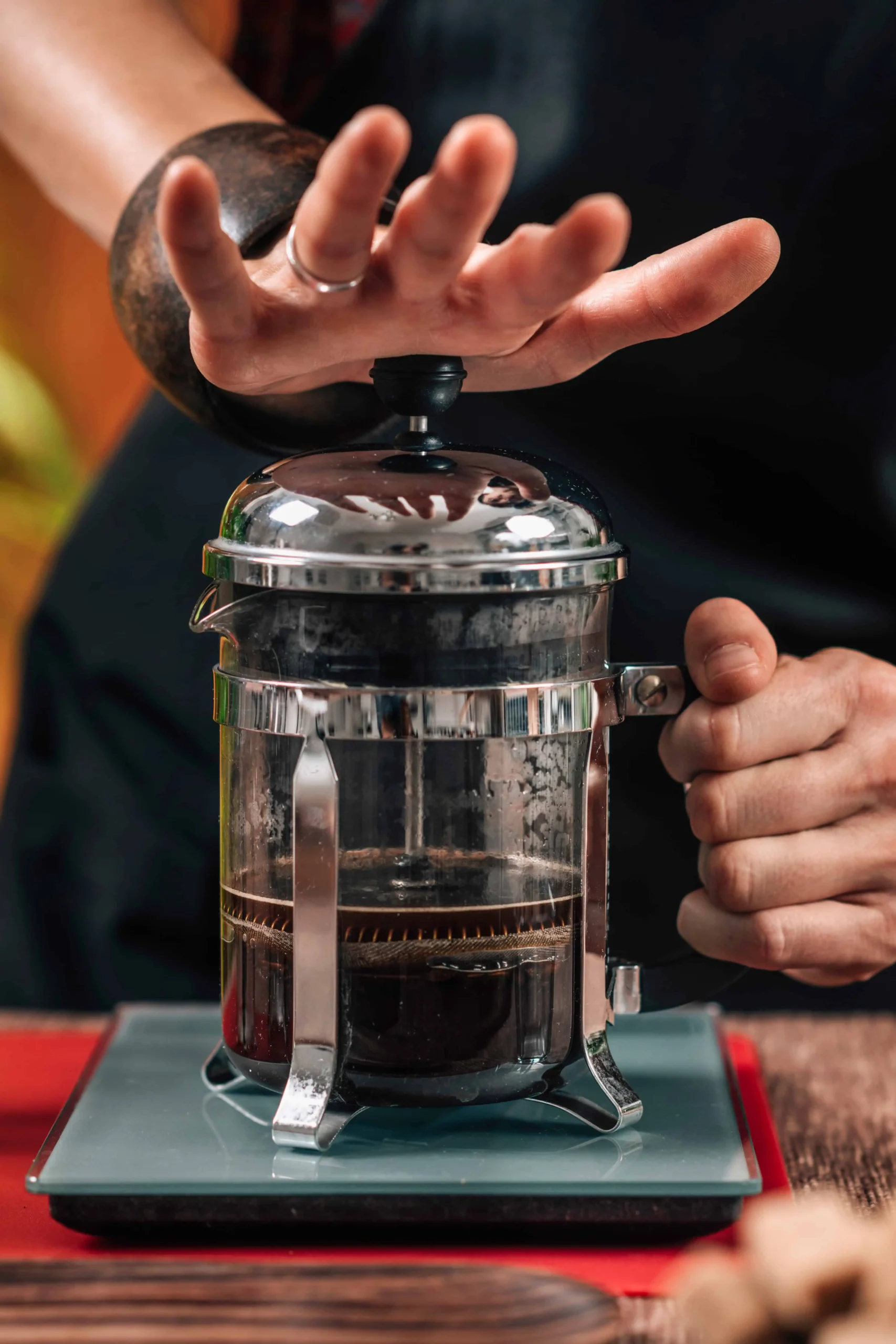
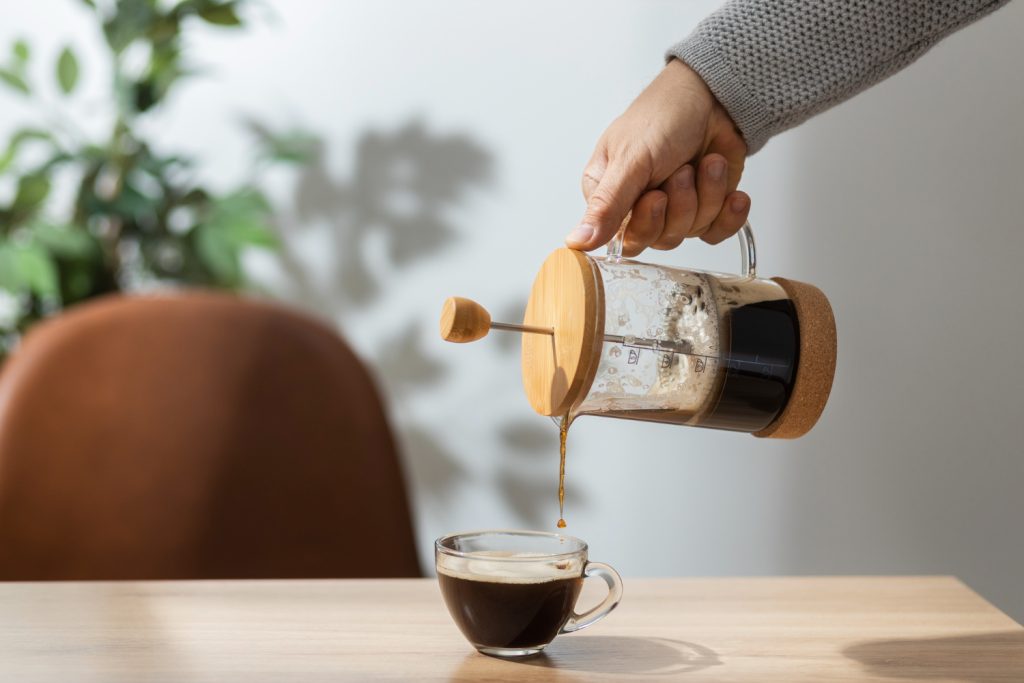
At the 4-minute mark, slowly press the plunger down to the bottom of the pot.
Step 8: Serve
Decant the coffee and enjoy your brew!
Tools:
- – French Press Size: Three Cup (22-ounce)
- – Grinder
- – Gram scale
- – Timer
- – Scoops
- – Thermometer
- – Gooseneck kettle
Materials: – Coffee: 36 grams, medium-coarse grind – Water: 660 grams or ml at 200°F / 93.5°C for brewing. Additional hot water at 200°F / 93.5°C for preheating
The Ultimate French Press Technique From James Hoffmann
Limitations of the French Press Method
- Coffee Grounds: Since there is no paper filter, some fine coffee grounds may end up in your cup.
- Requires More Technique: To achieve a perfect cup, consider various factors like grind size, water temperature, and steeping time.
- Waiting Time: The French Press brewing process requires a minimum of 4 minutes of steeping time, making it less ideal for those who need their coffee quickly.
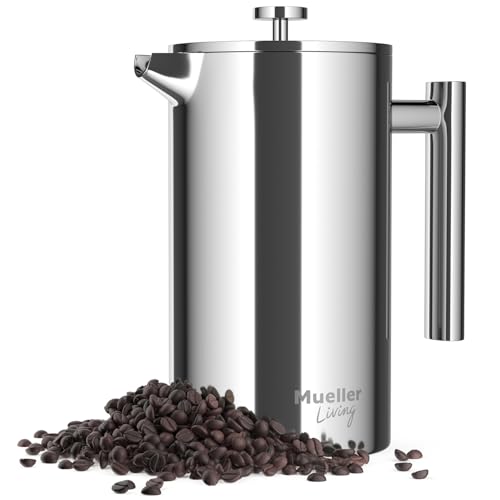
MuellerLiving French Press Coffee Maker 34oz, Stainless Steel French Press Coffee, 4 Filter Heat Resistant Double Insulated, Rust-Free, Food Grade, Dishwasher Safe Coffee Pot
- Take it Anywhere – Our rust-free french press-stainless steel-is durable for use while camping, at the office,…
- Robust, Full-Bodied Flavor – This stainless steel french press makes 4 × 8 cup servings of strong coffee. Also…
- Immersion Brewing – It’s simple! Just add coffee grounds then hot water. Stir it. Add the lid and the filter. …
- Easy to Clean – Our coffee press is dishwasher safe. The plunger and its filters are easy to disassemble, if y…
- 4-Level Filtration – No more grounds in the coffee! French press includes 1 coiled filter, 2 stainless steel s…
Conclusion
French Press brewing method offers a rewarding experience for coffee enthusiasts who appreciate bold flavors and enjoy a hands-on approach to their brewing. While it demands a bit of technique and patience, the result is a truly satisfying and unforgettable cup of coffee.
Probably it is the most underrated method of brewing coffee. But it is cheap, easy, repeatable, and everyone has one at home. With practice and exploration, you’ll find that brewing with a French Press is both an art and a simple pleasure in everyday life.
French Press FAQ
What is the French Press brewing method?
The French Press is an immersion brewing method where coffee grounds and hot water steep together for a period, allowing for a uniform extraction that results in a bold, rich, and full-flavored cup of coffee.
Why does French Press coffee taste bolder than pour-over coffee?
French Press coffee tastes bolder because it does not use a paper filter, allowing the natural oils and fine particles from the coffee beans to remain in the brew, which increases the richness and intensity of the flavor.
What is the recommended steeping time for French Press coffee?
According to SCA guidelines, the recommended steeping time for French Press coffee is approximately 4 minutes, which allows for optimal extraction before the plunger is slowly pressed down.
What grind size should be used for a French Press?
A medium-coarse grind size is recommended for the French Press to prevent fine grounds from passing through the mesh filter and creating a gritty texture in the final cup.
Who invented the earliest version of the French Press?
The earliest version of the French Press was patented in 1852 by two Frenchmen, a tinsmith and a merchant named Henri-Otto Mayer and Jacques-Victor Delforge, though the design has been improved upon over the decades.