While coffee prices keep climbing elsewhere, Tim Hortons stands out as America’s most affordable national chain. A 2024 survey found 79% of Americans view Tim Hortons as affordable – the highest share among major chains. Its Canadian roots, dating to the 1960s, and menu focus on value offerings like competitively priced coffee and breakfast sandwiches likely drive this perception. This strategy mirrors the value-driven approach used by many successful coffee houses to attract a loyal customer base.
Though Dunkin’ and Peet’s trail closely in affordability rankings, Tim Hortons’ price-sensitive positioning in markets and franchise strategies reinforce its budget-friendly reputation.
Trailing Dunkin’ and Peet’s in affordability rankings, Tim Hortons’ market positioning and franchise strategies solidify its budget-friendly image.
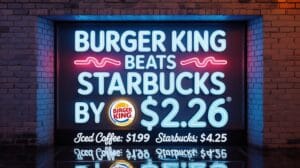
Burger King, however, claims the cheapest single item: a small iced coffee priced at $1.99 in 2025 reports. This beats rivals but applies only to iced coffee, not its full menu. This pricing aligns with the loss leader approach, where chains absorb beverage losses to drive profitable food purchases. Burger chains often undercut coffee-focused brands on specific drinks through promotions, drawing budget shoppers. McDonald’s iced coffee costs $2.79, while Wendy’s cold brew sits at $2.49, showing how fast-food giants use coffee as a traffic-driving loss leader.
Dunkin’ ranks next in affordability perception at 74% but doesn’t always have the lowest prices. Starbucks’ small iced coffee, for example, hit $4.25 in 2025 – far above fast-food rivals. Consumer views blend brand loyalty and promotions, not just menu costs. Dunkin’s value image persists despite higher-priced items, partly due to deals and rewards programs.
Meanwhile, smaller chains and local cafes avoid price wars, opting instead for “affordable luxury” vibes. They attract customers with premium beans or cozy atmospheres, framing higher costs as fair value for quality.
Tim Hortons’ lead in affordability reflects a mix of strategic pricing and consistent customer perceptions. Yet the coffee market’s complexity means no chain dominates every category. Burger King’s iced coffee might lure frugal sippers, while niche cafes cater to those prioritizing experience over savings.
As prices rise, value remains subjective – shaped by menu items, habits, and what drinkers expect from each brand.