
The best coffee machines are rarely the most famous ones – they’re the ones built for the way you actually drink coffee. A Moccamaster sitting next to a French press and a Nespresso Vertuo aren’t competing; they’re answering three completely different questions about your morning.
This guide cuts through the noise by ranking six brew-method archetypes on the criteria that determine whether you’ll still love a machine in year three: extraction quality, materials, ownership cost, ease of use, and ease of cleanup. Pick your archetype first. The right machine follows automatically.
Whether you prefer a minimalist pour-over or one of the market’s stainless steel coffee makers for ultimate durability, picking your archetype first ensures the right machine follows automatically.
Key Takeaways on Best Coffee Machines
- SCA certification is the cleanest quality gate for drip brewers – use it as a filter keyword, not a tiebreaker.
- A burr grinder and fresh whole beans outperform any machine upgrade as the first investment in better coffee.
- The thermal carafe versus glass carafe decision is a taste decision: warming plates accelerate oxidation and bitterness in the second cup.
- Capsule systems carry a per-cup premium that never amortises – project the cost over three years before buying.
- Cold brew is a brew-ahead archetype, not a speed one; “Over Ice” modes produce a different drink entirely.
- Water hardness and descaling access are scored ownership criteria, not footnotes – a machine you can’t descale shortens its own lifespan.
Our Coffee Machine Ranking Methodology (And Why Most “Best Coffee Machine” Lists Fail You)
Every buying guide in this category eventually shrugs and says “it depends on your lifestyle.” That’s true and useless in equal measure. The part they skip – the part that actually separates a useful guide from a curated scroll – is assigning weights to those lifestyle factors and publishing them so you can check the work.
Cutting through marketing noise requires rigorous testing parameters, a philosophy reflected in the best coffee makers of 2026.
Scoring Dimensions and Scope Boundaries
This guide ranks every entry across five dimensions: coffee quality, materials, value for money, ease of use, and ease of assembly and cleanup. These aren’t averaged into a single score and sorted highest-to-lowest – that math hides more than it reveals. Instead, they’re weighted into tiers, because a coffee machine that scores a ten on convenience and a four on cup quality is fundamentally different from one that scores the reverse.
The scope covers six brew-method archetypes: drip, pour-over, immersion, pod/capsule, cold brew, and siphon. Milk-forward espresso machines and fully automatic bean-to-cup systems exist as an escalation tier – they’re referenced where relevant but not ranked here, because they operate under a different set of trade-offs (pressure, steam, maintenance complexity) that deserve their own treatment.
Every entry is held to a consistent data standard: rating, wattage, capacity, weight, warranty, and price must exist and be verifiable against a real spec sheet. If a product couldn’t be confirmed against its own manufacturer data, it didn’t make the cut. No paid placements. No placeholder model names. No claims that couldn’t be sourced. A reviewed premium machine, for example, should carry a documented wattage, a stated lifespan warranty, and a real retail price – not a range that shifts depending on which affiliate link you click. That standard is applied uniformly, and it eliminates a surprising number of machines that appear on other lists.
Price-Tier Mapping and Ownership Economics
Four tiers frame the landscape: entry-level home, mid-tier automatic, premium fully automatic/bean-to-cup, and commercial. Treat these as orientation bands, not hard price floors – regional pricing, currency fluctuations, and retailer margins mean the exact dollar figures need local verification before they influence a purchase decision.
The payback logic is straightforward: if you’re spending $5 to $7 per takeaway cup and buying two a day, a $300 machine pays for itself inside three months on hardware alone, before you account for the per-cup cost difference. But the machine price is only the opening bid. Fresh whole beans ground immediately before brewing outrank any machine upgrade as a quality lever – grind size and grind consistency are the single biggest variables in extraction, which means a $60 burr grinder paired with a $120 drip machine will outperform a $400 machine fed pre-ground coffee from a supermarket shelf.
When mineral buildup inevitably leads to drip coffee maker problems, knowing how to troubleshoot effectively is essential for extending your machine’s lifespan.
The criterion almost every competitor omits: water chemistry. Municipal tap water carries dissolved minerals that attack internal heating elements over time, building scale that degrades temperature stability and shortens the machine’s functional life. “Can I descale this without a service call?” is a scored ownership criterion in this guide, not a footnote buried in the manual. A machine with inaccessible internal components or proprietary descaling tablets turns a $200 purchase into a $200-plus-annual-service-contract.
Drip Brewers: The SCA-Certified Batch Workhorses
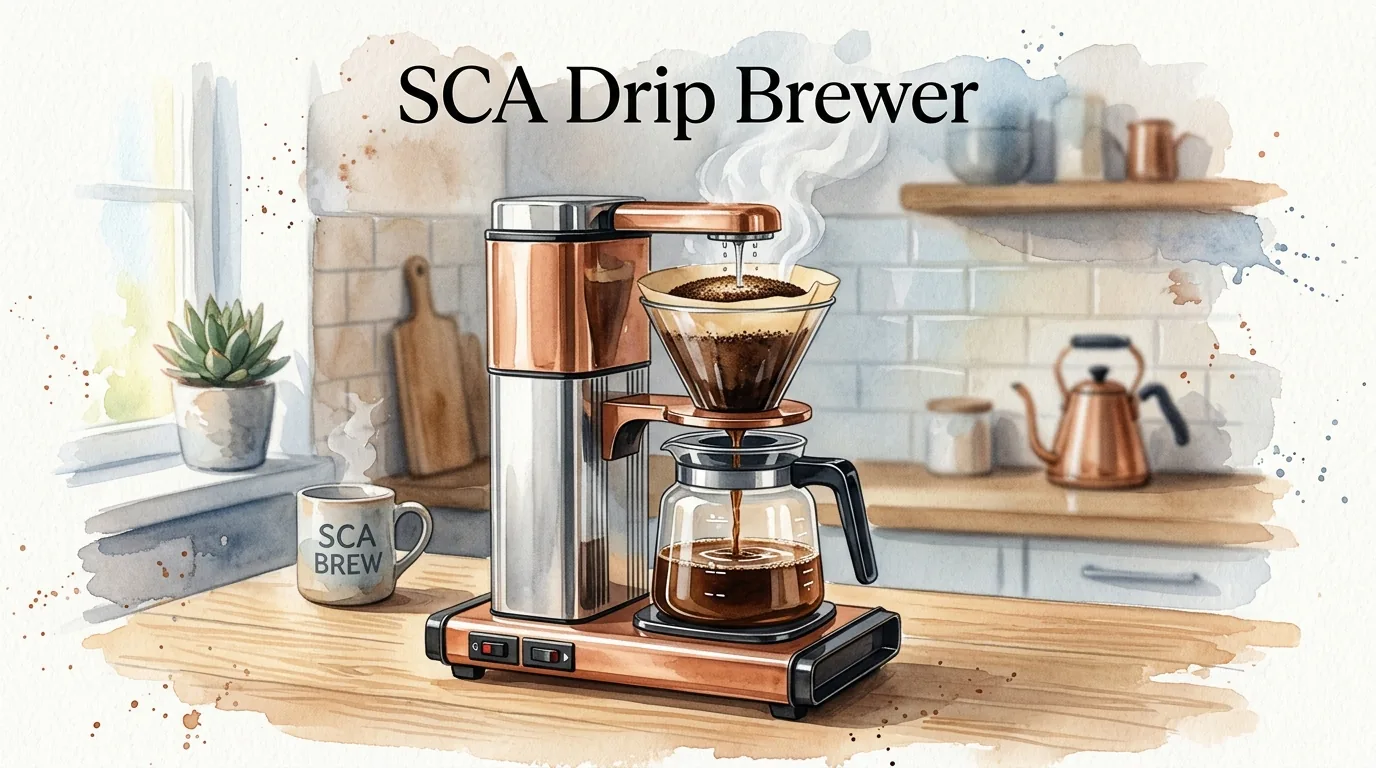
Batch filter brewing is the volume archetype – it’s designed for households that brew multiple cups per session, want the process to run unattended once the basket is loaded, and drink their coffee black or close to it. Load the grounds, press start, come back to a full carafe. That’s the entire user experience, and for a significant portion of coffee drinkers, that’s exactly right.
The quality gate that separates a great drip machine from a cheap bitter pot is SCA Golden Cup Standard certification. Certified brewers hold water between 195°F and 205°F (90°C–96°C) and distribute it evenly across the coffee bed. The Moccamaster, Breville Precision Brewer, and Oxo Brew 9-Cup are all certified examples in this class – machines that have been independently tested against that standard rather than simply marketed against it.
It’s worth noting what the research actually says about temperature’s role here. A peer-reviewed study in Scientific Reports found that at fixed total dissolved solids and percent extraction, brew temperatures of 87°C, 90°C, and 93°C produced no appreciable difference in sensory profile. Temperature primarily governs how fast extraction happens, not the final dissolved-solids outcome – meaning total dissolved solids and extraction percentage are the variables that govern cup quality, and temperature is the mechanism that controls the pace of getting there. SCA certification still matters, but as a proxy for consistent, well-engineered extraction rather than as a magic temperature threshold.
Emi Fukahori, co-founder of MAME in Zurich and KURO MAME in Tokyo, and the 2018 World Brewers Cup champion, makes the case for immersion’s structural advantages: she notes that immersion offers more sweetness, bigger body, and more consistency in extraction compared to percolation methods.
This is the other half of what showerhead geometry does: even water dispersion across the coffee bed prevents the uneven extraction that produces weak and bitter pockets in the same pot. Hitting the right temperature is only half the job – the geometry of how water meets grounds determines whether every gram in the basket contributes equally to the cup.
The carafe decision is a taste decision, not a convenience decision. A double-walled stainless steel thermal carafe keeps coffee at temperature without applying heat. A glass carafe on a warming plate keeps coffee hot by continuing to heat it – and sustained heat exposure accelerates oxidation, which means the second cup from a glass carafe is measurably more bitter than the first. If you regularly drink that second cup an hour later, the thermal carafe isn’t a luxury; it’s the version of the machine that tastes like the brewer intended.
Fit check: drip is right if you brew more than two cups per session, want a programmable wake-up cycle, and have counter space for a full-size machine. It’s wrong if you’re only brewing single cups – you’ll be making half-pots and wondering why the flavour is thin.
Precision engineering ensures that every SCA certified coffee maker delivers optimal thermal stability for demanding palates.
Pour-Over: The Manual Ritual That Punishes Impatience
Manual percolation gives you more direct control over the brewing process than any machine in this guide. A cone or dripper, a gooseneck kettle, and your own hands replace every electronic component – you control the bloom, the pour rate, and the brew ratio directly, rather than delegating them to a thermostat and a timer.
The non-negotiable is the grinder. With no machine regulating time and temperature, grind consistency is what determines the cup. A blade grinder chops coffee into uneven particles – some fine, some coarse – and those different-sized particles extract at different rates, producing a cup that is simultaneously under- and over-extracted. A burr grinder produces uniform particles and uniform extraction. This is not a marginal upgrade; it’s the prerequisite that makes pour-over worth doing.
The equipment that replaces the machine’s thermostat is a variable-temperature gooseneck kettle. The gooseneck spout gives you control over pour rate and direction; the variable temperature setting lets you dial in the right brew temperature for the coffee you’re using rather than guessing and hoping.
The real cost of pour-over is time and attention. This is the highest active-attention archetype in the guide – four to five minutes of hands-on work for a single cup, which makes it genuinely unsuitable for rushed mornings or households where multiple people need coffee before 7:30 a.m. That’s not gatekeeping; it’s arithmetic.
Pour-over is the right choice for the single-cup drinker chasing clarity and origin character – the one who wants to taste where the coffee came from, not just that it’s coffee. If the pour itself is part of the pleasure rather than the friction, this is your archetype. If it’s friction, it isn’t.
The video below breaks down kettle flow and pour height – two variables that have more impact on extraction evenness than most beginners expect.
French Press & Immersion: The Zero-Electronics Champion
Full immersion steeping works differently from every other method in this guide: grounds and water spend the entire brew time together, then are separated by a filter at the end. The French press is the canonical example; the AeroPress is the single-serve crossover that adds pressure and paper filtration to the same basic principle.
Grind matters here too, but in the opposite direction from pour-over. Immersion requires a coarse, consistent grind. Too fine, and the metal mesh clogs, the plunge becomes a physical struggle, and the cup turns muddy with fine particles that slipped through. Coarse and consistent produces a clean plunge and a clear separation between grounds and brew.
The filtration trade-off is a preference decision, not a quality gap. Metal mesh lets coffee oils and fine sediment pass through, producing a heavier body with a slight grittiness at the bottom of the cup – the texture many French press devotees are specifically after. Paper filtration (used in the AeroPress and some hybrid setups) strips those oils and fines, delivering a cleaner, brighter cup with less body. Neither is wrong; they produce different drinks.
Here’s what a French press looks like in practice – grounds steeping against a metal mesh filter before the plunge separates them:
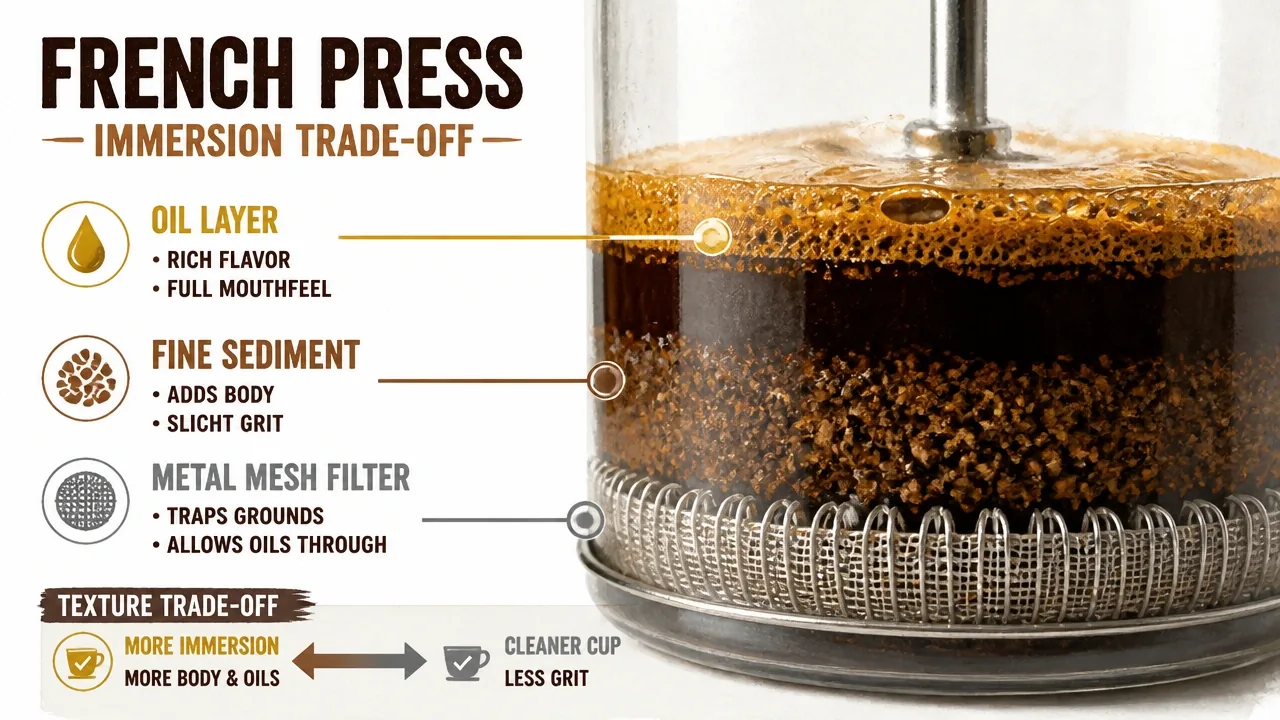
The zero-electronics design is not a consolation prize. No heating element means no scale-sensitive boiler, no electronics to fail, no descaling schedule, and no service calls. A French press is the cheapest entry point in this guide, the most field-repairable, and the most travel-friendly. A broken French press costs $15 to replace. A broken bean-to-cup machine costs $200 to service.
Friction check: cleanup requires rinsing the mesh and disposing of wet grounds, which some people find genuinely annoying. A second cup means a second full brewing cycle – there’s no carafe sitting on a warmer. If you want coffee ready for the next person without any additional effort, immersion isn’t your archetype.
Mastering full immersion mechanics at scale is thoroughly broken down in The Ultimate Guide to 12 cup brewing mastery.
Pod & Capsule: The 30-Second Cup With a Hidden Bill
Speed and consistency are the honest selling points of capsule systems, and they’re real. Insert a capsule, press a button, have a coffee in thirty seconds with no grinder, no scale, no kettle. For a specific type of household, that’s not a compromise – it’s the product.
System Classifications and Flavor Ceilings
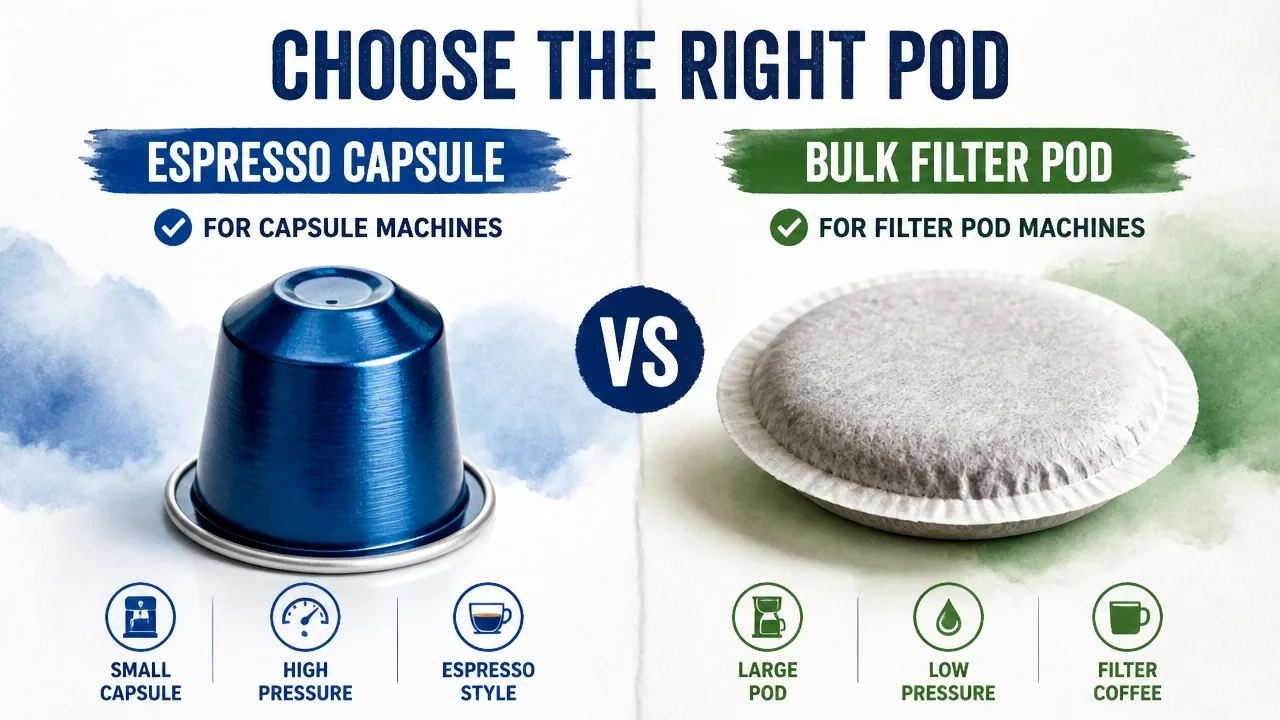
The first mistake most buyers make is treating all capsule machines as one category. They aren’t. Espresso-capsule systems – the Nespresso Vertuo class, the Lavazza Jolie class – are built to produce espresso-adjacent drinks under pressure, typically in small volumes with concentrated flavour. Bulk filter-pod systems – the Keurig K-Elite class, dual-brew hybrid systems – are built to produce larger, filter-style cups at lower pressure. These machines don’t brew the same drink, they don’t use the same pods, and buying one when you wanted the other is an expensive mistake that buying guides routinely enable by flattening both into “pod machines.”
The photo below shows the physical difference between these two system types – a distinction that matters before you buy a single capsule:
The flavour ceiling is fixed at packaging time. Coffee is ground and sealed when the capsule is made – by the time it reaches your counter, the freshness window that produces bright, complex extraction has already closed. You’re brewing from a preserved state, not a fresh one. That’s not a defect in the machine; it’s a structural property of the format.
Ecosystem lock-in is the other fixed cost. Your machine choice determines which capsules you can use, which constrains your future coffee options and the prices you’ll pay for them indefinitely. Switching brands means buying a new machine.
Natalie Hancock, co-owner of Maverick Coffee, points out that reusable pods often can’t match the intensity of proprietary capsules – you may need a stronger blend or even two pods per cup to get comparable results.
This matters because reusable pods are frequently presented as the solution to both the cost problem and the waste problem simultaneously. They address waste meaningfully, but the intensity gap is real and worth accounting for before you assume the switch is seamless.
Ownership Economics and Household Fit
The cost math that almost no buying guide publishes: a capsule typically costs $0.70–$1.50 per cup. Whole-bean coffee brewed at home runs closer to $0.20–$0.40 per cup at comparable quality levels. Over one year of two cups per day, that gap is roughly $365–$800. Over three years, you’re looking at $1,100–$2,400 in additional spend – before accounting for the machine cost itself. The capsule premium never amortises; it compounds.
The infographic below puts the capsule, the bean, and the waste stream on the same ledger so the trade-off becomes a number rather than a talking point:
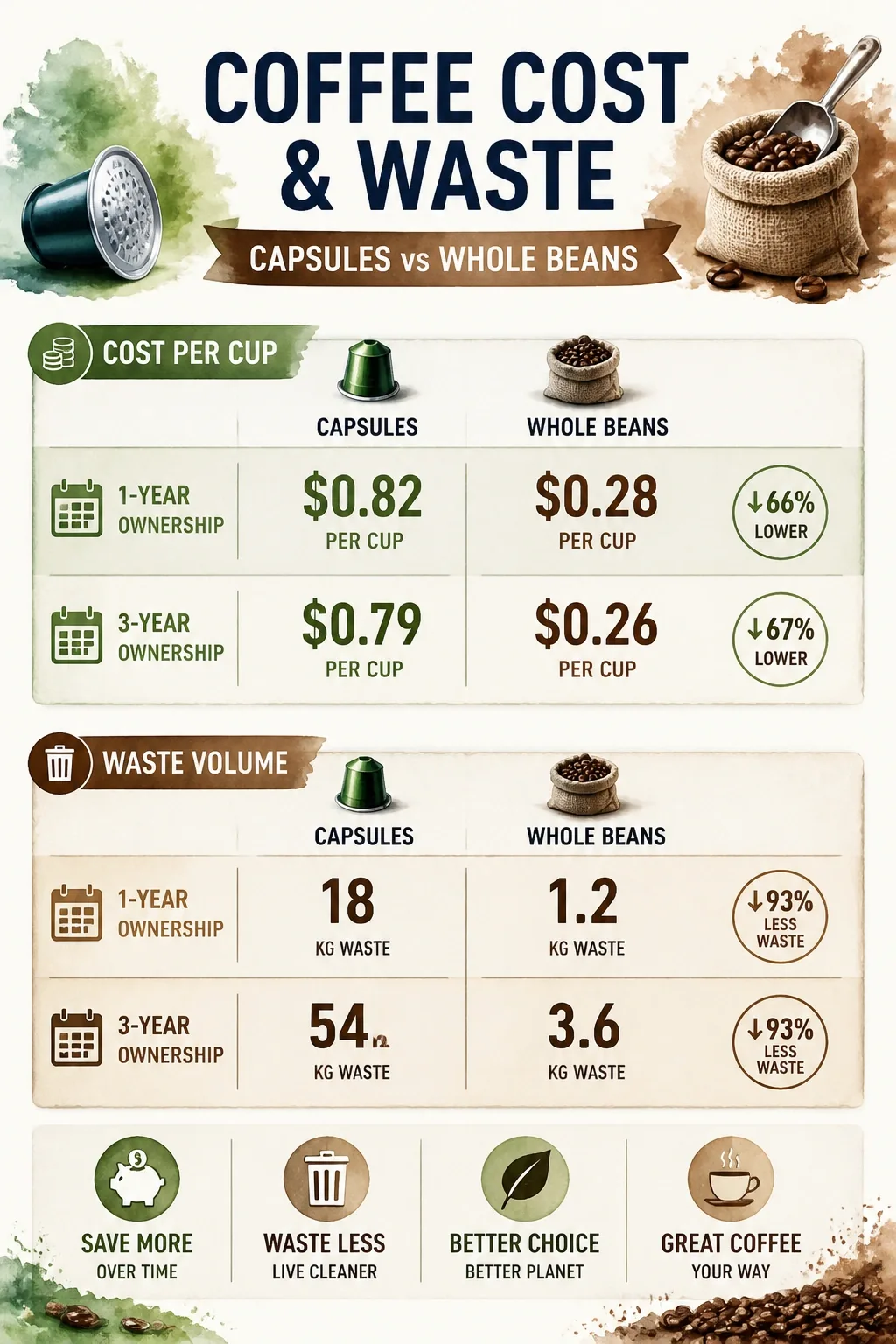
The waste lifecycle deserves the same clarity. Aluminium capsules (Nespresso’s standard format) are technically recyclable through dedicated collection programs – but “technically recyclable” and “actually recycled” diverge significantly depending on your local infrastructure. Plastic capsules carry a worse baseline recyclability profile. A household drinking two capsule coffees per day generates roughly 730 capsules per year. That’s a physical volume worth visualising before you commit to the format.
Best fit: low-effort single-drinker households and small offices where speed and repeatability outrank cost per cup and flavour depth. If you know that’s you, capsule is a legitimate choice. If you’re not sure, the math above will clarify it quickly.
Cold Brew: The Overnight Machine That Isn’t a Machine
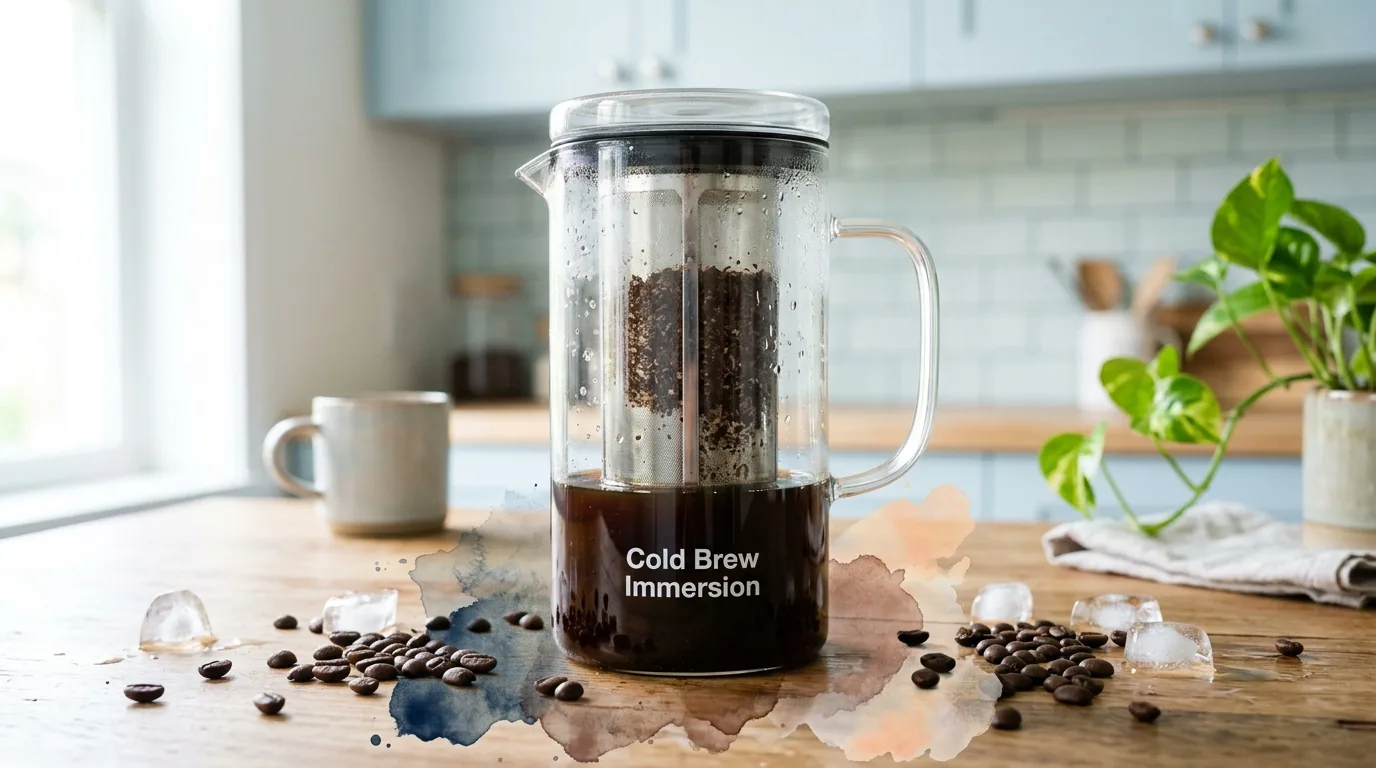
Cold brew is cold-water extraction over a long steep window – typically 12 to 24 hours. Because no heat is applied at any point, the result is structurally smooth and low-acid. This isn’t a recipe adjustment; it’s a chemical outcome of cold extraction. Heat accelerates the release of certain acidic compounds; remove the heat, and those compounds stay largely in the grounds rather than in your cup.
The planning reality is non-negotiable: cold brew is a brew-ahead archetype, not a speed archetype. You brew tonight for tomorrow. It fits a routine – the same way you’d prep lunch the night before – but it cannot satisfy a craving. If you want cold coffee in the next five minutes, cold brew is the wrong tool.
Concentrate ratios are worth deciding before you buy anything. You can brew at double or triple strength and dilute at serving time, which extends the yield and lets you adjust intensity per cup. Or you can brew ready-to-drink at your preferred strength and pour straight from the vessel. The choice determines the vessel size you need, and vessel size determines what fits in your refrigerator.
The equipment question has a genuinely honest answer: a dedicated cold-brew maker with a built-in filter basket is convenient and produces clean results. An immersion pitcher with a removable filter does the same job for less. A mason jar with a paper filter over the top does it for almost nothing. This is the archetype where spending more changes the process, not the cup. The coffee, the ratio, the steep time, and the water quality matter more than the vessel.
The real footprint of cold brew is refrigerator space, not counter space. A one-litre cold brew vessel sitting in your fridge for 18 hours is the actual commitment – plan accordingly.
Best fit: large-volume drinkers, iced-coffee households, and readers who are sensitive to acidity. If you’re already buying cold brew from a café regularly, brewing at home pays for itself inside a week.
One distinction worth making explicit: some hot-coffee machines offer an “Over Ice” brewing mode that flashes hot coffee over ice in a few minutes. It produces a cold cup quickly, but it’s not cold extraction – you get a faster, brighter, more acidic result than a long cold steep delivers. It’s a useful feature for a different drink, not a time-saving version of cold brew. Treat them as separate options, not interchangeable ones.
Selecting the right hardware for long steeps is simplified when evaluating a dedicated Ninja cold brew coffee maker.
Siphon: The Vacuum Brewer for Showmen
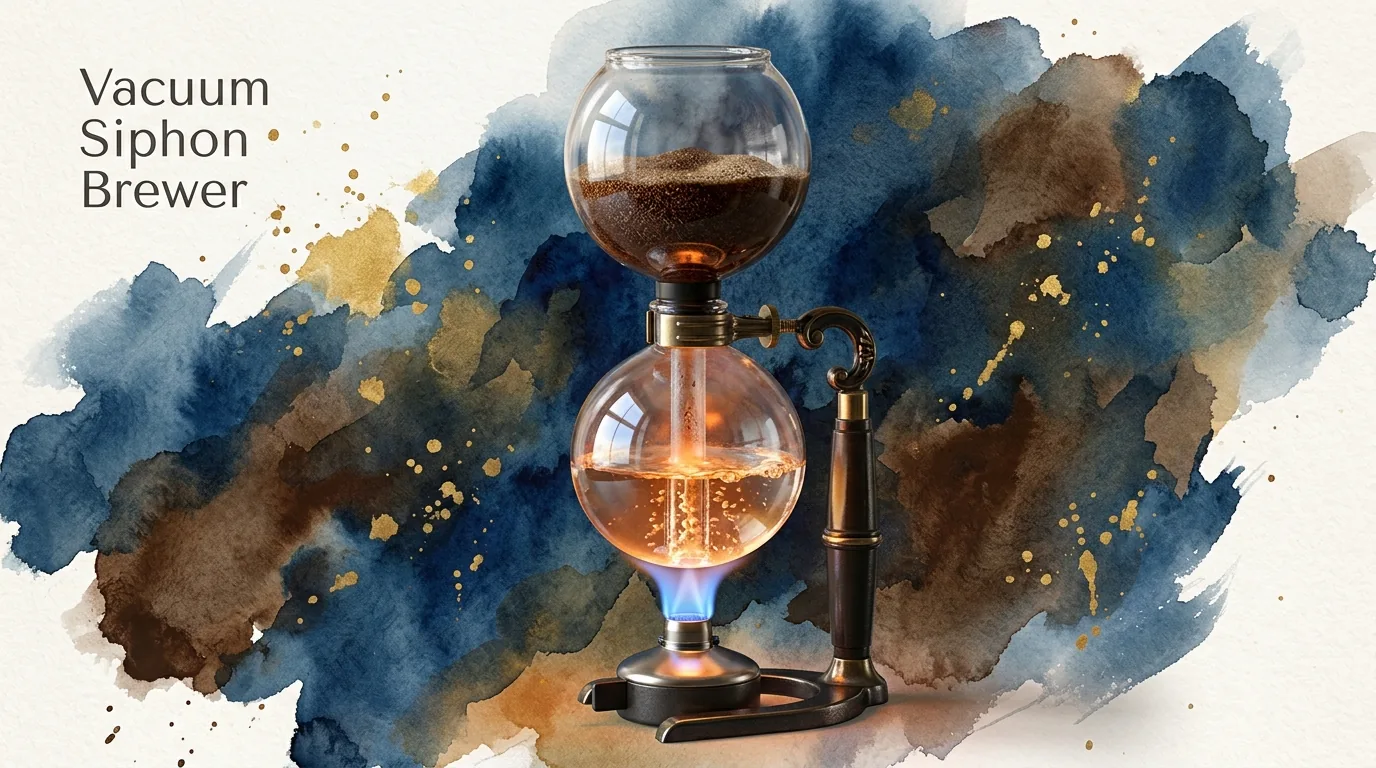
The siphon brewer works on a mechanism that sounds like a chemistry demonstration – because it essentially is one. Vapour pressure from a heat source pushes water up from the lower chamber into the upper chamber, where it mixes with grounds and steeps. When the heat is removed and the lower chamber cools, the pressure differential draws the brewed coffee back down through a filter, leaving the grounds behind. The result is a remarkably clean, full-bodied cup with a clarity that immersion methods rarely match.
Christopher Hendon, associate professor of chemistry at the University of Oregon and co-author of Water For Coffee, captures the critical moment in siphon brewing: the real action happens when you pull it off the heat – that pressure drop is what drives the filtration and determines the final cup.
The heat source options include a butane burner, a halogen beam heater, or an alcohol lamp – each with different heat control characteristics. The brew window itself is short and hands-on; you’re present for the whole process, not setting a timer and walking away.
Filter choice shapes the cup meaningfully. A cloth filter produces the cleanest, brightest result with almost no sediment. A glass rod filter sits in the middle – cleaner than metal, less filtering than cloth. A metal filter lets more oils through, adding body at the cost of some clarity. These aren’t interchangeable; they produce distinguishably different cups from the same grounds.
The fragility question deserves a direct answer: this is a glass appliance with glass consumables. Upper chambers break. Filters chip. Replacement parts exist but require sourcing, and not all are universally stocked. A siphon is not a daily driver for a household where someone is half-awake at 6 a.m. and rushing. It’s also not a small-footprint option – the two-chamber assembly needs vertical clearance above the unit, not just surface area below it.
Cleanup is thorough and deliberate. Both chambers need rinsing, the filter needs careful maintenance (especially cloth filters, which require regular boiling to prevent flavour contamination), and the whole assembly needs to be dried and stored with care.
Best fit: the drinker who treats brewing as a hobby, wants the theatrical experience alongside a genuinely excellent cup, and has the patience to maintain the equipment properly. It should never be a household’s only brewer – but as a weekend ritual for someone who already has a reliable daily driver, it earns its counter clearance.
The 60-Second Decision Flowchart: Your Verdict
Theory is done. Here’s how to route yourself to the right machine in under a minute.
Routing Questions and Answer Paths
Work through these questions in order. Each answer narrows the field. Stop when you have one archetype left.
1. How many cups per day?
- One cup → skip drip entirely; go to question 2
- Two or more cups → drip brewer is now your primary candidate; confirm with question 3
2. Black coffee or milk-based drinks?
- Black coffee → continue through this flowchart
- Milk-based (lattes, cappuccinos, flat whites) → you’re in espresso machine territory, which sits outside this guide’s ranked archetypes
3. How many minutes of morning patience do you have?
- Zero to two minutes → capsule system; accept the per-cup premium and the flavour ceiling
- Three to five minutes → drip brewer (load the night before, press start in the morning) or French press
- Five or more minutes, and you enjoy the process → pour-over
4. Do you drink coffee hot or cold?
- Cold, regularly → cold brew; plan for 12–24 hours of lead time and refrigerator space
- Hot, but occasionally iced → a drip machine with an “Over Ice” mode handles this; don’t buy a dedicated cold brew setup for occasional use
5. Is this a daily utility or a weekend hobby?
- Daily utility → one of the four archetypes above; your answer from question 3 holds
- Weekend hobby, enthusiast-level interest → siphon brewer, paired with a daily-driver machine for weekday mornings
6. What’s your local water like?
- Hard water (scale buildup is a known local issue) → prioritise machines with accessible descaling pathways and budget for descaling solution; this eliminates several elegant-but-sealed designs
- Soft water → this criterion relaxes; focus your weighting on the other dimensions
Every path lands on one archetype. If you’re genuinely torn between two, the tiebreaker is always cleanup friction – the machine you’ll actually clean regularly is the machine that will still taste good in year two.
Buying Prerequisites and Break-Even Calculations
Before you buy anything, four prerequisites apply across every archetype without exception:
- Fresh whole beans, bought in small quantities and used within two to three weeks of roast date
- A burr grinder – blade grinders are a false economy that degrades every archetype equally
- A descaling schedule matched to your local water hardness – monthly in hard-water areas, quarterly in soft
- Accessible parts – if you can’t reach the components that need cleaning, you won’t clean them, and the machine’s lifespan and cup quality both drop accordingly
The price check reframed as a break-even calculation: take your current monthly spend on takeaway coffee and divide your target machine price by that number. The result is your payback period in months. A $250 drip machine against $150 per month in café spending pays for itself in under two months – and the per-cup running cost of home brewing is a fraction of the café price from month three onward. Sticker price is the least useful number in the purchase decision; running cost over 36 months is the one that matters.
Archetype Verdicts
One line per archetype, no hedging:
| Archetype | Verdict |
|---|---|
| Drip Brewer | Buy if you brew multiple cups daily and want zero babysitting; skip if you’re a single-cup drinker |
| Pour-Over | Buy if you drink one cup and want the best possible extraction; skip if mornings are rushed |
| French Press / Immersion | Buy if you want full-bodied coffee with no electricity and minimal spend; skip if wet-grounds cleanup is a dealbreaker |
| Capsule System | Buy if speed and repeatability are genuinely your top priority; skip if cost-per-cup or waste volume concerns you |
| Cold Brew | Buy if you drink cold coffee regularly and can plan ahead; skip if you want cold coffee on demand |
| Siphon | Buy as a hobby brewer alongside a daily driver; skip if this is your only machine |
One final disclosure worth stating plainly: this guide contains no “most overrated machines” list, because no verified community signal on that question could be substantiated from the source landscape. Publishing an overrated list without that foundation would be the same mistake this guide was built to avoid – dressing up an opinion as a finding. If a claim couldn’t be verified here, it was left out rather than dressed up. That’s the standard this guide holds itself to, and it’s the standard worth applying to any list you read after this one.
Frequently Asked Questions About Best Coffee Machines
What is the best coffee machine for home use?
It depends entirely on how many cups you brew and how much morning patience you have – drip brewers win for volume and convenience, pour-over wins for single-cup quality, and capsule machines win for pure speed. Run through the routing flowchart in the final section and you’ll have your answer in under a minute.
Which coffee machine brand is actually worth trusting?
Brand reputation is a weaker signal than SCA certification for drip machines, or verifiable spec sheets for any archetype. Moccamaster, Breville, and Oxo are consistently certified in the drip category, but the certification matters more than the badge on the machine.
Does grind size really matter more than the machine itself?
Yes – grind consistency is the single biggest extraction variable in every archetype except capsule systems. A quality burr grinder paired with a mid-range machine will outperform a premium machine fed pre-ground coffee, reliably and repeatedly.
How often should I descale my coffee machine?
It depends on your local water hardness. In hard-water areas, monthly descaling is the practical standard; in soft-water areas, quarterly is usually sufficient. The more important question is whether your machine’s internal components are accessible enough to make descaling something you’ll actually do.
Are reusable capsule pods a genuine solution to the waste and cost problem?
They reduce waste meaningfully, but the intensity gap is real – you may need a stronger blend or two pods per cup to match the extraction strength of proprietary capsules. They’re a worthwhile upgrade for committed capsule users, but not a seamless one.
Is cold brew actually lower in caffeine than hot-brewed coffee?
Cold brew is typically brewed as a concentrate and then diluted, which makes caffeine content highly variable depending on your ratio. The low-acid quality is structural (cold extraction doesn’t release the same acidic compounds as heat), but caffeine level is a function of your brew ratio and dilution, not the temperature of extraction.
What does “SCA Golden Cup Standard” actually certify?
It certifies that the brewer holds water between 195°F and 205°F and distributes it evenly across the coffee bed during the brew cycle – both of which are independently tested, not self-reported by the manufacturer. It’s a process certification, not a taste guarantee, but it separates engineered extraction from a heated drip.
Is a siphon brewer practical as a daily coffee machine?
Not really. It’s fragile, requires hands-on attention for the entire brew, and involves thorough cleanup afterward. It produces an exceptional cup, but it works best as a weekend ritual alongside a more practical daily driver – not as a household’s sole brewer.
References
- Brew temperature, at fixed brew strength and extraction, has little impact on the sensory profile of drip brew coffee | nature.com
- Hybrid coffee brewers making a comeback | perfectdailygrind.com
- Are reusable coffee pods viable? | perfectdailygrind.com
- Best siphon coffee makers | seriouseats.com