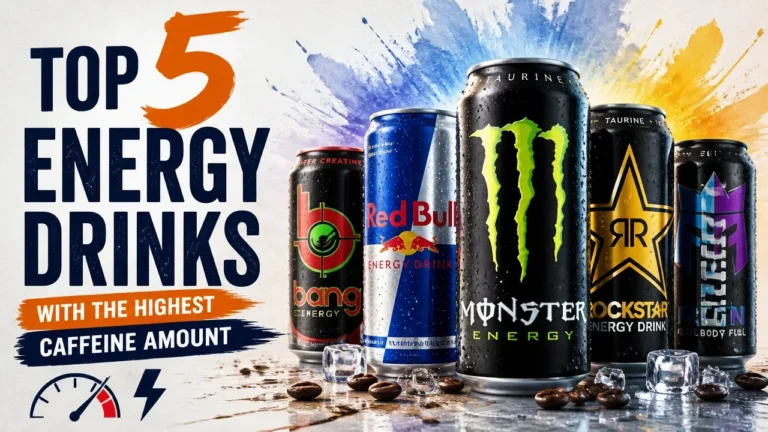

The highest caffeine energy drinks on the market span a 54 to 328 mg per 16 oz range, yet most athletes pick a can based on brand familiarity or perceived kick rather than verified label data. Spike Hardcore Energy, Bang, Reign Total Body Fuel, Celsius Heat, and C4 Ultimate sit in a completely different tier than Monster Original or Red Bull.
Before you grab one for your next training session, the caffeine number on the label tells only part of the story. Serving size, delivery matrix, and your total daily intake from preworkout, coffee, and gels all determine whether that can is a performance tool or a liability.
Key Takeaways on Highest Caffeine Energy Drinks
- Normalize to mg per 16 oz before comparing any two products; total can volume makes raw label numbers misleading.
- Spike Hardcore Energy leads the verified leaderboard at 350 mg per 16 oz; Bang, Reign, Celsius Heat, and C4 Ultimate cluster at 300 mg.
- Monster Original’s 160 mg can feel stronger than brewed coffee’s 190–280 mg because sugar, carbonation, taurine, and ginseng amplify perceived stimulation independent of caffeine dose.
- Caffeine blocks adenosine receptors rather than generating energy; tolerance builds as the brain upregulates receptor density in response to chronic blockade.
- Total daily intake across preworkout, coffee, gels, and medications is the real safety variable, not any single can.
- The FDA’s 400 mg daily guideline is a population average; apply a 3–6 mg/kg bodyweight filter to find your personal ceiling.
The International Society of Sports Nutrition research committee’s consensus position on energy drinks is direct: aerobic exercise performance benefits are largely driven by caffeine doses above 200 mg, or more than 3 mg per kilogram of bodyweight.
That threshold alone reframes how an athlete should read a label. A can sitting below 200 mg may not move the performance needle at all, regardless of what else is in the formula.
The Caffeine Metric: What “Highest Caffeine” Means for an Active Athlete
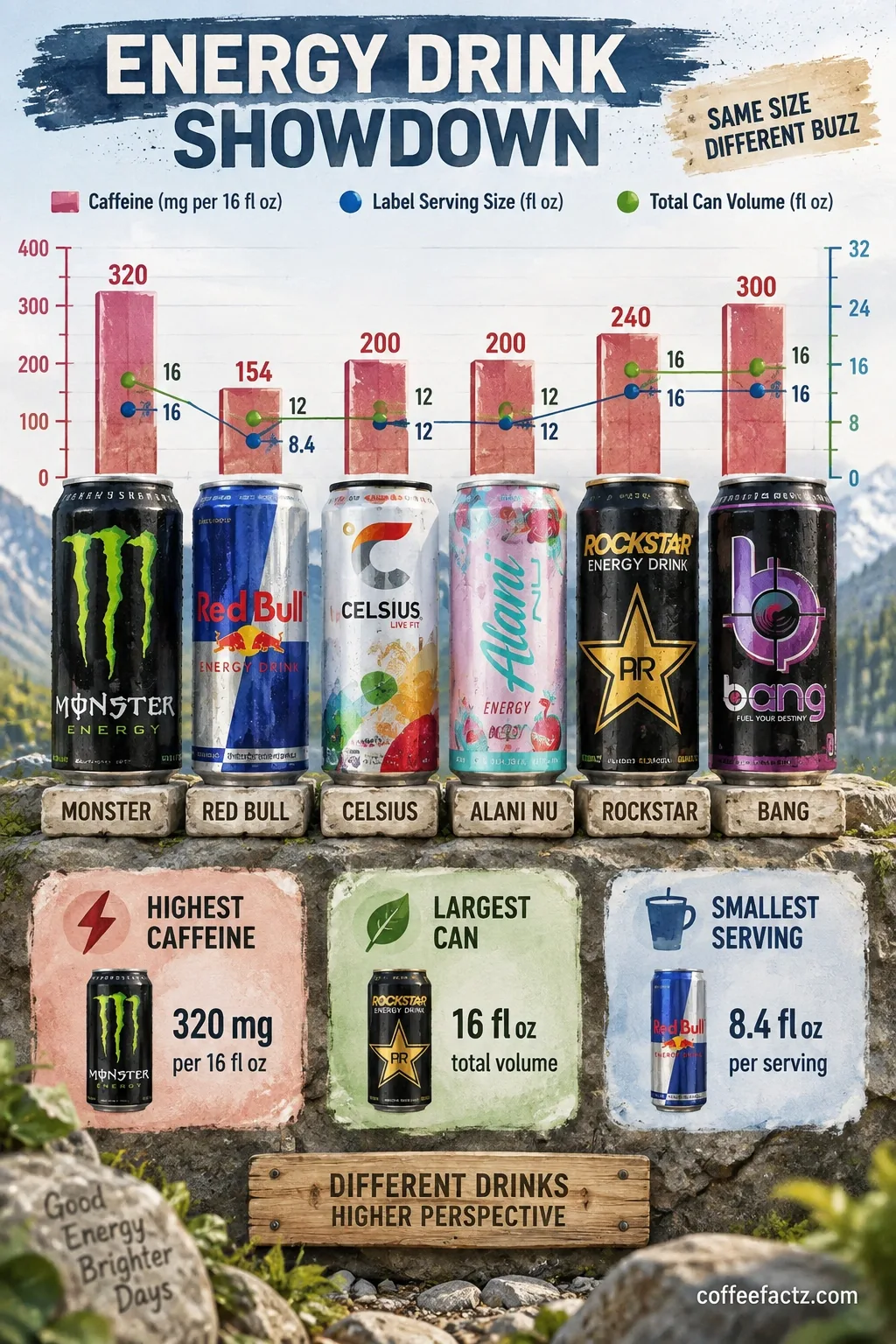
Comparing energy drinks fairly requires one shared unit: milligrams per 16 fluid ounces. Without it, you’re comparing apples to staplers. A 12 oz can with 180 mg and a 16 oz can with 180 mg are not the same product. The smaller can delivers more caffeine per ounce. Normalizing to 16 oz gives you a concentration metric that actually tells you something.
Once you have that number, separate it from everything else on the label. Sugar, electrolytes, carbonation, taurine, L-carnitine, ginseng, and whatever sits inside an “energy blend” are not caffeine. They affect how a drink feels, how fast it hits, and how your gut handles it mid-session, but they do not change your caffeine dose. Brands lean hard on those ingredients because they’re legal, marketable, and genuinely shift perception. That’s fine, but an athlete needs to know the difference.
Two reference points anchor the field: Monster Energy Original at 160 mg per 16 oz and Red Bull at 80 mg per 16 oz. Every product you evaluate should be measured against those. The full market range runs from roughly 54 mg at the low end to 328 mg and beyond at the high end. The 300 mg tier is now common. Products claiming 400 mg exist, though label verification and regional formulation differences make any single ranking provisional.
Think of caffeine as a training tool you periodize, not a daily hydration source. You wouldn’t take creatine without a protocol. The same logic applies here. Reserve higher-dose cans for key sessions. On recovery days, the stimulant load is working against the adaptation process, not supporting it.
One natural transition before the numbers: the infographic below maps out how caffeine concentration shifts across common can sizes, which makes the 16 oz normalization logic concrete.
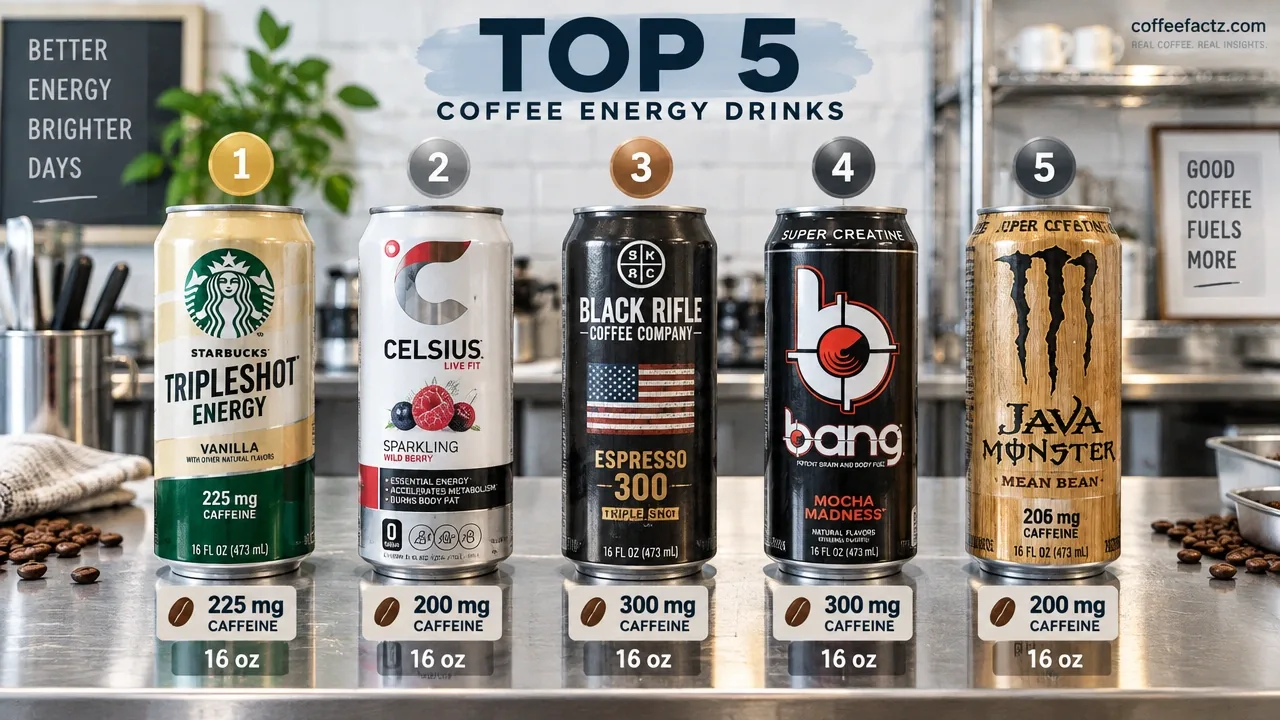
Quick Ranking Leaderboard: Top 5 Highest-Caffeine Energy Drinks
The five cans below represent the verified 16 oz standings from the research behind this guide. They are not a universal truth. Hyde Xtreme claims 400 mg, regional formulations shift numbers, and new products enter the market regularly. Treat this leaderboard as the most reliable snapshot available, then verify the label on whatever you actually purchase.
Verified 16 oz Standings
Here’s where the top five land when you normalize to 16 oz:
| Rank | Product | Caffeine per 16 oz |
|---|---|---|
| 1 | Spike Hardcore Energy | 350 mg |
| 2 | Bang Energy | 300 mg |
| 2 | Reign Total Body Fuel | 300 mg |
| 3 | Celsius Heat | 300 mg |
| 4 | C4 Ultimate Energy | 300 mg |
| 5 | Ghost Energy | 200 mg |
Against those numbers, Monster Original at 160 mg is mid-tier and Red Bull at 80 mg is a baseline stimulant, not a performance dose. The spread from Red Bull to Spike Hardcore is more than fourfold. That’s not a minor formulation difference. That’s a completely different pharmacological load.
Selection Logic & Training Timing
The ranking criterion is caffeine per 16 oz, full stop. Flavor, total can size, price, and added ingredients did not determine placement. That’s why Bang and Reign tie at #2: both deliver 300 mg per 16 oz, and no other variable in this context breaks that tie. Celsius Heat and C4 Ultimate land in the same 300 mg tier by the same logic.
For an active athlete, the selection question isn’t just “which can has the most caffeine?” It’s “which can matches this specific session?” A 350 mg dose before a moderate aerobic workout is unnecessary and potentially counterproductive. Save Spike Hardcore for your highest-output sessions: competition days, max-effort intervals, or long training blocks where the performance ceiling matters. Use the 200 to 300 mg tier for hard but sub-maximal work. And build in caffeine-free days so your adenosine receptors don’t normalize to the stimulus, which is a mechanism covered in detail later.
Daily reliance on any of these products is a different problem than strategic pre-session dosing. One is a performance tool. The other is a dependency that will eventually stop working.
Monster Energy Lineup Breakdown: Which Can Matches Your Training Load
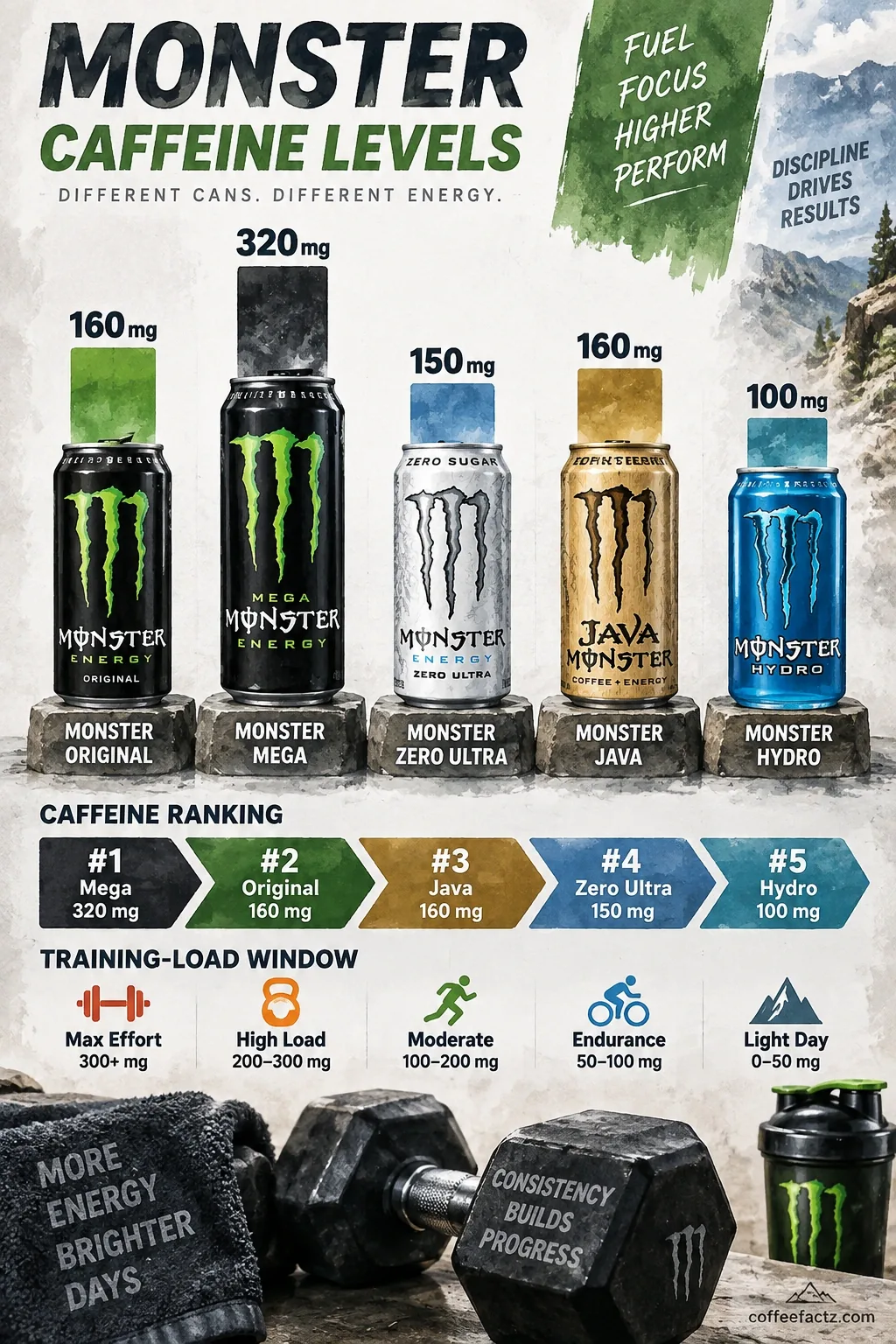
Monster Energy’s lineup spans a wider internal range than most athletes realize. The Original can is not the top of their stack. Here’s the full breakdown normalized to 16 oz:
| Product | Caffeine per 16 oz |
|---|---|
| Monster Energy Original | 160 mg |
| Monster Energy Mega | 240 mg |
| Monster Energy Zero Ultra | 140–150 mg |
| Monster Energy Java | 200–220 mg |
| Monster Energy Hydro | 188 mg |
Stacked against the Quick Ranking leaderboard, even Monster Mega at 240 mg sits below the 300 mg tier occupied by Bang, Reign, Celsius Heat, and C4 Ultimate. Ghost Energy at 200 mg is roughly equivalent to Monster Java. Monster Original and Zero Ultra fall below Ghost. Red Bull is at the bottom of any serious performance comparison.
Matching the right Monster variant to your training load works like this. Zero Ultra (140–150 mg) fits afternoon skill sessions, technical work, or any block where you want mild alertness without disrupting evening sleep. Hydro at 188 mg is a reasonable choice when hydration is a priority alongside stimulation. Original at 160 mg is familiar and predictable, which matters when gut comfort during training is a concern. Java at 200–220 mg adds coffee flavor and a small sugar load; useful for morning sessions, but the sugar and dairy-adjacent ingredients may not suit everyone pre-session. Mega at 240 mg is the closest Monster gets to the lower edge of the performance-relevant tier.
One rule applies across the entire lineup: account for Java’s and Original’s sugar content before use. Sugar during high-intensity training can cause GI distress. And regardless of which variant you choose, protect your 7 to 9 hours of sleep. No caffeine dose compensates for sleep debt. It only masks the deficit while the debt accumulates.
The Monster vs. Brewed Coffee Paradox: Why 160 mg Can Feel Stronger Than 190–280 mg
Standard drip coffee contains 190 to 280 mg of caffeine per 16 oz, which is 20 to 75 percent more caffeine than Monster Original’s 160 mg. By the label logic alone, coffee should always feel stronger. For many athletes, it doesn’t. That gap between what the label says and what the body reports is worth understanding precisely.
The explanation lives in what researchers call the delivery matrix. Monster Original carries roughly 54 grams of sugar, carbonation, taurine, L-carnitine, and ginseng. None of those ingredients are caffeine. But together, they create a sensory and physiological environment that amplifies subjective stimulation. The sugar spike raises blood glucose rapidly. The carbonation accelerates gastric emptying. Taurine and ginseng have their own mild stimulant or mood-modulating effects. The result is a felt experience that registers as “stronger” even when the caffeine dose is lower.
This is a perception problem, not a performance problem. Subjective stimulation and actual caffeine dose are not the same variable. A brain that feels more alert isn’t necessarily performing better. For an athlete making pre-training decisions, this distinction matters.
Coffee may actually offer a cleaner pre-training dose if you tolerate it well. No sugar load. No carbonation that can cause bloating or GI discomfort at high intensity. Just caffeine and a small amount of other naturally occurring compounds. Monster’s sugar and carbonation can impair hydration status and gut comfort during sustained effort, which offsets whatever performance benefit the caffeine provides.
The practical takeaway: don’t choose a pre-training product based on how it feels in the first 20 minutes. Choose based on what it does to your gut, your hydration, and your sustained output over the full session.
Caffeine Mechanism & Tolerance: Why It Stops Working for Athletes
Every athlete hits the wall eventually. The can that used to sharpen focus and raise output starts feeling like it does nothing. That’s not placebo reversal. It’s a predictable biological response that label shopping cannot fix.
Adenosine Blockade & Pharmacokinetics
Caffeine is not an energy creator. It’s a blocker. Specifically, it occupies adenosine receptors (A1 and A2A subtypes) in the brain, preventing adenosine from binding. Adenosine is the molecule that accumulates during wakefulness and signals fatigue. When caffeine blocks those receptors, the fatigue signal gets suppressed. You don’t get more energy. You get less awareness of how tired you are.
A clinical toxicology review published in Toxicology Reports confirms caffeine functions as a non-selective adenosine receptor antagonist, with peak plasma concentrations typically reached 30 to 120 minutes after oral ingestion and an average elimination half-life of approximately 3 to 6 hours in healthy adults, though values can range from about 2.3 to 9.9 hours. The review also notes that clearance is dose-dependent and can slow at higher doses due to CYP1A2 enzyme saturation, which can meaningfully extend how long caffeine stays active in the body.
For practical timing: expect onset between 15 and 45 minutes, peak effect somewhere in the 30 to 90 minute window, and a half-life around 5 hours under normal conditions. A 350 mg can consumed at 6 PM still has roughly 175 mg circulating at 11 PM. That’s not a recovery environment. That’s why high-dose products taken late in the day reliably degrade sleep quality, even when the athlete reports feeling fine.
Tolerance develops because the brain responds to chronic adenosine receptor blockade by upregulating receptor density. More receptors means caffeine needs to block more of them to produce the same effect. The dose that worked at week two requires an upward adjustment by week eight. That’s the chase. It has a ceiling, and the ceiling is not the FDA’s 400 mg guideline.
Recovery Monitoring & Masked Deficiencies
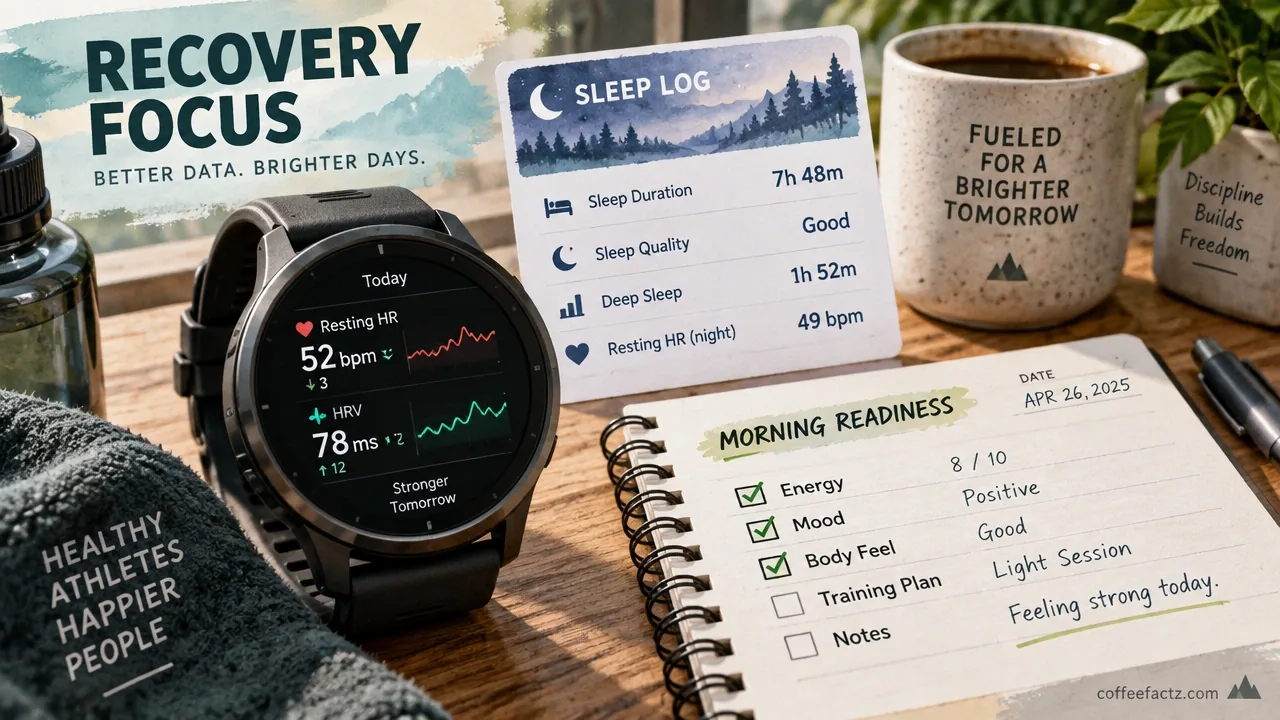
The practical counter to tolerance is monitoring, not escalation. Track resting heart rate each morning. Follow 7-day HRV trends rather than single-day readings. Log subjective energy and mood on a simple 1–10 scale. Monitor sleep quality by tracking time to sleep, number of awakenings, and how you feel 30 minutes after waking. If those metrics are trending down while caffeine intake is trending up, the caffeine is masking the problem, not solving it.
Caffeine cannot fix dehydration. It cannot correct iron deficiency or vitamin D deficiency. It cannot treat sleep apnea. It cannot substitute for adequate caloric intake or macronutrient timing. What it can do is suppress the fatigue signal long enough that you don’t notice those problems are getting worse. That’s the masking mechanism. An athlete who feels fine on 400 mg of caffeine per day while sleeping six hours, eating below maintenance, and running a hydration deficit is not performing well. They’re performing while impaired and not knowing it.
The highest-value question is not “which drink has the most caffeine?” It’s “why is caffeine stopping working for me?” Tolerance, dependence, sleep debt, and masked nutritional deficiencies are the real answers to that question.
Edge Cases for Active Athletes: Stacking, Body Weight, and Masked Deficiencies
A single 300 mg can is straightforward. The edge cases arise when that can is one of several caffeine sources in the same day, or when the athlete’s body weight and individual sensitivity shift the effective dose significantly.
Total Intake Auditing
The most common hidden risk is stacking: consuming caffeine from multiple sources without tracking the total. A morning coffee (150–200 mg), a preworkout supplement (150–300 mg), and an energy drink (200–350 mg) consumed across a single training day can push total intake to 600–850 mg without the athlete recognizing the accumulation.
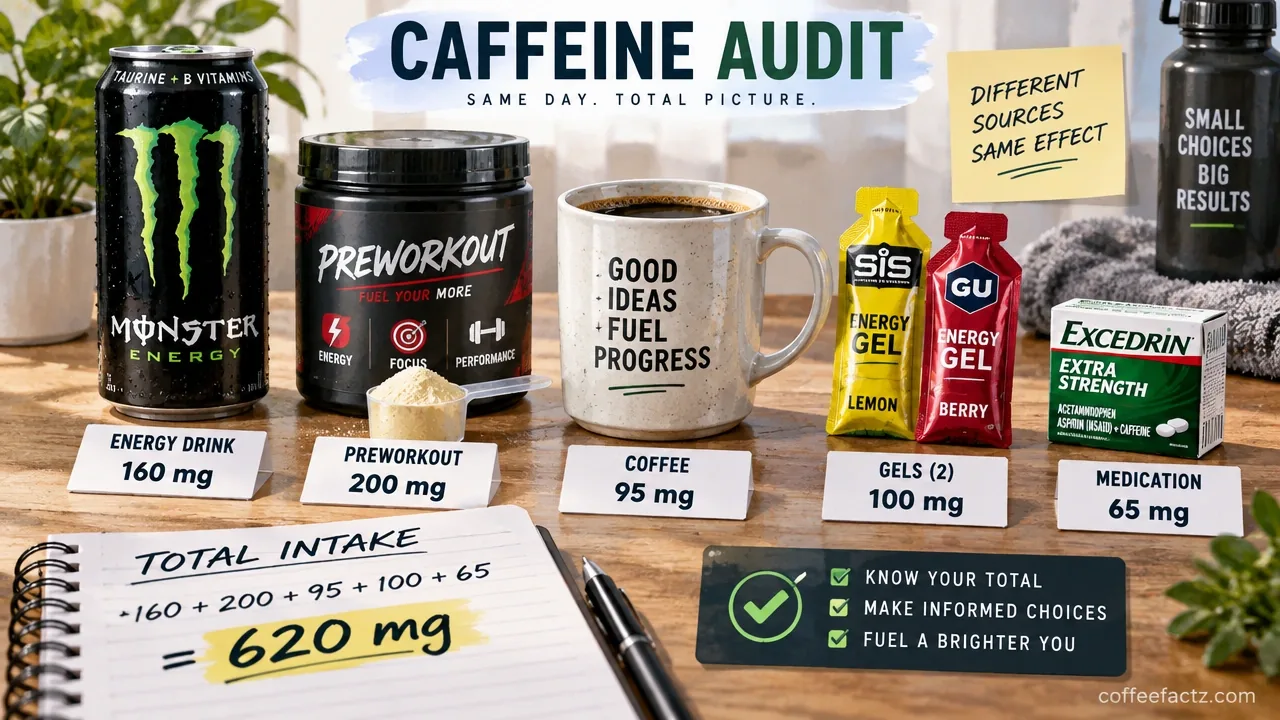
Preworkout combined with an energy drink is the highest-risk stack. Both products are designed to be taken before training, both are often consumed in the same window, and neither label warns you about what the other label says. Add a gel or two during a long session and the number climbs further. Audit every source: energy drinks, preworkout powders, coffee, caffeinated gels, pre-race supplements, and any medications (some pain relievers and cold medicines contain 30–65 mg of caffeine per dose). Total intake, not any single source, is what determines risk.
Individual Sensitivity Scaling
The FDA’s 400 mg per day guideline is a population-level reference point, not a personal prescription. A more precise filter is the 3 to 6 mg per kilogram of bodyweight upper bound used in sports science contexts. A 70 kg athlete can reach 420 mg under the mg/kg ceiling, which is slightly above the 400 mg flat limit. A 55 kg athlete hits the equivalent ceiling at 165 to 330 mg, well below what the flat number implies.
Individual sensitivity adds another layer. Two athletes with identical body weight can have dramatically different caffeine clearance rates based on CYP1A2 genetic variants, hormonal factors, and habitual intake history. The flat number is a starting point. Your personal response to a given dose, tracked honestly over time, is the actual data that matters.
Hidden Fatigue Causes & Open Questions
When an athlete reports persistent tiredness that caffeine no longer resolves, the caffeine is usually not the problem. Vitamin D deficiency, iron deficiency anemia, sleep apnea, and chronic under-recovery all produce fatigue profiles that closely resemble caffeine tolerance. The difference is that no amount of caffeine escalation fixes a hemoglobin deficit or an obstructed airway. A blood panel and a sleep study reveal what a stronger pre-workout cannot.
Two questions remain genuinely open in the research. Whether the body processes natural versus synthetic caffeine differently is debated but not resolved. And there is emerging clinical observation, though not yet robust controlled trial data, suggesting that individuals with ADHD or autism spectrum presentations may metabolize or respond to caffeine differently than neurotypical populations, including paradoxical calming responses or altered tolerance curves. These are not fringe claims, but they are not settled science either.
Safety Ceiling & Final Verdict: FDA 400 mg, Acute Toxicity, and the Smartest Athlete Choice
The regulatory and medical picture on caffeine is clearer than most product marketing suggests. Knowing the hard ceiling, and what happens above it, is the final piece of the framework.
Regulatory Thresholds & Poisoning Risks
The FDA identifies 400 milligrams per day as a caffeine intake level not generally associated with negative effects in most healthy adults, while toxic effects such as seizures can be observed with rapid consumption of approximately 1,200 milligrams of caffeine. – Source: FDA Consumer Updates
That 1,200 mg figure is not theoretical. It’s the threshold at which documented acute toxicity, including seizures, cardiac arrhythmias, and severe hypertension, becomes a real clinical risk. The danger is not a large energy drink consumed over an hour. The danger is pure caffeine powder or concentrated liquid caffeine, where a half-teaspoon can deliver a lethal or near-lethal dose. Standard energy drinks in the 300 to 350 mg range don’t approach that territory in a single serving, but stacking multiple high-dose products in a compressed timeframe can.
Minors should avoid high-caffeine energy drinks entirely. The developing cardiovascular and neurological systems respond differently to stimulant loads, and no performance benefit in a youth athlete justifies the risk profile of a 300 to 350 mg product.
Red flags for rapid high-dose caffeine exposure: racing heart rate that doesn’t settle after 30 minutes, tremors, nausea, chest pressure, or unusual anxiety. Those are not “just jitters.” They are physiological warning signals that require you to stop, hydrate, and, if symptoms persist, seek medical attention.
Withdrawal Tapering & Selection Guidance
If you’ve been running 400 mg or more per day and want to reduce, abrupt cessation is the wrong approach. Withdrawal headaches, fatigue, and irritability from sudden caffeine removal can last 2 to 9 days and are severe enough to disrupt training. A gradual taper, reducing by roughly one cup of coffee equivalent per day, is more workable than a zero-caffeine detox. It gives your adenosine receptor density time to normalize without the acute withdrawal period.
The final verdict on selection is straightforward. Spike Hardcore Energy at 350 mg per 16 oz is the top of this verified leaderboard. Bang Energy, Reign Total Body Fuel, Celsius Heat, and C4 Ultimate occupy the 300 mg tier. Ghost Energy sits at 200 mg. Monster Original at 160 mg and Red Bull at 80 mg are the lower benchmark tiers, useful for athletes who need mild stimulation without approaching any safety threshold.
For an active athlete, the smartest choice is the lowest effective dose that sits under your personal ceiling, timed 30 to 45 minutes before your key session, never stacked with another caffeine source, and never used as a substitute for sleep, nutrition, or hydration. The can with the highest number on the label is not automatically the best tool. The best tool is the one that gives you the effect you need without compounding the recovery debt you’ll pay back later.
Frequently Asked Questions About Highest Caffeine Energy Drinks
What energy drinks give the most caffeine?
Spike Hardcore Energy leads at 350 mg per 16 oz, followed by Bang Energy, Reign Total Body Fuel, Celsius Heat, and C4 Ultimate at 300 mg each. Hyde Xtreme claims 400 mg but label verification varies by region.
Which energy drink has 1000 mg of caffeine?
No commercially available, regulated energy drink contains 1,000 mg per serving. That dose approaches acute toxicity territory. Products claiming numbers in that range are either mislabeled, unverified, or referencing cumulative daily totals rather than single-serving content.
Does any drink have 1000 mg of caffeine?
Not in a standard retail can. Pure caffeine powder can be measured to that dose, which is exactly why the FDA flagged it as a serious public health risk. A half-teaspoon of pure caffeine powder is roughly 1,200 mg, a dose associated with seizures and cardiac events.
Is 900 mg of caffeine too much?
Yes, for nearly every adult. The FDA’s guideline is 400 mg per day for most healthy adults. At 900 mg, you’re more than double that threshold, well into the range where cardiovascular stress, tremors, and serious arrhythmia risk become real concerns rather than theoretical ones.
How does caffeine tolerance affect athletes differently than casual users?
Athletes often consume caffeine more strategically and at higher doses than casual users, which accelerates receptor upregulation. The result is faster tolerance development, a narrower window of effectiveness, and a harder withdrawal if they try to stop abruptly.
Should an athlete choose a higher-caffeine drink for every training session?
No. Reserve 300 mg and above for your highest-output sessions. Using maximum-dose products daily eliminates the performance edge through tolerance and adds a stimulant load on recovery days when lower arousal actually supports adaptation.
Can stacking a preworkout with an energy drink cause problems even under 400 mg total?
Yes, if consumed in a short time window. Rapid intake of even a combined 350–400 mg can spike plasma caffeine concentration faster than a slower-absorbed dose, raising short-term cardiovascular stress beyond what the daily total implies.
How do I know if my fatigue is caffeine tolerance or something else?
Track resting heart rate and HRV for 7 days while keeping caffeine constant. If those metrics are declining and subjective energy isn’t improving with dose increases, the issue is likely nutritional, sleep-related, or a deficiency. A blood panel checking ferritin, vitamin D, and thyroid function rules out the most common masked causes.
References
- The clinical toxicology of caffeine: A review and case study | pmc.ncbi.nlm.nih.gov
- Spilling the Beans: How Much Caffeine is Too Much? | fda.gov
- International Society of Sports Nutrition position stand on energy drinks | exa.ai