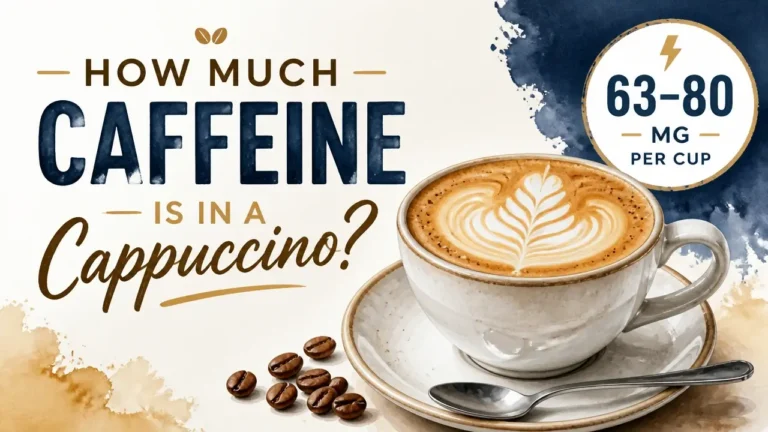

Classic cappuccino is one of the most misread drinks in the caffeine conversation. People assume the milk softens the hit or that a bigger cup means more dilution – neither is true. Every milligram of caffeine in your cup comes entirely from the espresso shots, and the only thing a larger serving does is add more of them.
Once you understand that simple mechanic, reading any café menu becomes straightforward. Whether you’re watching your daily intake, pregnant, or just curious why your afternoon cappuccino is wrecking your sleep, the answer lives in shot count – not cup size, not foam depth, not roast color.
What’s Actually Inside a Cappuccino
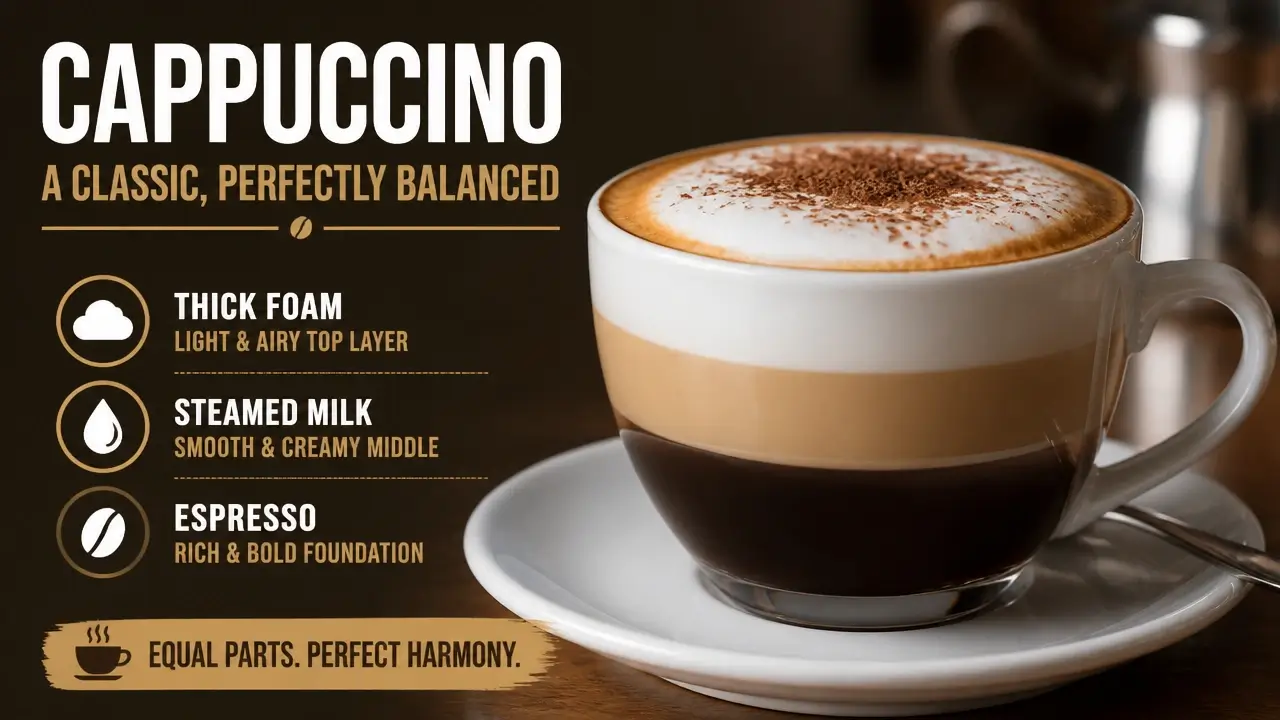
Classic cappuccino is built on a strict three-part ratio: roughly one part espresso, one part steamed milk, and one part milk foam. That structure is what gives it the signature layered texture – dense, velvety foam sitting on top of silky steamed milk, with a concentrated espresso base underneath.
Here’s the part that trips people up: steamed milk and milk foam contain zero caffeine. Not a trace. The entire caffeine load in your cup comes from the espresso shot alone. The milk and foam are there for texture and flavor balance – they don’t add stimulants, and they don’t dilute them either.
A traditional small cappuccino runs around 8 oz (240 ml) and is built with a single espresso shot. As café sizes scale up – think 12 oz or 16 oz – most shops compensate by pulling additional shots to maintain the espresso-forward flavor. So the cup gets bigger, the shot count goes up, and the caffeine rises with it. The foam depth might change, the milk ratio might shift slightly, but none of that touches the caffeine number. Only the shots do.
Here’s a look at those classic layers so the structure is easy to visualize:
Understanding this foundational espresso-to-milk ratio provides essential context when evaluating broader latte caffeine factors across different dairy and volume variations.
Cappuccino Caffeine by Size and Shot Count
Cappuccino caffeine content scales almost perfectly with shot count – and once you know the base number for a single shot, everything else follows from simple math.
A standard single espresso shot contains roughly 63–75 mg of caffeine. In practice, that number can land anywhere between 40 and 80 mg depending on the bean blend, grind size, and how the machine is dialed in. But 65–75 mg is the reliable working estimate most baristas and nutritionists use.
Here’s how that translates across common cup sizes:
When calculating the exact extraction metrics for your morning cup, bean roast level is frequently scrutinized, prompting baristas to ask: Does Dark Roast Coffee Have less stimulant potential despite its bolder flavor profile.
- 8 oz cappuccino (1 shot): approximately 65–75 mg
- 12 oz cappuccino (2 shots): approximately 130–154 mg
- 16 oz cappuccino (3 shots): approximately 170–195 mg