A multi‑year field trial in Côte d’Ivoire led by
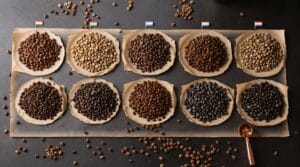
Nestlé reports that a carefully selected mix of six robusta coffee varieties can boost farm yields by up to
86 % while also improving cup quality, with the new material now officially registered and slated for distribution to local producers.According to
Daily Coffee News, the research was carried out by the Nestlé Institute of Agricultural Sciences in collaboration with Côte d’Ivoire’s
Centre National de Recherche Agronomique (CNRA). Since 2018, plant‑science teams from both organizations studied 18 robusta varieties across four coffee‑growing regions before narrowing the work to six best‑performing lines.The trial found that planting these six varieties together, using the same inputs as the commonly used local variety, increased yields by up to 86 percent, Daily Coffee News reported. The mix includes two varieties developed by Nestlé and four developed by CNRA, and all six have now been officially registered in Côte d’Ivoire, clearing the way for commercial use.Sensory testing cited by
Daily Coffee News found that coffee from the six‑variety mix delivered a smoother flavour, with less bitterness and fewer woody notes compared with the common local robusta. Nestlé states in the same report that the six varieties will be made available to farmers through cooperatives under its Nescafé Plan sustainable sourcing program.Côte d’Ivoire is the third‑largest coffee producer in Africa, according to Daily Coffee News, and the company’s agronomy team links the varietal work directly to mounting climate pressures in the country. “Côte d’Ivoire, the third‑largest coffee producer in Africa, is feeling the effects of climate change, with shifting rainfall and rising temperatures impacting crop health and yield,” said Hubert Coffi, agronomy manager at the Nestlé Institute of Agricultural Sciences in Côte d’Ivoire, in comments published by
FoodIngredientsFirst.In the same FoodIngredientsFirst report, Coffi said, “Together with partners such as CNRA, we are exploring resilient coffee varieties to help protect farmers’ livelihoods and ensure consumers can continue to enjoy great‑tasting coffee in the future.” FoodIngredientsFirst also reported that Nestlé says its latest varieties can increase yields and reduce emissions.The Côte d’Ivoire robusta work forms part of a broader genetics portfolio described by Nestlé. As reported by
Comunicaffe, the company’s Roubi 1 and Roubi 2 robusta varieties have delivered up to 50 percent higher yields in Mexico, while Star 4, a novel arabica with larger beans and coffee‑leaf‑rust resistance, has been registered in Brazil.Daily Coffee News, citing the journal
Frontiers in Plant Science, places global robusta production at roughly 70–76 million 60‑kilogram bags annually, and notes that traditional coffee variety‑development cycles can take more than 20 years. In August 2024, CNRA and Nestlé announced a new robusta variety in Côte d’Ivoire with plans to distribute 4.2 million plants to producers, according to Daily Coffee News, indicating that the newly registered six‑variety mix will enter a sector already experimenting with updated plant material.Daily Coffee News reports that the six new robusta varieties will be rolled out to farmers in Côte d’Ivoire through cooperatives under the Nescafé Plan over 2026–2027, following their official registration in the country.


 By | May 23, 2026