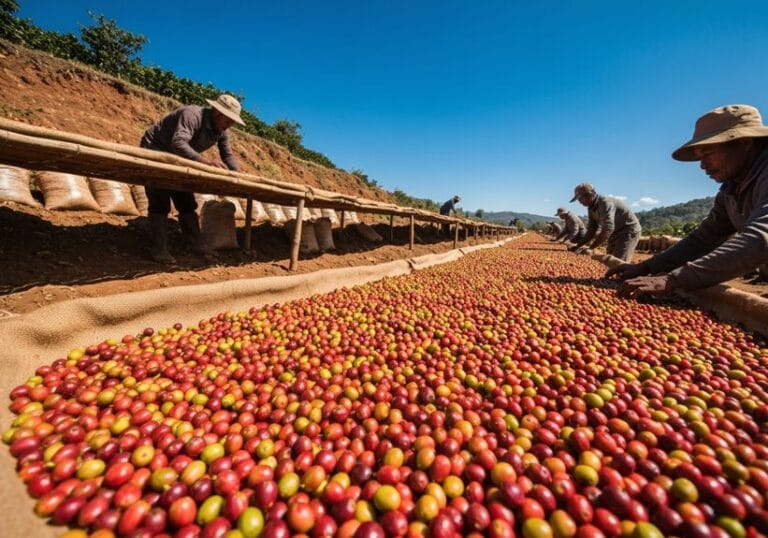

Dry process coffee is basically the classic way of making coffee, folks! Think sunbathing cherries—yes, whole cherries drying under the bright sun, with their fruity jackets still on. It’s super simple and great for those warm, sunny places. The cherries take about 3–4 weeks to dry, and if the humidity crashes the party, mold could show up uninvited. But when it all goes well, expect a sweet, fruity coffee that’ll knock your socks off! Stick around for more eye-opening coffee facts!
Key Takeaways
- Dry process coffee involves drying whole cherries in the sun with the fruit still attached, making it a water-efficient method.
- The drying process typically lasts 3-4 weeks, requiring careful monitoring of moisture levels to avoid mold.
- This method emphasizes sorting and cleaning to remove defective cherries, ensuring the quality of the final product.
- Dry process coffee is known for its heavy-bodied sweetness, fruity notes, and a long-lasting sweet aftertaste.
- Economically, it incurs lower production costs and can yield higher market prices due to its premium flavor profile.
Understanding the Dry Process Coffee Method
Diving into the world of dry process coffee is like stepping into a time machine, where you get to witness one of the oldest methods of coffee processing that still packs a punch today!
Imagine this: whole coffee cherries, like tiny fruit-filled treasure chests left out in the sun, drying slowly with the fruit clinging on. It’s all about simplicity, folks! No fancy water setups here—just sunshine and some serious patience. This method is especially suited for arid regions where the sun and heat can efficiently dry the cherries.
This method thrives in hot, arid places, like Yemen, but try it in a humid climate, and you’re asking for moldy coffee horror stories! Careful sorting’s key, too—nobody wants to sip a cup that tastes like a funky fruit salad!
The Workflow of Dry Process Coffee
While many people might think brewing a great cup of coffee is all about the magic of the final brew, the real adventure starts way earlier, in the laborious workflow of dry process coffee! It begins with sorting those coffee cherries, tossing out the bad apples (literally!). You don’t want your coffee tasting like dirt, right? Then comes the sun drying process; laid out like sunbathers on a beach, drying coffee beans need that TLC.
Here’s a quick rundown:
| Step | Key Details |
|---|---|
| Sorting & Cleaning | Removes defects & guarantees quality |
| Sun Drying Process | Takes 3-4 weeks, sun’s best friend |
| Monitoring & Quality | Check moisture, avoid mold fiascos! |
Next up, they huddle for storage before hulling!
Flavor Profile and Economic Impact of Dry Process Coffee
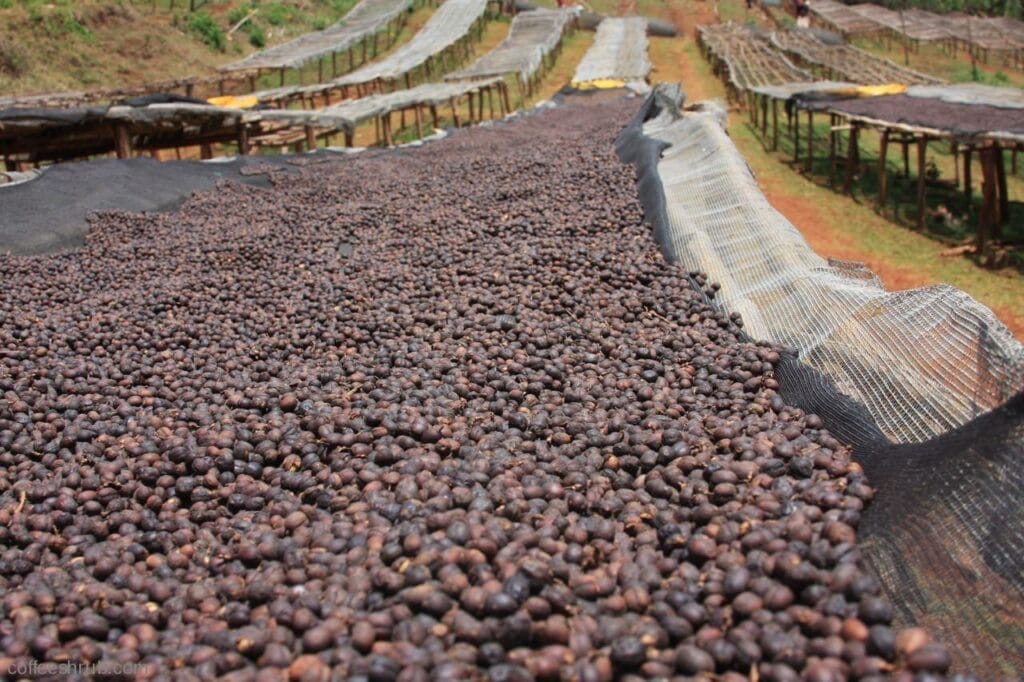
Regarding the flavor profile of dry process coffee, it’s hard not to get a little excited—this stuff can be like a party in your mouth!
You’ve got that heavy-bodied sweetness, smoothness, and a wild mix of fruity and wine-like notes. It’s like a flavor rollercoaster!
- Think of berry bursts, floral notes, and even chocolatey vibes.
- Imagine a spicy cinnamon kick that hugs your taste buds.
- Let’s not forget that longer, sweeter aftertaste, like the lingering memory of a great day.
It’s a unique experience, perfect for people wanting something beyond just a cup of joe.
Economically, while it needs less water and is cheaper to produce, its premium flavor can snag high prices—talk about a win-win!
Frequently Asked Questions
How Does Weather Affect Dry Process Coffee Quality?
Weather greatly influences dry process coffee quality through moisture levels, rainfall, and temperature. Ideal conditions promote flavor retention, while excessive rain and humidity lead to fermentation issues, adversely affecting the beans’ sensory attributes and general quality.
Can Dry Process Coffee Be Produced in Humid Climates?
Dry process coffee can be produced in humid climates, but challenges arise. Extended drying times increase risks of spoilage and off-flavors, necessitating specialized drying techniques and equipment to maintain quality and prevent degradation.
What Are the Environmental Impacts of Dry Processing?
The environmental impacts of dry processing include minimal water usage, reduced carbon footprint due to solar drying, and potential organic waste issues if not managed properly. It thrives in arid climates, facing limitations in humidity-affected regions.
Is Dry Process Coffee Suitable for All Coffee Varieties?
Dry process coffee is not suitable for all varieties. It works best for thicker-skinned cherries grown in arid climates, while thinner-skinned varieties often require wet processing to guarantee quality and prevent spoilage.
How Do Producers Ensure Consistency in Dry Processed Coffee?
Producers guarantee consistency in dry processed coffee through meticulous sorting, controlled drying environments, moisture stabilization techniques, and strict quality control measures, which collectively maintain uniform flavor profiles and prevent spoilage during the drying and storage processes.