Commercial coffee farming represents one of the most environmentally sensitive branches of tropical agriculture, demanding narrow climatic and geological thresholds to achieve premium cup quality. Thriving between 1,000 and 2,000 meters above sea level in volcanic soils, Coffea arabica trees require balanced drainage and cyclical rainfall patterns. This operational field guide covers the entire cultivation lifecycle, detailing soil preparation, seedling nursery hardening, phenological growth stages, and integrated farm disease management.
Key Takeaways on coffee farming
- Coffee trees demand well-drained volcanic soil with a pH strictly between 5.5 and 6.5 to maximize nutrient availability.
- Seedlings require 6 to 9 months of structured nursery hardening under graduated shade netting before field outplanting.
- Contour terracing on steep hillsides prevents erosion and allows deep taproot development down to 1.5 meters.
- Integrated pest programs against Leaf Rust and Berry Borers combine resistant varietals, copper sprays, and sanitary harvesting.
- Selective hand-picking of exclusively ripe crimson cherries is mandatory to preserve delicate origin acidity and high sugar Brix.
Soil Preparation and Drainage Architecture for Healthy Root Systems
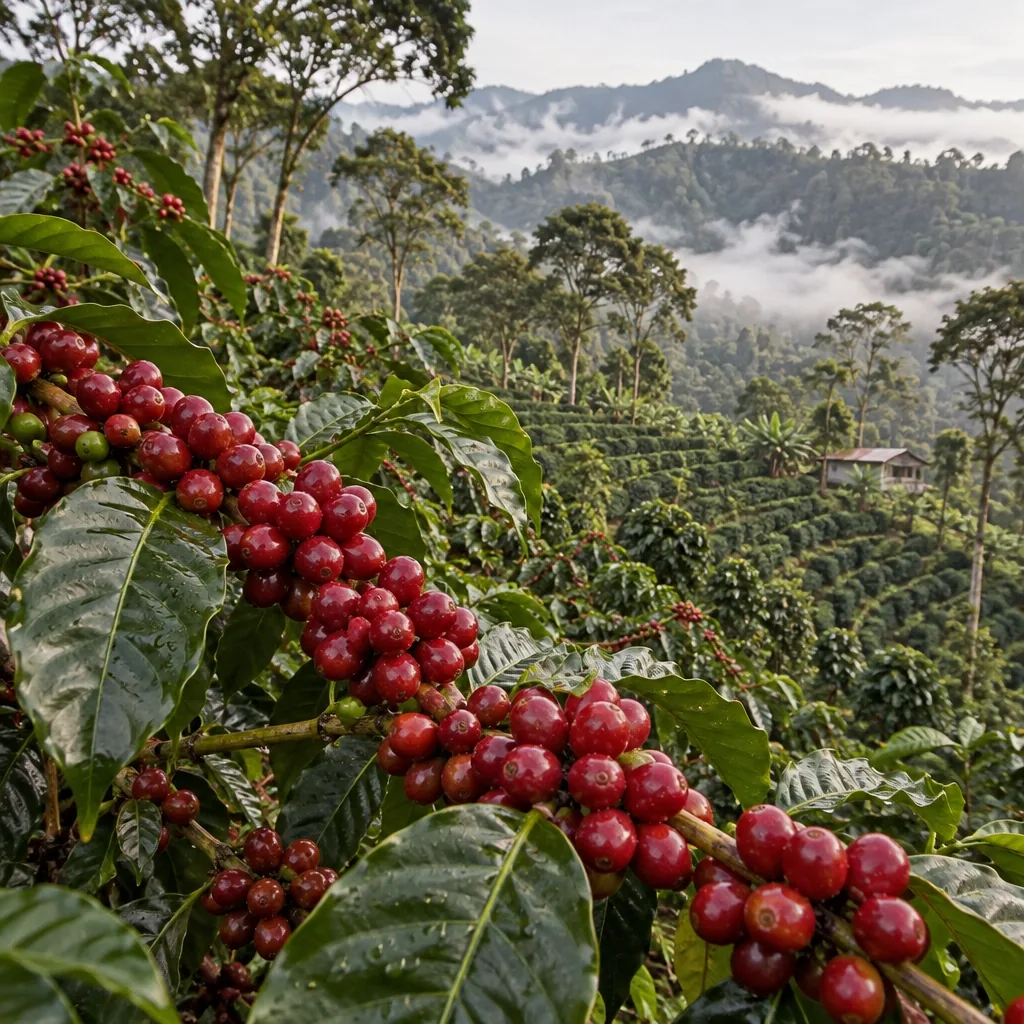
The long-term economic viability of any coffee plantation depends fundamentally upon initial soil geology and hydrological engineering. Correcting deep soil compaction or mineral toxicity becomes exponentially more difficult once trees establish root networks.
Soil Chemistry, pH Tolerances, and Cation Exchange
Coffea arabica evolved in the understory of East African highland forests, thriving in slightly acidic volcanic and alluvial soils:
- Target pH Spectrum: Optimal soil pH measures strictly between 5.5 and 6.5. In soils dropping below 5.0, soluble aluminum and manganese reach phytotoxic concentrations that scorch tender root tips and lock up essential phosphorus. Conversely, alkaline soils above pH 7.0 bind iron, zinc, and boron, causing severe leaf chlorosis.
- Organic Matter Thresholds: Premium coffee soils maintain 3 to 5 percent organic matter in topsoil layers. Decomposed organic humus increases cation exchange capacity, buffers against heavy fertilizer flushes, and retains moisture without compaction.
- Macronutrient Balance: Sustaining high cherry yields requires cyclical applications of nitrogen for vegetative flush, phosphorus for deep root elongation, and potassium to fuel carbohydrate accumulation during cherry swelling.
| Soil Type Classification | Primary Global Coffee Regions | Natural pH Range | Primary Agronomic Advantage |
|---|---|---|---|
| Andosols (Volcanic Ash) | Colombia, Guatemala, Costa Rica, Indonesia | 5.2 to 6.2 | High phosphorus retention, porous aggregation, deep drainage |
| Nitisols (Deep Tropical Red) | Kenya, Rwanda, Ethiopian Highlands | 5.5 to 6.8 | Exceptional clay depth, stable moisture buffer, high iron |
| Oxisols (Weathered Laterite) | Brazil Cerrado, Minas Gerais | 4.5 to 5.5 | Flat topography suited for mechanization; requires lime correction |
| Vertisols (Dark Shrinking Clay) | Select Monsoon Microclimates | 6.5 to 7.8 | High baseline fertility; requires drainage ditching to prevent root rot |
Hydrological Drainage and Contour Terracing
Coffee tree taproots plunge up to 1.5 meters deep, while primary feeder roots explore the top 30 centimeters of soil. When heavy monsoon rain stagnates in saturated ground, root zones rapidly suffocate:
- Contour Terracing: Planting steep hillsides requires cutting stepped terraces that follow topographical elevation contours. Terracing slows torrential surface runoff, allowing rainwater to percolate downward rather than stripping valuable topsoil.
- Deep Subsoil Aeration: Prior to planting, ripping hardpan layers down to 80 centimeters fractures impervious clay pans, allowing taproots to anchor deeply against severe windstorms and access subterranean water tables during prolonged dry spells.
Step-by-Step Nursery Protocols and Field Transplantation
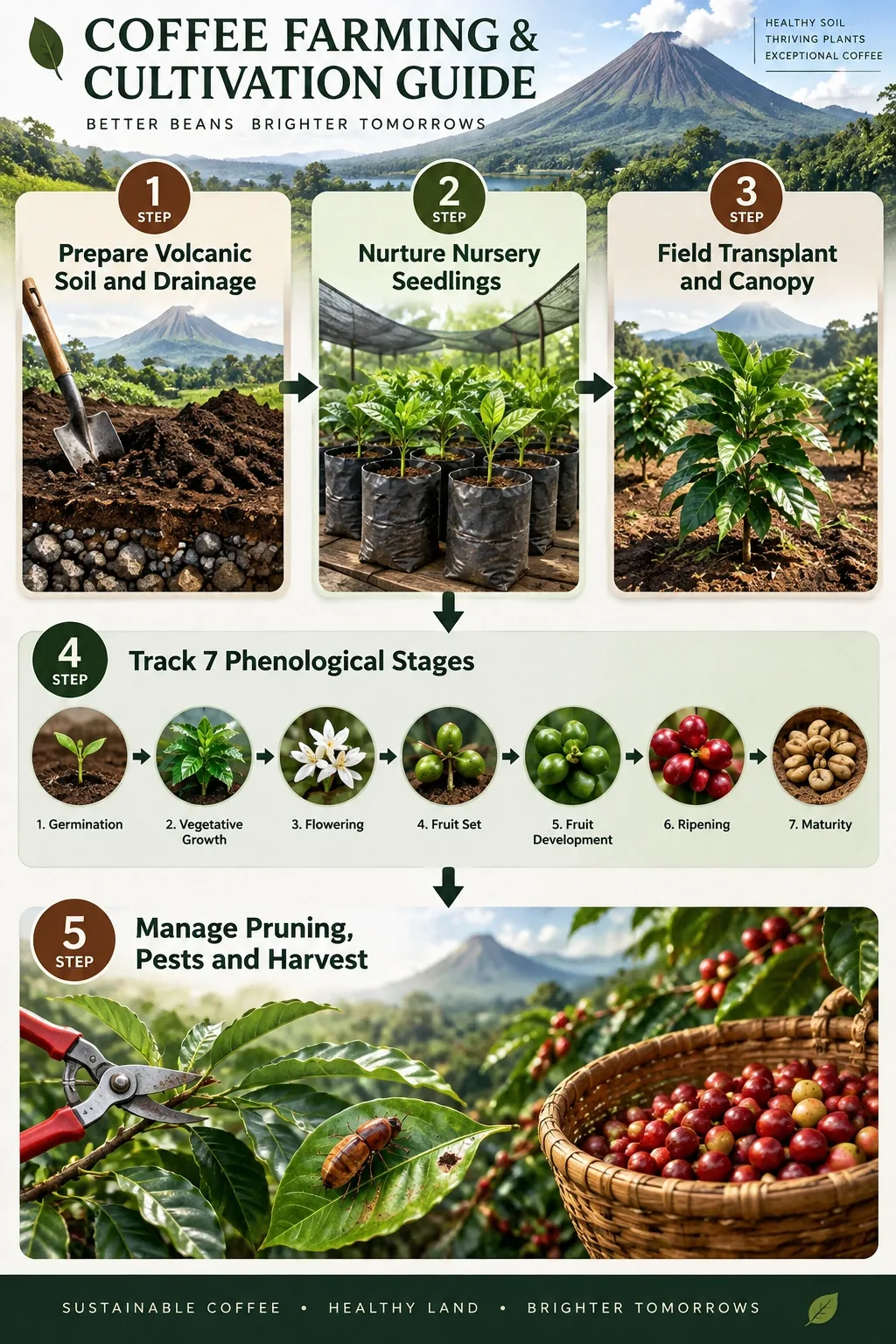
Rushing seedlings from germination trays to exposed fields causes high mortality rates. Professional estate nurseries harden juvenile trees systematically over six to nine months.
1. Seed Selection and Parchment Soaking
Select dense, fully formed parchment seeds from healthy mother trees showing documented resistance to pathogens:
- Soak parchment coffee seeds in room-temperature water for 24 to 36 hours to soften the hard endocarp shell and hydrate the embryonic axis.
- Discard floaters and damaged seeds showing insect exit holes.
2. Germination Beds and The Soldier Stage
Sow hydrated parchment seeds flat side down in raised germination beds filled with washed river sand:
- Maintain 50 percent ambient humidity and steady warmth between 68 and 78 degrees Fahrenheit.
- Seeds germinate over 30 to 50 days, pushing up a pale hypocotyl known as the “soldier” or matchstick stage.
- Once cotyledon leaves unfurl into the “butterfly” stage, carefully lift seedlings by the taproot without disturbing hair roots.
3. Polybag Nursery Hardening
Transplant delicate butterfly seedlings into perforated black polyethylene bags filled with sterilized volcanic loam, compost, and rock phosphate:
- House bags under 70 percent shade cloth for the first three months.
- Progressively reduce shade cloth coverage to 50 percent, 30 percent, and finally full sunlight over months four through eight.
- This progressive light exposure thickens the protective waxy leaf cuticle and stimulates lignification of the main central stem.
4. Field Outplanting and Canopy Spacing
Transplant vigorous, eight-month-old saplings measuring 25 to 35 centimeters tall at the onset of the local rainy season:
- Dig planting holes measuring 40 by 40 by 40 centimeters, backfilling with topsoil enriched with compost and agricultural lime.
- Establish plant densities ranging from 2,500 trees per hectare for large Typica varietals up to 5,000 trees per hectare for compact Caturra and Castillo cultivars.
- Interplant leguminous shade trees like Inga or Grevillea to fix atmospheric nitrogen and moderate midday canopy leaf temperatures.
The Seven Phenological Growth Stages of the Coffee Tree
Understanding the annual physiological lifecycle enables growers to time irrigation, nutrition, and pest interventions with seasonal accuracy.
1. Vegetative Growth and Dormancy
During the cool dry season, branch elongation slows and terminal shoots enter resting dormancy. Internal water deficit triggers physiological dormancy in lateral nodes, priming embryonic flower buds for hormonal activation.
2. Rain-Triggered Flowering Bloom
The first heavy soaking rainfall of the spring (typically 15 to 25 mm) shocks dormant buds into synchronous cell division:
- Within 8 to 12 days, tree branches explode with white, jasmine-scented blossoms.
- Arabica flowers are self-pollinating, achieving high fruit set rates within 48 hours before white petals wither and drop.
3. Pinhead and Berry Expansion
Fertilized ovaries form tiny green fruit clusters known as pinheads. Over the subsequent 60 to 90 days, cell division drives rapid berry swelling, requiring abundant soil nitrogen and moisture.
4. Endosperm Cavity Filling
Between days 90 and 150 following bloom, the inner seed hardens as carbohydrates, sucrose, and complex organic acids deposit inside the twin endosperm halves. Adequate potassium feeding during this stage directly dictates bean density.
5. Ripening and Color Transition
Over days 180 to 240, chlorophyll degrades within the outer exocarp skin. Carotenoids and anthocyanins emerge, shifting cherry pigmentation from dark forest green to pale yellow, bright orange, and finally deep crimson red.
Pest and Disease Management Against Berry Borers and Leaf Rust
Coffee monocultures face severe economic damage from fungal blights and boring insects if active preventative IPM protocols are neglected.
Coffee Leaf Rust (Hemileia vastatrix)
This airborne fungal pathogen enters through stomata on leaf undersides, forming telltale powdery orange spore lesions:
- Agronomic Impact: Severe infection causes massive tree defoliation. Without foliage, trees cannot photosynthesize, dropping immature fruit and aborting next season’s flower buds.
- Management Protocol: Apply preventative copper hydroxide sprays before the rainy season commences, alternating with systemic triazole fungicides during active vegetative growth flushes. Cultivating resistant Catimor or Sarchimor varieties provides long-term biological protection.
Coffee Berry Borer (Hypothenemus hampei)
The tiny Broca beetle represents the primary insect pest worldwide:
- Infestation Cycle: Female beetles bore into the floral disc end of developing cherries, tunneling directly into the green coffee seed to deposit eggs. The feeding larvae destroy commercial bean mass and generate mold taints.
- Control Strategy: Deploy funnel traps laced with ethanol and methanol lures to capture migrating females. Release beneficial entomopathogenic fungi such as Beauveria bassiana, and enforce rigorous sanitary harvesting by picking every dried raisin cherry off trees.
Farm Management Pruning Cycles and Selective Harvest Protocols
Disciplined field upkeep separates high-yielding specialty estates from overgrown, low-producing operations.
Cyclical Stumping and Agobiado Pruning
Coffee trees reach peak cherry productivity between ages four and eight. Beyond ten years, lateral branches turn woody and unproductive:
- Systematic Stumping: Cut exhausted trees back to 30 centimeters above the soil line at a 45-degree angle. This drastic renewal stimulates vigorous new orthotropic shoots, resetting tree productivity for another decade.
- Block Rotation: Stumping one-fifth of the farm acreage every year balances overall crop income without sudden production collapses.
Selective Hand-Picking Standards
Specialty grade coffee quality is won or lost during the final harvest pass:
- The Selective Standard: Instruct farm pickers to harvest solely fully ripe crimson cherries, leaving yellow and green fruit for subsequent passes every 10 to 14 days.
- The Defect Penalty: Harvesting unripe green cherries introduces harsh astringency and grassy flavors into the cup, while overripe black cherries risk immediate acetic fermentation. Careful selective harvesting ensures uniform sugar content and pristine flavor clarity.
Frequently Asked Questions About coffee farming
How many years does it take for a coffee tree to produce harvestable beans?
A coffee tree planted from seed takes three to four years to produce its first commercial harvest. The first year encompasses nursery development and outplanting, followed by two years of vegetative framework development before flowers set harvestable fruit.
What is the ideal elevation for growing specialty Arabica coffee?
Specialty Coffea arabica thrives between 1,000 and 2,000 meters above sea level. Cooler highland temperatures slow cherry maturation, allowing complex organic acids and high sugar concentrations to accumulate inside the coffee seed.
Why is soil pH critical for coffee plantations?
Soil pH between 5.5 and 6.5 ensures balanced solubility of vital macro and micronutrients. Highly acidic soil below 5.0 releases toxic aluminum that burns root tips, while alkaline soil above 7.0 locks up iron and zinc, causing severe nutritional deficiencies.
What causes Coffee Leaf Rust and how do farmers combat it?
Coffee Leaf Rust is caused by the fungal pathogen Hemileia vastatrix, which produces orange powdery spores on leaf undersides and defoliates trees. Farmers manage rust by planting resistant hybrid cultivars, spraying preventative copper fungicides, and maintaining proper shade canopy airflow.
Why is selective hand-picking preferred over strip harvesting?
Selective hand-picking gathers only uniformly ripe cherries across multiple passes, guaranteeing maximum fruit sugar content. Strip harvesting pulls unripe green, ripe, and overripe fruit simultaneously, introducing astringent vegetable taints and sour fermented defects into the crop.
References
- International Coffee Organization Crop Biology and Farming Protocols | ico.org
- Specialty Coffee Association Agronomy and Farm Practices | sca.coffee
- National Center for Biotechnology Information Coffee Cultivation Research | ncbi.nlm.nih.gov