Coffee Beans

Airscape Coffee Canister in light blue with black airtight lid and coffee beans on wooden counter
Coffee Beans

Airscape Coffee Canister: The Revolutionary Technology That Locks in Coffee Freshness

The Airscape coffee canister is a storage solution featuring patented technology designed to actively remove air from the container using a special inner lid. This system prevents coffee oxidation by pushing air out, locking in freshness for longer periods. Read on to explore its science and benefits for your daily brew.

Airscape Coffee Canister: The Revolutionary Technology That Locks in Coffee Freshness Read More »
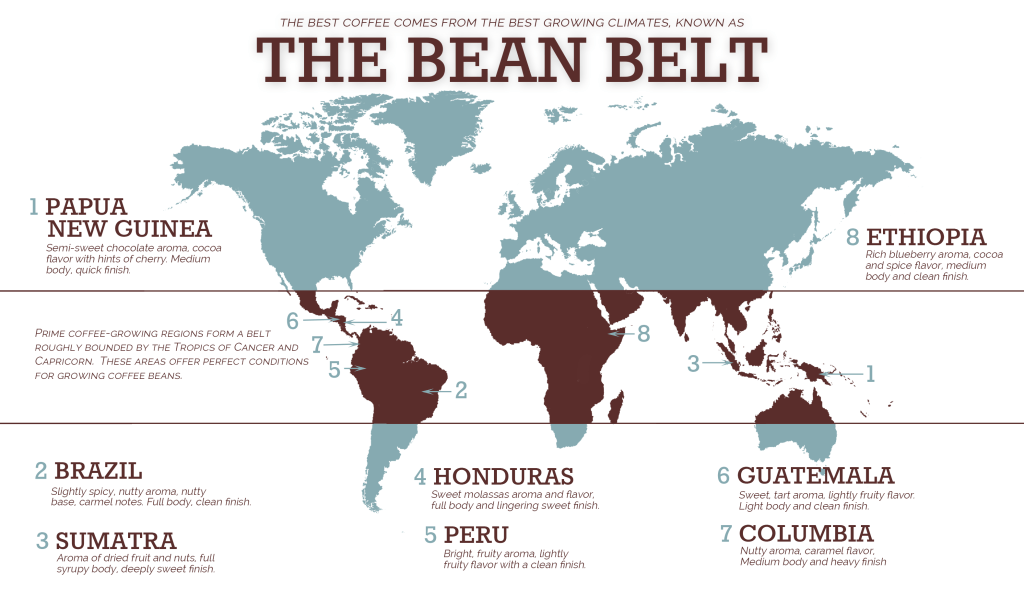

Map of the world highlighting prime coffee-growing regions, known as the Bean Belt, showing regions in Papua New Guinea, Brazil, Sumatra, Honduras, Peru, Guatemala, Colombia, and Ethiopia.
Coffee Beans

Where Is Coffee Grown? The Coffee Bean Belt VS CLIMATE CHANGE

Coffee is primarily grown within the “Coffee Bean Belt,” a narrow geographical band circling the Earth between the Tropic of Cancer (23.5°N) and the Tropic of Capricorn (23.5°S). This region offers the stable temperatures (60-70°F) and ideal rainfall critical for cultivation. Major producers include Brazil, Colombia, Ethiopia, and Vietnam. Read on to discover the major regions and future climate threats.

Where Is Coffee Grown? The Coffee Bean Belt VS CLIMATE CHANGE Read More »

Illustrated coffee journey from farm to cup showing coffee plants, hand picked cherries, processing, roasting and final cup of coffee
Coffee Beans

From Farm to Cup: The Art & Science Behind Your Morning Coffee Ritual

The farm to cup coffee journey encompasses the entire lifecycle of coffee, beginning with agricultural cultivation and culminating in the final brewing process. This transformation involves critical stages like specialized harvesting, precise processing methods like washed or natural, and expert roasting. Read on to discover how each step impacts your final cup’s flavor.

From Farm to Cup: The Art & Science Behind Your Morning Coffee Ritual Read More »

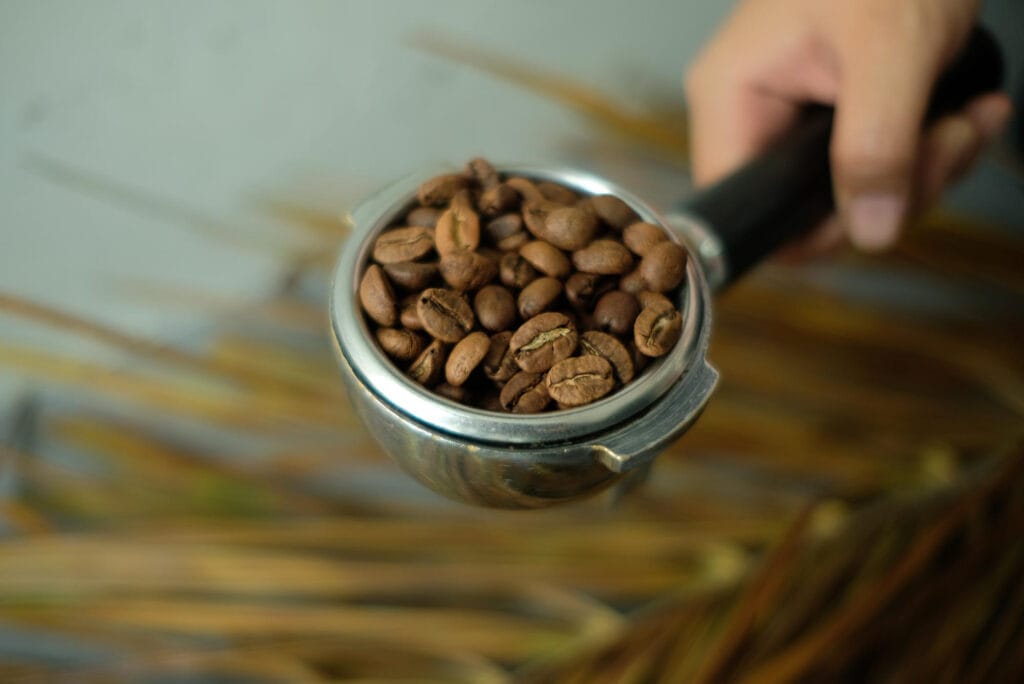
Hand holding portafilter filled with fresh coffee beans for espresso brewing, showing medium-dark roast espresso beans
Coffee Beans

Beans for Espresso: Choosing Quality for Best Results

The best espresso beans are those expertly roasted and balanced for the high-pressure extraction method, typically featuring medium to dark roasts and a blend of Arabica and Robusta. Flavor balance, oil content, and freshness are crucial for achieving a thick, rich crema. Read on to discover the ideal types and roasts for your perfect shot.

Beans for Espresso: Choosing Quality for Best Results Read More »

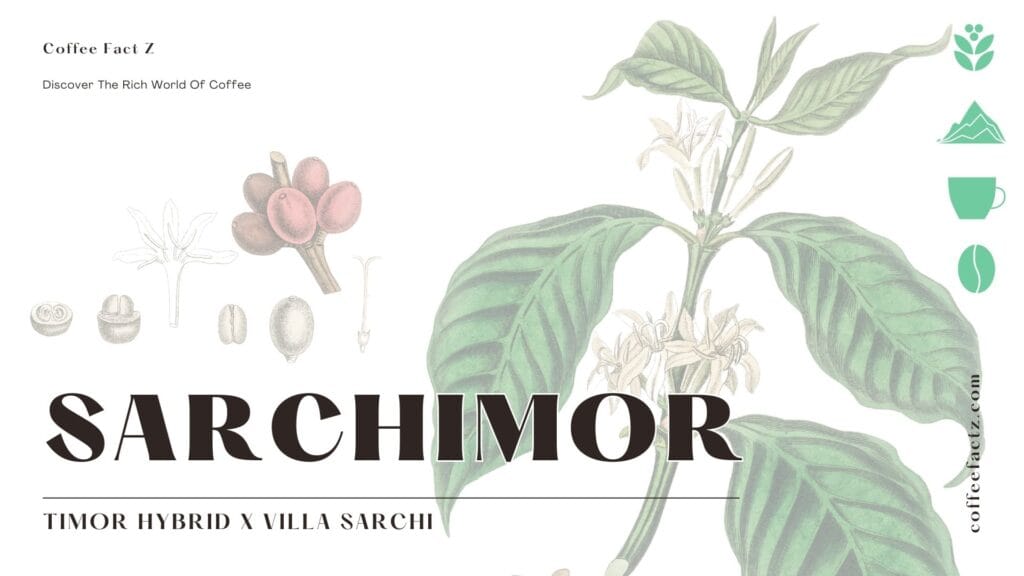
Botanical illustration of the Sarchimor coffee plant, showing its leaves, flowers, cherries, and beans.
Coffee Beans

What is Sarchimor Coffee and Why Should You Try It?

Sarchimor coffee is not a single cultivar but a group of hybrid varieties originating from the cross between Timor Hybrid and Villa Sarchi, primarily developed for robust disease resistance. These varieties offer high yields and significant genetic diversity, crucial for modern coffee cultivation against leaf rust. Learn about their origins, popular offshoots like Parainema, and quality recognition.

What is Sarchimor Coffee and Why Should You Try It? Read More »

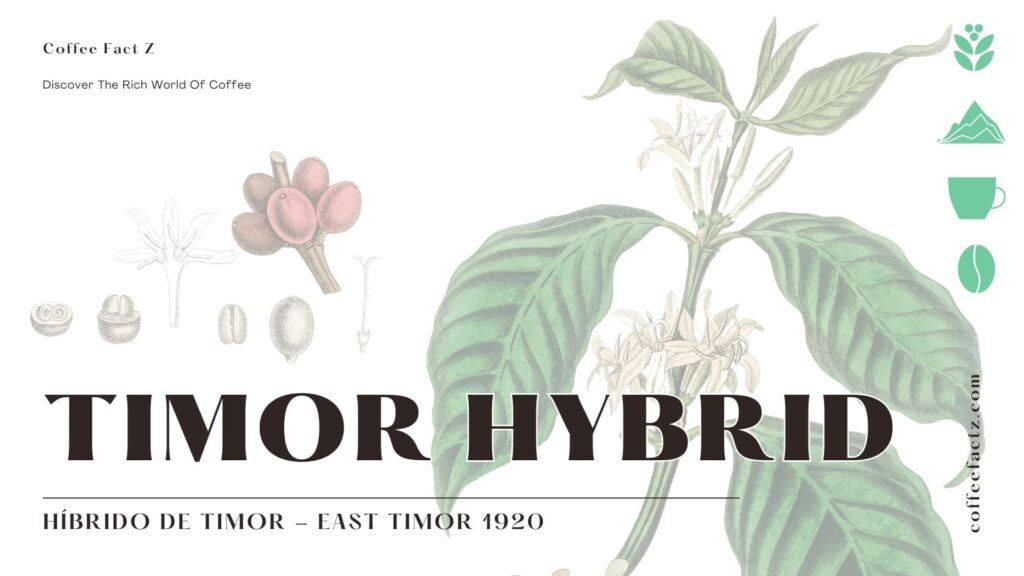
Illustration of the Timor Hybrid coffee plant, showcasing its beans and flowers, with the title "Timor Hybrid" prominently displayed.
Coffee Beans

Timor Hybrid: The Story of the ‘Super Coffee’

The Timor Hybrid coffee is a natural cross between Coffea Arabica and Coffea Canephora (Robusta) originating from East Timor, inheriting disease resistance genes. This unique Arabica variety, possessing 4 chromosome pairs, is vital for Arabica breeding programs against coffee leaf rust. Dive into its genetics and its descendants like Catimor and Sarchimor.

Timor Hybrid: The Story of the ‘Super Coffee’ Read More »

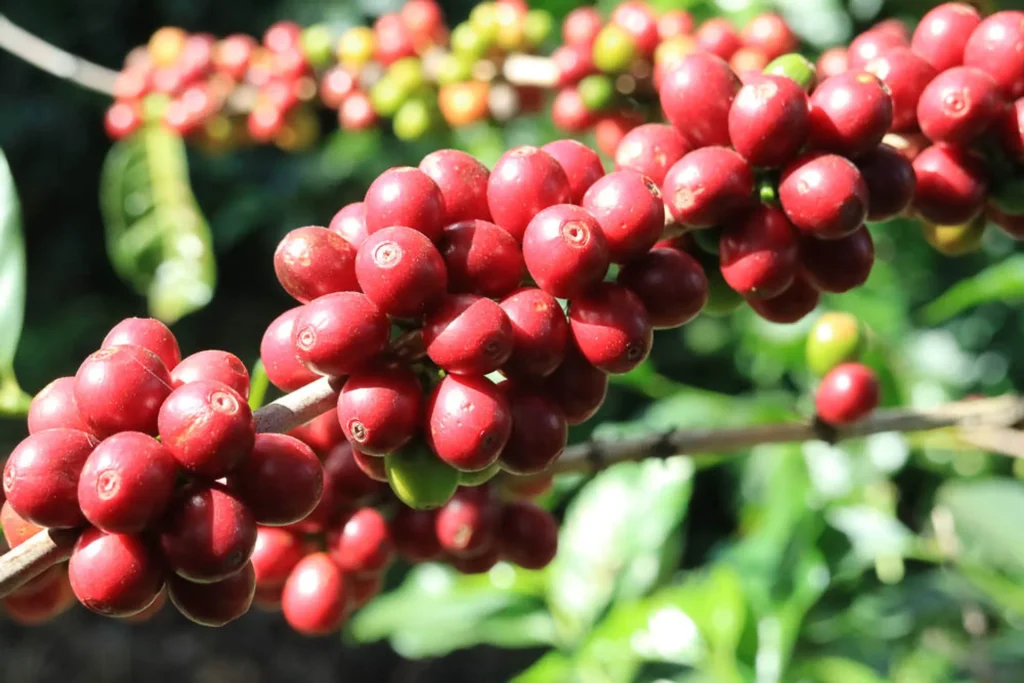
Close-up of ripe red Bourbon coffee cherries on a branch with green leaves in the background.
Coffee Beans

Bourbon Coffee: A Symphony of Genetic Diversity, Flavor, and Quality

Bourbon coffee is a highly celebrated Arabica varietal, tracing its origins to Yemen and Ethiopia before being widely cultivated on Réunion Island (Île Bourbon) in the 1700s. It is prized for its complex flavor profile, which features a satisfying balance of sweetness and acidity, rich aromas of fruit and caramel, and a smooth, full body. Bourbon is a foundational varietal, giving rise to important mutations like Caturra and Pacas. Explore the history, unique chemistry, and diverse relatives of this globally significant coffee plant.

Bourbon Coffee: A Symphony of Genetic Diversity, Flavor, and Quality Read More »

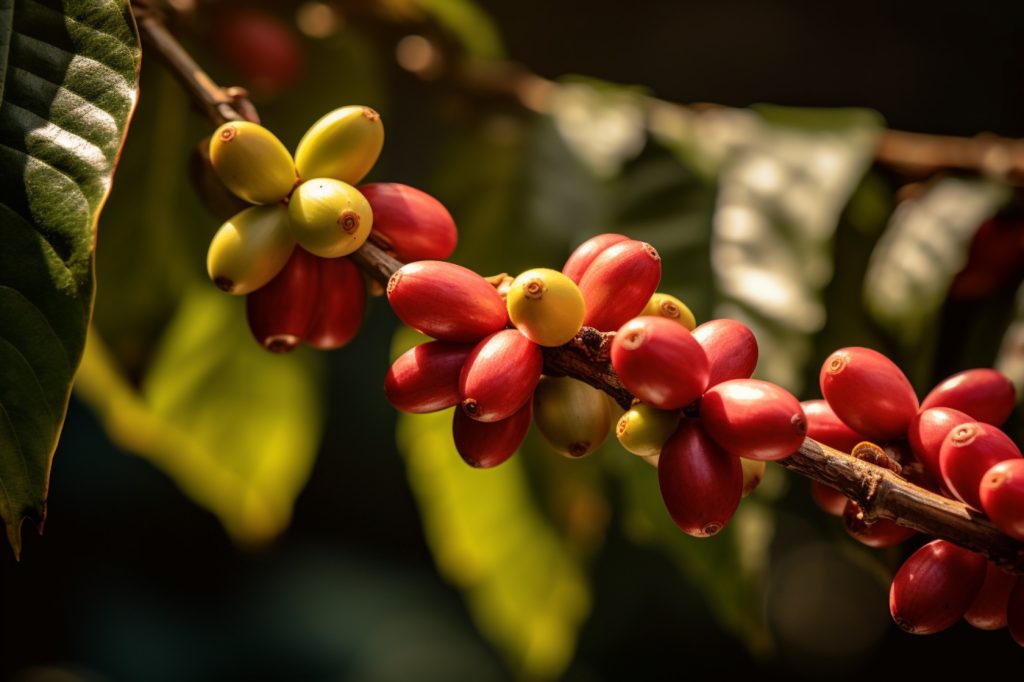
Close-up of ripe Typica coffee beans on a branch with green leaves in the background.
Coffee Beans

Typica Coffee : Queen of the Coffee World

Typica coffee is one of the original and most historically significant varieties of Coffea Arabica, tracing its global journey from Ethiopia and Yemen starting in the 15th century. While it is known for its low yield and disease susceptibility, Typica is highly prized in the specialty coffee market for the excellent quality of its large beans when grown at optimal altitudes (1000m to 1600m). Its genetic lineage is the backbone for many varieties, including Blue Mountain and Maragogype. Discover the rich legacy and unique characteristics of this “Queen of the Coffee World.”

Typica Coffee : Queen of the Coffee World Read More »

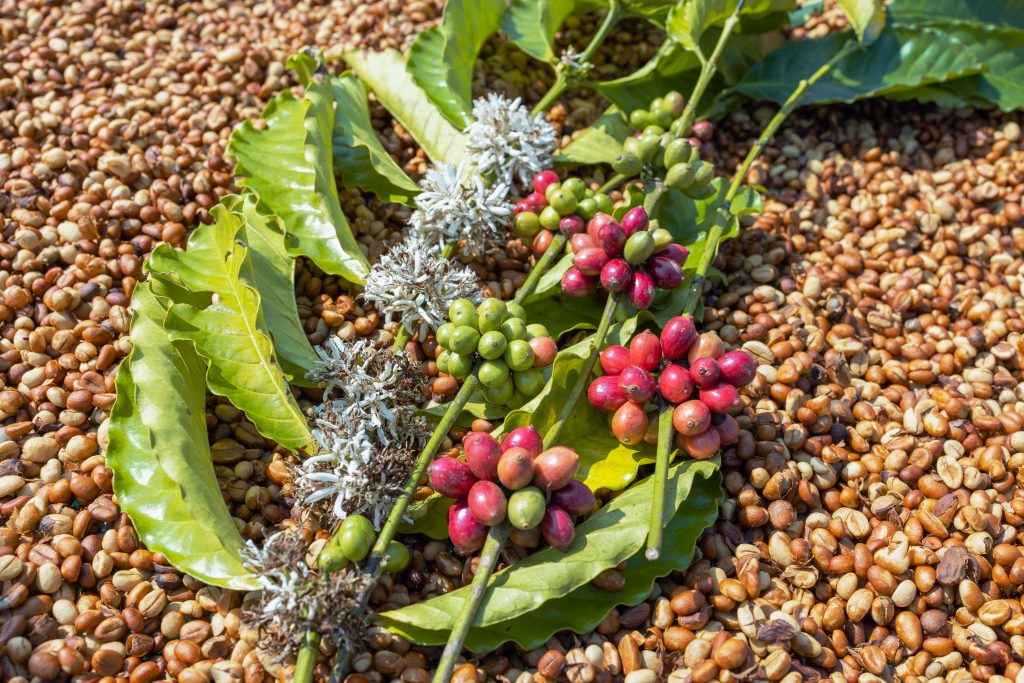
Freshly picked robusta coffee cherries and leaves laid out on a bed of dried coffee beans.
Coffee Beans

The Robust Flavor and Resilience of Robusta Coffee: A Deep Dive

Robusta (Coffea Canephora) is the second most popular coffee species, accounting for 40% of global production, and is primarily characterized by its high caffeine content and exceptional resilience to heat and drought. Unlike Arabica, Robusta’s chemical composition features higher levels of Chlorogenic Acids, resulting in a stronger, more bitter flavor, making it ideal for instant coffee and espresso blends. Robusta thrives best at temperatures between 16.2°C and 24.1°C. Explore the unique characteristics and vital role Robusta plays in the future of sustainable coffee production.

The Robust Flavor and Resilience of Robusta Coffee: A Deep Dive Read More »

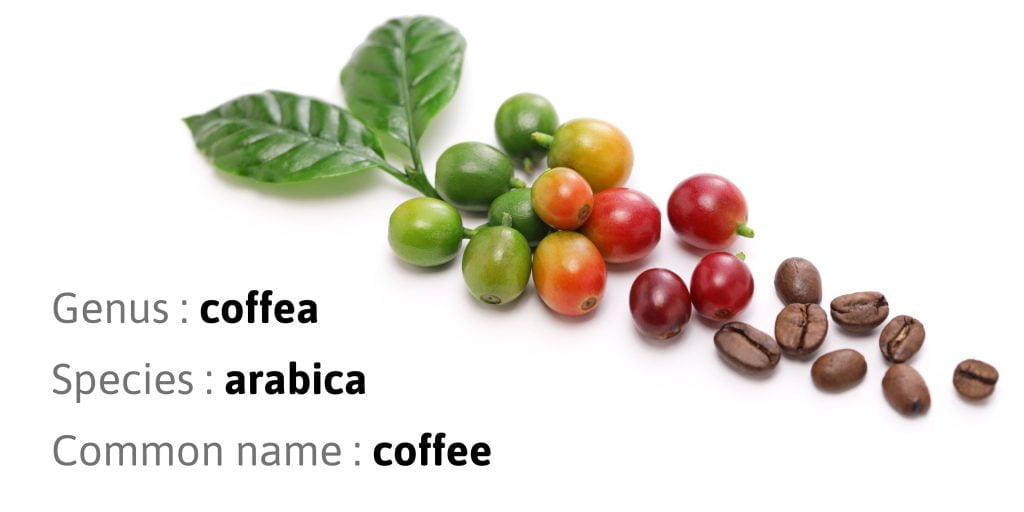
Arabica coffee leaves, beans and berries
Coffee Beans

The Comprehensive Journey of Arabica Coffee: From Plant to Cup

Arabica coffee (Coffea arabica) is the world’s most popular coffee species, accounting for over 60% of global production, and is cherished for its smooth, complex flavor profiles, ranging from fruity to floral. Originating in the Ethiopian highlands, Arabica requires specific conditions, thriving best at high altitudes (1,200 to 1,800 meters ASL) and temperatures between 15°C and 24°C. Despite challenges from Coffee Leaf Rust, its foundational varieties, Typica and Bourbon, continue to shape global cultivation. Discover the comprehensive journey of Arabica, from its genetic origins to its cultural impact worldwide.

The Comprehensive Journey of Arabica Coffee: From Plant to Cup Read More »

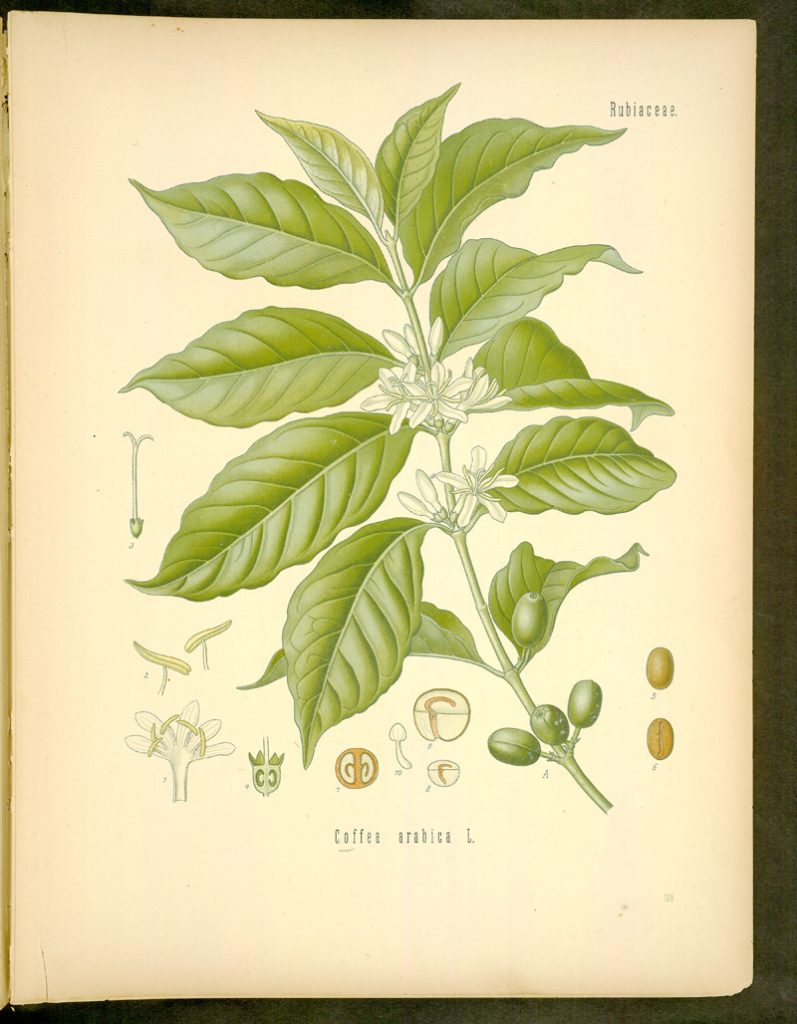
Botanical illustration of Coffea arabica plant, showing detailed leaves, flowers, and coffee cherries. The drawing includes close-up views of individual flowers, seed structure, and coffee beans. The illustration is labeled 'Rubiaceae' and 'Coffea arabica L.
Coffee Beans

Coffee Varieties: An In-Depth Exploration

Coffee varieties are primarily classified into three main species—Arabica, Robusta, and Liberica—based on morphological, genetic, and sensory characteristics. A key distinction is their chromosome count (Arabica has 44 vs. Robusta/Liberica’s 22) and preferred altitude (Arabica thrives at 600-2000m, Robusta at 0-800m). Modern classification includes F1 Hybrids, which are crossbred for superior traits like disease resistance and high yield. Understand the science behind coffee classification and how it shapes your daily brew.

Coffee Varieties: An In-Depth Exploration Read More »

Scroll to Top