
What is Catimor?
Is Catimor a type of coffee, a coffee variety, or a coffee brand? None of these are entirely accurate.
Catimor is not a single coffee variety but a group of coffee varieties with similar origins. Breeders have combined some Timor Hybrid lines with compact Caturra to create new Arabica hybrids.
These hybrids are called “Catimor“, resistant to coffee leaf rust and compact in size to optimize planting density. They were developed just in time for the emergence of leaf rust disease in the Americas.
The Origin of Catimor
In 1955, Professor António Branquinho D’Oliveira, a renowned plant pathology researcher from Portugal, founded the Centro de Investigação das Ferrugens do Cafeeiro (CIFC) with support from the governments of Portugal and the United States (Agreement FO-PO-5, April 29, 1955; Project FOA 72-11-004).
CIFC’s main goal was to research coffee rust disease. They supported coffee research centers in Portugal’s overseas territories and coffee-growing countries. They aimed to select rust-resistant coffee plants and train scientists to study these diseases.
CIFC helped create an international research network. This network includes over 40 coffee-growing countries. It focuses on coffee leaf rust (Hemileia vastatrix) and, after 1989, the coffee berry disease (Colletotrichum kahawae).
In its mission to support coffee breeding worldwide, CIFC received many Hibrido de Timor (HDT) samples from East Timor. Some HDT samples, resistant to all known rust strains, were used as a source of resistance in breeding programs for varieties like Catimor and Sarchimor.
The most commonly used samples for disease resistance in breeding programs and genetic studies are CIFC HDT 832 (received in 1957), CIFC HDT 1343 (received in 1960), CIFC HDT 2570 (received in 1968), and CIFC HDT 4106 (1971), a clone from the original hybrid believed to be from Timor.
HDT, its derivatives, and all available coffee materials from CIFC are provided free of charge to all coffee-growing countries worldwide. Over 90% of the disease-resistant coffee varieties grown have been created from research conducted at CIFC.
Some Timor Hybrid lines that resist leaf rust have cross-bred with compact Caturra. This has created different hybrids. The hybrids include Red Caturra CIFC 19/1, crossed with HDT CIFC 832/1, called HW26. Another hybrid is Red Caturra CIFC 19/1, crossed with HDT CIFC 832/2, or H46.
After some initial trials at IAC in Brazil, these hybrids were named “Catimor,” with “Ca” from Caturra and “Timor” from Timor Hybrid.
Popular Varieties
- IHCAFE 90: Grown in Honduras and other parts of Central America
- T8667: Central America
- Fronton: Puerto Rico
- Lempira: Honduras and other parts of Central America
- Catisic: El Salvador
- Oro Azteca: Mexico
- Costa Rica 95: Costa Rica
- Catimor 129: Malawi, Kenya
- T5175: Central America
- Anacafe 14 (T5175 x Pacamara): Guatemala
Benefits of Catimor
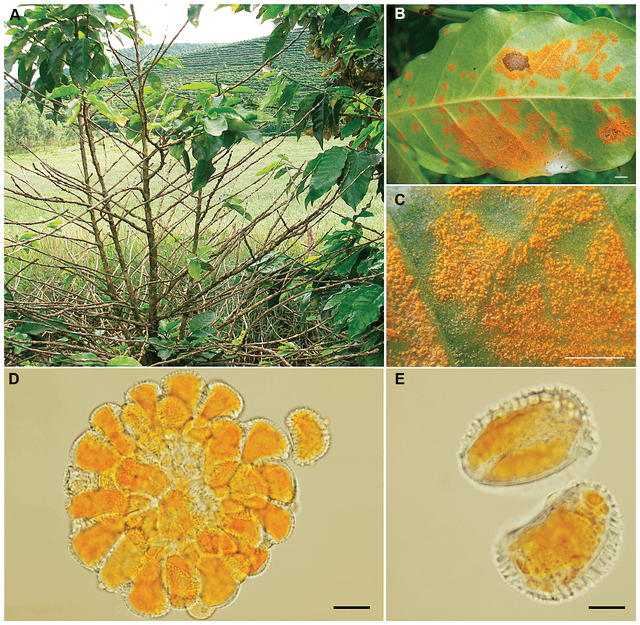
Coffee leaf rust, caused by the fungus Hemileia vastatrix Berkeley and Broome, is one of the main limiting factors in Arabica coffee production, causing production losses of over $1 billion each year worldwide. It has serious social consequences in agriculture and has been linked to changes in climate conditions, the ecology of coffee farms, and repeated economic shocks. Catimor was created just in time for the emergence of leaf rust in the Americas.
From CIFC, the initial Catimor hybrids have been distributed worldwide for local selection and ultimately released to farmers. Catimor and Timor Hybrid are important coffee types. They help farmers prevent crop loss. This ensures we can still enjoy Arabica coffee.
Quality Assessment
Catimor coffee is often considered lower quality than pure Arabica varieties. This is not entirely true; we should not hold onto outdated biases and label all Catimor coffee low-quality. Each batch of Catimor coffee should be evaluated according to current coffee assessment standards. I will provide you with two assessments: one from scientists and one from the market to give you the most objective view.
- Academic Journal:
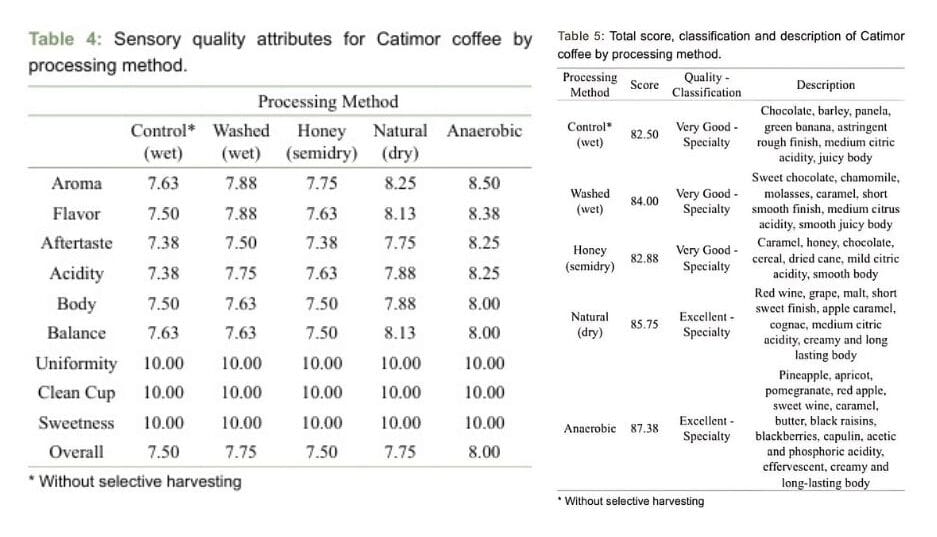
“Effect of processing methods (washed, honey, natural, anaerobic) of Catimor coffee on physical and sensory quality in Alto Inambari, Peru.”
This study evaluates the sensory characteristics of a Catimor variety grown in Alto Inambari, Peru, using four different processing methods: washed, honey, natural, and anaerobic. You can refer to the results below; all Catimor samples in the study scored above 80 SCA points, qualifying them as specialty coffee varieties. the result Sensory profile includes nutty and herbal aromas, distinct cherry and berry notes
- Market:
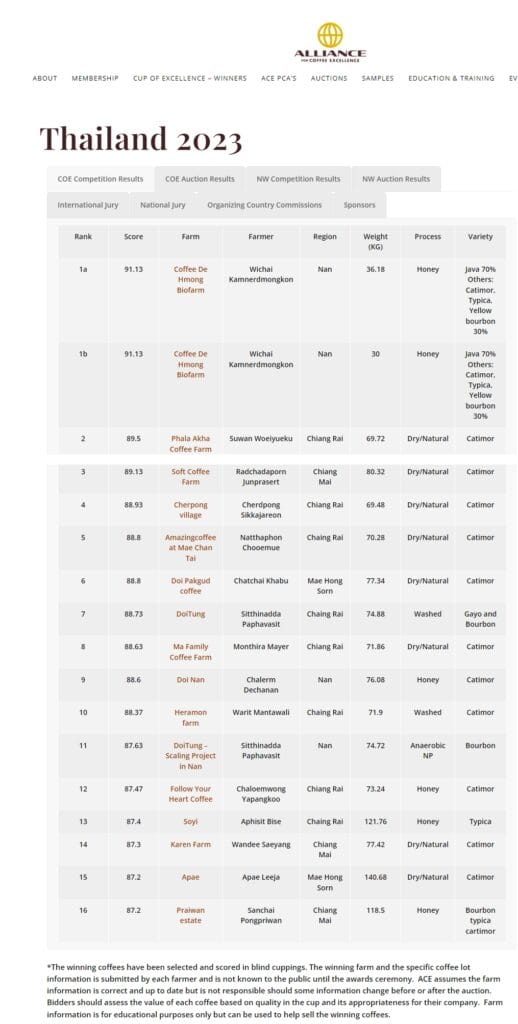
The ranking of Thailand’s Cup of Excellence competition in 2023 featured mainly Catimor coffee beans. You should know that the coffee assessment level of the Cup of Excellence is unmatched in the specialty coffee industry. You can see the COE evaluation of Catimor in the link above. You can also check the highest prices in the auction; from my observation, it is much lower than pure Arabica coffee.
Conclusion
Catimor coffee is not just a coffee variety; it results from creativity and continuous efforts to develop disease-resistant coffee varieties to protect the coffee industry from increasing challenges. With origins from serious scientific research and support from international organizations, Catimor has proven its value in production and flavor quality.
Many still consider it a coffee variety distinct from Robusta and Arabica coffee. And it is considered not to be as good as pure Arabica. However, advances in farming, processing, and brewing show that Catimor can offer rich and varied flavors. Assessments from scientific studies and market success have confirmed that Catimor deserves recognition as a specialty coffee.
So, are you ready to explore and experience the unique flavors of Catimor coffee? Let’s enjoy and evaluate each cup of Catimor coffee together to better understand the richness and diversity of the coffee world. Let’s break down biases and expand our perspective on what Catimor coffee can offer!
Frequently Asked Questions about Catimor coffee
What is Catimor coffee and how does it differ from pure Arabica?
Catimor coffee is a hybrid of Arabica derived from the Timor Hybrid and compact Caturra lines. Unlike pure Arabica, it carries a built‑in leaf‑rust resistance trait, a smaller plant size that improves yield density, and a flavor profile that can include nutty, herbal and berry notes depending on processing.
What are the benefits of Catimor coffee for growers?
Growers benefit from Catimor’s high resistance to coffee leaf rust, reduced need for fungicides, and its compact growth habit that increases annual yield per hectare. The hybrid also shows good adaptability to a range of climates, helping stabilize production and income in coffee‑producing regions.
How does Catimor coffee resist leaf rust?
Catimor incorporates resistance genes from the Timor Hybrid (Hibrido de Timor) that inhibit the growth of Hemileia vastatrix spores. This genetic resistance allows the plant to survive and produce fruit even in areas with heavy rust pressure.
What processing methods best enhance the flavor of Catimor coffee?
Scientific studies show washed, honey, natural, and anaerobic processing all produce specialty‑grade scores above 80 SCA points for Catimor. Beans processed with a washed method often highlight bright acidity and citrus notes, while honey or natural methods accentuate chocolate and berry undertones.
Is Catimor coffee considered specialty and how does it perform in competitions?
Yes, Catimor can achieve specialty status. In the 2023 Thailand Cup of Excellence, several Catimor entries scored highly, demonstrating the hybrid’s ability to compete with premium Arabica varieties in quality assessments.