What You Need to Know About the Caffè Latte in Italy
If you’re traveling through Italy and crave that familiar comforting cup of coffee softened by milk, you need to know the secret handshake for ordering a true caffè latte. In the Italian context, a caffè latte isn’t the giant mug you might get back home; it’s a carefully calibrated drink. It generally consists of a single shot of rich espresso balanced with steamed milk, arriving in a modestly sized cup, usually around 125 ml total. Think of it this way: if an American latte is a wide ocean, the caffè latte in Italy is a perfectly still pond reflecting the morning light.
The quality lies in the texture. You’ll notice the top layer isn’t a deep, stiff dome of foam; it’s more of a thin, velvety layer—a silky blanket that melts quickly into the warm espresso core beneath. This preparation keeps the focus firmly on the espresso’s flavor, complemented by the milk, which is standard Italian coffee culture. When you walk into a bustling caffè, you are participating in a ritual where size and texture speak volumes about authenticity.
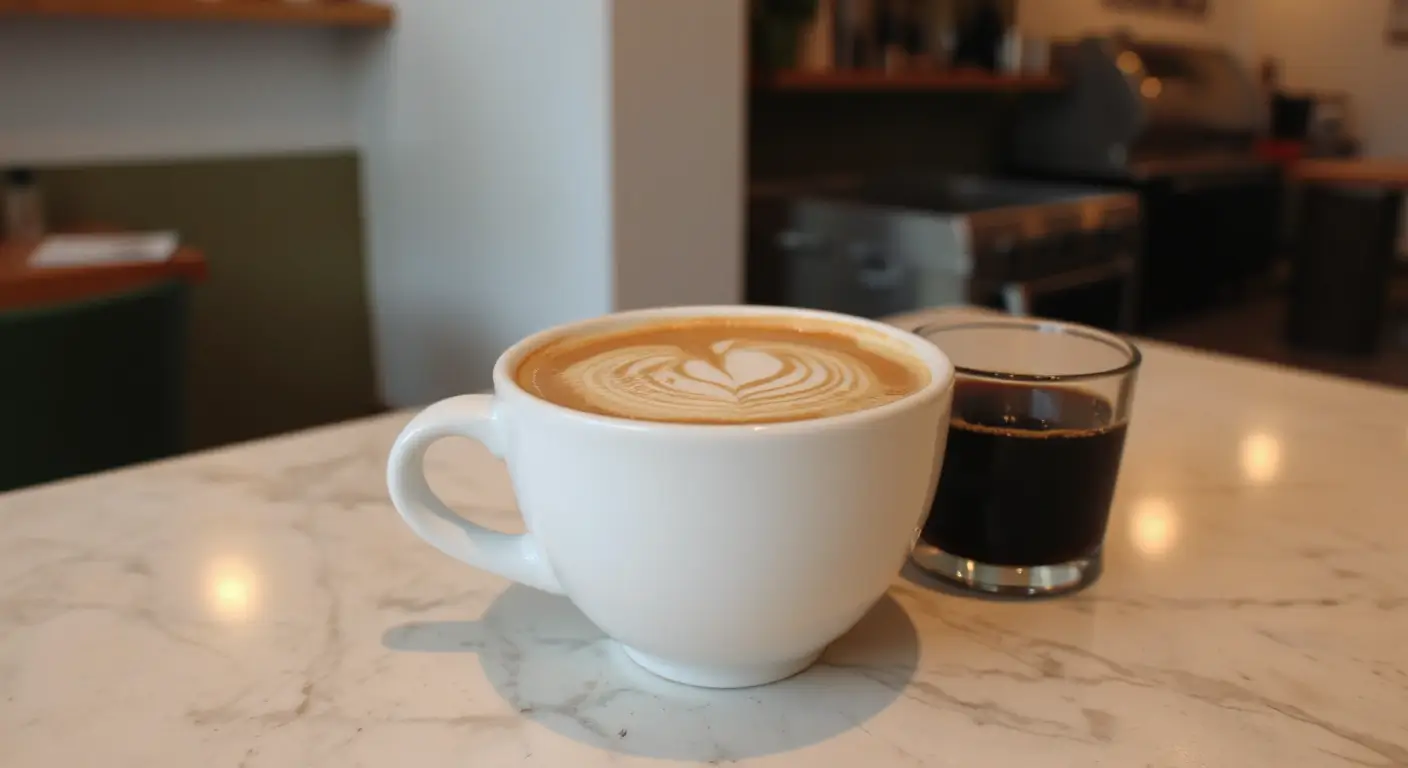
Latte vs. Cappuccino vs. Americano vs. Macchiato: The Key Differences
This is where most travelers get tripped up. Ordering dictates what ends up in your cup, and confusing these terms can lead to an experience that’s less than ideal. When I first visited, I accidentally ordered a latte and received just a glass of milk! To prevent that from happening to you, we need to look at the structure—specifically, the espresso, milk, and foam ratios. Which element do you prioritize—milk, foam, or espresso? Your answer determines your drink.
| Drink | Espresso Shots | Milk Volume | Foam Layer | Total Volume (Approx.) |
|---|---|---|---|---|
| Caffè Latte | 1 | High (Steamed) | Thin, Velvety | 125 ml |
| Cappuccino | 1 | Medium (Steamed) | Thick, Equal Part | 150 ml |
| Americano | 1 | None | None | Varies (Espresso + Water) |
| Caffè Macchiato | 1 | Minimal (Microfoam) | Dollop | 30–40 ml |
If you want a lighter shot of foam with intense coffee flavor, you choose a macchiato. If you want the classic, medium-sized indulgence, the cappuccino is your go‑to. But if the goal is smooth, milk‑forward bliss, keep reading for the true latte Italy breakdown.
Latte
When you ask for a caffè latte, you are requesting a generous 100 ml of steamed milk to complement one shot of espresso. The defining feature is the foam—it’s minimal, perhaps only 1 cm thick, and it’s intended to integrate almost immediately, giving the drink a homogenous, smooth mouthfeel. It remains a morning‑only affair for most Italians, rarely consumed after 11 AM, but that’s their rule, not yours!
Cappuccino
The cappuccino follows a strict 1:1:1 ratio: one part espresso, one part steamed milk, and one part structured foam. That foamy layer is noticeably thicker and fluffier than what tops a latte, acting almost like a meringue cap that stays visible right up until the last sip. Because of this higher foam content and temperature, it’s usually served slightly larger than a standard latte, around 150 ml.
Americano
If you are looking for something milk‑free but want to stretch that espresso shot, the Americano is the answer. It is simply one or two shots of espresso lengthened with hot water, creating a drink with a lighter body than a straight espresso but without any of the creaminess of milk. It’s the Italian way of drinking a filter coffee substitute, still retaining that punch but without much sweetness.
Macchiato
The caffè macchiato in Italy—or simply *macchiato in Italy*—is the polar opposite of the latte in size. The name translates literally to “stained,” because it is just a shot of espresso stained with the tiniest dollop of milk foam. This is a quick caffeine hit consumed standing at the bar, usually under 40 ml total. It has zero milk volume to speak of, making it perfect when you need the coffee’s intensity without the added body.
Mastering the Italian Café Phrases for Ordering a Latte
Language can feel like a barrier, but mastering three simple phrases will instantly earn you the respect of any barista. To properly order your milk coffee in Italian, confidence is half the battle. The canonical phrase you need to memorize is straightforward: “Un caffè latte, per favore.” Make sure to use “caffè latte” and not just “latte,” which, as we learned, just means milk! Practice the pronunciation silently: “OON kahf-feh LAHT-eh, per FAW-voh-reh.”
If you want to be extra polite or ask for something slightly different, remember that Italians appreciate brevity. You can modulate your request: “Un latte piccolo, grazie” if you want a smaller size or perhaps ask for a touch of sweetness: “Con un pizzico di zucchero, se possibile.” The texture of Italian espresso is highly valued, and researchers in sensory coffee science note how precise terminology impacts expectations regarding mouthfeel, requiring accurate descriptive language to communicate sensory attributes beyond just “body” Espresso Coffee Beverage: Classification of Texture Terms. Say it clearly and be ready to make your payment right away.
Regional Nuances: How Latte Is Prepared Across Italy
While the foundational components are the same, ordering a latte Italy in Milan isn’t guaranteed to yield the exact same result you get in Naples. Italy is wonderfully regional, and this holds true even for our beloved caffè latte. I’ve found that the espresso blend itself often shifts, altering the final flavor profile.
- Milan: Up north, you might find the froth slightly thicker than the standard, perhaps a more pronounced 1‑cm velvety cap that dominates the surface, often served in a slightly shorter vessel overall, around 125 ml.
- Rome: The capital tends toward a lighter touch. Expect thinner, airy foam that barely touches the latte, allowing the milk to feel lighter. The espresso base often features a brighter, almost citrus‑tasting crema.
- Naples: Down south, caffè is serious business. Here, the espresso dominates, meaning the milk is there to soften, not dominate. The froth tends to be kept very thin, and sometimes you might even see a pinch of sugar stirred in before serving.
- Sicily: In the south, the size tends to shrink even further, maybe around 110 ml. The regional touch here is often aromatic: look out for a dusting of cinnamon or nutmeg on top, adding a warm, spicy note.

The Little Rules of Café Etiquette: How to Talk to a Barista Like a Local
My first morning standing at the bar, I realized it wasn’t just about the drink; it was about the interaction. Italians do things differently when grabbing their daily caffeine hit, and observing these simple dos and don’ts will make your service smoother and faster. First rule: never approach the counter without a greeting. Always start with “Buongiorno” (morning) or “Buonasera” (afternoon).
- DO: Have your money ready before ordering, especially if you are paying cash. In many smaller caffè, you pay at the register first, get a receipt (scontrino), and then take that receipt to the barista to have your drink made.
- DON’T: Hang around the seating area (tavola) if you are just having a quick espresso or latte. That’s for tourists; locals drink standing at the bar (al banco) for the cheaper price and the quick experience.
- DO: Keep your requests direct. If you need an extra spoon or a napkin, ask politely once.
- DON’T: Ask for substitutions like non‑dairy milk unless you are at a large hotel or major chain. Oat or soy milk is rare outside the biggest tourist centers.
- DO: Say thank you (grazie) when you receive your drink and when you leave.
Quick Cheat Sheet: Essential Words & Common Expressions
When you’re standing at the bar, you don’t want to spend precious seconds translating in your head. Keep this short list handy for anything else you might want to order during your trip beyond the caffè latte. Italians certainly have a distinct preference set compared to global trends; for instance, statistics suggest that approximately 80% of coffee drinkers consume coffee at home, though on‑the‑go consumption remains high throughout the day coffee culture by the numbers as of 2023.
- Caffè: The default order; means a single shot of espresso.
- Doppio: A double shot of espresso.
- Caffè Latte: Espresso with steamed milk and thin foam (what we want!).
- Cappuccino: Espresso, equal parts steamed milk and thick foam.
- Caffè Macchiato: Stained espresso (espresso + dollop of foam).
- Caffè Nero: Literally “black coffee,” meaning a straight espresso.
- Latte Piccolo: A small milk coffee (often perfectly matches the standard *caffè latte* size).
Flexibility: What to Do If They Offer a Different Name or Size
Sometimes, you’ll look at the menu and see variations that use terms like latte macchiato or latte normale. Don’t panic! If the menu lists a latte piccolo, that is usually the closest equivalent to the US standard caffè latte we are aiming for (around 125 ml). If you see latte grande or latte americano on a menu, be wary; these will inevitably be much milkier and larger, closer to 300 ml, blurring the lines of authenticity.
My tactic, when in doubt, is to politely verify. I’ll point to what I suspect is the right size on the counter or ask: “Posso avere un latte di 125 ml, per favore? Un caffè latte?” This clearly communicates the desired volume while using the correct name. Remember, your goal is the silky texture of the true Italian preparation, not the often overly foamy, oversized American model. By confirming the size, you ensure the barista pulls the right ratio for that container.
Your Next Steps: Your Italian Latte Order Is Ready for Take‑Off
You are now equipped with the precise terminology and the cultural savvy needed to secure an authentic, silky caffè latte on your next Italian adventure. Recall the ratios, practice your pronunciation—“Un caffè latte, per favore”—and respect the morning‑only tradition. Don’t forget the regional quirks; a Milanese sip is different from a Sicilian one, and that’s part of the fun. Go forth, greet your barista warmly, and enjoy coffee exactly as the locals intended.
FAQ on Ordering Coffee in Italy
Q: If I just ask for a “latte,” what will I get?
A: In Italy, latte simply means milk. You will likely receive a glass of plain, cold or warm milk—perfect for children, but not for your caffeine fix! Always specify caffè latte.
Q: Can I order a latte after lunch?
A: You can order it, but you’ll find most cafes will prefer you order a single espresso or caffè macchiato in Italy after midday. Milk‑heavy drinks are strictly reserved for the morning ritual.
Q: Should I tip the barista for my latte?
A: For standard orders served quickly at the bar (al banco), tipping is generally not expected, unlike in the US. If you sit down at a table (al tavolo), a few extra coins left on the table for service is appreciated.
Q: What is the difference between a *latte* and a flat white in Italy?
A: Italy generally doesn’t have the “flat white” on its standard menu. The closest in texture would be the traditional caffè latte due to its thin, velvety foam, but its volume is usually smaller than what you might expect from an Australian or New Zealand flat white.
Q: Can I get a larger size, like an American style?
A: You can ask for a doppio (double espresso) with more milk, but you should frame it as a modification rather than expecting a standard large size. Try asking for a latte grande, but be prepared for a slightly different composition.