Brazilian authorities have uncovered
44 cases of irregularities in roasted and ground coffee so far in 2026, extending a nationwide crackdown on fraud in the world’s largest coffee producer. The figures, disclosed in mid‑May by Helena Pan Rugeri of Brazil’s Ministry of Agriculture and Livestock (Mapa), follow a series of recalls and seizures that have put so‑called “fake coffee” under intense scrutiny.According to
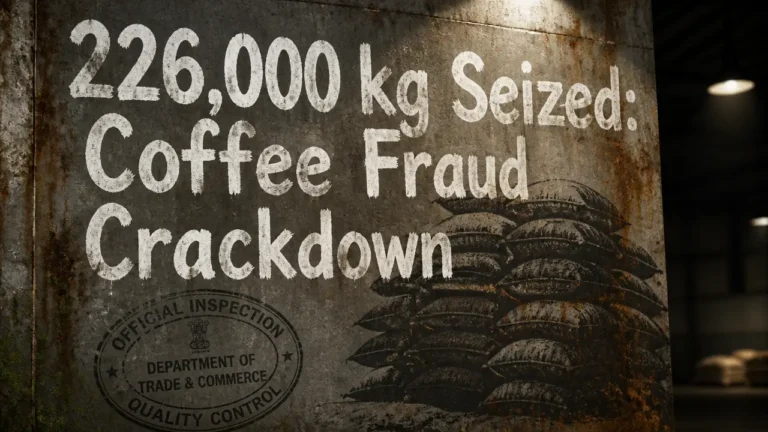
Valor International, which cited Rugeri’s presentation, Mapa logged 44 irregular cases in 2026 after identifying 85 such cases in 2025. Rugeri said that of 120 complaints received about plant‑based products, 58 investigations had been concluded and 75.9% led to confirmation of an irregularity, a rate she described as evidence that complaints are highly accurate. Between 2023 and 2026, Valor reported, Brazilian inspectors seized 226,000 kg of roasted and ground coffee and 85,000 kg of green coffee beans.Rugeri, General Coordinator of Fiscal Operations at Mapa’s Department of Inspection of Plant‑Based Products, told Valor that “despite budgetary constraints” inspectors carried out 943 collections of plant‑based products in 2026, 88 of which were roasted and ground coffee. In 2025, according to Valor and
Globo Rural, Mapa collected 711 samples of roasted and ground coffee and 54 samples of green coffee for analysis of pesticides, ochratoxin and other parameters.The enforcement push gained prominence after the Brazilian Coffee Industry Association (
ABIC) reported “fake coffee” brands to regulators in early 2025. Reuters reported via
van.nongnghiepmoitruong.vn that ABIC first identified suspicious products on sale in the city of Bauru in São Paulo state in February 2025 and alerted Mapa and health regulator Anvisa. Valor later reported that Mapa had confirmed only three cases of “fake coffee” nationwide, involving products that contained coffee husks and residues but were marketed as coffee.Price tensions in Brazil’s domestic market form an important backdrop. Reuters, in coverage carried by van.nongnghiepmoitruong.vn, reported that coffee prices in Brazil rose more than 50% in the three months leading up to February 2025, with global coffee prices hitting all‑time highs on tight supplies. The same report noted that “fake coffee” products such as Oficial do Brasil sell for about one‑third the price of conventional coffee, positioning them as an option for highly price‑sensitive consumers.This price gap has also created friction between the traditional coffee industry and alternative beverage producers. Referring to the fake coffee brands, ABIC executive director Celirio Inacio da Silva told Reuters it was “a clear attempt to fool consumers.” In response, Master Blends Indústria de Alimentos Ltda, producer of Oficial do Brasil, said in the same report, “We never said it was coffee. We created a product to meet the demand of a class of consumers that is suffering from high prices.”Domestic public procurement has been another hotspot. Agro news outlet
Agro em Campo reported that in Paraná state in 2025, 53% of coffee samples taken from public purchasing programs showed irregularities, leading to the seizure of around 40 tonnes of product, equivalent to 80,000 half‑kilogram packages. Out of 186 samples collected there, 168 laboratory reports were completed and 89 samples were disqualified, with impurities in some cases more than 20 times above Brazil’s legal limit; these inspections follow coffee‑specific rules for public contracts under Portaria SDA nº 570, in force since 2022.Industry associations say they support firm action while stressing that irregular coffee represents a small share of Brazil’s vast output. Valor quoted Sérgio Meirelles, president of the Coffee Industry Association of the State of Minas Gerais (Sindicafé‑MG), as saying that irregular coffee production accounts for less than 1% of the coffee commercialized in Brazil and that irregularities “worry the industry as a whole.” Meirelles said ABIC and Sindicafé penalize members who do not adopt appropriate practices, highlighting concern for consumer trust.ABIC president Pavel Cardoso pointed to a 2025 operation in Rio de Janeiro as an example of coordinated enforcement. In remarks reported by Valor, Cardoso said, “In Rio de Janeiro, we managed to align all public bodies and, in a first action in 2025, we seized more than 16 tonnes of coffee. In less than six months we had a drastic reduction in fraud.” He added that the association wants to extend this model to the rest of Brazil as Mapa maintains its inspection program for roasted and ground coffee.

 By | May 22, 2026