
Heavy stuff ahead. DeLonghi’s lineup hides an uncomfortable truth that’ll save you serious cash: the extraction unit, the actual heart pumping out your espresso, stays largely identical across their automatic lines, even when the price jumps $1,000. According to deep-dive discussions on specialty coffee forums and comparative reviews from sites like Coffeeness, you’re paying premiums for milk texture wizardry, app connectivity that loses its charm after two weeks, and chassis materials that photograph well. My job here is to show you where the engineering budget actually landed, so your wallet doesn’t take an unnecessary beating.
The Pricing Game DeLonghi Plays
Before we audit individual machines, you need to see the pattern.
DeLonghi systematically separates sticker price from actual brewing performance. They load up consumer electronics, Wi-Fi modules, touchscreens, dual bean hoppers—while the foundational mechanical bits stay fixed. Coffee blogs comparing internal specs across the Dinamica, Primadonna, and Eletta lines confirm this standardization.
Here’s where it gets messy for buyers:
The Flavor Ceiling: Premium pricing doesn’t unlock superior shot extraction. It buys you convenience theater like automatic cold froth or bean-switching automation. If you want genuine flavor improvement, you’re looking at the manual La Specialista line, not the high-dollar automatics. Seattle Coffee Gear’s side-by-side taste tests back this up.
Feature Graveyard: You buy into fifty pre-programmed drink profiles, but Reddit threads on superautomatic ownership show users consistently revert to one, maybe two favorites. That massive capital expense devoted to software complexity? It fades into irrelevance three months post-purchase.
The Support Abyss: This is the real hazard. Community discourse on r/espresso paints a grim picture—customer support for warranty claims is described as “systemically non-functional.” Any major failure on an expensive automatic might result in a total loss, not a reasonable repair turnaround.
This structure forces us to sort these twelve machines not by price tags, but by what actual problem they solve for your daily routine.
The Skill-Required Machines
These demand your attention and effort. Coffee quality scales directly with how much you’re willing to learn.
DeLonghi Stilosa – The Fixer-Upper That Rewards Tinkerers
Affiliate Disclosure
This post contains affiliate links, meaning I may earn a commission if you make a purchase through these links, at no additional cost to you. As an Amazon Associate, I earn from qualifying purchases. I only recommend products I genuinely believe will add value.
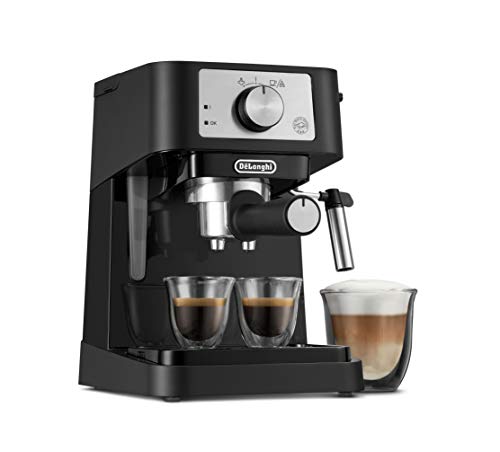
De'Longhi Stilosa Manual Espresso Machine, Compact Coffee Maker, 15 Bar Pump Pressure, Manual Milk Frother Steam Wand for Authentic Single & Double Espresso, Lattes & Cappuccinos, Tamper Included
- Please refer to user guide or user manual or user guide (provided below in PDF) before first use
- Includes Portafilter, measuring scoop/tamper and two filters for single or double espresso
- Stainless steel boiler is engineered to last long and work for years
- Manual steam wand to texture milk for lattes and cappuccinos
This is where hobbyists enter, but don’t mistake it for a finished product.
It runs a 15-bar pump system with a compact 1.0L water reservoir and uses DeLonghi’s proprietary portafilter setup. On paper, it looks like an affordable entry point. In practice, Coffee Chronicler’s modification guide makes it clear: to get usable extraction yield above 18%, you need immediate intervention. The factory setup is inherently unstable.
This isn’t cheap coffee access—it’s a budget-first build where the real price tag includes a mandatory $70 accessory budget for a naked portafilter and precision basket. You’re buying the skeleton, not the performance.
Here’s the deal with the pressurized portafilter it ships with: think of it like a tiny pressure cooker attached to your grounds basket. It’s engineered to fake decent espresso extraction even with mediocre grinders. If you want actual flavor control, you swap it for a naked (non-pressurized) basket immediately. That’s upgrade number one, not an optional nice-to-have.
Your decision point: Go this route if your primary goal is learning manual pressure profiling on a tight budget and you’re already planning that accessory spend. Skip it entirely if you expect café-quality shots out of the box—this machine is designed to be opened up and modified.
La Specialista Series (Arte/Prestigio) – For People Who Enjoy The Process

De'Longhi La Specialista Arte Evo Espresso Machine - Compact Cold Brew Coffee Maker with Grinder, Milk Steam Wand/Frother & Tamping Tools - Home Barista Kit for Lattes, Cappuccinos, Iced Coffee
- BUILT-IN BURR GRINDER. The conical burr grinder delivers a precise, consistent dose of freshly ground coffee f…
- POWERFUL STEAM WAND. This commercial-style steam wand heats up quickly, delivers the right steam pressure need…
- COLD EXTRACTION TECHNOLOGY. Enjoy cold brew in under 5 minutes with De’Longhi’s proprietary Cold Extraction Te…
- BARISTA KIT. The professional barista toolkit makes your experience mess-free and easier than ever with the do…
- IDEAL PRESSURE. La Specialista Arte Evo has a 15 bar Italian pump that delivers perfect pressure, which is ess…

De'Longhi EC9355M La Specialista Prestigio Espresso Machine , 1.3L, Stainless Steel,Silver
- FRESHEST COFFEE, EVERY TIME: Integrated burr grinder with two sensors delivers consistent grinding and optimal…
- TAMPING WITH EASE AND LESS MESS: Proprietary Smart Tamping Station significantly reduces mess and tamps coffee…
- MORE CONTROL OVER EXTRACTION: Explore single wall filter baskets for greater espresso experience
- DYNAMIC PRE-INFUSION: Consistently evenly wet coffee for the right extraction
- 1 SECOND QUICK START: Power the machine on and immediately start grinding.ACTIVE TEMPERATURE CONTROL
These look manual but pack guidance systems. You’re paying for hand-holding, not just hardware.
They swing up to a 19-bar system, feature an integrated 15-step grinder, and use dual heating elements for rapid steam recovery. Marketing materials highlight the consistent 20kg tamping station as premium automation. Social reality check from Coffeeness: while the tamping is clean, you still manage dosing and grind dialing by hand. Skip those steps, and you get channeling—uneven extraction that tastes thin and sour.
The labor tax is high. You’re manually prepping the puck every single time. The stainless steel housing feels premium, but you’re paying for engineering around the process, not automated results.
That 15-step grinder gives you precision, but precision demands your focus. Beans change slightly batch-to-batch, humidity shifts, roast dates matter—you dial it in again each time. Skip this step, and the expensive machine spits out mediocre coffee. Classic case of engineering that expects constant user attention.
Your decision point: This machine works if you genuinely enjoy the ritual and need precise control over shot parameters without juggling a separate grinder. It fails hard if you secretly want full automation hidden inside a semi-automatic body—it’ll feel like exhausting homework.
La Specialista Touch – The Smart Compromise

De'Longhi La Specialista Touch Espresso Machine with Grinder & Milk Frother – Cold Brew & Iced Coffee Maker, Burr Grinder, 10 Drink Presets, Compact Bean to Cup, Award-Winning Italian Design
- Crafted by You. Perfected with Guidance: The La Specialista Touch semi-automatic espresso machine grinds, dose…
- 10 Preset Drink Recipes + Endless Customization: 10 preset recipes including espresso, americano, long black, …
- Interactive Guided Experience to Dial In Your Machine: Our innovative Bean Adapt technology assists you in set…
- Conical Burr Grinder for Freshly Brewed Coffee Every Time: The Italian-made conical burr grinder delivers a pr…
- Automatic Milk Frothing: The automatic steam wand adjusts between 5 froth levels and 4 temperature settings ba…
DeLonghi’s attempt to bridge DIY mastery and push-button convenience.
It keeps the integrated grinder, offers five temperature profiles, and includes dedicated Cold Extraction Technology for iced drinks. According to BBC Good Food’s testing, this model justifies its elevated cost by automating the most common failure point in manual machines: puck preparation and tamping. The cold brew feature is a functional, software-enabled solution for a niche craving.
You’re paying a hefty premium for a software layer placed over mechanical stability. That stability hinges on maintaining complex dual heating systems—more parts, more potential failure points.
Your decision point: This works if you want the expressive control of manual dialing but need the machine to handle messy tamping inconsistency for you. It’s a bad buy if you don’t plan to use the specialized cold brew feature—you’re overpaying for a single temperature trick.
Dinamica Plus – The Aging Former Flagship

De'Longhi Dinamica Plus Fully Automatic Espresso Machine - Brew Personalized Coffee for up to 4 User Profiles, 24+ Recipes, Built in Grinder & Automatic Milk Steam Wand with 3 Frother Modes
- Enjoy 24 one-touch or customized espresso drinks including: latte, espresso, cappuccino, flat white, iced coff…
- Built-in conical burr grinder with 13 settings ensures freshly ground coffee with any beans of your choice.
- LatteCrema Hot System for frothing milk or milk alternatives. The automatic, customizable system delivers a cr…
- 3.5” TFT full-touch screen, colorful display, and soft-touch buttons to quickly sort through and customize rec…
- Smart One-Touch system recognizes your preferences and lists your most frequently selected drinks first.
This machine shows its age because the market moved faster than it could keep up.
It uses a touchscreen interface, a steel conical burr grinder, and an automated milk system. This was once a flagship, but its value proposition eroded when newer units like the Rivelia solved workflow issues faster than the Dinamica Plus improved extraction. As noted in comparisons from HomeCoffeeExpert, people rapidly abandon its large programmed menu—classic feature decay.
You’re looking at value depreciation. An investment in hardware whose primary selling points (feature density) are proven to have low long-term utility.
Your decision point: Consider it only if found heavily discounted and you genuinely benefit from its robust preset customization profiles. If buying new, the Rivelia has effectively made this model obsolete in the workflow department.
The Workflow Solvers
These models earn their price tags by solving specific, high-friction problems in multi-user households where full automation is necessary.
DeLonghi Rivelia – The Logistics Champion
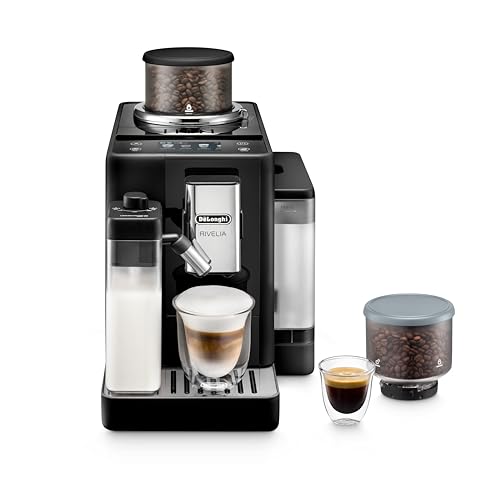
De'Longhi Rivelia Automatic Espresso Machine with Grinder & Milk Frother – All-in-One Coffee Maker, Hot & Iced Latte, Cappuccino, Bean Switch System, Burr Grinder, Compact Italian Design, Black
- CRAFT COFFEE SHOP FAVORITES WITH JUST ONE TOUCH With one touch, grind, dose, brew, and froth your favorite cof…
- PERSONALIZE TO YOUR TASTE Take customization to the next level by adjusting the intensity, quantity and amping…
- TWO REMOVABLE BEAN HOPPERS Effortlessly rotate different flavors into your coffee routine with two 8.8-oz inte…
- AUTOMATIC MILK FROTHER Instantly froth milk or plant-based alternatives into velvety smooth hot foam with the …
- ELIMINATE GUESSWORK WITH STEP-BY-STEP GUIDANCE Expertly set and automatically save the ideal grind, dose level…
If you need automation that elegantly manages multiple bean types, this is where engineering dollars actually went to work.
It boasts dual bean hoppers, the Bean Adapt System, and TFT touchscreens. Its elevation to “best overall” in CoffeeBlog’s comprehensive guide is based entirely on logistics management—the ability to switch instantly between two types of beans without opening the machine or purging the old batch. This beats the Eletta’s sheer feature count on practical grounds.
The engineering focus is entirely upstream (grinding and sourcing), not downstream (extraction quality). Long-term component integrity beyond the initial year remains an open question based on the newness of the model.
Here’s what Bean Adapt actually does: if you switch from a dark roast to a light roast, the machine recognizes the density difference and adjusts the grind setting automatically. This is a massive leap in convenience over manual guessing and dialing.
Your decision point: Buy this if you have two distinct bean preferences in your home (dark roast vs. light roast, or regular vs. decaf) and need instant switching capability. Skip it if there’s only one bean type in rotation—the dual-hopper investment offers zero functional return.
Magnifica Evo – The Accidental Milk Genius

De'Longhi Magnifica Evo Automatic Espresso & Coffee Machine with Auto Milk Frother, Built-in Grinder & Auto-Clean Function - For Latte, Cappuccino, Americano, Iced Coffee, ECAM29084SB , Silver
- 7 ONE-TOUCH RECIPES: 7 one-touch or customized coffee drinks: espresso, cappuccino, latte macchiato, iced coff…
- PERFECT GRINDING: 13 grind settings means all of your bean varieties are optimally prepared for extraction. Th…
- LATTECREMA SYSTEM: De'Longhi's proprietary technology textures both milk and milk alternatives and can be stor…
- ENJOY ICED COFFEE: Over Ice recipe automatically adjusts the dose and brew to create a refreshingly bold & bal…
- PERSONALIZE WITH MY LATTE: Allows you to personalize and save your own recipes
This cheaper automatic has a quirk users absolutely love.
It uses a standard 15-bar pump, basic LCD display, and a single milk carafe. According to Seattle Coffee Gear’s testing, this budget automatic accidentally created the best basic milk texture. The Evo’s fixed milk carafe produces foam density that users report is thicker than the maximum setting on the pricier Explore or Plus models.
As it turns out, there is a scientific basis for this “accidental” win: dairy researchers recently noted in the International Dairy Journal that microfoam density is highly sensitive to specific nozzle geometry and steam parameters. By hitting a precise sweet spot in how water is incorporated during the frothing process, the Evo’s specific nozzle design likely manages air incorporation and protein stability more effectively than its more complex siblings. The result is a classic case of “less is more,” where simpler hardware actually yields a superior, more stable foam texture.
The catch: you’re locked into one milk texture. If you want to change it, you step up in price, even though the baseline is arguably superior for foam structure.
Your decision point: This works if you exclusively drink one milk-based drink (like a standard cappuccino) and want the thickest available foam without paying for complex customization features. Pass if you need steamed milk texture variance or dislike the fixed density it outputs.
Maestosa – The Capacity King Nobody Needs
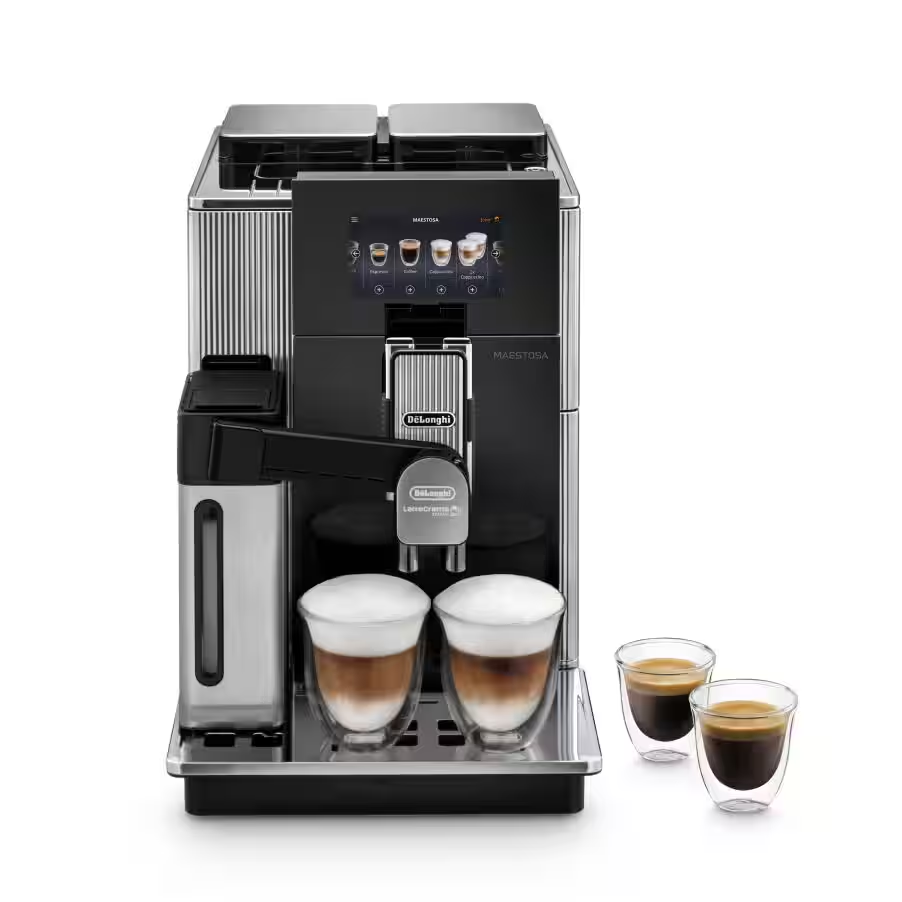
This is the flagship for pure redundancy and status signaling.
Its key differentiator is dual grinders, premium finishes, and Wi-Fi connectivity. According to CoffeeBlog’s breakdown of DeLonghi’s premium tier, this machine’s entire massive price premium derives only from hardware redundancy: the ability to grind two different beans simultaneously and segregate decaf waste. It offers no systemic brewing improvement over cheaper models.
You’re looking at extreme capital expenditure for a convenience feature. If you don’t routinely need two types of beans ready to go simultaneously, you’re simply paying for status and added complexity risk.
Your decision point: This makes sense only if your household genuinely runs on multiple distinct bean types simultaneously (one user drinks dark roast espresso, another only drinks light roast decaf) and budget is completely irrelevant. Otherwise, the Rivelia offers better overall value for single-bean-type households.
Magnifica Plus – The Sensible Step Up
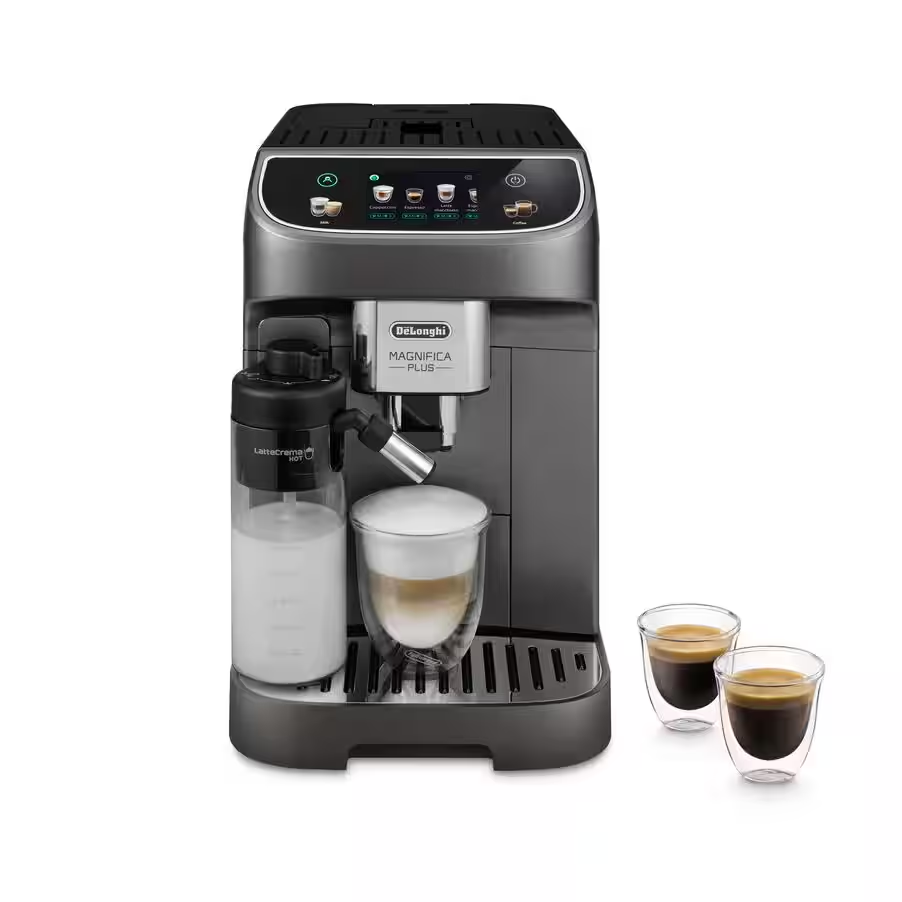
This machine fixes the primary complaint about the base Evo—lack of control.
It’s an upgrade from the Evo with adjustable foam settings and an improved touchscreen. According to Seattle Coffee Gear’s comparison, this model solves the single biggest limitation of the Evo—the fixed milk texture. It allows users to dial in foam density while maintaining a reasonable price point below the flagship Eletta tier.
It’s an incremental upgrade. You’re paying for moderate customization friction reduction, nothing revolutionary.
Your decision point: Go this route if you need adjustable milk texture automation but don’t want the complexity or price tag of the Eletta Explore. Skip it if you’re happy with basic automation—the Evo is functionally cheaper for the same core brewing function.
The Value Traps
These models are incredibly capable but suffer from the fastest depreciation in utility and highest price tags relative to the actual mechanics inside. You’re buying the newest interface and the most complex feature set.
Eletta Explore – The Recipe Encyclopedia You Won’t Read

De'Longhi Eletta Explore Espresso Machine with Cold Brew, Hot & Cold Milk Frother - 50+ Recipes, Built in Grinder, User Profiles, Smartphone Compatible with Bean Adapt Technology for Ideal Extraction
- 50+ ONE-TOUCH RECIPES. 50+ Hot & Cold Recipes including Espresso, Cappuccino, Latte, Iced Cappuccino, Iced Lat…
- BUILT-IN GRINDER. The built-in grinder delivers a precise, consistent dose of freshly ground coffee for all yo…
- HOT & COLD FOAM TECHNOLOGY. Two LatteCrema Systems with Hot and Cold Foam Technology. The LatteCrema Hot Syste…
- COLD EXTRACTION TECHNOLOGY. Enjoy cold brew in under 3 minutes with De’Longhi’s Cold Extraction Technology. Th…
- SIMPLE & INTUITIVE DISPLAY. A 3.5” TFT full-touch, colorful display and soft-touch control icons are intuitive…
This machine excels at novelty but struggles with sustained utility.
It boasts over fifty programmable recipes, dedicated cold milk foam technology, and Wi-Fi app connectivity. According to BBC Good Food’s extensive testing, it dominates in variety, handling iced drinks and specialized profiles beautifully. However, Reddit threads on superautomatic ownership are brutally clear: users quickly settle on only two or three profiles, rendering the other 47+ features unused noise.
This represents a massive upfront investment for features that don’t sustain utility past the initial wow factor. This machine also carries the highest potential cost if its complex fluid dynamics fail, pushing you into the broken support ecosystem described in community forums.
Your decision point: This works if your primary focus is reliably producing cold lattes or highly specialized drinks daily. It’s a terrible buy if you’re a standard espresso or americano drinker—you’re financing a recipe book you’ll never open.
Primadonna Elite – The Prestige Shell
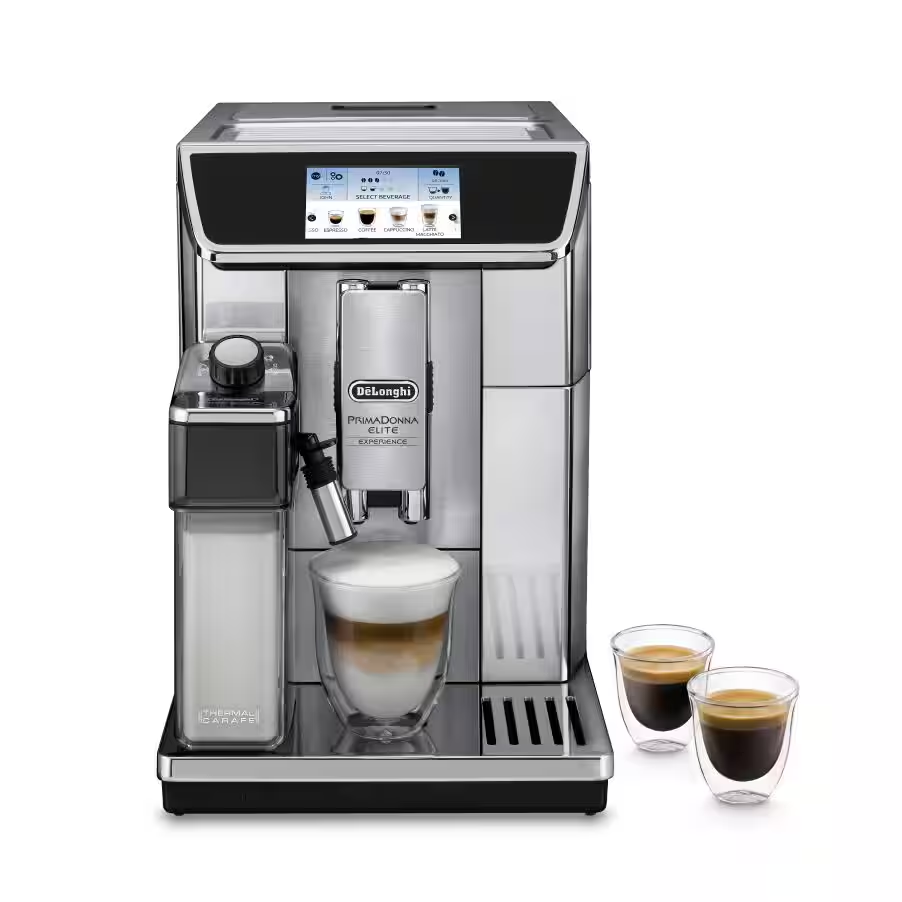
You’re paying for bragging rights, plain and simple.
It features premium metal finishes (titanium-effect plastics) and high-tolerance proprietary milk hardware. Like the Eletta, the premium price signals superior milk capability (cold whip/foam), but as noted in CoffeeBlog’s internal comparison, extraction hardware remains standardized against mid-tier models. You’re mainly paying for the “Elite” branding and metal exterior. The whole Primadonna line is structurally similar to the standard Dinamica internally, just with better aesthetics.
Maximum initial capital outlay for zero measurable gain in the quality of the espresso shot itself. This is a massive financial commitment weighted entirely on aesthetic preference and milk texture complexity.
Your decision point: Buy this only if budget is irrelevant and the specific texture output of the proprietary milk system is non-negotiable for your drinks. Skip it if you care about long-term total cost of ownership—the high maintenance risk on proprietary milk tech is significant.
Magnifica Start – The Forgettable Baseline

De'Longhi Magnifica Start Automatic Espresso Machine with Auto Milk Frother & Built in Grinder - 5 One-Touch Recipes, Easy-to-Clean, Home Barista Coffee Maker for Lattes, Cappuccino, Iced Coffee
- 5 ONE-TOUCH RECIPES: Enjoy Latte Macchiato, Cappuccino, Espresso, Coffee, and Hot Water at the touch of a butt…
- PERFECT GRINDING: 13 grind settings means all of your bean varieties are optimally prepared for extraction. Th…
- LATTECREMA SYSTEM: De'Longhi's proprietary technology textures both milk and milk alternatives. The automatic …
- EASY TO CLEAN: Removable and dishwasher-safe parts for easy clean up.
This is the baseline for the next generation of entry-level automatics.
It features soft-touch icons and baseline automation setup, providing a fixed performance profile. According to HomeCoffeeExpert’s lineup analysis, this model is positioned to replace the Evo as the low-cost baseline. The data suggests it’s a slight refinement of the absolute entry-level experience with no standout features.
It offers no distinguishing characteristic that clearly justifies moving away from the slightly older Evo or stepping up to the Plus. It’s a safe but unexciting placeholder.
Your decision point: Consider this only if you need dead-simple, push-button operation and can find it at a significantly lower price than the Evo. Otherwise, the Evo often shows surprising milk utility for the money.
Dinamica – The Awkward Middle Child

De'Longhi Dinamica Espresso Machine, Black - Automatic Bean-to-Cup Brewing, Built-In Steel Burr Grinder & Manual Frother - One-Touch Hot & Iced Coffee - Easy Cleanup
- Effortless Drink Selection: Dinamica
- Intuitive Control: Touch Panel with Backlit Icons
- Versatile Espresso Brewing: Single or Double
- Adjustable Espresso Length: Three Levels
- Customizable Strength: Five Levels
This SKU is financially trapped in no-man’s-land.
It features the standard automated system and similar grinder options to the Plus tier, but without premium app integration. The Dinamica sits in an expensive slot without delivering flagship convenience. Community discussions and comparison guides show it’s too expensive to compete with budget models and lacks the specialized utility (dual hoppers, cold milk tech) of flagship tiers. It suffers heavily from the feature decay problem.
It’s optimized for no one. It sacrifices aesthetic polish for automated function but fails to deliver breakthrough performance in either category.
Your decision point: Only consider this if you found a deep clearance deal and need a standard, fixed-use automatic that covers basic espresso and latte needs. Otherwise, it sits in the most financially inefficient spot in the lineup.
The Smart Play: Skip the Automation Tax Entirely
Here’s the only reliable path I see to truly high-quality espresso without walking into the high-finance risk traps of the Primadonna or Eletta: The Stilosa Modification Strategy.
De'Longhi Stilosa Manual Espresso Machine, Compact Coffee Maker, 15 Bar Pump Pressure, Manual Milk Frother Steam Wand for Authentic Single & Double Espresso, Lattes & Cappuccinos, Tamper Included
- Please refer to user guide or user manual or user guide (provided below in PDF) before first use
- Includes Portafilter, measuring scoop/tamper and two filters for single or double espresso
- Stainless steel boiler is engineered to last long and work for years
- Manual steam wand to texture milk for lattes and cappuccinos
If you’re comfortable with a learning curve, you skip the $1,500+ automation tax outright. Coffee Chronicler’s detailed breakdown proves the Stilosa chassis is structurally sound enough to facilitate superior extraction if you swap out the weak factory components. By investing $70 in a quality metal portafilter and a precision basket, you immediately move past the $2,000 superautomatics in terms of shot quality.

51mm Bottomless Portafilter 2 Ears with WDT Tool & Puck Screen, Stainless Steel Filter Basket and Rosewood Handle, Compatible with Delonghi ECP3420/EC155/EC260, ECP3120/3220/3630
- 51mm Bottomless Portafilter 2 Ears – See Every Espresso Shot: The open-bottom design lets you watch the entire…
- Precision Fit for 51mm Espresso Machines: Our 51mm bottomless portafilter fits for DeLonghi EC260, ECP3120, EC…
- Complete 51mm Espresso Kit – Puck Screen & WDT Tool: Includes a 1.7mm thick 150μm stainless steel puck screen …
- 18–20g Stainless Steel Filter Basket – Built to Perform: Crafted from premium food-grade stainless steel with …
- Natural Wood Handle: The ergonomic natural wood handle provides a comfortable grip, with unique grain variatio…

MHW-3BOMBER 51mm Espresso Filter Basket, 12g Double-layer Stainless Steel High Precision Extraction Portafilter Basket Filter Fits Most 51mm Portafilter/Tamper, Ridged, FB5619-OS
- 【Dual-Layer Filtration】The upgraded espresso filter basket incorporates a dual-layer design. The inner filter …
- 【Precision Extraction】With 745 laser-drilled perforations, our BEP espresso filter basket ensures a more even …
- 【51mm Basket】Designed to work seamlessly with a variety of 51mm espresso machine portafilters on the market, c…
- 【Durable and Long-lasting】The portafilter filter basket is constructed entirely of food-grade SUS304 stainless…
- 【Enhanced Coffee Flavor】The upgraded straight-sided, flat-bottom design promotes uniform and stable extraction…
This approach recognizes reality: DeLonghi engineers durable shells but sells restrictive software and workflow limitations. You dismantle the restriction yourself and get better coffee for a fraction of the cost.
How I Built This Audit
I didn’t just skim brochures. This analysis is built on two parallel investigations.
First, the technical forensics: I cross-referenced official marketing specs from DeLonghi’s product pages with internal component breakdowns from specialist blogs like Coffeeness, CoffeeBlog, and Seattle Coffee Gear. This revealed what the engineering decision was (dual thermoblocks, for example) and why they made it (zero wait time between espresso and milk shots).
Second, the social reality check: I compared those engineering decisions against actual community sentiment on Reddit’s specialty coffee forums. This exposed the gap between what the company claims features are good for (recipe variety, customization) and what users consistently actually use them for (one favorite drink on repeat). I’m showing you the friction points because I watched users go through entire repair processes only to find the support network effectively useless. It’s about avoiding the purchase that leads to a frustrating support nightmare six months down the line.
FAQ
Q: Why do many DeLonghi entry‑level machines come with a pressurized portafilter and what does that mean for a beginner?
A: The factory installs a pressurized basket so the machine can produce a crema‑like shot without precise grind or tamping. It lets a novice get a drink that looks decent, but it also masks the nuances of true espresso and makes it harder to transition to a non‑pressurized portafilter later.
Q: How does DeLonghi’s standard steam wand compare to a professional‑grade wand in terms of milk texture?
A: DeLonghi typically equips its lower‑priced models with a panarello wand that injects air through a perforated tube, resulting in larger bubbles and a foamy head rather than silky micro‑foam. A professional wand uses a steam nozzle that creates a vortex, allowing skilled users to stretch milk into a glossy texture.
Q: Are DeLonghi machines generally easy to repair or modify, and is it worth the effort?
A: The internal layout often places the pump, boiler and electronics in tight enclosures, making part access cumbersome. While some owners report success swapping a metal portafilter or precision basket, most repairs require disassembly that can void the warranty, so the effort may outweigh the benefit unless you are comfortable with espresso‑tech DIY.
Q: What warranty or service options exist to offset the reported support delays?
A: DeLonghi provides a standard one‑year limited warranty covering manufacturing defects, but extensions must be purchased separately and still rely on the same call‑center network. Some retailers offer third‑party service plans that promise faster turnaround, which can be a practical workaround.
Q: Can inexpensive upgrades bring an entry‑level DeLonghi up to café quality without buying a new machine?
A: Adding a stainless‑steel portafilter, a precision IMS basket and dialing in a finer grind can lift extraction yield into the professional range. The parts cost roughly $120‑$150 and the performance gain is noticeable, though it still won’t match a dedicated semi‑automatic with a high‑end grinder.
Q: Do single‑boiler DeLonghi models suffer from temperature swings that affect espresso consistency?
A: With a single boiler the water is heated for brewing and then quickly switched to steam, which can cause the brew temperature to drift a few degrees before stabilizing. Dual‑boiler or thermoblock designs keep brewing water at a steadier set point, so they generally deliver more repeatable shots.