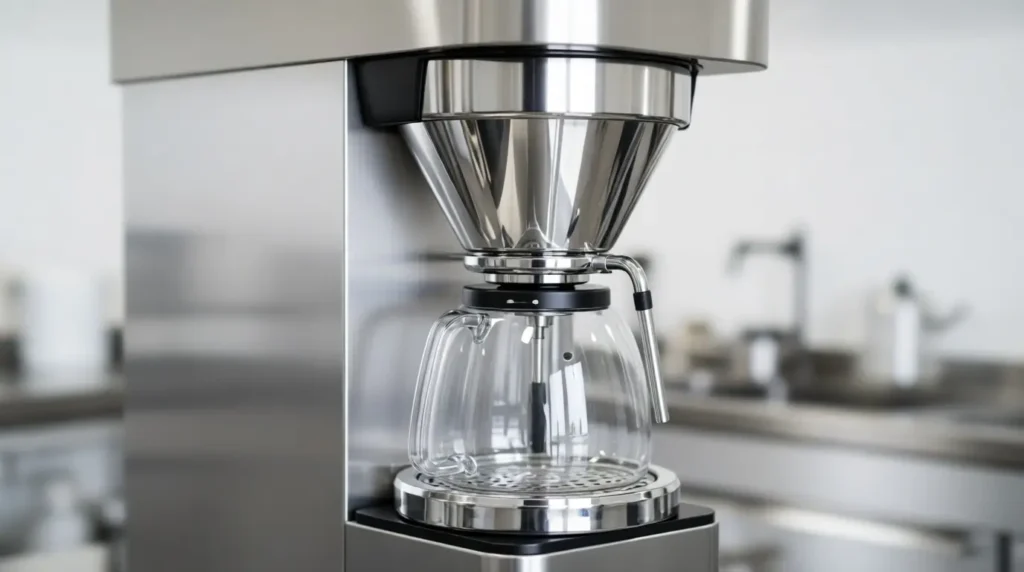
Ultrasonic espresso slashes energy use by 75%
Ultrasonic espresso brewing cuts energy use by up to 75% while matching traditional taste in tests. How will this reshape industrial coffee production?
Plant-based milk surcharge lawsuit in Quebec targets Starbucks, Tim Hortons and Second Cup. Are 80-cent premiums fair when courts cite far lower costs?
Plant-based milk surcharge lawsuit hits Canada chains Read More »
Starbucks Korea Tank Day controversy triggers nationwide early store closure and a 26.3% payment drop—how far will boycotts reshape the brand’s standing?
Starbucks Korea Tank Day controversy hits sales, sparks shutdown Read More »
Roasting Plant Coffee expansion ramps up with Javabot-powered cafés and up to 50 Singapore stores. How far can its automated model scale globally?
Roasting Plant Coffee expansion driven by Javabot Read More »
Stumptown leadership change follows Keurig Dr Pepper’s JDE Peet’s acquisition and JAB’s $13B exit. How will this reshape specialty coffee ownership?
Stumptown leadership change amid JDE Peet’s sale Read More »
Electric coffee roastery showroom in Texas lets buyers test equipment before big investments. How will this hands-on model shape roaster choices?
Electric Coffee Roastery Showroom Opens in Texas Read More »
Cafestol and kahweol are fat-soluble diterpenes found in coffee oils that represent the most potent dietary source of LDL cholesterol elevation known – and whether they reach your bloodstream depends entirely on which brewing method sits on your counter.
Trigonelline and melanoidins are the two most underexplained compounds in roasted coffee – one generates the volatile aroma architecture of the cup, the other physically constructs its body, colour, and crema while fermenting like dietary fibre in the colon. Understanding the formation pathways and biological fate of both compounds gives coffee professionals a durable filter for evaluating every health claim and roast decision that follows.
Caffeine metabolism is controlled primarily by the liver enzyme CYP1A2, which breaks caffeine into three biologically active metabolites at a rate that varies two- to threefold between individuals based on genetics, medications, and lifestyle – not just how many cups you drink.
Chlorogenic acid is coffee’s dominant polyphenol antioxidant – not a single compound but a family of isomers that activate cellular defense pathways, modulate glucose metabolism, and influence vascular function at doses most coffee drinkers never actually absorb in full.
Coffee bioactive compound groups do far more than deliver a caffeine hit – they operate as a coordinated chemical system that activates cellular defense pathways, modulates liver metabolism, and reduces risk of multiple chronic diseases. Understanding which compounds do what, and how roasting and brewing reshape them, is the filter every health-conscious coffee drinker needs.
Global coffee price rally boosts Tanzania’s export earnings as Brazil faces record crop with falling prices. How will buyers navigate this split?
Global coffee price rally splits fortunes in Tanzania and Brazil Read More »