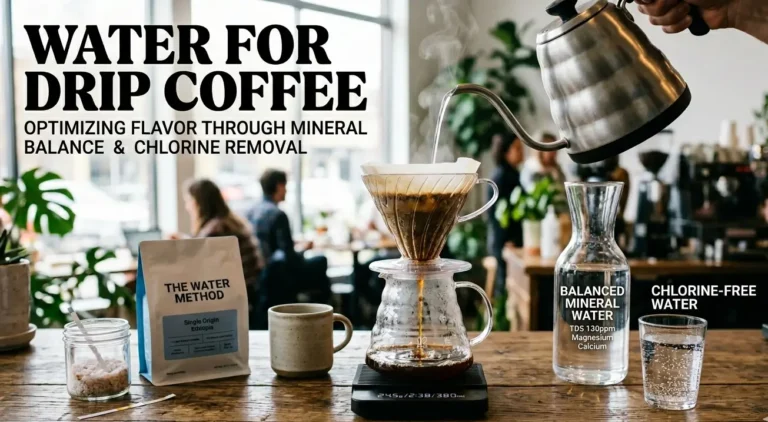

Water for drip coffee commands the entire extraction physics. I see you struggling with inconsistent flavors because chlorine or unbalanced minerals silently sabotage the brew. We often overlook this liquid as mere solvent, yet it demands specific TDS levels to unlock true potential.
You need to understand the root cause, not just rely on bulk mineral packets. Industry guides skip the chemistry, leaving you dependent on expensive shortcuts. By mastering these underlying mechanics, you will engineer custom profiles rather than following generic recipes. You gain autonomous power to diagnose extraction issues instantly.
Water Makes Up 98% of Your Drip Coffee
Fresh water constitutes 98% of the final brew, so tap water chemistry dictates how coffee solids extract and impact td. We often blame the beans when the cup tastes off, but the solvent itself does the heavy lifting. Even slight variations in that liquid profile create noticeable shifts in sweetness and clarity.
When we ignore this liquid foundation, we let invisible minerals hijack the flavor before the beans even get a chance. You might buy expensive bags, but inconsistent water for drip coffee turns a great roast into a flat or sour experience. To see why this happens, we need to look at what the liquid is actually doing inside your carafe.
- Extraction Efficiency:
Wateracts as the solvent that pulls soluble flavor compounds from thecoffeegrounds. - Flavor Profile: Mineral content directly shapes brightness, body, and clarity in the final cup.
- Consistency: Small changes in composition produce noticeable taste differences every time you
brew.
Research confirms that mineral balance often outweighs acidity when it comes to sensory perception. Dr. Marco Wellinger, a coffee researcher in chemistry and sensory analysis at the Institute of Food and Beverage Innovation at ZHAW, highlights this specific dynamic.
“Extending the same logic to water and coffee, the impact of alkalinity is several hundredfold times higher than that of pH on the final acidity of the beverage, provided that pH is close to neutral (6–8) and alkalinity reasonably high (above 20 ppm CaCO3).”
This observation confirms why balancing minerals matters more than just checking acidity labels. Now that we know the liquid is the star, we need to identify which specific minerals are driving the show.
How Minerals and Chlorine Control Coffee Flavor
Dissolved minerals like magnesium, calcium, and bicarbonate concentrations selectively bind to flavor compounds while chlorine residues actively destroy aromatic clarity. Optimized water for drip coffee relies on this balance to ensure chlorine removal efficacy and proper extraction. We need to manage chlorine first, then adjust the minerals to get the cup tasting right.
How Carbon Filters Ensure Chlorine Removal Efficacy
Effective chlorine removal efficacy requires carbon filter technology because Brita pitchers and similar systems actively adsorb disinfectant residues before brewing. Chlorine in tap water should be zero because it imparts metallic or chemical off-flavors that mask the subtle notes we want to taste. Even low levels can ruin the experience, which is why we see such widespread reliance on filtration.
Data Point: percentage of US municipal water systems with detectable chlorine residual 2023. Recent EPA drinking-water monitoring data show that ≈ 94 % of public water systems reported a detectable chlorine or chloramine residual in 2023, meeting the federal requirement that at least 95 % of monthly samples contain a disinfectant residual. The average residual concentration nationwide was about 1.1 ppm. This demonstrates that chlorine presence is almost universal in U.S. municipal supplies, making its removal essential for preserving coffee flavor.
Since nearly every municipal supply contains measurable chlorine, using a simple carbon filter is the most reliable way to protect flavor. I recommend running water through a Brita or any certified carbon filter before you brew to ensure those chemical notes stay out of your cup.
How Mineral Contributions Shape Brightness and Body
Specific mineral contributions from magnesium, calcium, and bicarbonate concentrations directly adjust KH, pH, and extraction strength during brewing. Magnesium enhances bright, fruity, and acidic notes by acting as an aggressive solvent for flavor compounds. Calcium contributes to body, sweetness, and mouthfeel, giving the coffee a heavier feel on your tongue. Bicarbonate controls clarity by buffering pH; too much mutes fruitiness, while too little makes the cup taste sharp or hollow.
Research confirms this biochemical reaction:
Evidence: The study demonstrates that magnesium (Mg²⁺) has the highest binding energy among common brewing minerals, acting as the most aggressive solvent and enhancing brightness and complexity in the cup, while calcium (Ca²⁺) exhibits slightly lower binding energy and primarily contributes to body and mouthfeel. Bicarbonate (HCO₃⁻) functions as a pH buffer, with low levels leading to sharp, sour notes and high levels producing a flat, chalky profile. Quantitatively, the authors propose an optimal water composition of total hardness (as CaCO₃) and alkalinity in the range of 40–75 ppm to balance extraction efficiency with sensory clarity.
While you now understand the role of each mineral, many brewers miss a simple way to achieve the perfect balance. Distilled water isn’t inherently flat-tasting: when re-mineralized with a simple Epsom-salt + baking-soda blend it restores body and sweetness. The DIY “Epsom-salt + baking-soda” recipe precisely implements the SCA-recommended 2 : 1 GH : KH ratio, providing a cost-effective, scientifically grounded method to hit the optimal mineral balance. We will look at how to mix this yourself in the next section.
The ideal mineral profile for water for drip coffee
Precise mineral profile dictates extraction efficiency by managing td, KH, water hardness, pH, and chlorine levels to protect light roast integrity. Optimized water for drip coffee acts as a liquid solvent specifically designed to grab soluble flavors. When we adjust these numbers, we tell that solvent exactly how aggressively to pull flavors from the grounds.
Setting TDS and alkalinity targets for coffee water
The Specialty Coffee Association suggests we aim for a Total Dissolved Solids count near 150 ppm, though anything between 75 and 250 ppm stays acceptable. For alkalinity, we target 40 ppm to act as a buffer for coffee acids, keeping the range between 40 and 70 ppm. This buffer prevents the brew from tasting too sharp or too flat by stabilizing the acidity during extraction.
Why roast-specific adjustments change coffee water needs
Total hardness should sit between 17 and 85 mg/L calculated as calcium-carbonate equivalent. We want the pH range to stay between 6.5 and 7.5, aiming right around neutral 7.0. Chlorine must be 0 mg/L because it introduces medicinal off-flavors that mask everything else.
While these baselines work for most brews, light roast beans often need a softer touch. Many baristas target lower TDS (30–80 ppm) and low alkalinity (15–20 ppm) to preserve delicate floral and fruity notes. Medium and dark roasts lack a community-wide TDS guideline, leaving brewers to experiment based on flavor goals.
Charles Nick, founder of Third Wave Water notes that alkalinity plays a distinct role when brewing darker beans.
One of the most important differences in minerals between light roast and dark roast is KH. “Generally speaking, and this is key, you want more alkaline water for dark roasted coffee to smooth out flavours and enhance the nutty, chocolate notes.”
From this insight, it’s clear adjusting alkalinity is essential for matching roast-specific adjustments to your water hardness and pH balance.
Your water source compares tap water to bottled options.
Specific water source includes tap water, Brita filters, RO systems, or Third Wave Water packets. Each option dictates extraction quality and monthly expenses differently. We often overlook how these choices shape the final cup of water for drip coffee. I know this feels overwhelming because every brand claims superiority, but we just need to look at what minerals stay in the cup and what gets removed. You need to understand the trade-offs before pouring anything into your brewer.
Filtration and purification methods include Brita, RO.
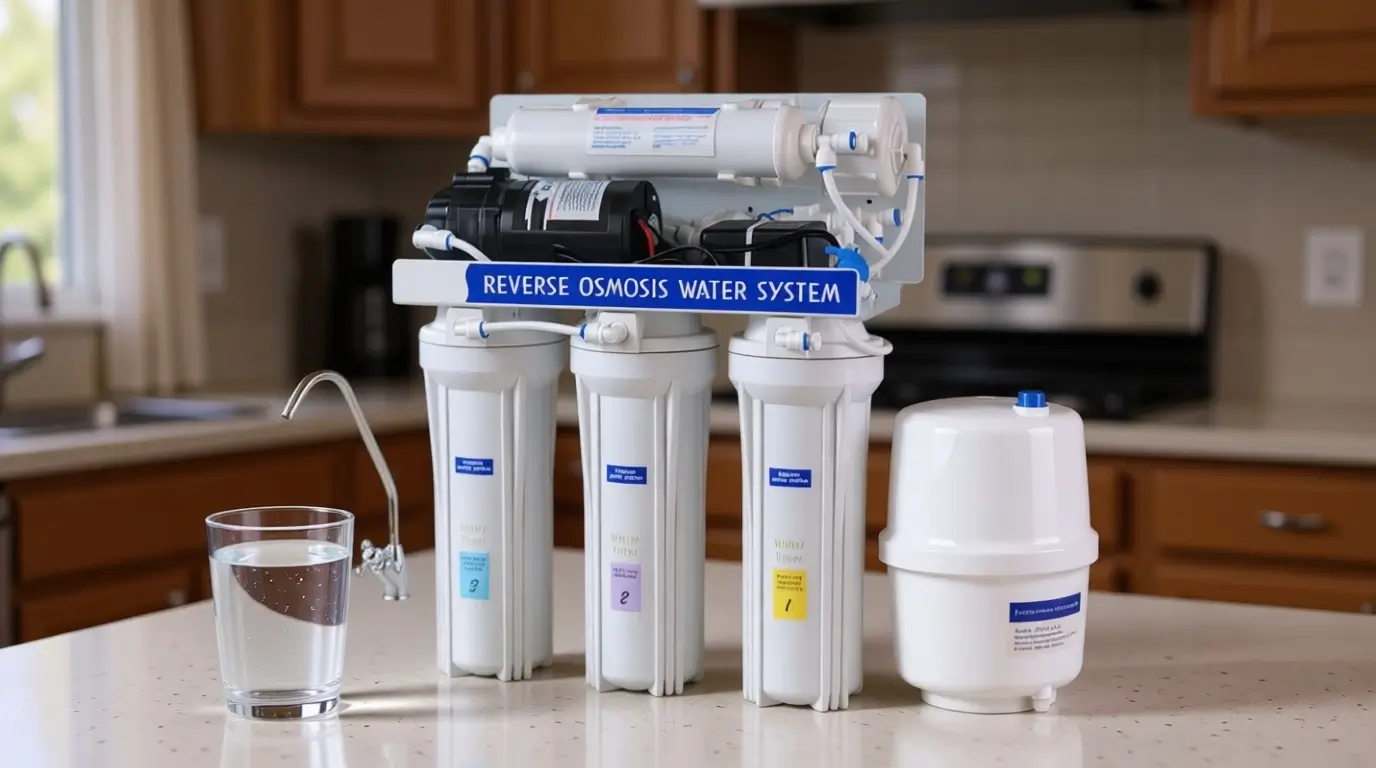
Standard filtration and purification methods like carbon filters or RO systems remove chlorine while altering mineral content differently. A simple Brita pitcher stops chlorine taste but leaves hardness minerals intact. Reverse osmosis strips everything clean, which means you must add minerals back later. Some specialized filtration pitchers let you adjust based on your tap water’s hardness, giving you control without buying new bottles.
The hardware below shows exactly how this separation happens:
Cost and environmental impact favor Third Wave.
Real cost and environmental impact favor Third Wave Water over bottled springs like Icelandic Glacial or Mountain Valley. Buying bulk mineral packets costs less per liter than carrying heavy plastic bottles home. You also create far less waste when using reusable containers instead of single-use packaging. For light roasts, a low-mineral bottled spring water under 100 ppm TDS works well, but avoid distilled water unless minerals are added back.
This breakdown illustrates the long-term trade-offs:
| Water Source | Cost per L (USD) | TDS (ppm) | Mineral content / hardness* (mg/L CaCO₃) | Chlorine removal | Environmental impact (plastic waste rating 1-5) |
|---|---|---|---|---|---|
| Tap | $0.001 – $0.005 | 50-250 | 30-200 (varies by municipality) | No † | 1 (no plastic) |
| Filtered (activated-carbon pitcher) | $0.02 – $0.04 | 30-150 | 20-120 | Yes | 2 (plastic pitcher, but reusable) |
| Reverse Osmosis (home RO unit) | $0.04 – $0.07 | 5-20 | 5-30 | Yes | 3 (plastic tubing & membrane, waste water) |
| Bottled (standard grocery brand) | $0.80 – $1.20 | 150-300 | 80-250 | Yes (most are pre-filtered) | 5 (single-use plastic bottle) |
| Third-wave mineral packets (e.g., “Coffee Water” mixes) | $0.10 – $0.15 (per L when reconstituted) | 150-250 (adjustable) | 120-180 (customizable) | Yes (packets are pre-treated) | 4 (single-use sachet, but less volume than bottled) |
* Hardness expressed as CaCO₃ equivalent.
† Most municipal water supplies add chlorine; removal depends on local treatment. (If your tap already uses chloramine, a carbon filter is required for removal.)
DIY mineral rebalancing improves water for drip coffee
Precise DIY mineral rebalancing mixes Epsom salt and baking soda to balance GH and KH levels. We start with pure water because it lacks the minerals needed to extract flavor properly. Adding these compounds restores the chemistry so your water for drip coffee tastes sweet instead of flat.
Re-mineralization concept sets GH and KH ratios
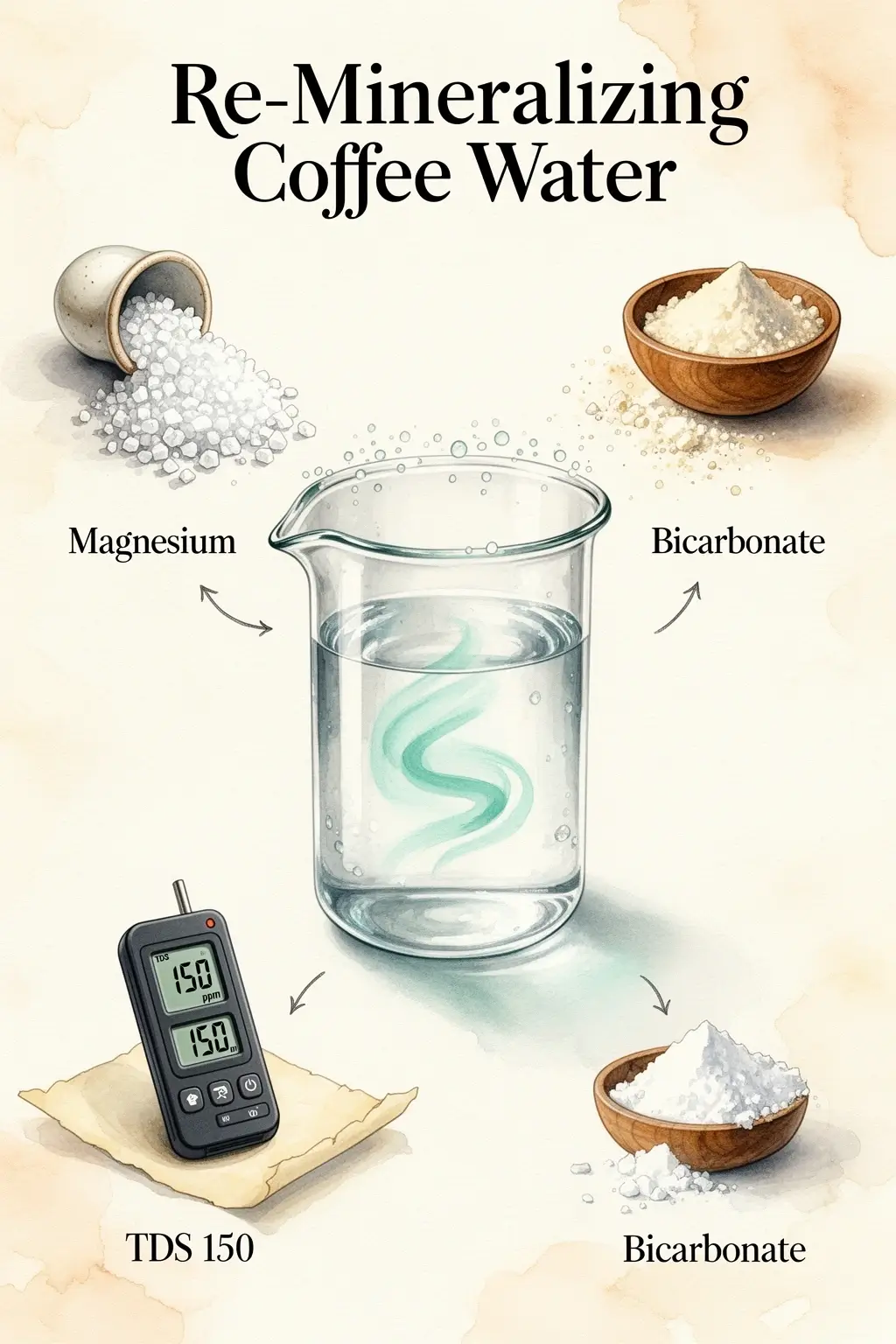
The re-mineralization concept simply means adding calibrated minerals back into pure water to reach target TDS, hardness, and alkalinity. We aim for a specific GH and KH ratio of 2:1 as per SCA guidelines. This balance ensures the water grabs the right compounds from the grounds without pulling out excessive bitterness.
The visual below outlines the exact workflow we follow to hit these targets.
DIY recipe uses Epsom salt and baking soda
This DIY recipe requires just 1 g Epsom salt and 0.5 g baking soda per liter. You can scale this up for larger batches without losing accuracy. Distilled water is not inherently “flat-tasting” when treated this way: it restores body and sweetness. We measure the resulting water with a TDS meter and pH strips to confirm target values.
Watching the process helps clarify the measurement steps.
Precision matters when calculating these additions for larger volumes. Chris Kornman at Daily Coffee News details the exact math required for professional standards:
“Let’s say you want to make 4 liters of water with 80 ppm hard minerals (as CaCO3), equal parts calcium and magnesium chlorides, and 40 ppm alkalinity (as CaCO3) using potassium bicarbonate… – 40ppm HCO3– (alkalinity as CaCO3) ÷ 595.32 = 0.067 g x 4L = 0.269 g of KHCO3 to add to 4L water – 40ppm Mg2+ (as CaCO3) ÷ 489.6 = 0.0817 g x 4L = 0.327 g of MgCl2 to add to 4L water – 40ppm Ca2+ (as CaCO3) ÷ 681.2 = 0.0587 g x 4L = 0.235 g of CaCl2 to add to 4L water”
This data underscores why we rely on specific minerals rather than guessing when adjusting GH and KH levels.
Testing and maintaining coffee water ensures stable water quality
Consistent testing and maintaining coffee water requires a TDS meter, pH test strips, and a chlorine test kit to verify water quality. These devices measure the dissolved solids and chemical balance that define every cup. We use them to ensure the liquid hitting the grounds matches the chemistry we planned.
Testing tools require TDS meters and test strips
Essential testing tools require TDS meters and test strips to measure dissolved solids against Specialty Coffee Association targets. We look for a TDS reading around 150 ppm and a pH near 7.0. Hardness should sit around 30 mg/L while alkalinity stays close to 40 ppm. Chlorine must read 0 mg/L to avoid off-flavors. Without these numbers, we cannot know if our filtration is working or if our DIY minerals are balanced.
Workflow and cost practices favor bulk minerals
Efficient workflow and cost practices use bulk mineral packets and RO water to maintain consistency. We start by testing tap water, assessing gaps, and deciding on filtration or DIY re-mineralization before retesting. To keep results stable, store re-mineralized water in sealed containers and calibrate measurement tools regularly. You should also note any seasonal changes in tap water composition that might shift your baseline.
For cost-effective practices, bulk mineral packets and re-using RO water lower expenses compared to daily bottled buys. We keep occasional bottled water as a backup when our supply runs low. Chris Kornman at Daily Coffee News emphasizes the importance of balancing these minerals correctly.
“In our testing, high alkalinity water resulted in very flat, chalky, coffee with muted acidity and muddled flavors. A lower ratio, about 1 part alkalinity for every 2 to 3 parts hard minerals (as CaCO3), provided better results.”
This finding proves that why we track alkalinity separately from hardness in our workflow. By testing, adjusting, and maintaining water, you can consistently brew drip coffee with optimal flavor.
Real Talk: What Most People Miss About Water for Drip Coffee
Q: What if your tap water has chloramine instead of chlorine?
A: Carbon filters like Brita won’t touch chloramine, so you’re still brewing with chemical off-flavors. Switch to a catalytic carbon filter or RO system to strip it out completely, then re-mineralize. Test with a chloramine kit first—most don’t realize their city’s using this tougher disinfectant.
Q: Why does distilled water suddenly taste amazing after adding minerals?
A: Pure distilled lacks any minerals, so it extracts coffee unevenly and tastes flat. The Epsom salt and baking soda hit the SCA’s 2:1 GH:KH ratio, restoring magnesium for brightness and bicarbonate for buffering—turning solvent into a flavor extractor. Verify with TDS meter at 150ppm.
Q: How do light roasts fail even with perfect SCA water specs?
A: Light roasts need softer water—drop TDS to 30-80ppm and alkalinity to 15-20ppm to preserve florals, unlike mediums that handle 150ppm fine. Your standard recipe over-extracts delicate acids, muting nuances. Test and dial down for those beans specifically.
Q: What happens if bicarbonate goes too high in dark roast water?
A: Excess bicarbonate buffers pH too much, flattening nutty notes into chalky mud. For dark roasts, bump alkalinity slightly to smooth flavors per Third Wave advice, but cap at 70ppm max. It’s the buffer balance that unlocks chocolate without dulling it.
Q: Why does your RO water still taste off after Third Wave packets?
A: RO waste water ratio means inconsistent purity if membranes clog, leaving trace contaminants. Run a full flush cycle monthly and test chlorine residuals—packets can’t fix upstream junk. Bulk RO needs regular maintenance to match distilled baselines.
Q: How do seasonal tap changes wreck your coffee consistency?
A: Municipal tweaks for weather shift hardness and chlorine levels unnoticed, spiking TDS swings that alter extraction. Baseline test quarterly, adjust DIY ratios accordingly—don’t assume static tap chemistry. It’s why pros retest before big batches.