
Distinct coffee varieties don’t just taste different. They are genetically different at the chromosomal level, and that difference ripples through every decision a roaster or green buyer makes: which lots to cup, which farms to contract, and which risks to absorb over a 20-to-30-year tree cycle.
Understanding why Geisha produces jasmine and bergamot while Catimor struggles in the cup, or why SL28 commands Kenyan premiums while Catuai fills commercial blends, requires more than a flavor wheel. It requires knowing the phylogenetic tree, the breeding tradeoffs, and the altitude mechanism that separates genetic potential from cup expression.
Key Takeaways on Coffee Varieties
- Variety, cultivar, and varietal are not synonyms; conflating them produces sourcing decisions built on marketing language rather than botany.
- Arabica carries 44 chromosomes (allotetraploid) and self-pollinates, which narrows its genetic diversity and makes it dependent on Robusta as a resistance donor in breeding programs.
- Typica and Bourbon are the two founding Arabica lineages; nearly every Latin American variety traces back to one or both.
- The Timor Hybrid imported Robusta-derived rust resistance into Arabica breeding, but introgressed varieties like Catimor and Sarchimor often carry a cup quality penalty that F1 hybrids are attempting to resolve.
- Altitude improves cup quality through slower maturation, which allows greater accumulation of lipids, organic acids, and sugars in the developing bean, not through elevation itself as an abstract quality signal.
- Variety sets the genetic ceiling; terroir, processing, and roast determine how much of that ceiling the final cup reaches, which means planting and sourcing decisions require mapping both dimensions simultaneously.
The Coffee Variety Lexicon: Species, Variety, Cultivar, and What Labels Actually Mean
The word “variety” on a coffee bag could mean a botanical classification, a marketing invention, or something in between. Before we can talk about what makes Geisha taste like Geisha or why Catimor divides roasters, we need a shared vocabulary with actual definitions.
Botanical Taxonomy and Production Dominance
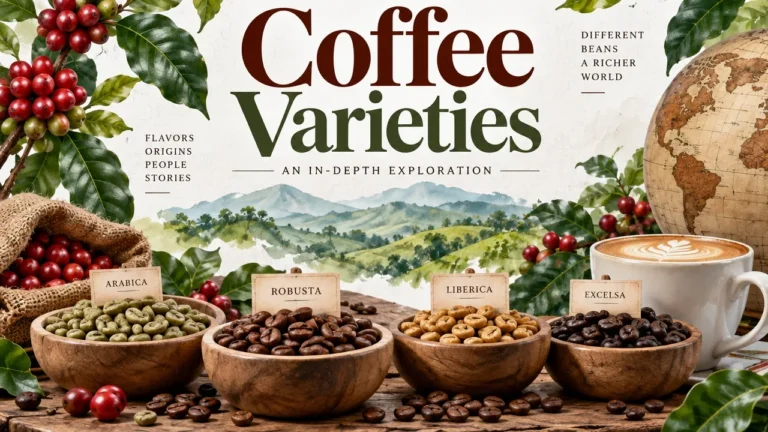
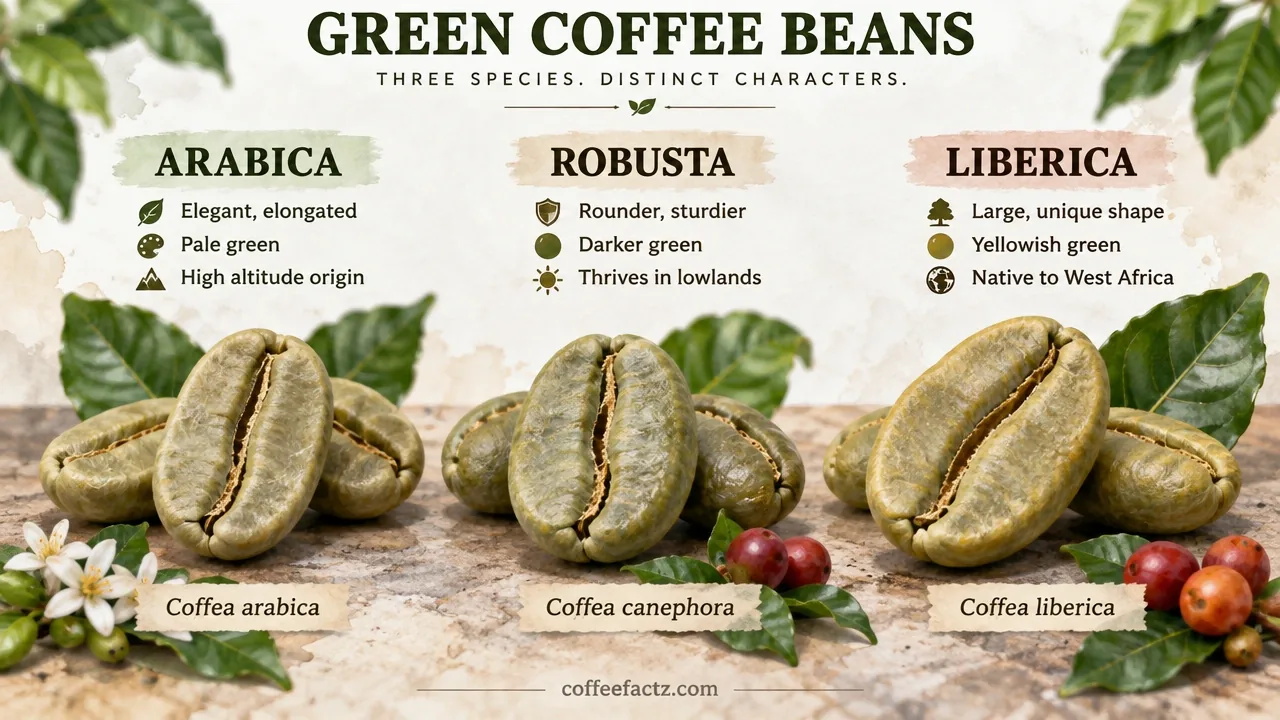
Coffea, the genus, contains over 120 described species. Botanists organize these under subgenus Coffea, which holds the three commercially relevant species: Coffea arabica, Coffea canephora (sold under the trade name Robusta), and Coffea liberica. Arabica and Robusta dominate global production by a wide margin. Liberica occupies a small, regionally specific niche.
Production share figures for Arabica circulate widely but rarely come with dates. Context matters here. Estimates citing roughly 70% Arabica dominance typically reference periods from the early 2000s. Figures in the 55% to 61% range reflect more recent data from the 2000s to 2010s, as Robusta cultivation expanded significantly in Vietnam and Brazil. Any production share you cite should carry both a date and a source.
Market Terminology and Processing Distinctions
Here is where most coffee writing falls apart. These three terms are not interchangeable:
- Variety: A genetically distinct, naturally occurring population within a species. Bourbon is a variety of Coffea arabica.
- Cultivar: A variety that was developed or selected under cultivation. Catimor is a cultivar. The distinction matters because cultivars are human-directed.
- Varietal: An adjective. It describes something relating to a variety, as in “varietal character.” It is not a noun and not a synonym for variety.
Beyond these botanical terms, coffee labels often carry names that describe neither species nor genetics. Kopi Luwak is a processing method, not a botanical species. The beans are collected from civet feces after digestion, regardless of which arabica variety was fed to the animal. Similarly, drink-menu names like “Blue Mountain” or “Hawaiian Kona” reference geographic origin and legal designation, not distinct genetic populations. Conflating these categories produces sourcing decisions built on marketing instead of agronomy.
The Phylogenetic Root: Arabica’s Allotetraploid Genome and the Coffea Family Tree
The genetic difference between Arabica and Robusta is not just a matter of flavor profile. It is a structural difference at the chromosomal level, and it explains why the two species behave so differently in breeding programs, disease response, and cup expression.
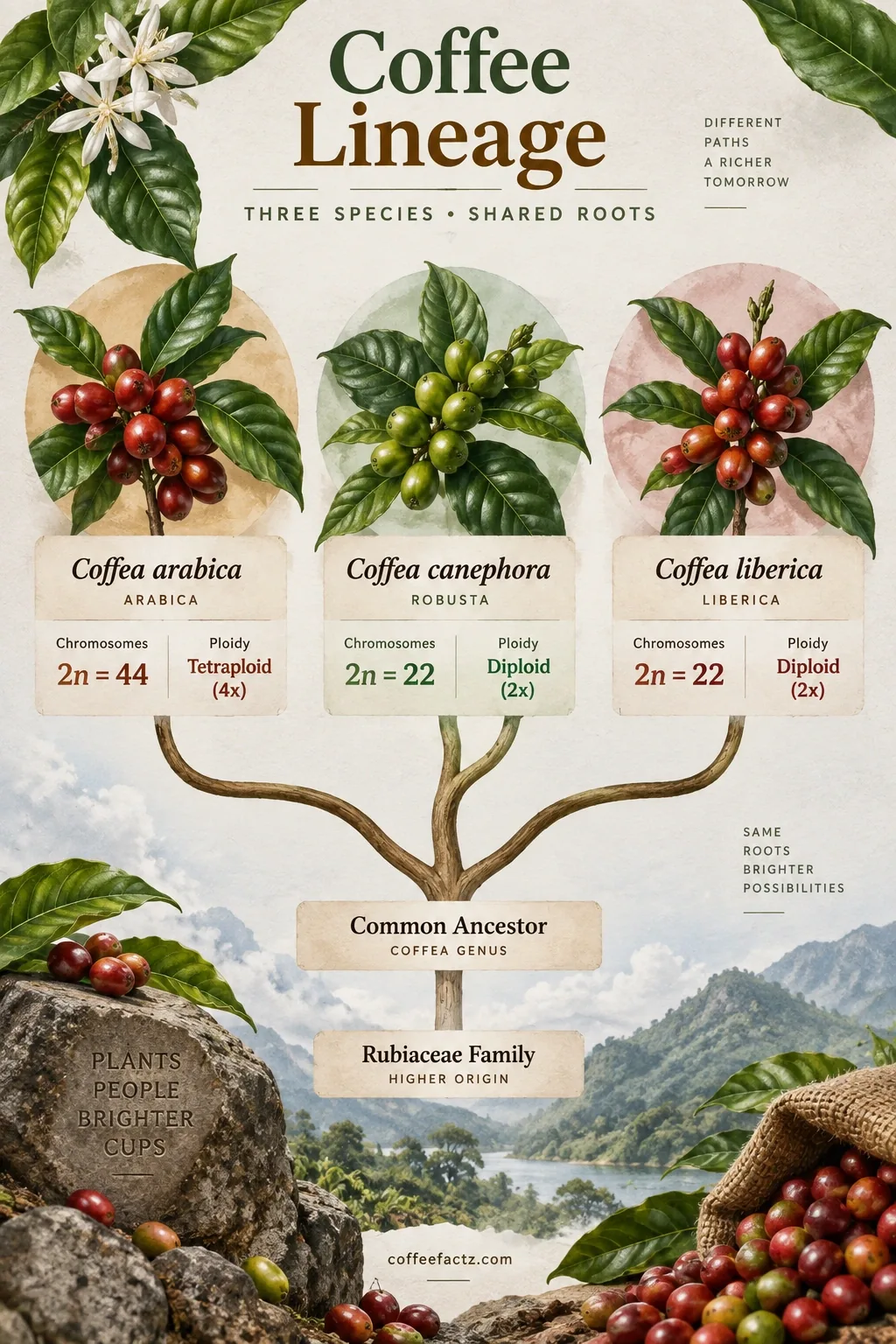
Coffea arabica is allotetraploid: it carries 44 chromosomes, the result of an ancient hybridization event between two diploid ancestors, one of which is believed to be Coffea canephora itself. Coffea canephora (Robusta) is diploid with 22 chromosomes. Coffea liberica is also diploid with 22 chromosomes.
That ploidy difference has direct consequences. Because Arabica carries a doubled genome, it self-pollinates. Self-pollination narrows genetic diversity over generations. The Arabica gene pool is relatively shallow compared to Robusta, which cross-pollinates and carries broader genetic variation, including resistance traits to Hemileia vastatrix (coffee leaf rust) and other pathogens. This is why Robusta genetics function as a resistance donor in breeding programs, not as a quality benchmark. Breeders don’t cross Arabica with Robusta to improve flavor. They do it to import disease resistance that Arabica simply doesn’t carry on its own.
One persistent myth worth clearing up: the “four main bean types” framing that places Excelsa alongside Arabica, Robusta, and Liberica as a distinct species. Excelsa is not a separate species. It is now classified as Coffea liberica var. dewevrei, a botanical variety within Liberica. The phylogenetic tree has three commercial branches, not four.
Founding Lineages and Natural Mutations: Typica, Bourbon, Caturra, Pacas, Maragogipe, Mundo Novo
Every cup of specialty Arabica traces back to one of two founding lineages. Everything else is a mutation, a selection, or a cross built on that foundation.
Heritage Arabica Ancestry and Baseline Selections
Typica and Bourbon are the two pillars. Typica arrived in the Americas via Dutch and French colonial trade routes through India and Java. Its cup character runs toward clean, elegant complexity, with a relatively long, tapered bean. Bourbon, which diverged on Réunion Island (formerly Bourbon), expresses more sweetness and balance than Typica, with a rounder bean and denser fruit set. These two lineages set the genetic and sensory baseline for the Latin American selections that followed. Nearly every variety bred in the Western Hemisphere for the next two centuries descends from one or both.
Spontaneous Dwarf Forms and Hybrid Origins
Natural mutations on Typica and Bourbon plants generated most of the compact, high-yielding varieties that now dominate commercial Latin American production.
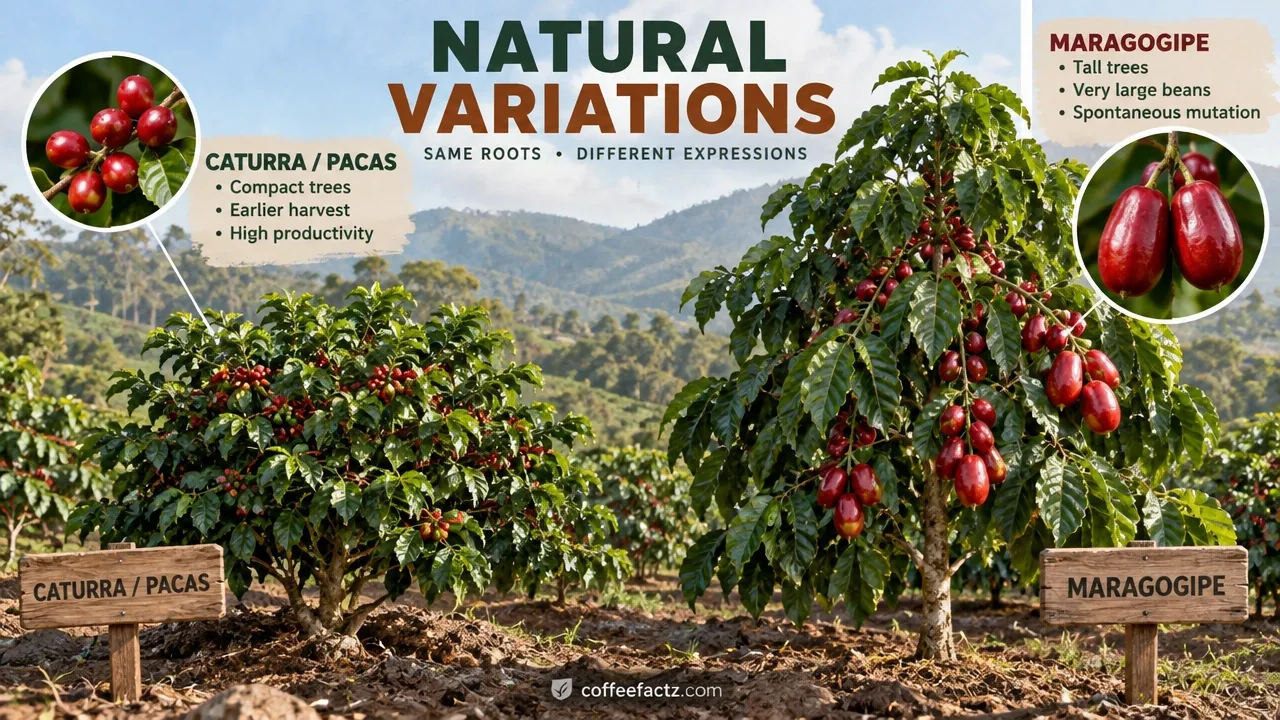
Caturra appeared as a spontaneous dwarf mutation of Bourbon in Brazil around 1915. Its compact architecture allows denser planting and reduces harvest labor, though it demands more intensive fertilization than its tall ancestors. Pacas is an independent dwarf mutation of Bourbon, discovered in El Salvador in 1949. Villa Sarchi, another Bourbon dwarf, emerged in Costa Rica and carries similar compact traits.
Maragogipe went the opposite direction. A mutation of Typica discovered in Brazil’s Maragogipe region, it produces unusually large beans with lower density and a correspondingly lower yield. Buyers pay premiums for the visual novelty, though cup quality is inconsistent.
Mundo Novo is a spontaneous natural hybrid between Typica and Bourbon, identified in Brazil in the 1940s. It combines reasonable vigor with decent cup quality and became a workhorse of Brazilian commercial production for decades.
Introgressed Hybrids and Breeding Objectives: Timor Hybrid, Catimor, Sarchimor, Castillo, F1s
When leaf rust devastated coffee farms across Asia and Latin America, breeders faced a hard tradeoff. The genetics needed to fight the disease didn’t exist in the Arabica gene pool. The answer came from an unexpected source.
Resistance Donor Lineages and Disease Susceptibility
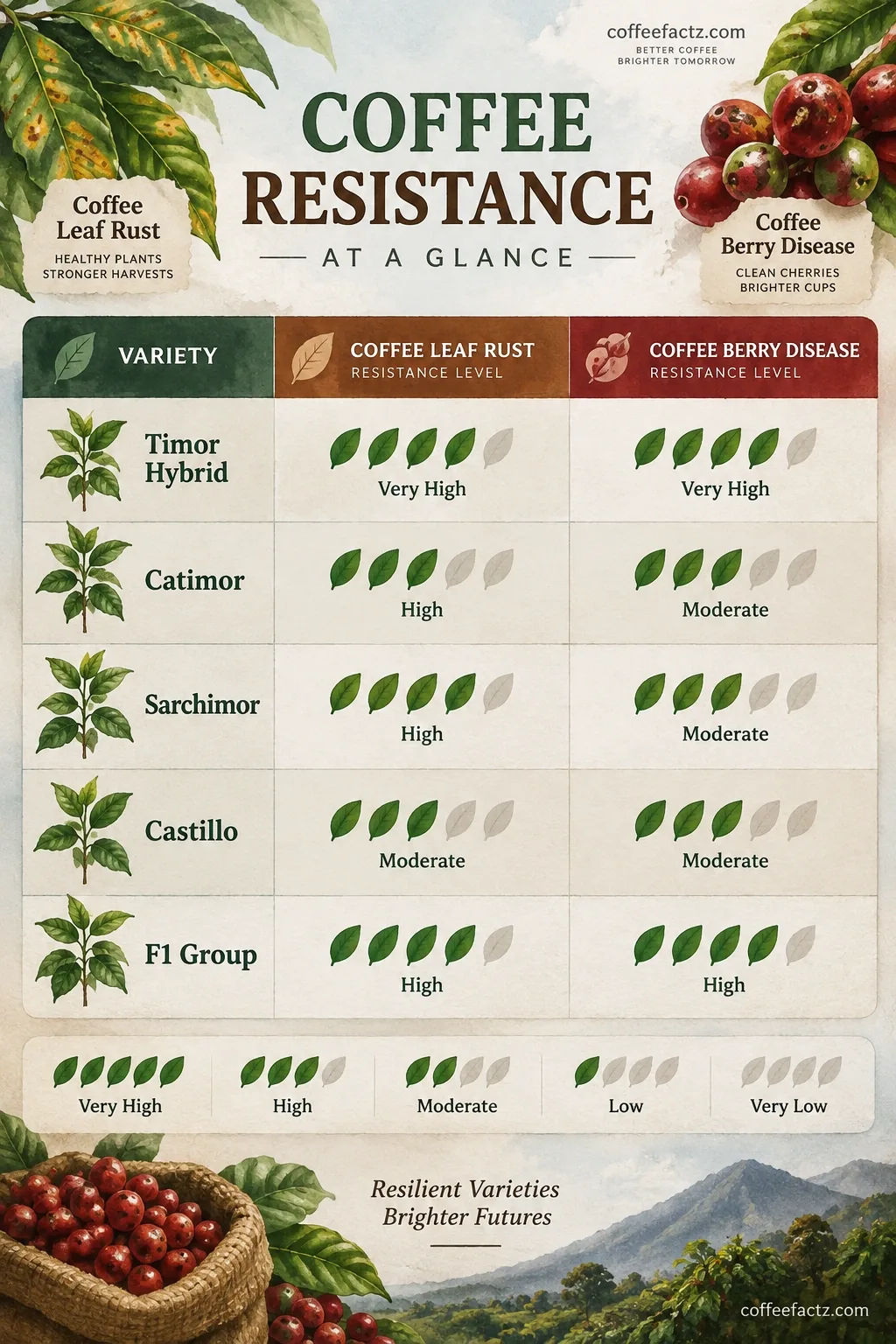
The Timor Hybrid (also called Hibrido de Timor or HDT) is a naturally occurring cross between Coffea arabica and Coffea canephora, discovered in Timor-Leste in the 1920s and formally documented in the 1940s. It carries Robusta-derived resistance to Hemileia vastatrix (coffee leaf rust) and Colletotrichum kahawae (Coffee Berry Disease, or CBD). That resistance made it the most important genetic donor in 20th-century coffee breeding.
Three major introgressed variety groups descend from the Timor Hybrid:
- Catimor: Timor Hybrid crossed with Caturra. Compact, high-yielding, rust-resistant. Cup quality is the persistent concern: at lower altitudes, Catimor lots frequently show earthy, herbal, or astringent notes that specialty buyers reject.
- Sarchimor: Timor Hybrid crossed with Villa Sarchi. Similar resistance profile, with marginally better cup reports in some origins, particularly at altitude.
- Castillo: A Colombian selection developed by Cenicafé, with multiple regional sub-lines. Rust-resistant and productive. Colombian roasters and international buyers continue to debate its cup ceiling relative to traditional Caturra and Bourbon lots.
The table below maps disease susceptibility across the major variety groups:
| Variety Group | Leaf Rust (H. vastatrix) | Coffee Berry Disease (CBD) | Cup Quality Ceiling |
|---|---|---|---|
| Typica | Susceptible | Susceptible | High |
| Bourbon | Susceptible | Susceptible | High |
| Caturra / Catuai | Susceptible | Susceptible | High (altitude-dependent) |
| Timor Hybrid | Resistant | Resistant | Moderate |
| Catimor | Resistant | Resistant | Moderate (variable) |
| Sarchimor | Resistant | Resistant | Moderate-High (origin-dependent) |
| Castillo | Resistant | Resistant | Moderate-High (debated) |
| F1 Hybrids | Varies by cross | Varies by cross | High (target) |
Commercial Selection Priorities and Productivity Balance
F1 hybrids represent the current attempt to escape the yield-quality-resistance triangle. These first-generation crosses between genetically distant parents exploit heterosis, the tendency of F1 offspring to outperform both parents in vigor and yield. Varieties like Centroamericano (H1), developed through a collaboration involving World Coffee Research, CATIE, and Ecom, target high yield, resistance, and specialty cup quality simultaneously.
The tradeoff is production complexity. F1 seeds cannot be saved and replanted; farmers must purchase new seed each cycle. That dependency raises input costs and creates supply chain considerations for smallholder producers.
The breeding triangle remains real. Yield, disease resistance, and cup quality pull in different directions because the genetic mechanisms behind each compete for the same biological resources. F1 hybrids narrow that tension, but they don’t eliminate it. For yield and disease data, the World Coffee Research Variety Catalog is the appropriate reference. Do not use yield-per-hectare figures that lack a catalog edition and origin context.
Sensory Signatures and Genetic Ceilings: Geisha, SL-28, SL-34, Pacamara, Sudan Rume
Genetics set a ceiling on what a coffee can express. The ceiling doesn’t guarantee anything. But without the right genetics, no amount of altitude, processing, or roasting craft will produce jasmine in the cup.
Premium Floral and Acidic Profiles
Geisha (also spelled Gesha) originated in the Gori Gesha forest of Ethiopia and was introduced to Panama via CATIE in Costa Rica in the 1960s. For decades it sat mostly unnoticed on Panamanian farms. Then the 2004 Best of Panama competition revealed what the variety could do at altitude under careful management. The cup profile, jasmine, bergamot, tropical fruit, and a translucent, tea-like body, was unlike anything buyers had cupped before.
Top Geisha lots regularly score in the 90+ SCA point range. Yield is low. The tree is tall and susceptible to rust. Every agronomic metric works against it except the one that matters most to specialty buyers.
“Pt. 4 – 2nd batch Cupping of Gesha ft. Emerald Bean”
SL28 and SL34 are Kenyan selections developed by Scott Laboratories in the 1930s. SL28 was selected for drought tolerance and produces the high acidity, blackcurrant, and tomato-like complexity that defines Kenya’s sensory reputation. SL34 handles heavy rainfall better and contributes a similarly bright, complex cup. Both varieties are susceptible to leaf rust and CBD, which is why Kenya’s specialty production demands intensive management. The cup ceiling for elite SL28 and SL34 lots reaches into the 88-to-92 SCA point range under optimal conditions.
One correction worth making here: “100% Arabica” is not a quality claim. Species membership doesn’t determine cup quality. A low-altitude, poorly processed Arabica will score below a well-grown, well-processed Robusta in a blind cup. Cup quality reflects how well the seed and fruit have developed, not which species name appears on the label.
Workhorse Productivity and Landrace Complexity
Caturra and Catuai (a cross between Mundo Novo and Caturra) are the production backbone of Central and South American specialty coffee. Compact, high-yielding, and adaptable, they fill the majority of specialty lots from Colombia, Costa Rica, and Brazil. At the right altitude, typically 1,200m to 1,600m, they produce clean, balanced cups with good sweetness and moderate acidity. Below that window, the cup flattens.
Pacamara, a cross between Pacas and Maragogipe developed in El Salvador, combines large bean size with genuine cup complexity. Stone fruit, floral notes, and a distinctive texture make it a reliable competition variety. The large bean creates sorting and roasting challenges, but buyers willing to manage those variables get a cup that outperforms the variety’s modest agronomic profile.
Sudan Rume is an Ethiopian landrace from the Boma Plateau in Sudan. It appears in breeding programs as a quality donor, contributing savory, herbal, and spice complexity that differs structurally from Geisha’s florals. Cup scores for well-grown Sudan Rume lots can reach the high 80s. Yield is low and the variety is difficult to manage, which keeps it out of commercial production.
Variety contributes to flavor alongside soil, altitude, rainfall, processing, and roast. Isolating variety as the single quality driver is a sourcing mistake. A Geisha grown at 600m, picked green, and poorly processed will not deliver jasmine. The genetics set the ceiling; everything else determines how close you get to it.
Morphology and Tree Architecture: Dwarf vs Tall, Internode Spacing, Bean Shape
What a coffee tree looks like above ground directly determines how a farm operates, what it costs to run, and how the beans behave in the mill and the roaster.
Canopy Structure and Planting Density
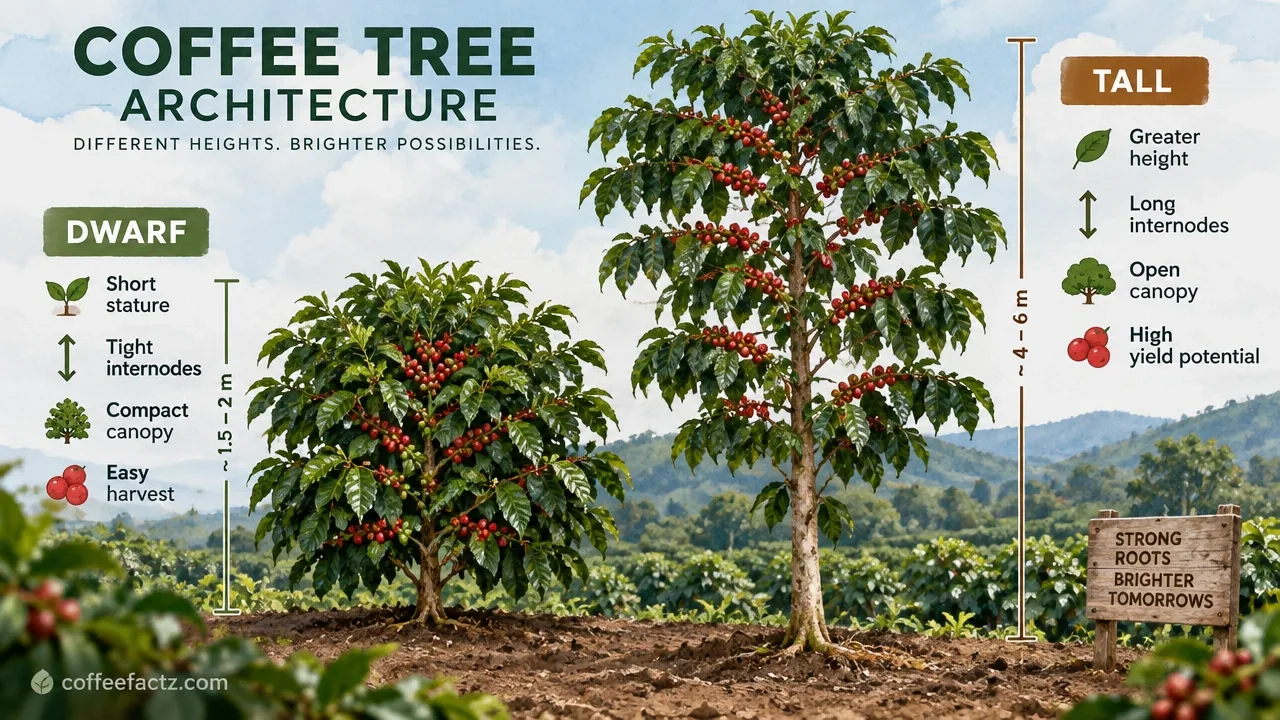
Dwarf varieties include Caturra, Pacas, and Villa Sarchi. Their compact architecture, driven by short internodal spacing between leaf nodes, allows farmers to plant more trees per hectare, typically 5,000 to 10,000 trees per hectare versus 2,500 to 4,000 for tall varieties. Denser planting raises yield potential per land unit. It also increases canopy closure, which changes how light, wind, and humidity move through the farm.
Tall varieties include Typica, Bourbon, and Maragogipe. Their extended internodal spacing creates open canopy structures that improve light penetration and air circulation. That airflow matters for disease management. Dense, humid canopies favor rust and CBD. Tall varieties also require different pruning strategies and make mechanical or strip harvesting more difficult on steep terrain.
Harvest labor is where the architecture difference becomes most visible. Compact trees allow pickers to work faster with less physical strain. Tall trees like Maragogipe require ladders or selective picking from lower branches, which raises labor cost per kilogram.
Seed Geometry and Processing Implications
Bean shape is not cosmetic. It determines how coffee moves through sorting equipment, how heat transfers during roasting, and what buyers expect visually in a specialty green lot.
| Variety | Tree Height | Bean Shape | Typical Management Need |
|---|---|---|---|
| Typica | Tall | Flat, elongated | Low-density planting, selective pruning |
| Bourbon | Medium-tall | Round, compact | Moderate density, regular pruning |
| Caturra | Dwarf | Flat, medium | High density, intensive fertilization |
| Catuai | Dwarf | Flat, medium | High density, intensive fertilization |
| Maragogipe | Tall | Very large, flat | Low density, careful sorting |
| Pacamara | Medium | Very large, flat | Moderate density, careful sorting |
| Geisha | Tall | Narrow, elongated | Low density, selective harvest |
| SL28 | Tall | Bold, flat | Moderate density, disease monitoring |
Maragogipe and Pacamara beans require wider sorting screens and adjusted drum roasting parameters. Their mass and surface area ratio differs from a standard Caturra or Catuai bean, meaning they absorb heat differently. Roasters who run Pacamara on the same profile as their Catuai lots typically produce uneven development.
Narrow, elongated beans like Geisha sort easily but require careful green assessment because the narrow profile can mask defects that a rounder bean would reveal immediately. Buyer perception also factors in: specialty markets have come to associate the Geisha bean’s distinct silhouette with premium quality, creating a visual expectation that producers and processors must meet before the coffee is even cupped.
Elevation, Maturation, and the Cup Quality Mechanism: Why Bourbon and Geisha Can Outperform Vigor
High altitude doesn’t automatically improve coffee quality. But it creates the conditions under which high-quality genetics can fully express themselves. The mechanism is slower maturation, and the chemistry behind it is specific.
Coffea arabica grows commercially between roughly 800m and 2,300m above sea level, though the ideal window narrows by variety and origin. Coffea canephora performs better at lower altitudes, typically below 800m, where warmer temperatures suit its biology. Within Arabica, varieties like Caturra and Catuai show their best cup potential between 1,000m and 1,600m. Geisha and Bourbon can express their full genetic ceiling closer to 1,600m to 2,000m, depending on latitude and climate.
The altitude-flavor link works through temperature. Cooler temperatures at elevation slow the maturation of the coffee cherry. A fruit that takes 10 to 11 months to ripen at 1,800m accumulates more time for biochemical synthesis than one that ripens in 7 to 8 months at 900m. During that extended development window, the bean accumulates lipids, organic acids, and sugars at higher concentrations.
A study published in Agronomy on green coffee from Gorongosa Mountain, Mozambique found that moving from 650m to 935m extended fruit maturation by four weeks. At the higher elevation, beans showed greater mass, higher apparent density, improved commercial homogeneity, and elevated concentrations of trigonelline and 5-CQA, two compounds directly associated with cup complexity and roast development.
That physical density is not just a weight metric. Denser beans conduct heat more evenly during roasting, which supports more consistent development and reduces the risk of scorching or tipping. The higher organic acid concentrations, particularly chlorogenic acids and citric acid, translate directly to the brightness and complexity that specialty buyers cup for.
Vigorous hybrids like Catimor and Sarchimor prioritize biomass allocation toward rapid growth, disease resistance mechanisms, and fruit production volume. That biological priority competes with the slow, resource-intensive process of building dense, acid-rich beans. The genetics are optimized for different outcomes. This is the root cause of the cup quality gap between high-altitude heritage varieties and disease-resistant hybrids: not terroir alone, but the interaction between genetic priorities and the conditions altitude creates.
Terroir, processing, and roast modulate the final cup even when variety and altitude are fixed. A poorly timed harvest or a flawed fermentation will collapse the quality that slow maturation built. But without the genetic capacity and the altitude conditions to build it in the first place, no post-harvest intervention recovers it.
Disease, Climate Edge Cases, and the Buyer’s Genetic Decision Matrix
A planting decision is not a seasonal purchase. Coffee trees carry a productive life of 20 to 30 years. The variety you plant today sets the agronomic and sensory ceiling for the next three decades of production, disease exposure, and climate risk.
Building a sourcing or planting decision requires mapping variety performance across six dimensions simultaneously:
| Variety | Cup Quality Ceiling | Yield Potential | Leaf Rust Resistance | CBD Resistance | Altitude Fit | Management Intensity |
|---|---|---|---|---|---|---|
| Typica | High | Low | Susceptible | Susceptible | 1,200m-2,000m | Moderate |
| Bourbon | High | Low-Moderate | Susceptible | Susceptible | 1,200m-2,000m | Moderate |
| Caturra | High (altitude-dep.) | High | Susceptible | Susceptible | 1,000m-1,800m | High |
| Catuai | Moderate-High | High | Susceptible | Susceptible | 1,000m-1,600m | High |
| Catimor | Moderate | High | Resistant | Resistant | 800m-1,600m | Moderate |
| Sarchimor | Moderate-High | High | Resistant | Resistant | 1,000m-1,800m | Moderate |
| Castillo | Moderate-High | High | Resistant | Resistant | 1,000m-1,800m | Moderate |
| Geisha | High | Low | Susceptible | Susceptible | 1,400m-2,000m | High |
| SL28 | High | Moderate | Susceptible | Susceptible | 1,400m-2,100m | High |
| Pacamara | High | Low-Moderate | Susceptible | Susceptible | 1,200m-1,800m | High |
| F1 Hybrids | High (target) | High | Varies | Varies | 1,000m-1,800m | High (seed cost) |
For verified yield, disease resistance ratings, and altitude parameters, the World Coffee Research Variety Catalog is the appropriate primary source. Do not use yield-per-hectare figures from general coffee guides; they frequently lack origin context and catalog edition dates.
Dr. Jorge Berny, Research Scientist in Breeding and Genomics at World Coffee Research, describes the organization’s current work as identifying how top varieties respond to climatic and agronomic variation, distinguishing those that are widely adapted from those that perform best under specific conditions. He frames this as foundational groundwork for new variety introductions and future breeding, with the explicit goal of helping the coffee sector make more informed decisions about what to grow and where.
That framing is useful for buyers. “Widely adapted” and “site-specific” are different sourcing propositions. A variety that performs consistently across altitudes and climates reduces origin risk. A variety optimized for specific conditions requires more precise matching between genetics and geography to deliver its ceiling.
Climate-resilient edge cases deserve attention without distraction. Coffea stenophylla, rediscovered in Sierra Leone in 2018, can tolerate higher temperatures than Arabica and has produced cup profiles that sensory panelists have compared to Arabica quality. Coffea charrieriana is naturally caffeine-free, which creates a distinct market angle for specialty and health-focused buyers. Neither species is yet available at scale for commercial sourcing.
Historically, non-Arabica species have demonstrated specialty potential. Kahawa Sūg and Sulu coffee have been produced since the 1860s, showing that the specialty ceiling is not exclusive to Arabica. But scalable sourcing decisions still center on Arabica and Canephora. Stenophylla and Charrieriana are worth tracking as climate change narrows viable Arabica growing windows, but they are not yet a reliable sourcing category.
The final rule is simple. Variety sets the genetic ceiling. Terroir, elevation, processing, and roast determine how much of that ceiling the final cup actually reaches. A buyer who ignores variety is working with an unknown upper bound. A buyer who treats variety as the only variable is ignoring the execution chain that converts genetics into flavor.
Frequently Asked Questions About Coffee Varieties
What is the genetic difference between Arabica and Robusta?
Arabica is allotetraploid with 44 chromosomes, the result of an ancient hybridization between two diploid ancestors. Robusta is diploid with 22 chromosomes, cross-pollinates, and carries broader genetic diversity including disease resistance traits that Arabica lacks.
Why does Geisha cost so much more than other Arabica varieties?
Geisha produces very low yields, is susceptible to leaf rust, demands careful selective harvesting, and requires high altitude to express its distinctive jasmine and bergamot profile. Every agronomic metric works against profitability, which is why the cup quality premium exists to compensate.
Is “100% Arabica” a reliable quality indicator?
No. Species membership doesn’t determine cup quality. A low-altitude, poorly processed Arabica will score below a well-grown, well-processed Robusta in a blind cup. Cup quality reflects how well the seed and fruit developed, not the species name on the label.
Why do Catimor and Sarchimor sometimes disappoint in the cup despite their agronomic advantages?
Both varieties carry Robusta-derived genetics through the Timor Hybrid. Those introgressed genes import disease resistance but can also express earthy, herbal, or astringent notes that specialty buyers associate with lower cup quality, particularly at lower altitudes where slow maturation doesn’t compensate.
How does altitude actually improve coffee flavor, mechanically speaking?
Cooler temperatures at higher elevation slow cherry maturation. That extended development window allows the bean to accumulate higher concentrations of lipids, organic acids, and sugars. The result is a denser bean with more complex flavor precursors and a brighter, more structured cup after roasting.
What is Excelsa, and is it a separate coffee species?
Excelsa is not an independent species. It is now classified as Coffea liberica var. dewevrei, a botanical variety within Liberica. The “four main bean types” framing that treats Excelsa as a standalone species is outdated.
How should a green buyer use the World Coffee Research Variety Catalog?
Use it as the primary reference for yield-per-hectare benchmarks, disease resistance ratings, altitude ranges, and productive life data for specific varieties and their regional sub-lines. Avoid yield figures from general coffee guides; they typically lack origin context and catalog edition dates.
What makes F1 hybrid coffee varieties different from conventional breeding?
F1 hybrids are first-generation crosses between genetically distant parents, which produces heterosis: offspring that outperform both parents in vigor and yield. The tradeoff is that F1 seeds cannot be saved and replanted, requiring farmers to purchase new seed each cycle, which raises input costs.
References
- Shade and Altitude Implications on the Physical and Chemical Attributes of Green Coffee Beans from Gorongosa Mountain, Mozambique | exa.ai
- Cup Quality GxE IMLVT | worldcoffeeresearch.org