
Cappuccino caffeine levels confuse even experienced coffee drinkers because the drink tastes intense, so the assumption is that it must pack more caffeine than a plain cup of drip. That assumption is wrong most of the time, and understanding why requires separating two numbers that almost everyone conflates: concentration per ounce and total milligrams per serving.
A standard single-shot cappuccino sits at roughly 63-75 mg of caffeine. A standard 8 oz drip coffee sits at 95-165 mg. The espresso inside that cappuccino is far more concentrated, but the cup is far smaller. Once you see the math clearly, the comparison stops being a mystery and starts being a simple calculation you can run at any cafe counter.
Key Takeaways on Cappuccino Higher Caffeine Than Coffee
- A single-shot cappuccino delivers 63-75 mg of caffeine, which is less than a standard 8 oz drip coffee at 95-165 mg.
- Milk and foam add zero caffeine; all milligrams come from the espresso shot count alone.
- Espresso is 3-4 times more concentrated per ounce than drip coffee, but total dose requires multiplying concentration by serving volume.
- A double-shot cappuccino at 125-154 mg can approach a small drip coffee, but 12-16 oz drip servings consistently pull ahead.
- Robusta beans and total coffee dose determine caffeine ceiling more reliably than roast color or drink name.
- The FDA’s 400 mg daily reference is a population guideline; personal sensitivity can produce palpitations and rapid heart rate at far lower doses.
What a Cappuccino Actually Contains: Espresso, Steamed Milk, and Foam
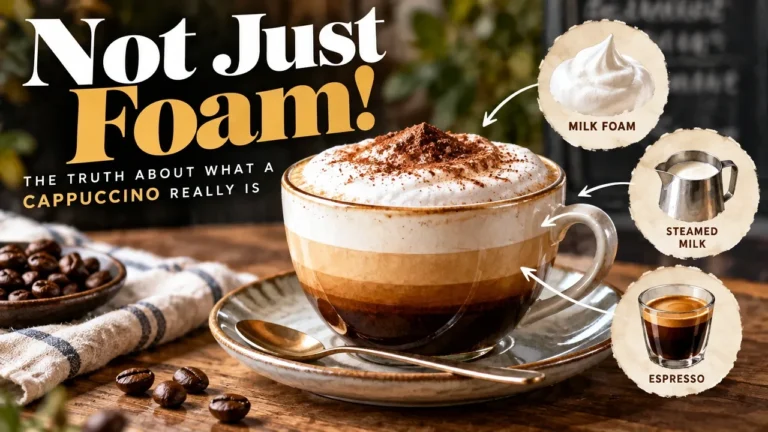
A cappuccino is three things: a shot of espresso, steamed milk, and a layer of microfoam, classically built in a 1:1:1 ratio inside a 3-4 oz cup. That is the textbook version. Walk into most modern cafes and you will get a 5-6 fl oz drink, and chain versions often push to 8-12 oz with a default double shot.
Here is the part that matters for caffeine: milk and foam contribute exactly zero milligrams. Steamed milk changes the texture, softens the bitterness, and adds calories, protein, and fat. It does not touch the caffeine number. All the caffeine in your cappuccino comes entirely from the espresso shot or shots at the bottom of that cup.
A latte uses the same espresso base but more steamed milk and a thinner foam layer, which gives it a creamier texture and a lower coffee-to-milk ratio by volume. Neither drink is defined by its caffeine content. Both are defined by their coffee-to-milk structure. The cappuccino just uses less milk to get there.
This is where the mental model most people carry breaks down. The drink’s name tells you the milk ratio. It tells you nothing about the caffeine dose. That number lives entirely in the total coffee dose, the extraction efficiency, the shot count, and the serving volume. Change any one of those four variables and the milligram count moves, regardless of what the menu calls the drink.
Here is a quick visual breakdown of how a cappuccino compares to a latte at the structural level:
How Much Caffeine Is in a Cappuccino: Single vs Double Shot Foundation
Cappuccino caffeine content is not a fixed number. Caffeine per serving is determined almost entirely by how many espresso shots the barista pulls. That range sits between 63 mg and 126 mg for a standard 1-2 shot cappuccino, but it can climb well above that if the cafe defaults to a triple shot in a larger cup.
Per-Serving Milligram Ranges
A single espresso shot delivers roughly 63-75 mg of caffeine. A double shot delivers approximately 125-154 mg. A triple shot pushes to around 231 mg. The cappuccino itself adds nothing to those numbers. The steamed milk and foam are caffeine-neutral, so the drink’s total is identical to whatever the shot count produces.
| Cappuccino Type | Shot Count | Caffeine Range |
|---|---|---|
| Single-shot cappuccino | 1 shot | 63-75 mg |
| Double-shot cappuccino | 2 shots | 125-154 mg |
| Triple-shot cappuccino | 3 shots | ~231 mg |
| Standard 1-2 shot cappuccino | 1-2 shots | 63-126 mg |
Chain cafes routinely default to a double shot in any medium or large cup. If you order a cappuccino without specifying, you are likely getting a double. That single default choice can push your caffeine intake from the lower end of the range to the higher end, which completely changes the comparison against a plain cup of drip coffee.
Dairy Contribution, Recipe Audits
Milk is not a caffeine source. Full stop. Whether the barista uses whole milk, oat milk, or skim milk, the caffeine total does not move. The bean, the dose, and the shot count inside the espresso are the entire story.
What does move is the recipe. A “standard cappuccino” is not a standardized drink. A classical Italian cappuccino runs 3-4 oz. A typical American cafe version runs 5-6 oz. A large chain cappuccino can reach 12 oz with a double shot baked in. All three drinks carry the same label on the menu. Their caffeine contents are not remotely similar.
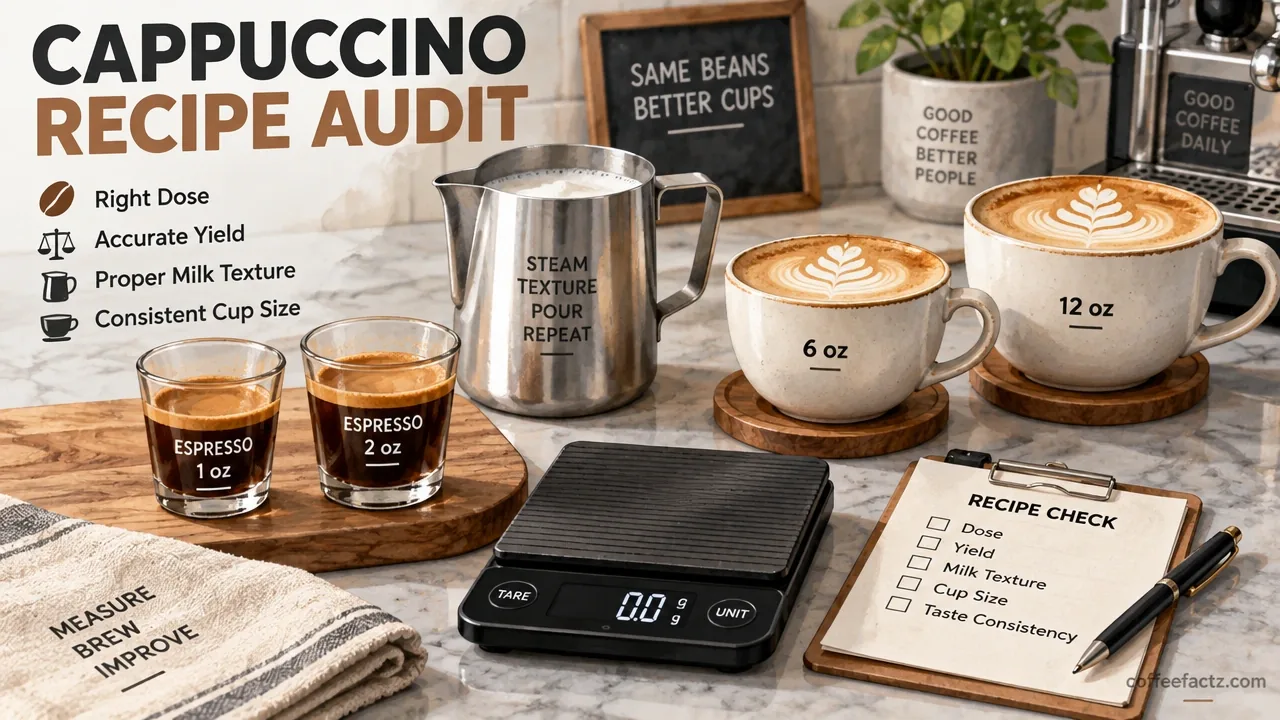
Before you compare a cappuccino to drip coffee, you need two pieces of information: the cup size and the shot count. Without both, the comparison is guesswork.
Caffeine Levels in a Regular Brewed Cup: 8 oz, 12 oz, and 16 oz
Drip coffee delivers caffeine at roughly 12-18 mg per fluid ounce, which sounds modest compared to espresso’s 40-64 mg per fluid ounce. The catch is that nobody drinks a 1.5 oz cup of drip coffee. Volume is where drip coffee wins.
An 8 oz cup of medium roast drip coffee contains approximately 95-165 mg of caffeine. A 12 oz mug, which is a common kitchen pour, lands at roughly 140-200 mg. Scale up to a 16 oz travel mug and you are looking at 190-280 mg, all from the same 12-18 mg/fl oz concentration range, just applied to a larger container.
| Serving Size | Caffeine Concentration | Total Caffeine Range |
|---|---|---|
| 8 oz drip coffee | 12-18 mg/fl oz | 95-165 mg |
| 12 oz drip coffee | 12-18 mg/fl oz | 140-200 mg |
| 16 oz drip coffee | 12-18 mg/fl oz | 190-280 mg |
The concentration does not change much between an 8 oz and a 16 oz cup brewed from the same beans with the same ratio. What changes is how many times that concentration gets multiplied by fluid ounces. A 16 oz travel mug delivers roughly twice the total caffeine of an 8 oz cup, even though the coffee itself tastes identical.
This is the structural reason drip coffee often wins the total caffeine comparison against a cappuccino. The cappuccino uses a highly concentrated liquid in a small volume. Drip coffee uses a moderately concentrated liquid in a large volume. Total dose is the product of both numbers.
Head-to-Head: Cappuccino vs Drip Coffee Caffeine Matrix
Cappuccino vs coffee caffeine is not a single comparison. It is a matrix, and the answer changes depending on which version of each drink you are holding.
| Drink | Shot/Volume | Caffeine Range |
|---|---|---|
| Single-shot cappuccino | 1 shot, ~5-6 fl oz | 63-75 mg |
| Double-shot cappuccino | 2 shots, ~5-6 fl oz | 125-154 mg |
| 8 oz drip coffee | 8 fl oz | 95-165 mg |
| 12 oz drip coffee | 12 fl oz | 140-200 mg |
| 16 oz drip coffee | 16 fl oz | 190-280 mg |
The direct comparison is clear at the single-shot level. A single-shot cappuccino at 63-75 mg sits well below an 8 oz drip coffee at 95-165 mg. The cappuccino loses that matchup consistently.
The comparison gets closer at the double-shot level. A double-shot cappuccino at 125-154 mg can approach a small 8 oz drip coffee at the lower end of that range. There is a crossover zone where a 12 oz double-shot cappuccino at roughly 154 mg pulls near an 8 oz brewed coffee at roughly 163 mg. That is the one scenario where a milk drink genuinely matches a small drip serving.
But push the drip coffee to 12 oz or 16 oz and the cappuccino falls behind again. A 12 oz drip coffee at 140-200 mg and a 16 oz serving at 190-280 mg both exceed what a standard double-shot cappuccino delivers.
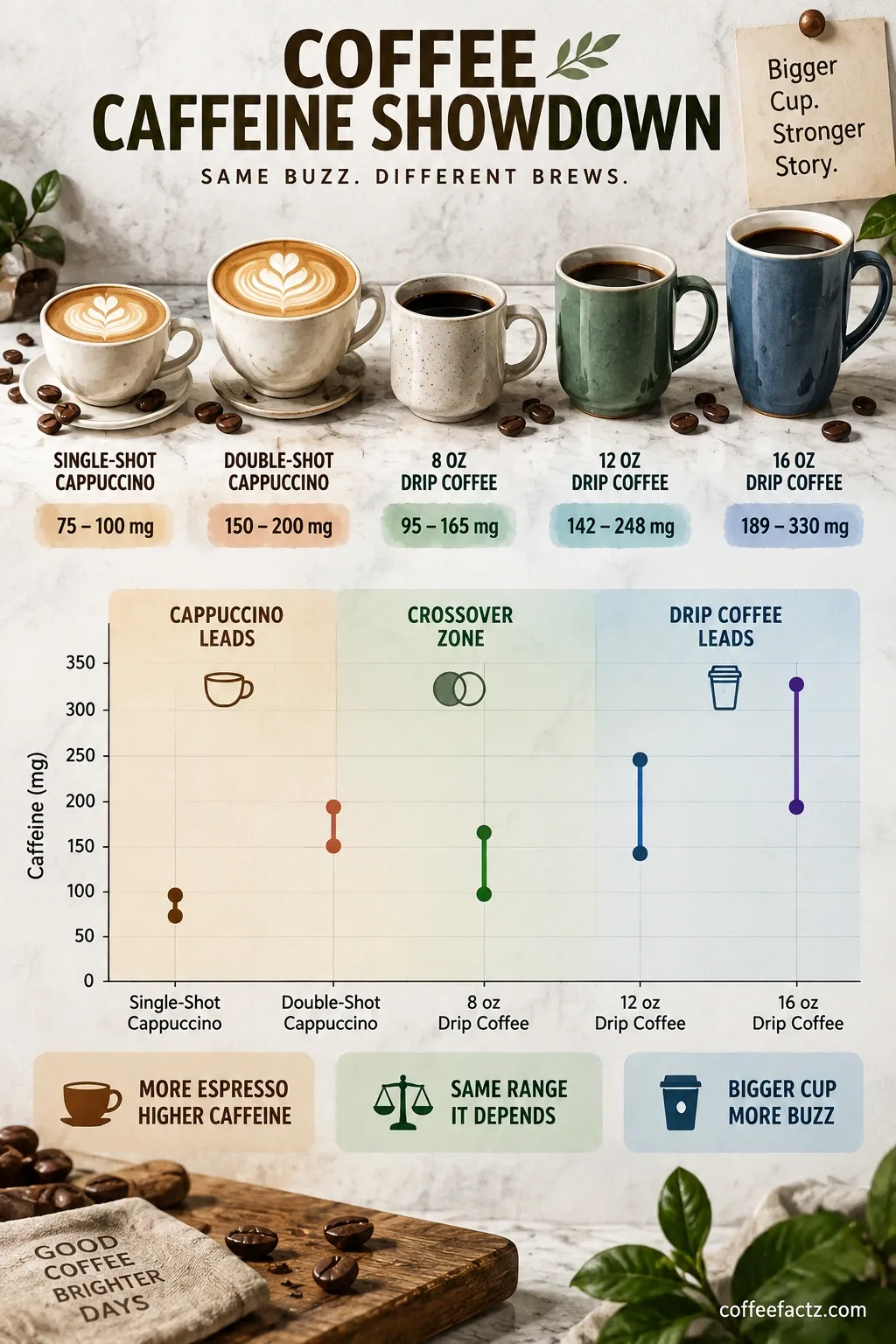
The comparison flips based on two levers: shot count and serving volume. Not on how strong the drink tastes. Not on the drink’s name. A cappuccino that tastes rich and intense can still carry less total caffeine than a mild-tasting 12 oz drip coffee, because intensity is a sensory experience and milligrams are a chemical quantity.
The Root Cause: Concentration vs Total Dose and Extraction Contact Time
Caffeine concentration is the number that tricks people. Espresso reads at roughly 40-64 mg per fluid ounce. Drip coffee reads at roughly 12-18 mg per fluid ounce. Espresso is three to four times more concentrated. That fact is real. But concentration is not the same thing as total dose, and the distinction is everything.
Density-to-Volume Conversion
Total caffeine equals concentration multiplied by volume. A 1.5 oz espresso shot at 50 mg/fl oz delivers about 75 mg. An 8 oz drip coffee at 12 mg/fl oz delivers about 96 mg minimum. The espresso is far more concentrated per ounce, but it is served in a container that holds roughly one-fifth the liquid.
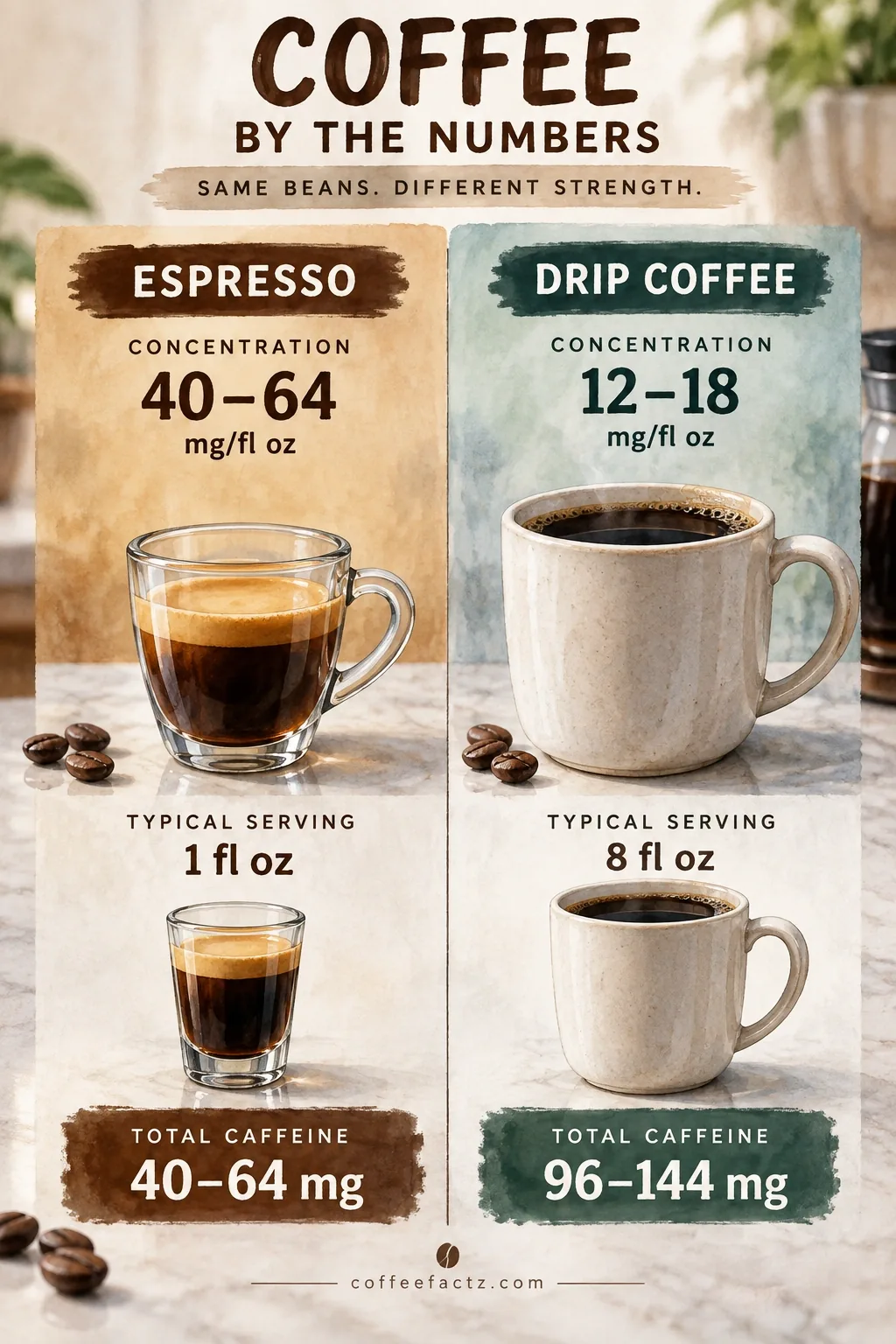
When you run the numbers per 100 ml, espresso delivers roughly 212 mg of caffeine per 100 ml while drip coffee delivers roughly 40-60 mg per 100 ml. Espresso wins the concentration comparison by a wide margin. But a cappuccino uses only 44-89 ml of espresso inside a 5-6 oz cup. An 8 oz drip coffee uses 237 ml of brewed liquid. The serving size multiplier flips the total.
This is why the phrase “cappuccino vs coffee” is unanswerable without size and shot count attached. A classical 3-4 oz cappuccino, a 6 oz cafe version, and a 12 oz chain version with a double shot are three different caffeine propositions wearing the same name.
Brewing Duration, Sensory Misreads
Brewing duration is the second mechanical reason drip coffee accumulates more total caffeine than its concentration alone suggests. Espresso extraction runs approximately 25 seconds. Hot pressurized water blasts through finely ground coffee and pulls soluble compounds fast. Drip brewing runs 4-5 minutes. Water saturates the grounds, gravity pulls it through, and the extended contact time keeps extracting.
A European Food Research and Technology study comparing nine extraction methods found that fully automatic espresso extracted in roughly 25 seconds, while filter methods ran 4-6 minutes. The study found that a higher volume of water, as used in longer extractions, generally led to higher extraction efficiency, and that filter coffee showed relatively higher caffeine extraction efficiency compared to espresso. Longer contact time and greater water volume work together to raise total caffeine yield in drip brewing.
The sensory piece is separate and important. Bitterness, body, and intensity are not milligram counters. Espresso tastes stronger because it is more concentrated, which means more dissolved solids per ounce, more aromatic compounds, and more perceived bite. None of those sensory signals correlate reliably with total caffeine. A light-roast drip coffee can taste mild and clean while delivering 160 mg of caffeine in a standard mug. A double-shot cappuccino can taste rich and bold while delivering 128 mg. The sensory experience and the chemical dose are running on separate tracks.
Variables That Swing the Caffeine Needle: Bean, Dose, Roast, Grind, and Brew Method
Brewing variables are the actual controls. Once you understand them, you can predict a drink’s caffeine load without relying on the menu name.
Botanical Species, Peak Source Identification
Robusta beans contain roughly double the caffeine of Arabica beans by dry weight. A blend that swaps 30% of its Arabica for Robusta will deliver meaningfully more caffeine per gram of coffee used, without changing the drink’s name, size, or appearance.
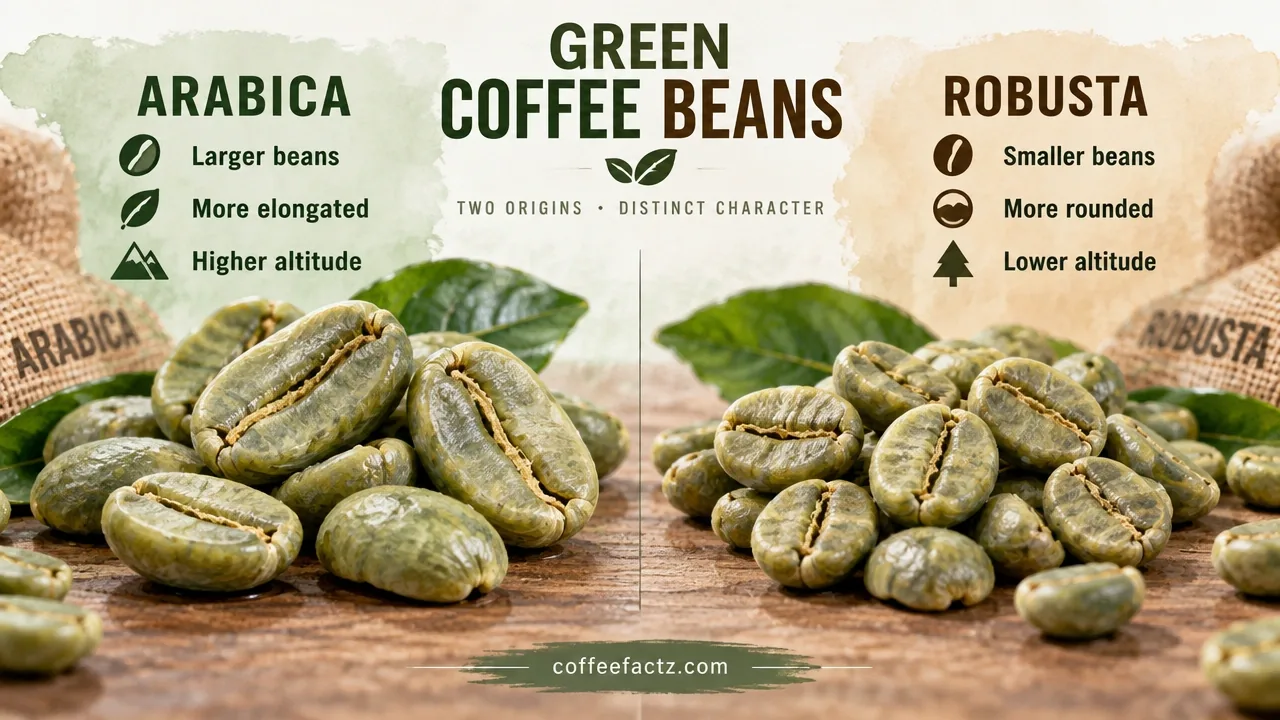
The question “which coffee is highest in caffeine?” is not answered by drink name or roast color. The highest-caffeine cup is the one with the most total coffee dose and the highest proportion of Robusta in the blend. A single-origin Robusta espresso will outperform a light-roast single-origin Arabica drip coffee in total caffeine, even if the espresso is served in a smaller cup.
Mass, Color Effects
Coffee dose, measured in grams, sets the ceiling. More coffee in the portafilter or the brew basket means more caffeine available for extraction, regardless of how much water runs through it. A barista who doses 20 grams instead of 14 grams is building a higher caffeine potential before a single drop brews.
Roast level is where the myths pile up. Dark roast does not reliably produce more caffeine than light roast. Roasting burns off a small amount of caffeine by mass, but it also reduces bean density, so dark roast beans are lighter per bean. When you measure by volume, the numbers shift slightly. When you measure by weight, the differences are marginal. Caffeine content follows bean species and total dose far more reliably than it follows roast color. A dark French roast Arabica and a light roast Arabica from the same farm, brewed at identical doses, will deliver similar caffeine totals. The flavor profile changes dramatically. The milligrams do not.
Particle Size, Serving Controls
Grind size changes extraction efficiency. Finer grind creates more surface area, which allows water to contact and dissolve more caffeine in a given time. Espresso uses a very fine grind paired with high pressure and a short 25-second window. Drip uses a medium grind with gravity and a 4-5 minute window. The two methods reach comparable extraction efficiency through different mechanical paths.
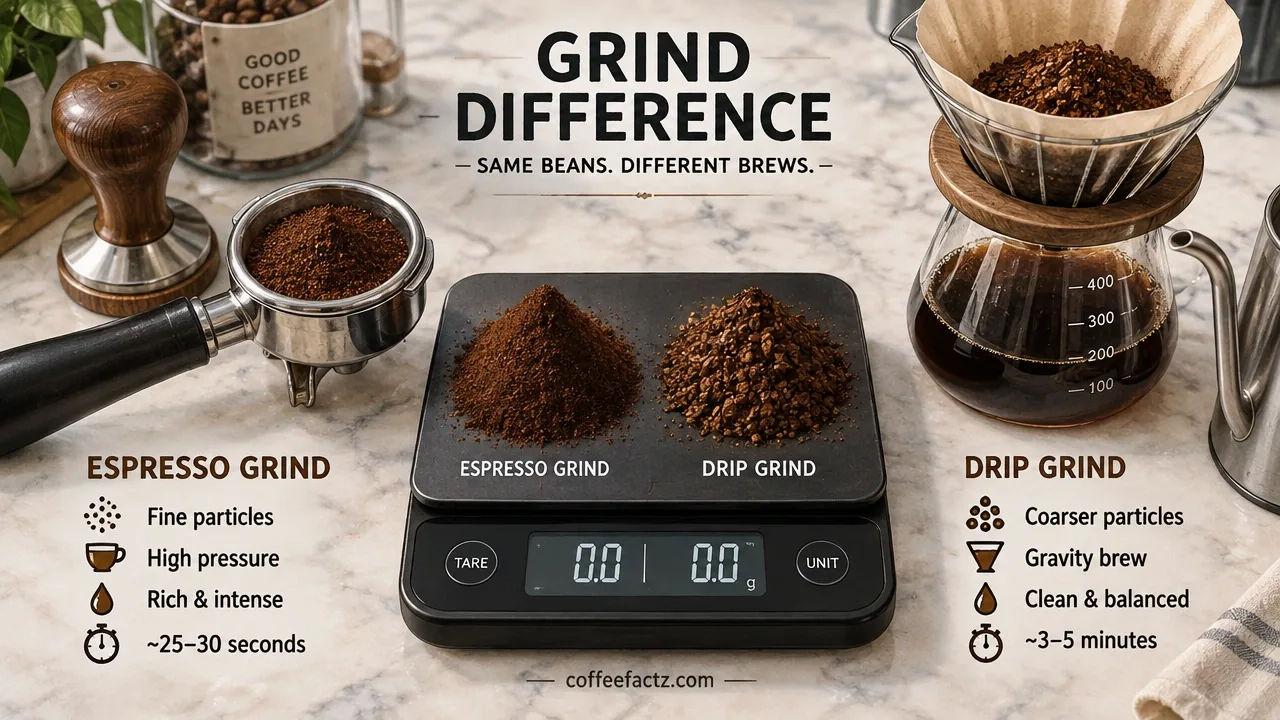
Shot count and serving size are the two fastest levers. A cappuccino moves from 63 mg to 126 mg the moment a second shot is pulled. A drip coffee moves from 95 mg to 190 mg the moment the cup size doubles. When a cafe drink surprises you with its caffeine effect, check total coffee dose, extraction efficiency, serving volume, and shot count before assuming the drink name caused it.
How Fast It Hits, How Much Is Too Much, and How to Order
Caffeine intake from a cappuccino follows the same absorption pathway as caffeine from any other source. The mechanism does not change because the drink has milk in it.
Absorption Timing
Caffeine absorbs in the gastrointestinal tract and reaches peak blood concentration in roughly 30-60 minutes for most people. Milk fat may slow gastric emptying slightly, which can soften the onset curve and delay the peak by a small margin. That is a timing effect, not a reduction in total caffeine. Every milligram you consumed will still reach your bloodstream. The milk does not neutralize, bind, or excrete caffeine. It adjusts the speed of delivery, not the total load.
Daily Limit, Personal Sensitivity
The FDA references 400 mg per day as a generally safe intake for healthy adults. That number is a population-level reference point, not a personal target. Individual sensitivity varies considerably. Some people report palpitations, shakes, and heart rates climbing toward 180 beats per minute at doses well below 400 mg, particularly if they are sensitive to caffeine, sleep-deprived, or using other stimulants.
The “2 cappuccinos a day” question requires actual shot math. Two single-shot cappuccinos deliver roughly 126-150 mg total. Two double-shot cappuccinos deliver 250-308 mg total. Add a morning drip coffee and the numbers accumulate quickly. The 400 mg reference is a ceiling to stay below, not a target to hit. If you are noticing palpitations or a racing heart at lower doses, that is your personal threshold, and it is more relevant than any published guideline.
“The quantities of caffeine and CQA in the cappuccinos from University Café and Artisan roast were similar to the amounts found in their espresso coffee while the quantities in cappuccinos from the other three coffee shops were about double the amounts in the comparable espressos. Caffeine contents of the cappuccinos from Patisserie Francoise and Costa Coffee were in excess of 200 mg per cup.” – From the study by Professor Alan Crozier, University of Glasgow, published in Food & Function
That finding from Professor Crozier’s team reveals something important: the cappuccino you order at one cafe can carry double the caffeine of the same-named drink at the cafe next door. The drink name is not a caffeine specification. The recipe behind the counter is. Two cappuccinos exceeding 200 mg each would put a two-cup daily habit at over 400 mg before accounting for anything else consumed that day.
Nutrition Separation, Purchase Controls, Final Verdict
Milk adds protein, fat, and calories to a cappuccino. A standard 5-6 oz cappuccino with whole milk contributes roughly 60-80 calories and 4-6 grams of protein from the milk component alone. Those are nutritional facts, but they have no bearing on the caffeine comparison. Any health argument about cappuccino versus drip coffee that rests on caffeine content alone is incomplete, because the milk fraction introduces a separate nutritional profile that drip coffee does not carry.
The practical ordering controls are straightforward. Ask how many shots are standard in the size you are ordering. Request a single shot if you want to stay in the 63-75 mg range. Ask the barista to confirm the cup size before they build the drink, because a cafe that defaults to a 12 oz cappuccino with a double shot is delivering roughly 125-154 mg before you even sit down. If you are sensitive to caffeine, reduce shot count first, then adjust cup size second.
The final answer: a cappuccino is not automatically higher in caffeine than regular drip coffee. A single-shot cappuccino usually carries less total caffeine than an 8 oz or 12 oz drip coffee. A double-shot cappuccino can approach a small drip serving but still trails a medium or large drip cup. The drink name does not decide the dose. Total coffee dose, extraction efficiency, shot count, and serving volume decide the dose. Those are the four variables worth tracking.
Frequently Asked Questions About Cappuccino Higher Caffeine Than Coffee
Is cappuccino stronger than coffee in terms of caffeine?
Espresso is more concentrated per ounce, but a standard single-shot cappuccino at 63-75 mg usually delivers less total caffeine than an 8-12 oz drip coffee at 95-200 mg. “Stronger tasting” and “more caffeine” are not the same thing.
Is 2 cappuccinos a day too much?
It depends entirely on shot count. Two single-shot cappuccinos add up to roughly 126-150 mg, which is well under the 400 mg FDA reference. Two double-shot cappuccinos add up to 250-308 mg, which leaves little room for other caffeine sources before hitting that ceiling.
Is cappuccino healthier than coffee?
Cappuccino adds protein, fat, and calories from milk, which drip coffee does not. Neither drink is inherently healthier; the comparison shifts based on your nutritional goals, caffeine sensitivity, and total daily intake of both caffeine and dairy.
Which coffee is highest in caffeine?
The highest-caffeine cup is the one with the most total coffee dose and the highest proportion of Robusta beans, not the one with the strongest flavor. A large drip coffee made with a Robusta-heavy blend will typically outperform any standard cappuccino.
Does the milk in a cappuccino slow down caffeine absorption?
Milk fat may delay gastric emptying slightly, which can soften the onset of caffeine’s effects. It does not reduce the total caffeine that reaches your bloodstream. Every milligram you consumed still gets absorbed.
Why does espresso taste stronger if it doesn’t always have more caffeine?
Espresso is more concentrated per ounce, so it carries more dissolved solids, aromatic compounds, and bitterness per sip. Those sensory signals feel intense, but they measure flavor density, not total milligrams. A mild-tasting 12 oz drip coffee can easily contain more total caffeine than an intense double shot.
How do I order a cappuccino with less caffeine?
Ask for a single shot and confirm the cup size before the barista builds the drink. Chain cafes often default to a double shot in medium and large sizes, which doubles your caffeine intake without any visible change to the drink’s appearance.
Can a cappuccino exceed 200 mg of caffeine?
Yes. Research from the University of Glasgow found that cappuccinos from some commercial coffee shops exceeded 200 mg per cup, which was roughly double the caffeine found in espressos from the same shops. Recipe variation between cafes is significant enough to make the drink name an unreliable caffeine guide.
References
- Comparison of nine common coffee extraction methods: instrumental and sensory analysis | link.springer.com
- Food & Function study on caffeine in commercial cappuccinos | pubs.rsc.org