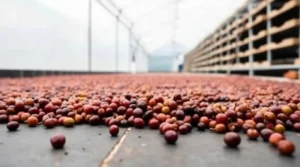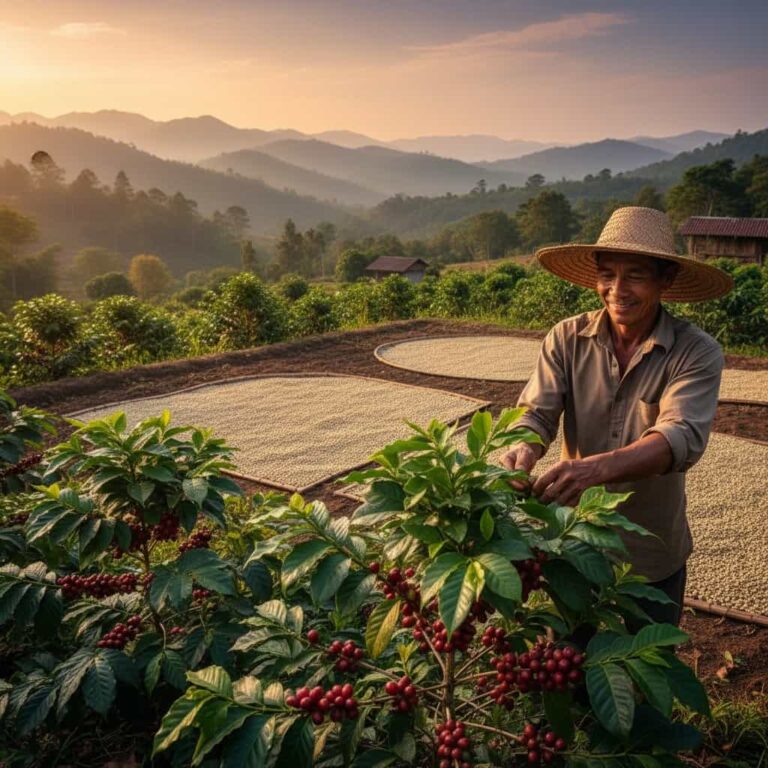

So, coffee beans start their wild journey as picky little seeds, right? Initially, farmers choose mature, disease-free beans. Then, after some blossom-flavored drama with pollinators buzzing around, cherries grow and ripen for months—talk about patience! The harvesting is a whole circus too, with folks plucking ripe cherries or machines doing the job—sometimes, it’s a bit of a mess! Ultimately, there’s processing, milling, and grading—it’s like a coffee makeover! Stick around to find out what happens next.
Key Takeaways
- The cultivation process begins with selecting disease-free, high-yielding seeds for optimal genetic potential.
- Coffee plants go through a flowering phase lasting 2 to 3 months, leading to cherry development.
- Cherries take approximately 6 to 9 months to ripen after blooming, influencing final coffee quality.
- Harvesting can be manual or mechanized, with selective picking ensuring only ripe cherries are collected for quality.
- Processing methods such as wet, dry, and honey affect the flavor profiles of the final coffee beans.
Seed Selection and Plantation
In the matter of selecting coffee beans for planting, you’d think it’s as simple as picking your favorite candy from a box—just grab what looks good, right? Wrong!
Once you understand how agricultural practices shape the harvest, you can better appreciate the unique flavor profiles found when you single origin coffee beans choose for your daily brew.
Choosing seeds isn’t just about pretty cherries—the seed selection criteria involve finding mature, disease-free gems from high-yielding trees. It’s like dating; you want the “best trees” that have proven track records! (Trust me, looks aren’t everything!) Quality-oriented seed selection ensures that the genetic potential of trees is maximized, ultimately leading to better coffee quality.
Then comes the drama of transplanting seedlings to the plantation where they need the right conditions to thrive. Ever thought about where do coffee beans come from? Exactly—the groundwork starts here!
When gathering the crop, the methods used in harvesting can significantly impact the overall quality and taste of the final product.
Good seeds mean great coffee! So, before you sip your java, remember: high-stakes decisions led to that delightful brew in your cup!
Mastering this initial phase is foundational when exploring a complete coffee farming guide dedicated to maximizing agricultural yields.
Flowering and Cherry Development
A coffee tree in full bloom is like a rock concert for bees—every flower bursts open, releasing an irresistible fragrance that draws pollinators in like groupies to their favorite band. During these flower development stages, buds elongate and turn white, only to give way to stunning white blossoms for just 1 to 2 days. Following this flamboyant display, little green coffee cherries begin to form.
| Stage | Timeframe |
|---|---|
| Flowering Phase | 2 to 3 months |
| Initial Cherry Growth | 6 to 7 months |
| Cherry Ripening | 7 to 9 months |
| Pollination Agents | Wind, Bees, Birds |
| Key Flavor Compounds | Accumulate here |
And remember, coffee beans come from cherries—so let’s not forget where those magic beans originate from!
Harvesting Techniques
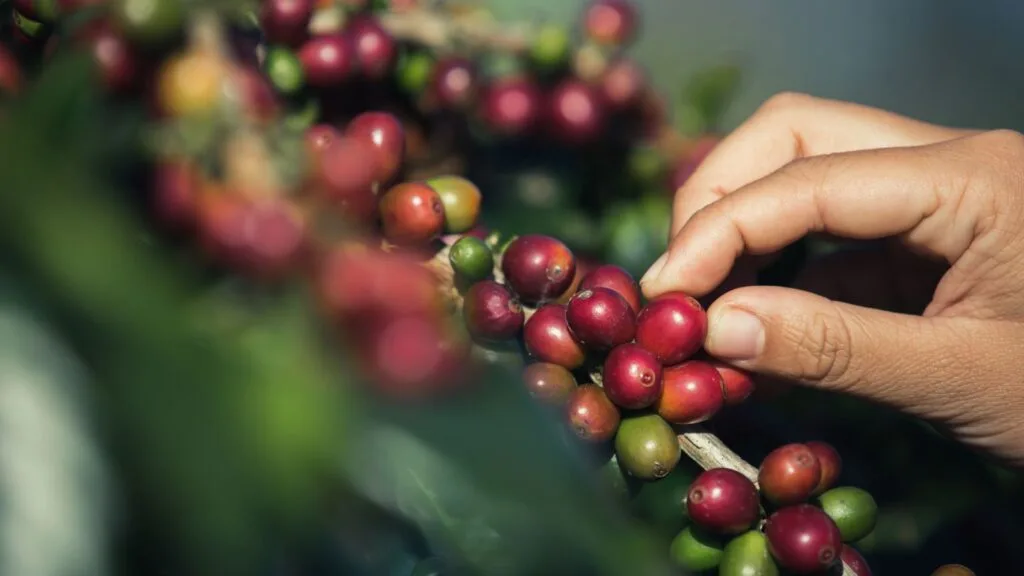
Harvesting coffee is where the real excitement kicks in, and oh boy, does it come with a mix of sweat, strategy, and sometimes, a hint of chaos!
Imagine this, workers climbing up and down those steep hills, picking coffee bean cherries by hand with selective picking—they’re only grabbing the ripe ones, making the taste buds tingle!
But then there’s mechanized harvesting! Those machines rumble in, shaking trees like they’re at a rock concert, collecting everything in sight—ripe, unripe, you name it! It’s faster, sure, but raises the stakes on quality.
And don’t forget about that trusty semi-mechanized method, blending a little manual love with some machine magic. The world of harvesting techniques is truly a wild ride, folks!
Processing Methods
Processing coffee beans is like throwing a wild party for those cherries—one that demands a fabulous dress code and a few wild dance moves! Each processing method, from wet to dry, dances to its unique rhythm, leaving a distinct flavor in your cup.
Processing coffee beans is a vibrant celebration, each method adding its unique flair and flavor to your perfect cup!
- Wet process: brings out the bean’s natural brightness and acidity—like a fresh burst of citrus!
- Dry process: lets the cherry party hard, delivering a sweet, fruity vibe—perfect for those sunny afternoons.
- Honey process: is a sweet compromise, combining the two for a balanced cup that feels just right! The fermentation process plays a crucial role in developing unique flavor profiles during coffee processing.
Understanding these processing methods helps coffee enthusiasts uncover the history of coffee beans, while still asking the age-old question: how are coffee beans grown?
Milling, Grading, and Quality Control
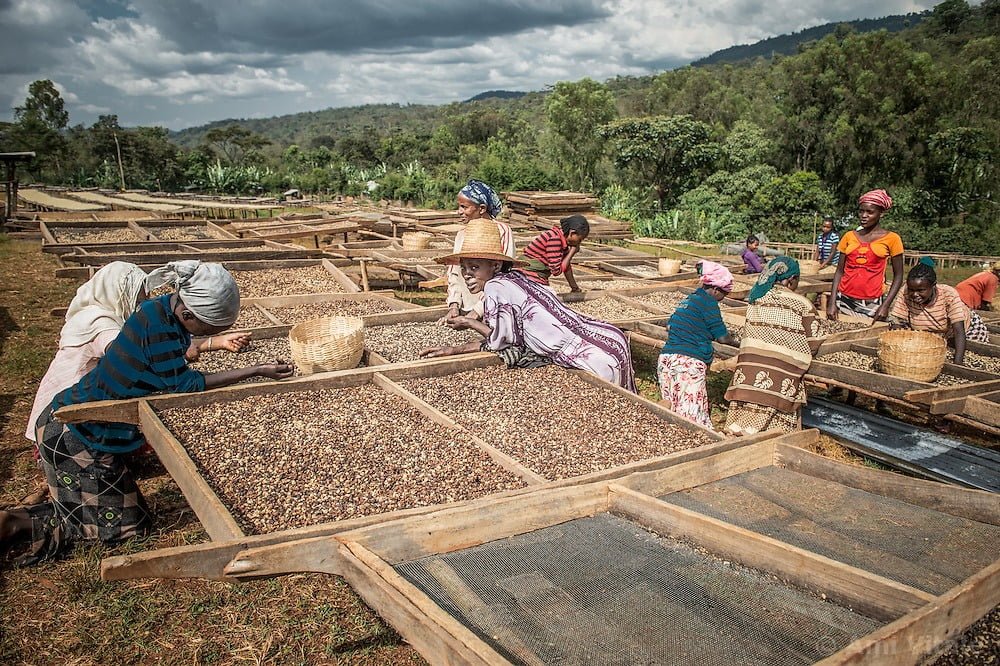
While most folks might think of coffee as that magical elixir that fuels mornings and late-night study sessions, the journey from cherry to cup involves a whirlwind of milling, grading, and the fine art of quality control.
Firstly, milling removes those pesky outer layers of fruit, leaving only the precious coffee beans—think of it as a spa day but for beans!
Then, there’s grading, where size matters, and beans get sorted into categories like Fancy—no, not the coffee equivalent of a high-society gala, but close!
Ultimately, quality control swoops in, using fancy machines and color sorters to guarantee nothing defective sneaks through. Because we all know, nobody wants a coffee bean that looks like it had a rough night out!
Frequently Asked Questions
What Are the Best Coffee Varieties for Specific Climates?
Diverse coffee varieties excel in specific climates: high-altitude regions favor Arabica types like Geisha, Caturra, and SL28, while Robusta thrives in low-altitude tropical areas, showcasing resilience against heat, pests, and disease.
How Does Altitude Affect Coffee Flavor Profiles?
Altitude greatly influences coffee flavor profiles; higher elevations improve brightness, acidity, and complex notes, while mid-altitude yields balanced flavors. In contrast, low-altitude coffees tend to present fuller, chocolatey, and nutty characteristics, impacting consumer preferences.
What Tools Are Used in Manual Coffee Harvesting?
Manual coffee harvesting employs hand tools like small knives, baskets, and tarpaulins, alongside mechanical devices like derricadeiras for shaking branches. These methods allow selectivity, ensuring high-quality cherries while managing labor-intensity effectively across varying terrains.
How Long Can Harvested Cherries Be Stored Before Processing?
Harvested coffee cherries can be stored for a maximum of 12 hours before processing for washed methods; however, natural processing allows for drying over 10 to 21 days, commencing immediately after harvest rather than prolonged storage.
What Is the Environmental Impact of Coffee Cultivation?
Coffee cultivation notably impacts the environment through deforestation, carbon emissions, soil degradation, and water pollution. These practices threaten biodiversity, contribute to climate change, and strain local ecosystems, ultimately undermining the sustainability of coffee production.
References
- https://coffeegreenbeans.com/blogs/forest-blog/the-7-stages-of-the-coffee-production-process
- https://www.coffeebean.com/blogs/blog/processing-101-what-is-washed-coffee
- https://agriculture.institute/crop-production-technology/coffee-propagation-methods-seed-vegetative-techniques/
- https://wikifarmer.com/library/en/article/how-to-select-and-treat-coffee-seeds