The cortado taste represents the pinnacle of balance in coffee drinks. As an espresso based beverage, it achieves something remarkable: a perfect harmony between the intensity of espresso and the smoothness of steamed milk. Like a perfectly composed symphony, each sip reveals a carefully crafted combination where neither element overshadows the other.
Taste Profile & Characteristics
What does a cortado taste like?
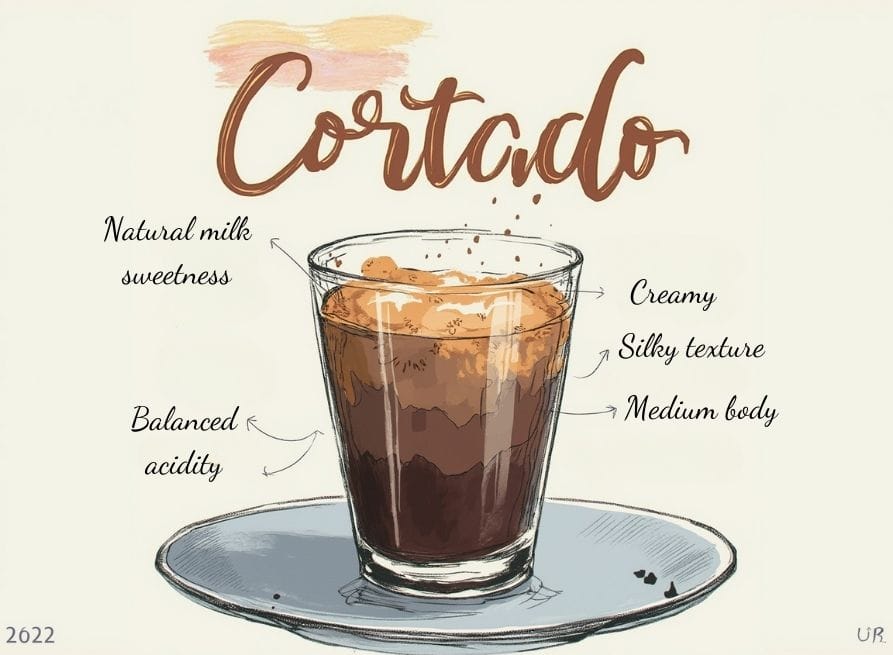
The perfect balance comes from the precise combination of a shot of espresso with steamed milk, creating three key taste elements:
- Sweetness Profile:
- Natural milk sugars (lactose sweetness)
- Caramelized coffee notes from proper extraction
- Subtle vanilla hints from perfectly steamed milk
- Acidity Structure:
- Bright but not sharp, like ripe fruit
- Wine-like complexity from quality beans
- Fruit undertones that complement the sweetness
- Body Composition:
- Silky texture from microfoam integration
- Medium weight that satisfies without heaviness
- Creamy consistency throughout
Origins & Tradition
The cortado origin in Spain’s Basque Country has significantly influenced its taste profile. The traditional cortado emerged from a desire to soften espresso’s intensity while preserving its essential character. In San Francisco, innovative baristas have refined this concept, creating a version that emphasizes flavor clarity and balance.
The cortado represents our coffee heritage – simple, pure, and focused on quality” – Juan Martinez, Spanish Coffee Culture Expert
Brewing Technique
Achieving the signature cortado taste requires precise attention to the ratio of espresso to milk (1:1). The quality of both components is crucial:
Coffee Components:
- Quality coffee beans (medium-dark roast)
- Single-origin recommended
- Fresh roasted within 2 weeks
- Fresh grinding
- Fine grind size
- Consistent particle distribution
- Proper extraction time (25-30 seconds)
Equipment Requirements:
- Espresso machine with consistent pressure
- 9 bars ideal pressure
- Stable temperature control
- Precision temperature control (195-205°F)
- Professional milk steaming capability
Milk Preparation:
- Fresh whole milk (or condensed milk variation)
- Microfoam technique (minimal bubbles)
- Proper temperature (150-155°F)
Pro Tips:
- Preheat your cups
- Use filtered water
- Clean equipment between shots
- Practice consistent tamping
Taste Comparison & Distinction
Among coffee beverages, the cortado’s taste profile stands unique compared to other espresso drinks:
Versus flat white:
- More pronounced coffee flavor (70% stronger)
- Less milk dilution (40% less milk)
- Cleaner finish without lingering heaviness
Taste Distinctions:
- Stronger espresso presence
- Better flavor clarity
- More concentrated body
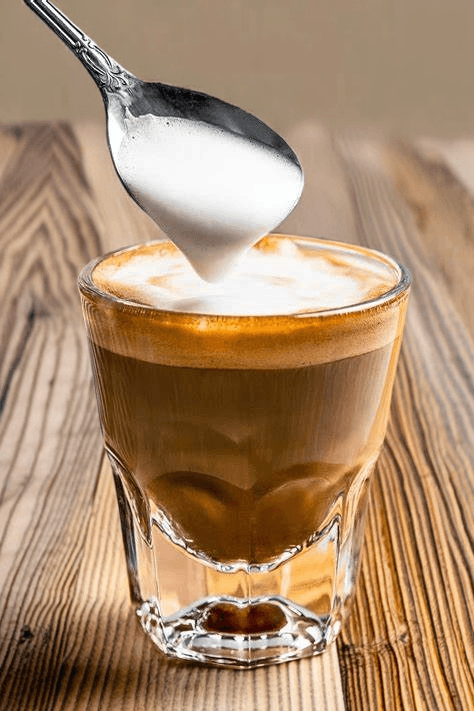
Visual Guide:
- Color: Deep mahogany with caramel crema
- Texture: Glossy, smooth surface
- Layer: Distinct but integrated

Modern Taste Trends
The cortado has become a popular choice among coffee lovers seeking refined taste experiences. Modern preferences favor its:
- Clean flavor profile
- Balanced sweetness
- Artisanal preparation
- Pure coffee expression
“Today’s coffee enthusiasts appreciate cortado for its honest expression of coffee’s true character” – Sofia Martinez, Coffee Culture Expert
Summary
The cortado’s taste profile exemplifies sophisticated coffee crafting, offering a perfect balance between espresso’s complexity and milk’s smoothness. Its growing popularity reflects an appreciation for nuanced, well-crafted coffee experiences.
Frequently Asked Questions about Cortado Taste
What exactly is the cortado taste and why is it considered a balanced espresso drink?
The cortado taste is defined by a 1:1 espresso‑to‑steamed‑milk ratio that creates a harmony between intense coffee flavor and smooth, microfoam‑infused milk. The result is a beverage that delivers espresso’s bright acidity and body while the milk softens the bitterness, achieving a crisp yet creamy finish.
How can I achieve the authentic cortado flavor profile from home?
To replicate a true cortado flavor profile, grind fresh beans to a fine consistency, pull a single shot (25‑30 s extraction, 9 bar pressure), and steam whole milk to 150‑155°F, creating minimal bubbles. Pour the milk over the espresso in a 4‑oz glass, maintaining the 1:1 ratio for that balanced taste.
Can you describe the cortado taste breakdown in terms of sweetness, acidity, and body?
Sweetness comes from natural lactose, caramelized coffee notes, and subtle vanilla from the milk. Acidity is bright and fruit‑like, not sharp, providing a lively counterpoint. Body is silky, medium‑weight, and creamy, thanks to the integrated microfoam that gives the drink a smooth texture.
How does the cortado taste compare to a flat white in terms of flavor intensity?
The cortado offers a stronger coffee focus—about 70 % more espresso flavor—and uses 40 % less milk, resulting in a cleaner finish. Its 1:1 ratio delivers clearer flavor clarity and a more concentrated body compared to the milk‑diluted flat white.
What regional variations influence cortado taste, such as the Basque Country versus American styles?
In its Basque origins, the cortado emphasizes preserving espresso’s character while softening intensity, often served in a small glass with a hand‑crafted microfoam. American variants may experiment with alternative milks or slightly higher milk proportions, subtly shifting sweetness and body while keeping the core espresso intensity.