Why Single Source Coffee Beans Change Everything for Your Cup
I remember the first time I truly understood the difference between a blend and a single origin. I was used to the familiar, comforting profile of my morning cup—always solid, never surprising. Then, I brewed a single origin Ethiopian Yirgacheffe. It wasn’t just coffee; it was a sudden burst of floral aroma and bright blueberry notes that I never knew beans could possess. That moment shifted my entire approach to single origin coffee beans.
Blends are like a carefully constructed orchestra, where different instruments (beans from various locations) are mixed to create a balanced, predictable sound. Single source coffee, though, is a virtuoso solo. It offers complete traceability back to one farm, one region, one moment in time.
| Attribute | Blend | Single Origin Coffee |
|---|---|---|
| Flavor Profile | Consistent, balanced, moderate complexity | Unique, distinct, high clarity |
| Traceability | Farm level often unknown (just by country) | Fully traceable to a specific farm or estate |
| Experience | Comforting predictability | Flavor journey and experimentation |
A seasoned Coffee Roaster I spoke with recently emphasized this point: “Traceability isn’t just a marketing word; it’s a flavor guarantee. When I know exactly where the Coffee Bean came from, I know exactly how to treat it to bring out its best character as Specialty Coffee.” If you seek true flavor expression and want to move beyond the familiar, exploring single origins is the next logical step in your coffee exploration. Think about the cup you had yesterday—did it taste like a particular place? If not, perhaps it’s time to change where you shop.
How Origin, Altitude, and Climate Shape the Flavor of a Single Origin Bean
To truly master your selection of single origin coffees, you must understand that the coffee cherry is deeply imprinted by its environment. It’s the ultimate expression of terroir, an idea borrowed from wine, but utterly relevant here. The geography isn’t just a location on a map; it dictates the density, the acidity, and the final cup’s personality. When you pick up a bag of single origin beans, you are choosing geology, weather, and elevation.
Imagine the map illustrating these points; the subtle differences in soil mineral content can throw the flavor from nutty to spicy. The elevation acts like a maturity dial, slowing down the ripening process.
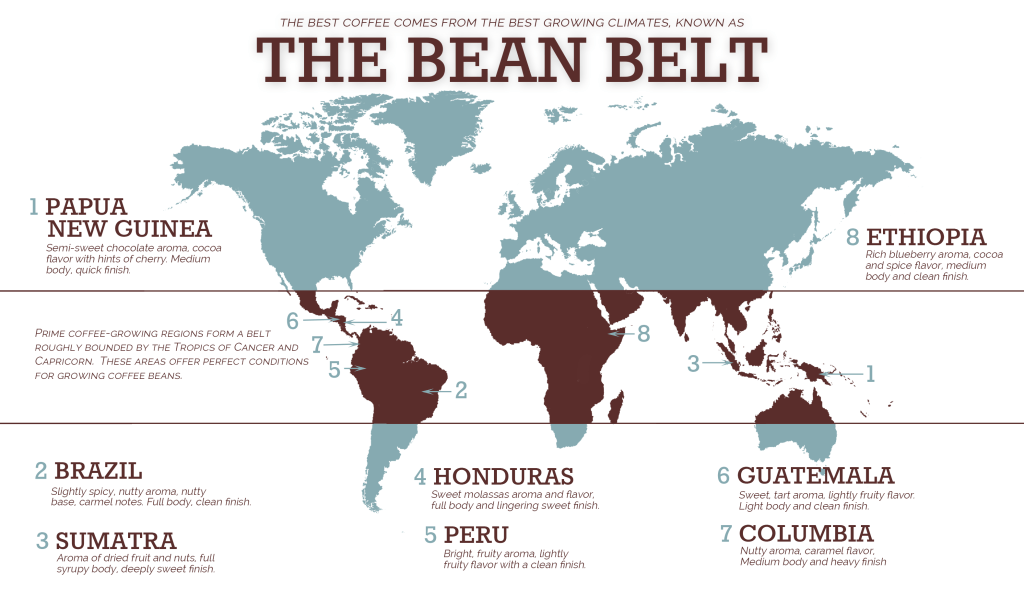
Altitude directly impacts how fast the coffee cherry matures. At higher elevations, the cooler temperatures extend the ripening period. Think of it as a “time‑slow” effect, allowing the cherry to develop more complex sugars and acids before harvest. These acids are what we perceive as brightness and clarity in the final brew.
Here is a simplified chain of effect created by altitude:
Altitude → Slower Maturation → Complex Sugars + Higher Acidity → Brighter, More Defined Flavor and Body
Climate variations, particularly rainfall consistency and temperature swings, determine Coffee Variety health and Coffee Roast Level response. Consistent, moderate temperatures encourage steady growth, leading to dense beans that can handle a darker roast without losing definition. Erratic weather, conversely, can stress the plant, sometimes yielding lighter, less predictable beans.
Regional Flavors: Where the Beans Come From
Different Coffee Region locations bake in specific characteristics that become their signature. If you see a label from East Africa, prepare for something bright and complex.
I recall a Guatemalan bean tasting intensely of dark chocolate, tasting almost caramelized, while a distant Ethiopian cousin tasted like wine and jasmine. It’s remarkable how place defines taste. One farmer from a Colombian hillside once told me, “The moisture in the morning fog—that is what stops the harshness from entering the seed.”
- Ethiopia: Berry‑rich and floral, reminiscent of a fragrant tea.
- Colombia: Chocolatey and balanced, the classic, easy‑drinking profile.
- Guatemala: Earthy and often possessing deep spice notes, great clarity.
Altitude Matters: How Elevation Shapes Sweetness
Because the air is thinner at higher altitudes, photosynthesis efficiency changes, which profoundly affects sugar storage within the bean. The plant works harder and longer to mature its fruit.
| Elevation (Meters Above Sea Level) | Dominant Characteristic |
|---|---|
| Below 1,200 m | Lower acidity, denser body |
| 1,400 m – 1,800 m | Balanced acidity and sweetness |
| Above 1,900 m | Significant acidity, intense complexity |
Consider the renowned Panamanian beans grown near 2,200 meters; their crystalline acidity is legendary precisely because of this slow, cold maturation.
Climate Cues: Temperature, Rain, and Your Cup
Seasonal patterns define harvest timing and bean density. Generally, regions with distinct wet and dry seasons experience the best structural development in their single source coffee. Summer sun exposure dictates sugar concentration, while dry spells during fruiting encourage denser structure. Denser beans have more structural integrity, which translates to a perception of smoother body on the palate. A micro‑weather fact to keep in mind is that even minor shifts in daily temperature can influence how well a bean accepts roast development.
Decoding Processing Methods: Wash, Natural, Honey, and Their Impact on Taste
Once we know where the single origin coffee processing happened, we must understand how the seed was separated from the fruit. This step, often overlooked, dramatically alters the final sensory experience. The Coffee Roaster must adjust their approach based on how the bean was prepared. As S. P. Johnson et al. noted in their 2021 study on lipid composition, processing methods significantly influence volatile compound profiles and sensory attributes of coffee Lipidomic profiling provides insights on Arabica coffee.
| Method | Fruit Left On? | Sensory Profile | Acidity/Sweetness Score |
|---|---|---|---|
| Washed (Wet) | No | Clean, bright, acidic | High Acidity / Moderate Sweetness |
| Natural (Dry) | Yes (full) | Intense fruit, winey, very sweet | Moderate Acidity / High Sweetness |
| Honey (Pulped Natural) | Partially | Balanced, syrupy body | Balanced |
When you see complex descriptors like “fermented plum” or “stone fruit funk,” you are likely looking at a natural‑processed bean because the prolonged contact with the fruit pulp introduces those strong fruity esters.
Wash Process: Crisp, Clean Profiles
The wash process removes the fruit immediately after picking, washing the parchment clean before drying. This technique strips away most residual sugars, leaving a clean finish. It emphasizes the inherent acidity and clarity of the Coffee Variety. If you prefer a sharp, almost tea‑like cup, look for washed single source coffee. The acidity here is often bright, like green apple or lemon zest, making it perfect for lighter Coffee Roast Level profiles.
Natural Process: Bright, Fruity Intensity
In contrast, the natural process involves drying the entire cherry, fruit and all, on raised beds—a far more hands‑off approach after harvest. This allows the sugars and fruit mucilage to fully penetrate the bean. This yields intense sweetness and potent berry‑like notes; sometimes it tastes like genuine fruit punch! Natural processed coffees often possess heavy body, but the clarity of flavor can sometimes be muddied by excessive fermentation if managed poorly.
Honey Process: Sweet, Smooth Flavor
The honey method sits squarely in the middle ground. The skin of the fruit is removed, but a specific, sticky layer of mucilage (which looks somewhat like honey) is left adhered to the parchment during drying. This partial pulp contact provides sweetness without the sometimes overwhelming intensity of a full natural. It balances perceived sweetness against acidity beautifully, often resulting in an exceptionally smooth mouthfeel and flavor profile, regardless of the Coffee Roast Level chosen by the Coffee Roaster.
Reading Flavor Profile Descriptors to Match Your Palate
Label reading can feel like deciphering ancient script until you realize the descriptors are simple clues pointing toward origin or processing. When I first started buying single origin coffee flavor and single origin coffee notes were just vague terms. Now I use them as my personalized compass.
| Descriptor | Sensory Cue | Best Brewing Method |
|---|---|---|
| Citrus/Lemon Zest | Bright, high acidity | Pour‑Over (V60, Chemex) |
| Stone Fruit/Berry | Intense fruit sweetness | Full Immersion (French Press) |
| Caramel/Toffee | Balanced sweetness, moderate body | Automatic Drip |
| Cacao/Nutty | Deep, earthy, low acidity | Espresso, French Press |
Before your next brew, take a moment to match today’s mug to one descriptor. It is the primary way you begin profiling your preferences as a Specialty Coffee enthusiast.
Why Certifications Like Organic and Fair Trade Matter for Quality and Ethics
When you select organic single origin coffee, you are making a choice about purity. Organic farming prohibits synthetic pesticides and fertilizers. For the cup, this often translates to cleaner, purer fruit notes because the bean isn’t interacting with synthetic residues during development. My rule is simple: if the origin is already unique, why dilute that uniqueness with outside chemicals?
Ethics, covered by fair trade single origin coffee certification, moves beyond taste and addresses livelihood. While critics sometimes argue about the final impact, the baseline guarantee is important for supporting producers who often operate under severe economic pressure. According to a consumer survey conducted by the National Coffee Association of America, 48% of U.S. coffee consumers indicated that they prioritize fair‑trade certification when selecting specialty coffee.
Focusing on ethics—ensuring fair prices stabilize farming communities—eventually feeds back into the quality loop. Stable farmers invest in better infrastructure, better processing, and better harvesting, leading to better beans for us all. My satisfaction increases knowing my purchase helps secure future crops.
Picking the Right Roast Level and Grind Size for Your Brewing Style
The best single origin espresso beans in the world can taste awful if roasted too dark or ground too fine for the machine. The roast level is the Coffee Roaster’s interpretation of the bean’s inherent potential, and the grind size is your final control knob.
For single origins, particularly those noted for high acidity (like a washed Kenya), I rarely let a Coffee Roaster take them past a light‑to‑medium shade. This preserves the intrinsic terroir flavors. Darker roasts burn off those volatile acids and replace them with smoky, oily chocolate flavors, which defeats the purpose of buying a meticulously sourced origin bean.
Roast Levels Explained: Light, Medium, Dark
- ☀️ Light Roast (City/Cinnamon): Maximizes origin acidity and brightness; lower body.
- ❤️ Medium Roast (City+): Balances origin character with developed sweetness; balanced body.
- 🔥 Dark Roast (Full City/Vienna): Flavor dominated by roast; low perceived acidity, heavy body.
Grind Size Guidelines: From Fine to Coarse
Don’t guess your grind size; match it to your equipment for optimal extraction. If your brew tastes sour, the grind is likely too coarse (underextracted). If it tastes bitter or dry, it’s too fine (overextracted).
| Method | Grind Size |
|---|---|
| Espresso | Fine, like table salt structure |
| Pour‑Over (V60/Chemex) | Medium‑fine, like granulated sugar |
| Drip Machine | Medium, slightly coarser than table salt |
| French Press/Cold Brew | Coarse, like sea salt or breadcrumbs |
Brewing Method Pairings: What Works Best
| Method | Recommended Roast–Grind | Extraction Time Goal |
|---|---|---|
| Espresso | Light‑Medium / Fine | 25–30 seconds |
| Pour‑Over | Light / Medium‑Fine | 3:00–4:00 minutes |
| French Press | Medium‑Dark / Coarse | 4:00 minutes |
Remember, these are guidelines, not iron rules. If you love bold espresso, grab a medium‑dark bean and use it, but perhaps grind it slightly coarser than standard to keep the origin flavors from being completely masked.
A Practical Checklist for Comparing Roasters, Bean Packages, and Freshness
| Criterion | Ideal | Red Flag |
|---|---|---|
| Roaster: Transparent sourcing | ✔ Clear origin & process | ✘ Unknown source |
| Roaster: Consistent roast profile | ✔ Consistent cup taste | ✘ Inconsistent flavor |
| Roaster: Small batch production | ✔ Fresh flavors | ✘ Mass‑produced large batches |
| Bean package: Vacuum sealed | ✔ Airtight, sealed | ✘ Sealed but not vacuum‑sealed |
| Bean package: Nitrogen flushed | ✔ Extended freshness | ✘ No nitrogen flush, open box |
| Bean package: Visible roast date | ✔ Printed date on front | ✘ No roast date |
| Freshness: Roast within 2 weeks | ✔ Within 2 weeks of brew | ✘ > 4 weeks old |
| Freshness: Strong aroma | ✔ Fresh coffee scent | ✘ Musty or stale scent |
| Freshness: Grind on the day | ✔ Same‑day grind by store | ✘ Stale grind, pre‑ground |
Smart Buying Tactics: Price vs. Quality, Buying in Bulk, and Sampling Options
The price tag on single origin coffee can look intimidating, especially for micro‑lots. I approach cost by using a basic price‑quality grid. If a highly graded, fully traceable green coffee is priced at $15/lb wholesale, a good Coffee Roaster might sell it for $22/lb retail. If they are selling it for $35/lb, I need to know why – is it rare, graded exceptionally high, or are they simply inflating the margin?
Buying in single origin coffee bulk can save money, but only if you are certain you can consume it quickly, as freshness starts declining immediately after roasting. The freshness window for peak flavor exposure remains roughly two to three weeks post‑roast. Only buy bulk if you have a dedicated grinder and consume 1 lb every 10 days or less.
For testing new single origin coffee roasters or origins, sampling packs are your friend. They minimize waste and allow you to try three to four very different profiles risk‑free. It’s the coffee equivalent of trying appetizers before committing to the main course.
The Final Decision: A Step‑by‑Step Path to Owning Your Perfect Single Origin Beans
- Identify Your Mood: Decide what you crave today—bright and acidic, or deep and chocolatey? Match this to regional profiles.
- Research Processing: Look at the process (Washed for clarity, Natural for intensity) and see if it matches your goal from Step 1.
- Sample If Possible: Test a small bag or ask your roaster for a tasting recommendation before buying a larger quantity.
- Order with Freshness Criteria: Verify the roast date is recent (ideally within the last 10 days of delivery).
- Taste and Document: Brew it exactly according to recommendation, then note what you taste. This builds your personal database for better future choices.

Expanding Your Horizons
You now possess the expert understanding needed to select any bag of single origin coffee beans and understand exactly why it tastes the way it does. Forget generic coffee shopping; you are now shopping based on altitude, fermentation, and geography. If consistency is what you seek, stick to one origin and one roaster until you master that specific profile. However, if discovery drives you, I encourage you to swap out just one bean each month for something entirely new—perhaps a high‑altitude Yemen or a rare Gesha variety. Your perfect cup of single origin coffee is waiting there, expertly mapped out.
Frequently Asked Questions About Single Origin Coffee
Q: What is the main difference between single origin and blend coffee?
A: Single origin coffee comes from one specific geographic location (farm or co‑op), prioritizing traceability and unique regional flavor profiles. Blends mix beans from different sources to achieve a consistent, balanced taste year‑round.
Q: How long after roasting is single origin coffee best to use?
A: For peak flavor clarity, single origin coffee beans are generally best consumed between 4 and 14 days post‑roast. After about three weeks, the vibrant aromatics begin to fade noticeably.
Q: Can I use the same roast for espresso and pour‑over with an origin bean?
A: While possible, it’s rarely ideal. Light roasts work best for pour‑over to emphasize acidity, while medium roasts often perform better for espresso as they are dense enough to withstand high pressure without harshness.
Q: Does organic certification truly affect the final taste?
A: It can. While not a guarantee of superior taste, organic single source coffee eliminates chemical input variations, allowing the natural terroir flavors—acidity, sweetness, and fruitiness—to express themselves more purely.
Q: If a bag doesn’t list a roast date, what should I assume?
A: Assume the beans are old or the Coffee Roaster is not concerned with freshness. Always choose a package displaying a clearly printed, recent roast date for the best experience with single origin coffee.