
Discovering Starbucks’ Creamy Coconut Milk: The Brand Behind the Bliss
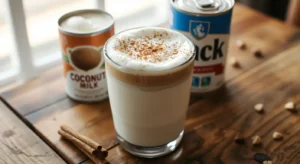
When I’m craving that slightly tropical, creamy lift in my afternoon latte, I naturally reach for Starbucks. But one of the most common questions I get asked—and one I’ve dug into myself—is what coconut milk does Starbucks use? This isn’t just any coconut milk poured from a carton; it’s a specific selection engineered for the coffee house experience. I want to give you the complete rundown on the brand they stock.
The Brand Identity
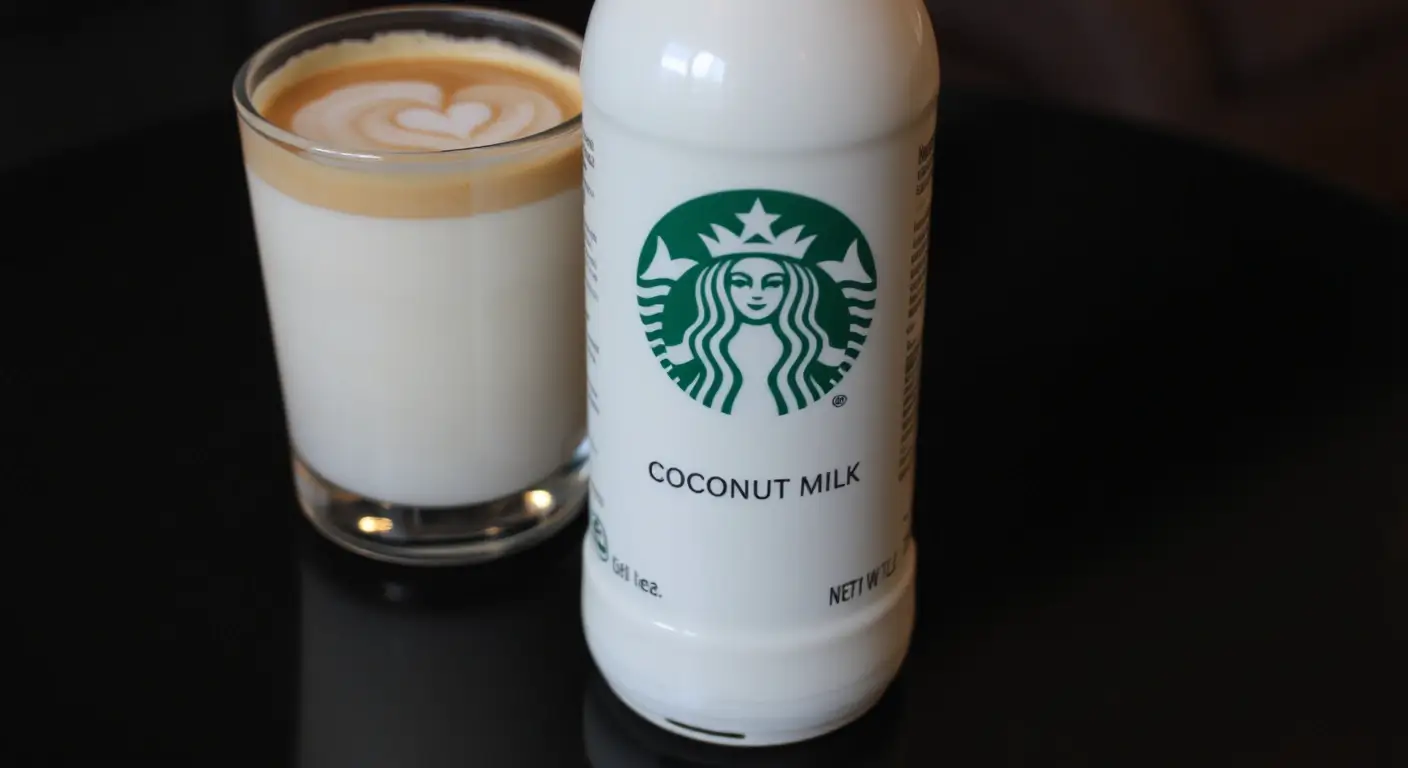
Starbucks officially markets this non-dairy option as Starbucks Single Origin Sumatra Coconut Milk. You won’t find a competitor’s name like Califia or Silk on the carton they pull out from behind the espresso machine. This is a proprietary product, specifically branded to highlight its unique origin. By using a single-origin source, Starbucks ensures that when you order a coconut milk latte, you get a consistent, premium flavor profile that was designed specifically to pair with their coffee beans.
Manufacturing Partner & Production
While the Starbucks name is on the front, this milk is a proprietary formulation developed specifically for their global operations. Unlike off-the-shelf retail brands, this “Barista Edition” is engineered with specific emulsifiers and stabilizers to be heat-stable. This ensures the milk can be steamed to high temperatures without curdling or separating, allowing baristas to create the silky micro-foam necessary for high-quality latte art and a smooth mouthfeel.
Why Starbucks Chose This Source
The decision to source from Sumatra, Indonesia, was entirely flavor-driven. Starbucks required a coconut base that offered a rich, tropical creaminess without the aggressive “sunscreen” aftertaste found in some commercial brands. The coconuts from the Sumatra region provide a subtle sweetness that complements the roasty notes of Starbucks’ espresso. Furthermore, sourcing from Southeast Asia aligns with their sustainability goals and long-standing relationships within major coffee-growing regions, ensuring a transparent and ethical supply chain.
Sweetened or Unsweetened? Clarifying the Starbucks Coconut Milk Options
One of the most common misconceptions is that Starbucks offers an unsweetened coconut milk option. In reality, Starbucks only carries one standard type of coconut milk, and it is sweetened with cane sugar. Unlike their almond milk, which is often unsweetened in many regions, the Sumatra Coconut Milk is formulated with sugar as a primary ingredient to ensure it balances the bitterness of the espresso. Customers looking to avoid added sugars should be aware that there is no “unsweetened” coconut milk alternative available behind the bar.
Ingredient Breakdown & Allergen Insights for Starbucks Coconut Milk
The Starbucks Single Origin Sumatra Coconut Milk contains
- Filtered Water
- Coconut Cream (Concentrated Coconut Milk)
- Cane Sugar (The 3rd ingredient, providing its signature sweetness)
- Tricalcium Phosphate & Vitamin A Palmitate (For fortification)
- Sea Salt
- Natural Flavors
- Stabilizers (Carrageenan, Xanthan Gum, Guar Gum): These are essential for the milk’s ability to steam and foam without separating
Note: Ingredients and stabilizers (such as Carrageenan) may vary by region or may be updated as Starbucks evolves its recipes to meet consumer preferences. Always check the packaging in-store if you have specific dietary sensitivities.
Allergen Profile
Plant‑based milks are usually sought out by those avoiding dairy, but plant‑based sources bring their own considerations. When examining the allergen profile of these alternatives, it’s wise to check for cross‑contamination warnings. While coconut is technically a tree nut botanically, the FDA classifies it separately. However, because many facilities handle various ingredients, cross‑contact is a risk.
Research on milk alternatives often points out the necessity of testing for IgE, IgG, and IgA antibodies before selecting milk alternatives. For example, a study evaluating various milks found that Immune reactivity study on milks indicates that coconut milk ranks lowest in allergenicity among plant‑based options. Always look for specific warnings regarding soy or other nuts if you are dealing with severe allergies, as trace cross‑contamination is always a possibility in preparation areas.
How Starbucks Coconut Milk Stacks Up Against Other Leading Brands
Taste & Texture Comparison
| Brand | Taste | Creaminess | Aftertaste |
|---|---|---|---|
| Starbucks | Coffee‑forward, slightly bitter, sweet | Smooth, velvety | Subtle coffee, lingering nutty base note |
| Almond Breeze | Mildly nutty, slightly sweet, light | Creamy but lighter than oat milk | Light almond flavor with a faint toasty hint |
| Oatly | Mildly sweet, oat buttery, creamy | Rich, thick, almost buttery | Sweet oat finish, slightly chalky for some |
| Silk | Neutral, buttery, subtle dairy note | Smooth, semi‑thick | Mild, lingering buttery note with a hint of sweetness |
Starbucks’ product generally edges out the others in terms of sheer velvety richness when heated, making it superior for a hot coconut latte Starbucks style drink.
Sweetness & Ingredient Purity
When assessing pure ingredients, the commercial competition often wins on one count: fewer additives. While Starbucks needs stabilizers like carrageenan (in some formulations) to prevent separation in high‑volume steaming, some rivals aim for ultra‑clean labels.
Price & Availability
Availability is straightforward: you get the Starbucks product inside the store. For home use, you might look specifically for their retail line if you find it, but generally, you’ll be comparing price points of other brands. Retail coconut milk cartons usually run between $3.50 and $4.50 for a standard half‑gallon size, depending on sales and location (Walmart versus a specialty grocer).
The cost factor inside the store is consistent: you pay the standard dairy‑free upcharge, which usually hovers around $0.75 to $0.90 per substitution. Considering the quality of the texture provided, I find this premium charge reasonable for the Starbucks coconut coffee drinks. My advice? Buy your preferred retail brand for the home, but enjoy the premium texture they’ve formulated when you buy out.
Using Starbucks Coconut Milk in Coffee—From Store to Kitchen
Coconut Americano
In a Coconut Americano, baristas add the standard (sweetened) coconut milk to the water and espresso. Because there is no unsweetened version, this drink will always have a slight hint of sweetness from the cane sugar present in the milk blend.
Coconut Latte
This is where the sweetened variant often excels behind the counter. They steam the milk—usually between 140°F and 155°F—to create that signature silky texture. Because the proprietary blend is engineered for foaming, it produces incredibly stable espresso micro‑foam, leading to that lovely, almost buttery mouthfeel that customers often associate with the perfect coconut latte.

Coconut Frappuccino
For the blended beverages, the sweetened coconut milk provides necessary structure and sweetness without making the drink taste icy or thin. When blended with ice and coffee concentrate, the higher fat content in the commercial formulation helps maintain a thick, airy consistency that doesn’t immediately melt into liquid. A touch of white cocoa dusting on top transforms it into a decadent coconut treat.
Homemade Coconut Latte
You can absolutely replicate that signature experience without leaving your kitchen! You just need good espresso (or very strong brewed coffee) and your preferred store‑bought sweetened coconut milk. For an iced version, which is often easier to manage at home than home‑steaming, aim for an 8 oz glass. Pull two shots of espresso (Ristretto shots if you have the machine)—about 2 oz total. Combine equal parts strong coffee and your sweetened coconut milk over ice. For a hot experience, gently heat your milk to about 150°F, gently incorporating air with a handheld frother for about a minute until glossy.
Sustainability & Sourcing—Where Does Starbucks Get Its Coconut Milk?
My interest as a coffee enthusiast extends beyond taste to ethical sourcing—and that curiosity carries over to plant-based options. While Starbucks has not released a specific global percentage for certified sustainable coconut farms, the move to a Single Origin Sumatra source is a major step toward transparency. By focusing on a specific region, Starbucks can better support farmer training programs designed to help local communities adopt climate-resilient and efficient farming methods. This commitment helps ensure that the tropical creaminess in your cup supports the local economies that produce it.
Making It Work For You
So, we’ve established that Starbucks uses its own proprietary Starbucks Single Origin Sumatra Coconut Milk, which is specifically engineered for a superior texture. While it is a sweetened blend designed to balance the bitterness of espresso, it provides a level of creaminess that many unsweetened retail brands simply cannot match. Since the barista defaults to this specific formulation, you can always expect a consistent, velvety finish. Armed with this knowledge, I hope you feel completely confident ordering your next creamy coconut beverage, whether at the counter or recreating the experience in your own kitchen! Which coconut creation will you try next?
Frequently Asked Questions
Q: Does Starbucks charge extra for coconut milk?
A: Yes, Starbucks typically applies an upcharge for any dairy alternative substitution, including their coconut milk, which generally costs around $0.75 to $0.90, depending on your location and current pricing structure.
Q: Is Starbucks coconut milk vegan?
A: Typically, yes. The Starbucks Coconut Milk product line is dairy‑free, utilizing water and coconut concentrate. Unless specific natural flavors or processing agents were utilized that have a non‑vegan derivation, it is considered suitable for a vegan diet, though always confirm if you have strict criteria.
Q: Can I buy the Starbucks coconut milk brand at the grocery store?
A: The specific bulk product used behind the counter is generally proprietary and not sold directly to the public in their retail packaging, although Starbucks does occasionally release limited co‑branded retail lines that may include their coconut formulation.
Q: Why does Starbucks coconut milk sometimes taste sweeter than others?
A: This discrepancy usually comes down to the specific variant used. The standard substitution is often the mildly sweetened version, which has organic cane sugar added, whereas many competing retail brands opt for completely unsweetened bases.
Q: Is the coconut milk at Starbucks good for making iced coffee?
A: It is excellent for iced coffee. Its formulation resists separation in cold liquids better than many thin, lower‑fat retail coconut milks, lending a pleasing creaminess to cold drinks like an Iced Latte or Cold Brew.