
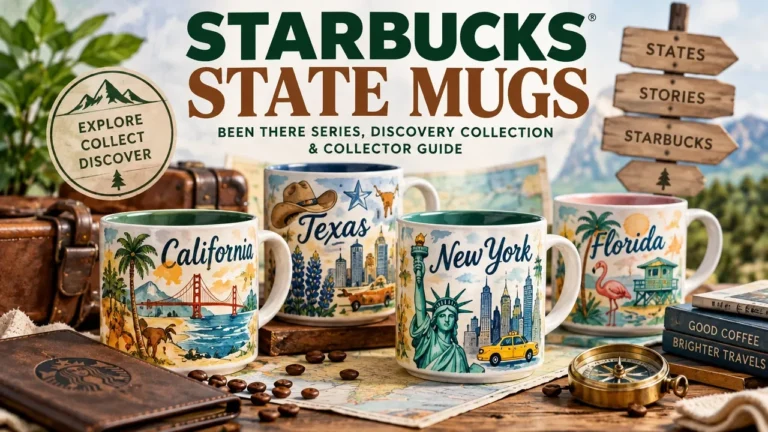

Starbucks state coffee mugs are one of the few mass-market collectibles where the newest release isn’t automatically the smartest buy. Five series, 30-plus years of production, and a secondary market that rewards patience over impulse make this hobby more strategic than it first appears.
Understanding which era deserves your shelf space – and which one to let sit until the price drops – comes down to five criteria that no brand page or fan wiki has ever published together in one place. That’s what this guide fixes.
Key Takeaways on Starbucks State Coffee Mugs
- Been There’s 50-state coverage and active production make it the right starting series for most collectors.
- You Are Here is fully secondary-market but more predictable to complete – every state already exists somewhere.
- Condition and original packaging are the primary price drivers on discontinued series, not design preference alone.
- Filter resale platforms by Sold Items to see what buyers actually paid, not what sellers are hoping to get.
- Discovery is still in production – don’t pay a scarcity premium for a mug that’s still being made.
- Age does not equal value here; demand drives the secondary market, and Global Icon proves it.
How Collectors Actually Rank Starbucks State Mugs (And How to Spot a Fake in Ten Seconds)
Most people walk into a Starbucks, see a mug with their home state on it, and buy it. Collectors walk in, flip it over, check the base, and then decide. That gap in behavior is exactly what this guide is designed to close – whether you’re building a 50-state set or just trying not to overpay for a single souvenir.
The ranking system here is built on five criteria: availability (can you still find it?), provenance (where and how it was acquired), design fidelity (how well the artwork holds up), price fairness (what the secondary market actually clears at, not what sellers are asking), and series lifecycle (active production versus fully retired). No single criterion wins on its own – a rare mug that nobody wants is still just a cheap mug.
Series Eras, Collection Scope, and Format Matrix
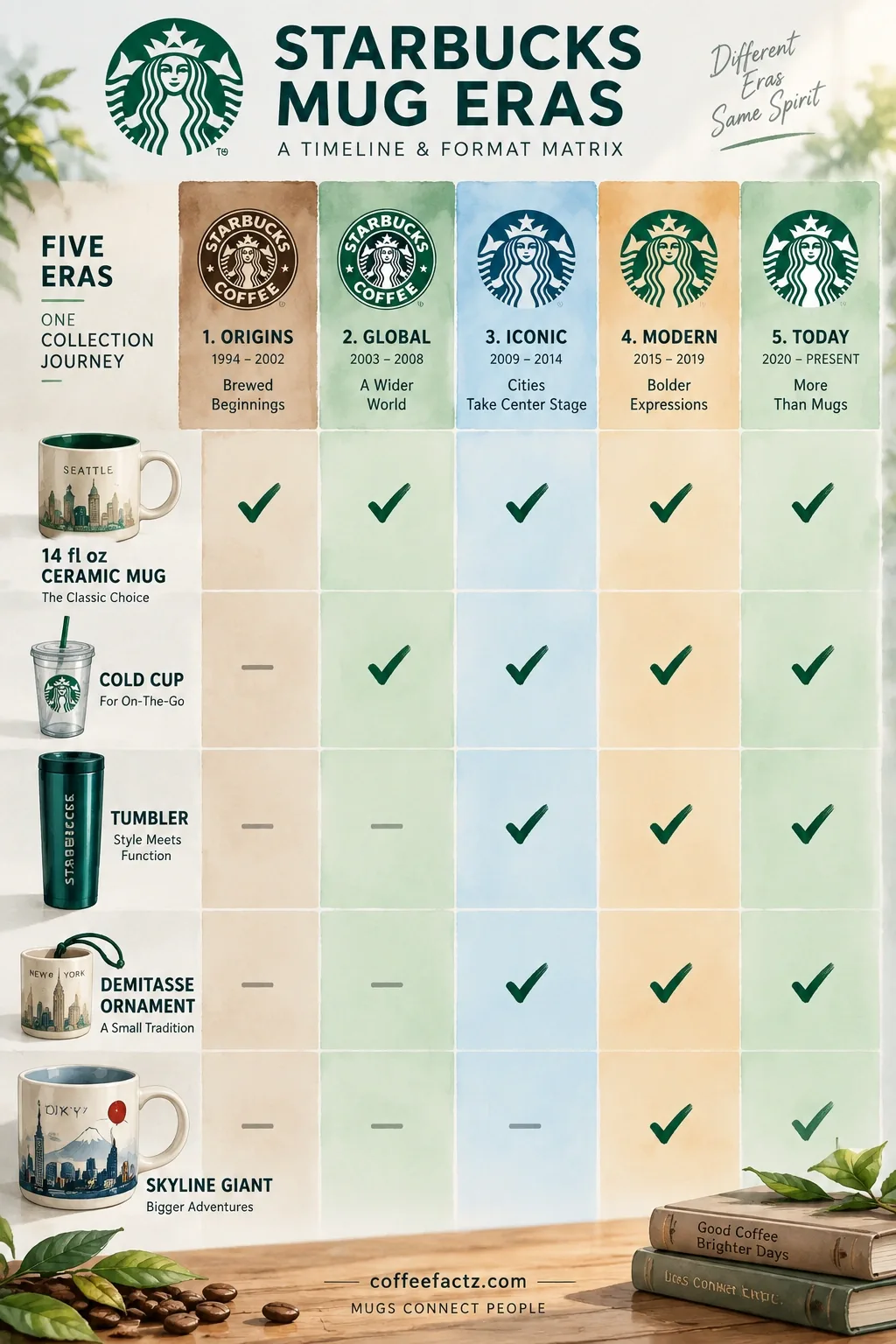
The Starbucks location mug story starts in 1994 and runs through five distinct chapters.
The Collector Series (1994–2008) is where it all began – simple, often city-focused designs that read more like regional keepsakes than curated collectibles. The Global Icon Series (2008–2012) followed with a more graphic, internationally consistent look that, frankly, didn’t win many hearts. The You Are Here Series (2013–2018) is where collector culture really took hold: detailed linework, richer palettes, and a visual language that felt genuinely local. Been There (2018–present) succeeded it with stackable ceramics, hyperlocal illustration, and a hidden-detail culture that turned casual buyers into active traders. And Discovery (2022–present) is the newest chapter – still finding its footing with both shelves and collectors.
The scope of a “complete set” shifts depending on which series you’re chasing. Been There covers all 50 US states, plus city mugs and international locations. You Are Here had similar ambitions during its run. The Collector and Global Icon eras were patchier – not every state got a dedicated mug.
Formats matter too. The flagship is the 14 fl oz ceramic mug, but the line has always extended into adjacent objects: a 24 oz cold cup, a 16 oz stainless steel tumbler, lid-equipped travel formats, a 2 oz demitasse ornament, packable travel totes, and – at the extreme end – the 2.5-gallon Skyline Giant, which is less drinkware and more display-scale sculpture.
Five-Criteria Evaluation, Authentication Protocol, and Care Baseline
Before you spend anything, run the authentication check. Flip the mug over and confirm three things on the base: the Starbucks logo, the 14 fl oz capacity marking, and a crisp, evenly printed text block. Then look for the SKU sticker on the mug itself or on the box – its presence is a strong signal of legitimate retail origin.
Counterfeit tells are blurry printing, colors that look dull or washed out compared to official product photography, and missing SKU information entirely. If a listing describes itself as a “prototype,” treat it as high-risk until proven otherwise – that label is frequently used to explain away authentication gaps.
One publicly shared collector ranking places Been There first, You Are Here second, Discovery third, and Global Icon last. That’s a useful directional read, but it reflects one collector’s preference, not community consensus. Use it as a starting point, not a verdict.
On pricing: the claim that current mugs cost “three times a normal mug” circulates in collector threads but doesn’t survive scrutiny. Around $13 is the figure most commonly cited as the typical retail price. Don’t let an inflated price narrative make any series look more exclusive than it actually is.
On care: most mugs are technically dishwasher and microwave safe, but the chemistry works against you over time. Research into ceramic tableware surface degradation shows that repeated exposure to alkaline dishwasher detergents erodes the silicate glass matrix of glazed surfaces – leaving harder crystalline particles behind, increasing surface roughness, and accelerating decoration fade. A study on porcelain tableware surface behavior found that accelerated chemical aging produced measurable glaze erosion and decoration degradation consistent with regular machine washing. Hand-washing isn’t fussiness – it’s what keeps the artwork looking like artwork five years from now.
Been There (2018–Present): The Series That Became the Collector Standard
Been There didn’t become the benchmark by accident. It launched in 2018 as the direct successor to You Are Here, and unlike its predecessor, it’s still in active production – which means the 50-state set is genuinely completable through retail channels if you’re willing to travel or trade.
The design language is what separates it. Each mug assembles a hyperlocal illustration from architecture, food, wildlife, and landscape specific to that state or city – layered tightly into a format that rewards close inspection. The stackable ceramic form is practical without being generic. But the details that actually drive collector behavior are the ones you can’t see in a listing photo.
Flip a Been There mug over and look inside: there’s a small to-go cup illustration printed on the interior base. On the exterior, a green dot functions as a quiet brand reference. These two details are the most frequently omitted elements in resale listing photos – which makes them the standard ask before any trade or purchase in this line. If a seller can’t confirm both, ask for a photo before committing.
Holm-Ingolf Hamann, Discovery Series Product Manager at Starbucks, describes the design philosophy behind the location mug line as storytelling through authenticity – each mug meant to carry a joyfulness and genuine sense of place through its artwork and color choices.
That storytelling intent is most visible in Been There. The artwork is public knowledge, but what collectors actually trade on is provenance – and this is the series where that distinction matters most. Two physically identical Been There mugs are not the same item in collector standing. A mug you bought in-store during a visit, a mug someone proxy-purchased on your behalf, and a mug you received in a dupe swap all carry different weight in the community. The mug is the same; the story behind it isn’t.
For most people starting a collection, Been There is the right first series. Full 50-state coverage, active production, and the widest spread of state-to-state artwork variation make it the most complete playing field in the hobby.
Affiliate Disclosure
This post contains affiliate links, meaning I may earn a commission if you make a purchase through these links, at no additional cost to you. As an Amazon Associate, I earn from qualifying purchases. I only recommend products I genuinely believe will add value.

Starbucks Been There Series - Idaho Mug, 14 Fl Oz
- * * note * * * this mug is actually new but never used. it justy sat o the display shelf. no cracks, breaks, c…
The State Mugs Collectors Chase Hardest: Florida and Hawaii
Every state gets a mug. Not every state gets a good mug. The difference comes down to how much the designer had to work with – and two states consistently generate the most conversation among serious collectors.
A Been There state design is built from layers: architecture, flora, fauna, food, and landscape compressed into a single wraparound illustration. States with rich, visually distinct identity across all five categories produce the most compelling mugs. States that are harder to distinguish visually tend to produce mugs that feel generic by comparison.
Florida is the clearest example of the layered approach working at its best. The mug assembles Everglades imagery (sawgrass, wildlife, water), orange blossoms representing the state’s agricultural identity, and Art Deco architectural elements drawn from Miami’s South Beach streetscape. The result reads as a landscape triptych – wetlands, citrus, and coastal modernism – which is why it’s consistently cited as one of the most recognizable state compositions in the entire line. It’s also one of the most gifted, which means it’s easy to find and, for collectors building a set, easy to end up with duplicates of.
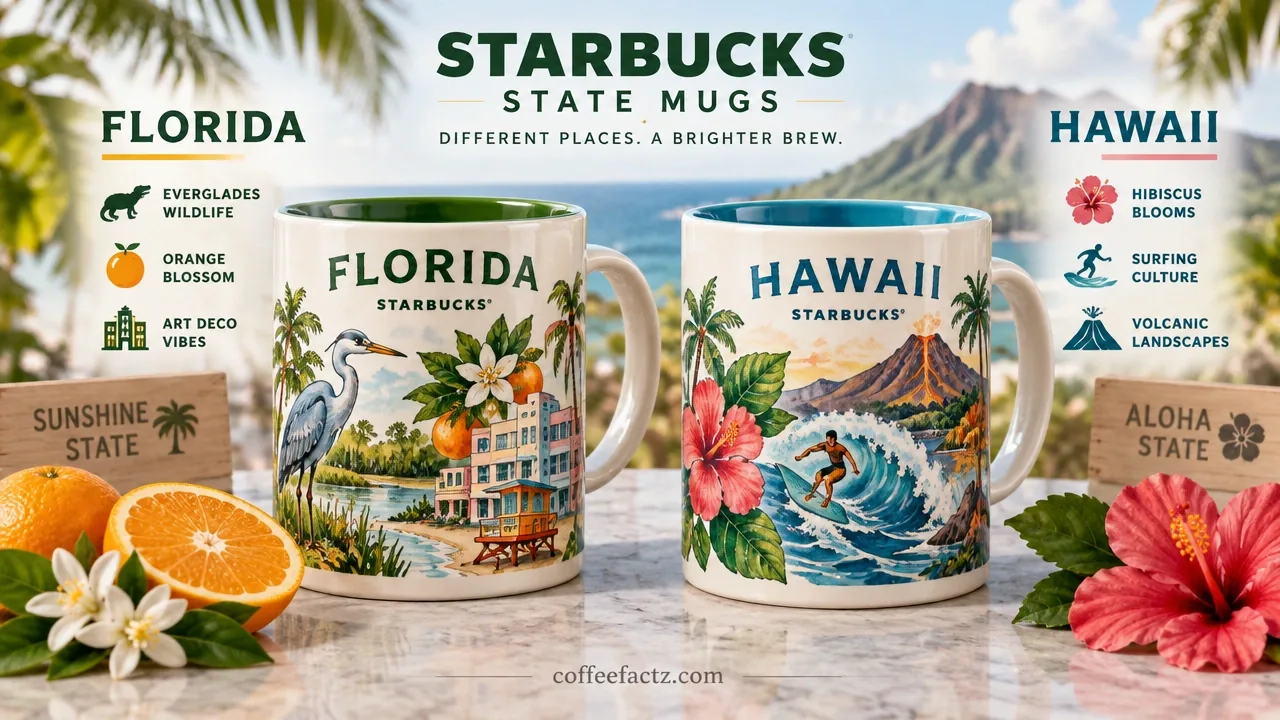
Hawaii is the structural exception to the one-mug-per-state model. Because individual islands carry distinct identities – hibiscus and tropical flora, surfing culture, volcanic iconography – the designs fragment by island rather than treating Hawaii as a single landmass. A “complete Hawaii” in this line is a multi-mug project, not a single purchase. That makes it both more expensive and more interesting to chase than any other state in the set.
For gift buyers: the high-volume travel states – Florida, Hawaii, California, New York – are the easiest to find at airport and tourist-adjacent Starbucks locations. They’re also the states most likely to generate duplicate gifts. If you’re buying for a collector who already has one foot in the hobby, ask before you buy the Florida mug.
You Are Here (2013–2018): The Vintage Tier That Quietly Outperforms
You Are Here is discontinued. It left retail shelves when Been There launched in 2018 and hasn’t returned. If you want one, you’re buying from the secondary market – full stop.

Starbucks Coffee Mug You Are Here Collection, Michigan, 14 oz
- 2015 Starbucks Michigan You Are Here Collection
- Includes Gift Box
- Holds 14 fl oz
- Stackable
- Dishwasher and Microwave Safe
That’s not bad news. It’s actually the cleaner setup.
The series ran from 2013 to 2018 and established the collector culture that Been There inherited. Visually, it differs from Been There in ways that are identifiable at a glance: heavier linework, a slightly more restrained and flat color palette, and a compositional style that tends toward illustrated maps and typographic elements rather than pure landscape layering. If you’re trying to separate the two at a glance, look at the interior – You Are Here mugs don’t carry the hidden to-go cup detail that Been There introduced.
Collectors rank it second overall, and the reason is straightforward: the design style was retired before it wore out. There’s no new You Are Here mug to dilute the series – the set is fixed and finite, every state already exists on the secondary market, and nothing is still shipping. That makes it more predictable to complete than Been There, where production continues and some states are easier to find than others depending on where you live.
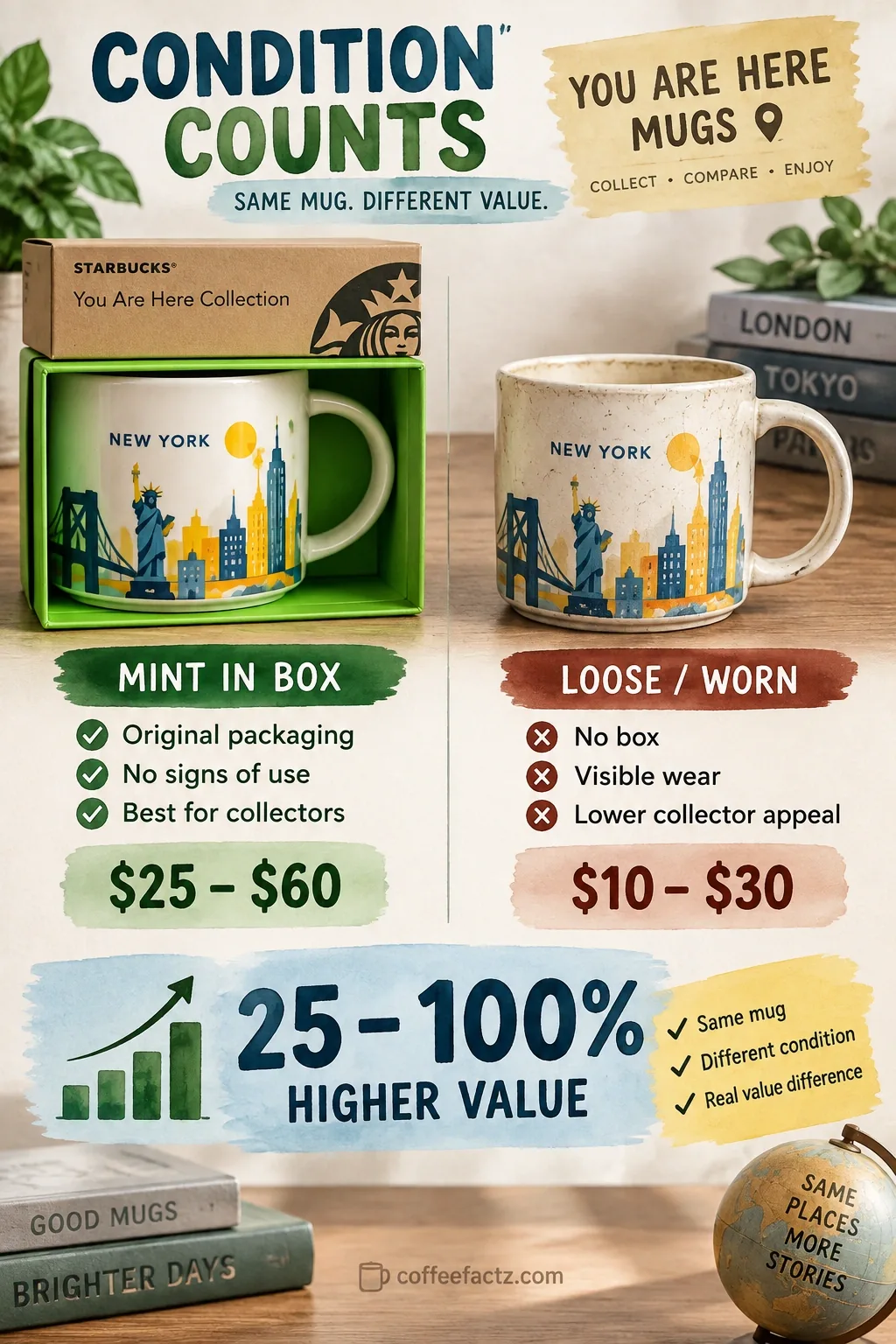
Condition is the primary price driver in this tier, and it matters more here than in any other series. Mint-condition mugs with original boxes can command 25–100% higher prices than the same mug in loose, worn condition. Before you negotiate on any You Are Here piece, establish the grade: does it have the box? Any chips, crazing, or fading on the artwork? A worn mug at a mint price is the most common overpay in this hobby.
The practical takeaway: if you’re hunting value in a discontinued tier, You Are Here is the more predictable bet. Every state exists somewhere. The question is condition and patience, not availability.
Discovery (2022–Present): Today’s Shelf Reality, and the Rollout Nobody Published
Discovery launched in 2022 as the successor to Been There and is currently in active production. That’s the official version. The shelf version is messier.
Store-Level Availability Patterns
State mugs are still sold in Starbucks stores – but which series a given location carries is not consistent across markets, and the Been There-to-Discovery transition has not been a clean national cutover. Both lines can appear on the same shelf. Two stores in the same city may carry different series entirely, depending on when they last received a merchandise refresh.
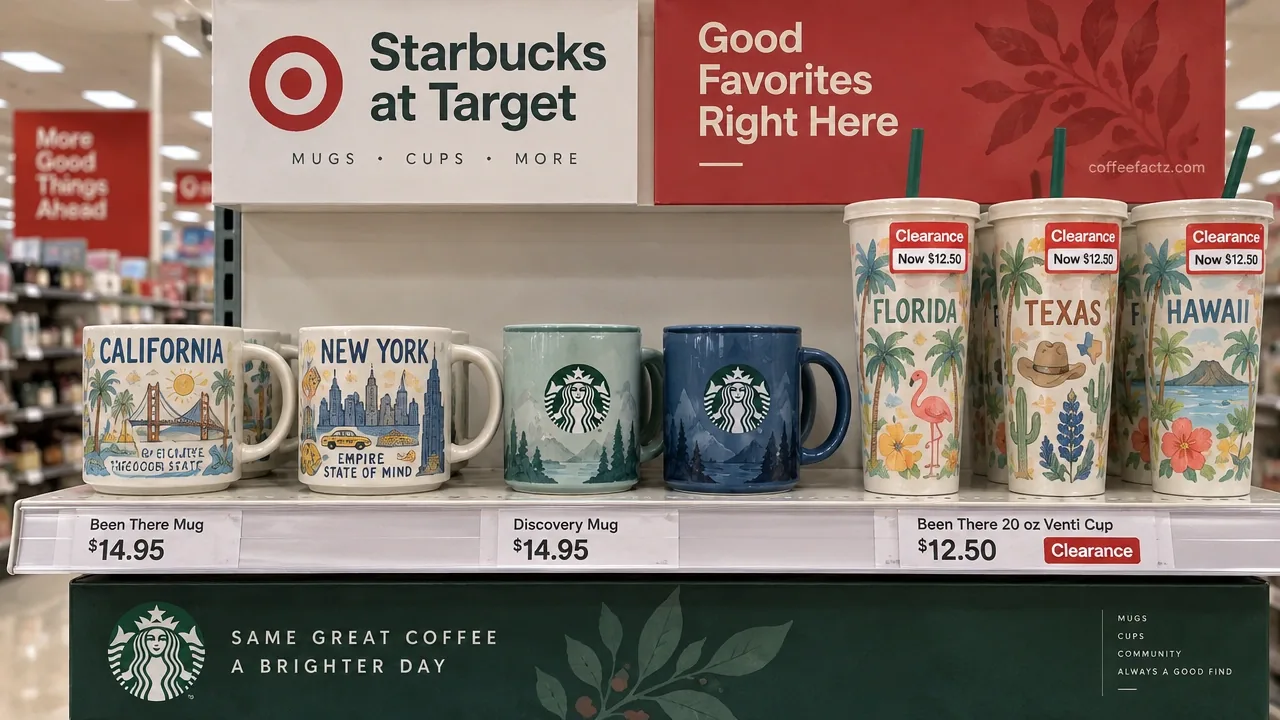
Barista-level reports from collector communities describe a mixed picture: regular ceramic Been There mugs still appearing in stores, 20 oz venti Been There cups showing up on clearance endcaps, and some locations receiving only Discovery stock since roughly March. If you’re specifically hunting Been There mugs in a particular state, call ahead – don’t assume the newest release has replaced it everywhere.
The clearance activity on adjacent Been There formats is worth noting for gift buyers. If you find a Been There cold cup or travel format on clearance, that’s often better value than paying full price for the newest ceramic release.
Design Language and Collector Reception
Discovery’s design language differs from Been There in ways that are visible but hard to summarize neutrally – because collector reception has not been neutral. The honest summary is that aesthetic pushback has been the dominant early response in collector communities, with “ugly” appearing frequently in forum threads alongside hearsay about higher price points.
That said, early sentiment on any new release is provisional. Collectors who panned Been There in 2018 often became its most active traders by 2020.

Starbucks Discovery Series California Ceramic Mug, 14 Oz
- HIGH-QUALITY CERAMIC: Made from durable ceramic, this mug is designed to withstand daily use while maintaining…
- 14 OZ CAPACITY: Perfect for enjoying your favorite hot or cold beverages, providing ample capacity for a gener…
- COLLECTIBLE ITEM: A must-have for any Starbucks mug enthusiast, this mug serves as a keepsake that celebrates …
- DISHWASHER & MICROWAVE SAFE: Easy to clean and warm up, suitable for everyday use.
The practical guidance here is simple: don’t chase Discovery at a premium in year one. It is the easiest series to acquire later precisely because it’s still being made. If you find a Discovery mug for a state you care about at retail price, buy it. If a resale seller is asking a markup because it’s “new,” walk away and wait.
The Rare Vault: Skyline Giants, Global Icon, and the Eras Collectors Forget
Age is the least reliable thing to pay for in this hobby. That correction matters before you spend anything on the older tiers.
Historical Origin Lines and Display-Scale Objects
The Collector Series (1994–2008) is where the entire category began. These are the origin pieces – city-focused, relatively simple in design, and now spread across garage sales, thrift stores, and resale listings with wildly inconsistent pricing. Identifying early-era originals versus later reissues comes down to era-appropriate base markings and print quality: genuine early pieces carry dating cues in their backstamps that later reissues typically don’t replicate precisely.
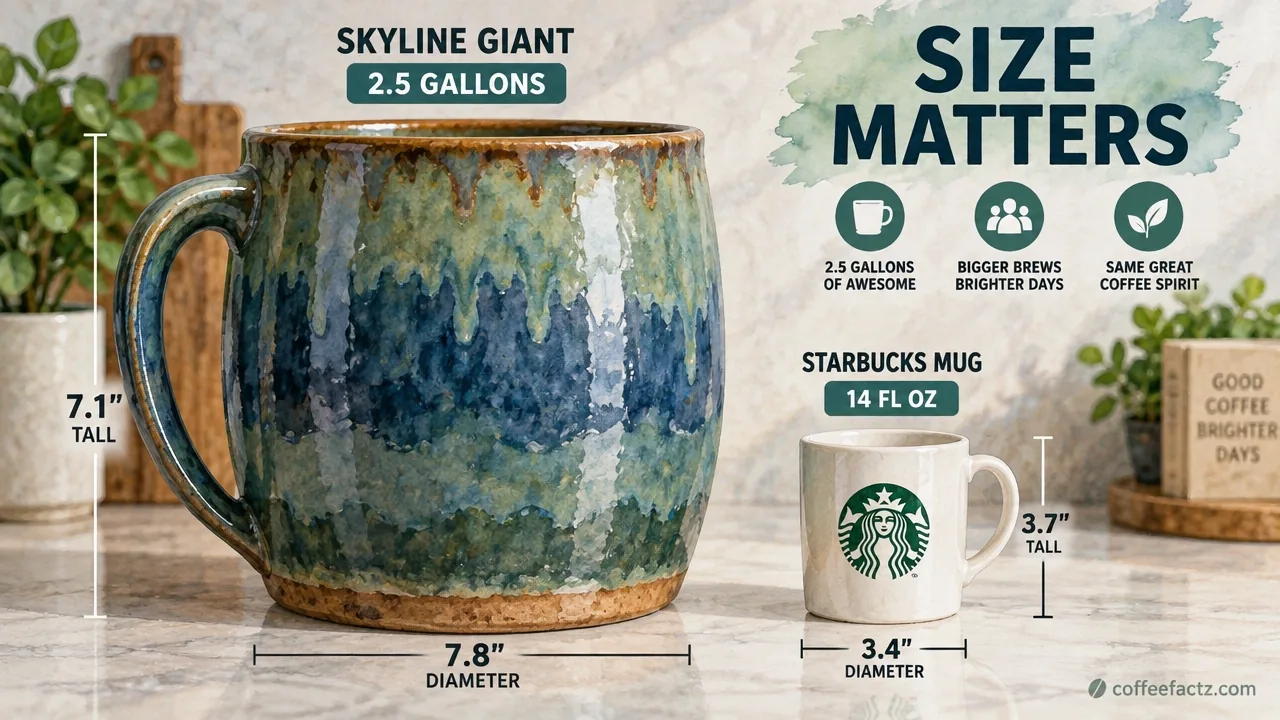
At the extreme end of the rarity scale sit the 2002 Skyline Giants – ceramic objects produced at 2.5-gallon scale that have no practical function as drinkware and exist entirely as display pieces. They are the rarest physical objects in the Starbucks location mug category, full stop. If you encounter one, you’re looking at a display curiosity, not a portfolio investment – but it is genuinely rare, and the scale alone makes it a conversation piece unlike anything else in the line.
Low-Collectibility Periods and Demand-Driven Value
The Global Icon Series (2008–2012) is the chapter most collectors skip – and it shows in the pricing. The design language leaned toward a more uniform, internationally consistent graphic style that didn’t generate the local attachment that drives collector demand. In the only publicly shared collector ranking, Global Icon sits last.
That makes it cheap – but cheap for a reason. It’s not an overlooked gem waiting to be discovered; it’s a low-demand era that collectors have already evaluated and passed on. Treat it as an opportunistic pick if a piece genuinely appeals to you aesthetically, or as a display curiosity in a broader collection. Don’t buy it expecting appreciation.
The discipline that applies across the entire rare vault: demand drives value, not age. A 1998 Collector Series mug for a city nobody collects is worth less than a 2021 Been There mug for a state that cleared out fast. Spend your budget on the tiers people actively trade.
Limited-Edition Crossovers and the Gift-Buyer’s Shortcut
Not every Starbucks collectible is tied to a location. A parallel lane exists for pop-culture collaborations, and it operates on completely different logic.
Entertainment Collaboration Releases
The current reference point is the Dragon Glassware × Wicked cup releases – a collaboration between Starbucks and entertainment IP that produced limited runs with no geographic tie and a short retail window. These aren’t location mugs; they’re hype-driven objects that move fast and age unpredictably.
What makes crossovers structurally different from state mugs: limited production runs mean secondary market pricing spikes immediately after sellout, entertainment IP means the collectibility is tied to the franchise’s cultural moment rather than to any enduring geographic identity, and the absence of a location anchor means there’s no “complete set” logic driving sustained demand.
The collector caveat is worth stating plainly: crossover and collaboration items carry the highest risk of frothy resale pricing relative to their long-term place in a collection. Buying a Wicked cup at retail is a reasonable decision. Buying it at 3x retail on a resale platform six months after the film’s release is a bet on cultural staying power that history doesn’t consistently reward.
Non-Location Presentation Formats
For gift shoppers who need to solve a problem quickly, the overlooked answer is the 2 oz demitasse ornament available at licensed-store locations. Small, inexpensive relative to full ceramic mugs, and consistently stocked on dedicated-store shelves rather than in travel retail – these are the format most frequently passed over by gift buyers who default to a state mug and then panic when their target state is out of stock.
Lid-equipped travel formats – stainless steel tumblers, cold cups – solve a different gifting problem: they’re practical in a way that a display ceramic isn’t, which makes them a better match for recipients who actually commute with a travel cup rather than collect for the shelf.
The guidance for gift shoppers is to match the format to the recipient before worrying about state inventory. A demitasse ornament from a licensed store is a more thoughtful and easier-to-find gift than a ceramic state mug sourced in a panic from a resale platform at a markup.
The Verdict: What to Buy, What to Skip, and Where Collectors Actually Find Them
Here’s the part no corporate source publishes: the acquisition logistics.
If you’re a completionist building a 50-state Been There set, your primary sourcing route is in-store retail – with a call-ahead to confirm which series the location carries. For states that aren’t clearing locally, dupe swapping with other collectors is the most cost-efficient route. Paying resale markup for a state that someone else can walk into a store and buy is the most avoidable overspend in this hobby.
If you’re a traveler and provenance matters to you, the rule is simple: buy the mug in the state it represents, in-store, during your visit. Airport Starbucks locations are the most reliable sourcing point for state-specific mugs in high-traffic travel markets. The mug you bought at Orlando International is a different object from the mug you bought on eBay – even if they’re physically identical.
If you’re a budget hunter, You Are Here is the value tier. Every state exists on the secondary market, nothing is still shipping, and the set is finite and predictable. Before you negotiate on any piece, filter resale platforms by Sold Items – not active listings. What buyers have actually paid is the real price. What sellers are asking is aspiration.
If you’re a gift shopper, match format to recipient before chasing state inventory. High-volume travel states – Florida, Hawaii, California, New York – are the easiest to find at airport and tourist-adjacent locations. For harder-to-find states, ask the store to hold a mug if they’re expecting a restock, or pivot to a demitasse ornament or travel format that’s actually in stock.
If you’re a display or rarity collector, the 2.5-gallon Skyline Giants are the top of the physical rarity pile – but treat them as display curiosities, not investments. Global Icon pieces are cheap and available precisely because demand is low; buy them because you like them, not because you expect them to appreciate.
A few sourcing specifics that practising collectors actually use: Kroger in-store Starbucks locations in Ohio and Kentucky are reliable sourcing points for their respective state mugs. Metro Detroit locations for Michigan. Store holds for harder-to-find states when a restock is expected. And regional leftovers – states that sit unsold on shelves in certain markets – are the cheapest wins available. Pennsylvania comes up repeatedly as a state that lingers on shelves in some markets while clearing fast in others. Buy what’s available locally; trade for what isn’t.
The honest version of the verdict: for most readers, the answer is the current Been There line for states you personally visit, You Are Here as the secondary tier for value and design, and patience on Discovery – the collection you can actually complete beats the collection you overspent on in year one.
Frequently Asked Questions About Starbucks State Coffee Mugs
Does Starbucks still sell state coffee mugs?
Yes, but which series a store carries varies by location – Been There and Discovery can both appear on the same shelf, and the transition between them hasn’t been a clean national cutover. Call ahead before making a trip.
Can you buy Starbucks location mugs online?
Starbucks doesn’t maintain a comprehensive online retail catalog for location mugs, so secondary market platforms are the main online sourcing route. Filter by Sold Items to gauge real transaction prices before committing to any listing.
Does Starbucks still sell the You Are Here mugs?
No. You Are Here was discontinued when Been There launched in 2018 and is no longer sold in stores. Every piece in the series now trades exclusively on the secondary market.
What is the rarest Starbucks mug?
The 2002 Skyline Giants – produced at 2.5-gallon scale – are the rarest physical objects in the category. They function as display pieces rather than drinkware, and genuine examples are genuinely uncommon.
How do I tell a real Starbucks mug from a counterfeit?
Flip it over and check for the Starbucks base logo, a 14 fl oz capacity marking, and a crisp, evenly printed text block. Look for a SKU sticker on the mug or box. Blurry printing, dull colors, and missing SKU information are the three clearest counterfeit signals.
Is the Discovery Series worth collecting right now?
It’s the easiest series to acquire later because it’s still in production. Buy it at retail if you find a state you care about, but don’t pay resale markup on a mug that’s still sitting on store shelves somewhere.
Why do two identical Been There mugs have different value to collectors?
Provenance. A mug purchased in-store during a personal visit, a proxy-purchased mug, and a dupe-swapped mug are physically identical but carry different standing in collector communities – particularly in the Been There line, where the in-person acquisition story is part of what’s being traded.
What’s the best format for gifting if the state mug I need is out of stock?
The 2 oz demitasse ornament from licensed-store locations is the most consistently overlooked alternative – smaller, less expensive, and more reliably stocked than the ceramic flagship. Lid-equipped travel formats are a better match for recipients who actually use their cups rather than display them.
References
- Materials – Metal Marking Behavior and Testing of Porcelain Tableware | exa.ai
- Fun Facts and Surprises About Starbucks New Collectible Merch | about.starbucks.com
