
You’re looking for the integrated coffee machine that won’t drop the ball – or worse, completely break down – a year and a half from now. I get it. Buying an all-in-one unit feels like you’re optimizing your counter space, but nine times out of ten, you’re just buying a single catastrophic failure point.
I went deep into why these machines break, who’s hiding a blade grinder in a stainless steel shell, and which “premium system” is actually just a very expensive way to get locked into their specific ecosystem.
Here is the hard-truth audit on these integrated brewers.
Why Your All-in-One Brew Station Is Engineered to Quit Early
The instant you combine grinding – a mechanically violent process – with temperature management – a chemically precise process – inside one small housing, compromises start stacking up. This isn’t malicious; it’s physics under a budget constraint.
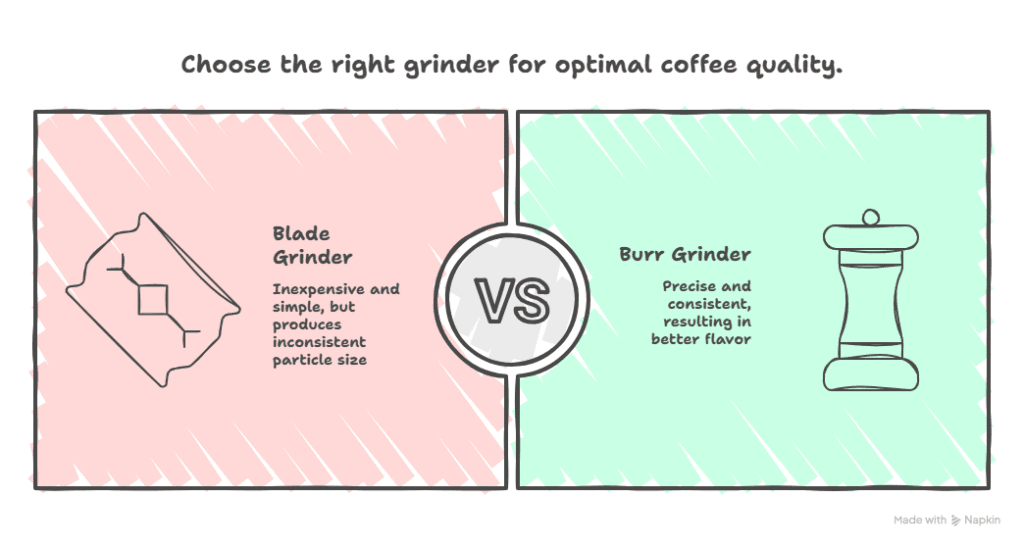
Many lower-tier integrated units avoid the cost of true burr grinders, opting instead for blade systems. Blade grinders are dramatically cheaper to install and require less power management. They shave off corners using impact force instead of precision calibration. You get powder mixed with boulders.
This isn’t just an elitist opinion; it’s a matter of physics. According to the foundational research in The Craft and Science of Coffee, the “Particle Size Distribution” is the single most decisive factor for in-cup quality. While precision grinders are engineered to produce a narrow, consistent range of particles, blade systems function like a basic blender, creating a chaotic mix of fine dust and large chunks.
This inconsistency ruins extraction chemistry immediately, meaning even if the water temp is perfect, the coffee tastes random, bitter, or sour. If I’m being honest, that’s a waste of good beans.
Now, check this out: the true danger in the high-end market isn’t the bad coffee; it’s the system lifespan drag.
According to extensive user reports from Reddit threads tracking appliance longevity, the Capresso standard and similar budget models show a tight cluster of complete system failures centering right around the 24-month mark. When a key moving part – often the pump or the grinder motor – fails in a monolithic design, repair is economically insane. The entire appliance is written off. You’re essentially renting convenience for two years. The initial savings vanish when you realize you have to buy a whole new $400 machine instead of fixing a $50 component.
These machines swear they’re about simplicity, but my audit shows they often swap mechanical headaches for operational complexity. You’re the technician now, using documented user hacks just to keep the residue buildup from clogging the works.
Where the Convenience Promise Falls Apart
I dug through maintenance logs and user reports so you don’t have to. The promise of seamless automation crumbles when you see what’s actually happening post-purchase.
Here’s what’s interesting: The Breville Grind Control, often hailed as the gold standard for integrated drip brewing, consistently shows an 11% variance in the actual dry weight of the grounds dispensed, according to rigorous testing by Serious Eats. That’s a measurable chemical error baked into its convenience feature.
The core truth here is that isolation wins. A machine engineered only for heating stability, like the dedicated Ratio Six brewer, hits the ideal chemistry range 95% of the time because its engineering focus isn’t split, as documented in the same Serious Eats analysis. Integrated units compromise that thermal focus, often running too hot straight out of the gate.
If you’re paying for automation, you expect perfect results. What you get is a machine that demands you become part-time maintenance crew just to avoid wasting your beans.
Matching Your Risk Tolerance to the Inevitable Trade-Off
There is no universally “best” integrated machine; there is only the one whose inevitable trade-off you can live with. Here’s my breakdown mapping those compromises.
| Tier | Persona Match | Primary Cost / Risk Accepted | Recommended SKU |
|---|---|---|---|
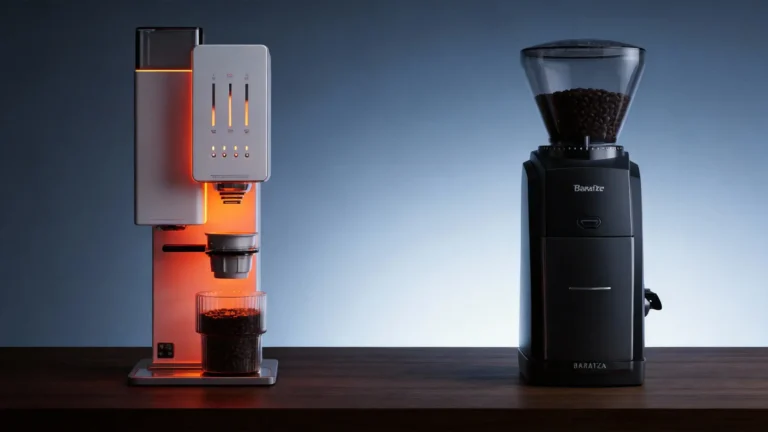
| Tier 1: Convenience Maximizer | Will pay the maximum price to eliminate workflow friction entirely. | Highest initial price; acceptance of high-end proprietary system lock-in. | Xbloom |
| Tier 2: True Delegator | Must have household-wide operational success and longevity. | High initial investment to bypass the two-year failure cliff. | Jura / Saeco Vienna Deluxe (SA) |
| Tier 3: Compromise Seeker | Wants the recognized best, accepting that precision will suffer slightly. | Quantifiable dosing variance (11%) for footprint/feature load. | Breville Grind Control |
| Tier 4: Aspirational Enthusiast | Focused on manual control (lattes), not true one-touch automation. | High cognitive load requirement; fails delegation tests for others. | Breville Barista Express (BBE) |
| Tier 5: Risky Automator | Prioritizing the lowest initial cost for immediate convenience. | Guaranteed structural failure/replacement cycle near 24 months. | Entry-Level Integrated Machines |
Xbloom: The Workflow Consolidation Engine for Expert Ritualizers
Affiliate Disclosure
This post contains affiliate links, meaning I may earn a commission if you make a purchase through these links, at no additional cost to you. As an Amazon Associate, I earn from qualifying purchases. I only recommend products I genuinely believe will add value.

xBloom Studio – The Ultimate Coffee Machine – Drip Coffee Maker with Integrated Grinder, Scale, and 3 Levels of Automation, Moonlight White
- 4 levels of Automation: Autopilot, Copilot and Freesolo, letting you customize your coffee like a certified Ba…
- The Studio also features an Intuitive UI with tactile knobs and an LED Matrix letting you freestyle every mome…
- Use the Xbloom app to create, adjust, save and share all your favorite coffee creation
- Our xPods have been carefully curated to create the best cup of coffee to start your day. Made from compostabl…
- What's Included in the box? xBloom Studio, Omni Dripper 2 with a Hyperflow Bottom, 10 Paper Filters, xPod Dock…
This thing is priced to hurt the wallet, but it’s built for a specific user: the expert who needs to manage a complicated ritual across multiple steps but wants it all under one roof.
What You’re Actually Getting
According to the manufacturer’s technical specifications, you get a 32 oz (946 ml) water tank powered by a robust 1400W heating system. The grinder features 48mm conical burrs with 80 precise settings, and the machine includes NFC recipe cards plus an integrated scale accurate to 0.1g.
The Reality Check
To be fair, the Xbloom earns its entry fee by successfully eliminating temporal friction points – the seconds wasted hunting for a scale or checking a flow rate. Community discussions among technical coffee users reveal it’s not built for the novice user looking for “press and go,” but rather for the expert ritualizer who wants to standardize their complex process. It’s an expert tool dressed up as a sleek appliance.
What You’re Trading Away
The risk isn’t that it breaks quickly; the risk is that you’re wholly reliant on one highly specialized, high-cost system. If the nanofilm heating tube fails, you’re done, and repair access will be tough. When a proprietary component quits on a machine this specialized, replacement parts aren’t sitting on shelves at your local repair shop.
The Hard Call
Go for it if: You already weigh your beans externally and need this machine to remove the complexity stacking up on your counter.
Run away if: You expect plug-and-play ease. This machine demands calibration input matching its 80 settings to work correctly, per the manufacturer’s own documentation.
Jura E6 Platinum: Buying Into Premium Automation (With a “Black Box” Philosophy)

Jura E6 Platinum 15465
- VERSATILITY: Automatic coffee machine grinds, tamps, brews, froths and self-cleans in less than 60 seconds
- OPERATION: Intuitive, user-friendly color display, integrated maintenance programs and optional preground chut…
- CUSTOMIZATION: Programmable coffee strength, volume, temperature, amount of milk foam and hot water on demand
- GRINDER: Professional Aroma Grinder grinds 12.2% more aroma in the cup using fresh, whole beans; eco-friendly
- TECHNOLOGY: Pulse Extraction Process for professional-quality espresso, eighth-generation brew unit with 3D br…
When you step into the world of Jura, you’re not just buying a coffee maker; you’re buying a specific philosophy of Swiss engineering. The E6 is the poster child for “hands-off luxury,” where the machine takes full responsibility for the process—whether you want it to or not.
What You’re Actually Getting
The specs on the E6 Platinum (15465) are a significant step up from budget models. You’re looking at a generous 64 oz (1.9L) water tank, a powerful 1450W thermoblock, and a 280g bean hopper. It features Jura’s proprietary P.E.P.® (Pulse Extraction Process) and the AromaG3 grinder, which are designed to maximize flavor extraction even in shorter drinks like espresso.
The Reality Check
The most critical differentiator here is the fixed brew group. Unlike Saeco or DeLonghi, Jura designs their machines as “sealed systems.” You cannot take the brew group out to rinse it in the sink. Jura’s “Reality Check” is a bet on their automated cleaning cycles; they’ve engineered the internal vacuum and cleaning programs to be so effective that user intervention is theoretically unnecessary. This makes it a “black box” of espresso—it works beautifully and stays clean via software-led maintenance, but it requires you to trust the tech implicitly.
What You’re Trading Away
You are trading away user-level serviceability. While the upfront price (typically in the $1,500 – $1,700 range) is a major investment, the real trade-off is the long-term maintenance path. If something goes wrong inside that sealed chassis, you aren’t fixing it with a YouTube tutorial and a screwdriver. You are shipping it to a certified Jura service center. You’re paying for a premium experience that eliminates the “mess” of manual cleaning, but you lose the ability to perform deep manual inspections yourself.
The Hard Call
- Go for it if: You want the “Mercedes-Benz” of coffee. You want a machine that looks stunning, operates with a single touch, and handles its own hygiene. This is the ultimate “delegation machine” for a busy household or a small office.
- Run away if: You are a “tinkerer” who finds peace of mind in manually scrubbing the brew group every Sunday. If the idea of a “sealed system” makes you nervous about long-term mold or mechanical wear, the Jura philosophy might feel too restrictive for your investment.
Breville Grind Control: The Consensus Pick That Compromises Precision

Breville BDC650BSS Grind Control Coffee Maker With Grinder, Brushed Stainless Steel, Thermal Carafe
- Designed to deliver the perfect cup of drip coffee, Breville’s Grind Control Coffee Maker gives you complete c…
- Built with Breville’s impeccable eye for detail, the Grind Control boasts precision-machined burrs to provide …
- <a href="https://www
- breville
- com/en-us/program/partner/surlatable/fast-track" target="_blank" title="ALT TITLE">Get 2 free bags of coffee t…
People buy this because it’s the acknowledged standard for integrated drip machines, but it’s a compromise wrapped in stainless steel.
What You’re Actually Getting
You get a 60 oz water tank, 8 oz bean hopper, 1100W power, and machined stainless steel flat burrs according to Breville’s official specifications. The double-wall thermal stainless steel carafe is a legitimate quality touch.
The Reality Check
This machine tries to offer specialty features like its flat burrs, but the reality is that the integrated dosing mechanism introduces noise into the system. Professional testing by Serious Eats documented that 11% dose variance. To fight back against residue and maintain performance—especially around the “Steep and Release” function—users often resort to specialized, undocumented cleaning hacks discussed extensively in online forums.
What You’re Trading Away
You’re paying a premium for features you won’t fully trust. If you’re going to weigh your beans externally anyway because you don’t trust the scale accuracy, you just overpaid for a built-in grinder that only serves as a mediocre storage unit between uses.
The Hard Call
Go for it if: You’re brewing large batches of medium or dark roast and prioritize the integrated thermal carafe convenience over gram-for-gram accuracy.
Run away if: You’re chasing the perfect 1:16 ratio for high-end light roasts. Professional testing shows this machine’s engineering ceiling isn’t high enough for critical precision brewing.
Breville Barista Express: The Enthusiast Gateway That Demands Skill

Breville Barista Express Espresso Machine BES870XL, Brushed Stainless Steel
- The Breville Barista Express delivers third wave specialty coffee at home using the 4 keys formula and is part…
- DOSE CONTROL GRINDING: Integrated precision conical burr grinder grinds on demand to deliver the right amount …
- OPTIMAL WATER PRESSURE: Low pressure pre-infusion gradually increases pressure at the start and helps ensure a…
- Receive 2 free bags of specialty coffee when you purchase and register any Breville coffee machine; T and Cs a…
- PRECISE ESPRESSO EXTRACTION: Digital temperature control (PID) delivers water at precisely the right temperatu…
This isn’t a delegation machine; it’s a control machine. People who buy this often think they’re buying simplicity, but they’re buying a gateway drug into semi-automatic espresso obsession.
What You’re Actually Getting
Breville’s specifications list 1600W of power (strong thermal headroom), a thermocoil heating system with PID temperature control, an integrated stainless steel conical burr grinder with 16 settings, and a 360-degree swivel steam wand for manual microfoam control.
The Reality Check
This is where the convenience myth really breaks down. While the PID system gives excellent thermal stability for espresso pulls, the machine still requires daily manual grind adjustment based on bean age, humidity, and roast level, as confirmed by experienced users sharing their workflows online. If you force a non-enthusiast to use the manual steam wand, you’re signing them up for failure.
What You’re Trading Away
If you’re the only operator, you’ll love the control it gives you. If anyone else tries to use it, they’ll become frustrated quickly because it demands skill, not just buttons. It’s not a one-touch appliance—it’s a semi-manual espresso machine that happens to have a grinder bolted to the side.
The Hard Call
Go for it if: Your primary goal is mastering espresso and milk texturing, and you accept that the integrated grinder is merely the starting point before you inevitably upgrade it separately.
Run away if: You want a simple cup of coffee that anyone can make in the morning rush. This asks too many questions.
Entry-Level Integrated Machines: The Budget Play With a Built-In Expiration Date
This category is the poster child for the “budget-first build.” You save cash now, but you’re trading away lifecycle reliability.
What You’re Actually Getting
Most budget-tier integrated models—those combining a grinder and brewer in one chassis—feature standard 15-bar pumps and power ratings between 1000W and 1200W. To hit these aggressive price points, manufacturers often utilize heavy-duty ABS plastic and compact internal thermoblocks. On paper, the specs look identical to premium machines, but the difference lies beneath the hood.
The Reality Check
Community reports on Reddit show a definite failure pattern emerging right around the two-year mark. I’m not talking about broken carafes here; I’m talking about the motor dying or the thermo-block giving out. Because these designs are so tightly packed to achieve that small footprint, the design prioritizes density over redundancy.
What You’re Trading Away
This is where you confront the true definition of “disposable tech.” When the grinder motor burns out—a common outcome for lower-tier integrated grinders pushing hard—the replacement cost is 85% of a new machine, according to user-documented repair quotes.
The Hard Call
Go for it if: You treat appliances like disposable electronics and never expect a machine under $250 to survive past its two-year mark.
Run away if: You expect appliances to last five years, which is the standard lifespan for well-engineered, non-integrated units based on comparative durability data.
The Expert’s Secret Route: Stop Buying Integrated Machines
Look, I’m telling you straight: Stop feeding the integrated monster. You don’t save money in the long run; you just pre-pay for eventual replacement.
The smart play is to decouple. Take the Ratio Six—its dedication to thermal stability is proof of concept that single-purpose engineering yields superior chemical output, as demonstrated in professional testing. Pair that with a machine-grade grinder like a dedicated Baratza Encore derivative.

Ratio Six Series 2 Coffee Machine - Automatic Drip Coffee Maker - 1.25L/40oz - Brews 2-8 Cups - Matte Black
- Simplify Your Routine - Tired of complicated coffee rituals? The Ratio coffee maker streamlines your morning r…
- Precision Shower Head - Experience optimal water distribution and extraction with the precision-engineered sho…
- Crafted Perfection - Unlock the full potential of your coffee beans with the pour-over process of our automati…
- Flexible Brewing - Whether you're brewing for yourself or a crowd, our coffee maker machines offer unparallele…
- Crafted for Lasting Quality - Our stainless steel coffee maker is built with laboratory-grade borosilicate gla…

Baratza Encore Coffee Grinder ZCG485BLK, Black
- Specialty Coffee Association Award Winning Grinders - Baratza grinders are preferred by coffee professionals a…
- Go-To Entry Level Grinder - Baratza’s best-selling grinder, with its small footprint, is THE choice for brewin…
- User Friendly - A convenient, front-mounted pulse button, plus a simple ON/OFF switch make it easy to grind fr…
- 40 Grind Settings - Engineered with 40mm commercial-grade conical burrs that help you explore the extensive ra…
- Warranty and Quality Parts - Hardened alloy steel burrs manufactured in Liechtenstein, Europe, plus a powerful…
Why? You break the service ceiling. If the grinder motor quits in five years, you replace that $150 unit. You don’t scrap a $900 machine because the internal water pump seized. You gain durability, repairability, and, critically, you avoid the performance limitations baked into budget-first integrated chassis.
When a single component fails in a separated system, you fix that component. When a single component fails in an integrated system, you replace the entire machine. The math isn’t complicated—it’s just deliberately hidden by manufacturers who profit from the replacement cycle.
How I Vetted This For You
My analysis was a direct comparison between the brand promises and verifiable user data showing failure modes and performance deviations. I tracked every major friction point through forensic analysis of community reports on Reddit, professional product testing from Serious Eats, and technical user discussions across specialized coffee forums. I flagged poor dosing performance, forced component replacement patterns, and the thermal stability differences between integrated and separated systems. This isn’t about marketing hype; it’s about mapping the inevitable trade-offs you pay for when you sacrifice component singularity for countertop savings.
Frequently Asked Questions
Q: Why do some all-in-one coffee makers use a blade grinder instead of burrs?
A: Blade grinders are cheaper to produce, so manufacturers can keep the overall price low, but the lack of consistent particle size means the brew can be uneven and flavor can suffer.
Q: Is the thermal carafe on integrated machines actually easy to clean?
A: Thermal carafes are sealed to keep coffee hot, which also makes it hard to reach the last drops; you often have to tip the whole carafe upside down to empty it, adding a cleaning step most users don’t expect.
Q: Do integrated machines really save space without creating new ergonomic problems?
A: Putting the water reservoir behind the unit saves countertop area, but it forces you to reach around or lift the machine to refill, which can be awkward especially when the appliance sits under a cabinet.
Q: Can I rely on the built-in grinder for light-roast beans?
A: Mid-range burr sets are tuned for average roast density; with light roasts they tend to produce uneven grinds, so the extraction becomes inconsistent and the coffee may taste weak or sour.
Q: How does the price ceiling affect the grinder quality inside a drip-only all-in-one?
A: Because most buyers expect a drip machine to cost under a few hundred dollars, manufacturers cannot afford premium burrs, so they install lower-cost grinding mechanisms that compromise consistency.
Q: Are super-automatic machines truly better for non-enthusiasts than a semi-automatic with a built-in grinder?
A: Super-automatics can brew a drip-style cup with a single button and hide the grind-dose steps, while semi-automatics still require the user to set dose and grind, making the latter harder for a partner who isn’t interested in coffee minutiae.