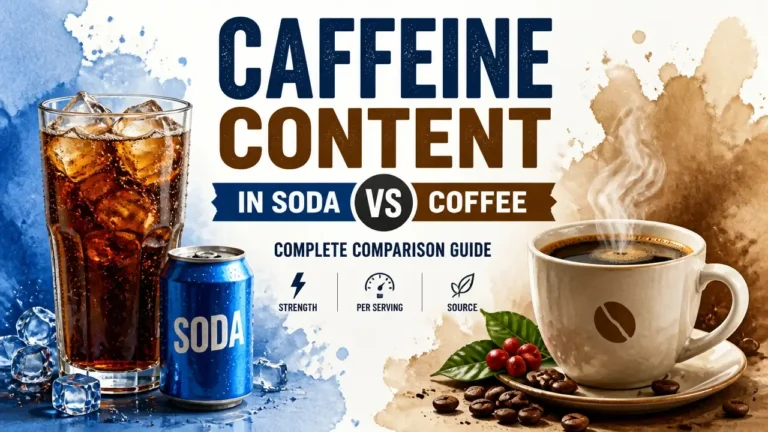

Accurate caffeine content comparison between soda and coffee is the one piece of nutritional math most health-conscious people have never actually done. Coffee’s caffeine is obvious. Soda’s is invisible – and that invisibility is exactly where your daily limit quietly fills up.
Three cans of cola, a mid-morning coffee, and a diet soda at lunch: you could be past 300 mg before dinner, without ever feeling like you had a “real” caffeine day. The numbers are fixable once you see them clearly.
The Hidden Caffeine Trap You’re Not Counting
Caffeine content, the kind that sneaks past your awareness, is far more common in soda than most people account for – and the gap between “I only drink one coffee a day” and your actual daily intake can be surprisingly wide. The FDA’s widely cited safety benchmark for healthy adults sits at 400 mg of caffeine per day. Coffee earns its reputation as the obvious source. Soda doesn’t – because culturally, we treat it as a treat, not a stimulant delivery system.
That framing is where the hidden dose problem starts. A standard 12-oz can of Coca-Cola contains around 34 mg of caffeine. One can feels harmless. But drink three over the course of a day – a lunch Coke, an afternoon Pepsi, a soda with dinner – and you’ve quietly added 100+ mg to your tally without a single espresso shot. That’s already a quarter of your daily ceiling, from a source your brain never logged as “caffeine consumption.”
The milligram count isn’t the whole story, either. Absorption speed, the sugar load riding alongside the caffeine, and how your own body metabolizes the compound all shape the real-world impact. Two people drinking identical sodas can feel completely different effects within the hour – and genetics is the reason.
The 400 mg guideline gets repeated everywhere like settled science, but your personal threshold may be meaningfully lower, and it comes down to a single enzyme. Roughly 50% of people carry a slower variant of CYP1A2 – the liver enzyme responsible for breaking down caffeine. For slow metabolizers, caffeine lingers in the bloodstream significantly longer. The same “moderate” intake that feels fine for a fast metabolizer can produce prolonged anxiety, disrupted sleep, and elevated cardiovascular strain for someone in the slow half of the population.
A prospective cohort study published in JAMA Network Open tracked 1,180 hypertensive adults over roughly 7.5 years, genotyping them for the CYP1A2 rs762551 variant. Among participants drinking more than three cups per day, slow metabolizers showed markedly higher risks of albuminuria (adjusted hazard ratio 2.74), hyperfiltration (aHR 2.11), and hypertension (aHR 2.81) compared to fast metabolizers – suggesting the 400 mg ceiling is not a universal safe harbor. A separate case-control study in JAMA of over 4,000 participants found that slow metabolizers who consumed four or more cups of coffee daily had more than double the odds of non-fatal heart attack (OR 2.33), while fast metabolizers showed no increased risk at the same intake.
This isn’t a reason to panic. It’s a reason to pay attention to all your caffeine sources – including the ones you’ve been mentally filing under “just a soda.”
As Dr. Mitchell et al., leading nutritional epidemiology researchers mapping brand-specific dietary caffeine exposure in the U.S. population, noted:
“Due to the high consumption of regular soft drinks, they accounted for the main source of caffeine among children and adolescents, while coffee was the main source of caffeine consumption in adults.”
That split matters. If you grew up drinking soda and never fully transitioned your mental model to “caffeine source,” you may still be underestimating what’s in your can.
Caffeine Face-Off: Exactly How Much Is in Each Drink
Precise caffeine comparison between brewed coffee and soda reveals a gap far wider than most people expect – and the per-ounce number is where the real story lives. A standard 8-oz cup of brewed coffee carries somewhere between 95 and 200 mg of caffeine depending on roast, grind, and brew method. A 12-oz can of Coca-Cola delivers 34 mg. Those aren’t just different numbers – they represent fundamentally different categories of stimulant intensity.
Here’s the full side-by-side, drawn from CSPI and FDA data:
| Beverage | Serving Size | Caffeine (mg) | Caffeine per oz (mg) |
|---|---|---|---|
| Brewed Coffee | 8 oz | 95–200 mg | 12–25 mg/oz |
| Espresso | 1.5–2 oz | 65–75 mg | 33–50 mg/oz |
| Cold Brew Coffee | 8 oz | 150–300 mg | 19–38 mg/oz |
| Coca-Cola (Regular) | 12 oz | 34 mg | 2.8 mg/oz |
| Pepsi (Regular) | 12 oz | 38 mg | 3.2 mg/oz |
| Diet Coke | 12 oz | 46 mg | 3.8 mg/oz |
| Diet Pepsi | 12 oz | 35 mg | 2.9 mg/oz |
| Mountain Dew | 12 oz | 54 mg | 4.5 mg/oz |
The per-ounce column is the one to anchor on. Brewed coffee runs roughly 12–25 mg per ounce. Soda runs 2.8–4.5 mg per ounce. Coffee is three to five times more concentrated – which means to match even a modest 8-oz cup of coffee in caffeine, you’d need to drink 3–4 full cans of cola. That’s 36–48 oz of liquid, with all the sugar that comes along for the ride.
One detail worth flagging: diet sodas often carry slightly more caffeine than their regular counterparts. Diet Coke, at 46 mg per 12 oz, edges out regular Coke’s 34 mg. If you switched to diet thinking you were cutting stimulants, you may have quietly increased them.
The label numbers look fixed, but the biggest caffeine variable in your day is actually sitting in your own kitchen. Preparation method and coffee-to-water ratio are the primary determinants of how much caffeine lands in your cup, and the swing is dramatic. A light pour-over made with a 1:18 ratio might deliver only 70 mg in 8 oz. A strong French press at 1:12 can push past 200 mg. A 20-oz cold brew from a coffee shop can easily clear 300 mg – and most people ordering it have no idea they’re drinking three times what they planned.
As food scientists compiling national caffeine content data have noted, “Coffee remains the single largest contributor to caffeine intakes… Coffee generally contains more caffeine per fluid ounce than other caffeinated beverages.” The practical implication: your brew ratio is a real lever you control. Pulling it consciously is more useful than memorizing a chart.
Beyond Caffeine: The Sugar, Calorie, and Health Picture
Added sugar in a standard 12-oz can of regular soda isn’t a minor nutritional footnote – it’s the central reason soda and coffee aren’t comparable health choices, even when caffeine content is held equal. One can of Coca-Cola contains approximately 39 grams of added sugar. The American Heart Association’s recommended daily maximum for women is 25 grams. For men, it’s 36 grams. A single can at lunch already blows past both limits before you’ve factored in anything else you eat or drink that day.
According to data from Flour Facts, a single 12-oz soda can exceed the daily added-sugar recommendation for women by 40–60% in one serving.
Black coffee, by contrast, contains zero grams of sugar and fewer than 5 calories per 8-oz cup. That’s not a minor difference – it’s the difference between a functional beverage and a dessert drink wearing an alertness costume. The caveat worth stating clearly: specialty coffee drinks can erase this advantage fast. A large flavored latte or a bottled frappuccino can carry as much sugar as the soda you were trying to avoid. The comparison only holds for coffee consumed black or with minimal, unsweetened additions.
The downstream health picture reinforces the gap. Habitual soda consumption is associated in large observational studies with increased risk of type 2 diabetes, metabolic syndrome, and weight gain – outcomes tied more to the chronic sugar load than to the caffeine itself. Unsweetened coffee, in the same body of research, is associated with reduced risk of cardiovascular disease, Parkinson’s disease, and several liver conditions. These are associations, not guarantees, but the directional signal is consistent across studies.
The most useful reframe for a health-conscious consumer: the question isn’t really “how much caffeine is in my soda?” It’s “what is my caffeine riding in?” Sugar is the vehicle problem. A mild stimulant inside 39 grams of sugar is not a functional energy tool – it’s a glycemic event with a caffeine chaser.
Clinical researchers investigating metabolic health in younger populations put it plainly:
“Concomitant use of caffeine and sugary soft drinks in children and adolescents may result in poor dietary habits across the lifespan, and increase the risk of obesity… In sedentary individuals, insulin resistance may explain the deleterious effects of EDs [and sodas].”
That insulin resistance pathway is the mechanism connecting habitual soda consumption to long-term metabolic risk – and it operates quietly, well below the threshold of anything you’d feel in the moment.
How Your Body Reacts: Coffee Jitters vs. Soda Crashes
Glycemic response is the hidden variable that explains why a soda and a coffee with identical caffeine content can produce completely different experiences inside your body. Coffee’s caffeine absorbs rapidly – blood concentration peaks within 30 to 60 minutes, delivering a clean, measurable lift. When you’re drinking it black, there’s nothing else in the cup competing for your body’s attention. The stimulant does its job without interference.
Soda introduces a different sequence. The high-glycemic sugar load hits your bloodstream fast, triggering an insulin surge. Within 60 to 90 minutes, that surge can drive blood glucose down sharply – reactive hypoglycemia – even while caffeine is still technically active. The result is the familiar “crash”: fatigue, brain fog, sometimes a headache, arriving while you’d logically expect to still be alert. The caffeine didn’t fail. The sugar undermined it.
There’s a compounding factor that often goes unmentioned. Sugar’s osmotic effect pulls water into the gut during digestion, contributing to mild dehydration. Coffee in moderate amounts is actually net-hydrating despite its mild diuretic effect. Soda’s sugar load creates a hydration deficit that amplifies the fatigue response – so the crash you feel isn’t just glycemic, it’s partly fluid-based.
To see how the sugar and caffeine dynamic plays out visually in a real-world test, this breakdown is worth watching:
An extreme but instructive example makes the deception concrete. Pulling an all-nighter with 2 liters of regular Coke – a behavior that shows up in student forums regularly – delivers roughly 57 mg of caffeine total. That’s less than a single small coffee. What it does deliver is approximately 220 grams of sugar. The perceived alertness in that first hour is almost entirely a sugar rush, not a caffeine effect. When the insulin response clears that glucose, cognitive performance can drop sharply – often worse than before the soda was consumed. Anyone using soda as a functional alertness tool is essentially borrowing wakefulness from a loan that charges steep interest 90 minutes later.
Double-blind randomized trial data on cognitive performance confirms the asymmetry. Researchers tracking postprandial responses found that “the caffeine beverage also led to an improvement in most cognitive measures and moods 30-min post-consumption with improvements tapering at 69 and 108 min… [Conversely] the consumption of high-sugar beverages leads to rapid glycaemic and insulin responses… Sustained delivery of energy… may help in preventing the ‘sugar crash’ that can occur after consumption of a product high in sugar.”
The takeaway is mechanical: for steady, controlled alertness, what matters isn’t just how much caffeine you consumed – it’s what your body is simultaneously forced to process alongside it. Coffee keeps the equation clean. Soda makes it chaotic.
Smart Swaps and Timing Hacks to Level Out Your Energy
Caffeine reduction doesn’t have to feel like deprivation – the most effective moves are about substitution and timing, not elimination. If you’re trying to pull back from soda, decaf coffee is your first lever. Start by replacing one-third of your regular coffee with decaf, hold that ratio for three or four days, then increase the decaf share gradually. The same logic applies to soda: mix caffeine-free versions with your regular, shifting the ratio slowly. Caffeine withdrawal headaches are real, but they’re almost entirely avoidable when the taper is gradual enough.
The most efficient single swap available – replacing one daily can of soda with a small cup of black coffee – cuts more than 35 grams of added sugar while adding only a modest caffeine increase. That’s a net health win by almost every metric: fewer empty calories, more stable blood glucose, and no meaningful jump in stimulant load.
Here’s a visual reference for putting these swaps into practice:
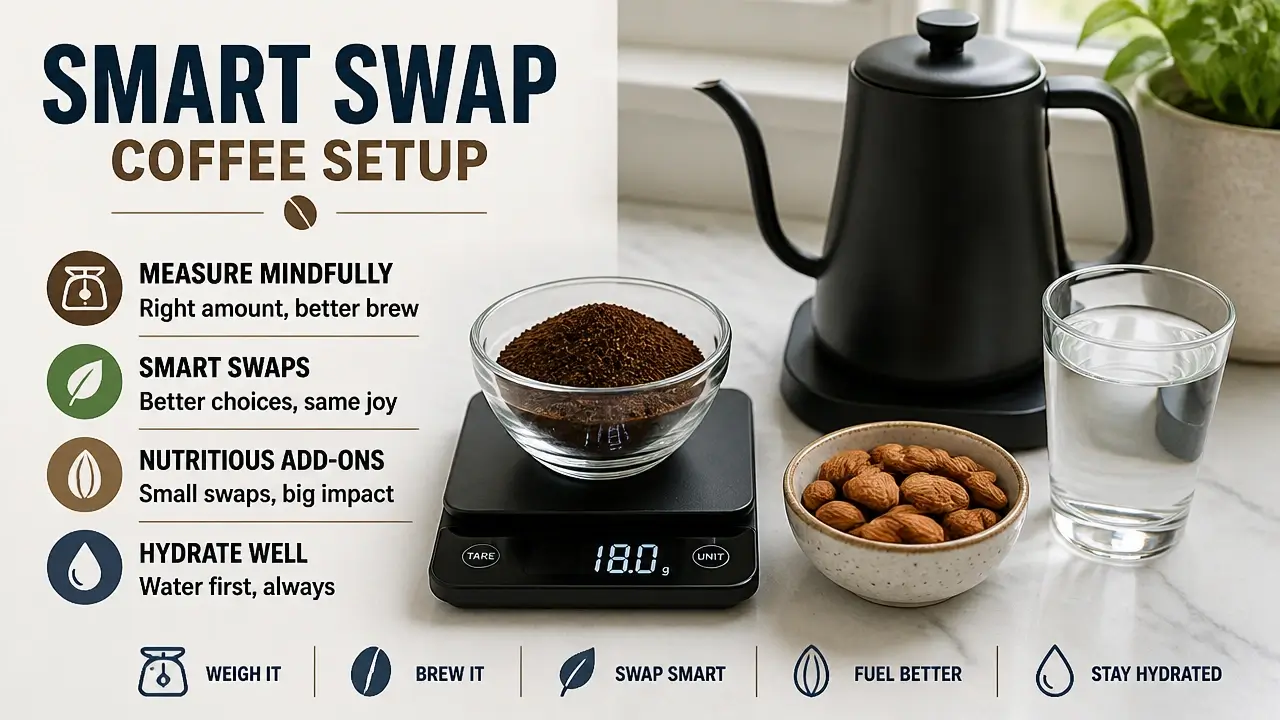
Protein-pairing is the timing strategy most people skip and shouldn’t. Consuming caffeine alongside a small protein-rich snack – Greek yogurt, a handful of almonds, a hard-boiled egg – about 15 to 30 minutes before your typical mid-afternoon slump changes the pharmacokinetics in a useful way. Dietary protein slows gastric emptying and stabilizes blood glucose, which buffers the stimulant’s peak and stretches the energy curve out. Instead of a sharp spike and drop, you get a longer, flatter arc of alertness. This is especially useful for anyone who’s noticed that coffee on an empty stomach tends to produce jitters followed by a crash.
Hydration is the baseline that makes everything else work better. Alternating each caffeinated drink with roughly the same volume of water reduces the mild dehydration that amplifies fatigue, and it reduces the impulse to reach for a sugary “refuel” soda when energy dips.
Because you now know that brew method is the real caffeine dial, you can use it as a precision tool rather than a blunt instrument. Moving from a 1:12 to a 1:16 coffee-to-water ratio – or simply shortening steep time by two minutes in a French press – can reduce per-cup caffeine by 20 to 40% without switching brands or products. That’s a quantifiable, personalized taper that no generic caffeine guide can offer you, because it’s specific to your setup. Food and nutrition science research confirms the mechanism: “The response to caffeine in coffee is attenuated compared to caffeine alone, presumably due to the presence of polyphenols and other coffee-related constituents… caffeine has been related to other beneficial effects such as antioxidant and anti-inflammatory actions that are extremely important to human health.” Adjusting your ratio doesn’t just lower the dose – it keeps the beneficial compounds in the cup while reducing the stimulant load.
The Final Verdict: What Should You Actually Reach For
The beverage recommendation here isn’t close: for daily energy efficiency, metabolic health, and long-term risk profile, unsweetened coffee is the superior caffeine vehicle by a significant margin. Soda – regular or diet – provides negligible functional benefit and carries real health costs when it becomes a daily habit. The caffeine content comparison that started this conversation ends with a clear directional answer, even if the exact choice depends on who’s drinking.
Here’s how that translates by persona:
Daily energy seeker, student, or athlete – Black coffee is your tool. Use it as a pre-workout or study aid, optionally paired with protein to smooth the curve. Cold brew from the fridge is a convenient, low-friction option that beats a vending machine soda by every health metric.
Sugar-conscious or weight-managing – Coffee, black or minimally sweetened, is the only sensible choice here. Both regular and diet soda undermine satiety and metabolic regulation in different ways – regular through sugar load, diet through sweet taste signals that can amplify cravings.
Anxiety-prone or caffeine-sensitive – A small 4-oz cup of coffee diluted with water or plant milk gives you control over the dose. If soda is genuinely unavoidable, caffeine-free diet versions reduce the stimulant exposure, but recognize that the sweet taste may still drive cravings. Green tea, paired with protein, offers a slower, L-theanine-modulated lift that many caffeine-sensitive people tolerate far better.
Convenience-driven, on-the-go – Unsweetened cold brew or a plain black coffee from any coffee shop still outperforms a soda can on every dimension that matters for health.
Soda’s role, framed realistically, is as a pleasure item – something closer to dessert than a performance beverage. A health-conscious person can enjoy one occasionally inside an otherwise balanced intake. What it shouldn’t be is your default alertness tool, because biologically, it isn’t one.
The 400 mg guideline comes with one qualifier worth repeating: listen to your body before you hit the ceiling. If you’re a slow CYP1A2 metabolizer, your personal safe threshold may be meaningfully lower than 400 mg – regardless of whether that caffeine arrives in a coffee cup or a soda can. The goal isn’t to optimize a number. It’s to maintain steady, crash-free alertness by controlling what you can – brew strength, sugar load, timing, hydration – while respecting what your genetics have already decided.
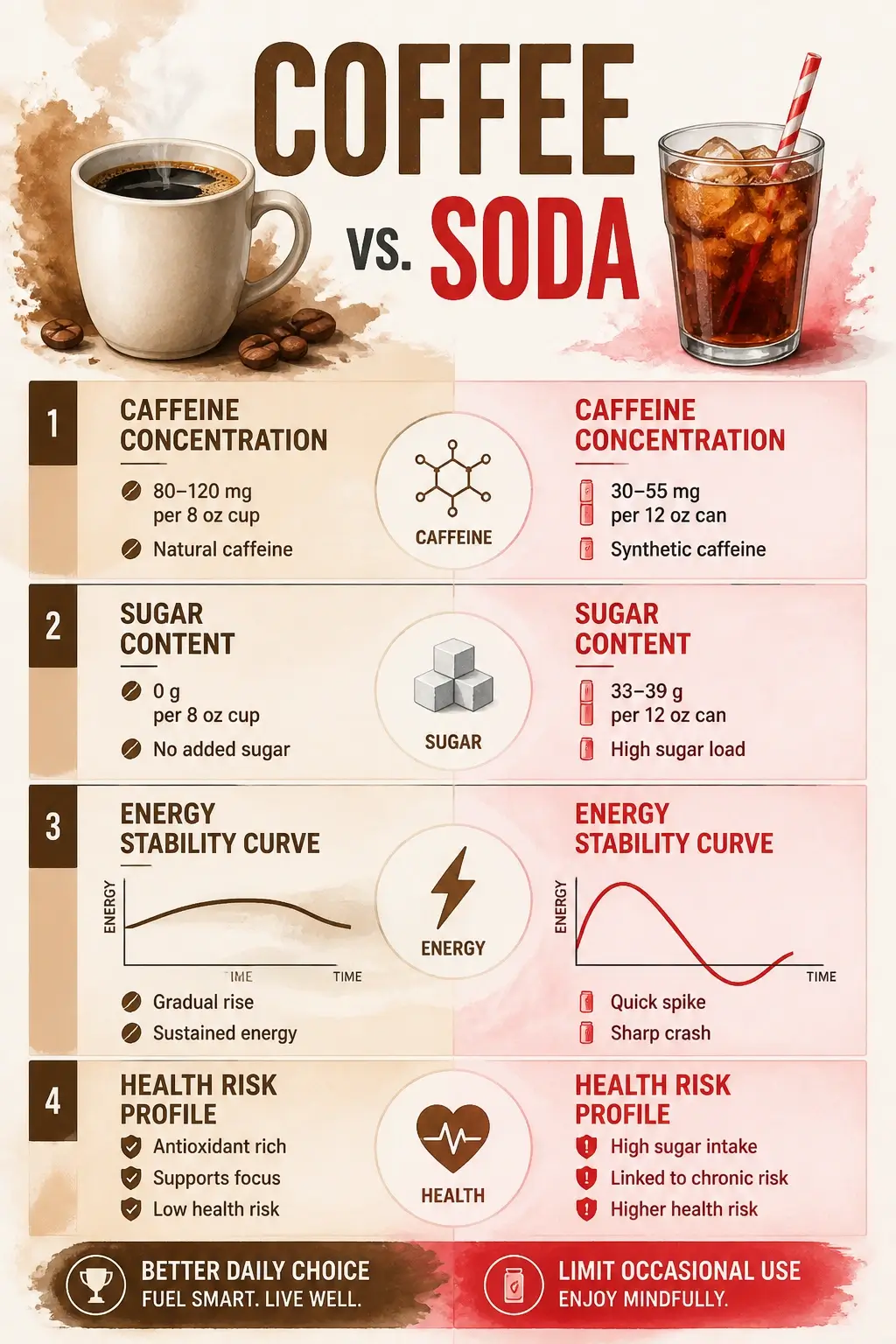
The infographic below brings the full comparison together in one view:
Key Takeaways on Caffeine Content in Soda Vs Coffee
- Coffee delivers 3–5× more caffeine per ounce than soda, making it a far more potent stimulant by volume.
- Three cans of regular soda add 100+ mg of caffeine to your daily total without feeling like a “real” caffeine source.
- About 50% of people are slow CYP1A2 metabolizers, meaning the 400 mg daily limit may not be a safe ceiling for them.
- A single 12-oz can of regular soda exceeds the American Heart Association’s daily added-sugar limit for women in one serving.
- Soda’s sugar load triggers an insulin surge and reactive hypoglycemia, creating an energy crash that coffee without sugar does not cause.
- Your brew method – not just the bean – can shift your per-cup caffeine by 20–40%, giving you a precise taper tool without changing products.
Frequently Asked Questions About Caffeine Content in Soda Vs Coffee
How many cans of Coke equal one cup of coffee?
You’d need roughly 3–4 cans of regular Coca-Cola to match the caffeine in a single 8-oz cup of brewed coffee, which means 36–48 oz of liquid and around 115–155 grams of sugar alongside the caffeine. It’s not a practical trade.
Can I drink caffeine if I have AFib?
Current evidence suggests moderate coffee consumption isn’t a trigger for most people with AFib, but individual response varies significantly – especially for slow CYP1A2 metabolizers – so checking with your cardiologist before settling on a daily intake makes sense.
Does caffeine negate ashwagandha’s effects?
There’s no strong clinical evidence that caffeine directly cancels ashwagandha’s adaptogenic effects, but caffeine’s cortisol-elevating mechanism works in the opposite direction from ashwagandha’s cortisol-lowering action, so taking both simultaneously may reduce the net benefit of the supplement.
What is the 2-hour coffee rule?
The 2-hour coffee rule refers to waiting roughly 90–120 minutes after waking before your first cup of coffee, allowing cortisol levels to naturally peak and decline first so the caffeine works with your biology rather than stacking on top of an already elevated stress response.
Is diet soda actually lower in caffeine than regular soda?
Not always – Diet Coke contains about 46 mg of caffeine per 12 oz compared to regular Coke’s 34 mg, so switching to diet to reduce caffeine can quietly backfire depending on the brand you choose.
Why does cold brew coffee have so much more caffeine than regular coffee?
Cold brew is typically steeped at a higher coffee-to-water ratio for 12–24 hours, which extracts significantly more caffeine per ounce – a standard 8-oz serving can carry 150–300 mg, making it one of the highest-caffeine options available without it tasting bitter or intense.
Can soda ever be a useful caffeine source for energy?
Not reliably – the caffeine dose in most sodas is too low to produce a meaningful stimulant effect on its own, and the accompanying sugar load creates a glycemic response that typically results in an energy crash within 60–90 minutes, undermining whatever alertness the caffeine provided.
If I’m trying to cut caffeine, should I switch from coffee to soda?
No – switching from coffee to soda trades a higher, cleaner caffeine source for a lower dose buried inside a significant sugar payload, which creates its own metabolic problems. A better path is gradually diluting your coffee with decaf or adjusting your brew ratio to reduce the caffeine dose while keeping the vehicle clean.
References
- JAMA Network Open – CYP1A2 Genetic Variation, Coffee Intake, and Kidney Dysfunction – jamanetwork.com
- JAMA – Coffee, CYP1A2 Genotype, and Risk of Myocardial Infarction – jamanetwork.com
- Molecular Biology Reports – CYP1A2 rs762551 Polymorphism and Team Sport Athlete Status – link.springer.com
- How Much Sugar Is in Coca-Cola – flourfacts.blog