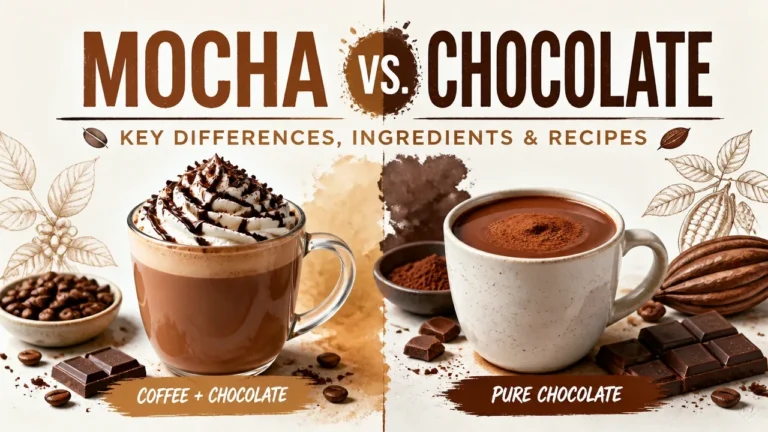

Mocha vs chocolate is a deceptively simple comparison that trips up even regular café-goers. One drink is built on espresso and steamed milk with chocolate woven in; the other is pure chocolate comfort with no coffee involved whatsoever.
The confusion is real because both drinks taste chocolatey, both show up on the same menu, and some cafés build them from the exact same chocolate base. Understanding what actually separates them – coffee presence, caffeine load, chocolate type, and café build – means you’ll never stare at a menu board unsure of what you’re about to drink.
What Actually Separates Mocha from Hot Chocolate
Chocolate is made from the cacao bean. Strip it down to its core and you have cacao solids, cocoa butter, sugar, and – in most commercial forms – milk. Chocolate can be used in recipes and enjoyed on its own as a food. Hot chocolate takes that ingredient, melts or dissolves it into heated milk, and serves it as a drink. No coffee. No espresso. Just chocolate in liquid form.
Mocha is something else entirely. It’s a coffee drink – specifically espresso combined with steamed milk and a chocolate element, most commonly added as chocolate syrup, cocoa powder, or ganache. The chocolate softens the espresso’s bitterness; the espresso sharpens what would otherwise be a cup of hot chocolate. Neither ingredient dominates; they’re in a negotiated truce.
“A mocha is a blend of a cappuccino and a hot chocolate. Like a cappuccino it contains espresso, warm milk and a frothy top but it also contains a sweet chocolatey twist using either chocolate powder, chocolate syrup or melted chocolate.” – Nespresso, global coffee brand and espresso machine manufacturer
The name itself carries history worth knowing. “Mocha” traces back to Al Mokka, a historic port city in Yemen that dominated the global coffee trade in the 15th century. The Arabica beans shipped from Al Mokka had a naturally earthy, chocolate-like taste profile – so distinctive that the word “mocha” became shorthand for that flavor character long before anyone thought to combine espresso with actual chocolate sauce.
The rest of this article uses that origin as a foundation and builds outward: comparing mocha and hot chocolate across coffee and caffeine content, chocolate base type, sweetness versus bitterness, standard café build, cost, and at-home recipe difficulty. Those are the criteria that actually matter when you’re standing at a counter or heating milk on your stove.
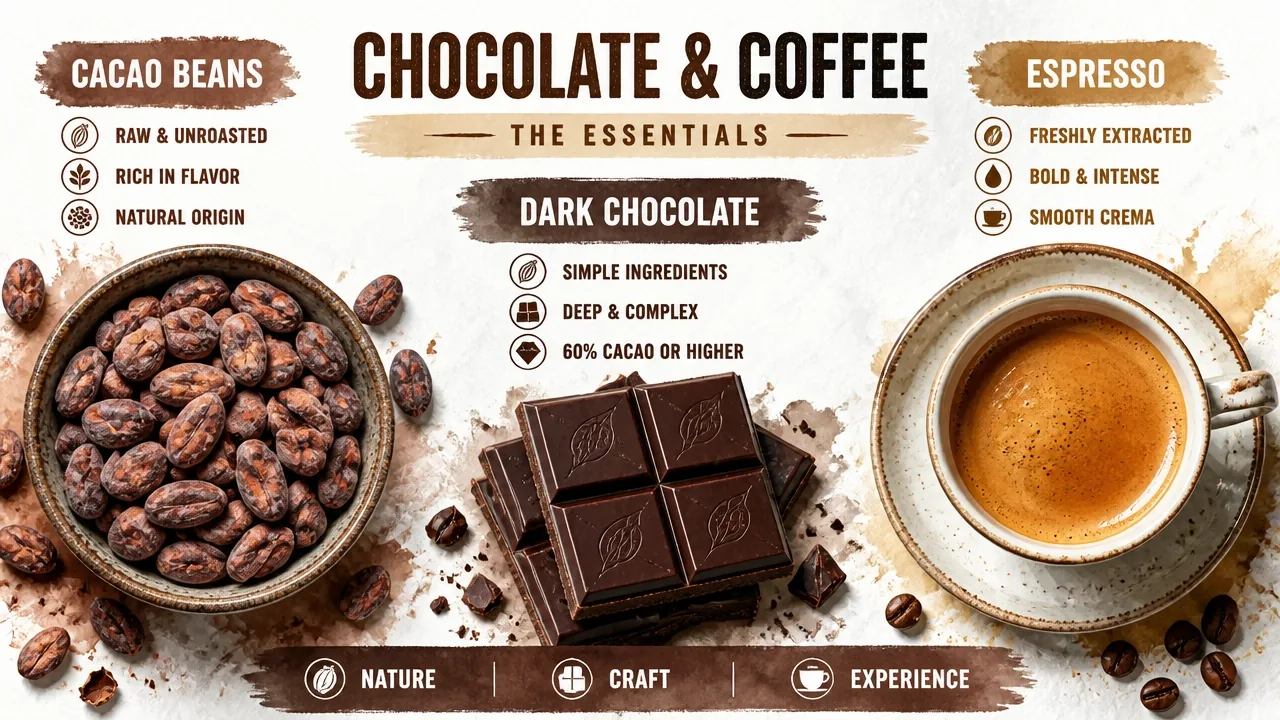
Here’s a visual showing the raw ingredients behind both drinks – the cacao bean on one side, the espresso shot on the other:
Head-to-Head: Mocha vs Hot Chocolate in a Real Cup
Espresso Presence and Stimulant Load
The most fundamental difference between a mocha and a hot chocolate is the presence – or absence – of coffee. A mocha is built on espresso. Hot chocolate contains no coffee at all.
That distinction matters most when you look at caffeine. A standard mocha pulls roughly 70–150 mg of caffeine from its espresso base, depending on how many shots the café uses. Hot chocolate, by contrast, has only about 5–10 mg of trace caffeine – the tiny amount that naturally occurs in cocoa itself. For most people, that trace amount is functionally invisible. If you’re caffeine-sensitive and you order a mocha thinking it’s just a mug of hot chocolate, you’re going to feel the difference within the hour.
Here’s a quick visual breakdown of how the caffeine loads compare between the two drinks:

Ingredient Architecture and Taste Direction
The formulas are structurally different. A mocha is built in layers: espresso at the base, steamed milk to soften and add volume, and a chocolate element – syrup, powder, or ganache – to round out the bitterness. A hot chocolate is simpler: heated milk with melted chocolate or dissolved cocoa, no coffee involved.
That structural difference produces two distinct flavor directions. A mocha is bold and bittersweet – the espresso pushes through even when the chocolate is generous, giving the drink a roasted edge. Hot chocolate is pure and sweet – the chocolate is the whole story, with nothing to compete against it.
Here’s the part most beginners miss: even when a café uses the exact same chocolate sauce in both drinks, the two cups still taste different. The build standard isn’t identical. Toppings, milk ratios, and how the chocolate integrates with steamed milk versus heated milk all shift the final sensory result. The espresso difference is obvious, but the architecture difference is what explains why two cups made with the same sauce can still surprise you.
The Chocolate Base Decision: Sauce, Syrup, Cocoa Powder, or Ganache
Ingredient Formats and Sensory Integration
When a café says “mocha,” the chocolate base they’re using matters more than most people realize – because it’s not always the same thing from one shop to the next.
The chocolate element in a mocha typically comes in one of four forms. Dutch-processed cocoa powder has its natural acidity neutralized through an alkalization process, giving it a deep dark color and a silky, smooth integration with espresso. Natural cocoa powder keeps its acidity intact, producing a sharper, fruitier chocolate character that pairs best with lighter roasts. Real chocolate ganache or melted chocolate is the artisan café standard – richer, denser, and more complex than any powder. Commercial mocha powder mixes are the fast, shelf-stable option used in high-volume environments: convenient, consistent, and noticeably less nuanced.
Each format changes the drink in measurable ways. A 2023 study published in Foods examining alkalized and natural cocoa powder in chocolate milk found that Dutch-processed cocoa had a significantly higher pH – above 7.61 – compared to natural cocoa’s lower pH of roughly 5.3–5.8. The alkalized version showed better dispersibility and beverage stability, while the natural cocoa affected viscosity and mouthfeel differently. Interestingly, overall consumer liking was similar between the two, but the textural experience – the way the drink coats the tongue and lingers – varied noticeably depending on which powder was used.
That’s not a minor detail. Sweetness, texture, and how completely the chocolate dissolves into espresso or milk all shift based on which format your café is working with.
Café Selection Consequences
A café’s ingredient choice determines whether its hot chocolate and mocha are built on the same chocolate base – and that single decision resolves a lot of ordering confusion.
Here’s the decision fork that matters most: if a café uses the same sauce or syrup for both hot chocolate and mocha, then “hot chocolate with espresso” is functionally a mocha. They’re the same drink with one added variable. But if the café uses cocoa powder for its hot chocolate and syrup for its mocha, the two orders are materially different drinks – different texture, different sweetness, different integration with milk. Ordering “hot chocolate with a shot” in that scenario doesn’t get you a mocha. It gets you something in between that may not satisfy either craving.
This is the single most useful thing to know before you order. Ask what the shop uses for each drink, and the rest of the decision becomes straightforward.
How to Order: Shots, Pumps, Vanilla, and Cost Traps
Counter Inquiry and Customization Levers
Cafés aren’t standardized the way a recipe book would suggest. Before you order, it’s worth spending ten seconds asking how the shop builds its hot chocolate and its mocha – specifically whether they use syrup, sauce, or powder for each drink. That one question tells you whether the two drinks share a base or diverge at the ingredient level, and it prevents the most common ordering mistake: assuming the drinks are either identical or completely different when the truth depends entirely on the shop.
Once you know the base, the customization levers are straightforward. Adding or removing espresso shots is the primary control for caffeine and bitterness – one shot produces a gentler coffee presence, two shots push the roasted edge forward. Requesting extra chocolate pumps or sauce increases chocolate intensity without changing the coffee structure. These aren’t exotic modifications; any barista expects them.
At a Starbucks-style café, the standard builds are worth knowing before you walk up. A grande hot chocolate typically comes with 4 pumps of mocha sauce, steamed milk, whipped cream, and a mocha drizzle. A grande mocha defaults to 2 shots of espresso, 4 pumps of mocha sauce, steamed milk, and whipped cream. The sauce quantity is identical – the espresso is the only structural difference. That means you can predict exactly how the two drinks will taste relative to each other before you order, and modify from there rather than guessing.
Treat the ordering process like a quick audit: ask what the shop uses for hot chocolate versus mocha, how many pumps and shots are standard, and whether vanilla is included before you start customizing.
Price Pitfalls and Flavor Inconsistency
Here’s a cost reality that reverses the obvious assumption: ordering a hot chocolate with an added espresso shot often costs more than ordering a mocha outright. Baristas frequently ring it up as a hot chocolate plus an espresso add-on – two line items – while a mocha is a single menu item. The cheapest path to a chocolate-and-espresso drink is almost always to order a mocha and modify the shots, not to start with hot chocolate and add coffee to it.
There’s also a vanilla inconsistency worth flagging. Hot chocolate no longer standardly includes vanilla at most Starbucks-style cafés, but baristas trained in an earlier era sometimes still add it out of habit. This creates a frustrating experience for regulars who notice the drink “tastes worse now” without understanding why. If you want the older, slightly sweeter flavor profile, ask for vanilla explicitly – don’t assume it’s in there.
Beginner Home Recipes: Hot Chocolate, Mocha, and the Hybrid
Core Beverage Preparations
Making both drinks at home is more forgiving than most beginners expect – and you don’t need an espresso machine to get close to a mocha.
Basic hot chocolate is the simpler starting point: heat milk on the stove over medium-low heat, then melt in chopped chocolate or whisk in cocoa powder until fully dissolved. No coffee required, no special equipment. The quality of your chocolate is the only variable that matters.
A beginner mocha swaps the espresso for strong brewed coffee or cold brew, which removes the most expensive and technically demanding part of the process. For brewed coffee, aim for roughly 1g of coffee per 15g of water – that’s a stronger-than-usual ratio that gives you the bold base a mocha needs. Water temperature should sit between 195–205°F; below that and the coffee tastes flat, above it and you’ll get harsh bitterness. A French press with a coarse grind and a 4-minute steep or a pour-over with a medium grind and about 3 minutes of total brew time both work well. Once you have strong coffee, add your chocolate element and steamed or heated milk. Skip the espresso machine for now – it’s a steeper learning curve and a more expensive entry point than the drink itself justifies at the beginner stage.
If you want an even faster shortcut, home experimenters have found that a hot chocolate K-Cup combined with NescafÉ El Clásico instant coffee produces a result that reads as “pretty darn close” to a café mocha – a useful pantry hack when you want the flavor profile without any brewing technique at all.
For a visual walkthrough of getting the most out of basic hot cocoa at home, this video is worth a few minutes:
Layered and Copycat Constructions
Once you’re comfortable with the basics, two builds are worth trying.
The Mocha Hot Chocolate hybrid is exactly what it sounds like: a rich, full hot cocoa with one shot of espresso, a shot of strong brewed coffee, or a splash of cold brew stirred in. It’s an adult evening drink – the chocolate stays dominant, but there’s a coffee undercurrent that makes it feel more complex than plain hot chocolate. One shot is usually enough; two starts to tip the balance toward mocha territory.
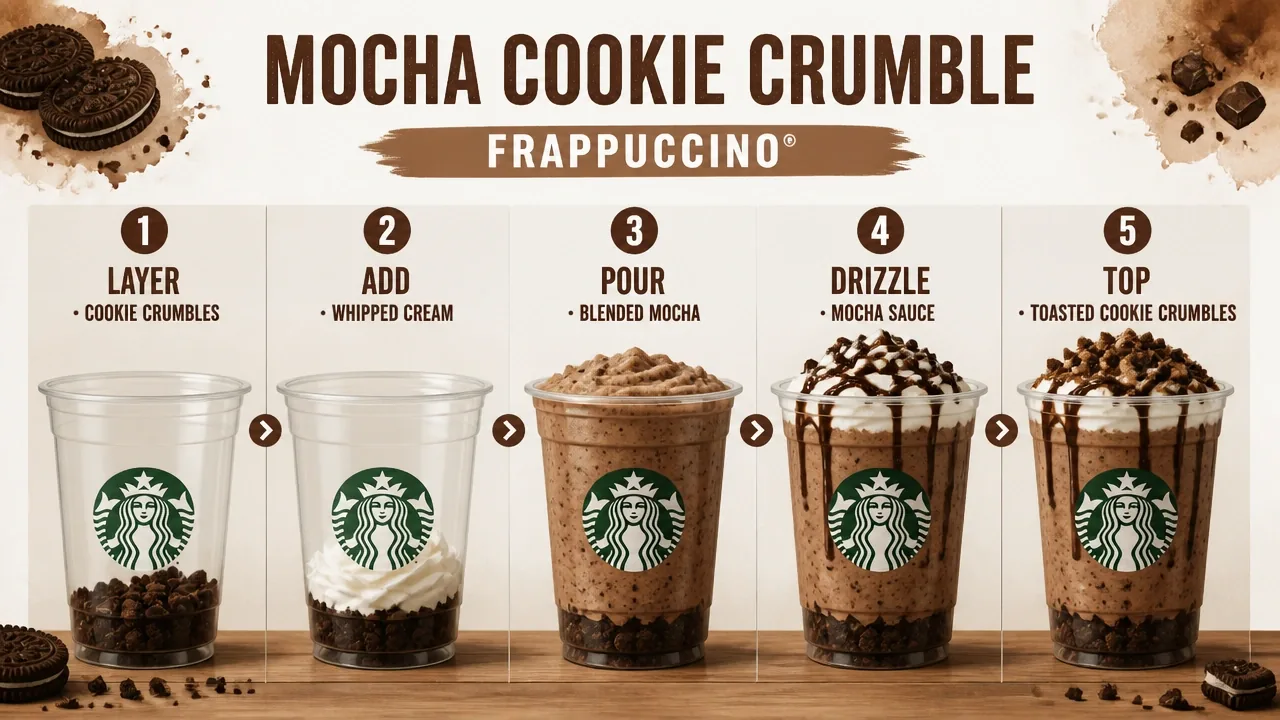
The copycat Mocha Cookie Crumble Frappuccino takes more assembly but rewards the effort. Combine 2 shots of chilled espresso or 1/2 cup cold brew concentrate, 1/2 cup milk, 3 tablespoons of mocha sauce, and 1.5 cups of ice in a blender with 3 crushed chocolate sandwich cookies. Blend until smooth. To build it properly: layer whipped cream and cookie crumbles at the bottom of the glass, pour in the blended mocha mixture, then finish the top with whipped cream, a mocha drizzle, and toasted cookie crumble. The layering isn’t just visual – the bottom whipped cream changes how the first sip tastes.
Here’s what the finished layered build looks like before you collapse the layers with a straw:
Which Should You Choose?
The answer depends on one question first: does your café use the same chocolate base for both drinks?
If the same sauce or syrup goes into both the hot chocolate and the mocha, the two drinks share a foundation. In that case, order a mocha and control your experience through shot and pump modifications – it’s simpler, usually cheaper, and gives you more levers to pull.
If the café uses cocoa powder for hot chocolate and syrup for mocha, the two orders are genuinely different drinks. Then the choice depends on what you want: order hot chocolate plus an espresso shot if you want the powder-based chocolate character with coffee added; order a mocha with extra chocolate pumps if you want the syrup base with more chocolate presence.
At a Starbucks-style café, default to ordering a mocha with shot and pump customization. It’s the most cost-efficient path and gives you the most control over bitterness and sweetness.
Here’s how that plays out by persona:
| Who You Are | Best Order |
|---|---|
| Chocolate-forward espresso drinker | Ask about the base first. Powder-based café: hot chocolate + shot. Syrup-based café: mocha + extra chocolate pumps. |
| Caffeine-sensitive | Mocha with one shot instead of the default double. |
| Cost-sensitive | Order mocha, not hot chocolate + espresso shots. |
| Hot chocolate purist | Standard hot chocolate, no espresso. Request vanilla explicitly if you want the older flavor profile. |
| Home experimenter | Start with strong brewed coffee or cold brew – skip the espresso machine at first. |
The final answer is clean: mocha is a coffee-based chocolate drink; hot chocolate is a no-coffee chocolate drink. Use the base check to understand what you’re actually ordering, and use shot and pump modifications to tune the result without overpaying.
Key Takeaways on Mocha vs Chocolate
- Mocha is a coffee drink built on espresso, steamed milk, and chocolate – hot chocolate contains no coffee at all.
- A mocha carries roughly 70–150 mg of caffeine from espresso; hot chocolate has only 5–10 mg of trace caffeine from cocoa.
- The chocolate base type – powder, syrup, or ganache – changes sweetness, texture, and flavor more than most people expect.
- If a café uses the same chocolate sauce for both drinks, hot chocolate with espresso is functionally a mocha.
- Ordering “hot chocolate with a shot” often costs more than ordering a mocha with shot modifications.
- At home, strong brewed coffee or cold brew substitutes for espresso well enough to make a beginner mocha without special equipment.
Frequently Asked Questions About Mocha vs Chocolate
Is mocha the same as hot chocolate?
No – a mocha contains espresso; hot chocolate doesn’t. They may share a chocolate base at some cafés, but the coffee presence makes them structurally different drinks with different caffeine loads and flavor profiles.
Is a mocha stronger than regular coffee?
Not necessarily stronger in caffeine, but bolder in flavor. A standard mocha uses one or two espresso shots – roughly the same caffeine as a regular drip coffee – but the chocolate and milk round out the bitterness in a way that plain coffee doesn’t.
Are mochas healthier than lattes?
It depends on what you mean by healthy. A mocha adds chocolate syrup and sometimes whipped cream on top of the espresso and milk base a latte already has, so it’s typically higher in sugar and calories. A latte with no additions is the lighter option.
Is mocha basically just coffee?
It’s coffee-based, but that undersells it. Mocha is espresso plus steamed milk plus a chocolate element – the chocolate isn’t a flavoring note, it’s a structural ingredient that changes the drink’s sweetness, texture, and bitterness balance.
Why does my mocha taste different at different cafés?
The chocolate base is almost always the reason. Cafés use different formats – Dutch-processed cocoa, natural cocoa, ganache, or commercial mocha powder – and each one integrates differently with espresso and milk, producing noticeably different sweetness and texture in the final cup.
Can I make a mocha without an espresso machine?
Yes. Strong brewed coffee or cold brew concentrate works as a substitute. Use about 1g of coffee per 15g of water, brew it hot and strong, then combine it with your chocolate element and heated milk. It won’t be identical to an espresso-based mocha, but it’s close enough for home use.
What happens if I ask for a hot chocolate with an espresso shot added?
You’ll likely get something close to a mocha, but the cost and flavor depend on the café. If they use powder for hot chocolate and syrup for mocha, you’ll get a different chocolate character than a standard mocha. Price-wise, it often rings up higher than just ordering a mocha directly.
Does hot chocolate have any caffeine at all?
A small amount – roughly 5–10 mg from the cocoa itself. That’s trace-level for most people and won’t produce any noticeable stimulant effect, unlike the 70–150 mg in a mocha.
References
- The Only Mocha Guide You Will Ever Need | nespresso.com
- Physico-Chemical Property, Sensory Profile and Consumer Acceptability of Water Buffalo Chocolate Milk Using Alkalized and Natural Cocoa Powder | doi.org