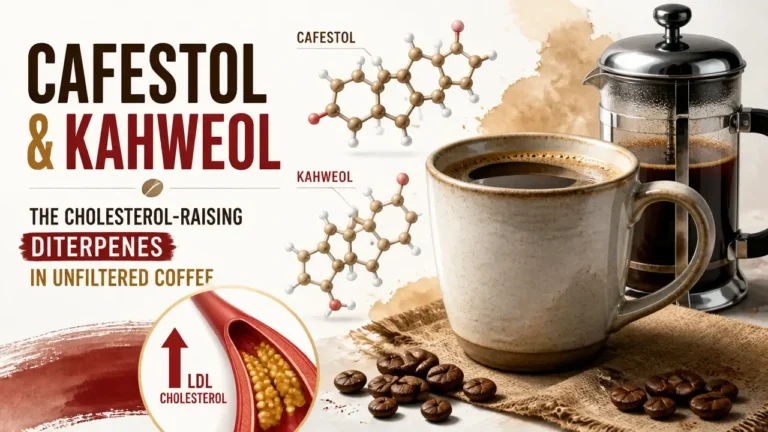

Cafestol and kahweol, two naturally occurring diterpenes locked inside coffee’s oily fraction, are quietly responsible for more LDL cholesterol elevation than any other compound in the human diet. Most people who drink French press, espresso, or boiled coffee every morning have no idea they’re consuming them in meaningful doses.
The good news is that this is one of the few dietary cholesterol risks with a straightforward fix – and it doesn’t require giving up coffee. Understanding what these compounds do, where they hide, and how your body responds gives you everything you need to make a genuinely informed choice.
Fortunately, enjoying your daily brew can still be part of a balanced lifestyle when you explore our comprehensive health benefits guide to make the most of your routine.
Beyond cardiovascular concerns, your daily brew also plays a surprising role in digestion and gut wellness, influencing everything from nutrient absorption to your microbiome.
Beyond navigating brewing methods for your health, becoming an ethical consumer also means paying attention to fair trade coffee sourcing to ensure your daily cup supports sustainable farming practices.
What Are Cafestol and Kahweol?
Cafestol and kahweol are naturally occurring, fat-soluble diterpenes concentrated in the oily fraction of coffee beans – not the water, the oils – and they hold the distinction of being the most potent dietary elevators of LDL cholesterol that researchers have ever identified. No other single food compound raises serum LDL as reliably or as measurably. Their primary target is low-density lipoprotein cholesterol, the particle most associated with cardiovascular plaque buildup, while their effect on HDL – the so-called “good” cholesterol – is minimal at best.
Because cafestol and kahweol are hydrophobic, they don’t dissolve into the water-based liquid that makes up most of your cup. They travel in the oils. That single physical property is what makes brewing method so consequential: if something physically traps those oils before they reach your mug, the diterpenes go with them. If nothing does, you drink them whole.
Here’s what that looks like in practice. A paper filter – the kind used in standard drip machines and pour-over setups – catches those oils against its fibers. A metal mesh, which is what a French press or most espresso machines use, lets them pass straight through. The difference between a paper-filtered cup and an unfiltered one isn’t a matter of taste preference alone. It’s a meaningful difference in what your liver has to deal with every morning.
Take a look at what cafestol and kahweol actually look like at the source – embedded in the same beans that end up in every brewing method.
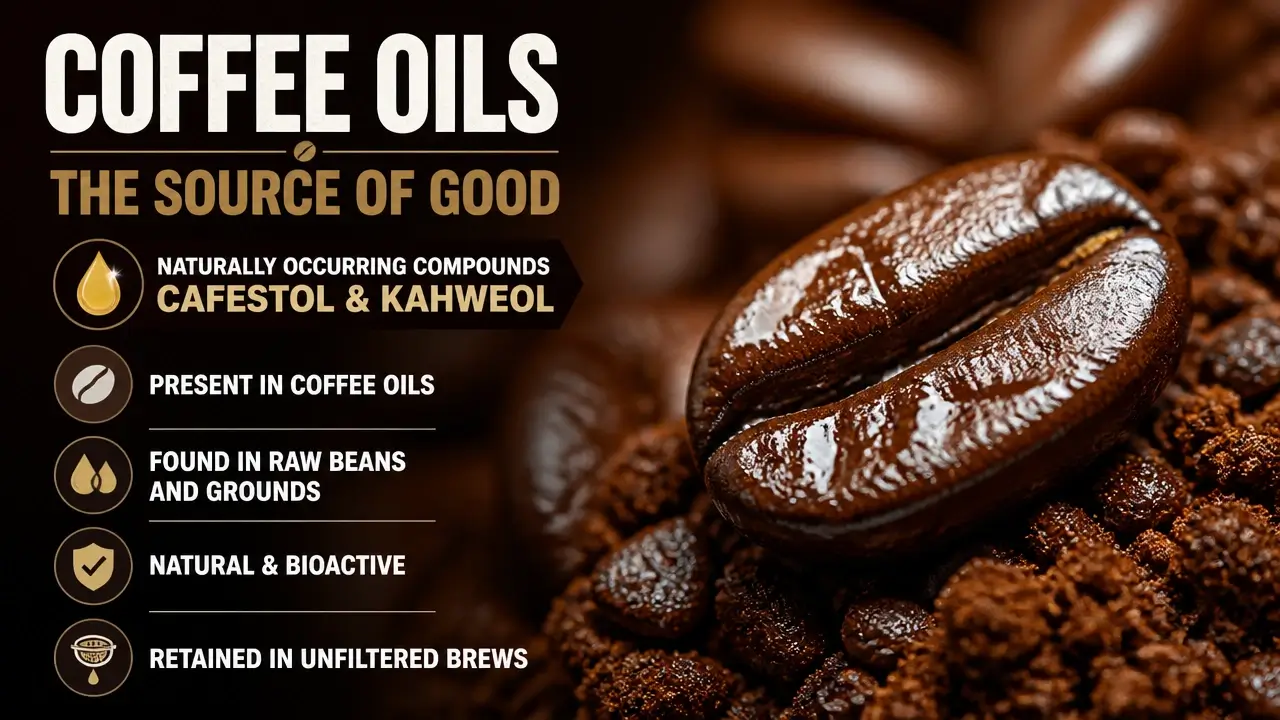
Dr. Carmine Ostacolo, Assistant Professor in Medicinal Chemistry at the Department of Pharmacy, University of Naples Federico II, describes cafestol as responsible for more than 80% of the total effect that coffee exerts on serum lipids – a figure that underscores just how dominant cafestol is relative to kahweol in this particular story. Kahweol contributes, but cafestol is the primary driver, and it’s the compound that makes unfiltered coffee a legitimate cholesterol consideration rather than a theoretical one.
Brewing Methods: The Real Filter Divide
Coffee brewing methods split cleanly into two categories when it comes to diterpene exposure, and the line isn’t drawn where most people think it is. Paper-filtered methods – standard drip machines with paper inserts, pour-over, Aeropress with a paper disc, and percolators with paper – remove approximately 98% of cafestol and kahweol by trapping the oils against the filter’s fibers before they reach your cup. Everything else – French press, Turkish coffee, Greek coffee, Scandinavian boiled coffee, moka pot, cold brew without paper post-filtration, and espresso – delivers these diterpenes in measurable quantities with every serving.
Espresso trips people up because the serving size is small. A double shot is only 60 milliliters, so the absolute dose per cup is lower than a full French press – but the coffee still passes through a metal screen, not paper, so the diterpenes are present. Drink two or three doubles a day and the cumulative dose becomes significant. Instant coffee, by contrast, is essentially cholesterol-neutral: the manufacturing process removes the oily fraction, leaving negligible diterpene content.
The subtler trap is the word “filtered” itself. Many people assume any machine with a filter basket is safe. It isn’t. Metal mesh and nylon filters don’t bind hydrophobic oils – they only catch grounds. The filter material is what matters, not the presence of a filter component.
The table below shows how dramatically diterpene concentration varies across brewing methods – and why the type of filter is the decisive variable.
| Brewing Method | Filter Type | Cafestol Concentration (approx.) | Diterpene Exposure |
|---|---|---|---|
| Paper drip / pour-over | Paper | ~12 mg/L | Negligible |
| Aeropress (paper disc) | Paper | ~12 mg/L | Negligible |
| Instant coffee | N/A (processed) | <5 mg/L | Negligible |
| Espresso | Metal screen | ~40–60 mg/L | Moderate (small volume) |
| Moka pot | Metal filter | ~40–80 mg/L | Moderate |
| Cold brew (no paper) | Metal/nylon | ~40–100 mg/L | Moderate–High |
| French press | Metal mesh | ~100–200 mg/L | High |
| Boiled / Turkish / Greek | None | ~150–300 mg/L | High |
| Workplace metal-mesh machine | Metal mesh | Up to 444 mg/L | Very High |
That last row deserves attention. A study analyzing coffee machines in Swedish workplaces, cited by Dr. Maria Halvorsen and colleagues at the Department of Nutrition, Institute of Basic Medical Sciences, University of Oslo, found that metal-mesh office machines produced cafestol concentrations reaching 444 mg/L – roughly 37 times the 12 mg/L typical of home paper-filtered coffee, with a median of 176 mg/L across those machines. If your office coffee runs through a metal-mesh commercial brewer and you’re drinking three cups a day, you’re getting a French-press-level diterpene load without realizing it. Dr. Halvorsen’s research also documented that French press coffee specifically reached kahweol concentrations of 17.2 mg per cup and cafestol concentrations of 19.7 mg per cup – among the highest of any common brewing method – while paper filtration brought both to near-zero.
The practical implication is straightforward: check what your coffee machine actually uses to filter, not just whether it has a filter.
How Much Can Your Cholesterol Actually Rise?
Serum cholesterol doesn’t respond to a single cup of coffee – it responds to a sustained pattern, and the dose-response relationship for cafestol is one of the better-characterized in dietary research. Consuming approximately 60 mg of cafestol per day – roughly the amount in five cups of French press coffee – raised LDL cholesterol by around 0.57 mmol/L (approximately 22 mg/dL) in controlled trials run over four weeks. That’s not a trivial shift. For context, a daily French press or boiled-coffee habit in the range of two to three cups typically bumps LDL by 8–10 mg/dL, and heavier consumption pushes the number further.
To understand why that matters clinically, consider the inverse: reducing LDL by 1 mmol/L is associated with roughly a 22% reduction in major cardiovascular events. The same arithmetic works in the other direction. A sustained, modest LDL elevation from a daily unfiltered coffee habit isn’t catastrophic in isolation, but it’s a real, modifiable contributor – and it compounds with other risk factors.
A controlled trial published in the European Journal of Clinical Nutrition demonstrated this dose-response relationship directly, showing that the LDL increment from cafestol is predictable and repeatable across subjects, not just a statistical artifact from one study population.
Population-level data reinforce the picture. The Tromsø Survey – a large Norwegian cohort study – found that people drinking three to five espresso cups daily showed a measurable increase in total serum cholesterol, with the effect becoming more pronounced at higher consumption levels. This is real-world confirmation that the controlled-trial numbers translate outside the laboratory.
Two important qualifications are worth holding onto. First, the effect is dose-dependent and not permanent: switching to paper-filtered coffee allows cholesterol levels to return toward baseline within weeks, which means this is a genuinely reversible risk factor. Second – and this is a gap in the current evidence – no study has yet converted these LDL increments into absolute cardiovascular risk numbers for an individual. Relative risk projections exist (one analysis estimated a 13% lower cardiovascular mortality risk over five years if people switched from boiled to filtered coffee), but without an absolute baseline tied to your personal risk profile, you can’t run a precise personal equation. What you can do is treat the LDL shift as a real signal and weigh it against your overall cardiovascular picture – family history, baseline lipids, diet, activity level – rather than reading it in isolation.
How Cafestol Hijacks Your Cholesterol Regulation
LDL receptors on the surface of liver cells are your body’s primary mechanism for clearing LDL particles from the bloodstream. When they’re working normally, these receptors grab circulating LDL and pull it into the liver for processing – keeping blood LDL levels in check. Cafestol interferes with this system directly by down-regulating LDL receptor activity, meaning fewer receptors are available on the liver surface, fewer LDL particles get cleared, and blood LDL climbs.
What makes cafestol’s mechanism unusually precise is where in the process it intervenes. Research using human skin fibroblasts showed that cafestol reduces LDL receptor protein levels without altering the receptor’s messenger RNA – the genetic instruction that codes for the protein. This is post-transcriptional down-regulation: the gene is still being read, but the assembly of the receptor protein is being disrupted downstream. It’s not blocking the blueprint; it’s sabotaging the construction crew.
A peer-reviewed study on cafestol’s effect in human skin fibroblasts found that incubating cells with cafestol at 20 µg/mL for 18 hours reduced LDL receptor protein levels by roughly 20–25% while leaving receptor mRNA unchanged – direct evidence of a post-transcriptional mechanism. In the same cells, cafestol produced a 2.3-fold increase in cholesteryl ester incorporation, indicating that intracellular cholesterol storage was also being altered simultaneously.
A parallel study in HepG2 liver cells confirmed the post-transcriptional LDL receptor suppression in hepatic tissue, though it found that the cholesteryl ester effect was cell-type specific – a reminder that mechanistic findings from one cell model don’t always transfer uniformly to every tissue.
The net result is a one-way ratchet: less LDL clearance from the blood combined with altered intracellular cholesterol handling. This is why cafestol’s effect accumulates over days to weeks rather than appearing after a single cup – the receptor suppression builds gradually, consistent with the timeline seen in human trials.
Dr. Christian A. Drevon, Professor of Medicine and lead researcher on lipid metabolism at the Department of Nutrition, University of Oslo, points to an additional layer of this mechanism: cafestol’s suppression of bile acid synthesis appears to be part of what initiates the LDL receptor down-regulation. Bile acids are made from cholesterol in the liver, and when their synthesis is suppressed, the liver’s normal feedback loop for managing cholesterol traffic is disrupted – compounding the direct receptor effect. This is why cafestol stands apart from other dietary cholesterol influences; it’s not simply adding cholesterol to the system, it’s impairing the system’s ability to manage what’s already there.
The Hidden Benefit: Protective Effects of Cafestol and Kahweol
Cafestol and kahweol’s protective effects represent one of the more genuinely surprising paradoxes in nutritional biochemistry – the same compounds that reliably raise LDL cholesterol also show meaningful anti-inflammatory, antioxidant, and hepatoprotective activity in laboratory and animal models. This isn’t a fringe finding. It’s part of why population studies consistently link coffee consumption – including unfiltered coffee – with lower rates of liver disease, certain cancers, and markers of chronic inflammation, even when the cholesterol data would seem to argue against it.
The mechanistic picture, as synthesized by Dr. Christophe Cavin, Senior Research Scientist in Toxicology and Chemoprevention at Nestlé Research Center in Lausanne, Switzerland, involves several distinct pathways operating in parallel. Cafestol and kahweol down-regulate inflammation mediators – including prostaglandin synthesis pathways – which produces measurable anti-inflammatory activity. They increase glutathione, one of the liver’s primary endogenous antioxidants, which is the likely driver of their hepatoprotective signal. In cancer cell models, they induce apoptosis – programmed cell death – in tumor cell lines and appear to inhibit angiogenesis, the formation of new blood vessels that tumors depend on. Some research also points toward anti-diabetic effects, possibly through mechanisms related to insulin sensitivity, though this evidence is less developed.
Here’s what the data looks like when you map the protective activities alongside the cholesterol risk:
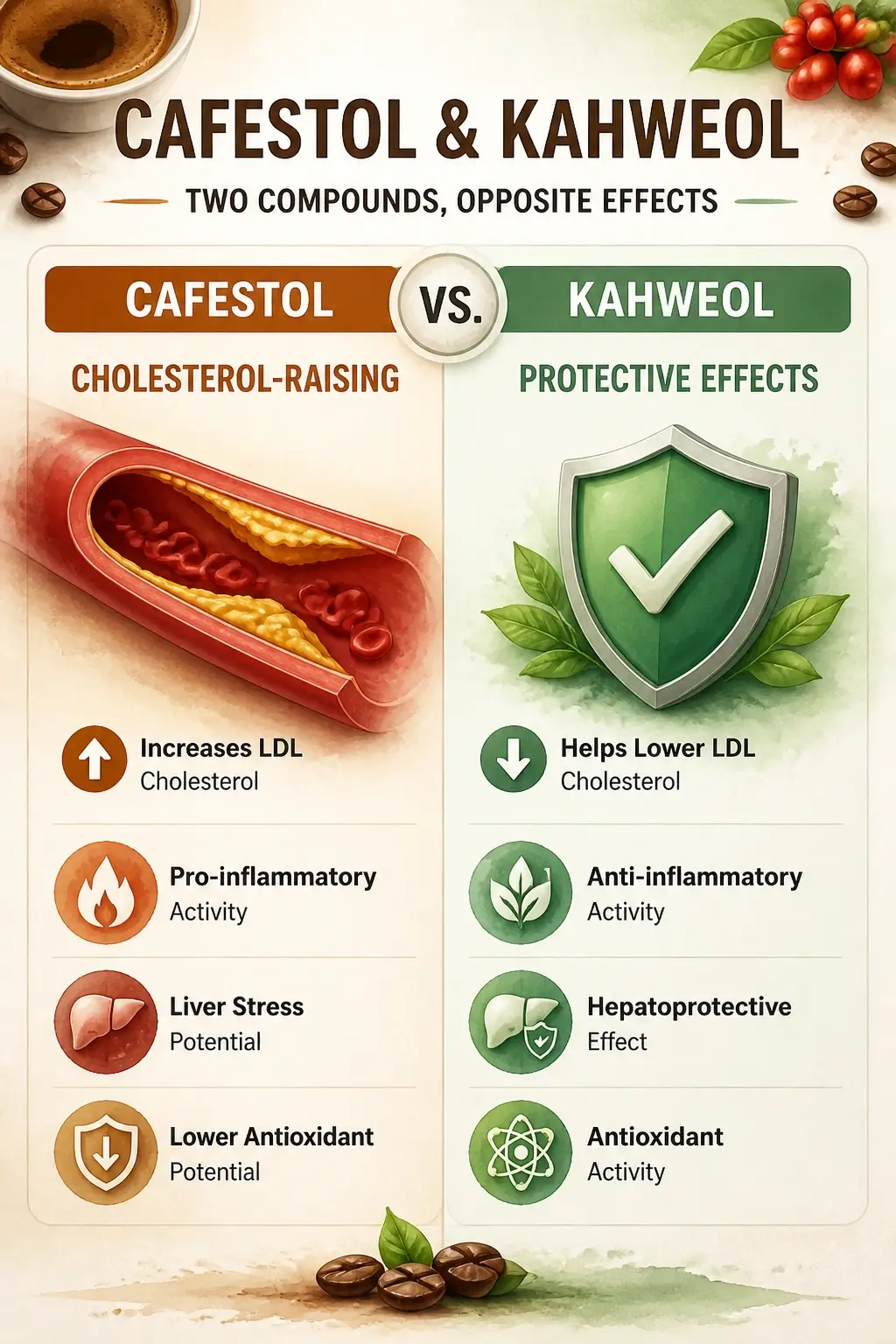
The critical caveat is that the bulk of this protective evidence comes from cell cultures and animal models. Human randomized controlled trials on cafestol and kahweol’s beneficial effects are scarce – the evidence tier is simply lower than for the cholesterol data, which has solid human trial support. These are not equivalent bodies of evidence, and it would be a mistake to treat them as if they cancel each other out.
Beyond cafestol, coffee also contains chlorogenic acid in coffee, a polyphenol with notable antioxidant and metabolic effects.
What they do accomplish is this: they prevent a one-sided narrative. If you’re drinking unfiltered coffee daily and have normal cholesterol, a family history of liver disease, or chronic inflammatory conditions, the risk-benefit calculus looks different than it does for someone whose primary concern is a borderline LDL number. The diterpenes aren’t purely harmful – they’re compounds with complex, context-dependent biology. That complexity is worth holding onto as you make a personal decision, even if the science hasn’t yet given us a clean risk-benefit score.
When Coffee Becomes a Cholesterol Double-Whammy: Add-Ins and Gender Differences
Coffee cholesterol amplifiers rarely appear in standard dietary guidance, yet two of them – saturated fat additions and sex-specific LDL responses – can meaningfully shift how much risk a given coffee habit actually carries. Understanding both gives you a more complete picture than the brewing-method conversation alone.
Saturated Fat in Unfiltered Coffee Compounds the LDL Load
Saturated fats added to unfiltered coffee – butter, heavy cream, whole milk, coconut oil, and MCT oil – independently raise LDL cholesterol through a separate mechanism: they reduce LDL receptor activity in the liver by increasing intracellular cholesterol availability, a pathway that operates in addition to, not instead of, cafestol’s post-transcriptional effect. When you combine unfiltered coffee with a saturated fat addition, you’re stacking two distinct LDL-raising mechanisms in the same cup.
Bulletproof coffee is the clearest example of this compounding risk. The typical preparation pairs unfiltered coffee – usually French press or moka pot – with a substantial dose of butter and MCT oil, delivering both a meaningful cafestol load and a significant saturated fat hit simultaneously. No long-term controlled trial has measured the combined lipid impact of this specific combination, so the total LDL effect can only be estimated by adding the two independent mechanisms together. For anyone already monitoring their cholesterol, that’s not a comfortable evidence gap to sit with.
The practical point is simple: if cholesterol is a concern, the add-in conversation matters as much as the brewing method conversation. A paper-filtered coffee with two tablespoons of butter is not a cholesterol-neutral cup.
The Gender Gap in Cafestol Sensitivity: Higher LDL Response in Men
The Tromsø Survey documented a consistent sex difference in how LDL responds to unfiltered coffee: men drinking three to five espresso cups daily showed a cholesterol increase of approximately +0.16 mmol/L, while women with the same intake showed roughly +0.09 mmol/L – men responding at nearly double the magnitude. This is an epidemiological signal that most consumer-facing dietary guidance simply doesn’t reflect. Standard recommendations lump all adults together, missing the opportunity to flag that men may be operating in a higher-sensitivity category.
Other notable coffee compounds include trigonelline and melanoidins, which contribute to aroma, body, and health effects.
Why this gap exists remains an open research question. The leading hypotheses involve estrogen-modulated differences in hepatic LDL receptor expression – estrogen is known to upregulate LDL receptors in women, which could partially buffer cafestol’s down-regulatory effect – but differences in typical serving sizes, cup volumes, and metabolic rate may also contribute. The biological mechanism hasn’t been resolved.
What the Tromsø data does establish clearly enough to act on is that men should treat themselves as a higher-sensitivity group when it comes to unfiltered coffee. The same espresso habit that causes a modest cholesterol nudge in a woman may produce a clinically more meaningful shift in a man – and that asymmetry deserves to be part of how men personally assess their coffee risk.
Your Smart Coffee Decision: Practical Steps and Cholesterol Monitoring
A coffee consumption strategy built on the actual biology here doesn’t require eliminating coffee or making dramatic lifestyle changes. It requires matching your brewing method to your cholesterol risk, adjusting the variables you can control, and letting your own lipid numbers be the final arbiter.
The baseline recommendation is straightforward: make paper-filtered drip or pour-over your primary daily coffee. A standard paper filter removes approximately 98% of cafestol and kahweol, making the cholesterol concern effectively negligible regardless of how many cups you drink. This single change is the highest-leverage intervention available.
If you genuinely prefer French press, espresso, or boiled coffee and aren’t willing to give them up entirely, the dose-dependent nature of the effect gives you a workable middle ground. Capping your intake at one to two small cups per day rather than drinking them automatically keeps your cumulative diterpene exposure in a range where the LDL impact, for most people, stays modest. The key word is intentional: drink unfiltered coffee as a deliberate choice, not a default habit.
Regardless of brewing method, eliminating high-saturated-fat add-ins – butter, heavy cream, coconut oil, MCT oil – removes a compounding LDL risk that operates independently of the diterpene pathway. If cholesterol is a priority, this matters.
The most useful thing you can do to understand your personal sensitivity is to get a fasting lipid panel now, change your coffee routine for six to eight weeks, and re-test. Individual responses to cafestol vary – some people show larger LDL shifts, others minimal ones – and your own data is more informative than any population average. This is especially relevant for men, who the Tromsø Survey data suggests may respond more aggressively to the same intake level as women.
Finally, keep the overall picture in proportion. The LDL increment from moderate unfiltered coffee is real and worth addressing, but it’s one variable in a system that includes your diet, activity level, family history, and baseline cardiovascular risk. Coffee itself – even unfiltered – carries documented benefits, and the goal isn’t abstinence. It’s alignment: matching your coffee habit with your actual risk tolerance, informed by your own cholesterol numbers rather than someone else’s average.
Here’s a concise video that walks through exactly why your coffee choice can move your cholesterol numbers – worth watching before your next brewing decision.
Key Takeaways on Cafestol and Kahweol
- Cafestol and kahweol are fat-soluble diterpenes in coffee oils – not water – making the physical filter type the decisive variable in your exposure.
- Cafestol alone accounts for more than 80% of coffee’s effect on serum lipids, making it the most potent dietary LDL-elevating compound identified in human research.
- Paper filters remove approximately 98% of both diterpenes; metal mesh, nylon, and no-filter methods deliver them in full – including many workplace coffee machines.
- Consuming around 60 mg of cafestol daily (roughly five French press cups) can raise LDL by approximately 0.57 mmol/L over four weeks, but the effect reverses when you switch to paper filtration.
- Men appear to show nearly double the LDL response of women to the same unfiltered coffee intake, based on Tromsø Survey data – a distinction most dietary guidance ignores.
- Cafestol and kahweol also show anti-inflammatory, hepatoprotective, and potential anti-cancer activity in laboratory models, adding genuine complexity to a simple “quit unfiltered coffee” recommendation.
Frequently Asked Questions About Cafestol and Kahweol
Does cafestol raise cholesterol in everyone equally?
No – individual sensitivity varies, and the Tromsø Survey data shows men respond more strongly than women to the same intake. Your baseline cholesterol, genetics, and overall diet all influence how much your LDL actually moves.
How quickly does LDL return to normal after switching to filtered coffee?
Most controlled trial data shows LDL levels returning toward baseline within a few weeks of eliminating unfiltered coffee – typically four to six weeks, though individual metabolism affects the timeline.
Does a French press with a paper filter add-on actually work?
Yes, if the paper filter is fine enough to trap the oils. Some pour-over papers placed over a French press can work, but the key is that the coffee must pass through the paper, not just sit near it.
Is cold brew safe from a cholesterol standpoint?
Only if it’s passed through a paper filter before drinking. Most commercial cold brew is paper-filtered, but home-brewed cold brew steeped and strained through metal or cloth still delivers diterpenes.
Can I reduce my cafestol exposure by drinking less espresso rather than switching methods?
Yes – the effect is dose-dependent, so lower intake means lower exposure. One small espresso daily carries a meaningfully smaller diterpene load than three doubles, even though neither is paper-filtered.
Do kahweol and cafestol survive roasting, or does dark roast reduce them?
Roasting does degrade both compounds to some degree, with darker roasts containing slightly less than light roasts – but not by enough to make the brewing method irrelevant. The filter type still matters far more than the roast level.
If I already take a statin, should I still worry about cafestol?
That’s a question for your prescribing physician, but mechanistically, cafestol and statins work on different parts of the same pathway – statins reduce cholesterol synthesis while cafestol impairs LDL clearance. They don’t simply cancel each other out.
Are there any supplements or foods that specifically counteract cafestol’s effect on LDL receptors?
No supplement has been shown in human trials to directly reverse cafestol’s post-transcriptional down-regulation of LDL receptors. Switching to paper filtration is the only intervention with solid evidence for removing the exposure at the source.
References
- Cafestol and Kahweol in Coffee: Cholesterol, Lipid Metabolism, and Pharmacological Effects – mdpi.com
- Diterpenes in Coffee: Brewing Methods and Cardiovascular Impact – mdpi.com (Beverages)
- Dose-Response Effect of Cafestol on LDL Cholesterol in Controlled Trial – nature.com (European Journal of Clinical Nutrition)
- Effect of a Coffee Lipid (Cafestol) on Cholesterol Metabolism in Human Skin Fibroblasts – pubmed.ncbi.nlm.nih.gov
- Effect of Coffee Lipids (Cafestol and Kahweol) on Regulation of Cholesterol Metabolism in HepG2 Cells – pubmed.ncbi.nlm.nih.gov
- Cafestol and Kahweol: Lipid Metabolism and LDL Receptor Regulation – sciencedirect.com
- Cafestol and Kahweol: Pharmacological Activities and Mechanisms – mdpi.com (International Journal of Molecular Sciences)