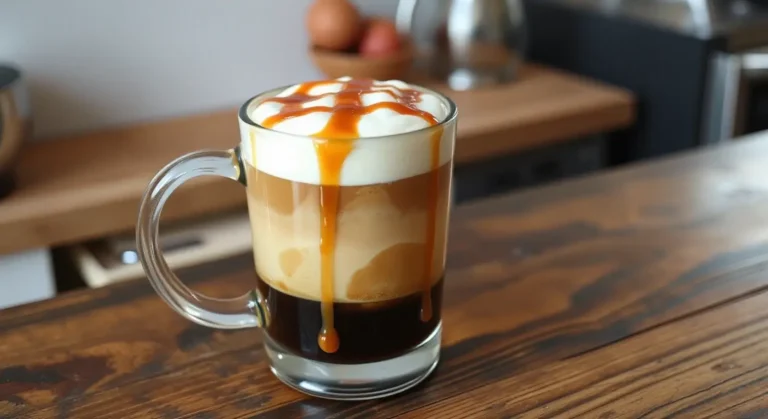

Grab the Café Vibe at Home
There’s an undeniable allure to the layered beauty of a Caramel Macchiato. It’s more than just coffee; it’s an experience marked by distinct sweetness followed by deep Espresso richness, all cushioned by warm Milk. Learning how to make a caramel macchiato is about mastering those layers. This guide will show you how to make a caramel macchiato at home using just three main components and simple equipment. Forget complicated recipes; we are aiming for café-quality flavor using straightforward techniques for your next hot caramel macchiato.
What Is a Caramel Macchiato? The Key Ingredients That Make It Unique
So, what exactly is a Caramel Macchiato? The word “macchiato” is Italian for “stained” or “marked.” Unlike a latte where the espresso is poured in first and mixed with the milk, a true macchiato is traditionally Espresso “marked” with a small dollop of foamed Milk.
However, the popular café version—the one we are aiming for—flips the script a bit for dramatic layering and sweetness distribution. The classic macchiato recipe format we emulate today involves steaming Milk, layering it in the cup, pouring the Espresso over the milk, and finally marking the top with Caramel Syrup and Milk Foam.
What sets this drink apart from, say, a standard latte? It’s the intentional layering and the specific placement of the Caramel Syrup. In many common preparations, the syrup goes in first or is mixed throughout, but for the signature look and taste, the caramel marks the foam. Think of the espresso as the canvas, milk foam as the background brushstroke, and caramel as the final glaze. When you compare various caffè macchiato recipes, you notice this distinction clearly. A traditional espresso macchiato is simply a tiny bit of milk added straight to the espresso to cut the bitterness slightly. Our caramel latte macchiato recipe, though, is built for indulgence.
| Drink Style | Primary Base | Milk Volume | Espresso Placement | Caramel Syrup |
|---|---|---|---|---|
| Espresso Macchiato | Espresso | Minimal foam | On top | Usually none |
| Latte | Milk | High volume, mostly steamed | Bottom | Mixed or dotted |
| Caramel Macchiato | Milk & Foam | Steamed & Foamed | Poured middle/top | Drizzled exclusively on top |
Baristas often joke that the “stain” is the signature move that elevates texture above simple mixing. By keeping the layers distinct, you get that beautiful contrast between the intense coffee flavor and the mellow sweetness, which is why getting your base ingredients right is so important for achieving that authentic copycat Starbucks caramel macchiato flavor profile.
Get the Right Tools and Ingredients for Café-Quality Flavor
To achieve café quality at home, we need to look closely at our equipment and sourcing. You don’t need to empty your bank account, but you do need tools that can handle pressure and temperature correctly. Ideally, you have an Espresso Machine capable of pulling a proper shot. If an espresso machine feels like too much of an initial investment, a sturdy French press can serve as a decent temporary substitute for creating a concentrated coffee base, though the resulting texture will differ.
When choosing your brewing method, consider what you prioritize:
| Feature | Espresso Machine | French Press |
|---|---|---|
| Cost | $300 – $2,500+ (varies by brand, power, accessories) | $30 – $120 |
| Convenience | Requires grinder, tamping, precise tamping pressure; 25–30 s brew; high initial set‑up but quick operation; automation options (auto‑grinder, programmable shots) | Manual steeping: 4‑5 min extraction; requires less equipment but more hands‑on; slower but no need for pressure control |
| Flavor Profile for Macchiato | Produces rich crema, pronounced acidity, and a concentrated body with complex aromatics; ideal for the classic macchiato “stain” of milk on espresso | Delivers a smoother, medium‑bodied espresso‑style brew with less crema; produces a milder, less volatile flavor; best for a relaxed, “spiced” macchiato experience |
If you value speed and that signature crema, stick with the machine. If you prefer a hands‑on, more relaxed brew, the French press works in a pinch.
Next up: ingredients. For the coffee, skip anything labeled medium or light roast if you are chasing that dark, decadent flavor. We want rich, bold dark roast beans ground fine enough for espresso. For the milk, whole Milk provides the best fat content for creating the necessary rich texture. If you are going dairy‑free, oat milk often froths better than almond milk due to its higher fat content.
Finally, the caramel! Don’t skimp here. Store‑bought caramel syrup works, but making your own homemade caramel syrup offers superior depth. If using store‑bought, ensure it’s a sauce consistency, not a thin syrup, so it holds its shape on top. Remember, a high‑temperature thermometer guarantees the caramel syrup reaches the right state if you are making it from scratch, and a milk frother (whether attached or a separate hand frother) is non‑negotiable for the texture we seek. Quick FAQ: Can I use soy milk? Yes, but it often changes the foam density significantly, leaning toward larger bubbles rather than true micro‑foam.
Nail the Espresso Shot: Why the First Sip Matters
The espresso shot is the undisputed anchor of this drink. If this part falters, the sweetness from the caramel and the texture of the milk can’t save it. A strong, balanced shot anchors the caramel’s sweetness and keeps the drink from tasting like sweet milk. This is where precision matters most.
To pull a shot that sings, you need to control four variables:
- Grind: Should be fine—like table salt—but not flour.
- Tamp: Firm and level pressure is needed to create a compact “puck.”
- Temperature: Aim for water heated between 195°F and 205°F. I target 200°F personally.
- Pull Time: The extraction should take approximately 25 to 30 seconds for a standard double shot volume.
I often set up a little workflow before I start, treating it like an assembly line. I grind my coffee beans, tamp, and have my warmed cup ready. Watching the first few ounces drip is mesmerizing; you want a steady, slow stream that looks like warm honey.
For demonstration on timing, watching an expert pull a shot really helps solidify the feel. You can see the impact of pressure and technique here:
Troubleshooting is part of the process. If your shot tastes overwhelmingly bitter and pulls too fast (say, under 20 seconds), your grind is likely too coarse. I usually adjust by reducing the grind size incrementally—by 0.5 mm is a good starting point—and pull again. Getting this right ensures the espresso coffee provides the necessary counterpoint to the sugar.
Milk Mastery: Steaming to the Perfect Temperature and Texture
Once the Espresso is locked in, we turn our attention to the Milk. The goal here is not stiff, airy foam like you might put on a hot chocolate, but velvety, liquid micro‑foam. This smooth texture integrates beautifully with the coffee and syrup, creating that signature mouthfeel.
The Specialty Coffee Association (SCA) recommends steaming milk to 55–65°C (139–149°F) for optimal micro‑foam; 140°F (60°C) lies within this range and is widely cited as the ideal target for baristas. (https://perfectdailygrind.com/2019/02/what-temperature-should-your-cappuccino-milk-be/)
When using a steam wand, the process involves two phases: aeration (stretching) and texturing (incorporating). For the first three seconds, lower the wand just below the surface to introduce air—this is the vapor phase creating initial volume. Next, submerge the tip slightly deeper and angle the pitcher to create a gentle whirlpool. This stirring action breaks down large bubbles into that desirable micro‑foam. Monitor the temperature closely. When you can barely keep your hand on the pitcher, you are nearing the limit. Shut off the steam just before you hit 150°F.
Picture the steam wand just below the surface, like a gentle caress, incorporating air just enough before you start stirring the liquid milk beneath. If the milk gets too hot, the sugar breaks down, and you lose that creamy sweetness. If this happens, let it rest for 30 seconds before pouring to allow some cooling. Good milk frothing is what separates a home attempt from a true café drink.
Caramel Drizzle Technique: The Signature “Stain” That Sets It Apart
This step is pure theater and defines the Caramel Macchiato. We are not mixing the caramel in; we are staining the foam, as the name implies. This technique ensures that the first third of the drink is purely sweet caramel and rich foam, followed by the bold coffee layer.
To execute the perfect caramel drizzle, use a squeeze bottle filled with your warmed caramel syrup (warm syrup flows much better). Hold the bottle about six inches above the surface of your steamed Milk Foam. Pour slowly and deliberately in a tight spiral, moving from the center outward. Resist the urge to keep pouring until the entire surface is covered; we are aiming for a defined circle or crosshatch pattern, leaving some white foam visible for contrast.
Quantifying the sweetness is important for that cafe precision; for an average 12oz cup, I find three teaspoons of syrup per cup generally equals a 1:1 sweet-to-caffeine balance that most people expect. Research examining the impact of caffeine on taste perception suggests that the coffee itself plays a role in how we perceive sweetness. One study found that caffeine may reduce perceived sweet taste, indicating that what we taste isn’t just about the sugar content but the chemical interaction happening on our tongues.
Pro‑tip: Set a small timer for two seconds after your drizzle stops. This brief pause lets the caramel gently settle into the foam without immediately sinking into the milk below. This creates that beautiful, set‑in‑place look.
Layering Order & Presentation Hacks for the Authentic Macchiato Look
The success of the visual presentation relies entirely on the pouring order. If you add the Espresso last, you’ll just get a standard latte look. We need distinct strata.
Here is the correct sequence for layering a hot caramel macchiato:
- Milk First: Pour roughly 80% of your steamed milk into the mug.
- Foam Layer: Gently spoon the remaining thick Milk Foam on top, leaving about one inch of space at the rim. This foam layer is what we will stain.
- The Mark (Espresso): Slowly pour the fresh Espresso shot directly into the center of the foam layer. Because the espresso is warm and dense, it will push down through the foam but settle just above the liquid milk below.
- The Final Drizzle: Apply the Caramel Syrup on top of the espresso/foam intersection, as detailed previously.
Tilt the cup at a 45° angle as you pour the milk initially to encourage a smoother layer break between the liquid milk and the foam on top.
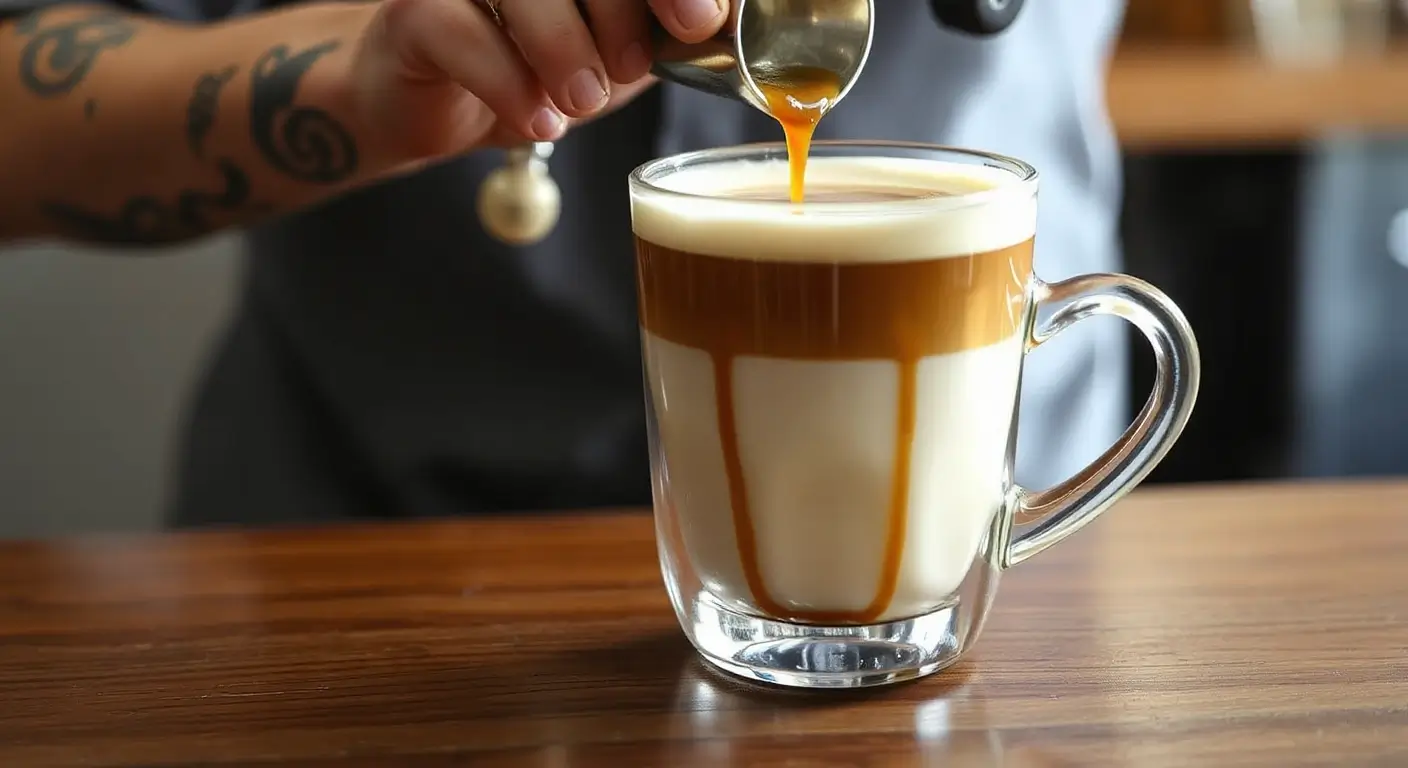
To make it truly Instagram ready, avoid pouring too much syrup that it floods the white foam. A light, controlled caramel swirl is better than a heavy covering. A simple garnish, like a light dusting of cocoa powder over the caramel drizzle, gives instant visual depth and suggests a richer flavor profile even before the first sip.
Fun Variations: Iced, Dairy‑Free, and Extra‑Flavor Editions
Once you master the base hot caramel macchiato recipe, the flavor possibilities open up dramatically. Why stick to hot when the weather heats up, or when you want to experiment with different milk textures?
- Iced Caramel Macchiato: Brew your double Espresso shot, allow it to cool slightly (or use cold brew concentrate in a pinch), and fill a tall glass with ice. Pour your chilled Dairy‑Free Milk (oat milk works wonders for creaminess here) over the ice. Then, gently pour the cooled espresso over the milk. Finish with the drizzle. Don’t worry about perfect foam; the layering is softer in cold drinks.
- Dairy‑Free Caramel Macchiato: Swap whole milk for oat or soy. Oat milk tends to produce a sweeter, frothier top, mimicking dairy quite well. If you use almond milk, you might use a stronger shot of espresso to punch through the lighter milk base.
- Vanilla Caramel Macchiato: For extra depth, add ½ teaspoon of Vanilla Syrup directly into the bottom of your warmed pitcher *before* steaming the milk. This integrates the vanilla perfectly into the steamed milk, providing a softer background sweetness than adding it separately. A pinch of coarse sea salt mixed into your caramel drizzle provides an excellent counterpoint, too!
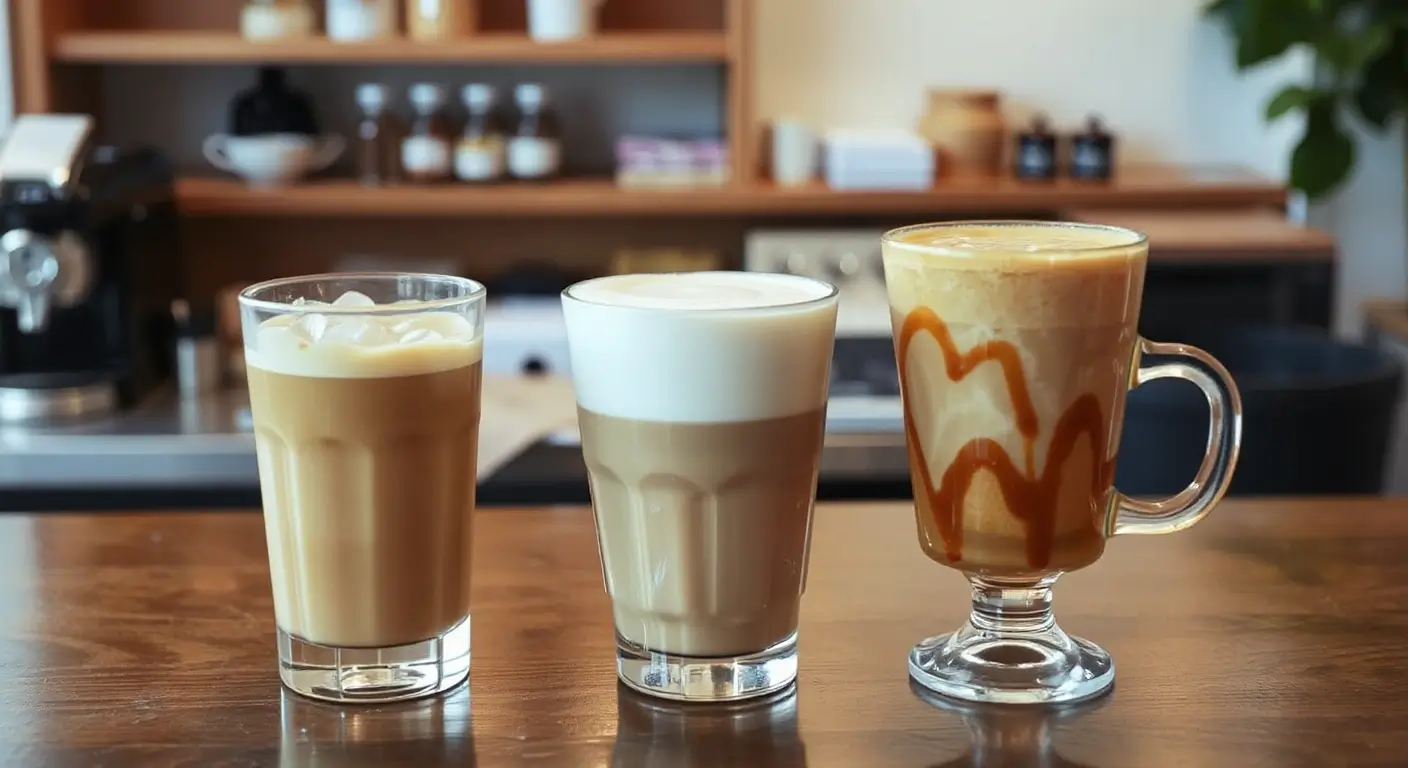
Try all three variations over the next week and report back! I find the vanilla caramel macchiato version cuts through the richness beautifully.
Pro Tips, Common Pitfalls, and Serving Tricks to Wow Your Palate
Making great coffee often comes down to troubleshooting the small hiccups you encounter along the way. Let’s cover a few things that commonly frustrate beginners trying to replicate a homemade caramel macchiato.
- Bitter Espresso Fix: If your shot tastes like burnt toast, you are likely over‑extracting. This almost always means your grind is too fine, or you tamped with too much force, blocking the water flow. Pull the shot 5 seconds shorter next time, or slightly coarsen your grind.
- Milk Won’t Foam: If you get flat, sad milk, check your steam wand position. Are you introducing air too slowly, or are you heating the milk past 160°F? Remember: hotter milk loses its ability to hold foam structure.
- Layering Mishap: If your espresso sinks immediately into the milk layer, your milk might have been too thin (not enough foam) or was not hot enough to create sufficient texture difference.
To elevate your drink presentation, stop serving in plain mugs unless you are just having a quick morning cup. Use clear glass cups or heavy, lowball glasses to show off those beautiful strata you worked so hard to create. Before serving, you can even rim the glass lightly with a little extra caramel dust for a final touch. And don’t be afraid to try simple latte art! You don’t need complex tulips; just pour straight down the center, watch the dot of foam rise, and gently swirl the pitcher for a simple heart shape using the froth. A great macchiato is not just coffee; it’s a small masterpiece.
Your Next Steps: Achieving Café‑Style Perfection
We have successfully broken down the art of the Caramel Macchiato into manageable steps. If you remember the three main components—perfect Espresso, expertly steamed Milk, and the signature surface application of Caramel Syrup—you have everything you need. Don’t be afraid to experiment with the caramel macchiato variations we discussed, particularly the iced version. Try a different syrup, tweak that espresso extraction time, snap a pic, and post it using #MyMacchiatoMagic. Now go brew, savor, and share your café‑style creation!
Frequently Asked Questions About Caramel Macchiatos
Q: What is the difference between a Caramel Macchiato and a Caramel Latte?
A: In a latte, the espresso is poured first or mixed in, and the caramel is often mixed throughout. In a true macchiato format, the steamed milk is poured first, then the espresso is added last (marking the milk), and the caramel is drizzled exclusively on top of the foam.
Q: Can I use drip coffee instead of espresso for my homemade caramel macchiato?
A: You can, but it won’t taste the same. Drip coffee lacks the concentration and crema that gives the macchiato its signature powerful base flavor needed to stand up to the milk and syrup.
Q: What’s the easiest way to get micro‑foam without a professional machine?
A: A dedicated electric milk frother that has a whisking and heating function works very well, or you can use a small immersion hand frother in a pre‑heated glass pitcher filled with warmed milk.
Q: Why does my caramel drizzle disappear immediately?
A: Your milk foam might be too thin, or your caramel syrup might be too runny or too cold. Ensure your foam has enough body, and avoid pouring the drizzle if the syrup is straight from a cold cupboard.
Q: How much caffeine is in a typical Caramel Macchiato?
A: This depends heavily on how many shots you use. A standard two‑shot espresso serving usually contains between 130mg to 180mg of caffeine, similar to a strong cup of brewed coffee.