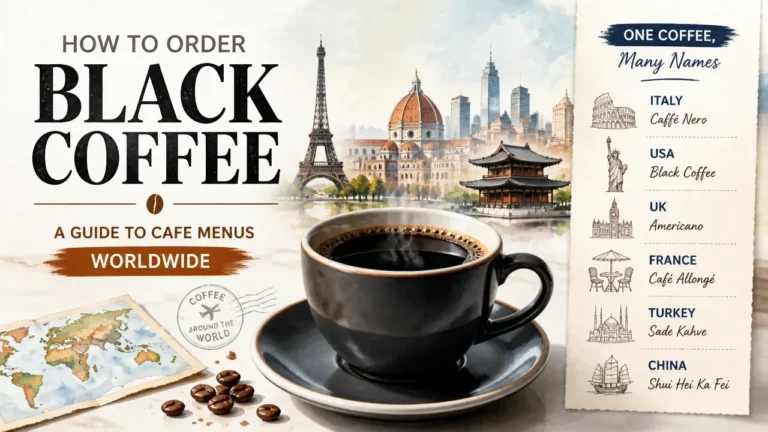

Black coffee sounds simple until you’re standing at a counter in Naples asking for “a coffee” and getting a shot of espresso so intense it rewires your afternoon. The terminology shifts by continent (un caffè in Italy, a long black in Australia, drip coffee in the US), and the gap between what you want and what arrives can be surprisingly wide.
Knowing the language changes everything. Espresso-based and filter-style coffees follow completely different logics, and every country has its own naming conventions, cup sizes, and unspoken rules.
What Black Coffee Actually Means
Black coffee is simply brewed coffee with nothing added (no milk, no cream, no sugar), but that clean definition has a real-world complication: baristas have stopped trusting the phrase. The word “black” technically signals the absence of milk or cream, but it says nothing about sugar, and it definitely doesn’t tell the person behind the counter which of the dozen-plus black coffee drinks you actually want.
Here’s where most people hit the first snag. They say “black coffee” expecting that to close the order, and instead they get a follow-up question (or three). That’s not the barista being difficult. It’s experience. In barista communities, it’s well-documented that customers who order “black coffee” routinely add cream at the condiment bar, ask for whipped cream once they see the cup, or clarify they meant sweetened after the drink is already made. The phrase has been used so inconsistently that it no longer functions as a complete instruction.
So the miscommunication isn’t really about coffee: it’s about an incomplete signal.
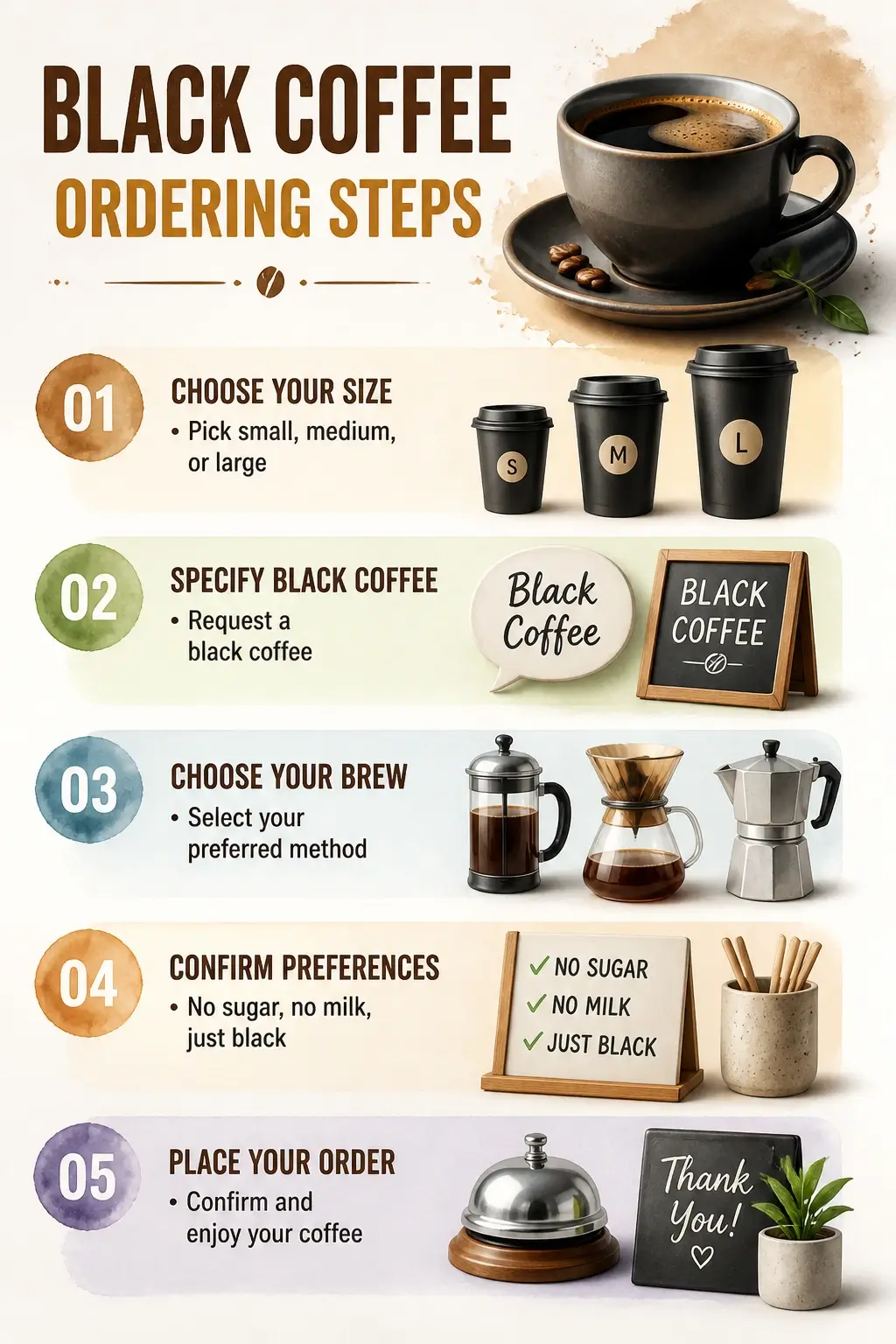
The good news is the fix is simple. A complete black coffee order only needs three things: the drink type (espresso, Americano, drip, etc.), the size, and a “no cream, no sugar” modifier. That’s the whole system. This guide walks you through each piece in order, starting with the drink types themselves: because “black coffee” is actually a family of very different drinks, not a single thing.
Step 1: Know Your Base: Espresso vs. Filter Coffee
Black coffee categories split cleanly into two families: espresso-based drinks built from a concentrated shot, and filter-style drinks brewed by running water through grounds. Once you can tell those two apart, any café menu stops being a wall of unfamiliar words and starts being a simple choice between two branches.
The difference isn’t just technique. It’s the whole experience: strength, speed, price, and what ends up in your cup.
Espresso-Based Black Coffee: Americano, Long Black, Straight Shot
Espresso-based black coffee starts with a single origin point, a concentrated shot pulled under high pressure in about 25 seconds, and then branches into different drinks depending on how much water you add and when.
Here’s how the three main options break down:
- Espresso: No water added. A small, intense shot served in a demitasse cup. It’s thick, syrupy, and topped with crema (that thin layer of reddish-brown foam that forms when pressurized water hits finely ground coffee). Ordering “just an espresso” is a complete, legitimate black coffee order.
- Americano: Hot water is added after the espresso shot. The result is closer in volume and strength to a regular cup of coffee, but the flavor is richer and more complex than drip. The crema gets diluted and largely disappears.
- Long black: The Australian version flips the order: hot water goes in the cup first, then the espresso is poured over it. That reversal matters. It preserves the crema layer on top and keeps the flavor more concentrated. If you’ve had both, you’ll taste the difference immediately.
Australian and US Black Coffee Terms
Australian and US coffee terms solve the same problem (ordering a plain black drink), but they come from completely different brewing traditions, so the names don’t overlap.
In Australia, the phrase you want is “long black.” That’s a double espresso poured over hot water, served in a medium-sized cup with the crema intact on top. It’s stronger and richer than a typical American Americano because the espresso goes in after the water, preserving more of the surface layer. If you want a straight single espresso instead, ask for a “short black.” In most Australian cafés, long black is the default black coffee: it’s what the menu assumes you mean when you want something without milk.
In the United States, the most common black coffee is “drip coffee”, batch-brewed in large volumes and served in a standard mug or paper cup. Ordering it is as simple as saying “coffee, black” or “drip coffee, black.” If you’re at an espresso bar or want something stronger, order an “Americano”: espresso and hot water, same concept as the Australian long black but typically with less crema and a slightly milder result. Either way, “black” does the modifier work: just say it clearly and you won’t get cream or sugar.
Step 3: Order the Right Coffee Cup Size
Coffee cup sizes should be the easiest part of ordering black coffee, but the vocabulary trap here is real: and it’s not just about confusion, it’s about signaling whether you belong in the room.
Here’s the rule that makes this simple: at independent coffee shops, use “small,” “medium,” and “large.” Every barista on earth understands those words. You won’t get a blank stare, you won’t get it wrong, and you’ll sound like someone who’s been doing this for years.
When Starbucks Size Names Actually Help
At Starbucks specifically, the chain’s internal size system is the language the staff is trained on. Tall gets you 12 oz hot, Grande is 16 oz, and Venti runs 20 oz for hot drinks or 24 oz for cold. Using those names there is just efficiency: it moves the line along and tells the barista you know the menu.
But the moment you walk into an independent specialty shop and ask for a “grande,” you’ve crossed a wire. At best, the barista will translate silently and move on. At worst, you’ve signaled that you think all coffee shops are the same (which, in specialty coffee culture, lands about as well as asking a sushi chef for the soy sauce packets).
Liz Dean at Irving Farm Coffee Roasters illustrates how independent shops build their own sizing logic entirely outside the chain model:
“We still have 16 ounce cups for hot, and also 20 for iced.”
That’s the thing: independent shops don’t need Starbucks vocabulary because they’ve already built their own system. A 16 oz hot and a 20 oz iced aren’t “Grande” and “Venti.” They’re just the sizes Irving Farm decided made sense for their drinks and their customers.
The One Question That Solves Everything
The script removes all ambiguity before they open their mouth:
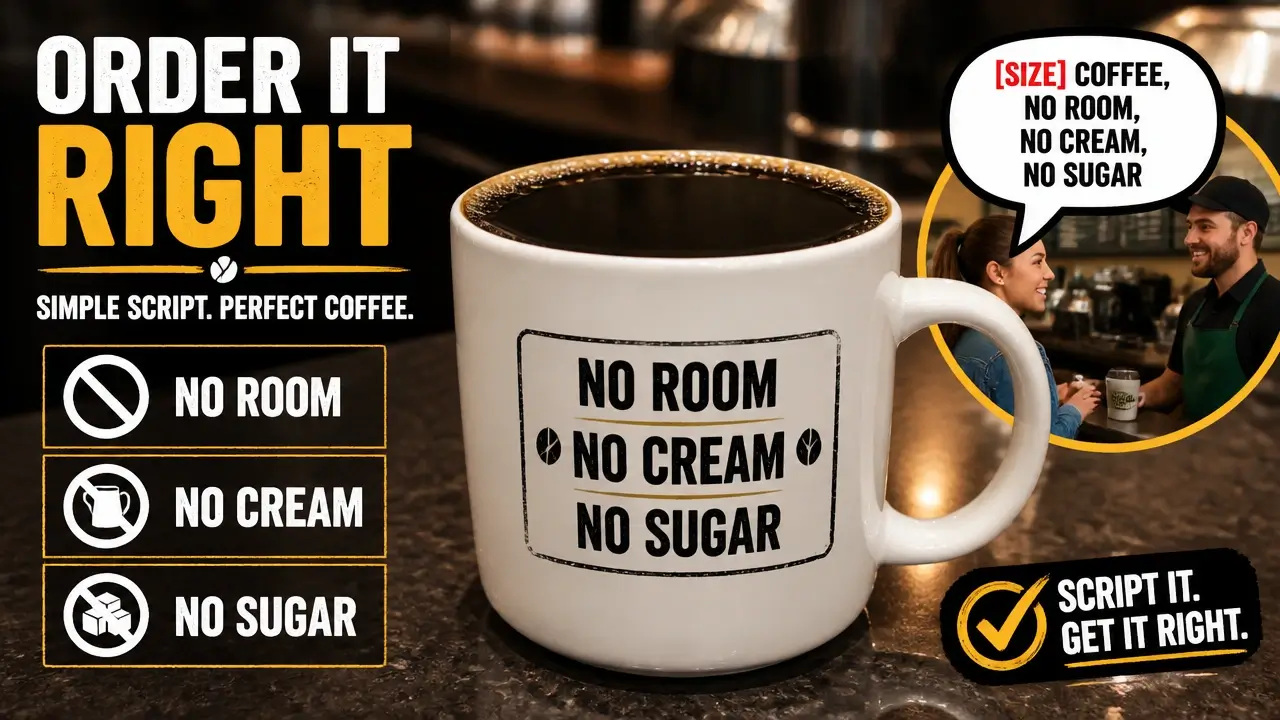
“[Size] coffee, no room, no cream, no sugar.”
Say it like this: “Medium drip coffee, no room, no cream, no sugar.”
Why “No Room” Is the Real Key
“No room” is the phrase doing the heaviest lifting here. It tells the barista to fill your cup all the way to the top: no space left over for you to pour in milk later. That one phrase is what kills the “room for cream?” question before it can leave their lips. Without it, even a perfectly stated “black coffee” still leaves that door open.
The full sequence (size, “no room,” no cream, no sugar) sends three separate signals at once. Chain-store regulars on ordering forums consistently point to “Tall coffee, no room, no cream, no sugar” as the most reliable one-and-done sentence at places like Starbucks. It’s not redundant. Each piece closes off a different follow-up question.
For iced coffee, the script shifts slightly (and we’ll get into why in the next section) but the base phrase stays close: “Iced coffee, unsweetened, no room, no cream.”
One thing worth keeping in mind: this script is for your order, not a statement about anyone else’s. Eric Squires at Perfect Daily Grind puts it plainly:
“Telling people they don’t need to add cream and sugar to their coffee just makes you look like a pretentious, condescending jerk, no matter how you say it. It implies your customer is wrong when they may have been enjoying their coffee that way for years.”
The script works because it’s efficient and clear: not because black coffee is superior. Say it confidently, say it once, and let the barista get to work.
Step 5: Ordering Iced Black Coffee Right
Iced black coffee has one trap that the hot-coffee script doesn’t protect you from: pre-sweetened syrup. At Starbucks and many other chains, the standard iced coffee comes with classic syrup already stirred in: it’s the default, not an add-on. So if you walk up and order “medium iced coffee, no cream,” you’ll still get a sweet drink.
The fix is one word: unsweetened.
Your complete iced order looks like this:
“Medium iced coffee, unsweetened, no room, no cream.”
That’s it. “Unsweetened” does the heavy lifting: it signals to the barista that you want zero syrup, not just no milk. The rest of the script stays exactly the same as your hot-coffee order.
Here’s the thing about that word, though. Even at shops where iced coffee is technically sugar-free by default, saying “unsweetened” costs you nothing and guarantees nothing gets lost in translation. Recipes shift by location, seasonal batches sometimes come pre-sweetened, and a new barista might not know the house standard. One extra word removes all of that ambiguity before the drink is made.
For iced Americano and cold brew, the same rule applies. Iced Americano (espresso pulled over cold water) is naturally unsweetened, but some cafes offer it pre-sweetened as a menu variation. Cold brew is the same story. Just say “unsweetened, black” and you’re covered either way.
If the barista asks “classic syrup?” (which is Starbucks-speak for their standard liquid sugar) the answer is simple:
“No classic, black please.”
Short, friendly, done.
Step 6: Fine-Tuning Your Black Coffee Order
Basic ordering black coffee is solved. Now the fun part starts: coffee customization options that let you dial in exactly what lands in your cup, without adding a single drop of milk or sugar.
Three levers matter here: roast, temperature, and strength. Each one is a one-phrase add-on to the scripts you already have.
Roast: Light vs. Dark
Light roast coffee tastes brighter (fruity, slightly acidic, almost tea-like in a good way). Dark roast goes the other direction: bolder, smokier, with that bitter edge most people picture when they think “black coffee.” Neither is better. They’re just different instruments.
At a specialty café, the menu usually lists what’s in the hopper. At a regular diner or chain, it’s worth a quick “What roast are you brewing today?”: a small question that signals you know what you’re doing. At Starbucks specifically, you can name it directly: “Grande Blonde roast, black, please.” Blonde is their light roast. You get a sweeter, less bitter cup without touching the cream or sugar, and the order sounds like you’ve been doing this for years.
Temperature: Don’t Burn Your Tongue
The default pour is hot enough to strip paint. If you want to drink it immediately, ask for “warm” or (this is a real thing baristas hear) “kid’s temperature.” No judgment. If you want it hotter than standard, “extra hot” tells them to push the brew or steam temperature up. Simple, one-word adjustment.
Extra Shot: More Body, More Caffeine
An extra shot on an espresso-based drink (Americano, long black) deepens the body and bumps the caffeine without changing the drink’s character. Some drip-focused cafés will pull a shot and add it to your filter coffee too, so it’s always worth asking.
Put it all together and your full script sounds like this:
“Medium drip coffee, no room, no cream, no sugar — extra hot, please.”
Or at Starbucks:
“Grande Americano, no room, black, with an extra shot.”
That’s a complete, confident order. Every variable is locked in. The barista has nothing left to ask: but if they do anyway, the next section handles exactly that.
Troubleshooting When the Barista Still Asks
Reliable order recovery phrases handle every follow-up question a barista can throw at you: and they do it without awkwardness, explanation, or holding up the line. The system you’ve built through this guide covers the order itself. These phrases cover the cleanup.
Here’s how each scenario plays out.
“Room for cream?”: Even after you’ve said “no room,” this one shows up because baristas run on muscle memory. The explicit reply that works every time: “No, I don’t need any space for cream.” It’s not a correction: it’s a clarification. Full sentence, zero ambiguity.
“Any sugar?”: “No sugar, thanks. Black is perfect.” That last word does quiet work. It signals you’re not undecided; you’re done.
You get handed a cup with cream or milk in it: Don’t drink it and don’t stew. Just say, “Sorry, I asked for this black: could you please remake it with no milk?” Most baristas fix it on the spot, no drama. A remake request stated calmly is never a big deal from their side of the counter.
They ask “What size?” because you forgot: “Medium, please,” then continue the rest of your script. Size is just one variable. Dropping it doesn’t break the order.
The follow-up question isn’t a sign your order failed. It’s a sign the barista is on autopilot (which happens dozens of times a shift). Maggie Gulasey at Black Black Coffee puts it well:
“[We] state ‘no’ really nicely and don’t make customers feel dumb for wanting cream or sugar or asking for that.”
That’s the right frame for both sides of the counter. When you come in calm and direct, the interaction stays easy, and with the recovery phrases in your pocket, no follow-up question can catch you off guard.
Orders are short routines. Baristas aren’t grading you. You now have the full system: the drink name, the size, the no-room-no-cream-no-sugar script, and the quiet one-liners to close any loop that stays open. Walk up, say your order, and walk out with exactly what you wanted.
Key Takeaways on Ordering Black Coffee
- Saying ‘black coffee’ isn’t a complete order — baristas have learned it’s an unreliable signal that needs follow-up questions.
- The three-word script ‘no room, no cream, no sugar’ pre-emptively answers every question the barista was about to ask.
- At independent shops, use ‘small, medium, large’ — Starbucks sizing vocabulary signals you don’t know where you are.
- Iced coffee at chains often comes pre-sweetened by default, so ‘unsweetened’ is the word that actually keeps it black.
- A remake request stated calmly is never a big deal — baristas fix it on the spot, no drama.
Frequently Asked Questions About Ordering Black Coffee
Q: Why do baristas keep asking follow-up questions when I say ‘black coffee’?
A: It’s pattern recognition, not rudeness. Baristas have seen too many customers say ‘black’ then ask for cream, sugar, or whipped cream once the drink is made. The phrase has been used so inconsistently that it no longer functions as a complete instruction on its own.
Q: What’s the actual difference between an Americano and a long black?
A: The water order changes everything. An Americano pours hot water over the espresso, diluting the crema. A long black pours espresso over hot water, preserving that reddish-brown foam layer on top. The long black tastes richer and more concentrated as a result.
Q: Does ‘black coffee’ mean no sugar either, or just no milk?
A: Technically, ‘black’ only signals no milk or cream — it says nothing about sugar. That’s exactly why the full script includes ‘no sugar’ as a separate piece. Leaving it out leaves the door open for the barista to add sweetener or ask the question.
Q: Why does iced coffee sometimes taste sweet even when I order it black?
A: At Starbucks and many chains, classic syrup is the default in standard iced coffee — it’s pre-sweetened unless you say otherwise. Cold brew and iced Americanos are usually unsweetened by default, but saying ‘unsweetened’ anyway costs nothing and guarantees no syrup ends up in your cup.
Q: What do I say if the barista hands me a cup with milk in it?
A: Don’t drink it and don’t stew. Just say, ‘Sorry, I asked for this black — could you please remake it with no milk?’ Most baristas fix it on the spot without drama. A remake request stated calmly is never a big deal from their side of the counter.
Q: Is it pretentious to order black coffee with specific instructions?
A: No, clarity isn’t pretension. The script works because it’s efficient and clear — not because black coffee is superior. What’s pretentious is telling other people how to drink theirs. State your order confidently, say it once, and let the barista get to work.
Q: Can I ask for a specific roast when ordering black coffee at a regular café?
A: Yes, and it’s a small move that signals you know what you’re doing. At a diner or chain, ask ‘What roast are you brewing today?’ At Starbucks, name it directly: ‘Grande Blonde roast, black, please.’ You get a sweeter, less bitter cup without touching cream or sugar.
References
- Sizing Up Your Coffee – Barista Magazine
- Perfect Daily Grind – Perfect Daily Grind
- Sprudge – Sprudge