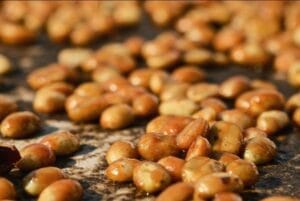

Precisely controlled carbonic maceration coffee sits at the intersection of food science, winemaking tradition, and specialty coffee ambition – a process where sealed tanks, CO₂ pressure, and whole cherry integrity determine whether a cup tastes like mango sorbet or a failed experiment. The technique entered mainstream specialty coffee through Saša Šestić’s 2015 World Barista Championship performance and has since reshaped how producers, roasters, and competition judges think about fermentation as a flavor tool.
What most guides skip is the full picture: the unverified intracellular science, the roasting adjustments the higher residual sugars demand, and the food safety blind spots that sealed anaerobic vessels quietly introduce. Understanding all of it – not just the flavor promise – is what separates informed producers from those chasing a trend.
Before diving into advanced methods, it helps to compare anaerobic vs traditional processing to understand how altering the core fermentation environment alters cup clarity and sugar retention.
To fully master these flavor profiles, roasters must understand how heat and fermentation in anaerobic roasting work in tandem to develop the green bean.
Beyond farm-level processing science and flavor development, commercializing these exotic lots requires a careful look at market trends and ROI to ensure long-term profitability for specialty roasters.
Choosing the right vessel is critical for maintaining this pressure, with different processing tanks compared across various budgets to help producers optimize their anaerobic workflow.
For roasters looking to maximize these unique flavor profiles, exploring the best coffee varieties ranked provides essential insight into which beans respond best to sealed-tank processing.
For a broader look at oxygen-deprived fermentation methods and their unique production variables, be sure to consult this anaerobic coffee processing guide.
While the flavor profiles are undeniably alluring, producers must carefully navigate various fermentation risks and defects to ensure safety and cup quality.
For a deeper dive into these techniques, explore the complete producer protocol and science required to execute this fermentation method successfully.
The Evolution and Science of Carbonic Maceration
Carbonic maceration coffee did not emerge from a laboratory – it was borrowed from a French wine region and reengineered for a cherry. The process places whole, intact coffee cherries inside a sealable tank, which is then flushed with carbon dioxide to displace oxygen and create a pressurized anaerobic environment. That single structural decision – keeping the cherry whole and removing oxygen – is what separates CM from every other fermentation method in the specialty coffee toolkit.
The historical anchor is well-documented. Saša Šestić, the 2015 World Barista Champion, introduced the technique to a global audience when he used a CM-processed Colombian coffee to win the championship. His framing was precise and worth preserving:
“Camilo and I started collaborating on a new technique for processing, not to create new flavours but to better express what was already there and make it more distinct.”
That distinction matters. CM is not a flavor additive – it is a precision environment designed to amplify what the origin already offers.
The Fermentation Mechanism
Fermentation in coffee is the breakdown of sugars by microorganisms, and the presence or absence of oxygen fundamentally redirects which metabolic pathways dominate. In conventional aerobic environments, bacteria and yeasts metabolize sugars quickly and broadly. Remove oxygen, and the microbial community shifts toward pathways that generate more complex flavor precursors – organic acids, esters, and alcohols that translate into the fruit-forward, high-clarity cup profiles CM is known for.
CM is a specific subtype of anaerobic fermentation, not a synonym for it. What distinguishes it is the combination of two conditions: whole cherries (the fruit skin remains intact throughout fermentation) and active CO₂ purging to create positive pressure inside the tank. Classic anaerobic methods may use depulped fruit, nitrogen gas, or simply sealed tanks with no active gas introduction. The CO₂ flushing in CM is not incidental – it is the defining variable.
The Intracellular Pathway Hypothesis
Here is where the science becomes genuinely interesting, and genuinely uncertain. In Beaujolais winemaking, whole-grape carbonic maceration is understood to trigger intracellular fermentation – enzymatic reactions occurring inside the fruit cells themselves, driven by CO₂ pressure, before any microbial activity in the surrounding liquid begins. The hypothesis applied to coffee is that a similar pathway may activate inside the coffee cherry cells, producing flavor compounds through an enzymatic route that standard anaerobic fermentation never reaches.
This is a conceptual transfer from wine science, not an established coffee-specific finding. No peer-reviewed study has yet confirmed intracellular fermentation pathways in coffee cherries under CO₂ pressure. It remains a productive lens for future research, not a proven mechanism – and the more rigorous guides in the specialty coffee space should say so plainly. Similarly, a circulating claim that CM slows fermentation “by up to 300%” lacks any published methodological basis and has not been replicated across independent sources. Quantitative kinetic data on CM remains sparse, which means producers should treat process parameters as guidelines requiring local calibration, not universal constants.
Mastering the Carbonic Maceration Process
The standard CM workflow begins at harvest. Only ripe, intact cherries qualify – any cracked or damaged fruit compromises the anaerobic seal the moment it enters the tank and creates a localized oxygen pocket where spoilage microorganisms can establish themselves. This is not a minor quality note; it is a structural prerequisite.
Once sorted, cherries go into the sealable tank, CO₂ is introduced to purge residual oxygen, and the tank is pressurized. From that point, four variables govern everything that happens to the coffee’s flavor potential: temperature, fermentation duration, CO₂ pressure, and cherry integrity.
Saša Šestić has articulated the temperature logic with unusual clarity:
“If we wish to have a complex acidity, we should ferment at a lower temperature, 4–8°C. For more sweetness, use a higher temperature, 18–20°C.”
That range – roughly 4–8°C for brighter, more structured acidity and 18–20°C for rounder sweetness – gives producers a practical dial. The mechanism behind it is straightforward: lower temperatures slow microbial metabolism, extending fermentation and allowing acid-producing bacteria more time to generate lactic and malic acid compounds. Higher temperatures accelerate yeast activity and favor sugar conversion pathways that express as sweetness in the cup.
Duration, Pressure, and What Goes Wrong
Fermentation duration typically runs between 48 and 72 hours, though this varies significantly with altitude, ambient temperature, cherry density, and the specific microbial population present. The range is a starting point, not a recipe. Over-fermentation – pushing beyond the point where the sugar and acid balance is optimal – tends to produce winey, boozy, or acetic notes. These can be intentional stylistic choices, but when they appear unexpectedly, they signal that the fermentation ran past its optimal window.
CO₂ pressure serves a dual function: it excludes oxygen and it suppresses certain microbial populations that require even trace amounts of O₂ to thrive. Maintaining consistent pressure throughout the fermentation period requires monitoring, because the cherries themselves generate additional CO₂ as fermentation proceeds – meaning pressure inside a sealed tank will rise over time without intervention.
After fermentation ends, cherries are dried and milled. This is a point of taxonomy that causes persistent confusion in the industry: CM describes only the fermentation step, not the full processing method. A coffee can be a natural CM (dried with the fruit intact), a honey CM (pulped after fermentation, dried with mucilage remaining), or a washed CM (fully washed after fermentation). Each produces a meaningfully different cup, and accurate labeling requires stating both. For producers who want to go deeper on execution, a detailed step-by-step processing guide covers the full workflow from tank setup to drying bed management. Understanding the roasting implications that follow depends on knowing which base process was used – which is why exploring roasting CM coffee strategies in conjunction with the processing decisions makes practical sense for anyone building a CM program.
Roasting Carbonic Maceration: How Heat Transforms the Bean
CM beans arrive at the roastery carrying a specific liability: elevated residual sugar content. The mucilage-intensive fermentation environment means more soluble sugars remain in the bean structure after drying, and those sugars respond to heat faster than a conventional washed lot would. Apply a standard high-heat charge profile, and the surface of the bean scorches before the interior has developed – producing bitterness and astringency that erase the very complexity the CM process was designed to build.
The corrective logic follows directly. Roasters working with CM coffees consistently find that lower charge temperatures, slower drum speeds, and extended development time give the bean’s sugar content time to caramelize gradually rather than combust. Airflow management becomes correspondingly more important: CM beans may carry slightly different moisture levels or density characteristics depending on the base process and drying conditions, which means each new lot warrants an individual assessment rather than a template profile.
The flavor objective in the roastery is preservation, not transformation. The goal is to protect the high-definition tropical fruit aromatics and lactic acidity that the fermentation step generated, delivering them to the cup intact rather than flattening them into generic roast character.
Sam Corra, Head of Coffee at ONA Coffee and a former Australian Barista Champion, has worked extensively with experimentally processed coffees and offers a roasting insight that applies directly to CM:
“Modern techniques allow for more expressive flavours and aromas for all coffee origins. But with the complexity gained we also have found an introduction of boozy, savoury, or umami-driven flavour compounds that need to be managed in the roasting process. To avoid this, we make preventive adjustments to the heat at a far earlier stage in the roast, near first crack… For experimental beans, first crack comes at a much later temperature than standard processed coffees, often about 2 to 3°C later. What works for me is radiation, rather than conduction or convection. I think it allows much better control for the bean when absorbing heat.”
That shift toward radiant heat transfer – rather than conductive or convective heat – reflects a broader principle: CM beans need gentler, more diffuse energy input precisely because their sugar load makes them more reactive. The 2–3°C delay in first crack temperature that Corra notes is a reliable early indicator that a CM lot is behaving differently from a standard processed coffee, and it should prompt roasters to ease heat application before the crack arrives rather than reacting afterward.
For anyone building roast profiles from scratch, the science of intracellular fermentation explains why CM beans carry the structural characteristics they do – and that mechanistic understanding translates directly into more confident roast curve decisions. A thorough comparison between CM and anaerobic fermentation also helps roasters calibrate expectations when switching between lot types from the same origin.
CM vs. Anaerobic and Other Processing Methods
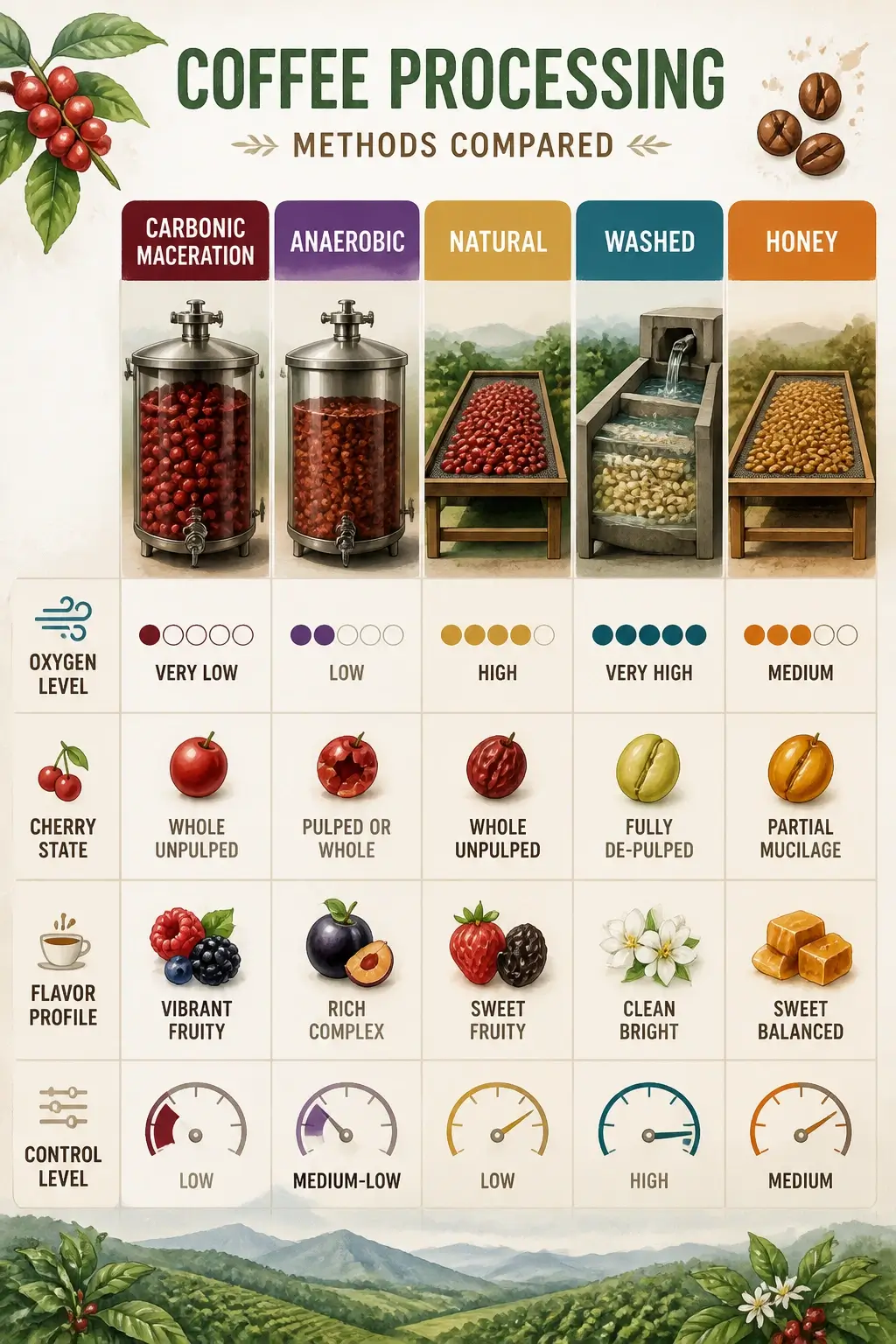
Anaerobic fermentation in coffee means fermentation in the absence of oxygen – but that definition covers a wide range of practices, and conflating them produces real confusion at the roastery and the retail shelf. CM sits within the anaerobic family, but its boundaries are specific: whole cherries, active CO₂ flushing, and oxygen exclusion to the point of positive pressure. Classic anaerobic methods may use depulped fruit, sealed tanks with no active gas introduction, or nitrogen rather than CO₂. The gas type, the cherry state, and the pressure level all influence the microbial populations that dominate fermentation and, by extension, the flavor compounds that develop.
The flavor differences across methods are consistent enough to generalize, though every origin and microclimate introduces variation:
| Processing Method | Typical Flavor Profile | Oxygen Environment | Cherry State |
|---|---|---|---|
| Carbonic Maceration | Tropical fruit, lactic acidity, syrupy body | Sealed, CO₂-pressurized | Whole cherry |
| Anaerobic Fermentation | Wilder ferment, stone fruit, funky complexity | Sealed, variable gas | Whole or depulped |
| Natural / Dry Process | Heavy berry, chocolate, ferment-forward | Aerobic (open drying) | Whole cherry |
| Honey Process | Balanced fruit and sweetness, medium body | Semi-aerobic | Depulped, mucilage intact |
| Washed / Wet Process | Clean, classical, origin-transparent | Aerobic | Depulped, mucilage removed |
The more consequential issue is terminological. Taya Brown, Ph.D., writing in Barista Magazine, has put the problem precisely: “Carbonic maceration is just one step – it should not be a standalone label for a coffee.” When roasters list only “carbonic maceration” on a bag without disclosing the base process, they are describing a fermentation environment, not a complete processing method. The downstream consequence is that consumers cannot predict what they are buying, and the premium the method commands begins to erode through unmet expectations. A practical step-by-step processing guide can help producers understand where CM fits within the larger processing decision tree and how to communicate it accurately.
Here is a visual summary of how CM compares across the processing landscape:
For a more complete picture of how CM and anaerobic fermentation diverge in practice, the comparison between CM and anaerobic fermentation breaks down the distinctions in detail.
The Hidden Risks: Safety, Spoilage, and Production Challenges
The specialty coffee conversation around carbonic maceration concentrates heavily on flavor potential and almost entirely ignores what can go wrong. That imbalance is a practical problem for producers making capital investments in sealed fermentation infrastructure and for roasters staking their reputation on CM lots. The risks fall into two distinct categories: production and mechanical failures that erode quality, and food safety hazards that the industry has not yet confronted directly. For a full account of how CM came to carry these risks – and why the wine-to-coffee transfer introduced them – the history of carbonic maceration coffee provides essential context.
Production Pitfalls and Mechanical Hazards in Carbonic Maceration
Mass loss during drying is the first economic reality producers encounter. CM cherries, having undergone a prolonged anaerobic fermentation, often show higher moisture retention and cellular degradation than conventionally processed fruit, which translates to greater weight reduction between wet and dry stages. For small-scale producers operating on tight margins, this loss compounds the already elevated cost of sealed tank infrastructure and CO₂ supply.
Batch inconsistency is the second persistent challenge. Fermentation variability – driven by differences in cherry ripeness distribution, microbial population density, ambient temperature fluctuations, and tank-to-tank CO₂ concentration – means that two batches produced under nominally identical parameters can yield meaningfully different cup profiles. This is not a failure of the method; it is an inherent characteristic of biological fermentation. But it demands rigorous sensory monitoring at every stage, and it means that producers cannot simply replicate a successful profile by repeating the same numbers.
Off-flavors from over-fermentation represent the most common quality failure. Winey, boozy, and acetic notes signal that fermentation extended past the point where the acid-sugar balance was optimal, either because duration ran too long or because temperature spiked unexpectedly. These notes are sometimes marketed as intentional complexity, but they are more often indicators of imprecise process control.
The mechanical hazard of sealed CO₂ tanks deserves more attention than it receives. Fermentation is not a static process – the cherries generate additional CO₂ as microbial activity proceeds, and in a sealed tank, that gas accumulates. Without properly rated pressure relief valves and regular pressure monitoring, tanks can rupture. This is not a theoretical concern; it is a physical safety risk for any producer working with sealed fermentation vessels, particularly at small-scale operations where purpose-built fermentation equipment may be substituted with improvised alternatives.
Food Safety Risks: Spoilage Contamination and the Botulism Threat
Any anaerobic vessel containing organic matter and moisture is a potential environment for spoilage microorganisms if sanitation protocols are inadequate. Residual organic material from previous batches, insufficient tank cleaning between ferments, or contaminated water sources can introduce bacterial populations that compete with desirable fermentation microbes and generate off-compounds – or worse, establish themselves across multiple batches as persistent contamination.
But the most critical danger is one that virtually no popular guide or industry resource currently addresses: the theoretical risk of Clostridium botulinum growth in a sealed, low-oxygen, low-acid fermentation environment. C. botulinum is the bacterium responsible for botulism toxin – one of the most acutely toxic biological substances known. Its spores are widespread in soil and organic matter, including coffee growing environments. Under the right conditions, those spores germinate and produce toxin.
The conditions that matter are precisely the ones CM creates: low oxygen, moderate moisture, and pH levels typically between 5.0 and 6.0. The critical threshold for C. botulinum toxin production risk is pH below 4.6 – above that level, in a low-oxygen environment, spore germination becomes plausible. Coffee cherries in early fermentation commonly sit above this pH threshold before sufficient acidification occurs.
A peer-reviewed study published in the Journal of Food Protection investigated C. botulinum growth under controlled oxygen concentrations and found that spore germination and outgrowth occurred in atmospheres with as little as 0.005% to 0.7% oxygen – and that toxin was absent only at 0.9% oxygen. The implication for sealed anaerobic fermentation tanks is direct: CO₂ flushing alone, which targets oxygen displacement rather than precise oxygen concentration, cannot be assumed to create a reliable safety barrier against C. botulinum outgrowth, particularly in the early hours of fermentation before the microbial community has acidified the environment sufficiently.
This is not a claim that CM coffee routinely produces botulism risk. It is a claim that the conditions are theoretically permissive, that the risk has not been studied in a coffee-specific context, and that producers currently have no industry guidance addressing it. The responsible mitigation posture includes: continuous pH monitoring throughout fermentation, protocols that ensure rapid acidification in the early fermentation window, rigorous tank sanitation between batches, and a clear understanding that CO₂ pressure is a flavor and fermentation control tool – not a food safety barrier.
A secondary hazard in failed fermentations is mycotoxin accumulation. Certain mold species that colonize damaged or poorly dried coffee cherries produce mycotoxins – fungal metabolites with chronic health implications. While mycotoxin risk is more commonly associated with poor drying conditions than with fermentation itself, a failed CM batch that produces excessive moisture retention or harbors damaged cherries creates a pathway for mold establishment during the subsequent drying stage. Proper risk management and quality control in CM requires treating both the fermentation and drying stages as integrated food safety control points, not independent quality concerns.
The Business of CM: Market Value, Branding, and Labeling
Carbonic maceration coffee commands a premium across the supply chain, and that premium is not arbitrary – it reflects genuine production complexity, infrastructure investment, and the competitive differentiation that a well-executed CM lot delivers. Understanding where that value comes from, and where it can collapse, is essential for any roaster or producer building a CM-centered commercial strategy.
Market Value and Branding Advantages of Carbonic Maceration Coffee
At the green coffee level, CM lots consistently price above conventionally processed coffees from the same origin. The additional infrastructure – sealed tanks, CO₂ supply, pressure monitoring equipment, extended fermentation management – justifies a portion of that premium at the farm level. At the roaster level, the premium persists because CM coffees occupy a distinct position in the specialty market: they are associated with competition culture, technical sophistication, and flavor intensity that casual consumers increasingly seek.
CM’s presence in World Barista Championship and World Brewers Cup competitions has functioned as a sustained endorsement mechanism. When a competition winner uses a CM-processed coffee, the method gains credibility and visibility simultaneously, and roasters who stock CM lots benefit from that association. As one industry perspective frames it plainly: for roasters, CM is often an effective way of promoting their brand and setting themselves apart from competitors.
That branding advantage is real, but it is conditional. Premium pricing depends entirely on perceived quality and transparency. A CM lot with poor process control – boozy, acetic, or muddy in the cup – does not just underperform; it actively damages the roaster’s reputation among the specialty consumers who paid the premium expecting the profile the label promised. The margin between a successful CM program and a costly one is process discipline and honest communication.
Labeling Transparency and the Consumer Information Void
The label “carbonic maceration” on a retail bag tells a consumer almost nothing useful. It identifies a fermentation environment but omits the base processing method, the fermentation duration, the drying approach, and any flavor implication. A natural CM and a washed CM from the same farm and the same harvest can taste like entirely different coffees – and a consumer holding a bag labeled only “carbonic maceration” has no way to know which they are buying.
Taya Brown, Ph.D., writing in Barista Magazine, advocates for a labeling standard that reflects the full process: something closer to “a natural coffee fermented in an anaerobic environment for X hours” rather than a standalone buzzword. This is not pedantry – it is the difference between a label that builds trust and one that invites disappointment.
The consumer information void this creates has a commercial consequence. When enthusiasts repeatedly encounter CM coffees that do not match their expectations – because the base process was never disclosed and the flavor profile was therefore unpredictable – the premium the method commands begins to erode. Roasters who lead on transparency, disclosing base process, fermentation duration, and expected cup profile, are not just acting with integrity; they are protecting the long-term market value of a method that their competitors may be quietly undermining through vague labeling.
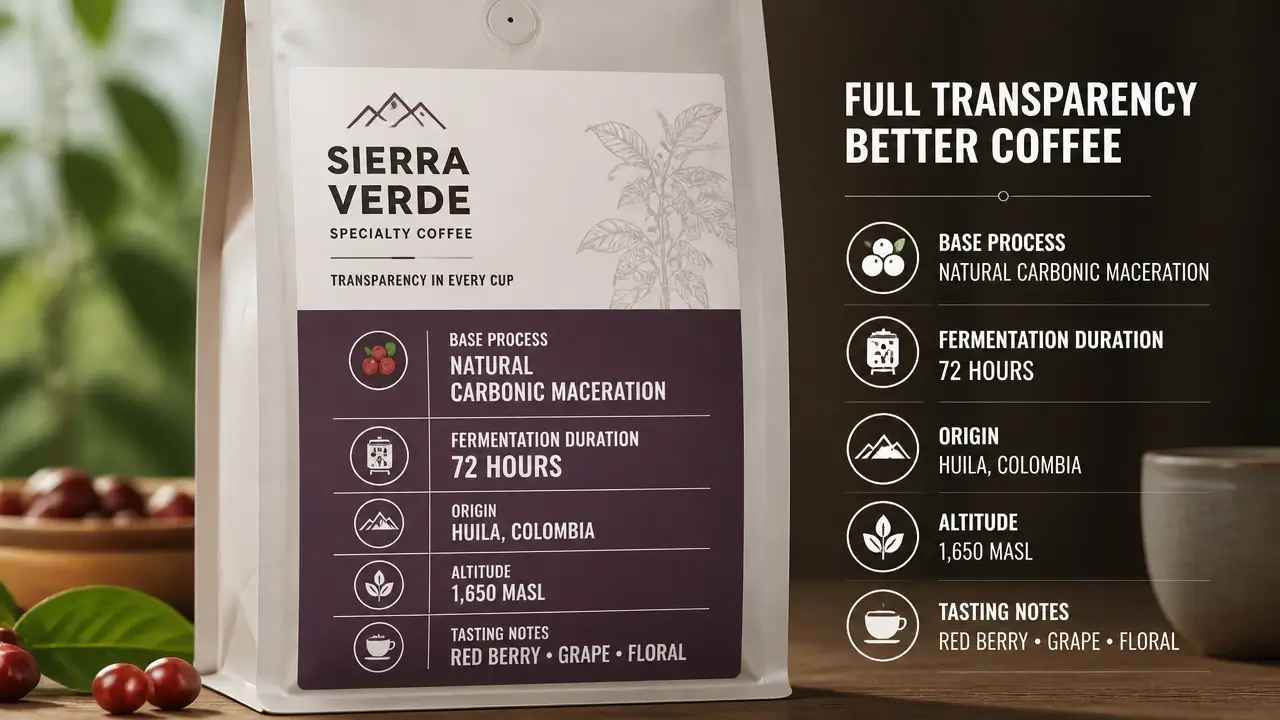
A concrete recommendation follows from this: state “natural carbonic maceration, 72-hour ferment, tropical fruit and lactic acidity” rather than “carbonic maceration process.” The specificity is a competitive advantage, not a disclosure burden.
Tasting and Brewing: What to Expect in the Cup
Carbonic maceration coffee at its best is unmistakable. The characteristic profile centers on intense tropical fruit – mango, pineapple, passion fruit – alongside stone fruit and berry jam, a distinct lactic acidity that reads as yogurt or cultured cream rather than citrus sharpness, and a body that is heavy and syrupy without being muddy. When the fermentation was extended intentionally, winey or boozy notes may appear as a deliberate stylistic element. When they appear unexpectedly in a lot not marketed for that character, they indicate that fermentation ran past its optimal window – a processing flaw, not a feature.
Understanding what the cup should taste like is the first step toward knowing when it doesn’t.
Brewing Parameters That Protect the Profile
CM coffee’s elevated sugar content and pronounced acidity respond well to specific brewing adjustments. A slightly finer grind increases extraction surface area without requiring higher water temperature, which helps pull the fruit and lactic compounds fully without scorching the more volatile aromatics. Water temperature in the 88–92°C range is consistently recommended for CM lots – lower than the 93–96°C standard for many washed coffees – because the delicate esters and fruit-forward volatiles that define CM’s character begin to degrade above that threshold.
For pour-over brewing, reducing the number of pours limits agitation of the grounds, which in turn reduces the extraction of bitter or tannic compounds that can overwhelm CM’s lighter, fruit-forward structure. Nordic Brew Lab’s sensory work on CM brewing highlighted extract chilling – brewing directly over ice or chilling the finished brew immediately – as a practical technique for locking in delicate fruit aromatics that dissipate with heat. For home enthusiasts and cafes alike, this is not a gimmick; it is a method that exploits CM’s flavor architecture rather than fighting it.
| Brewing Variable | Recommendation for CM Coffee | Rationale |
|---|---|---|
| Water Temperature | 88–92°C | Preserves volatile fruit aromatics |
| Grind Size | Slightly finer than standard | Increases extraction without added heat |
| Pour-Over Pours | Fewer, gentler pours | Reduces agitation and bitter extraction |
| Extract Chilling | Optional but effective | Locks in lactic and tropical aromatics |
| Brew Ratio | Standard (1:15–1:17) | No adjustment typically required |
How to Identify Quality – and When to Walk Away
When blind-tasting a CM coffee, the markers of quality are clarity of fruit, absence of heavy ferment funk, and a mouthfeel that is coating without being astringent or drying. The fruit should be identifiable and layered, not generic or muddled. The lactic acidity should feel smooth and integrated, not sharp or vinegary.
If the coffee tastes muddy, heavily acetic, or carries a persistent alcohol-forward note that dominates rather than accents, suspect poor processing – specifically, over-fermentation or inadequate temperature control during the fermentation window. These are not characteristics of CM as a method; they are characteristics of CM executed without sufficient precision.
For buyers, the clearest signal of a trustworthy CM lot is disclosure. Roasters who state the full processing method – “washed carbonic maceration, 64-hour ferment” – and provide tasting notes that align with CM’s known profile are signaling process discipline and honesty. If the labeling is vague, ask directly about sourcing, fermentation parameters, and safety practices. A roaster who cannot answer those questions has not earned the premium they are charging. For those building or expanding a CM program, understanding the commercial viability and equipment costs involved helps align the investment with realistic market expectations.
The ability to identify a quality CM coffee – and to recognize when a lot’s problems began long before it reached the roastery – is the practical reward of understanding the full process from sealed tank to cup.
Key Takeaways on Carbonic Maceration Coffee
- Carbonic maceration is a specific anaerobic subtype defined by whole cherries, CO₂ flushing, and positive pressure – not a synonym for anaerobic fermentation broadly.
- Temperature is the primary flavor dial: 4–8°C drives complex acidity, while 18–20°C favors sweetness and rounder body.
- CM beans carry higher residual sugars that scorch under standard roast profiles – lower charge temperatures, slower drum speed, and radiant heat transfer protect the cup.
- Sealed anaerobic tanks with pH above 4.6 create theoretically permissive conditions for Clostridium botulinum; CO₂ pressure alone is not a food safety barrier.
- “Carbonic maceration” as a standalone bag label is insufficient – the base process, fermentation duration, and expected flavor profile must accompany it for the premium to be defensible.
- Brewing CM coffee at 88–92°C with fewer pours and optional extract chilling preserves the volatile fruit aromatics that define the method’s value in the cup.
Frequently Asked Questions About Carbonic Maceration Coffee
What does carbonic maceration actually do to coffee?
It creates a sealed, CO₂-pressurized environment around whole cherries that redirects fermentation toward acid- and ester-producing pathways, generating the intense tropical fruit, lactic acidity, and syrupy body that define CM’s cup profile. The oxygen exclusion is what shifts the microbial metabolism – not the CO₂ itself.
What are the real disadvantages of carbonic maceration?
Beyond the well-known risks of over-fermentation and off-flavors, CM carries infrastructure costs, significant mass loss during drying, batch inconsistency from fermentation variability, and a mechanical hazard from pressure buildup in sealed tanks. The underreported risk is the theoretical permissiveness for Clostridium botulinum growth in low-oxygen, high-pH environments before sufficient acidification occurs.
What’s the difference between anaerobic and carbonic maceration?
Anaerobic fermentation is the broader category – it simply means fermentation without oxygen. Carbonic maceration is a specific type that requires whole, intact cherries and active CO₂ flushing to create positive pressure; classic anaerobic methods may use depulped fruit, nitrogen, or sealed tanks with no active gas introduction.
Can carbonic maceration be applied to any coffee origin?
Technically yes, but not every origin benefits from it. CM amplifies what’s already present in the cherry, so origins with inherently high fruit complexity tend to respond well. Applying CM to a more neutral origin can produce a generic fermented profile rather than a distinctive one, and it risks obscuring subtle terroir characteristics.
Why does CM coffee taste different from batch to batch?
Fermentation is a biological process influenced by cherry ripeness distribution, ambient temperature, microbial population density, and CO₂ concentration – all of which vary between batches even under nominally identical parameters. This inherent variability is why rigorous sensory monitoring at every stage is non-negotiable for consistent CM production.
How should I store CM coffee to preserve its flavor?
CM coffees carry more volatile aromatic compounds than conventionally processed lots, making them more sensitive to oxygen and heat exposure after roasting. Store in a sealed, one-way valve bag away from direct light and heat, and consume within four to six weeks of roast date to catch the fruit aromatics at their peak.
Is carbonic maceration coffee worth the price premium?
When the producer has exercised genuine process discipline and the roaster has communicated the full processing method transparently, yes – the cup quality is distinctive and the flavor profile is difficult to achieve through other methods. When the label is vague and the cup is muddy or acetic, you’re paying for a buzzword, not a process.
How do I tell if a CM lot was poorly processed before I buy it?
Ask the roaster for the base process (natural, honey, or washed CM), the fermentation duration, and the approximate fermentation temperature. If they can’t answer, treat that as a signal. When you do taste it, look for clarity of fruit and smooth lactic acidity – muddy, heavily boozy, or vinegary notes indicate process failures that started at the farm.
References
- How Does Fermentation Affect Coffee Flavour Development? | perfectdailygrind.com
- Coffee Roasting for Experimental Processing Methods | perfectdailygrind.com
- Effect of Headspace Oxygen Concentration on Growth and Toxin Production by Proteolytic Strains of Clostridium botulinum | pubmed.ncbi.nlm.nih.gov
- Barista Magazine – Carbonic Maceration Labeling and Terminology | baristamagazine.com